Want more images or videos?
Request additional images or videos from the seller
1 of 7

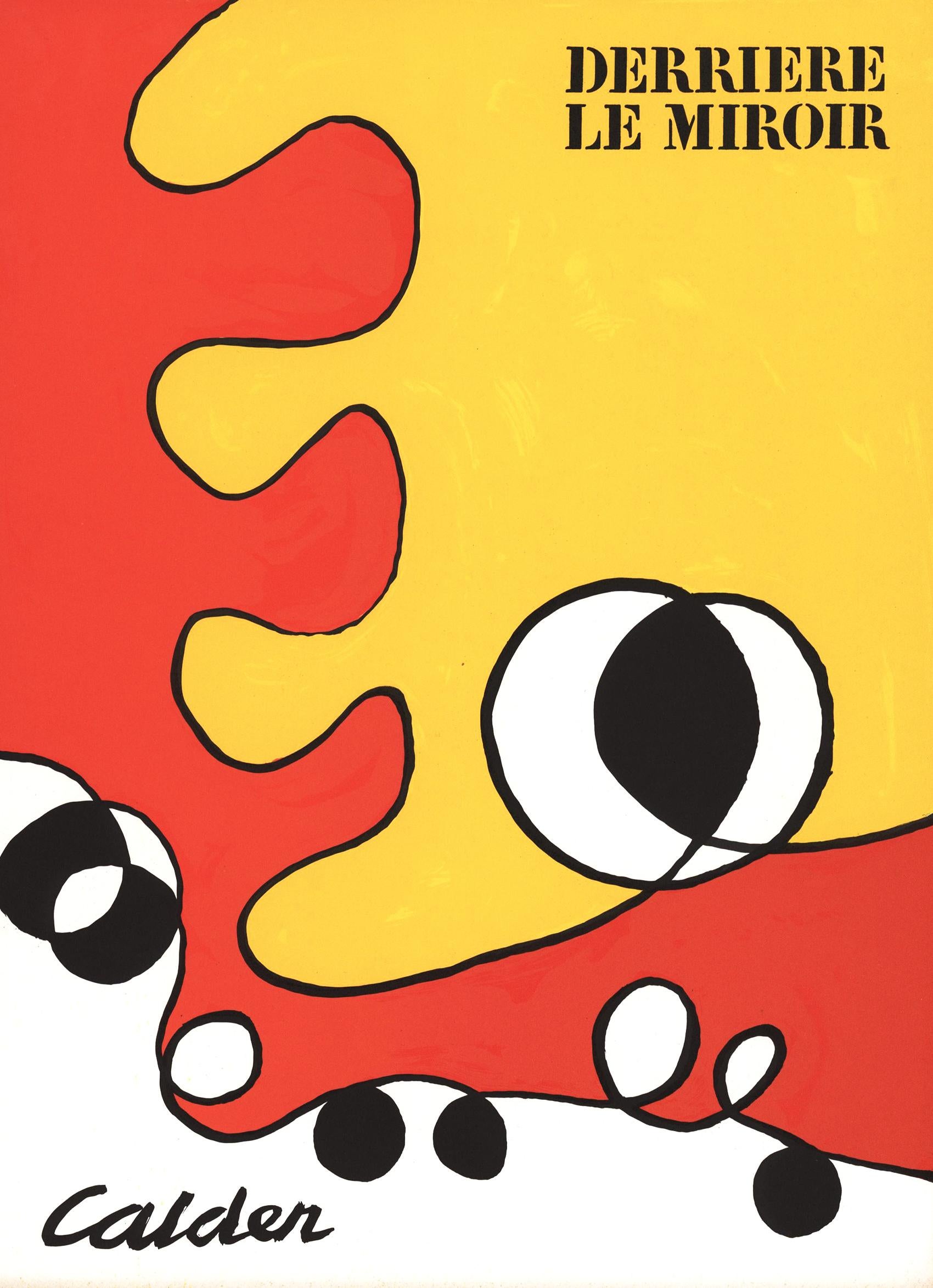
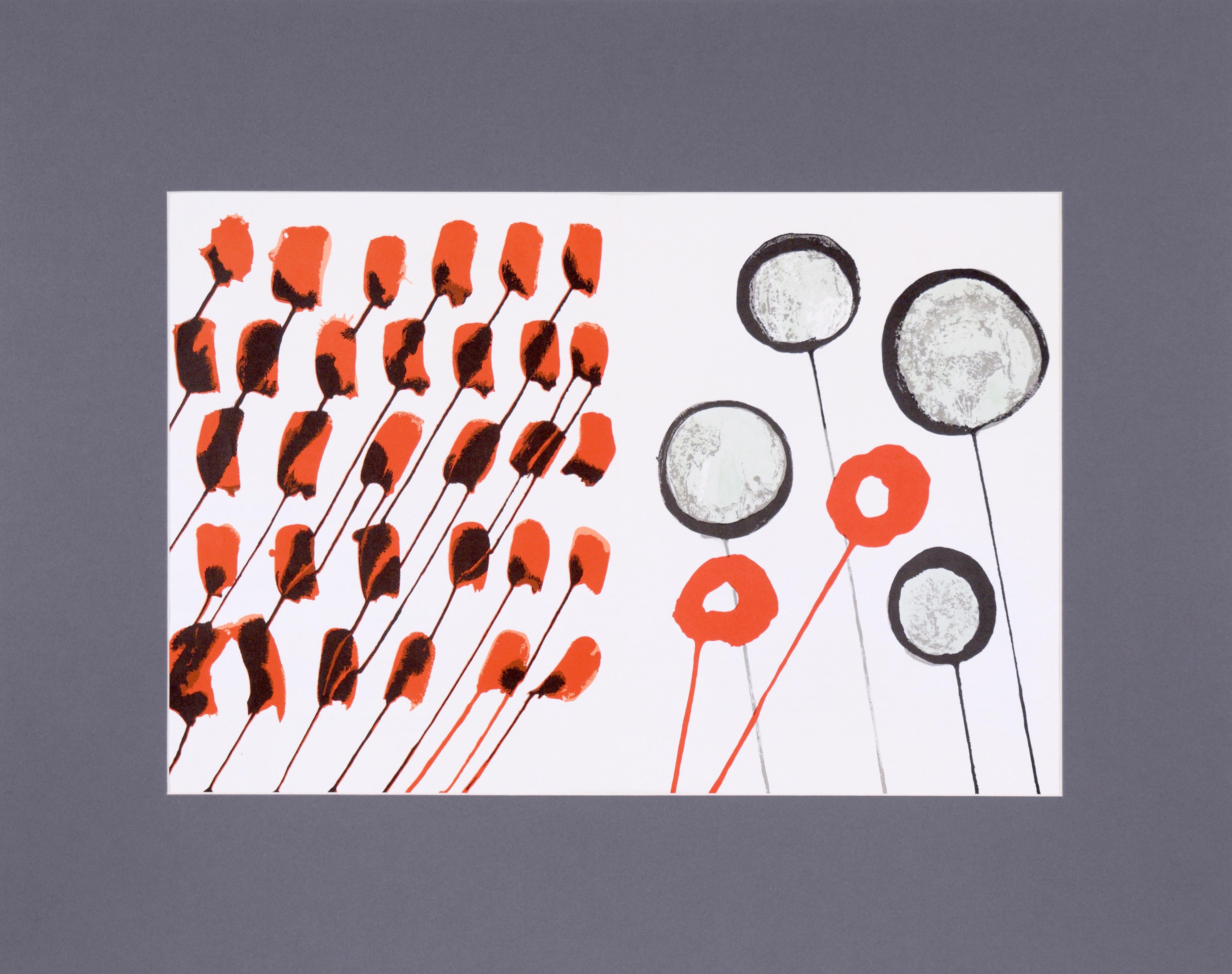
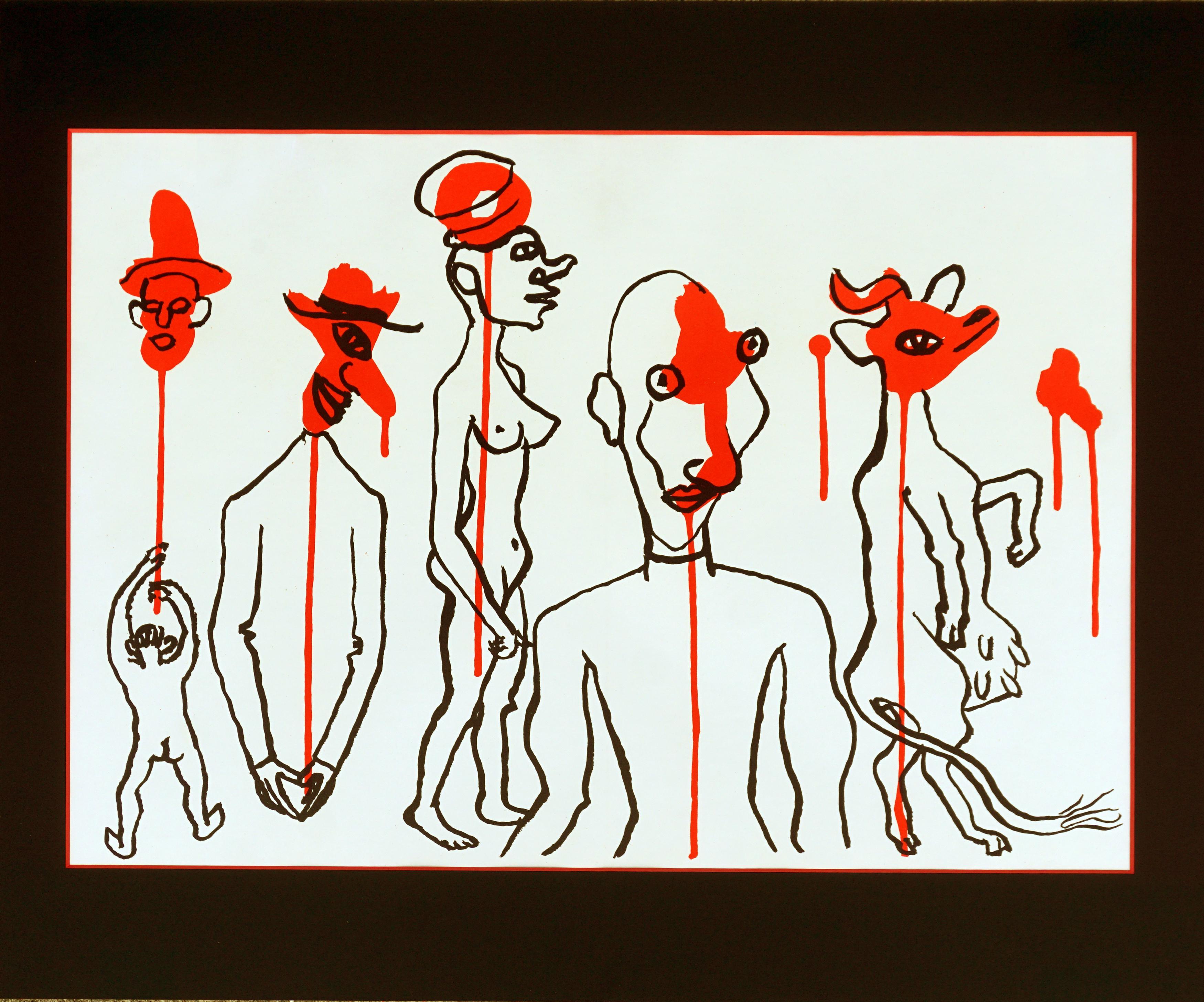
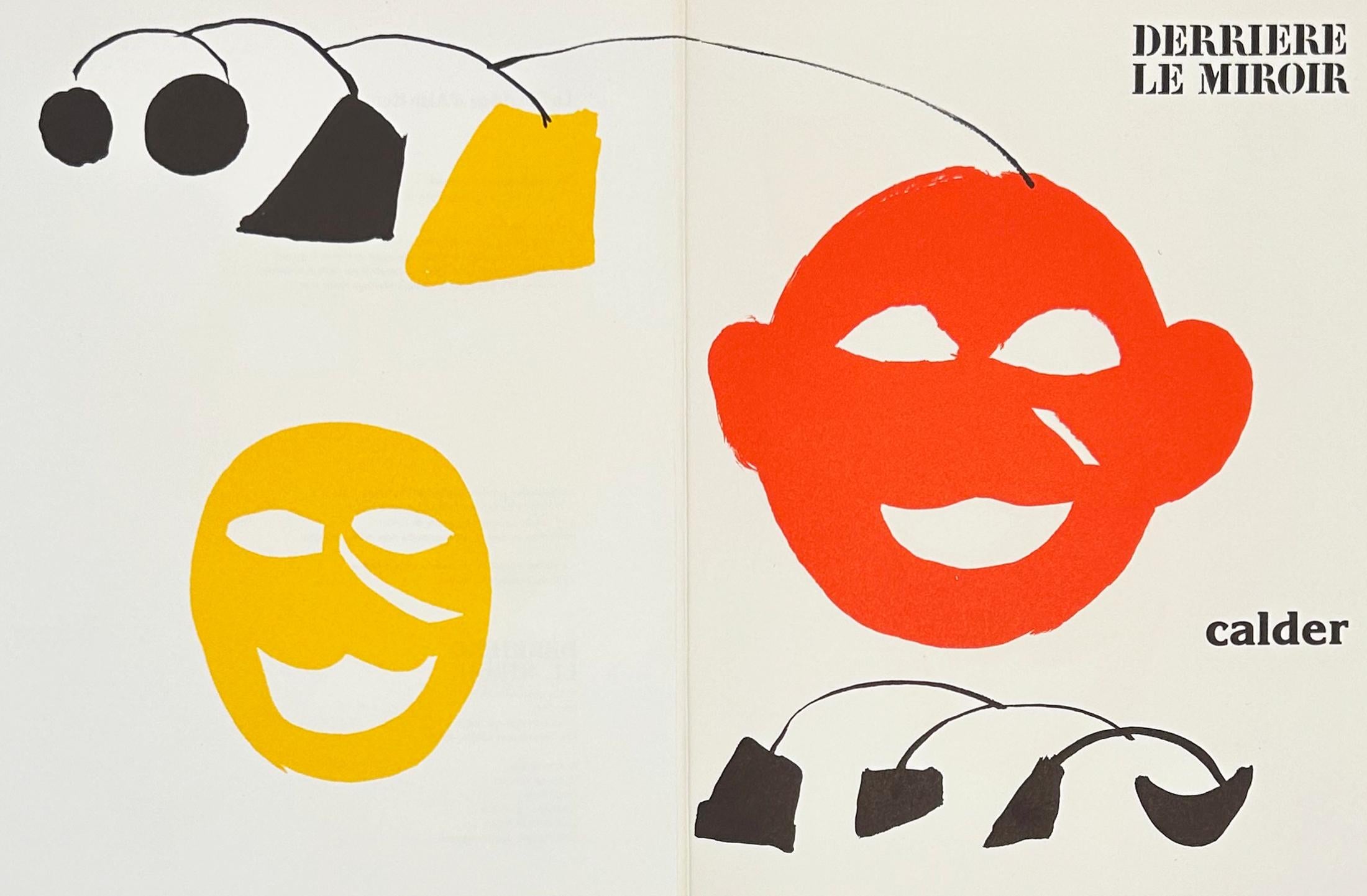
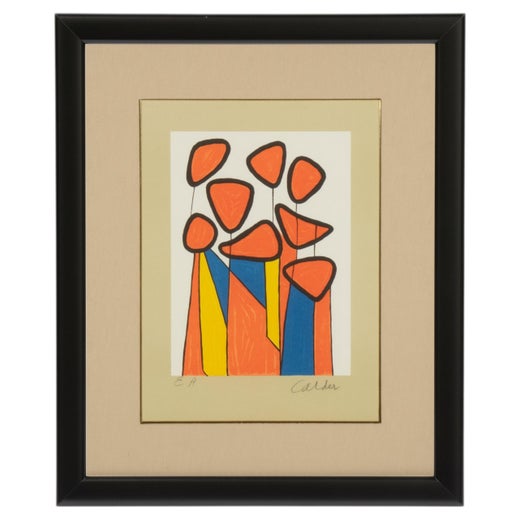
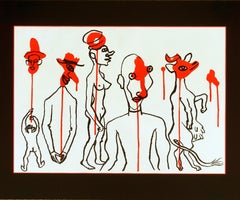
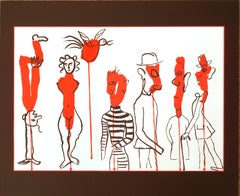
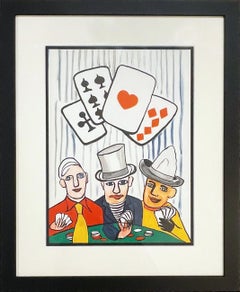
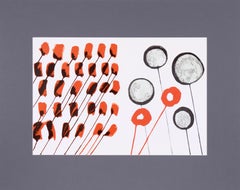
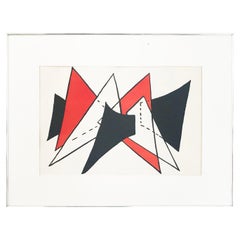
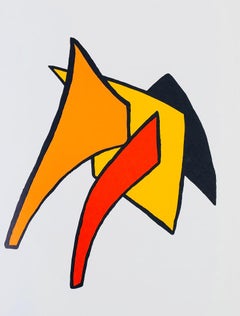
Alexander Calder - Derrière le Miroir 1975 Litograph

$824.18
£610.03
€700
CA$1,148.19
A$1,167.82
CHF 667.78
MX$14,125.76
NOK 7,824.15
SEK 7,822.27
DKK 5,337.56

About the Item

Litograph by Alexander Calder Derrière le Miroir 1975 #212.
  • Creator:
  • Dimensions:
    Height: 14.97 in (38 cm)Diameter: 21.86 in (55.5 cm)
  • Style:
    Modern (Of the Period)
  • Materials and Techniques:
  • Place of Origin:
  • Period:
  • Date of Manufacture:
    1975
  • Condition:
    Wear consistent with age and use.
  • Seller Location:
    Stockholm, SE
  • Reference Number:
    1stDibs: LU10232244826102

More From This Seller

View All
Swedish Modern Art Deco Pewter Mirror with Stylized Crest, circa 1930s

Swedish Modern Art Deco Pewter Mirror with Stylized Crest, circa 1930s

By CG Hallberg, Svenskt Tenn

Located in Stockholm, SE

frame and striking architectural crest. The design exemplifies the restrained sophistication of Scandinavian Art Deco, blending clean geometry with subtle ornamentation. The rectang...

Category

Vintage 1930s Swedish Art Deco Wall Mirrors

Materials

Pewter

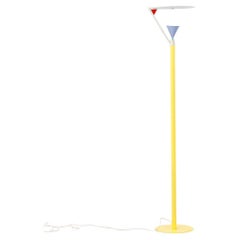
Postmodern "Halo" Floor Lamp by Olle Anderson, Sweden, 1980s

Postmodern "Halo" Floor Lamp by Olle Anderson, Sweden, 1980s

By Olle Andersson, Boréns Borås

Located in Stockholm, SE

An iconic postmodern "Halo" floor lamp designed by Olle Anderson in the 1980s. This distinctive piece showcases the designer’s playful use of geometric shapes and vibrant colors, ref...

Category

Vintage 1980s Swedish Post-Modern Floor Lamps

Materials

Steel

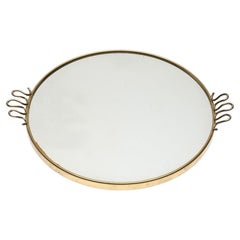
Josef Frank Brass and Mirror Tray/Plateau for Svenskt Tenn Swedish modern, 1940s

Josef Frank Brass and Mirror Tray/Plateau for Svenskt Tenn Swedish modern, 1940s

By Josef Frank, Svenskt Tenn

Located in Stockholm, SE

Refined mirrored plateau designed by Josef Frank for Svenskt Tenn, Sweden, in the 1940s. This circular tray features a beveled mirror surface set within a gilded brass frame, accente...

Category

Vintage 1940s Swedish Art Deco Decorative Dishes and Vide-Poche

Materials

Brass

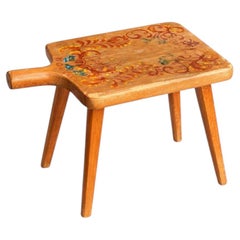
Swedish Folk Art Milking Stool, Hand-Painted, Hälsingland, 1960s

Swedish Folk Art Milking Stool, Hand-Painted, Hälsingland, 1960s

Located in Stockholm, SE

A charming Swedish folk art milking stool from Hälsingland, dating to the 1960s. Crafted in solid pine, the stool features a traditional three-leg construction with a distinctive pad...

Category

Vintage 1960s Swedish Scandinavian Modern Stools

Materials

Pine

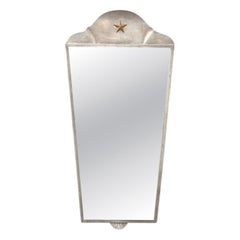
GAB Swedish Modern Art Deco Pewter Wall Mirror with Brass Star Detail, 1934

GAB Swedish Modern Art Deco Pewter Wall Mirror with Brass Star Detail, 1934

By GAB Guldsmedsaktiebolaget

Located in Stockholm, SE

A refined Swedish Art Deco wall mirror produced by GAB (Guldsmedsaktiebolaget) in 1934. Crafted in pewter with an elegant tapered form, the mirror features a distinctive brass star m...

Category

Vintage 1930s Swedish Art Deco Wall Mirrors

Materials

Brass, Pewter

You May Also Like

Alexander Calder Mid Century Derrière le Miroir Lithograph

Alexander Calder Mid Century Derrière le Miroir Lithograph

By Alexander Calder

Located in Soquel, CA

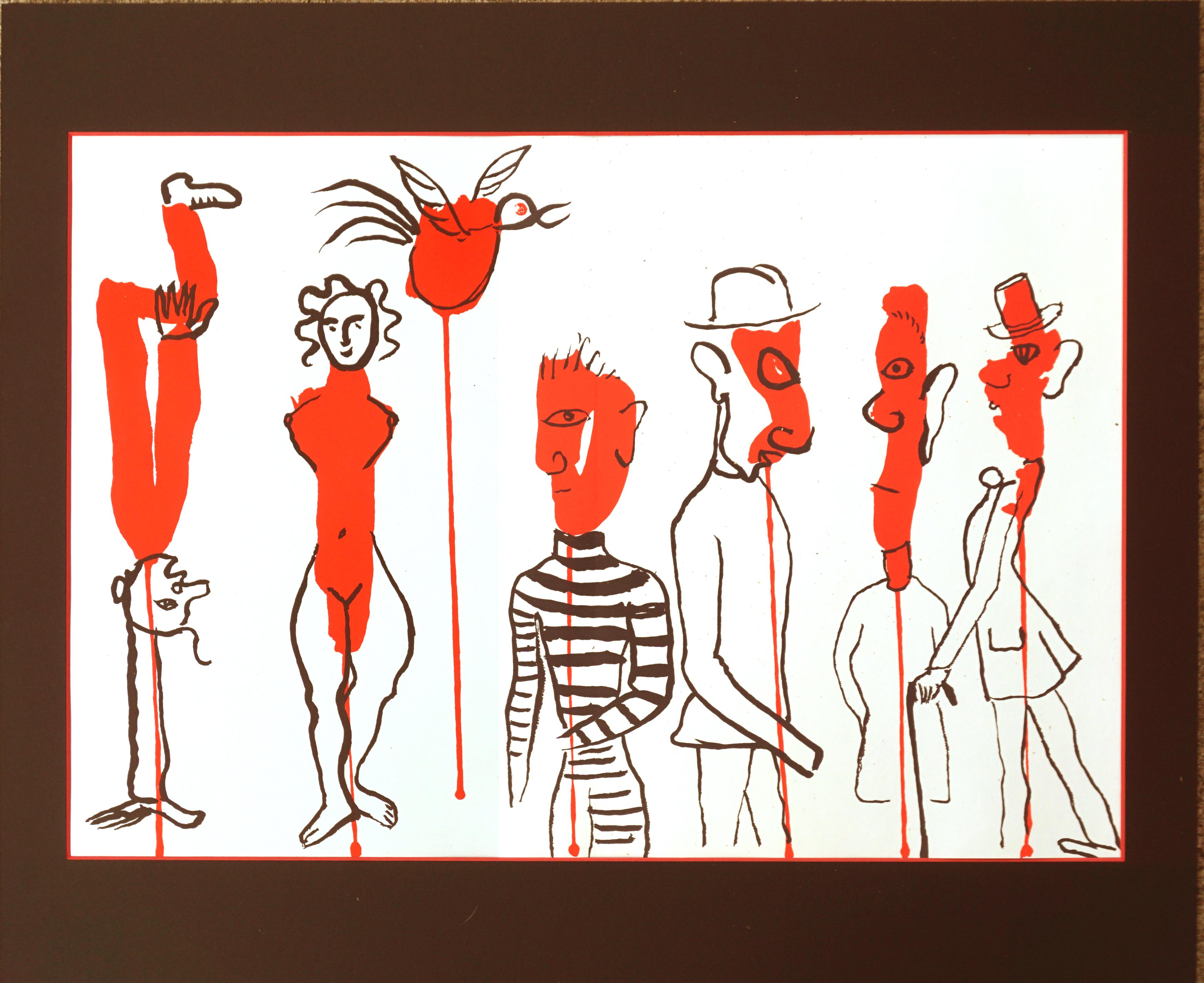
Vintage 1960s Alexander Calder Lithograph double page part of portfolio "Derriere le Miroir". Published by: Galerie Maeght, Paris, 1966. No. 156. Text on verso. Unsigned, from an unknown edition. Presented in black mat with red core. Mat size: 20"H x 24"W. Image size: 15"H x 22"W. American artist Alexander Calder changed the course of modern art by developing an innovative method of sculpting, bending, and twisting wire to create three-dimensional “drawings in space.” Resonating with the Futurists and Constructivists, as well as the language of early nonobjective painting, Calder’s mobiles (a term coined by Marcel Duchamp in 1931 to describe his work) consist of abstract shapes made of industrial materials––often poetic and gracefully formed and at times boldly colored––that hang in an uncanny, perfect balance. His complex assemblage Cirque Calder (1926–31), which allowed for the artist’s manipulation of its various characters presented before an audience, predated Performance Art by some 40 years. Later in his career, Calder devoted himself to making outdoor monumental sculptures...

Category

1960s Modern Figurative Prints

Materials

Paper, Ink

Alexander Calder Mid Century Derrière le Miroir Lithograph

Alexander Calder Mid Century Derrière le Miroir Lithograph

By Alexander Calder

Located in Soquel, CA

Vintage 1960s Alexander Calder Lithograph double page part of portfolio "Derriere le Miroir". Published by: Galerie Maeght, Paris, 1966. No. 156. Text on verso. Unsigned from an unknown edition. Presented in black mat with red core. Mat size: 20"H x 24"W. Image size: 15"H x 22"W. American artist Alexander Calder changed the course of modern art by developing an innovative method of sculpting, bending, and twisting wire to create three-dimensional “drawings in space.” Resonating with the Futurists and Constructivists, as well as the language of early nonobjective painting, Calder’s mobiles (a term coined by Marcel Duchamp in 1931 to describe his work) consist of abstract shapes made of industrial materials––often poetic and gracefully formed and at times boldly colored––that hang in an uncanny, perfect balance. His complex assemblage Cirque Calder (1926–31), which allowed for the artist’s manipulation of its various characters presented before an audience, predated Performance Art by some 40 years. Later in his career, Calder devoted himself to making outdoor monumental sculptures...

Category

1960s Modern Figurative Prints

Materials

Paper, Ink

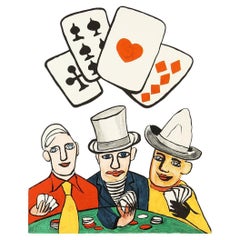
Mid-Century Derrière le Miroir Lithograph by Alexander Calder

Mid-Century Derrière le Miroir Lithograph by Alexander Calder

By Alexander Calder

Located in Soquel, CA

Mid-Century Derrière le Miroir Lithograph by Alexander Calder Vintage 1960's Alexander Calder double-page Lithograph, unsigned, part of portfolio "Derriere le Miroir". Published by:...

Category

1960s Modern Figurative Prints

Materials

Paper, Ink

Alexander Calder "Stabile ii" Lithograph for Dèrriere Le Miroir, 1976

Alexander Calder "Stabile ii" Lithograph for Dèrriere Le Miroir, 1976

By Alexander Calder

Located in Fort Lauderdale, FL

An Alexander Calder lithograph for the French publication Dèrriere Le Miroir circa 1976 matted and framed under glass.

Category

Mid-20th Century French Mid-Century Modern Prints

Materials

Paper

Alexander Calder lithograph (derrière le miroir)

Alexander Calder lithograph (derrière le miroir)

By Alexander Calder

Located in NEW YORK, NY

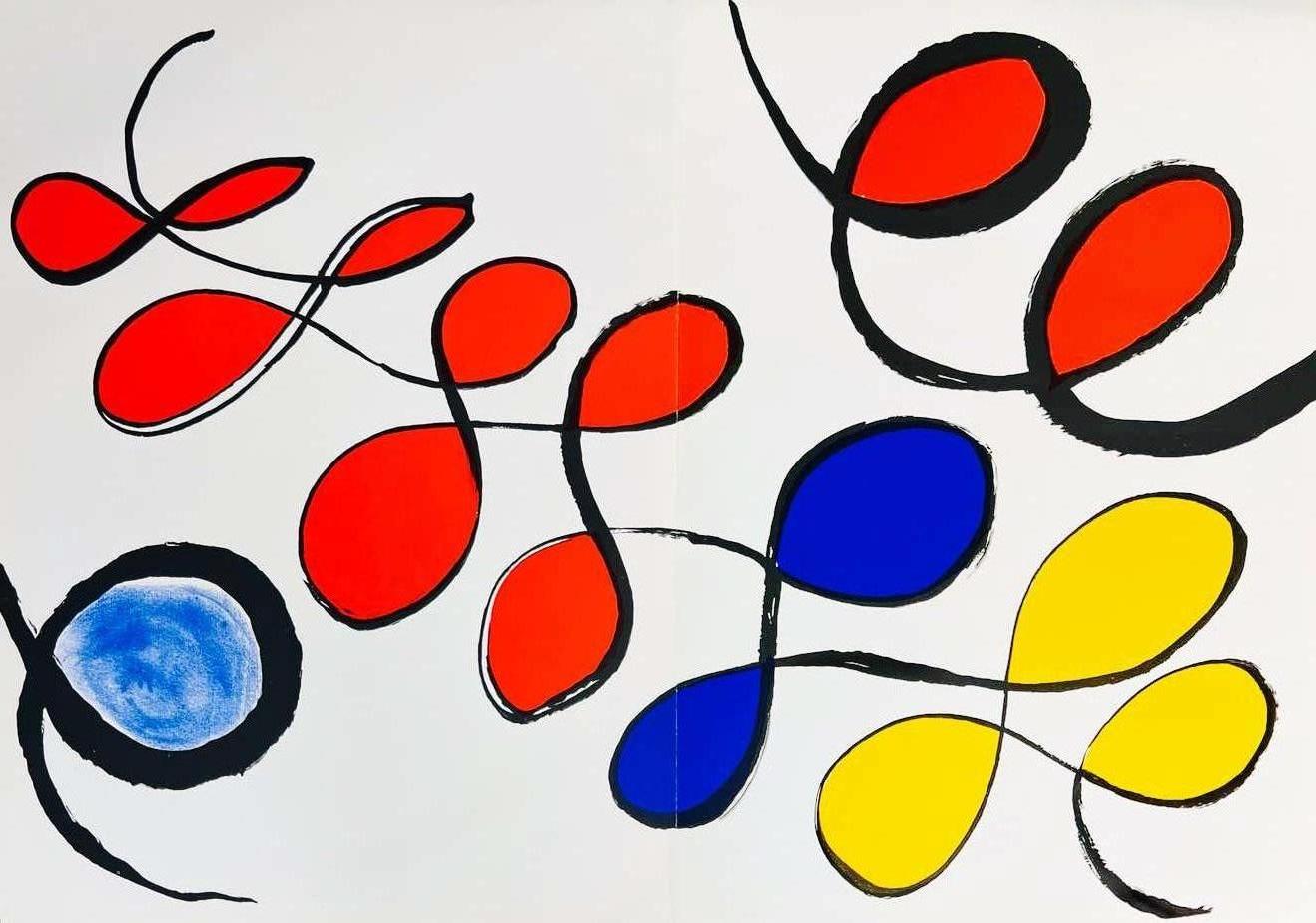
Alexander Calder Lithograph c. 1964 from Derrière le miroir: Lithograph in colors; 15 x 11 inches. Very good overall vintage condition; well-preserved. Unsigned from an edition of unknown. From: Derrière le miroir. Printed in France. Derrière le miroir: In October 1945 the French art dealer Aimé Maeght opens his art gallery at 13 Rue de Téhéran in Paris. His beginning coincides with the end of Second World War and the return of a number of exiled artists back to France. The publication was created in October 1946 (n°1) and published without interruption until 1982 (n°253). Its original articles and illustrations (mainly original color lithographs by the gallery artists) who were famous at the time. The lithographic publication covered only the artists exhibited by Maeght gallery either through personal or group exhibitions. Among them were, Pierre Alechinsky, Francis Bacon, Alexander Calder, Marc Chagall, Eduardo Chillida, Alberto Giacometti, Vassily Kandinsky, Ellsworth Kelly, Fernand Léger, Henri Matisse, Joan Miró, Saul Steinberg and Antoni Tapies. _ Alexander Calder was an American artist best known for his invention of the kinetic sculptures known as mobiles. Calder also produced a variety of two-dimensional artworks including lithographs, paintings, and tapestries as seen in his Butterfly (1970). “My whole theory about art is the disparity that exists between form, masses, and movement,” the artist once said. Born on August 22, 1898 in Lawnton, PA, Calder turned to art in the 1920s, studying drawing and painting under George Luks and Boardman Robinson at the Art Students League in New York. Calder moved to Paris to continue his studies in 1926, where he was introduced to the European avant-garde through performances of his Cirque Calder (1926–1931). “I was very fond of the spatial relations,” he said of his interest in the circus. “The whole thing of the—the vast space—I’ve always loved it.” With these performances, along with his wire sculptures, Calder attracted the attention of such notable figures as Marcel Duchamp, Jean Arp, and Fernand Léger. Notably, it was his friend Duchamp that coined the term mobile—a pun in French meaning both “motion” and “motive”—during a visit to Calder’s Paris studio in 1931. His earliest mobiles moved by motors, but Calder soon abandoned these mechanics and designed pieces that moved by air currents or human interaction. Over the course of seven decades, along with his mobiles, he also produced paintings, monumental outdoor sculptures, works on paper, domestic objects, and jewelry. The artist lived in both Roxbury, CT, and Saché, France, before his death on November 11, 1976 in New York, NY. Today, his works are held in the collections of The Museum of Modern Art in New York, the National Gallery of Art in Washington, D.C., the Whitney Museum of American Art, New York, the Art Institute of Chicago, and the Tate Gallery in London. Related Categories Calder prints. Mid Century Modern. 1970s. Miro. Chagall. Calder lithograph. Figurative art. Alexander Calder Derrière...

Category

1960s Contemporary Figurative Prints
Materials

Lithograph