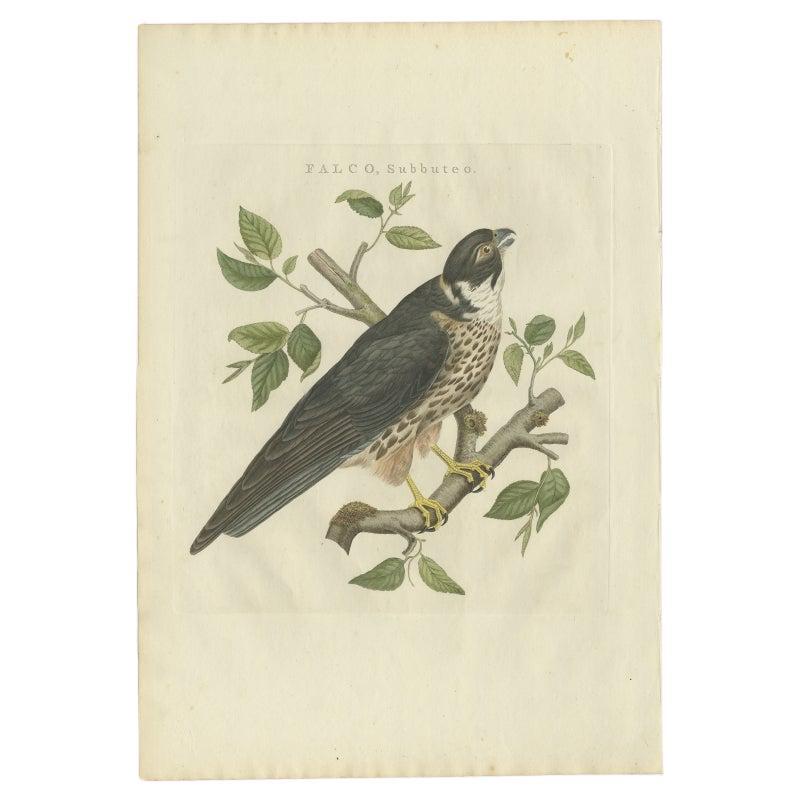
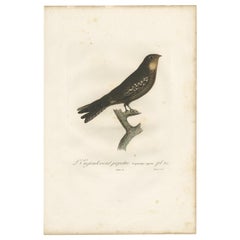
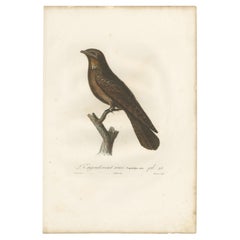
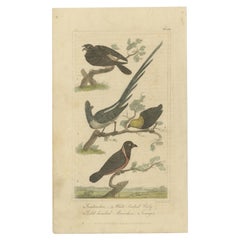
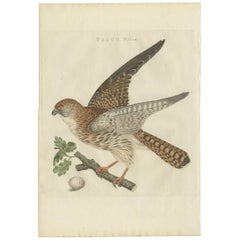
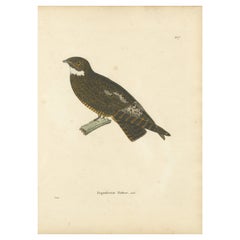
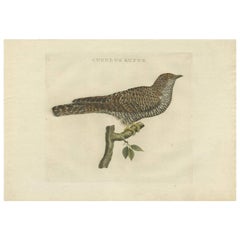
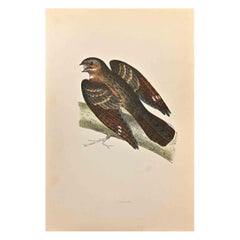
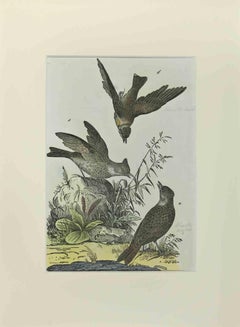
Antique Bird Print – Common Nightjar Caprimulgus by Nozeman & Sepp, 1770
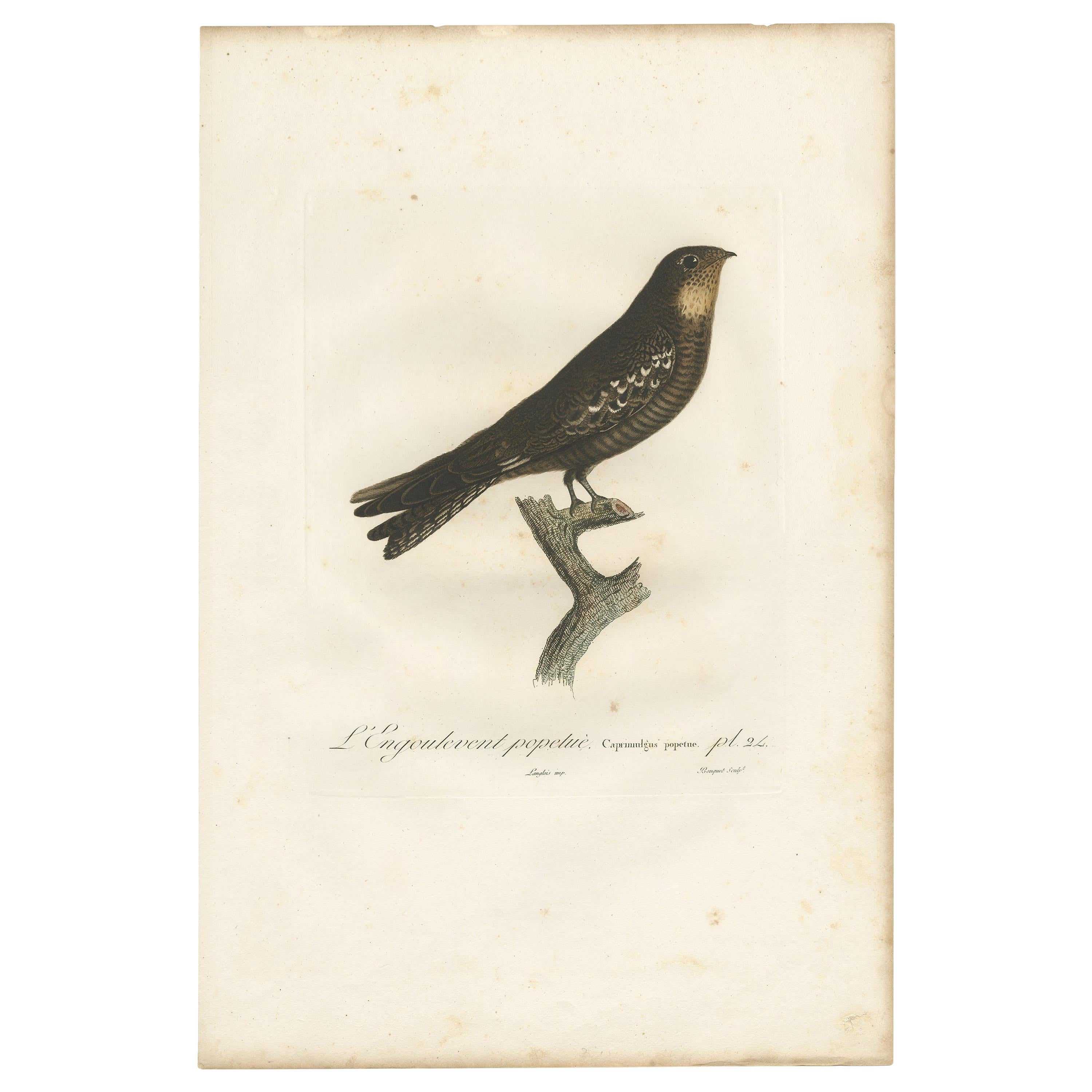
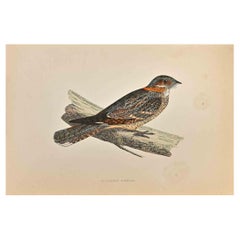
This finely hand-coloured copperplate engraving depicts the Caprimulgus, or nightjar, a nocturnal bird distinguished by its cryptic plumage, short bill, and long, pointed wings. Known in Dutch as the nachtzwaluw, the nightjar has long fascinated naturalists due to its mysterious habits and folklore. Its scientific name, Caprimulgus, derives from Latin — capra (goat) and mulgere (to milk) — referencing an ancient myth that nightjars would suckle milk from goats, a belief widespread across Europe. The English name “nightjar,” first recorded in 1630, alludes both to the bird’s nocturnal lifestyle and its distinctive churring song, which fills summer nights.
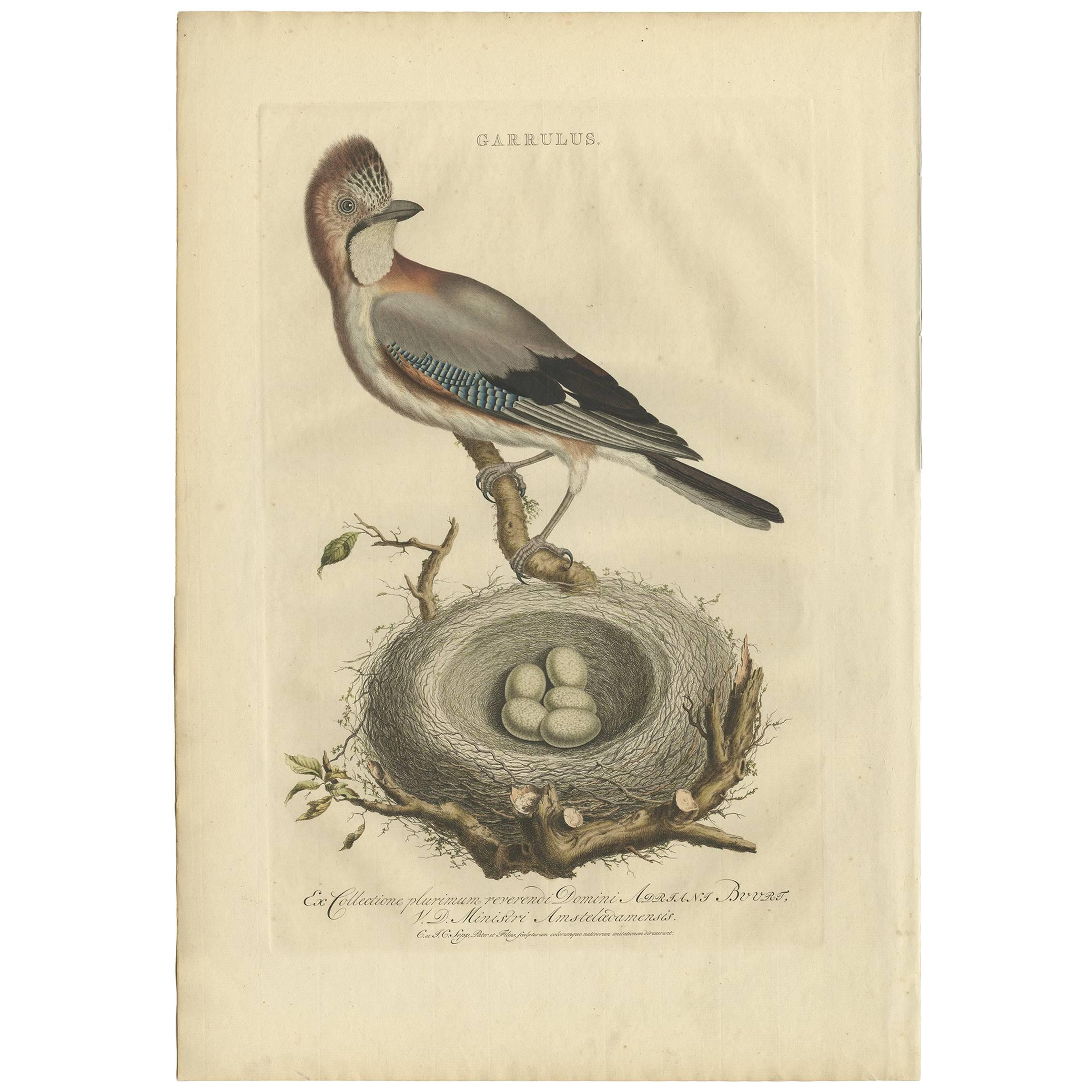
In this engraving, the nightjar is shown perched upon a small tree branch beside a nest with speckled eggs, a setting that enhances the naturalistic presentation characteristic of Nederlandsche Vogelen. The plate captures the bird’s mottled brown plumage, perfectly adapted to camouflage against woodland floors or heathland environments, where it rests motionless during daylight hours. Such detail reflects both scientific precision and aesthetic artistry, hallmarks of the Sepp workshop.
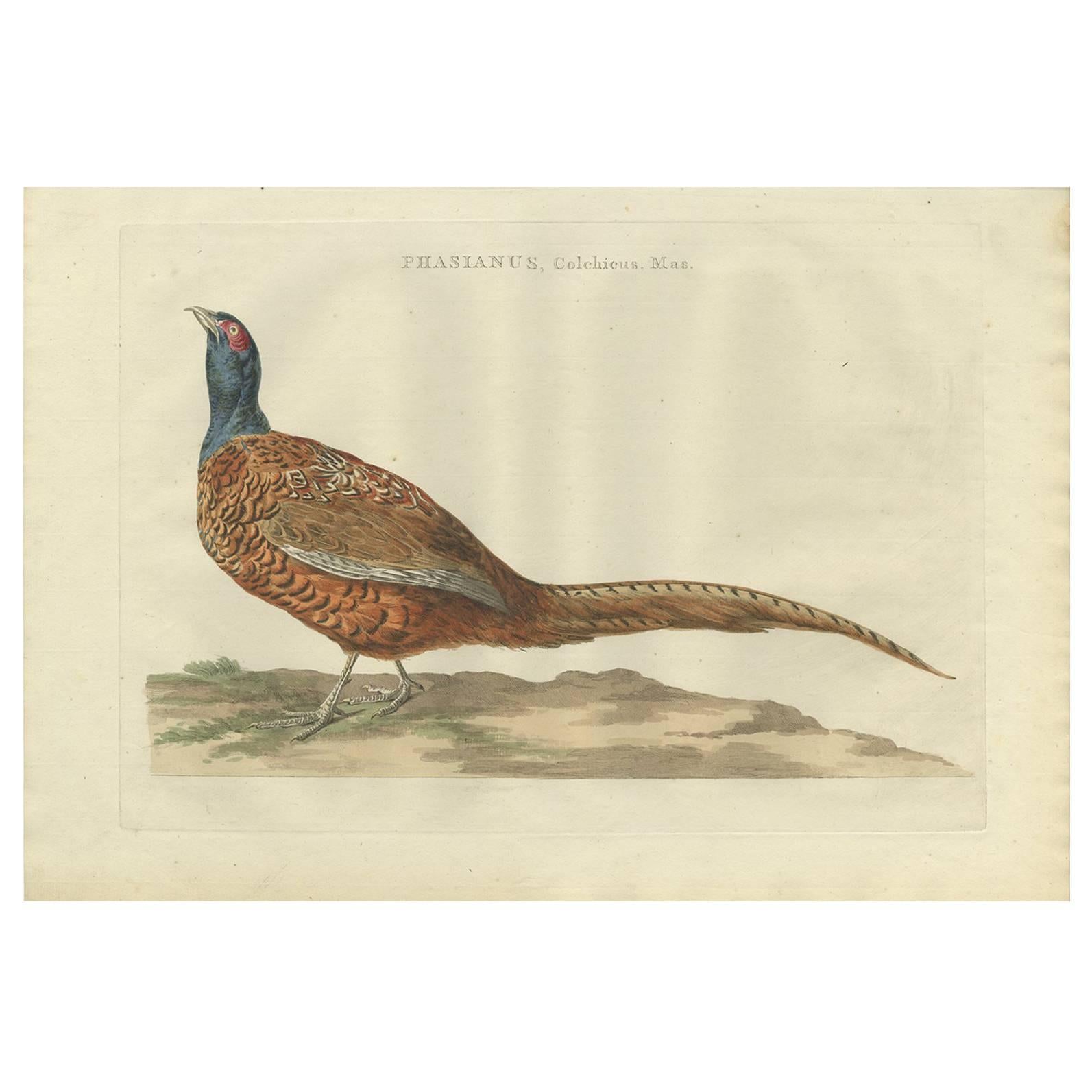
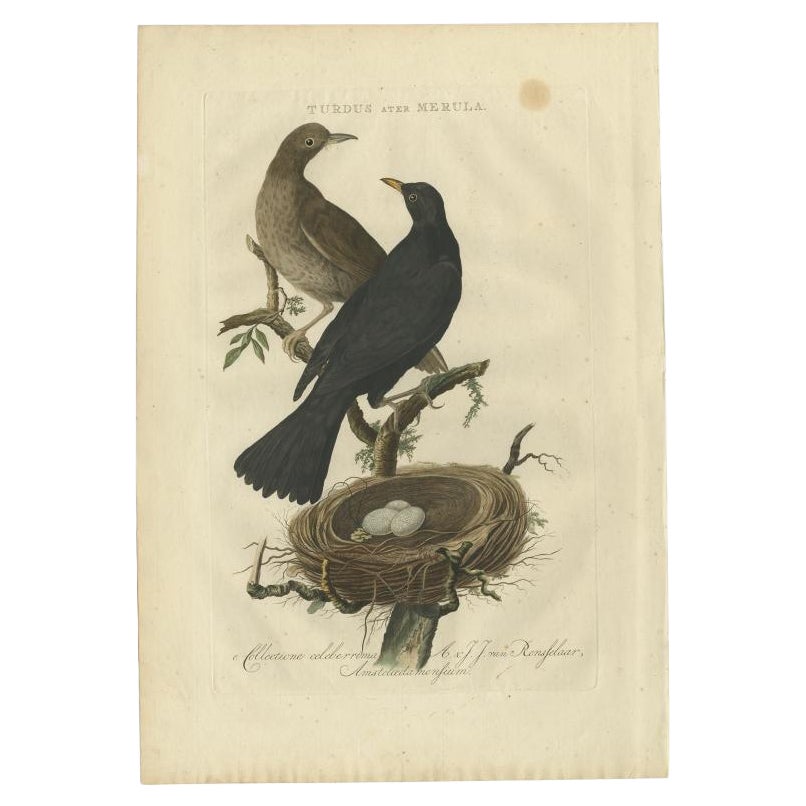
The print originates from Nederlandsche Vogelen; volgens hunne huishouding, aert, en eigenschappen beschreeven (Amsterdam, 1770–1829), the first comprehensive ornithological study published in the Netherlands. Initiated by Cornelis Nozeman and continued by Martinus Houttuyn, the monumental project was illustrated and produced by Christiaan Andreas Sepp and his descendants. Each bird was rendered as seen in life, often close to life-sized, with accompanying text offering detailed descriptions of habits, distribution, and behaviour.
The nightjar was a remarkable inclusion in the series, since it is a bird more often heard than seen. Migratory across Europe, it breeds in the Netherlands during the summer months before returning to Africa. Its depiction here provided contemporary readers with one of the most accurate illustrations of this elusive species available at the time.
Collectors value plates from Nederlandsche Vogelen for their rarity, historical importance, and decorative beauty. This example, with the bird in full profile and an egg depicted below, makes for an especially desirable natural history print.
Condition: Very good. Light age-related toning, wide margins preserved. Plate mark clearly visible and two darker spots in the margins. Accompanied by the original descriptive text sheet.
Framing tips: Best displayed in a dark wooden or ebonised frame with a soft ivory or pale beige mount, which enhances the bird’s mottled plumage. A gilt inner line could add a refined touch while preserving the classic natural history aesthetic.