Want more images or videos?
Request additional images or videos from the seller
1 of 8

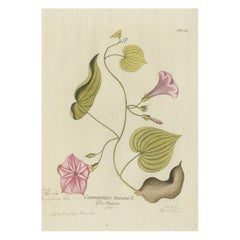
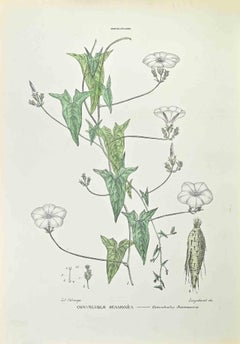
Antique Botanical Print of Convolvulus Scammonia, or Scammony, ca.1821

$162.02
$202.5220% Off
£118.77
£148.7620% Off
€136VAT Included
€17020% Off
CA$223.17
CA$279.4620% Off
A$226.06
A$284.4620% Off
CHF 129.80
CHF 161.9220% Off
MX$2,740.93
MX$3,433.6720% Off
NOK 1,506.16
NOK 1,888.0920% Off
SEK 1,533.10
SEK 1,910.8620% Off
DKK 1,037.08
DKK 1,296.2620% Off

About the Item

Antique botanical print titled 'Liseron Scammonée'. This print shows the Convolvulus Scammonia, commonly known as scammony. It is a bindweed native to the countries of the eastern part of the Mediterranean basin; it grows in bushy waste places, from Syria in the south to Crimea in the north, its range extending westward to the Greek islands, but not to northern Africa or Italy. It is a twining perennial, bearing flowers like those of Convolvulus arvensis, and having irregularly arrow-shaped leaves and a thick fleshy root. This print originates from 'Phytographie Medicale' by Joseph Roques. Engraved by Édouard Auguste Patrice Hocquart. Published circa 1821. Édouard Auguste Patrice Hocquart (1789–1870), frequently cited as L. F. J. Hoquart, was a French publisher, writer, artist and engraver, noted for his colour plates illustrating Joseph R. Roques's (1772–1850) materia medica publication Phytographie médicale of 1821–1824. More in detail: The Convolvulus Scammonia, or scammony, is special for several reasons that highlight its uniqueness in the botanical world and its historical uses: 1. **Unique Habitat**: Scammony thrives in the specific climates and terrains of the eastern Mediterranean basin, from Syria to Crimea and the Greek islands. Its adaptation to bushy waste places in this particular geographic region underscores its ecological niche and specialized growth requirements. 2. **Medicinal Root**: One of the most distinguishing features of scammony is its thick, fleshy root, which has been used historically for medicinal purposes. The root contains a milky juice that, when dried, forms a gum-like substance known as scammonium. This substance has been used as a powerful purgative or laxative in traditional medicine. 3. **Twining Growth and Flowers**: Scammony is a twining perennial, which means it grows by spiraling around other plants or supports. This growth habit, combined with its flowers that resemble those of the common bindweed (Convolvulus arvensis), adds an aesthetic value to the plant. The irregularly arrow-shaped leaves further contribute to its distinctive appearance. 4. **Botanical Interest**: Its place within the Convolvulus genus, which includes a variety of species with different growth habits and ecological adaptations, makes scammony a subject of interest for botanists and plant enthusiasts. Studying its characteristics can provide insights into the diversity and evolution of plants within this genus. 5. **Historical and Cultural Significance**: The use of scammony's root in traditional medicine connects it to the cultural and historical practices of the regions where it is native. Its role in herbal medicine and the trade of medicinal plants adds layers to its significance beyond its botanical characteristics. These aspects make the Convolvulus Scammonia a plant of interest not just for its visual beauty and ecological adaptation, but also for its historical, medicinal, and cultural significance.
  • Dimensions:
    Height: 12.29 in (31.2 cm)Width: 8.78 in (22.3 cm)Depth: 0.02 in (0.5 mm)
  • Materials and Techniques:
  • Period:
  • Date of Manufacture:
    c.1821
  • Condition:
    Age-related toning. Shows some staining. Minor wear, blank verso. Please study image carefully.
  • Seller Location:
    Langweer, NL
  • Reference Number:
    Seller: BG-13584-41stDibs: LU3054338353492

More From This Seller

View All
Convolvulus Batatas Botanical Engraving - Icones Plantarum Medicinalium, 1788

Convolvulus Batatas Botanical Engraving - Icones Plantarum Medicinalium, 1788

Located in Langweer, NL

"Convolvulus Batatas Botanical Engraving - Icones Plantarum Medicinalium, 1788" This delicate hand-colored engraving features the Convolvulus Batatas, also known as the Sweet Potato...

Category

Antique 1780s Prints

Materials

Paper

Convolvulus Jalapa Botanical Engraving - Icones Plantarum Medicinalium, 1788

Convolvulus Jalapa Botanical Engraving - Icones Plantarum Medicinalium, 1788

Located in Langweer, NL

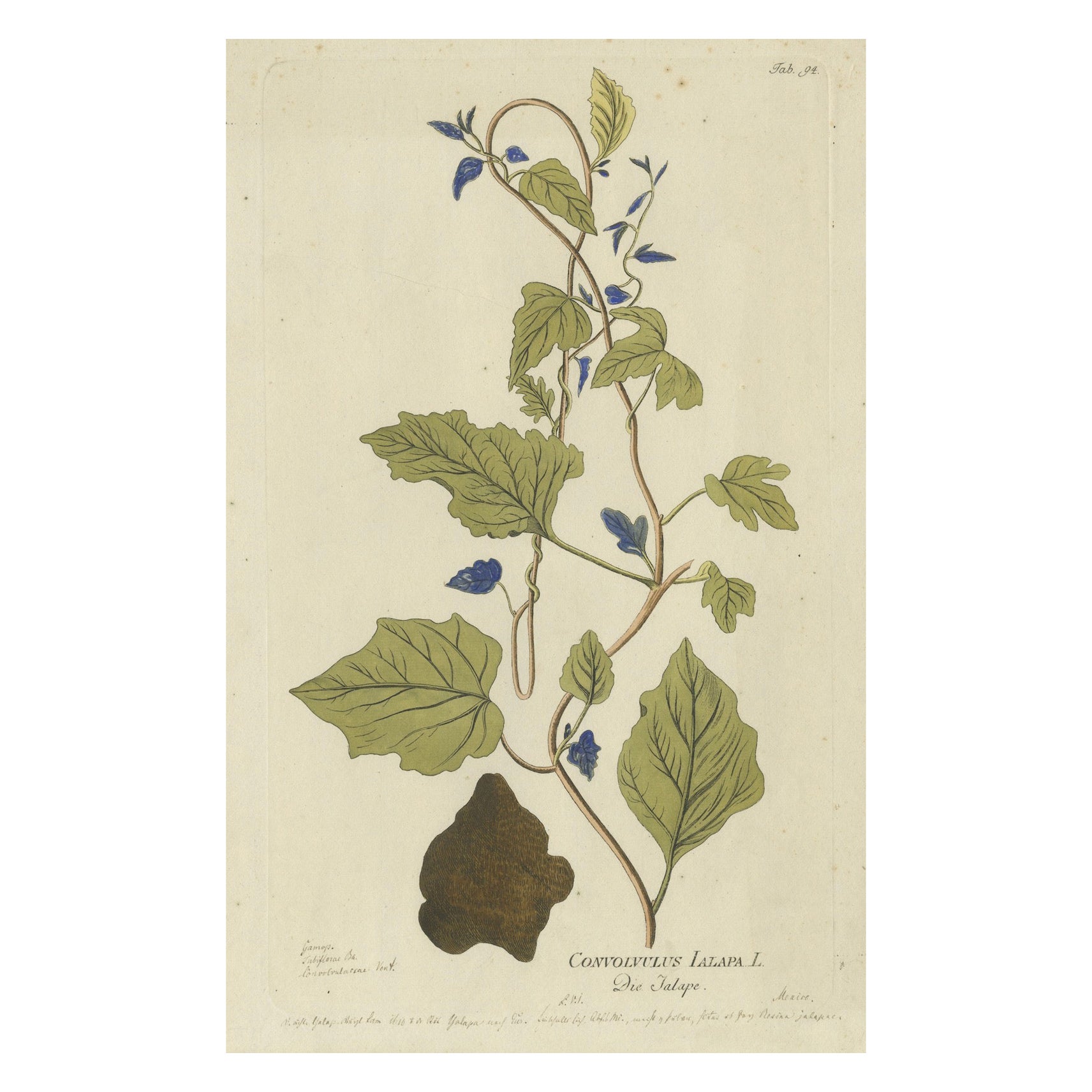
"Convolvulus Jalapa Botanical Engraving - Icones Plantarum Medicinalium, 1788" Description This hand-colored engraving presents the Convolvulus Jalapa, commonly known as the Jalap b...

Category

Antique 1780s Prints

Materials

Paper

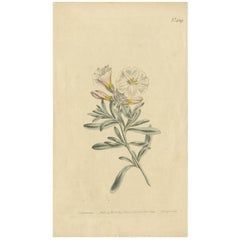
Antique Botany Print of Convolvulus Cneorum by Curtis, 1799

Antique Botany Print of Convolvulus Cneorum by Curtis, 1799

Located in Langweer, NL

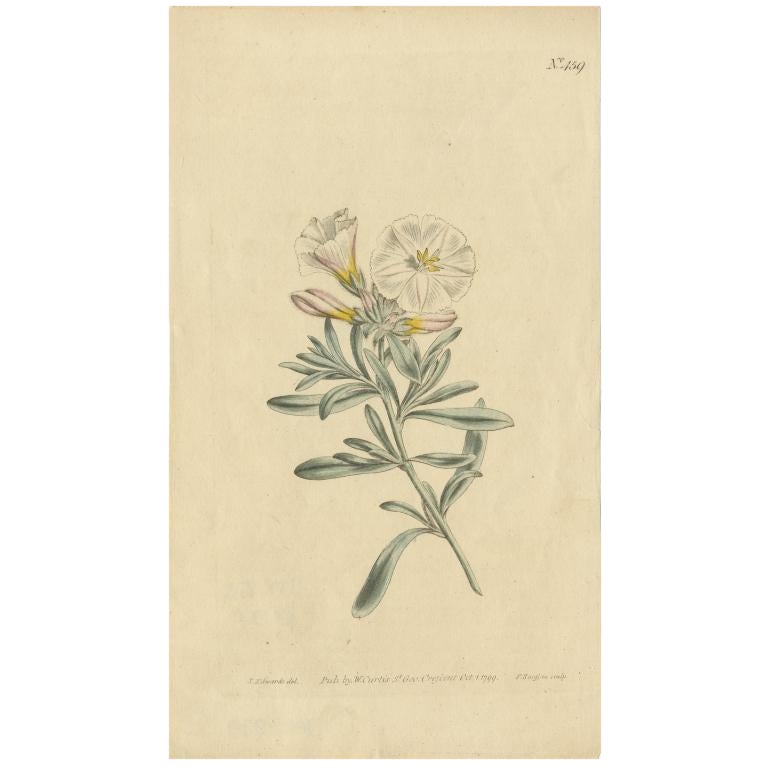
Antique botany print of Convolvulus Cneorum, also known as the silverbush or shrubby bindweed. This print originates from 'The Botanical Magazine; or Flower-Garden Displayed'. Arti...

Category

Antique 18th Century Prints

Materials

Paper

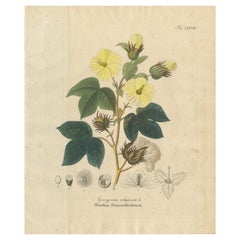
Antique Cotton Botanical Print, Gossypium Religiosum, c.1831

Antique Cotton Botanical Print, Gossypium Religiosum, c.1831

Located in Langweer, NL

Antique Cotton Botanical Print, Gossypium Religiosum, c.1831 Description: This decorative botanical engraving illustrates Gossypium religiosum, another important cotton species, sho...

Category

Antique 1830s German Prints

Materials

Paper

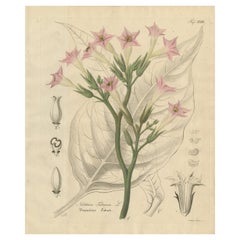
Antique Tobacco Botanical Print, Nicotiana Tabacum, c.1831

Antique Tobacco Botanical Print, Nicotiana Tabacum, c.1831

Located in Langweer, NL

Antique Tobacco Botanical Print, Nicotiana Tabacum, c.1831 Description: This elegant botanical engraving depicts Nicotiana Tabacum, the tobacco plant, with flowering stems, leaves, ...

Category

Antique 1830s German Prints

Materials

Paper

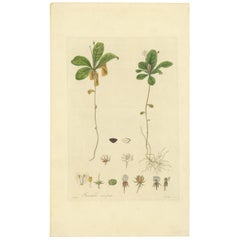
Antique Botany Print of Trientalis Europea by Curtis, 'circa 1817'

Antique Botany Print of Trientalis Europea by Curtis, 'circa 1817'

Located in Langweer, NL

Antique botany print titled 'Trientalis Europaea'. Hand colored engraving of trientalis europaea, also known as chickweed-wintergreen or arctic starflower. This print originates from...

Category

Antique Early 19th Century Prints

Materials

Paper

You May Also Like

Early 19th Century Botanical Engraving by John Curtis

Early 19th Century Botanical Engraving by John Curtis

Located in Seaford, GB

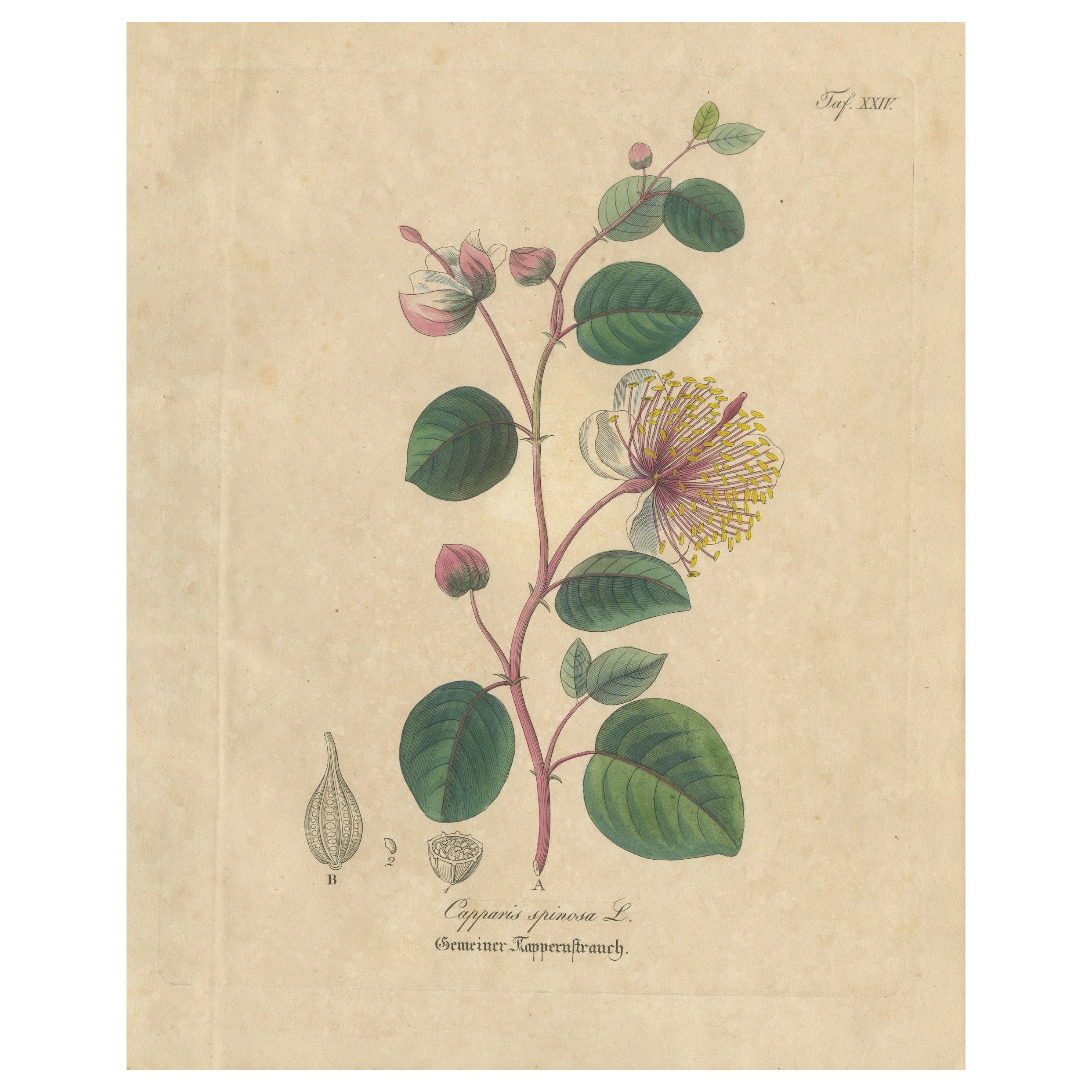
Early 19th Century Botanical Engraving by John Curtis – Hand Coloured Natural History Plate An original early 19th-century hand-coloured botanical engraving from the celebrated natural history publications of John Curtis (1791–1862), one of Britain’s most respected botanical and entomological illustrators. This beautifully detailed plate illustrates a flowering plant in scientific profile, showing bloom structure, leaves, buds, and root system with precision typical of early Victorian natural history illustration. Curtis’s work bridges science and art — created for study, yet prized today for its elegance and balance. These engravings formed part of the golden age of British botanical publishing, when artists collaborated with engravers and colourists to produce plates that were both accurate and visually refined. Each impression was printed from an engraved plate and then carefully coloured by hand, meaning no two examples are ever exactly identical. The composition has the clarity collectors seek: • Central botanical specimen • Naturalistic colour palette • Fine line engraving • Period scientific titling This makes it ideal as a single framed piece or as part of a gallery wall of antique botanical studies. About John Curtis John Curtis was a leading figure in British natural history illustration. He is best known for British Entomology and botanical works that combined taxonomic accuracy with graceful composition. His engravings are held in major museum collections and remain highly collectible in the decorative arts market. Period Early 19th century, circa 1820–1840. Technique Copperplate engraving with original hand colouring on laid paper. Condition Good antique condition consistent with age. Light toning and minor handling marks may be present, as expected with early 19th-century works on paper. Please see the images. Why Collect Curtis Botanical Prints...

Category

Antique Early 19th Century British George III Prints
Materials

Paper

Original Antique Botanical Print- Gloxina Rubra. 1841

Original Antique Botanical Print- Gloxina Rubra. 1841

Located in St Annes, Lancashire

Great image of Gloxina Rubra Lithograph with original hand colour Published 1841 Unframed. Free shipping

Category

Antique 1840s English Victorian Prints

Materials

Paper

Apocynum androsamifolium - French botanical flower engraving by Bessa, c1830

Apocynum androsamifolium - French botanical flower engraving by Bessa, c1830

By After Pancrace Bessa

Located in Melbourne, Victoria

'Apocynum androsamifolium' (Fly-trap dogbane or spreading dogbane) Original copper-line engraving with original hand-colouring. From 'Herbier general de l'amateur' by Jean Louis A...

Category

Early 19th Century Naturalistic Still-life Prints

Materials

Engraving

Campanula Allionii – Original Antique Botanical Print, France, 19th Century

Campanula Allionii – Original Antique Botanical Print, France, 19th Century

Located in Fukuoka, JP

Hand-colored lithograph from the 1800s A finely detailed and richly colored 19th-century botanical print depicting Campanula Allionii, a charming alpine bellflower native to the sou...

Category

Antique 19th Century British Prints

Materials

Paper

Convolvulus Scamonea - Lithograph by Vincenzo Tenore - 1870s

Convolvulus Scamonea - Lithograph by Vincenzo Tenore - 1870s

By Vincenzo Tenore

Located in Roma, IT

Lithograph hand watercolored. Belongs to the Series "Atlante di Botanica popolare ossia Illustrazione di Piante Notevoli di ogni famiglia" (Atlas of popular botany or illustration o...

Category

1870s Modern Figurative Prints

Materials

Lithograph