Want more images or videos?
Request additional images or videos from the seller
1 of 6

Antique Botanical Print of a Tamarind Tree

$461.75
$577.1920% Off
£343.05
£428.8120% Off
€392VAT Included
€49020% Off
CA$647.10
CA$808.8820% Off
A$655.21
A$819.0120% Off
CHF 372.75
CHF 465.9320% Off
MX$7,962.84
MX$9,953.5420% Off
NOK 4,406.05
NOK 5,507.5620% Off
SEK 4,382.90
SEK 5,478.6220% Off
DKK 2,988.90
DKK 3,736.1320% Off

About the Item

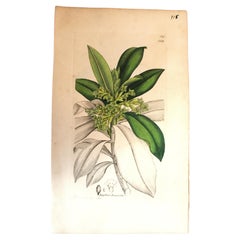
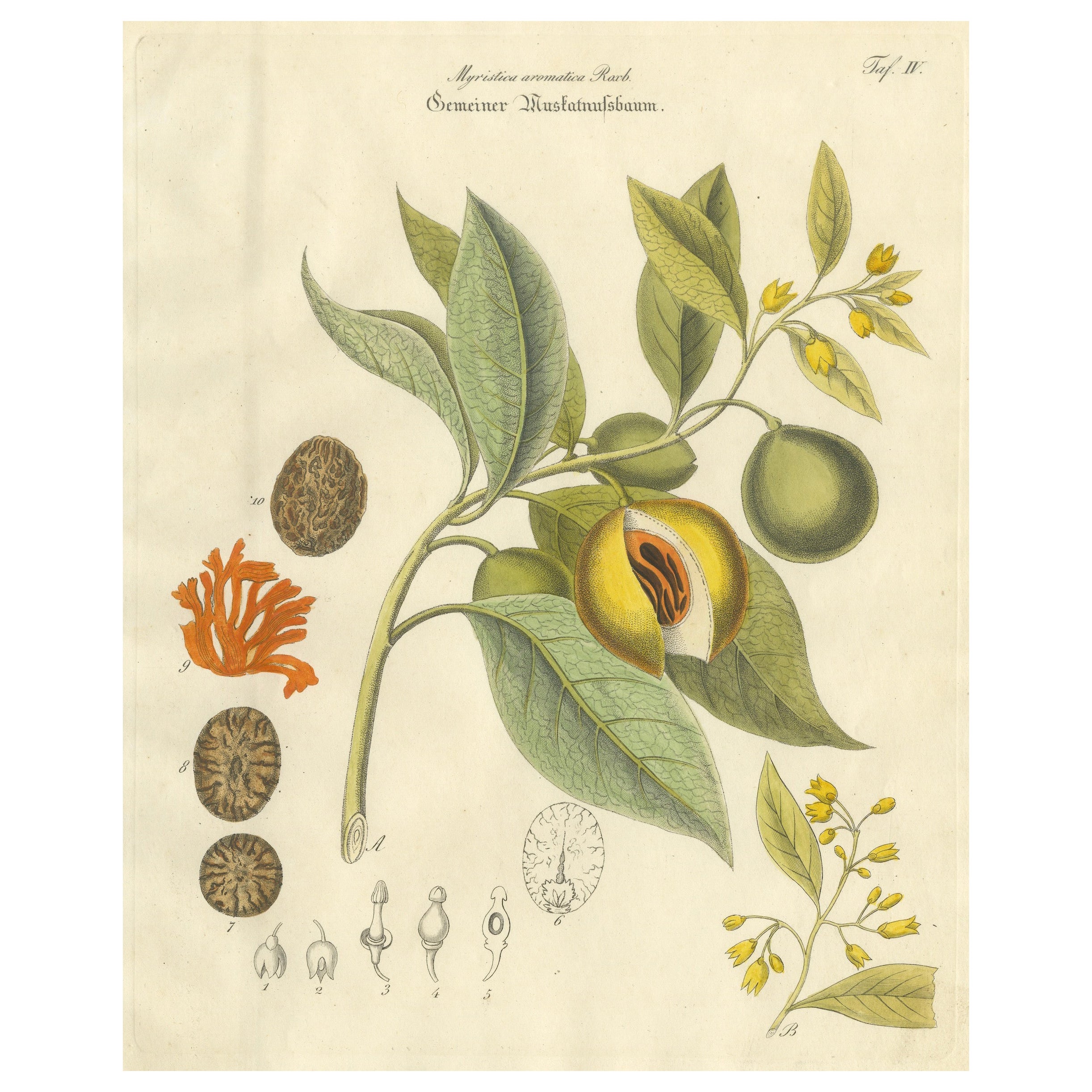
Antique print titled 'Tamarindus indica orientalis'. Botanical print of tamarind, a leguminous tree bearing edible fruit that is indigenous to tropical Africa and naturalized in Asia. Published by or after Elisabeth Blackwell, circa 1750.
  • Dimensions:
    Height: 13.98 in (35.5 cm)Width: 9.06 in (23 cm)Depth: 0.02 in (0.5 mm)
  • Materials and Techniques:
  • Period:
  • Date of Manufacture:
    c.1750
  • Condition:
    General age-related toning. Shows light staining. Minor wear and soiling. Small tear in left margin. Blank verso. Please study image carefully.
  • Seller Location:
    Langweer, NL
  • Reference Number:
    Seller: BG-13444-11stDibs: LU3054335166852

More From This Seller

View All
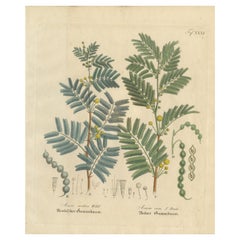
Antique Gum Arabic Botanical Print, Acacia Arabica & Acacia Vera, c.1831

Antique Gum Arabic Botanical Print, Acacia Arabica & Acacia Vera, c.1831

Located in Langweer, NL

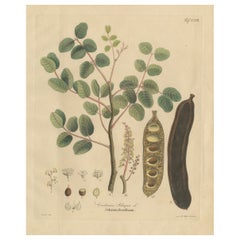
Antique Gum Arabic Botanical Print, Acacia Arabica & Acacia Vera, c.1831 This original botanical engraving depicts two important gum-producing trees: Acacia arabica and Acacia vera,...

Category

Antique 1830s German Prints

Materials

Paper

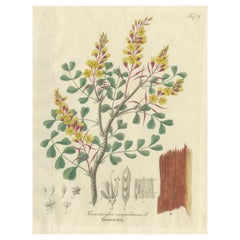
Antique Logwood Botanical Print, Haematoxylon Campechianum, c.1831

Antique Logwood Botanical Print, Haematoxylon Campechianum, c.1831

Located in Langweer, NL

Antique Logwood Botanical Print, Haematoxylon Campechianum, c.1831 This distinctive botanical engraving depicts Haematoxylon Campechianum, commonly known as logwood, a tree valued f...

Category

Antique 1830s German Prints

Materials

Paper

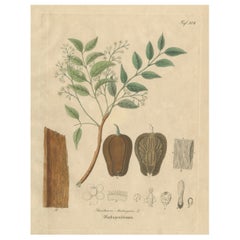
Antique Mahogany Botanical Print, Swietenia Mahagoni, c.1831

Antique Mahogany Botanical Print, Swietenia Mahagoni, c.1831

Located in Langweer, NL

Antique Mahogany Botanical Print, Swietenia Mahagoni, c.1831 Description: This finely detailed botanical engraving illustrates Swietenia Mahagoni, the mahogany tree, including its d...

Category

Antique 1830s German Prints

Materials

Paper

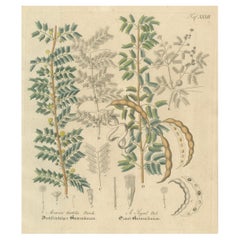
Antique Gum Arabic Botanical Print, Acacia Tortilis & Acacia Seyal, c.1831

Antique Gum Arabic Botanical Print, Acacia Tortilis & Acacia Seyal, c.1831

Located in Langweer, NL

Antique Gum Arabic Botanical Print, Acacia Tortilis & Acacia Seyal, c.1831 This detailed botanical engraving illustrates Acacia tortilis and Acacia seyal, two African acacia species...

Category

Antique 1830s German Prints

Materials

Paper

Antique Carob Botanical Print, Ceratonia Siliqua, Hand Colored, c.1831

Antique Carob Botanical Print, Ceratonia Siliqua, Hand Colored, c.1831

Located in Langweer, NL

Antique Carob Botanical Print, Ceratonia Siliqua, Hand Colored, c.1831 Description: This botanical engraving illustrates Ceratonia Siliqua, the carob tree, including its distinctive...

Category

Antique 1830s German Prints

Materials

Paper

Antique Botanical Print of Astragalus Verus, Copper Engraving, c.1831

Antique Botanical Print of Astragalus Verus, Copper Engraving, c.1831

Located in Langweer, NL

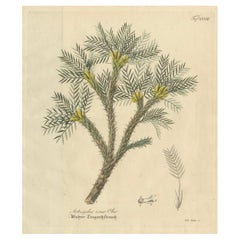
Antique Tragacanth Botanical Print, Astragalus Verus, c.1831 This striking botanical engraving depicts Astragalus verus, the plant from which gum tragacanth is derived. The plant is...

Category

Antique 1830s German Prints

Materials

Paper

You May Also Like

Tamarin (Tamarind), French botanical herbal medicinal flower engraving, 1818

Tamarin (Tamarind), French botanical herbal medicinal flower engraving, 1818

By After Pierre Turpin

Located in Melbourne, Victoria

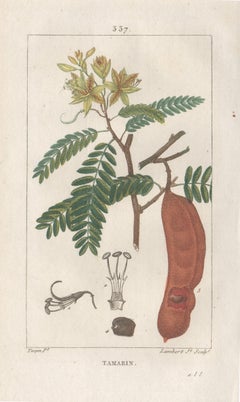
French botanical flower engraving, 1818. Colour-printed stipple engraving by J Lambert after Pierre Turpin (1775-1840) From Francois Pierre Chaumeton's 'Flore Medicale' which portrayed a variety of flowers, trees and herbs which could be used for treating illnesses. The engravings were produced during the great period of French colour printing using the stipple-engraving process pioneered by the great botanical artist Pierre-Jospeh Redoute. The artist is the celebrated Pierre Jean Francois Turpin...

Category

Early 19th Century Victorian More Prints

Materials

Engraving

Vintage Boho Botanical Engraving

Vintage Boho Botanical Engraving

Located in West Palm Beach, FL

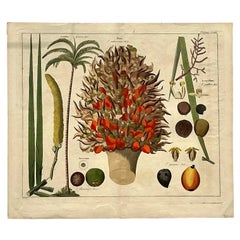
This stunning vintage botanical engraving is a masterful exploration of tropical flora, rendered with the precise detail characteristic of classic natural history illustrations. The ...

Category

Early 20th Century Italian Other Prints

Materials

Paper

Early 19th Century Botanical Engraving by John Curtis

Early 19th Century Botanical Engraving by John Curtis

Located in Seaford, GB

Early 19th Century Botanical Engraving by John Curtis – Hand Coloured Natural History Plate An original early 19th-century hand-coloured botanical engraving from the celebrated natural history publications of John Curtis (1791–1862), one of Britain’s most respected botanical and entomological illustrators. This beautifully detailed plate illustrates a flowering plant in scientific profile, showing bloom structure, leaves, buds, and root system with precision typical of early Victorian natural history illustration. Curtis’s work bridges science and art — created for study, yet prized today for its elegance and balance. These engravings formed part of the golden age of British botanical publishing, when artists collaborated with engravers and colourists to produce plates that were both accurate and visually refined. Each impression was printed from an engraved plate and then carefully coloured by hand, meaning no two examples are ever exactly identical. The composition has the clarity collectors seek: • Central botanical specimen • Naturalistic colour palette • Fine line engraving • Period scientific titling This makes it ideal as a single framed piece or as part of a gallery wall of antique botanical studies. About John Curtis John Curtis was a leading figure in British natural history illustration. He is best known for British Entomology and botanical works that combined taxonomic accuracy with graceful composition. His engravings are held in major museum collections and remain highly collectible in the decorative arts market. Period Early 19th century, circa 1820–1840. Technique Copperplate engraving with original hand colouring on laid paper. Condition Good antique condition consistent with age. Light toning and minor handling marks may be present, as expected with early 19th-century works on paper. Please see the images. Why Collect Curtis Botanical Prints...

Category

Antique Early 19th Century British George III Prints

Materials

Paper

Original Antique Botanical Print- Gloxina Rubra. 1841

Original Antique Botanical Print- Gloxina Rubra. 1841

Located in St Annes, Lancashire

Great image of Gloxina Rubra Lithograph with original hand colour Published 1841 Unframed. Free shipping

Category

Antique 1840s English Victorian Prints

Materials

Paper

Early 19th Century Botanical Engraving by John Curtis

Early 19th Century Botanical Engraving by John Curtis

Located in Seaford, GB

Early 19th Century Botanical Engraving by John Curtis – Hand Coloured Natural History Plate An original early 19th-century hand-coloured botanical engraving from the celebrated natural history publications of John Curtis (1791–1862), one of Britain’s most respected botanical and entomological illustrators. This beautifully detailed plate illustrates a flowering plant in scientific profile, showing bloom structure, leaves, buds, and root system with precision typical of early Victorian natural history illustration. Curtis’s work bridges science and art — created for study, yet prized today for its elegance and balance. These engravings formed part of the golden age of British botanical publishing, when artists collaborated with engravers and colourists to produce plates that were both accurate and visually refined. Each impression was printed from an engraved plate and then carefully coloured by hand, meaning no two examples are ever exactly identical. The composition has the clarity collectors seek: • Central botanical specimen • Naturalistic colour palette • Fine line engraving • Period scientific titling This makes it ideal as a single framed piece or as part of a gallery wall of antique botanical studies. About John Curtis John Curtis was a leading figure in British natural history illustration. He is best known for British Entomology and botanical works that combined taxonomic accuracy with graceful composition. His engravings are held in major museum collections and remain highly collectable in the decorative arts market. Period Early 19th century, circa 1820–1840. Technique Copperplate engraving with original hand colouring on laid paper. Condition Good antique condition consistent with age. Light toning and minor handling marks may be present, as expected with early 19th-century works on paper. Please see the images. Why Collect Curtis Botanical Prints...

Category

Antique Early 19th Century British George III Prints
Materials

Paper