Want more images or videos?
Request additional images or videos from the seller
1 of 5

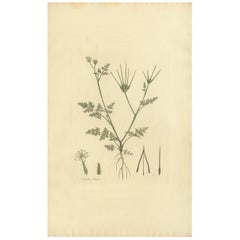
Antique Botany Print of Diplotaxis Tenuifolia by Curtis 'circa 1817'

$282.92
$353.6420% Off
£209.70
£262.1220% Off
€240VAT Included
€30020% Off
CA$394.68
CA$493.3520% Off
A$400.33
A$500.4220% Off
CHF 228.60
CHF 285.7520% Off
MX$4,848.17
MX$6,060.2120% Off
NOK 2,691.20
NOK 3,36420% Off
SEK 2,682.27
SEK 3,352.8320% Off
DKK 1,829.90
DKK 2,287.3720% Off

About the Item

Antique botany print titled 'Sinapsis Tenuifolia'. Hand colored engraving of diplotaxis tenuifolia also known as wild rocket and perennial wall-rocket. This print originates from 'Flora Londinensis' by William Curtis.
  • Dimensions:
    Height: 19.69 in (50 cm)Width: 12.6 in (32 cm)Depth: 0.02 in (0.5 mm)
  • Materials and Techniques:
  • Period:
  • Date of Manufacture:
    circa 1817
  • Condition:
    General age-related toning. Minor wear and creasing, blank verso. Please study images carefully.
  • Seller Location:
    Langweer, NL
  • Reference Number:
    Seller: BG-12512-291stDibs: LU3054319937682

More From This Seller

View All
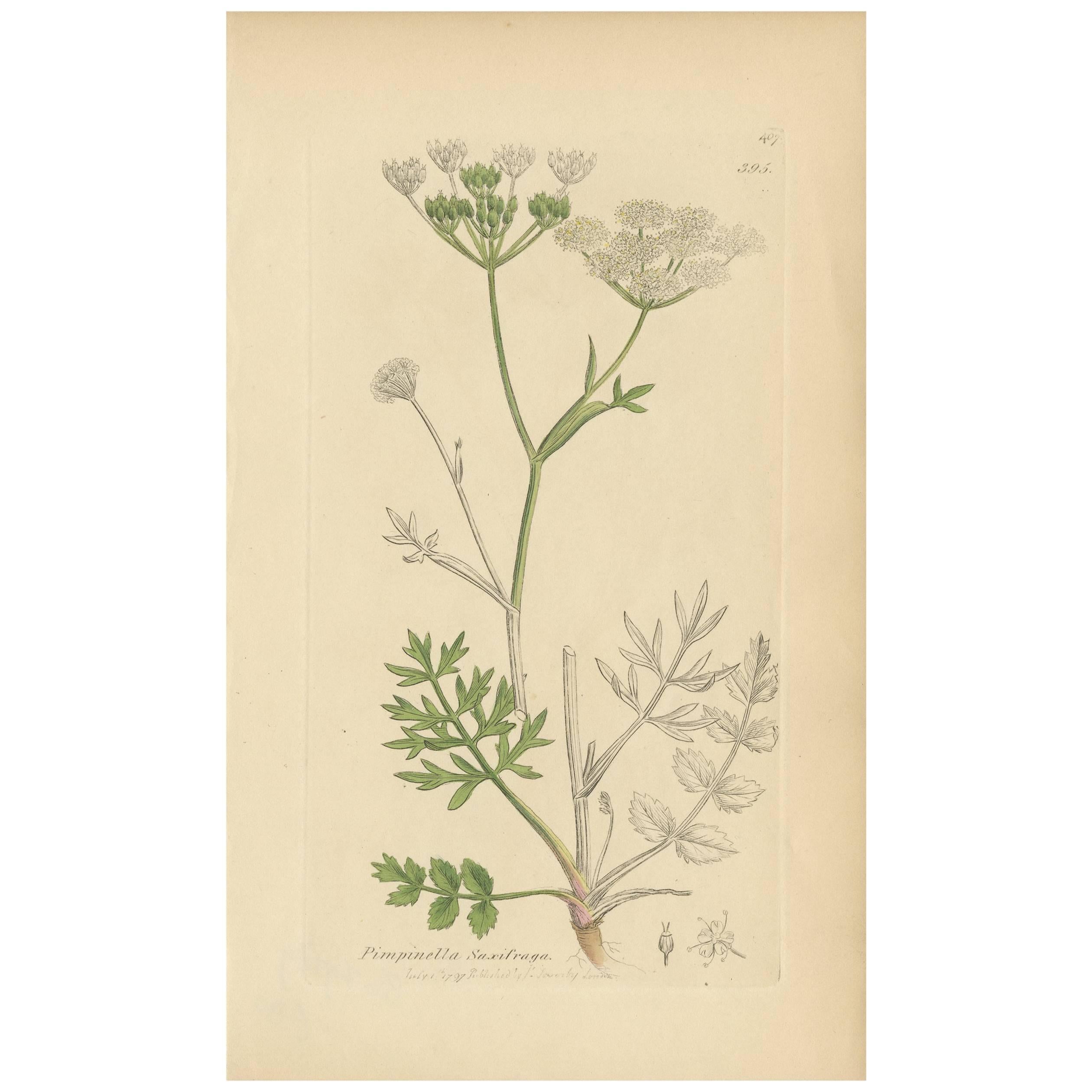
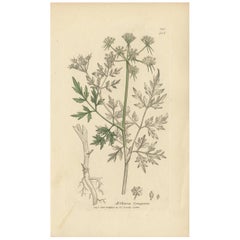
Antique Botany Print 'Aethusa Cynapium' by J. Sowerby, 1803

Antique Botany Print 'Aethusa Cynapium' by J. Sowerby, 1803

Located in Langweer, NL

Antique print titled 'Aethusa Cynapium'. This print originates from Sowerby's English Botany, or colored figures of British plants, 1803.  

Category

Antique Early 19th Century Prints

Materials

Paper

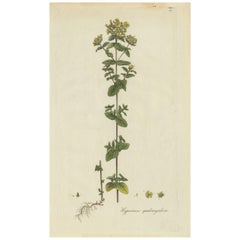
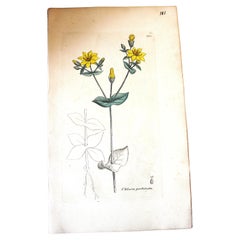
Antique Botany Print of a Species of St. Johnswort by Curtis, circa 1777

Antique Botany Print of a Species of St. Johnswort by Curtis, circa 1777

Located in Langweer, NL

Antique botany print titled 'Hypericum Quadrangulum'. Hand colored engraving of a species of St. Johnswort. This print originates from 'Flora Londinensis' by William Curtis.

Category

Antique Late 18th Century Prints

Materials

Paper

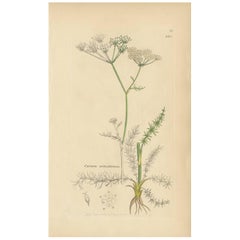
Antique Botany Print 'Carum Verticillatum' by J. Sowerby, 1797

Antique Botany Print 'Carum Verticillatum' by J. Sowerby, 1797

Located in Langweer, NL

Antique print titled 'Carum verticillatum'. This print originates from Sowerby's English Botany, or Coloured Figures of British Plants, 1797.

Category

Antique Late 18th Century Prints

Materials

Paper

Antique Botany Print of Scandix Pecten-Veneris by Curtis 'circa 1817'

Antique Botany Print of Scandix Pecten-Veneris by Curtis 'circa 1817'

Located in Langweer, NL

Antique botany print titled 'Scandix Pecten'. Hand colored engraving of scandix pecten-veneris also known as shepherd's-needle, Venus' comb or Stork's needle. This print originates f...

Category

Antique Early 19th Century Prints

Materials

Paper

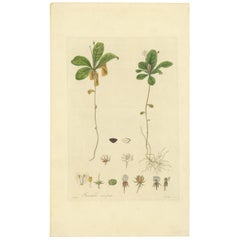
Antique Botany Print of Trientalis Europea by Curtis, 'circa 1817'

Antique Botany Print of Trientalis Europea by Curtis, 'circa 1817'

Located in Langweer, NL

Antique botany print titled 'Trientalis Europaea'. Hand colored engraving of trientalis europaea, also known as chickweed-wintergreen or arctic starflower. This print originates from...

Category

Antique Early 19th Century Prints

Materials

Paper

You May Also Like

Early 19th Century Botanical Engraving by John Curtis

Early 19th Century Botanical Engraving by John Curtis

Located in Seaford, GB

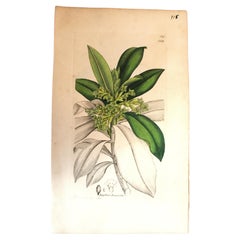
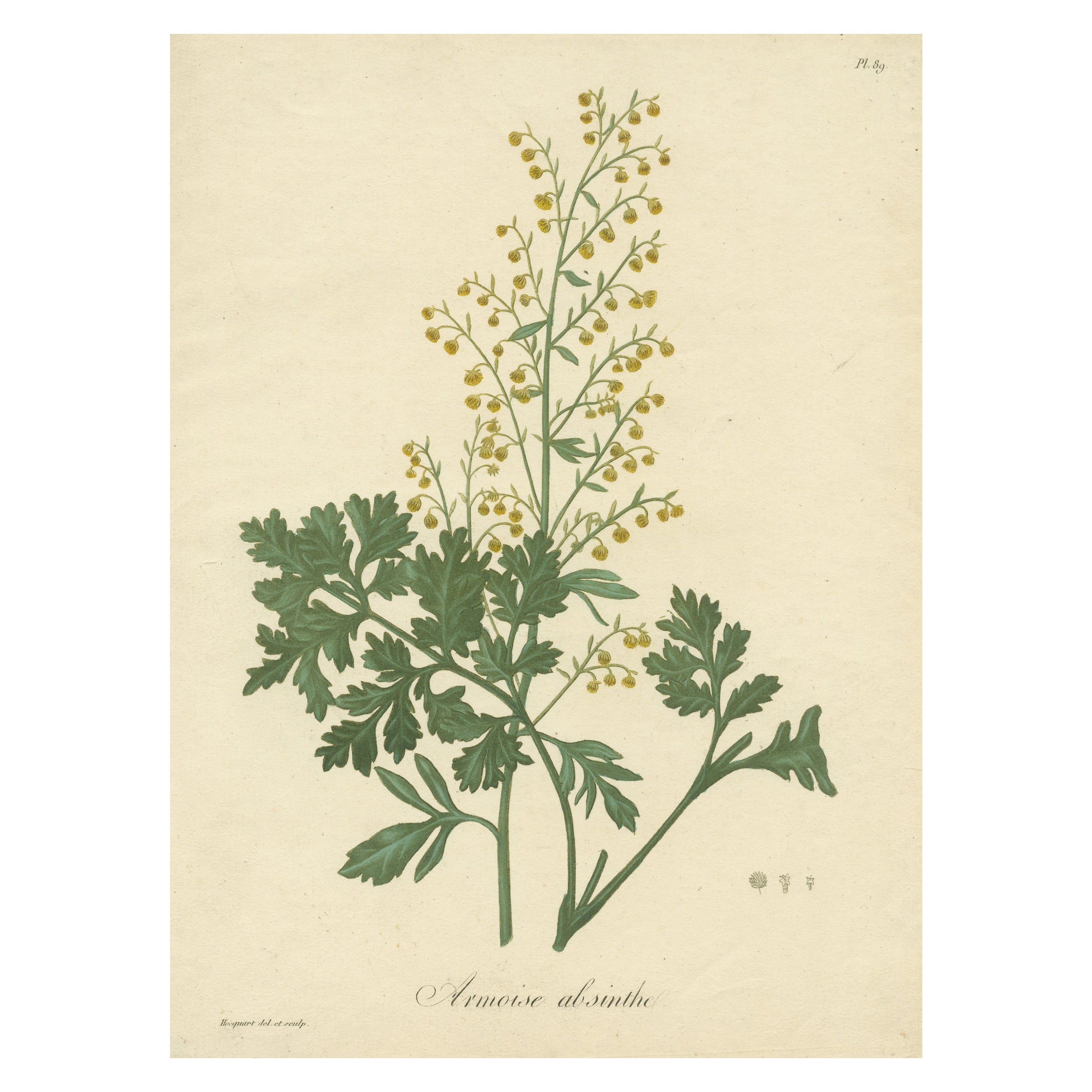
Early 19th Century Botanical Engraving by John Curtis – Hand Coloured Natural History Plate An original early 19th-century hand-coloured botanical engraving from the celebrated natural history publications of John Curtis (1791–1862), one of Britain’s most respected botanical and entomological illustrators. This beautifully detailed plate illustrates a flowering plant in scientific profile, showing bloom structure, leaves, buds, and root system with precision typical of early Victorian natural history illustration. Curtis’s work bridges science and art — created for study, yet prized today for its elegance and balance. These engravings formed part of the golden age of British botanical publishing, when artists collaborated with engravers and colourists to produce plates that were both accurate and visually refined. Each impression was printed from an engraved plate and then carefully coloured by hand, meaning no two examples are ever exactly identical. The composition has the clarity collectors seek: • Central botanical specimen • Naturalistic colour palette • Fine line engraving • Period scientific titling This makes it ideal as a single framed piece or as part of a gallery wall of antique botanical studies. About John Curtis John Curtis was a leading figure in British natural history illustration. He is best known for British Entomology and botanical works that combined taxonomic accuracy with graceful composition. His engravings are held in major museum collections and remain highly collectible in the decorative arts market. Period Early 19th century, circa 1820–1840. Technique Copperplate engraving with original hand colouring on laid paper. Condition Good antique condition consistent with age. Light toning and minor handling marks may be present, as expected with early 19th-century works on paper. Please see the images. Why Collect Curtis Botanical Prints...

Category

Antique Early 19th Century British George III Prints
Materials

Paper

Early 19th Century Botanical Engraving by John Curtis

Early 19th Century Botanical Engraving by John Curtis

Located in Seaford, GB

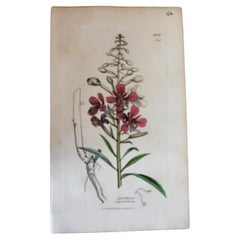
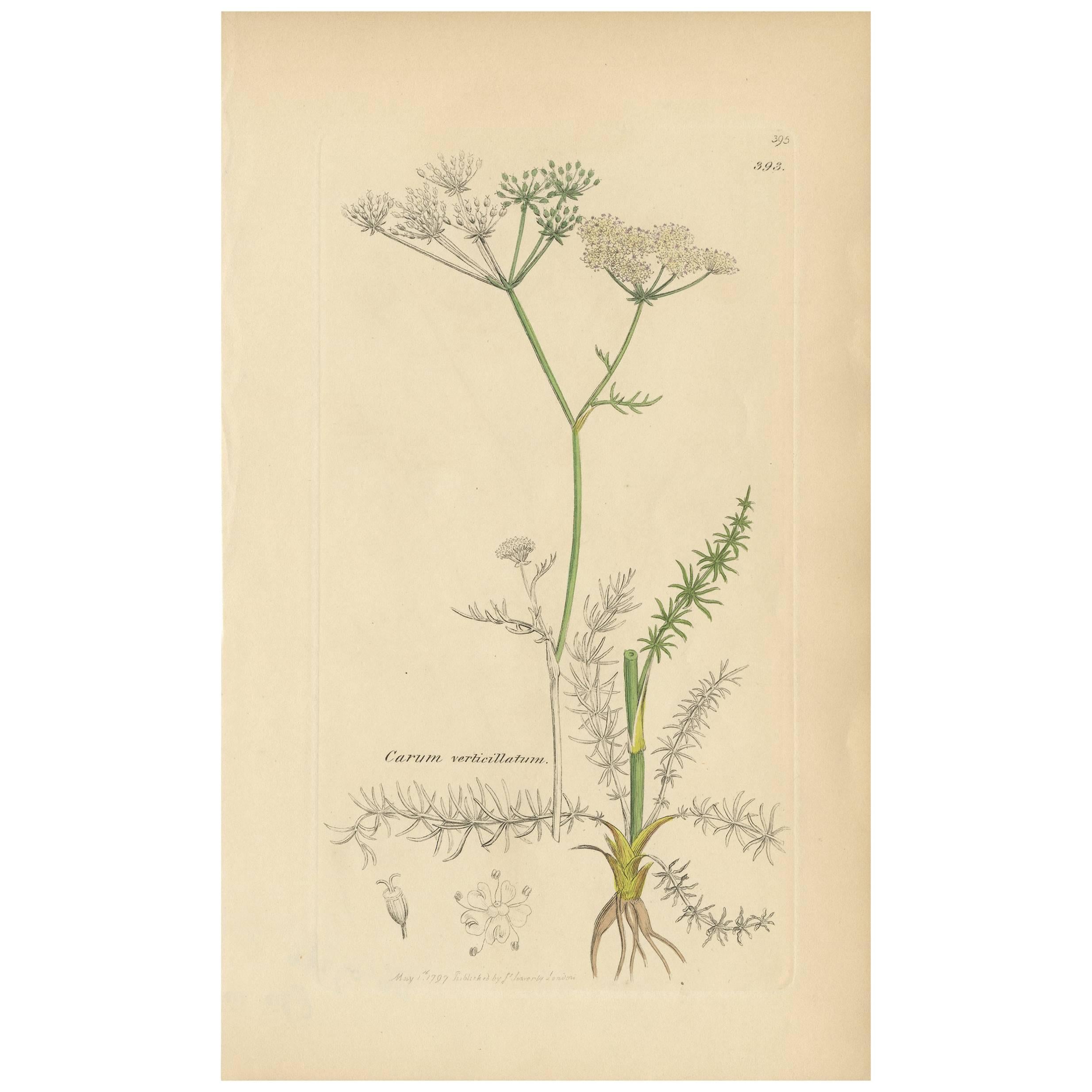
Early 19th Century Botanical Engraving by John Curtis – Hand Coloured Natural History Plate An original early 19th-century hand-coloured botanical engraving from the celebrated natural history publications of John Curtis (1791–1862), one of Britain’s most respected botanical and entomological illustrators. This beautifully detailed plate illustrates a flowering plant in scientific profile, showing bloom structure, leaves, buds, and root system with precision typical of early Victorian natural history illustration. Curtis’s work bridges science and art — created for study, yet prized today for its elegance and balance. These engravings formed part of the golden age of British botanical publishing, when artists collaborated with engravers and colourists to produce plates that were both accurate and visually refined. Each impression was printed from an engraved plate and then carefully coloured by hand, meaning no two examples are ever exactly identical. The composition has the clarity collectors seek: • Central botanical specimen • Naturalistic colour palette • Fine line engraving • Period scientific titling This makes it ideal as a single framed piece or as part of a gallery wall of antique botanical studies. About John Curtis John Curtis was a leading figure in British natural history illustration. He is best known for British Entomology and botanical works that combined taxonomic accuracy with graceful composition. His engravings are held in major museum collections and remain highly collectable in the decorative arts market. Period Early 19th century, circa 1820–1840. Technique Copperplate engraving with original hand colouring on laid paper. Condition Good antique condition consistent with age. Light toning and minor handling marks may be present, as expected with early 19th-century works on paper. Please see the images. Why Collect Curtis Botanical Prints...

Category

Antique Early 19th Century British George III Prints
Materials

Paper

Early 19th Century Botanical Engraving by John Curtis – Hand Coloured

Early 19th Century Botanical Engraving by John Curtis – Hand Coloured

Located in Seaford, GB

Early 19th Century Botanical Engraving by John Curtis – Hand Coloured Natural History Plate An original early 19th-century hand-coloured botanical engraving from the celebrated natural history publications of John Curtis (1791–1862), one of Britain’s most respected botanical and entomological illustrators. This beautifully detailed plate illustrates a flowering plant in scientific profile, showing bloom structure, leaves, buds, and root system with precision typical of early Victorian natural history illustration. Curtis’s work bridges science and art — created for study, yet prized today for its elegance and balance. These engravings formed part of the golden age of British botanical publishing, when artists collaborated with engravers and colourists to produce plates that were both accurate and visually refined. Each impression was printed from an engraved plate and then carefully coloured by hand, meaning no two examples are ever exactly identical. The composition has the clarity collectors seek: • Central botanical specimen • Naturalistic colour palette • Fine line engraving • Period scientific titling This makes it ideal as a single framed piece or as part of a gallery wall of antique botanical studies. About John Curtis John Curtis was a leading figure in British natural history illustration. He is best known for British Entomology and botanical works that combined taxonomic accuracy with graceful composition. His engravings are held in major museum collections and remain highly collectable in the decorative arts market. Period Early 19th century, circa 1820–1840. Technique Copperplate engraving with original hand colouring on laid paper. Condition Good antique condition consistent with age. Light toning and minor handling marks may be present, as expected with early 19th-century works on paper. Please see the images. Why Collect Curtis Botanical Prints...

Category

Antique Early 19th Century George III Prints

Materials

Paper