Want more images or videos?
Request additional images or videos from the seller
1 of 5

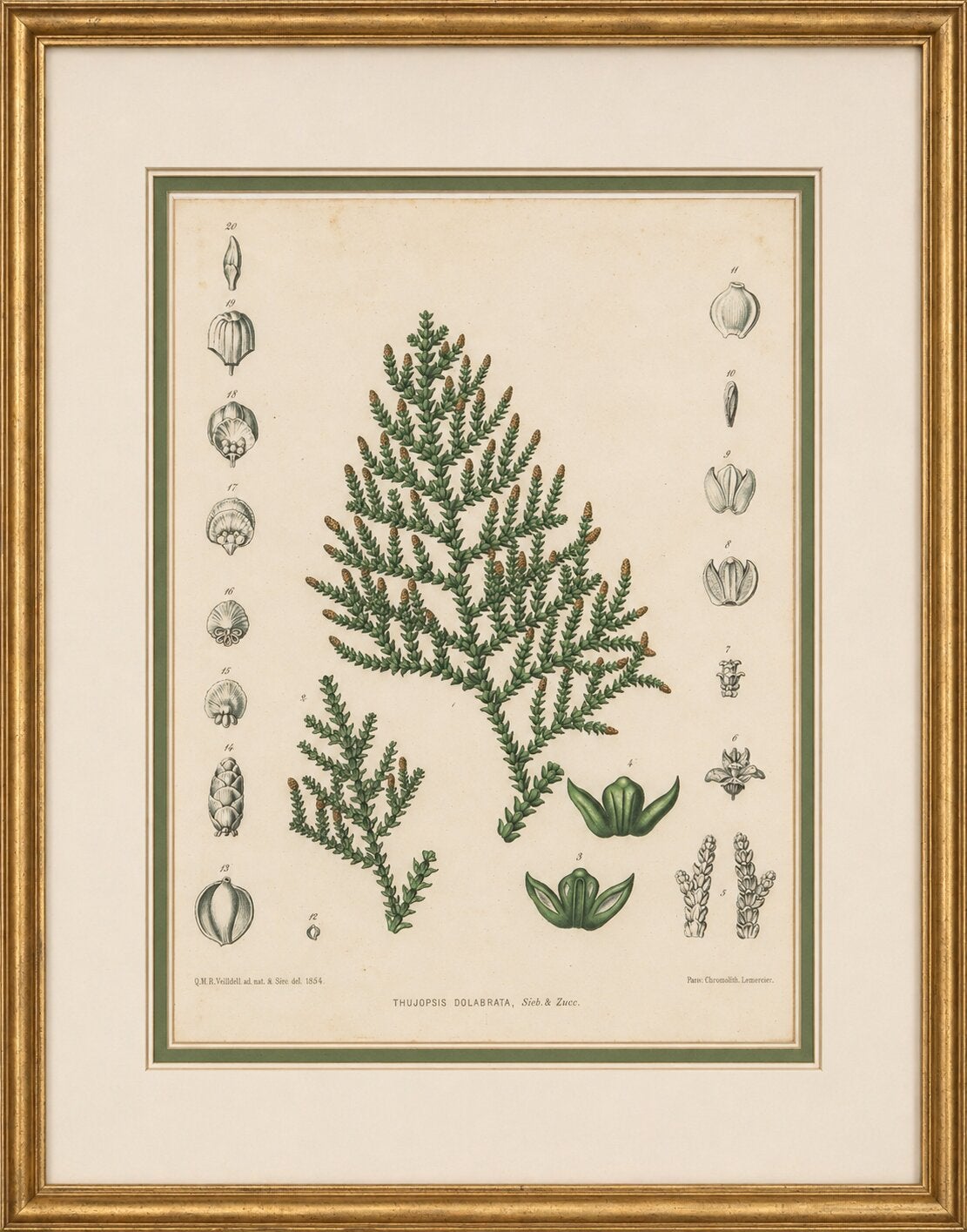
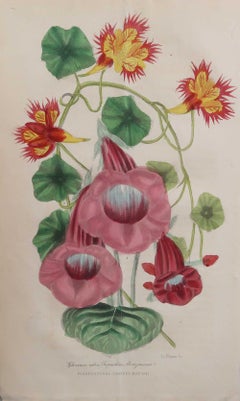
Antique Botany Print of the Illairea Canarinoides by Van Houtte 'c.1845'

$94.52
$117.6620% Off
£69.75
£87.1220% Off
€80VAT Included
€10020% Off
CA$131.06
CA$163.8920% Off
A$133.11
A$166.7320% Off
CHF 76.71
CHF 95.5520% Off
MX$1,607.16
MX$2,007.5620% Off
NOK 891.06
NOK 1,116.8520% Off
SEK 898.50
SEK 1,121.7520% Off
DKK 609.99
DKK 762.5420% Off

About the Item

Antique botany print titled 'Illairea Canarinoides'. Original antique print of the Illairea Canarinoides. This print originates from 'Flore des Serres' by Louis van Houtte. Published circa 1845.
  • Dimensions:
    Height: 13.39 in (34 cm)Width: 9.93 in (25.2 cm)Depth: 0.2 in (5 mm)
  • Materials and Techniques:
  • Period:
  • Date of Manufacture:
    circa 1845
  • Condition:
    Passe-partout/matting included. Please study image carefully.
  • Seller Location:
    Langweer, NL
  • Reference Number:
    Seller: BG-036611stDibs: LU3054324905812

More From This Seller

View All
Antique Botany Print of Ecballium Elaterium by Curtis, 1817

Antique Botany Print of Ecballium Elaterium by Curtis, 1817

Located in Langweer, NL

Antique botany print of Ecballium Elaterium, also known as the squirting cucumber or exploding cucumber. It gets its unusual name from the fact that, when ripe, it squirts a stream o...

Category

Antique 19th Century Prints

Materials

Paper

Antique Botany Print of Trientalis Europea by Curtis, 'circa 1817'

Antique Botany Print of Trientalis Europea by Curtis, 'circa 1817'

Located in Langweer, NL

Antique botany print titled 'Trientalis Europaea'. Hand colored engraving of trientalis europaea, also known as chickweed-wintergreen or arctic starflower. This print originates from...

Category

Antique Early 19th Century Prints

Materials

Paper

Exquisite Botanical Illustrations from Curtis’s Botanical Magazine (1847)

Exquisite Botanical Illustrations from Curtis’s Botanical Magazine (1847)

Located in Langweer, NL

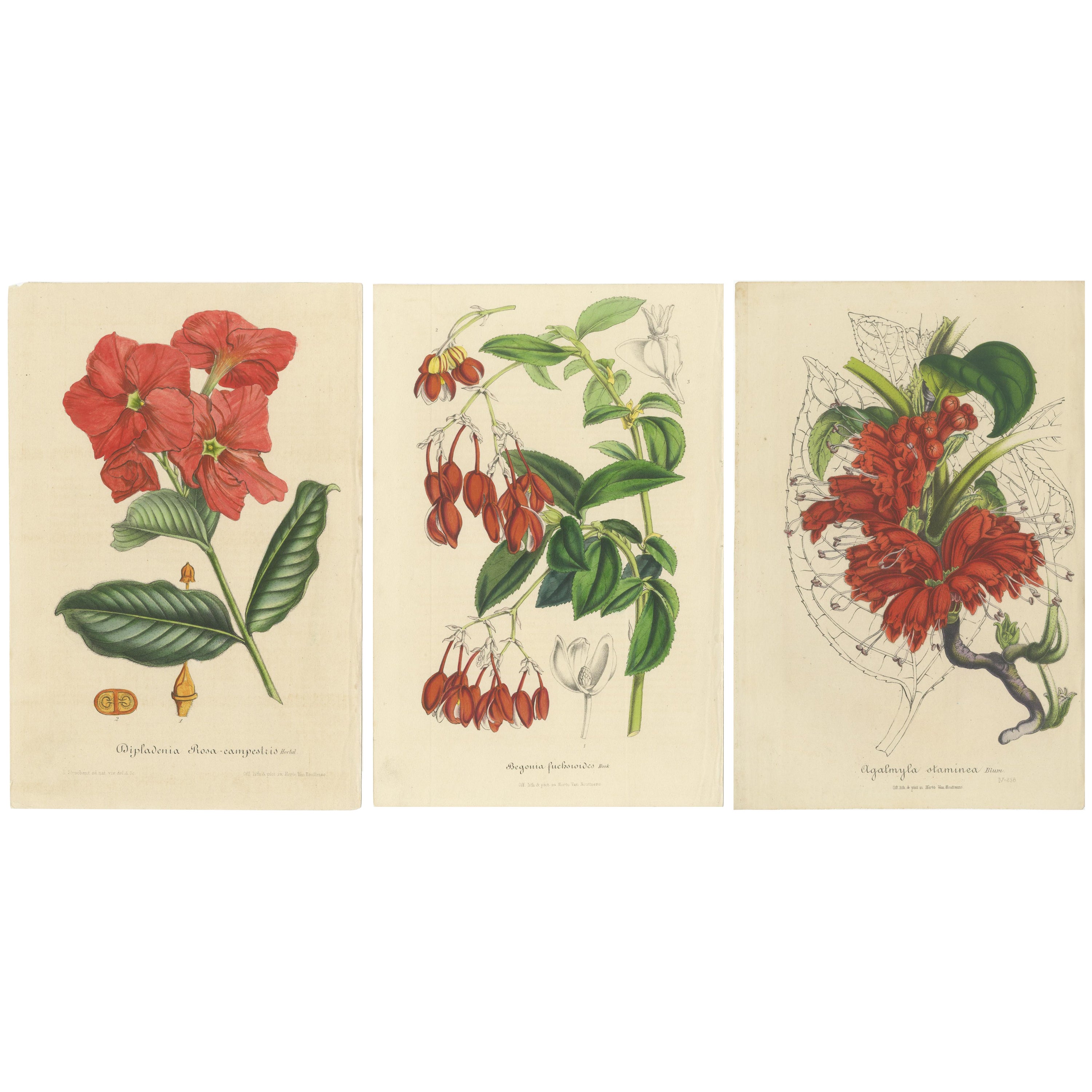
These beautiful hand-colored botanical illustrations, drawn and lithographed by the renowned artist Walter Hood Fitch, were featured in Sir William Jackson Hooker's *"Curtis's Botanical Magazine,"* published in London in 1847. Fitch was one of the most prolific and skilled botanical illustrators of the 19th century, known for his ability to capture the intricate details and vibrant hues of the plants he depicted. Sir William Jackson Hooker, a famous British botanist and the director of the Royal Botanic Gardens, Kew, commissioned these illustrations as part of his work to document newly discovered plants from around the world. The *Curtis’s Botanical Magazine* has been published since 1787 and remains one of the longest-running botanical periodicals. Detailed Descriptions of Each Plant #### 1. **Dipladenia Rosa-campestris** (*Hortul. ex Veitch*) - **English Name**: Rose Dipladenia - **Description**: This illustration showcases *Dipladenia rosa-campestris*, a striking flowering plant known for its showy pink to deep red trumpet-shaped flowers. Native to tropical regions of South America, particularly Brazil, *Dipladenia* belongs to the family Apocynaceae and is prized in horticulture for its vibrant blooms and ability to climb. Fitch's illustration emphasizes the waxy leaves and the vivid color of the petals, bringing the plant to life on the page. #### 2. **Begonia fuchsioides** (*Hook.*) - **English Name**: Fuchsia-flowered Begonia - **Description**: The *Begonia fuchsioides* is depicted with its characteristic red, pendulous flowers, which closely resemble the blooms of fuchsia plants. This species of Begonia is native to tropical regions and is popular for its delicate, bell-shaped flowers and glossy leaves. Fitch’s attention to the arrangement of the leaves and the contrast between the flowers' vibrant red and the soft green leaves provides a lifelike representation of this exotic plant. #### 3. **Agalmyla staminea** (*Blume*) - **English Name**: Staminate Agalmyla - **Description**: This illustration captures the unique red tubular flowers of *Agalmyla staminea*, a plant native to Southeast Asia. The species is part of the Gesneriaceae family and is known for its bright, showy flowers that grow in dense clusters. Fitch’s careful rendering of the plant’s leaves and the intricate veining, along with the vibrant red flowers, highlights his talent for bringing the botanical subject to life with both scientific accuracy and artistic flair. ### About the Makers #### **Walter Hood Fitch** (Artist and Lithographer) Walter Hood Fitch (1817–1892) was one of the most influential botanical artists of the 19th century, working primarily with Sir William Hooker and later his son, Joseph Dalton Hooker, at Kew Gardens. He produced thousands of illustrations for various botanical publications, including *Curtis’s Botanical Magazine*, where he was responsible for the majority of its plates from 1834 to 1877. Fitch’s mastery of lithography allowed him to create richly detailed and accurate depictions of plants, with a particular talent for illustrating both the botanical structure and the vibrant colors of flowers. #### **Sir William Jackson Hooker** (Director and Editor) Sir William Jackson Hooker (1785–1865) was a prominent British botanist and the director of the Royal Botanic Gardens, Kew. Under his leadership, Kew Gardens expanded its collection of plants from around the world, and Hooker was instrumental in promoting the scientific study and illustration of these species. As the editor of *Curtis’s Botanical Magazine*, Hooker collaborated with Fitch to document and share the beauty and diversity of plants with the scientific community and the public. ### The Lithographic Technique Lithography, particularly chromolithography, was a crucial innovation in botanical illustration. Fitch was skilled in the traditional method of lithography, where an image was drawn onto a stone plate with a greasy substance and then inked for printing. Hand-coloring was often applied afterward to bring the prints to life, as seen in these illustrations. This method allowed for highly detailed, accurate representations of plants and their botanical features, making it invaluable for both scientific study and aesthetic appreciation. ### Conclusion These prints from *Curtis’s Botanical Magazine* reflect the height of botanical art in the mid-19th century. The combination of Walter Fitch...

Category

Antique 1840s Prints
Materials

Paper

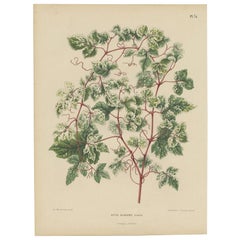
Antique Flower Print of the Ampelopsis Glandulosa var. Heterophylla, 1868

Antique Flower Print of the Ampelopsis Glandulosa var. Heterophylla, 1868

Located in Langweer, NL

Antique print titled 'Vitis Elegans'. Lithograph of the Ampelopsis Glandulosa var. Heterophylla, also known as porcelain vine or cutleaf grape. This print originates from 'Flora : af...

Category

Antique 19th Century Prints

Materials

Paper

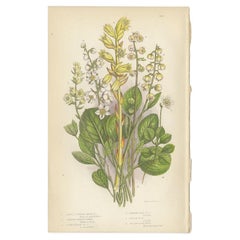
Antique Botany Print of the Large Flowered Moneses, c.1860

Antique Botany Print of the Large Flowered Moneses, c.1860

Located in Langweer, NL

Antique botany print depicting the Large Flowered Moneses, Serrated Winter-Green, Round-Leaved W.G., Intermediate W.G., Lesser W.G. and Yellow Birds-Nest. This print originates from ...

Category

Antique 19th Century Prints

Materials

Paper

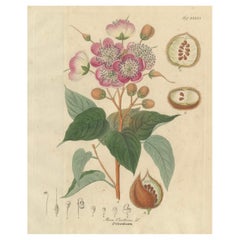
Antique Bixa Orellana Botanical Print, Copper Engraving, c.1831

Antique Bixa Orellana Botanical Print, Copper Engraving, c.1831

Located in Langweer, NL

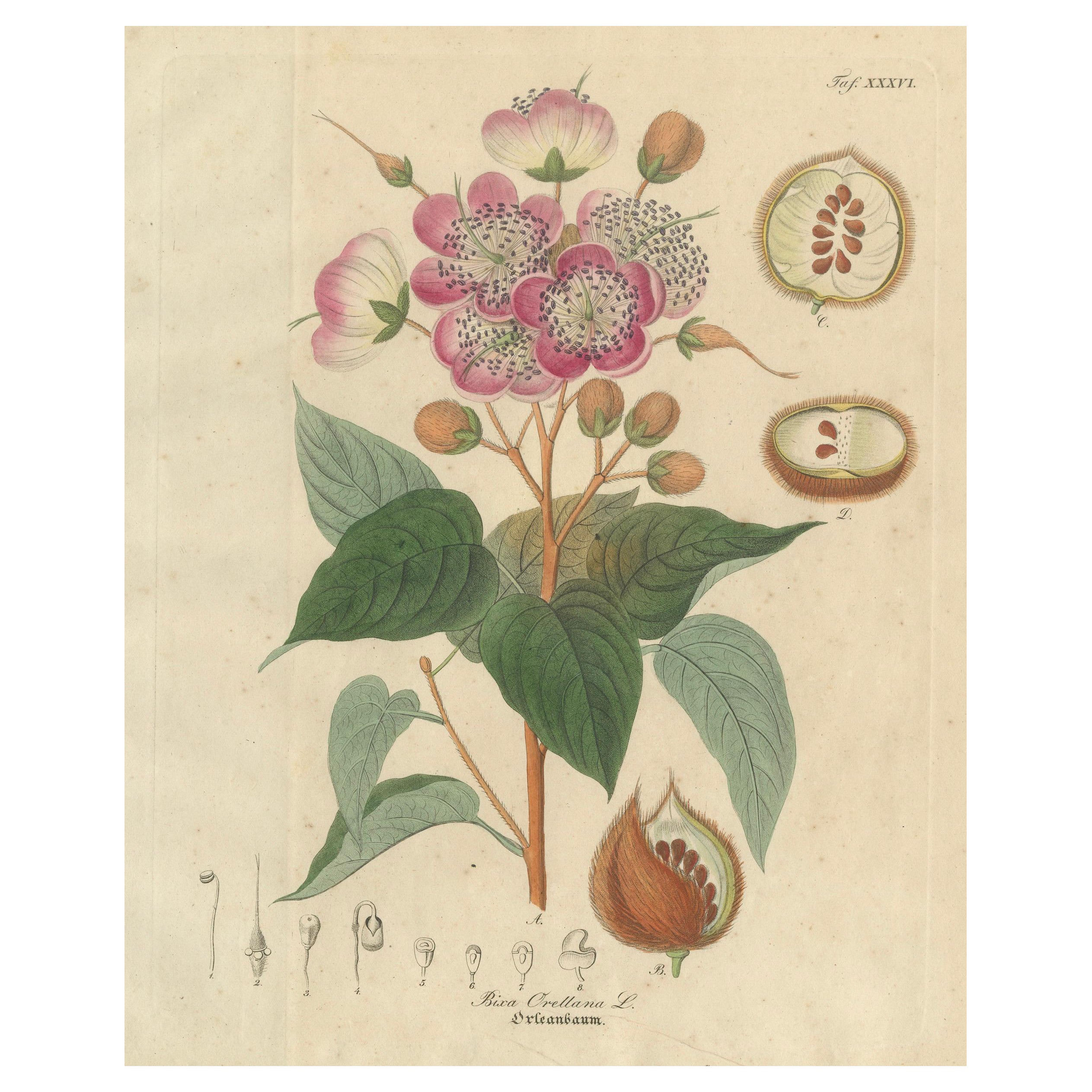
Antique Bixa Botanical Print, Bixa Orellana (Annatto), c.1831 Description: This vibrant botanical engraving illustrates Bixa Orellana, the annatto plant, valued for its seeds which ...

Category

Antique 1830s German Prints

Materials

Paper

You May Also Like

Original Antique Botanical Print- Gloxina Rubra. 1841

Original Antique Botanical Print- Gloxina Rubra. 1841

Located in St Annes, Lancashire

Great image of Gloxina Rubra Lithograph with original hand colour Published 1841 Unframed. Free shipping

Category

Antique 1840s English Victorian Prints

Materials

Paper

John Nugent Fitch Botanical Engraving, 19th Century Hand-Colored Victorian Style

John Nugent Fitch Botanical Engraving, 19th Century Hand-Colored Victorian Style

By John Nugent Fitch

Located in Miami, FL

John Nugent Fitch Botanical Engraving, 19th Century Hand-Colored Victorian Botanical Print, Framed A finely detailed 19th century hand-colored botanical engraving by celebrated Vict...

Category

Antique Mid-19th Century British Victorian Prints

Materials

Wood, Paper

Botanical Print by Sir Joseph Paxton from The Magazine of Botany

Botanical Print by Sir Joseph Paxton from The Magazine of Botany

Located in Downingtown, PA

Botanical Print of Centropogon surinamensis from Paxton’s Magazine of Botany S. Holden, del. & lith. In: Paxton’s Magazine of Botany, vol. 13, p. 149 London: Bradbury and Evan...

Category

Antique 1840s English Country Prints

Materials

Paper

Early 19th Century Botanical Engraving by John Curtis

Early 19th Century Botanical Engraving by John Curtis

Located in Seaford, GB

Early 19th Century Botanical Engraving by John Curtis – Hand Coloured Natural History Plate An original early 19th-century hand-coloured botanical engraving from the celebrated natural history publications of John Curtis (1791–1862), one of Britain’s most respected botanical and entomological illustrators. This beautifully detailed plate illustrates a flowering plant in scientific profile, showing bloom structure, leaves, buds, and root system with precision typical of early Victorian natural history illustration. Curtis’s work bridges science and art — created for study, yet prized today for its elegance and balance. These engravings formed part of the golden age of British botanical publishing, when artists collaborated with engravers and colourists to produce plates that were both accurate and visually refined. Each impression was printed from an engraved plate and then carefully coloured by hand, meaning no two examples are ever exactly identical. The composition has the clarity collectors seek: • Central botanical specimen • Naturalistic colour palette • Fine line engraving • Period scientific titling This makes it ideal as a single framed piece or as part of a gallery wall of antique botanical studies. About John Curtis John Curtis was a leading figure in British natural history illustration. He is best known for British Entomology and botanical works that combined taxonomic accuracy with graceful composition. His engravings are held in major museum collections and remain highly collectable in the decorative arts market. Period Early 19th century, circa 1820–1840. Technique Copperplate engraving with original hand colouring on laid paper. Condition Good antique condition consistent with age. Light toning and minor handling marks may be present, as expected with early 19th-century works on paper. Please see the images. Why Collect Curtis Botanical Prints...

Category

Antique Early 19th Century British George III Prints

Materials

Paper

Staggerbush Botanical Print on Paper, USA Early 20th C.

Staggerbush Botanical Print on Paper, USA Early 20th C.

Located in New York, NY

A color print of a Staggerbush on paper. This print captures the essence of the native to the US blooming plant of the northern landscape with delicate finesse. In this masterpiece, ...

Category

Early 20th Century American Prints

Materials

Paper

Early 19th Century Botanical Engraving by John Curtis

Early 19th Century Botanical Engraving by John Curtis

Located in Seaford, GB

Early 19th Century Botanical Engraving by John Curtis – Hand Coloured Natural History Plate An original early 19th-century hand-coloured botanical engraving from the celebrated natural history publications of John Curtis (1791–1862), one of Britain’s most respected botanical and entomological illustrators. This beautifully detailed plate illustrates a flowering plant in scientific profile, showing bloom structure, leaves, buds, and root system with precision typical of early Victorian natural history illustration. Curtis’s work bridges science and art — created for study, yet prized today for its elegance and balance. These engravings formed part of the golden age of British botanical publishing, when artists collaborated with engravers and colourists to produce plates that were both accurate and visually refined. Each impression was printed from an engraved plate and then carefully coloured by hand, meaning no two examples are ever exactly identical. The composition has the clarity collectors seek: • Central botanical specimen • Naturalistic colour palette • Fine line engraving • Period scientific titling This makes it ideal as a single framed piece or as part of a gallery wall of antique botanical studies. About John Curtis John Curtis was a leading figure in British natural history illustration. He is best known for British Entomology and botanical works that combined taxonomic accuracy with graceful composition. His engravings are held in major museum collections and remain highly collectible in the decorative arts market. Period Early 19th century, circa 1820–1840. Technique Copperplate engraving with original hand colouring on laid paper. Condition Good antique condition consistent with age. Light toning and minor handling marks may be present, as expected with early 19th-century works on paper. Please see the images. Why Collect Curtis Botanical Prints...

Category

Antique Early 19th Century British George III Prints

Materials

Paper