Antique China Merchant House Canton Print – Thomas Allom Steel Engraving 1843
Description
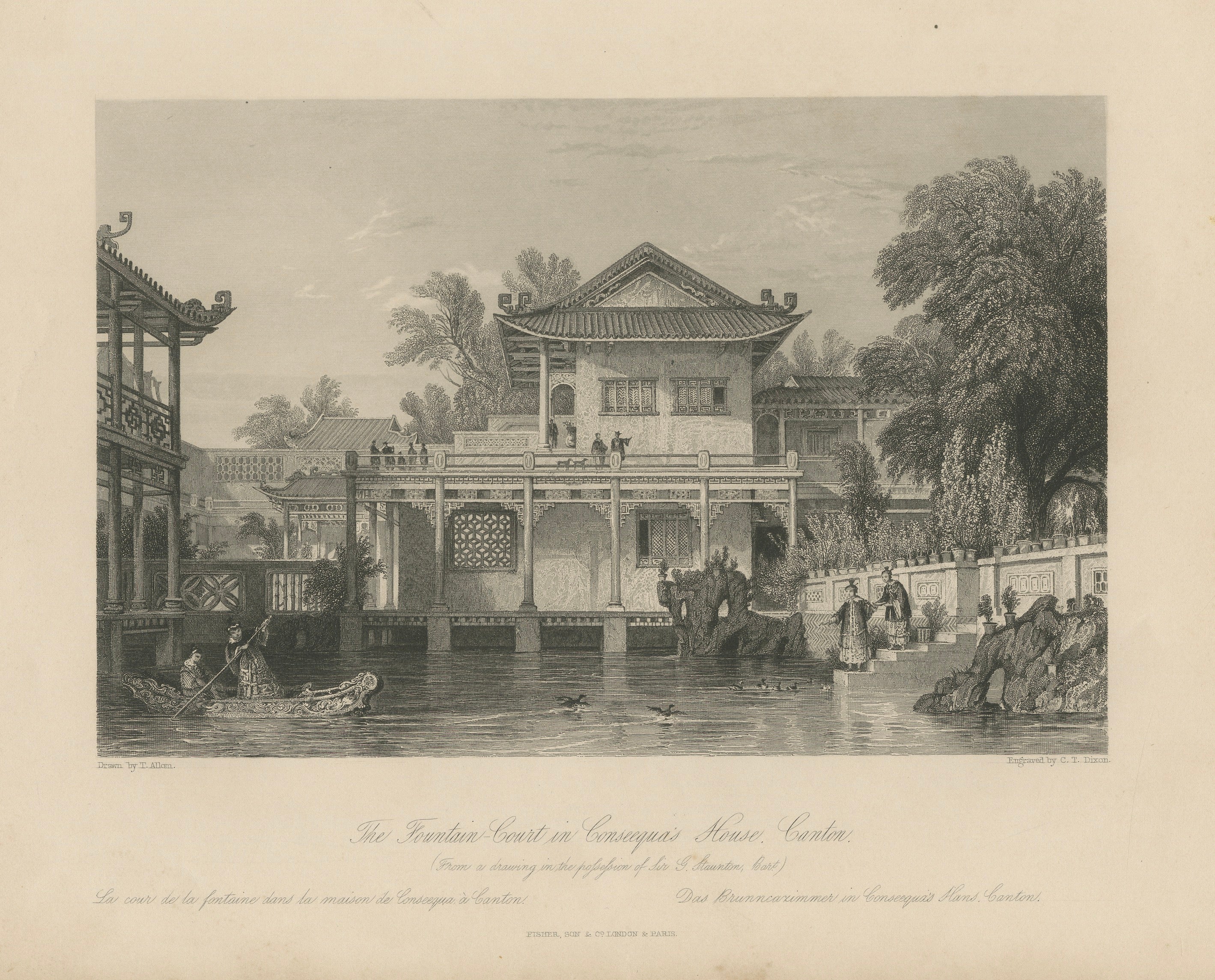
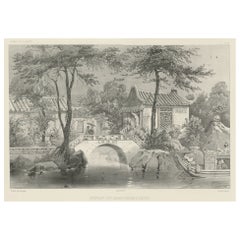
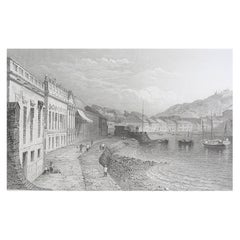
This refined antique print titled House of a Chinese Merchant, near Canton was drawn by the English architectural artist Thomas Allom and engraved by William Henry Capone. The engraving was published by Fisher, Son & Co. in the important illustrated travel work China, in a Series of Views, Displaying the Scenery, Architecture, and Social Habits, of that Ancient Empire, issued between 1843 and 1845.
The scene presents an elegant waterside residence belonging to a prosperous Chinese merchant near Canton (modern Guangzhou), one of the most significant commercial cities of the Qing dynasty. During the early 19th century Canton functioned as the principal trading port between China and Western nations, especially during the period of the Canton System when foreign trade was strictly regulated through a small group of licensed Chinese merchants known as the Cohong.
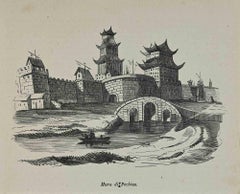
Allom’s composition captures the refined lifestyle associated with the merchant elite. The residence is built directly along the water’s edge and features multiple pavilions, balconies, and terraces overlooking the canal. The architecture reflects classic southern Chinese design: sweeping tiled roofs with curved eaves, decorative lattice panels, and ornate wooden railings. The building stands on stilts above the water, creating an elegant waterfront veranda where residents can enjoy the cool breeze from the canal.
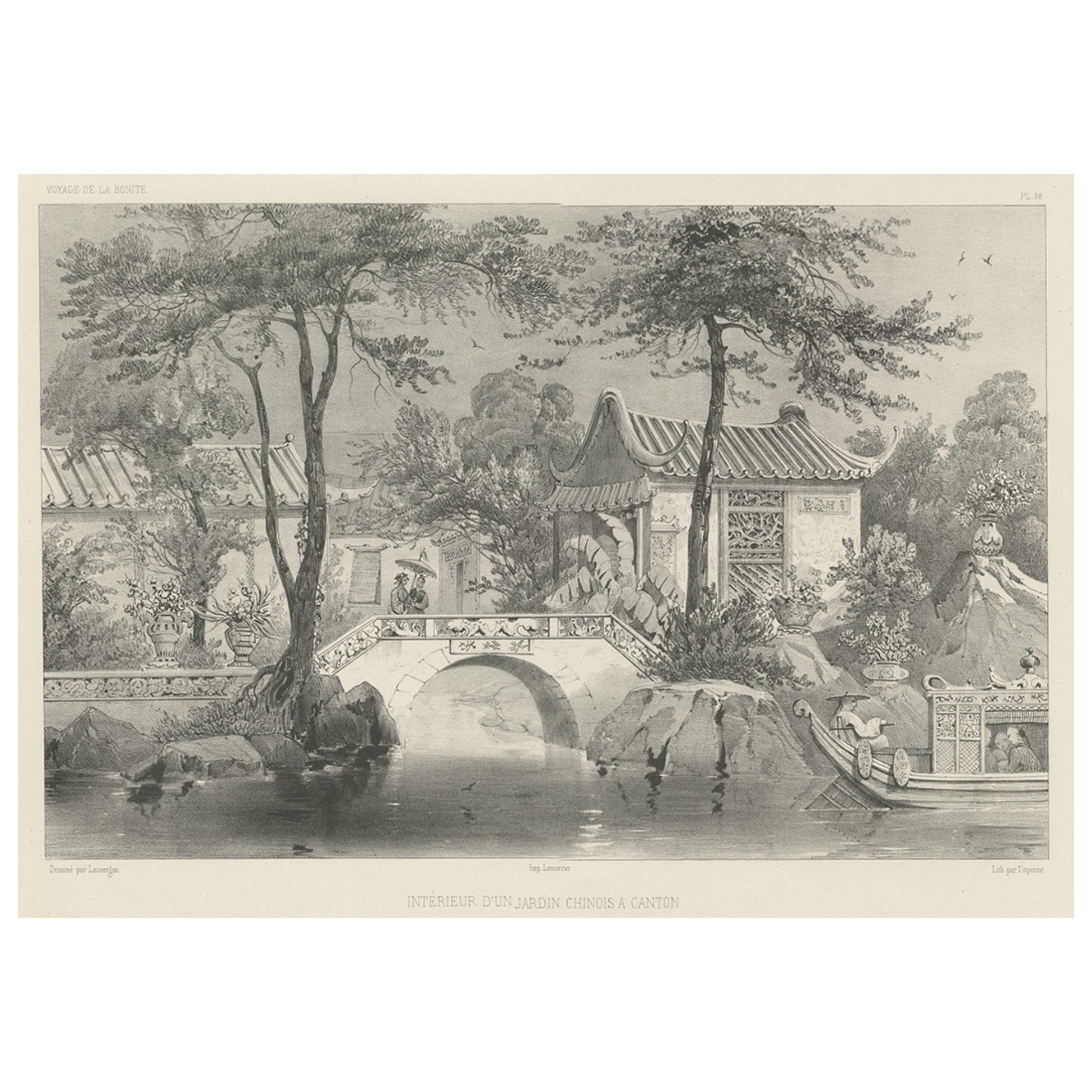
In the foreground a small ornamental boat glides across the calm water, while ducks swim nearby, adding movement and life to the tranquil scene. To the left, a graceful stone bridge spans the canal, connecting garden pavilions shaded by trees. The lush landscaping, ornamental structures, and waterways evoke the atmosphere of a classical Chinese garden—spaces designed to harmonize architecture, water, and nature.
Thomas Allom was one of the leading architectural illustrators of the Victorian period and a founding member of the Royal Institute of British Architects. Although he never personally traveled through much of China, his engravings were based on sketches and descriptions collected by diplomats, missionaries, and merchants active in the region. These images helped shape European perceptions of Chinese cities, architecture, and daily life at a time when photography had not yet become widespread.
Executed as a finely detailed steel engraving, the print demonstrates the remarkable precision typical of mid-19th-century book illustration. Steel plates allowed engravers to produce extremely delicate lines and subtle tonal gradations, perfectly suited to depicting architectural ornament and landscape detail.
Today, Allom’s views of China remain among the most attractive and historically significant visual records of the country as imagined and interpreted by Western artists during the early Victorian era.
Condition:
Good antique condition with age-related toning to the sheet and scattered light foxing, primarily visible in the margins. Minor wear along the lower edge consistent with age and previous binding. The plate mark remains visible.
Framing tips:
This print is ideally suited to a dark walnut, lacquered black, or Asian-inspired frame paired with a warm ivory mat. A generous mat border will highlight the elegant proportions of the engraving while museum glass will preserve the delicate linework and prevent further aging. The architectural subject makes it particularly striking in both classic and contemporary interiors.
Technique: steel engraving
Maker: Thomas Allom, England, 1843