Video Loading
Want more images or videos?
Request additional images or videos from the seller
1 of 10

Antique engraving of Cyrus the Great, King of Persia, Remondini, circa 1750

$1,155.55
£848.81
€970VAT Included
CA$1,594.57
A$1,623.11
CHF 923.91
MX$19,592.14
NOK 10,773.24
SEK 10,903.14
DKK 7,396.32

About the Item

Antique engraving of Cyrus the Great, King of Persia, Remondini, circa 1750 This antique engraving depicts Cyrus the Great (c. 600–530 BC), the legendary founder of the Achaemenid Empire and one of the most significant rulers in ancient history. The portrait, captioned “CIRUS PERS. REX.” (Cyrus, King of Persia), presents him in a Europeanized interpretation, dressed in a grand fur hat with plume and ornate clasp. While this attire does not reflect historical Persian fashion, it follows the early modern convention of portraying ancient rulers in stylized, exoticized costume that conveyed dignity, power, and oriental grandeur to contemporary viewers. The print was published in Bassano by the Remondini family, one of the most important Venetian printing dynasties active from the 17th through the 19th centuries. Remondini prints were widely distributed across Europe, known for their quality and for their ability to bring history, morality, and emblematic themes into popular circulation. This engraving belongs to their series of ruler portraits, often accompanied by moral verses that reflected the fragility of fortune and the inevitability of fate. Beneath the portrait, an Italian stanza offers a philosophical reflection on the wheel of fortune and the instability of human affairs: Il Mondo è un gioco à punto di fortuna Cade il Re sale il vile, e così gira La ruota sua, chi rise ancor sospira Joh. Sauren Italico sorte provai varia e importuna in Bassano per il Remondini Translation: The world is a game of fortune, The King falls, the lowly rises, and so it turns. Its wheel—he who laughed now sighs again. Joh. Sauren Italico: I too have experienced fortune, varied and burdensome. In Bassano, for Remondini. This interplay of imagery and text offers not only a portrait of an ancient sovereign but also a timeless meditation on the rise and fall of power. The engraving exemplifies the moral and didactic dimension of European print culture in the early modern period, when the depiction of kings and emperors often served as lessons in humility and fortune’s unpredictability. Collectors of emblematic art, early modern history, or Remondini prints will find this work particularly appealing. It represents the intersection of classical antiquity, Renaissance humanist traditions, and Baroque publishing practices, offering both artistic and historical interest. Condition report: The print shows some light toning and faint handling marks consistent with age. A small number of spots and signs of use along the edges, but the engraved lines remain crisp and clear. Overall, a well-preserved impression with strong contrasts. Plate mark visible. Framing tips: This engraving would benefit from a simple yet elegant presentation, ideally with a cream or ivory archival mat to highlight the fine linear work. A dark wood or black frame with subtle gilded accents would complement the historical subject and bring out the depth of the engraving, making it suitable for display alongside other portraits or emblematic prints. Technique: Engraving Maker: Remondini, Bassano, Italy, 17th–18th century
  • Dimensions:
    Height: 12.49 in (31.7 cm)Width: 8.47 in (21.5 cm)Depth: 0.01 in (0.2 mm)
  • Materials and Techniques:
    Paper,Engraved
  • Place of Origin:
  • Period:
    1750-1759
  • Date of Manufacture:
    circa 1750
  • Condition:
    The print shows some light toning and faint handling marks consistent with age. A small number of spots and signs of use along the edges, but the engraved lines remain crisp and clear. Overall, a well-preserved impression with strong contrasts. Plate.
  • Seller Location:
    Langweer, NL
  • Reference Number:
    Seller: BG-13875-121stDibs: LU3054346879322

More From This Seller

View All
Antique Engraving of Majorinus, Bishop of Carthage of the Donatist Sect, 1701

Antique Engraving of Majorinus, Bishop of Carthage of the Donatist Sect, 1701

Located in Langweer, NL

Antique print, titled: 'Majorinus Numida' Majorinus was a bishop of Carthage in dispute with Ceacilianus. He favored the so-called Donatist sect. Het died ca. 329 AD. The background to the controversy was the wave of persecutions of Christians by the Roman Emperor Diocletian. At that time some Church leaders - unwilling to endure torture or death and become martyrs - had been ready to take such acts as worshipping the gods of the old pantheon, considered idols by Christians, or surrendering church books and property to the imperial authorities. Such people became known as 'traditors' ("surrenderers"). One of these "traditors", named Caecilian, had returned to the fold of the Church once the persecutions ended, and was consecrated Bishop of Carthage and Primate of North Africa. Those of the faithful who refused to accept the authority of such a spiritual leader raised Majorinus as a rival bishop; however, Majorinus died shortly after being consecrated, and it fell to Donatus to take his place and continue the struggle. This rare print originates from: 'Historie der Kerken en Ketteren van den beginne des Nieuwen Testaments tot aan het Jaar onses Heeren 1688. Onzydig in 't Hoogduytsch beschreeven, door den Hoog-geleerden Heer Godfried Arnold, Voor deezen Hoog-Leeraar in de Historien tot Giesen. In het Neederduyts vertaald. Vercierd met verscheyde Koopere Plaaten door den Heer Romeyn de Hooghe.' (transl.: History of Churches and Heretics from the start of the New Testament until the year of our lord 1688 ...), by Godfried Arnold, Dutch edition published by Sebastiaan Petzold, Amsterdam 1701. This edition contains portraits of heretic figures, etched by the reknown Romeyn de Hooghe. Artists and Engravers: Made by 'Romeyn de Hooghe' after an anonymous artist. Gottfried Arnold (pseud. Christophorus Irenaeus) was an important representative of the so-called radical Pietism, publicist, church historian and chants writer (so he was believed to have written the well-known Church song 'O Durchbrecher aller Bande'). Arnold studied theology in Wittenberg. From the Lutheran Orthodoxy he converted, through writings of Spener, to Pietism, associating later into a circle around the court preacher Sprögel, who was influenced by Jakok Böhm. Many medieval mystics were later re-issued by him. In addition he was clearly influenced by Grotius and the early enlightenment. His quest for the 'true' Christianity rightly brought him in the early Church. So he arranged an edition containing the sermons of the desert father Macarius. Arnold was a skilled patristicus, although he did not escape from the creation of an ideal image of the Christian life in the early Church, in his view a flowering time which ended with the reign of Constantine. His first study of the early Church ('Die erste Liebe der Gemeinen Jesu Christi') provided him a professor position in Gießen, a post which he soon left, disappointed by what he called the 'Ruhmsachtige Vernunftwesen des akademischen Lebens'. He continued as an individual scientist and he published books and poems. His main work is 'Unparteiischen Kirchen- und Ketzerhistorie' (1699-1700), of which this is the Dutch translation. He adapts in this study the reformatory decay theory, where the censure lies no longer with Constantine, but the post-Apostolic time. The decay is temporarily lifted with the Reformation, but occurres again soon, so that even the contemporary institutional Protestantism lies under the fire of his criticism. On the other hand he favours the 'Church of the spirit' that existed in all times (invisible) and is characterised by avoiding the world and asceticism. Not the orthodoxy, but the subjectivity of religious man...

Category

Antique Early 1700s Dutch Prints

Materials

Paper

Original Antique Engraving of A Jewish Priest, 1709

Original Antique Engraving of A Jewish Priest, 1709

Located in Langweer, NL

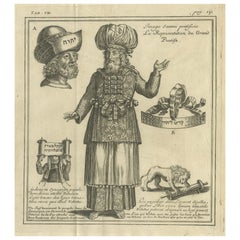
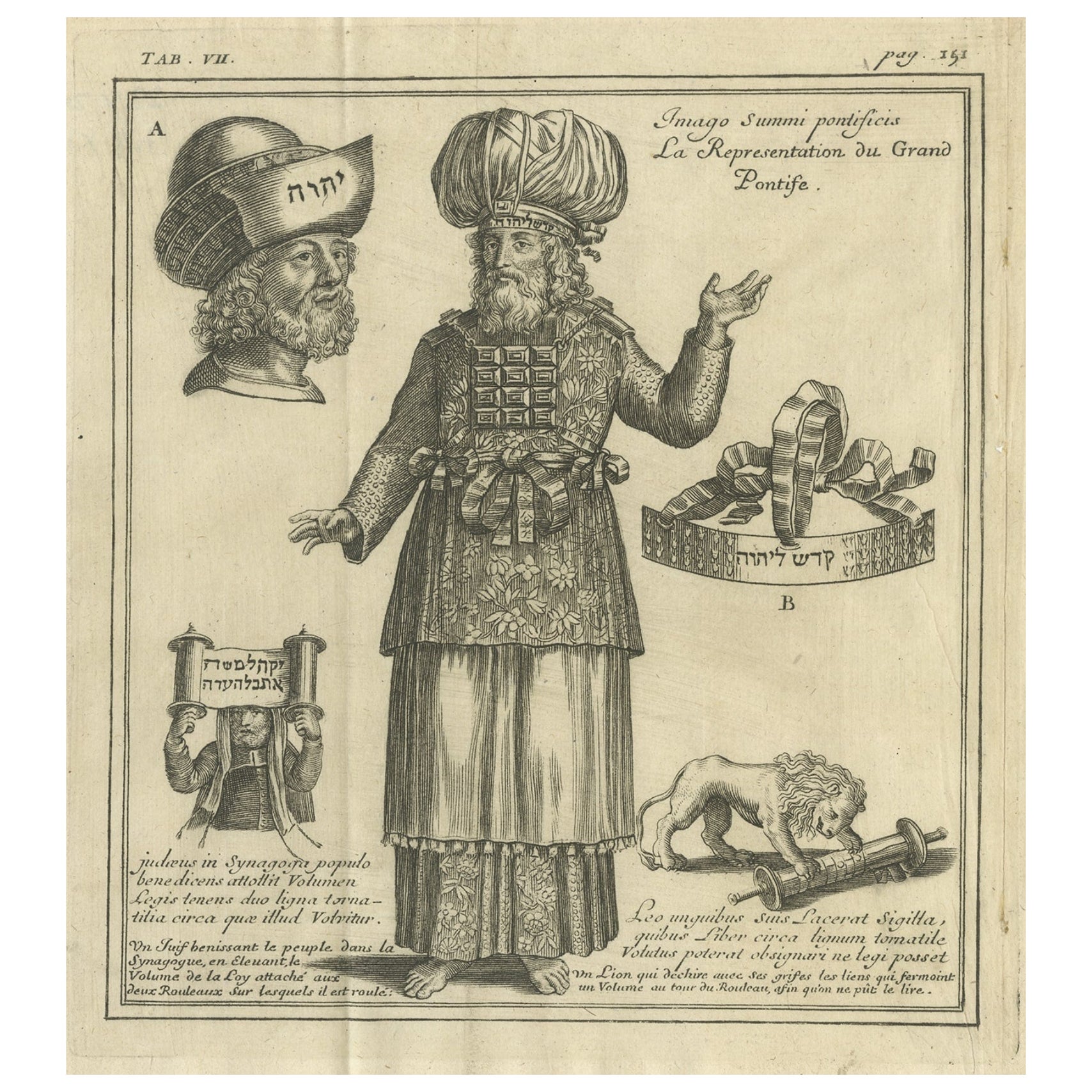
Antique print titled 'La Representation du Grand Pontise'. Old print depicting a Jewish Priest. This print originates from 'Introduction à l'écriture sainte, où l'on traite tout ...

Category

Antique Early 1700s Prints

Materials

Paper

King Nader Shah of Persia – Thamas Koulikan, 18th Century Engraving

King Nader Shah of Persia – Thamas Koulikan, 18th Century Engraving

Located in Langweer, NL

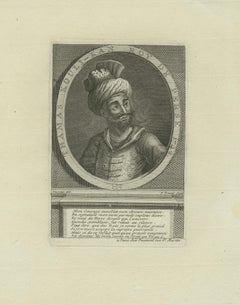
Title: 18th Century Engraving of Thamas Koulikan (Nader Shah), King of Persia Description: This antique engraving depicts Thamas Koulikan, known in European sources as Nader Shah (r...

Category

Antique Mid-17th Century French Prints

Materials

Paper

Prophet Muhammad (Mahomet) – 18th Century Paris Engraving by Daumont, c.1770

Prophet Muhammad (Mahomet) – 18th Century Paris Engraving by Daumont, c.1770

Located in Langweer, NL

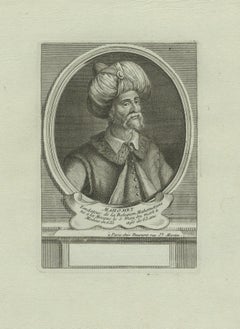
18th Century Engraving of Mahomet (Prophet Muhammad), Published by Daumont Paris Description: This antique French engraving depicts Mahomet (Muhammad), described here as the founder...

Category

Antique Mid-17th Century French Prints

Materials

Paper

Antique Print of Reba, The King of The Arab People, 1677

Antique Print of Reba, The King of The Arab People, 1677

Located in Langweer, NL

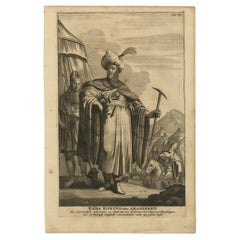
Description: Antique print, titled: 'Reba, Koning der Arabieren (…)' - This plate shows Reba, the King of Arab people. Reba was one of five Midianite kings killed during the ...

Category

Antique 1670s Prints

Materials

Paper

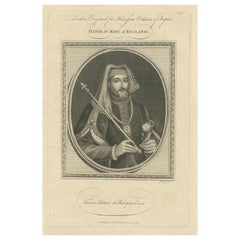
1787 Engraved Portrait of King Henry IV - Lancastrian Sovereign

1787 Engraved Portrait of King Henry IV - Lancastrian Sovereign

Located in Langweer, NL

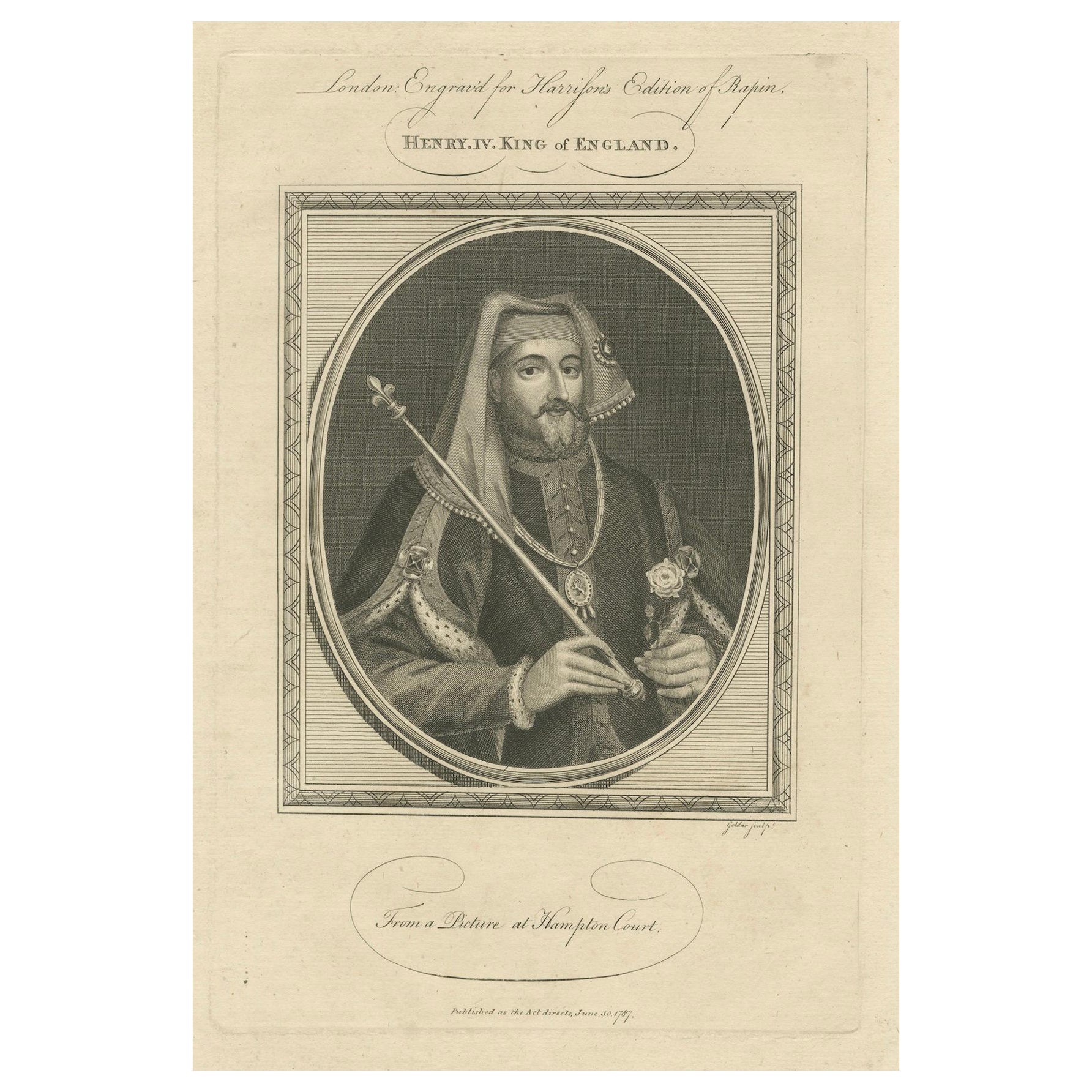
An engraved portrait of Henry IV, King of England. Henry IV was the first English monarch from the Lancastrian branch of the Plantagenets and came to power after deposing his cousin Richard II in 1399. His reign was marked by the start of the 15-year civil strife known as the Wars of the Roses, numerous rebellions, and efforts to consolidate his power and legitimize his somewhat tenuous claim to the throne. The text mentions that the portrait is based on a picture at Hampton Court, which is a royal palace in the London Borough of Richmond upon Thames. Published as the act directs on June 18th, 1787, this engraving is part of the collection for "Harrington's Edition of Rapin's History of England." Henry IV's reign is notable for the rebellion led by the famous knight Henry Percy...

Category

Antique 1780s Prints

Materials

Paper

You May Also Like

Portrait - Original Etching by Johann Caspar Lavater - 1810

Portrait - Original Etching by Johann Caspar Lavater - 1810

Located in Roma, IT

Portrait is an original artwork realized by Thomas Trotter (1748 - 1827). Original Etching from "Essays on Physiognomy, Designed to promote the Knowledge and the Love of Mankind", ...

Category

1810s Old Masters Portrait Prints

Materials

Etching

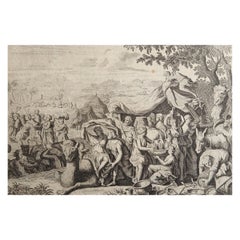
Original Antique Print After Jan Luyken, Amsterdam, Genesis XXXI, 1724

Original Antique Print After Jan Luyken, Amsterdam, Genesis XXXI, 1724

Located in St Annes, Lancashire

Wonderful copper-plate engraving after Jan Luyken Published by Marten Schagen, Amsterdam. 1724 Text on verso The measurement given is the paper size.

Category

Antique 1720s Dutch Renaissance Prints

Materials

Paper

Steel Engraving of the Portrait of Peter Paul Rubens

Steel Engraving of the Portrait of Peter Paul Rubens

Located in Saint-Ouen, FR

Steel engraving of the portrait of Peter Paul Rubens, 19th century. Measures: H 27cm, L 20cm. Contact us before ordering to confirm product availability.

Category

Antique 19th Century French Napoleon III Prints

Materials

Paper