Want more images or videos?
Request additional images or videos from the seller
1 of 10

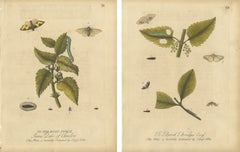
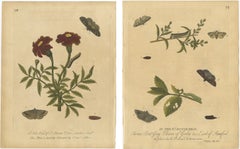
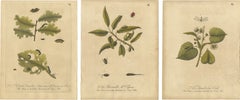
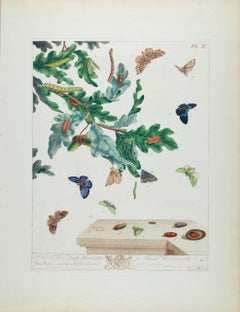
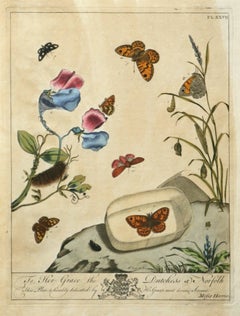
Antique Entomology Print, English Insects on Oak, Willow & Elm, Albin 1720

$664.85per set
£487.82per set
€559per setVAT Included
CA$921.06per set
A$929.74per set
CHF 534.23per set
MX$11,269.56per set
NOK 6,183.45per set
SEK 6,316.05per set
DKK 4,262.25per set

About the Item

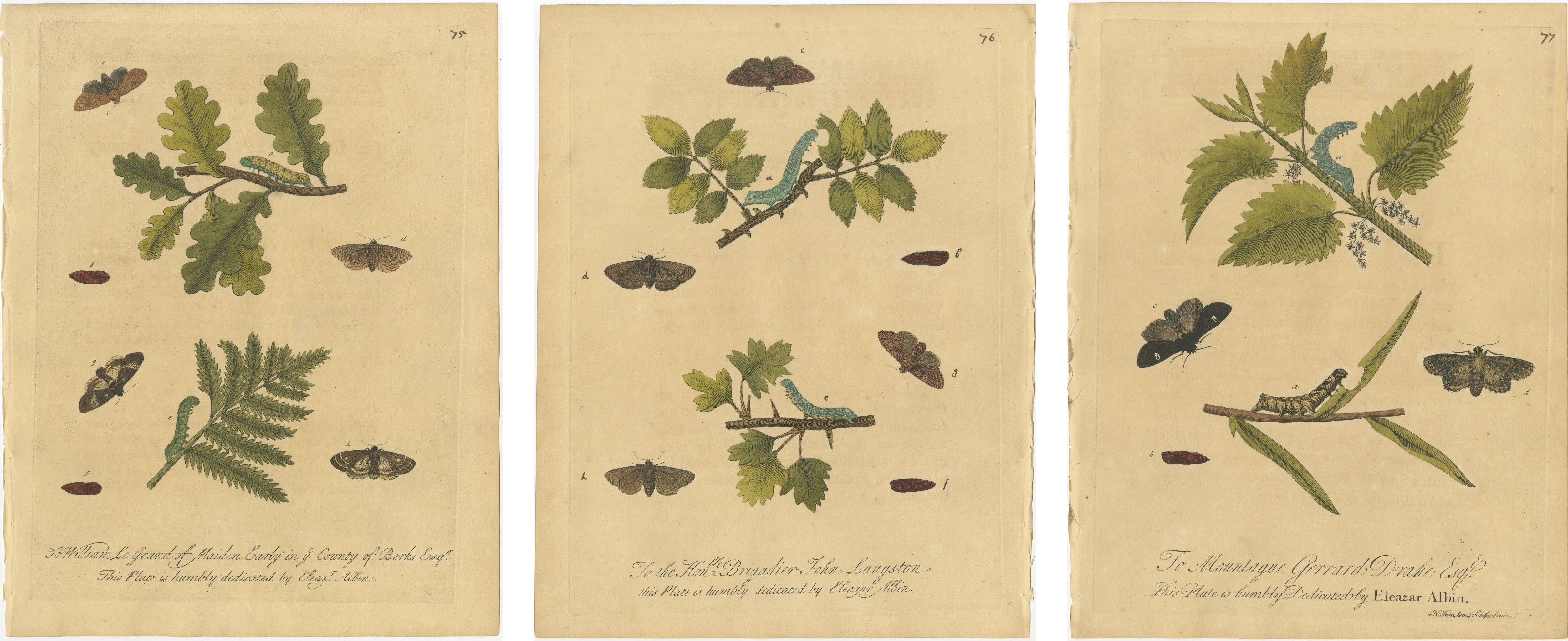
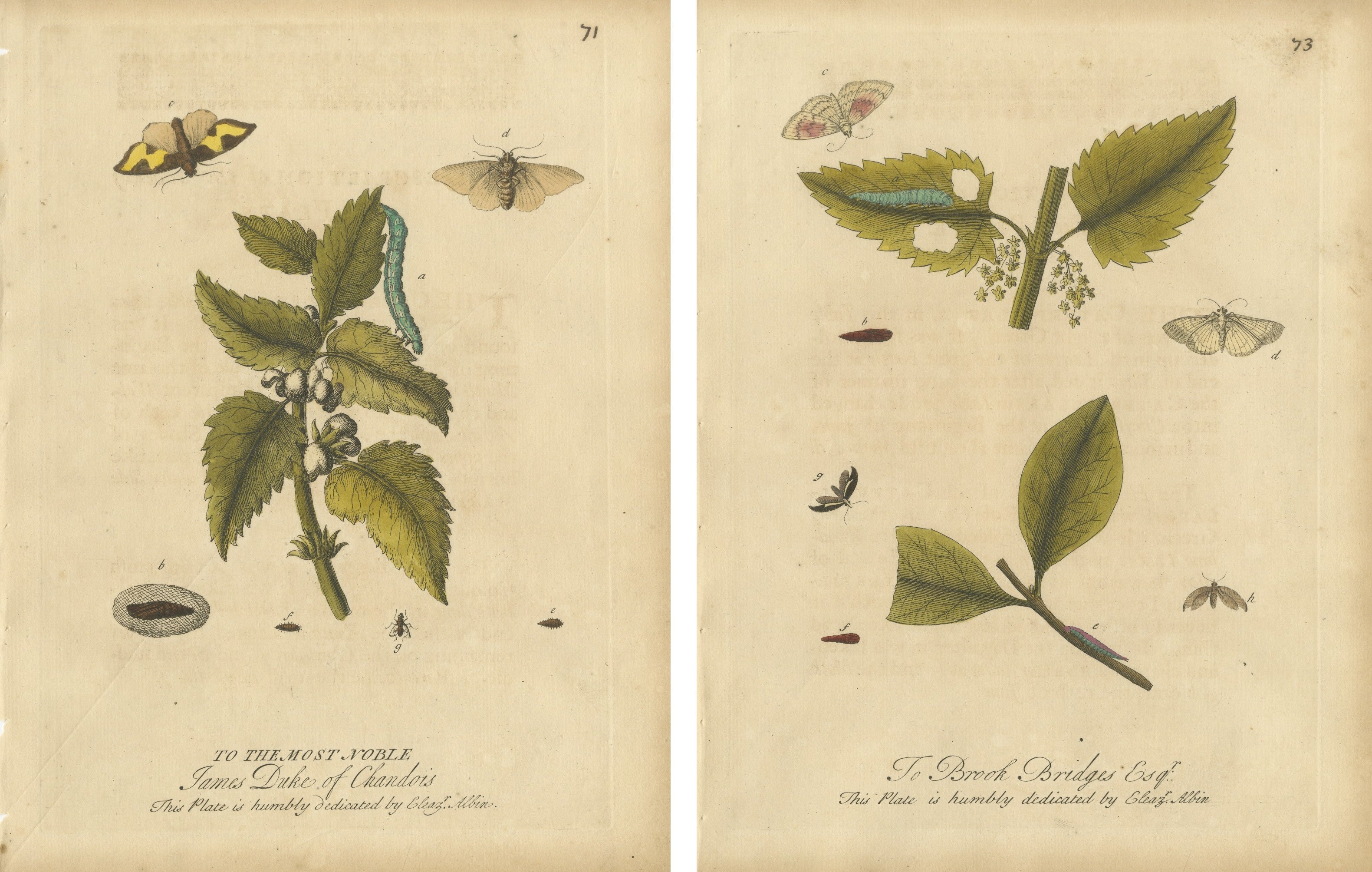
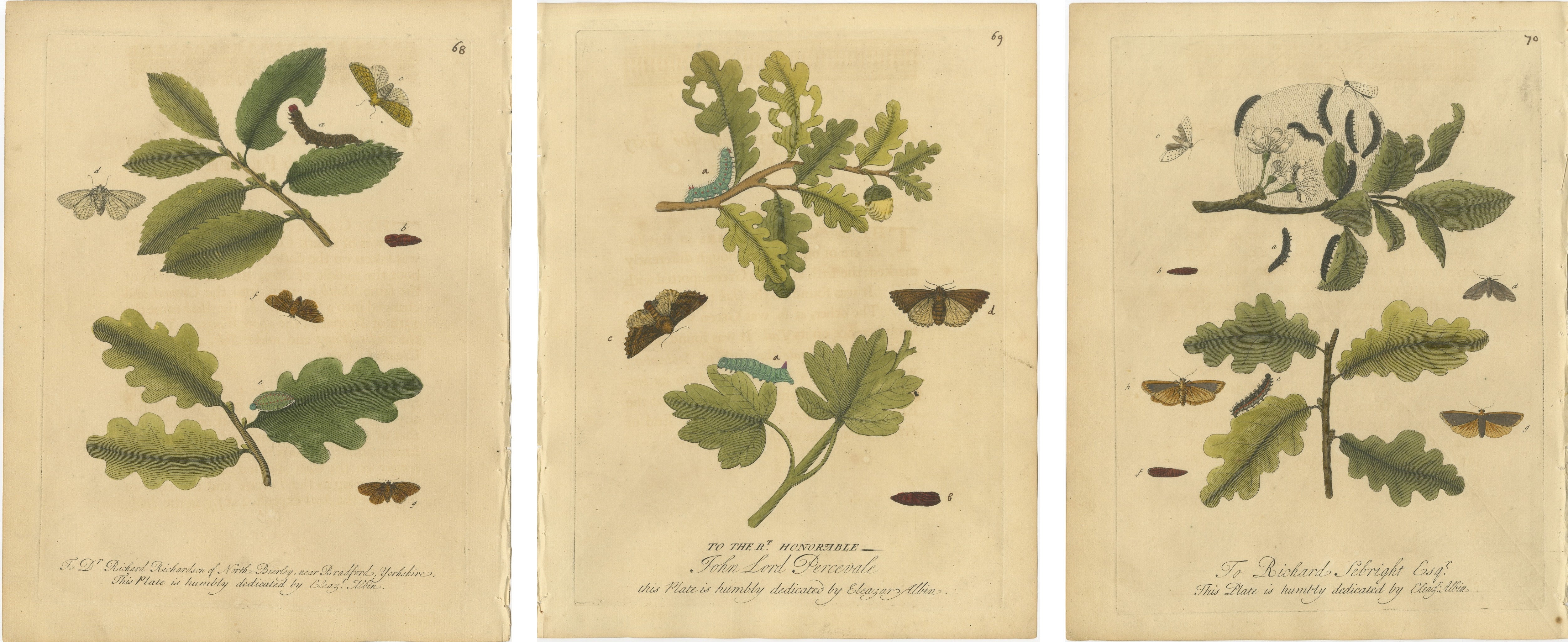
Title: Antique Entomology Print, English Insects on Oak, Willow & Elm, Albin 1720 Description: A finely composed group of early 18th-century natural history engravings by Eleazar Albin, published in London as part of his celebrated work A Natural History of English Insects. These plates exemplify the period when scientific study and decorative art were closely intertwined, resulting in works that are both precise in observation and elegant in presentation. The engravings depict insects at various stages of their life cycle—caterpillars, chrysalides, and moths—shown in direct relationship with their host plants. Among the foliage are clearly recognisable species such as oak (Quercus), elm (Ulmus), and willow (Salix), each carefully rendered with botanical accuracy. These plants serve as the natural habitat for the insects illustrated, reflecting Albin’s early effort to document species within their ecological context. The insects shown are primarily moths, likely including tiger moths, tussock moths, and other early recorded British species. Their larvae are depicted feeding on leaves, while the pupae are presented separately, offering a clear and instructive view of metamorphosis. The balanced placement of each element across the sheet creates a composition that is both scientifically informative and visually harmonious. Each plate carries a dedication to a notable figure of the period: Plate 83: Dedicated to Lady Mary Gore, a member of the English aristocracy, reflecting the important role of noble patronage in supporting scientific publication. Plate 84: Dedicated to Brigadier General Russell, a British military officer, representative of the educated and influential class that engaged with scientific works of the time. Plate 85: Dedicated to William Cavendish, Duke of Devonshire, a leading statesman and prominent patron of the arts and sciences in early 18th-century England. Albin’s engravings are among the earliest systematic studies of British insects, distinguished by their clarity, decorative balance, and carefully applied hand coloring. These qualities make them highly desirable both as historical documents and as refined decorative works. This example is an original antique engraving printed in around 1720. It is not a modern reproduction. Any images showing the print framed are for visual inspiration only. The print is supplied unframed. Details: Creator: Eleazar Albin (English, 1680–1742) Date: 1720 Medium: Hand-colored copper engraving Condition: Good antique condition with age-appropriate toning and light wear Format: Unframed Origin: London, England Keywords: Eleazar Albin, antique entomology print, English insects, oak leaf print, elm botanical print, willow plant engraving, moth life cycle, hand colored engraving, 18th century print, natural history art, copper engraving, British insects, scientific illustration, Georgian print, decorative antique print
  • Dimensions:
    Height: 11.15 in (28.3 cm)Width: 8.71 in (22.1 cm)Depth: 0.01 in (0.2 mm)
  • Sold As:
    Set of 3
  • Materials and Techniques:
    Paper,Engraved
  • Place of Origin:
  • Period:
  • Date of Manufacture:
    1720
  • Condition:
    Good antique condition with age-appropriate toning and light wear.
  • Seller Location:
    Langweer, NL
  • Reference Number:
    Seller: BG-14185-83, -84, -851stDibs: LU3054349510642

More From This Seller

View All
Antique Entomology Prints, English Insects on Oak, Bramble & Willow, Albin 1720

Antique Entomology Prints, English Insects on Oak, Bramble & Willow, Albin 1720

Located in Langweer, NL

Antique Entomology Prints, English Insects on Oak, Bramble & Willow, Albin 1720 Description: A beautifully balanced group of three early 18th-century hand-colored engravings by Elea...

Category

Antique Early 18th Century British Prints

Materials

Paper

Antique Entomology Print, English Insects on Oak & Elm, Albin 1720

Antique Entomology Print, English Insects on Oak & Elm, Albin 1720

Located in Langweer, NL

Antique Entomology Print, English Insects on Oak & Elm, Albin 1720 A refined and engaging example of early English natural history illustration, this original hand-colored copper en...

Category

Antique Early 18th Century British Prints

Materials

Paper

Antique Entomology Prints, English Insects on Hazel & Elm, Albin 1720

Antique Entomology Prints, English Insects on Hazel & Elm, Albin 1720

Located in Langweer, NL

Antique Entomology Prints, English Insects on Hazel & Elm, Albin 1720 Description: A charming and scientifically important pair of early 18th-century hand-colored engravings by Elea...

Category

Antique Early 18th Century British Prints

Materials

Paper

Antique Entomology Prints, English Insects on Marigold & Willow, Albin 1720

Antique Entomology Prints, English Insects on Marigold & Willow, Albin 1720

Located in Langweer, NL

Antique Entomology Prints, English Insects on Marigold & Willow, Albin 1720 Description: A refined and visually striking pair of early 18th-century hand-colored engravings by El...

Category

Antique Early 18th Century British Prints

Materials

Paper

Antique Botanical Insect Engravings with Caterpillars and Ladybirds — Albin 1720

Antique Botanical Insect Engravings with Caterpillars and Ladybirds — Albin 1720

Located in Langweer, NL

Antique Botanical Insect Engravings with Caterpillars and Ladybirds — Albin 1720 This attractive decorative set of three hand-colored copper engravings originates from the first edi...

Category

Antique Early 18th Century British Prints

Materials

Paper

Decorative Set of Three Early Insect Engravings with Plants — Eleazar Albin 1720

Decorative Set of Three Early Insect Engravings with Plants — Eleazar Albin 1720

Located in Langweer, NL

Decorative Set of Three Early Insect Engravings with Plants — Eleazar Albin 1720 This decorative set of three hand-colored copper engravings originates from the first edition of A N...

Category

Antique Early 18th Century British Prints

Materials

Paper

You May Also Like

19th Century Botanical Engravings with Insects, Victorian, Paper Print

19th Century Botanical Engravings with Insects, Victorian, Paper Print

Located in Seaford, GB

19th Century Botanical Engravings: A Timeless Art Form The Legacy of John Curtis and 19th-Century Botanical Engravings 🖋 Provenance Story – 19th Century Botanical Engravings with ...

Category

Antique 19th Century British Victorian Prints

Materials

Paper

Moths, English antique natural history Lepidoptera chromolithograph print

Moths, English antique natural history Lepidoptera chromolithograph print

Located in Melbourne, Victoria

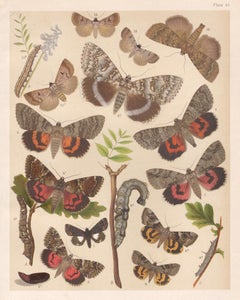
English moth chromolithograph, circa 1900. Plate number top right. From an English series of illustrations of butterflies and moths. Butterflies / moths are numbered and there is an ...

Category

Early 1900s Art Nouveau Animal Prints

Materials

Lithograph

4 plates from The Wondrous Transformation of Caterpillars & their Strange Diet..

4 plates from The Wondrous Transformation of Caterpillars & their Strange Diet..

By Maria Sibylla Merian

Located in Middletown, NY

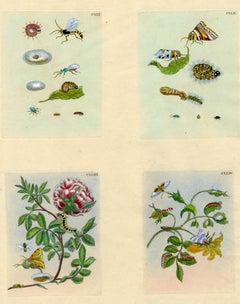
Four plates from The Wondrous Transformation of Caterpillars and their Strange Diet of Flowers. “Wolfsmelk Rupsen;" “Wolfsmilch, Raupe und Schmetterling" Amsterdam: JF Bernard, 1730. Each an engraving with hand coloring in watercolor and gouache printed on one sheet of watermarked Honig cream laid paper, each measures 6 1/4 x 5 inches (157 x 121 mm), sheet measures 20 5/8 x 14 inches (522 x 355 mm), full margins. With handling creases in the lower right sheet quadrant, as well as minor, loose cockling, otherwise in very good condition. The colors are superb with exceptionally fresh and bright saturation. Engraved between 1679 and 1683, printed 1730. Plates included: CXLI, CXLII, CXIII & CXLIV. MARIA SIBYLLA MERIAN was one of the most highly respected entomologists of the 17th century, and remains today one of the field's most significant figures. A German-born naturalist and scientific illustrator, she reared herself on the study of caterpillars, and made tremendous contributions to the knowledge of the life cycles of numerous species. Until her detailed and careful study of the process of metamorphosis it was thought that insects were "born of mud," through spontaneous generation. Trained as a miniature painter by her stepfather, she published her first book of illustrations in 1675, at the age of 28. In 1679, Merian published the first volume of the two-volume series on caterpillars, The Wondrous Transformation of Caterpillars and their Strange Diet of Flowers; the second volume followed in 1683. Each volume contained 50 plates that she engraved and etched. In 1699, Merian traveled to Dutch Guiana...

Category

Early 18th Century Naturalistic Still-life Prints

Materials

Watercolor, Engraving

4 plates from The Wondrous Transformation of Caterpillars & their Strange Diet..

4 plates from The Wondrous Transformation of Caterpillars & their Strange Diet..

By Maria Sibylla Merian

Located in Middletown, NY

Four plates from The Wondrous Transformation of Caterpillars and their Strange Diet of Flowers. “Wolfsmelk Rupsen;" “Wolfsmilch, Raupe und Schmetterling" Amsterdam: J F Bernard, 1730. Each an engraving with hand coloring in watercolor and gouache printed on one sheet of watermarked Honig cream laid paper, each measures 6 1/4 x 5 inches (157 x 121 mm), sheet measures 20 5/8 x 14 inches (522 x 355 mm), full margins. With handling creases in the lower right sheet quadrant, as well as minor, loose cockling, otherwise in very good condition. The colors are superb with exceptionally fresh and bright saturation. Engraved between 1679 and 1683, printed 1730. Plates included: LIV, LV, LVI, & LVII. MARIA SIBYLLA MERIAN was one of the most highly respected entomologists of the 17th century, and remains today one of the field's most significant figures. A German-born naturalist and scientific illustrator, she reared herself on the study of caterpillars, and made tremendous contributions to the knowledge of the life cycles of numerous species. Until her detailed and careful study of the process of metamorphosis it was thought that insects were "born of mud," through spontaneous generation. Trained as a miniature painter by her stepfather, she published her first book of illustrations in 1675, at the age of 28. In 1679, Merian published the first volume of the two-volume series on caterpillars, The Wondrous Transformation of Caterpillars and their Strange Diet of Flowers; the second volume followed in 1683. Each volume contained 50 plates that she engraved and etched. In 1699, Merian traveled to Dutch Guiana...

Category

Early 18th Century Naturalistic Still-life Prints

Materials

Watercolor, Engraving