Want more images or videos?
Request additional images or videos from the seller
1 of 10

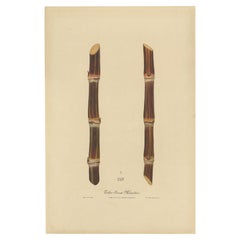
Antique Sugarcane Chromolithograph, Teboe Troeboe, Java 1892

$1,051.04
£781.37
€895VAT Included
CA$1,473.46
A$1,496.07
CHF 848.09
MX$18,225.21
NOK 10,030.61
SEK 10,033.52
DKK 6,823.77

About the Item

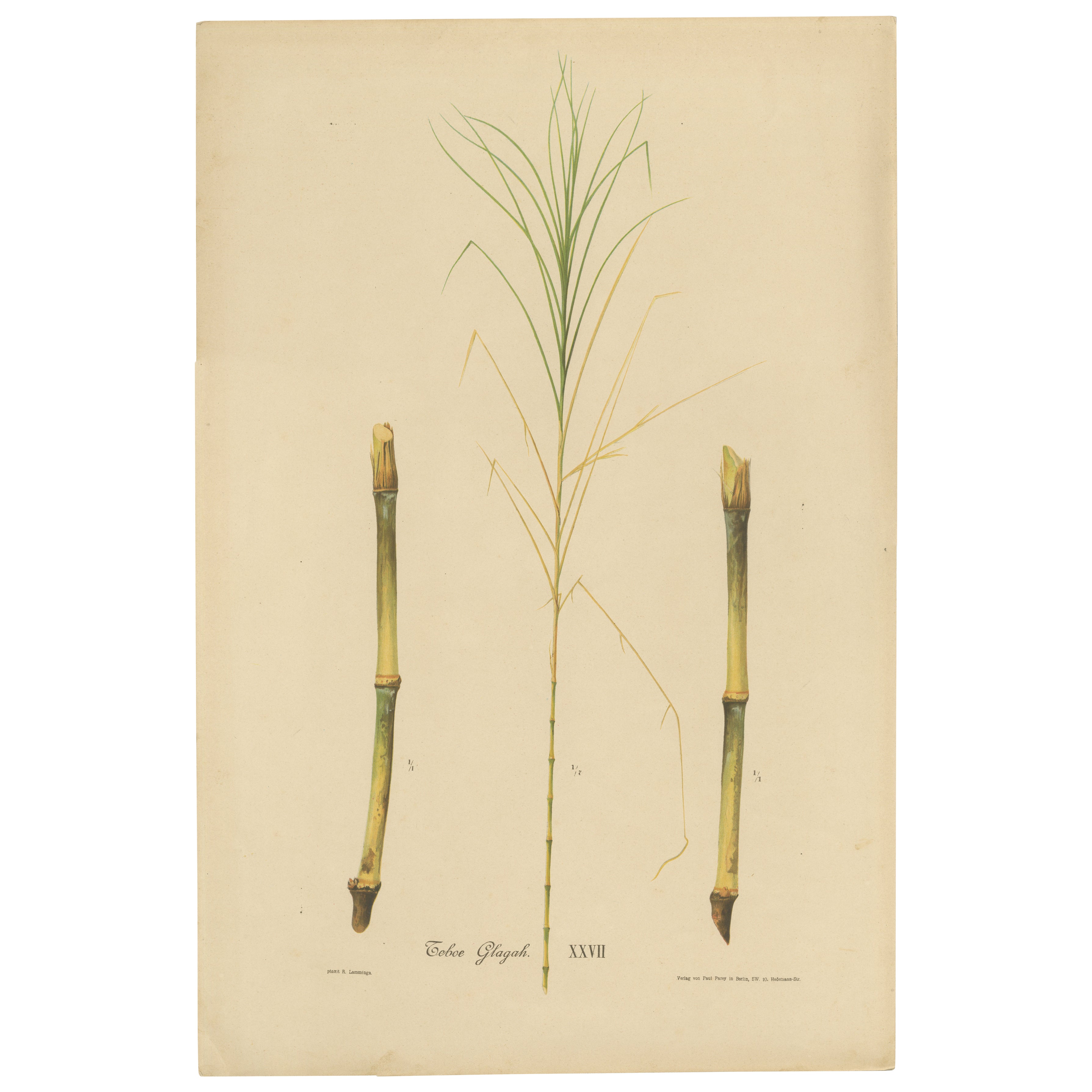
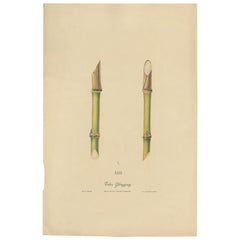
Antique Sugarcane Chromolithograph, Teboe Troeboe, Java 1892 Description This large chromolithographic plate depicts the sugarcane variety known as Teboe Troeboe and was published in Berlin in 1892 as part of Friedrich Soltwedel’s important botanical study Formen und Farben von Saccharum officinarum L. und verwandten Arten. Printed by W. A. Meyn, the plate exemplifies the precision and visual clarity characteristic of late nineteenth-century agricultural illustration. Plate XXVIII illustrates Teboe Troeboe through two cut cane sections shown at full scale. The variety is rendered in subdued green tones with subtle mottling and clearly articulated nodes, allowing close comparison of internode length and surface texture. The restrained colouring and clean background emphasize structural detail over ornament, reflecting the scientific intent of the series. These chromolithographic plates were produced during a period when sugarcane cultivation played a central role in the agricultural economy of Java and the wider Dutch East Indies. Soltwedel’s plates were issued separately from the accompanying text volume and are now increasingly scarce, particularly in well-preserved examples. With its tall vertical format and calm, natural palette, this plate works well both as a collector’s botanical specimen and as a decorative object, suited to interiors seeking understated botanical imagery with historical depth and scientific authenticity. Condition report One plate in very good condition for its age. Light, even age toning and minor surface marks consistent with atlas plates. Slight marginal wear. Colours remain well preserved. Plate mark visible. No significant tears or losses. Framing suggestions Best framed vertically. A dark walnut, ebonized, or soft antique gold frame paired with an ivory or parchment mat provides a refined, museum-style presentation. Wide matting is recommended to preserve the original margins and emphasize the vertical proportions. Technique: Chromolithography Maker: W. A. Meyn after F. Soltwedel, Berlin, 1892
  • Dimensions:
    Height: 23.63 in (60 cm)Width: 15.75 in (40 cm)Depth: 0.01 in (0.2 mm)
  • Materials and Techniques:
  • Place of Origin:
  • Period:
  • Date of Manufacture:
    1892
  • Condition:
    One plate in very good condition for its age. Light, even age toning and minor surface marks consistent with atlas plates. Slight marginal wear. Colours remain well preserved. Plate mark visible. No significant tears or losses.
  • Seller Location:
    Langweer, NL
  • Reference Number:
    Seller: BG-14180-201stDibs: LU3054348059752

More From This Seller

View All
Antique Sugarcane Chromolithograph, Teboe Soerat Mauritius, Java 1892

Antique Sugarcane Chromolithograph, Teboe Soerat Mauritius, Java 1892

Located in Langweer, NL

Antique Sugarcane Chromolithograph, Teboe Soerat Mauritius, Java 1892 Description This large chromolithographic plate depicts a single named sugarcane variety cultivated in Java and...

Category

Antique Late 19th Century German Prints

Materials

Paper

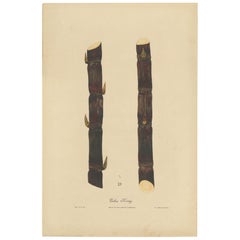
Antique Sugarcane Chromolithograph, Teboe Keong, Java 1892

Antique Sugarcane Chromolithograph, Teboe Keong, Java 1892

Located in Langweer, NL

Antique Sugarcane Chromolithograph, Teboe Keong, Java 1892 This large chromolithographic plate depicts a single named sugarcane variety cultivated in Java and was published in Berli...

Category

Antique Late 19th Century German Prints

Materials

Paper

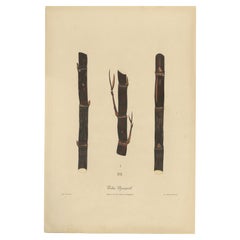
Antique Sugarcane Chromolithograph, Teboe Djampirik, Java 1892

Antique Sugarcane Chromolithograph, Teboe Djampirik, Java 1892

Located in Langweer, NL

Antique Sugarcane Chromolithograph, Teboe Djampirik, Java 1892 Description This large chromolithographic plate depicts a single named sugarcane variety cultivated in Java and was pu...

Category

Antique Late 19th Century German Prints

Materials

Paper

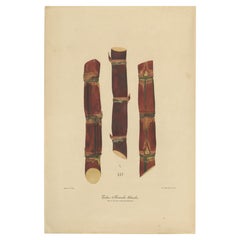
Antique Sugarcane Chromolithograph, Teboe Branche blanche, Java 1892

Antique Sugarcane Chromolithograph, Teboe Branche blanche, Java 1892

Located in Langweer, NL

Antique Sugarcane Chromolithograph, Teboe Soerat Mauritius, Java 1892 Description This large chromolithographic plate depicts a single named sugarcane variety cultivated in Java and...

Category

Antique Late 19th Century German Prints

Materials

Paper

Antique Sugarcane Chromolithograph, Teboe Glonggong, Java 1892

Antique Sugarcane Chromolithograph, Teboe Glonggong, Java 1892

Located in Langweer, NL

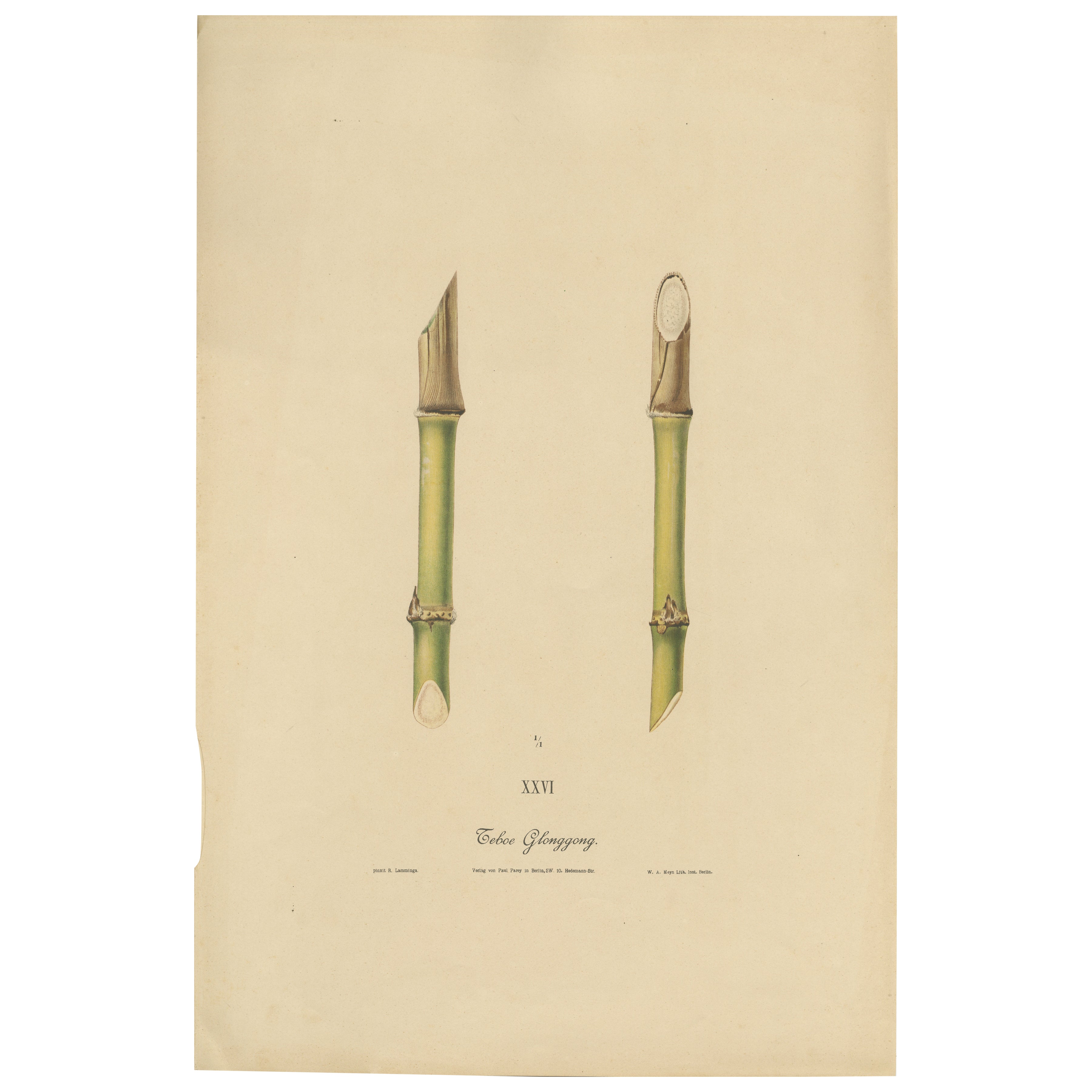
Antique Sugarcane Chromolithograph, Teboe Glonggong, Java 1892 Description This large chromolithographic plate depicts a single named sugarcane variety cultivated in Java and was pu...

Category

Antique Late 19th Century German Prints

Materials

Paper

Antique Sugarcane Chromolithograph, Teboe Rotan and Teboe Alfoere, 1892

Antique Sugarcane Chromolithograph, Teboe Rotan and Teboe Alfoere, 1892

Located in Langweer, NL

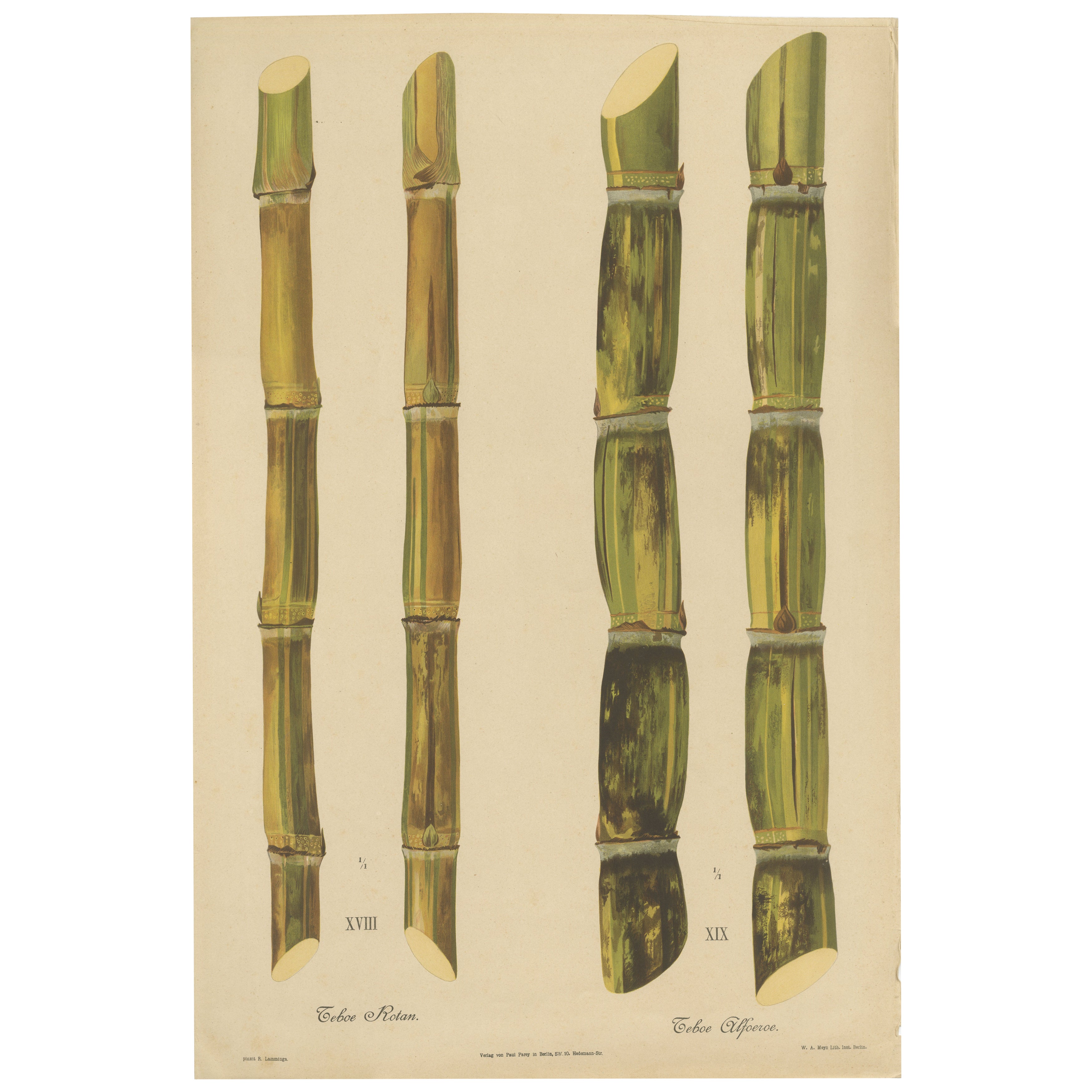
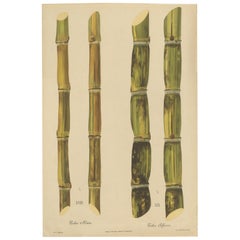
Antique Sugarcane Chromolithograph, Teboe Rotan and Teboe Alfoere, 1892 Description This large chromolithographic plate illustrates two distinct sugarcane varieties cultivated in Ja...

Category

Antique Late 19th Century German Prints

Materials

Paper

You May Also Like

Large Original Antique Natural History Print, Quadrumana, circa 1835

Large Original Antique Natural History Print, Quadrumana, circa 1835

Located in St Annes, Lancashire

Great image of Quadrumana, apes etc. Unframed. It gives you the option of perhaps making a set up using your own choice of frames. Lithograph after Cpt. Brown with original han...

Category

Antique 1830s English Folk Art Prints

Materials

Paper

South American Banana Palm Tree Framed Print from C 1843 Study, New

South American Banana Palm Tree Framed Print from C 1843 Study, New

Located in Lincoln, Lincolnshire

This is a digitally remastered print of a Banana Palm referenced from a French print dating to circa 1843 Prints of this style were originally printed in black and white and then ...

Category

2010s British American Colonial Prints

Materials

Glass, Wood, Paper

Framed 19th Century Victorian Watercolor of Rungia Apiculata

Framed 19th Century Victorian Watercolor of Rungia Apiculata

Located in Queens, NY

American Victorian (19th Century) watercolor, ink, and pencil botanical drawing depicting a Rungia Apiculata plant in green tones against a beige background, matted in a beveled parc...

Category

Antique 19th Century American Victorian Paintings

Materials

Paint

Early 19th Century Botanical Engraving by John Curtis

Early 19th Century Botanical Engraving by John Curtis

Located in Seaford, GB

Early 19th Century Botanical Engraving by John Curtis – Hand Coloured Natural History Plate An original early 19th-century hand-coloured botanical engraving from the celebrated natural history publications of John Curtis (1791–1862), one of Britain’s most respected botanical and entomological illustrators. This beautifully detailed plate illustrates a flowering plant in scientific profile, showing bloom structure, leaves, buds, and root system with precision typical of early Victorian natural history illustration. Curtis’s work bridges science and art — created for study, yet prized today for its elegance and balance. These engravings formed part of the golden age of British botanical publishing, when artists collaborated with engravers and colourists to produce plates that were both accurate and visually refined. Each impression was printed from an engraved plate and then carefully coloured by hand, meaning no two examples are ever exactly identical. The composition has the clarity collectors seek: • Central botanical specimen • Naturalistic colour palette • Fine line engraving • Period scientific titling This makes it ideal as a single framed piece or as part of a gallery wall of antique botanical studies. About John Curtis John Curtis was a leading figure in British natural history illustration. He is best known for British Entomology and botanical works that combined taxonomic accuracy with graceful composition. His engravings are held in major museum collections and remain highly collectible in the decorative arts market. Period Early 19th century, circa 1820–1840. Technique Copperplate engraving with original hand colouring on laid paper. Condition Good antique condition consistent with age. Light toning and minor handling marks may be present, as expected with early 19th-century works on paper. Please see the images. Why Collect Curtis Botanical Prints...

Category

Antique Early 19th Century British George III Prints

Materials

Paper

Early 19th Century Botanical Engraving by John Curtis – Hand Coloured

Early 19th Century Botanical Engraving by John Curtis – Hand Coloured

Located in Seaford, GB

Early 19th Century Botanical Engraving by John Curtis – Hand Coloured Natural History Plate An original early 19th-century hand-coloured botanical engraving from the celebrated natural history publications of John Curtis (1791–1862), one of Britain’s most respected botanical and entomological illustrators. This beautifully detailed plate illustrates a flowering plant in scientific profile, showing bloom structure, leaves, buds, and root system with precision typical of early Victorian natural history illustration. Curtis’s work bridges science and art — created for study, yet prized today for its elegance and balance. These engravings formed part of the golden age of British botanical publishing, when artists collaborated with engravers and colourists to produce plates that were both accurate and visually refined. Each impression was printed from an engraved plate and then carefully coloured by hand, meaning no two examples are ever exactly identical. The composition has the clarity collectors seek: • Central botanical specimen • Naturalistic colour palette • Fine line engraving • Period scientific titling This makes it ideal as a single framed piece or as part of a gallery wall of antique botanical studies. About John Curtis John Curtis was a leading figure in British natural history illustration. He is best known for British Entomology and botanical works that combined taxonomic accuracy with graceful composition. His engravings are held in major museum collections and remain highly collectable in the decorative arts market. Period Early 19th century, circa 1820–1840. Technique Copperplate engraving with original hand colouring on laid paper. Condition Good antique condition consistent with age. Light toning and minor handling marks may be present, as expected with early 19th-century works on paper. Please see the images. Why Collect Curtis Botanical Prints...

Category

Antique Early 19th Century George III Prints

Materials

Paper