Want more images or videos?
Request additional images or videos from the seller
1 of 10

Botanical Engraving of the Coffee Plant – Dutch Colonial Period, c.1737

$452.69
£332.52
€380VAT Included
CA$624.68
A$635.86
CHF 361.94
MX$7,675.27
NOK 4,220.45
SEK 4,271.33
DKK 2,897.53

About the Item

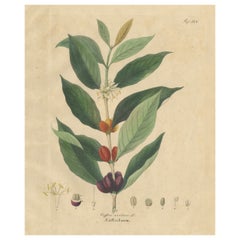
Botanical Engraving of the Coffee Plant – Dutch Colonial Period, c.1737 This exquisite botanical engraving depicts the coffee plant in detailed scientific form, as it was studied and cultivated during the Dutch colonial era. Titled along the vertical border as “Tak van den Koffy Boom met zyne Bloemen en Vrugten” (Branch of the Coffee Tree with its Flowers and Fruits), the image was originally published in the early 18th century, most likely in association with works by Dutch botanists documenting the plants of the East and West Indies. This particular sheet dates to around 1737 and reflects the style and typographic layout found in botanical publications tied to colonial trade networks. The large vertical illustration presents an elegant full-length view of a coffee plant stem, complete with clusters of pointed leaves, blossoms, and fruit at various stages of development. Below the main image are five carefully labeled vignettes showing different parts of the coffee plant: a dried fruit, the coffee husk, a ripe berry, and the bean or kernel (de Kers of Koffy Boon). Each part is rendered with careful linework, showcasing the clarity and precision typical of copperplate engraving used in early botanical studies. This print not only reflects the scientific curiosity of the Enlightenment but also the economic importance of the coffee plant to the Dutch Republic, which played a central role in cultivating and exporting coffee from colonies in Java, Ceylon, and Surinam. It would have served as both a botanical record and a symbol of colonial power, trade, and scientific advancement. Condition: Very good condition with a strong impression on laid paper. Light fold lines as issued (likely from a folio atlas or botanical volume). Slight age toning and minor edge wear. No tears or repairs. Framing tips: This elegant vertical print is ideal for a narrow frame in dark wood or ebonized finish. A natural cream or light tan mat will complement the botanical subject. For maximum impact, consider museum glass to preserve and highlight the fine linework. Technique: Copperplate engraving Maker: Anonymous Dutch engraver, after a botanical model, circa 1737
  • Dimensions:
    Height: 15.36 in (39 cm)Width: 7.68 in (19.5 cm)Depth: 0.01 in (0.2 mm)
  • Materials and Techniques:
    Paper,Engraved
  • Place of Origin:
  • Period:
    1730-1739
  • Date of Manufacture:
    circa 1737
  • Condition:
    Condition: Very good condition with a strong impression on laid paper. Light fold lines as issued (likely from a folio atlas or botanical volume). Slight age toning and minor edge wear. No tears or repairs.
  • Seller Location:
    Langweer, NL
  • Reference Number:
    Seller: BG-11491-61stDibs: LU3054346155042

More From This Seller

View All
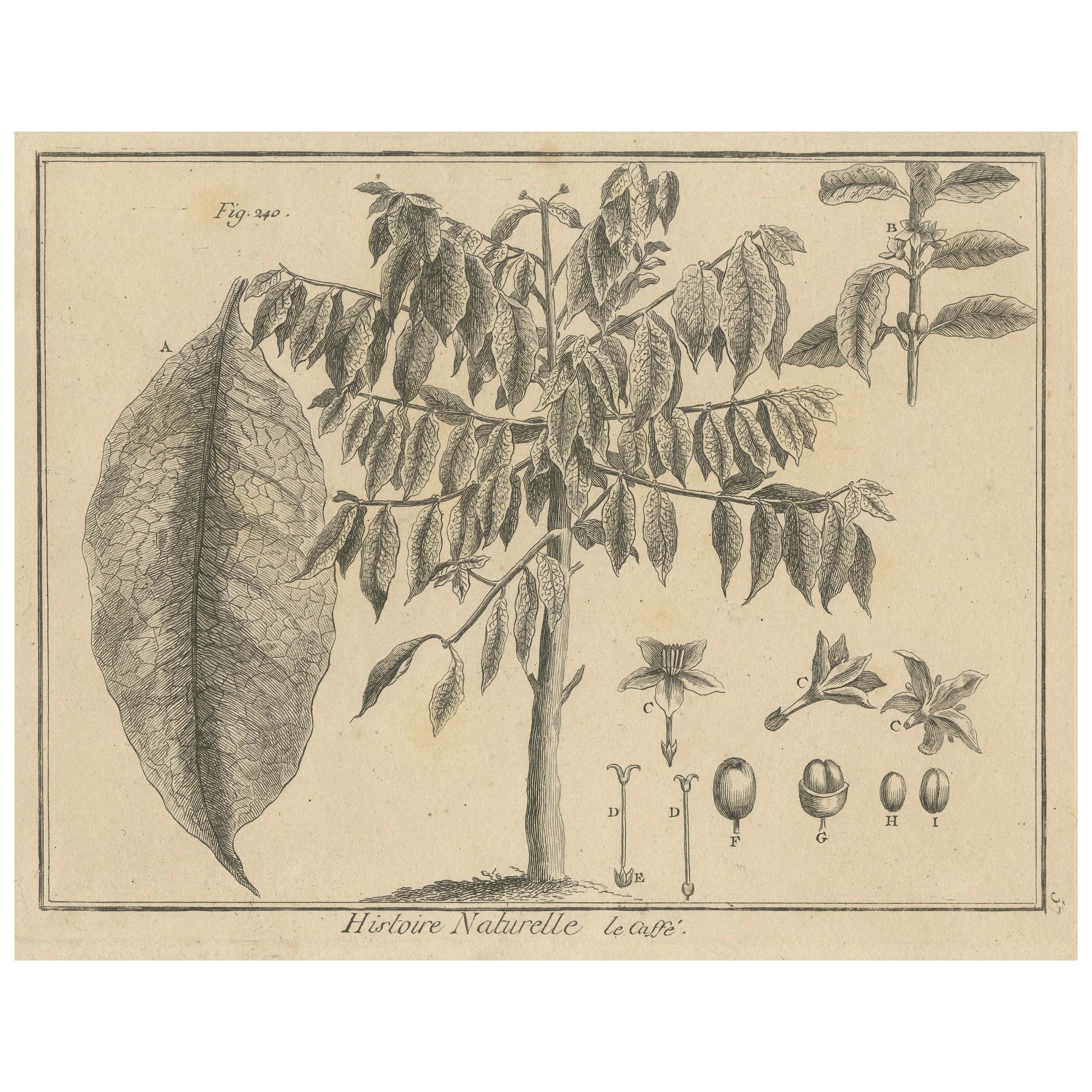
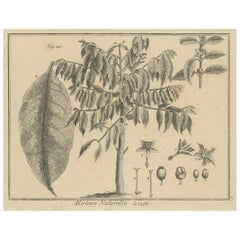
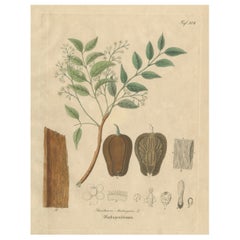
Detailed Botanical Engraving of the Coffee Plant from Histoire Naturelle, c.1780

Detailed Botanical Engraving of the Coffee Plant from Histoire Naturelle, c.1780

Located in Langweer, NL

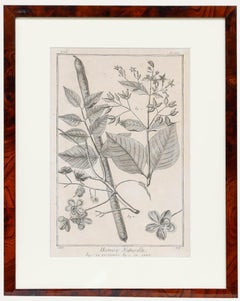
This engraving titled "Histoire Naturelle: le café" is a detailed botanical illustration, part of an 18th or 19th-century natural history text or compendium. It depicts the coffee ...

Category

Antique Late 18th Century Prints

Materials

Paper

Antique Botany Print of a Caperonia Species, 'circa 1730'

Antique Botany Print of a Caperonia Species, 'circa 1730'

Located in Langweer, NL

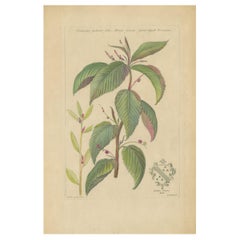
Antique botany print titled 'Ricinoides palustre foliis (..)'. Original antique print of a Caperonia species. This print originates from 'Historia plantarum rariorum' by John Martyn.

Category

Antique Mid-18th Century Prints

Materials

Paper

Antique Botany Print of the Mespilus Germanica by Plenck 'circa 1790'

Antique Botany Print of the Mespilus Germanica by Plenck 'circa 1790'

Located in Langweer, NL

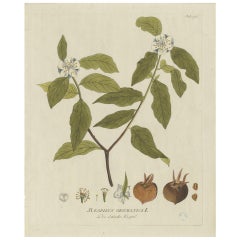
Antique botany print titled 'Mespilus Germanica'. Hand colored engraving of the mespilus germanica, also known as the medlar or common medlar. This print originates from 'Icones Plan...

Category

Antique Late 18th Century Prints

Materials

Paper

Antique Coffee Botanical Print, Coffea Arabica, Hand Colored, c.1831

Antique Coffee Botanical Print, Coffea Arabica, Hand Colored, c.1831

Located in Langweer, NL

Antique Coffee Botanical Print, Coffea Arabica, Hand Colored, c.1831 This outstanding botanical engraving depicts Coffea Arabica, the coffee plant, shown with characteristic foliage...

Category

Antique 1830s German Prints

Materials

Paper

Antique Mahogany Botanical Print, Swietenia Mahagoni, c.1831

Antique Mahogany Botanical Print, Swietenia Mahagoni, c.1831

Located in Langweer, NL

Antique Mahogany Botanical Print, Swietenia Mahagoni, c.1831 Description: This finely detailed botanical engraving illustrates Swietenia Mahagoni, the mahogany tree, including its d...

Category

Antique 1830s German Prints

Materials

Paper

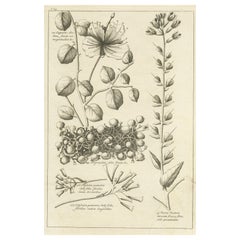
Antique Engraving of the Caper Bush and Other Plants, 1773

Antique Engraving of the Caper Bush and Other Plants, 1773

Located in Langweer, NL

Antique print titled 'Capparis Arabica (..)'. Old botany print depicting the caper bush, shepherd's purse and other plants. Originates from the first Dutch editon of an interesting t...

Category

Antique 18th Century Prints

Materials

Paper

You May Also Like

Early 19th Century Botanical Engraving by John Curtis

Early 19th Century Botanical Engraving by John Curtis

Located in Seaford, GB

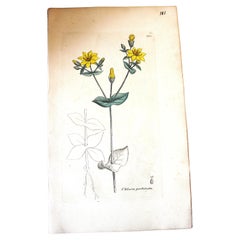
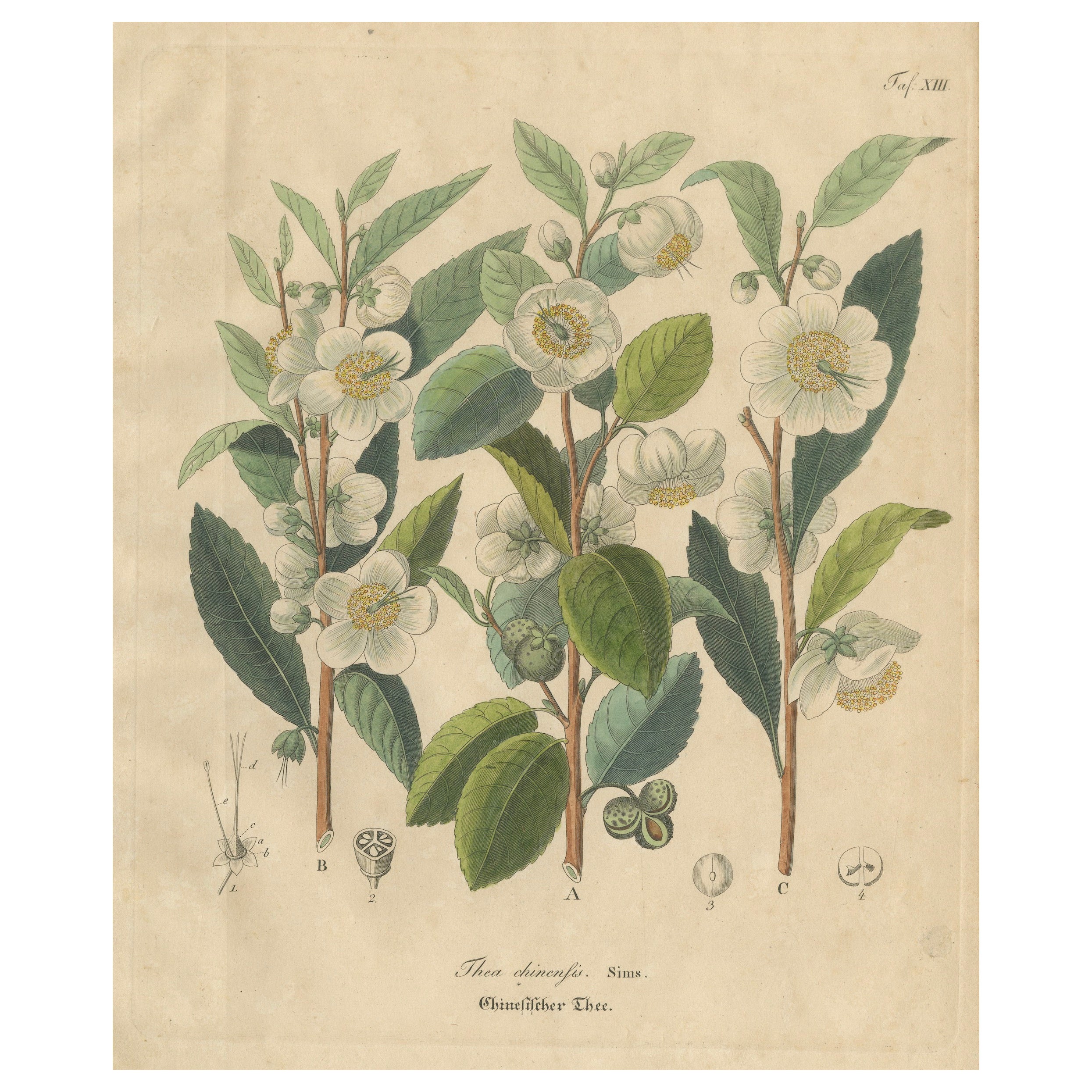
Early 19th Century Botanical Engraving by John Curtis – Hand Coloured Natural History Plate An original early 19th-century hand-coloured botanical engraving from the celebrated natural history publications of John Curtis (1791–1862), one of Britain’s most respected botanical and entomological illustrators. This beautifully detailed plate illustrates a flowering plant in scientific profile, showing bloom structure, leaves, buds, and root system with precision typical of early Victorian natural history illustration. Curtis’s work bridges science and art — created for study, yet prized today for its elegance and balance. These engravings formed part of the golden age of British botanical publishing, when artists collaborated with engravers and colourists to produce plates that were both accurate and visually refined. Each impression was printed from an engraved plate and then carefully coloured by hand, meaning no two examples are ever exactly identical. The composition has the clarity collectors seek: • Central botanical specimen • Naturalistic colour palette • Fine line engraving • Period scientific titling This makes it ideal as a single framed piece or as part of a gallery wall of antique botanical studies. About John Curtis John Curtis was a leading figure in British natural history illustration. He is best known for British Entomology and botanical works that combined taxonomic accuracy with graceful composition. His engravings are held in major museum collections and remain highly collectable in the decorative arts market. Period Early 19th century, circa 1820–1840. Technique Copperplate engraving with original hand colouring on laid paper. Condition Good antique condition consistent with age. Light toning and minor handling marks may be present, as expected with early 19th-century works on paper. Please see the images. Why Collect Curtis Botanical Prints...

Category

Antique Early 19th Century British George III Prints
Materials

Paper

Early 19th Century Botanical Engraving by John Curtis

Early 19th Century Botanical Engraving by John Curtis

Located in Seaford, GB

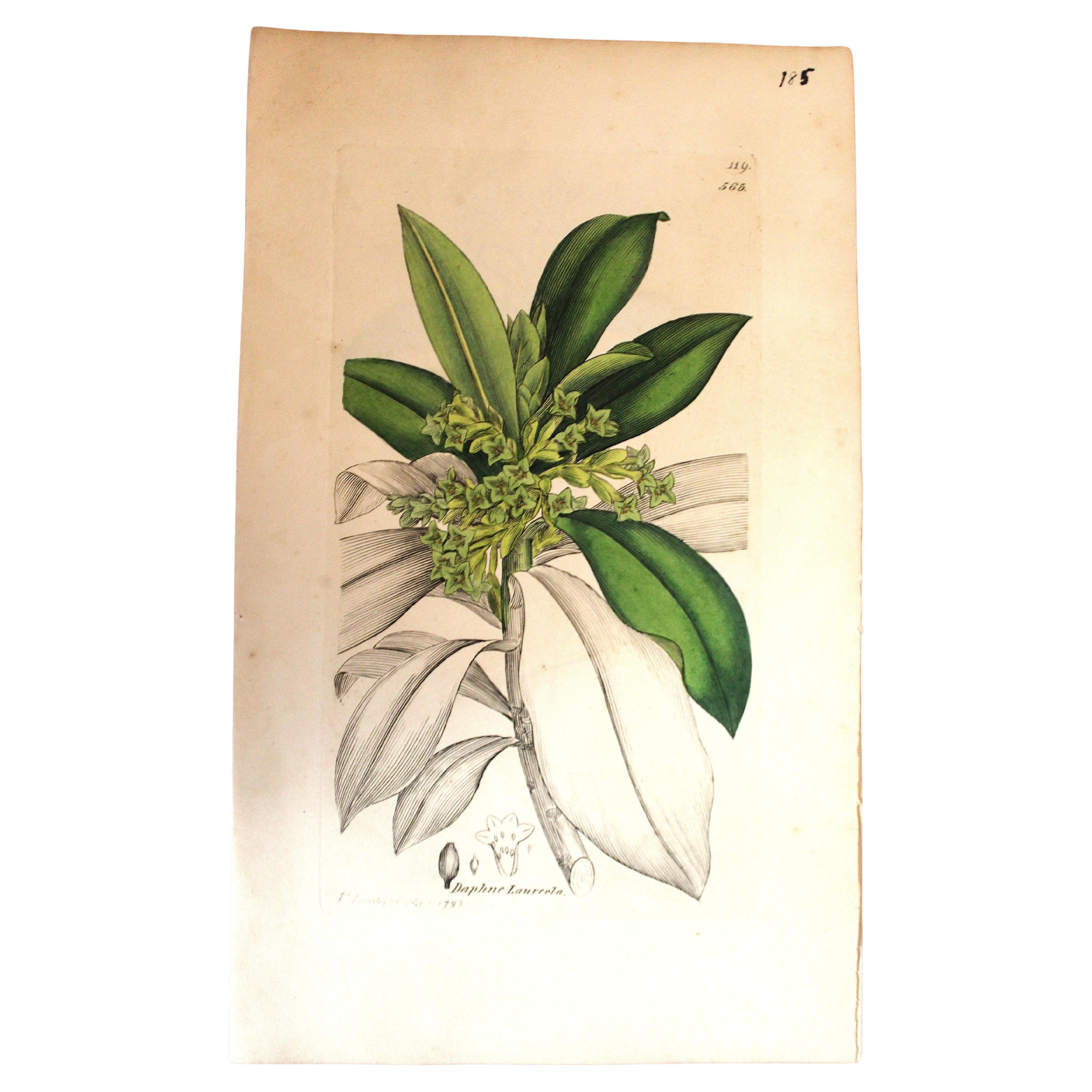
Early 19th Century Botanical Engraving by John Curtis – Hand Coloured Natural History Plate An original early 19th-century hand-coloured botanical engraving from the celebrated natural history publications of John Curtis (1791–1862), one of Britain’s most respected botanical and entomological illustrators. This beautifully detailed plate illustrates a flowering plant in scientific profile, showing bloom structure, leaves, buds, and root system with precision typical of early Victorian natural history illustration. Curtis’s work bridges science and art — created for study, yet prized today for its elegance and balance. These engravings formed part of the golden age of British botanical publishing, when artists collaborated with engravers and colourists to produce plates that were both accurate and visually refined. Each impression was printed from an engraved plate and then carefully coloured by hand, meaning no two examples are ever exactly identical. The composition has the clarity collectors seek: • Central botanical specimen • Naturalistic colour palette • Fine line engraving • Period scientific titling This makes it ideal as a single framed piece or as part of a gallery wall of antique botanical studies. About John Curtis John Curtis was a leading figure in British natural history illustration. He is best known for British Entomology and botanical works that combined taxonomic accuracy with graceful composition. His engravings are held in major museum collections and remain highly collectible in the decorative arts market. Period Early 19th century, circa 1820–1840. Technique Copperplate engraving with original hand colouring on laid paper. Condition Good antique condition consistent with age. Light toning and minor handling marks may be present, as expected with early 19th-century works on paper. Please see the images. Why Collect Curtis Botanical Prints...

Category

Antique Early 19th Century British George III Prints
Materials

Paper

Collection of Nine 18th Century Tropical Botanical Engravings by Georg Dionysius

Collection of Nine 18th Century Tropical Botanical Engravings by Georg Dionysius

By Georg Dionysius Ehret

Located in Tetbury, Gloucestershire

Collection of nine 18th Century tropical botanical engravings by Georg Dionysius Ehret. Hand coloured prints depicting local flora of Barbados. Each is dedicated to a prominent perso...

Category

Antique 18th Century German Prints

Materials

Paper

19th Century Botanical Drawing of Justicia Wynaadensis in Watercolor

19th Century Botanical Drawing of Justicia Wynaadensis in Watercolor

Located in Queens, NY

American Victorian (19th Century) watercolor, ink, and pencil botanical drawing depicting a Justicia Wynaadensis plant in green tones against a beige background, matted in a beveled ...

Category

Antique 19th Century American Victorian Paintings

Materials

Paint