Want more images or videos?
Request additional images or videos from the seller
1 of 9

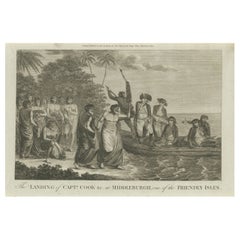
Captain Cook Landing Tonga Engraving, Friendly Isles, Pacific, 1777

$317.21
£235.13
€269VAT Included
CA$442.53
A$448.93
CHF 256.31
MX$5,435.82
NOK 3,017.44
SEK 3,007.43
DKK 2,051.73

About the Item

Captain Cook Landing Tonga Engraving, Friendly Isles, Pacific, 1777 This exceptional 18th-century copperplate engraving depicts the historic landing of Captain James Cook at Middleburgh (modern-day ʻEua, Tonga), one of the so-called “Friendly Isles,” during his second voyage to the Pacific in 1773. Titled “The Landing of Capt. Cook &c. at Middleburgh, one of the Friendly Isles,” the print captures a moment of first contact between European explorers and the indigenous population of Tonga. The composition is both elegant and theatrical. Cook is shown arriving in a small boat accompanied by members of his crew, while a large group of Tongans gathers along the shoreline to greet the visitors. At the center stands a chief figure, holding a plantain branch—a traditional gesture symbolizing peace and welcome. The scene conveys a sense of ceremony and diplomacy, reflecting the relatively harmonious initial encounters that led Cook to name the archipelago the “Friendly Isles.” The engraving is based on an original painting by William Hodges, the official artist on Cook’s second voyage (1772–1775). Hodges was among the first European artists to depict the landscapes and peoples of the South Pacific from direct observation. His work was later translated into engraving by John Keyse Sherwin, one of the leading British engravers of the period, and published in London in 1777. The print is notable for its refined neoclassical composition and detailed rendering of figures, costume, and environment. The lush tropical setting, combined with the carefully staged interaction between figures, creates a visually balanced and highly decorative image that appealed strongly to European audiences fascinated by exploration and distant cultures. As a decorative piece, this engraving is particularly strong. The wide horizontal format, animated grouping of figures, and rich narrative content make it ideal for display in interiors with a maritime, historical, or travel theme. It also pairs beautifully with other works related to Captain Cook, Pacific exploration, or 18th-century ethnographic subjects. Condition: Good condition for its age, with age-related toning and some spotting, primarily in the margins. Minor wear consistent with age. The engraving remains clear with a strong, well-inked impression. Plate mark visible. Framing tips: Best displayed with a generous ivory or off-white mat to emphasize the plate mark and provide visual space. A dark walnut or black frame enhances contrast and gives the piece a refined, museum-quality appearance. Technique: Copperplate engraving Maker: John Keyse Sherwin (after William Hodges), London, 1777
  • Dimensions:
    Height: 9.85 in (25 cm)Width: 15.08 in (38.3 cm)Depth: 0.01 in (0.2 mm)
  • Materials and Techniques:
    Paper,Engraved
  • Place of Origin:
  • Period:
  • Date of Manufacture:
    circa 1777
  • Condition:
    Good condition for its age, with age-related toning and some spotting, primarily in the margins. Minor wear consistent with age. The engraving remains clear with a strong, well-inked impression. Plate mark visible.
  • Seller Location:
    Langweer, NL
  • Reference Number:
    Seller: BG-13599-291stDibs: LU3054349258482

More From This Seller

View All
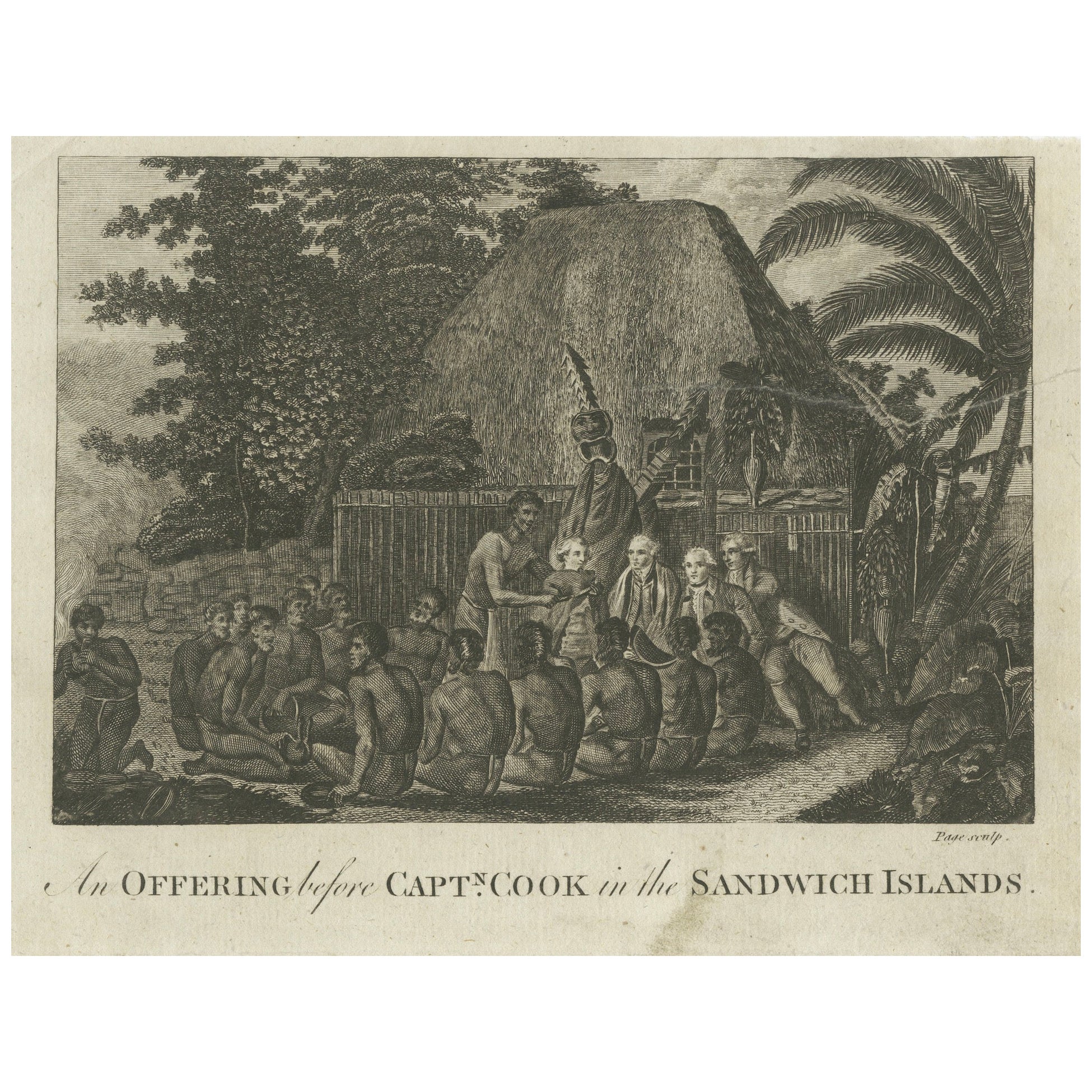
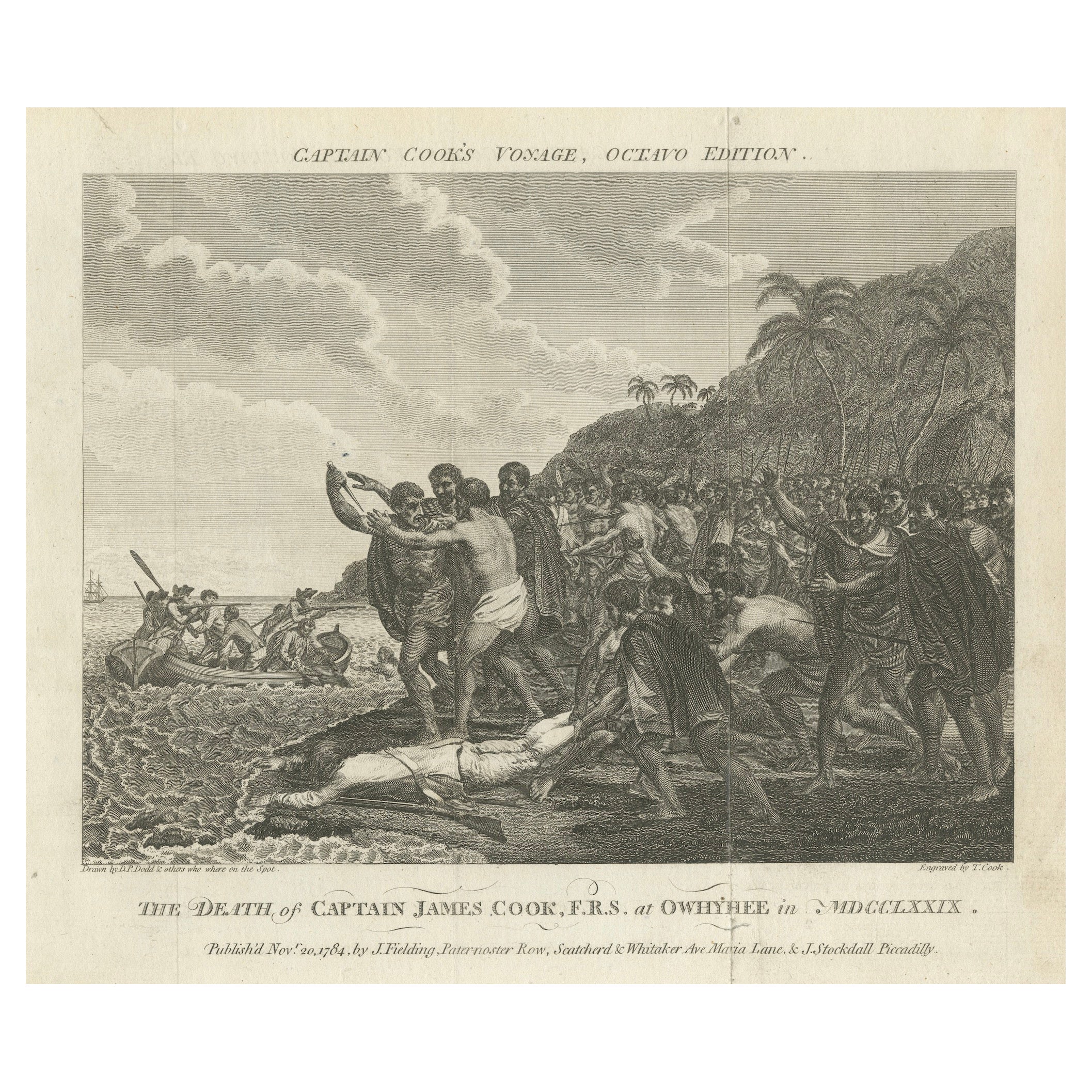
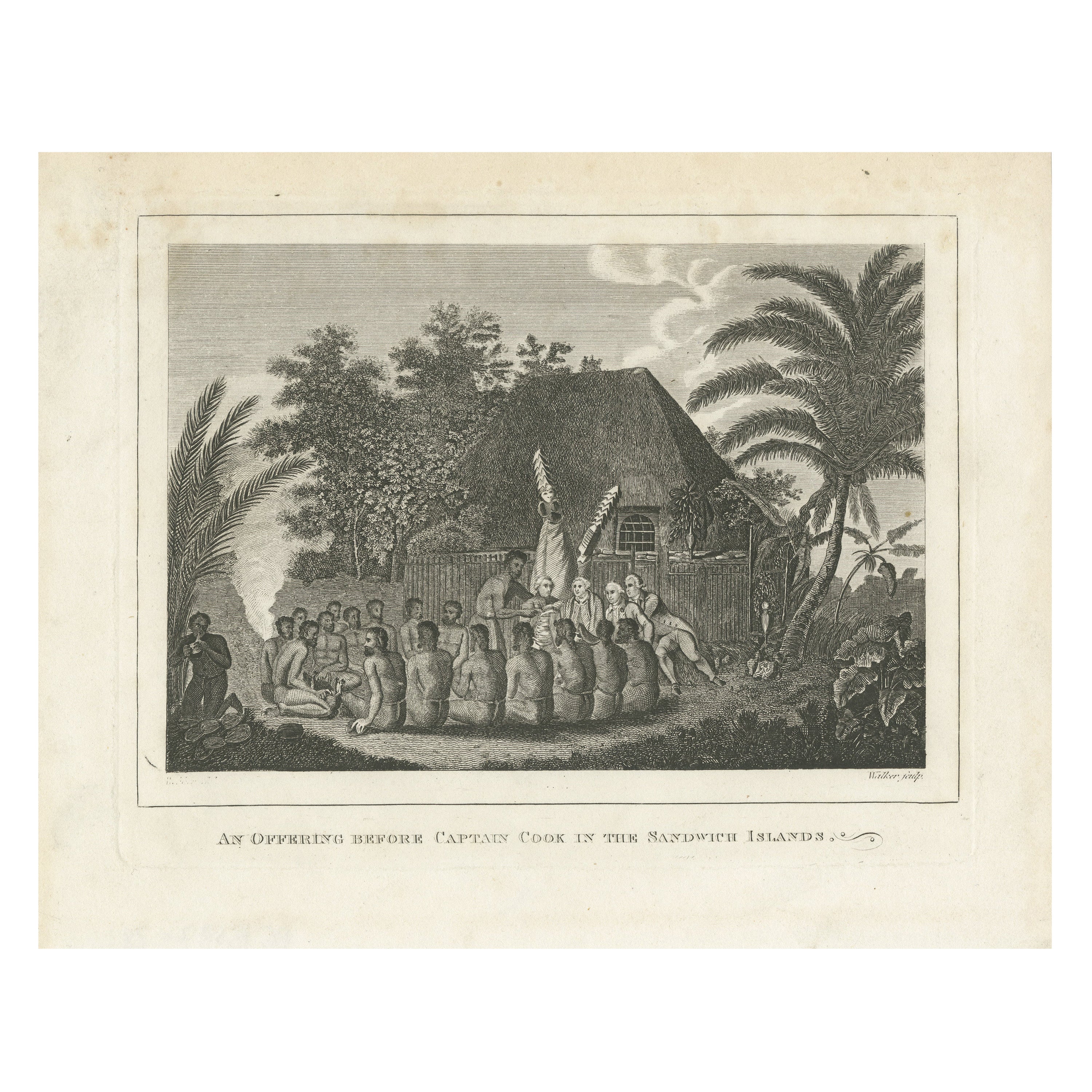
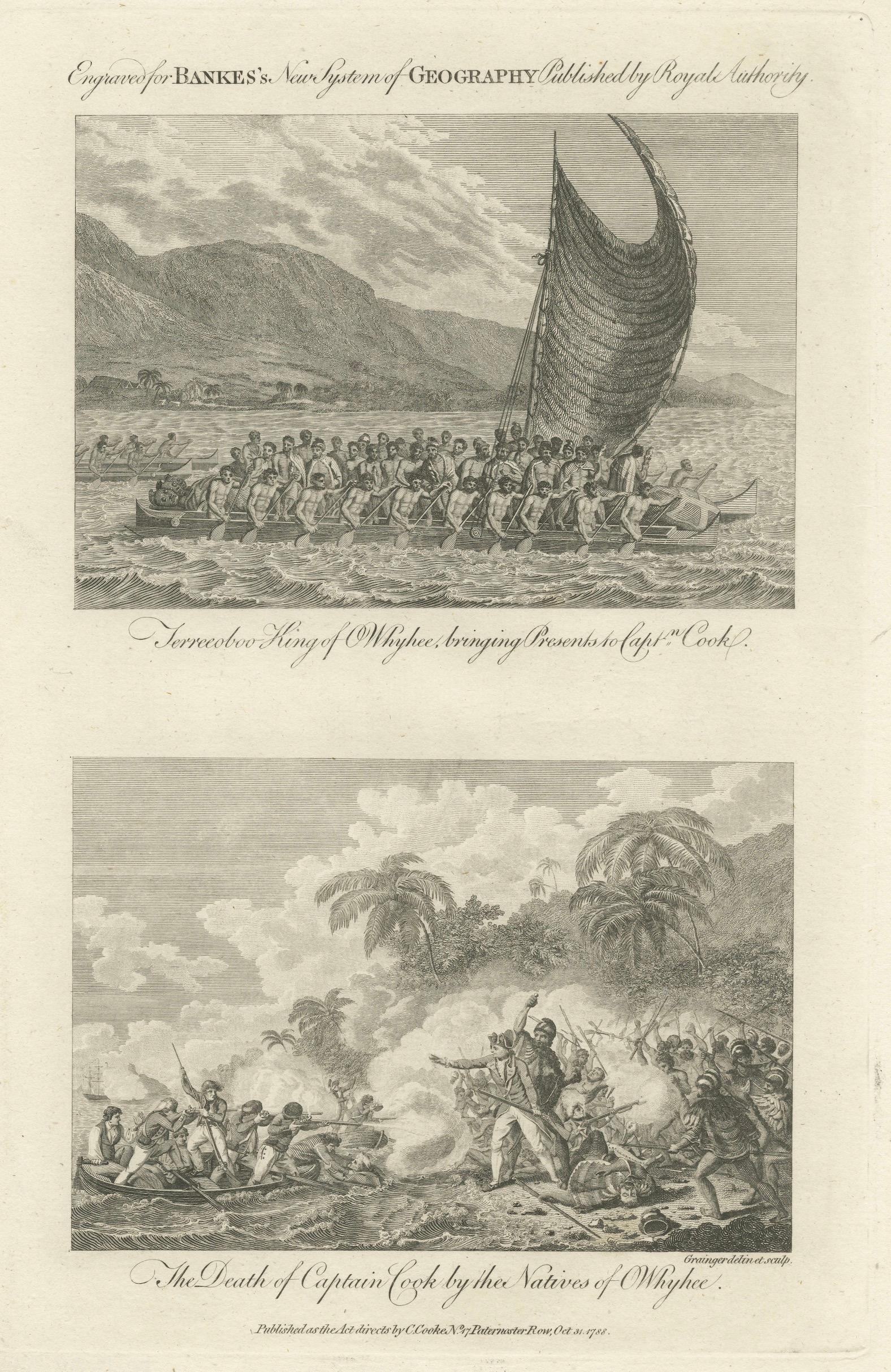
Captain Cook Hawaii Engravings, Death & Royal Encounter, Owhyhee, c.1788

Captain Cook Hawaii Engravings, Death & Royal Encounter, Owhyhee, c.1788

Located in Langweer, NL

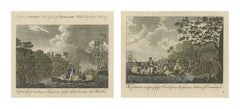
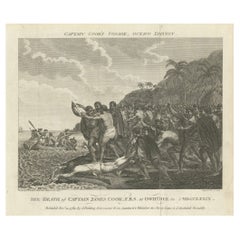
Captain Cook Hawaii Engravings, Death & Royal Encounter, Owhyhee, c.1788 This dramatic and historically significant late 18th-century engraving sheet presents two iconic scenes from...

Category

Antique Late 18th Century British Prints

Materials

Paper

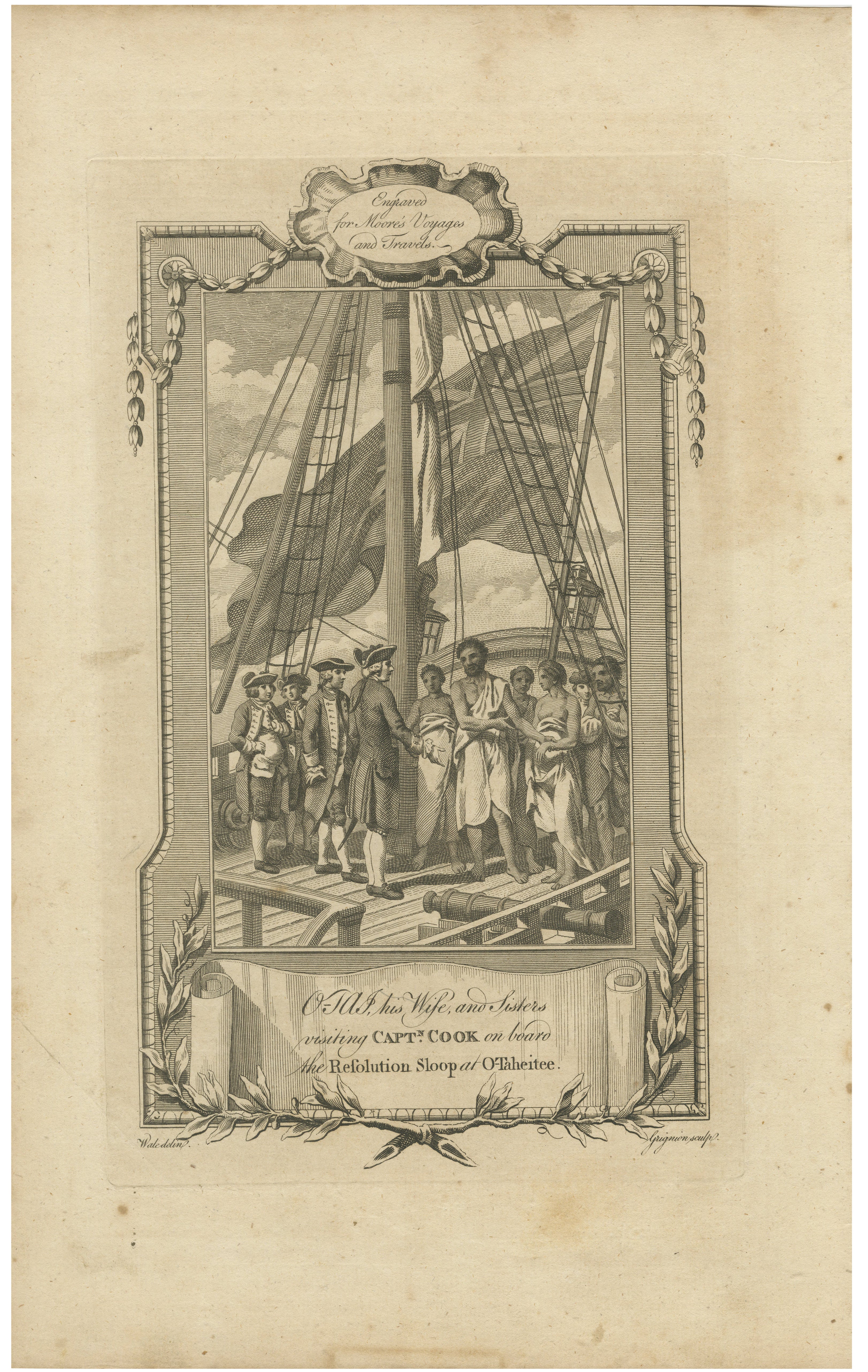
Captain Cook Tahiti Visit Engraving, Otaheite Natives, Pacific, c.1785

Captain Cook Tahiti Visit Engraving, Otaheite Natives, Pacific, c.1785

Located in Langweer, NL

Captain Cook Tahiti Visit Engraving, Otaheite Natives, Pacific, c.1785 This impressive late 18th-century copperplate engraving captures a historic encounter between Captain James Co...

Category

Antique Late 18th Century British Prints

Materials

Paper

Captain Cook's Landing at Middleburgh, Friendly Isles, circa 1790

Captain Cook's Landing at Middleburgh, Friendly Isles, circa 1790

Located in Langweer, NL

An engraving depicting the historical event titled "The Landing of Capt. Cook &c. at Middleburgh, one of the Friendly Isles." Description: - The scene shows Captain James Cook and...

Category

Antique 1790s English Prints

Materials

Paper

Captain Cook in the New Hebrides – Tanna Landing & Erromango Escape, c.1780

Captain Cook in the New Hebrides – Tanna Landing & Erromango Escape, c.1780

Located in Langweer, NL

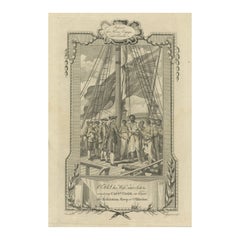
Captain Cook in the New Hebrides – Tanna Landing & Erromango Escape, c.1780 This striking pair of late 18th-century copperplate engravings illustrates two dramatic episodes from the...

Category

Antique Late 18th Century Prints

Materials

Paper

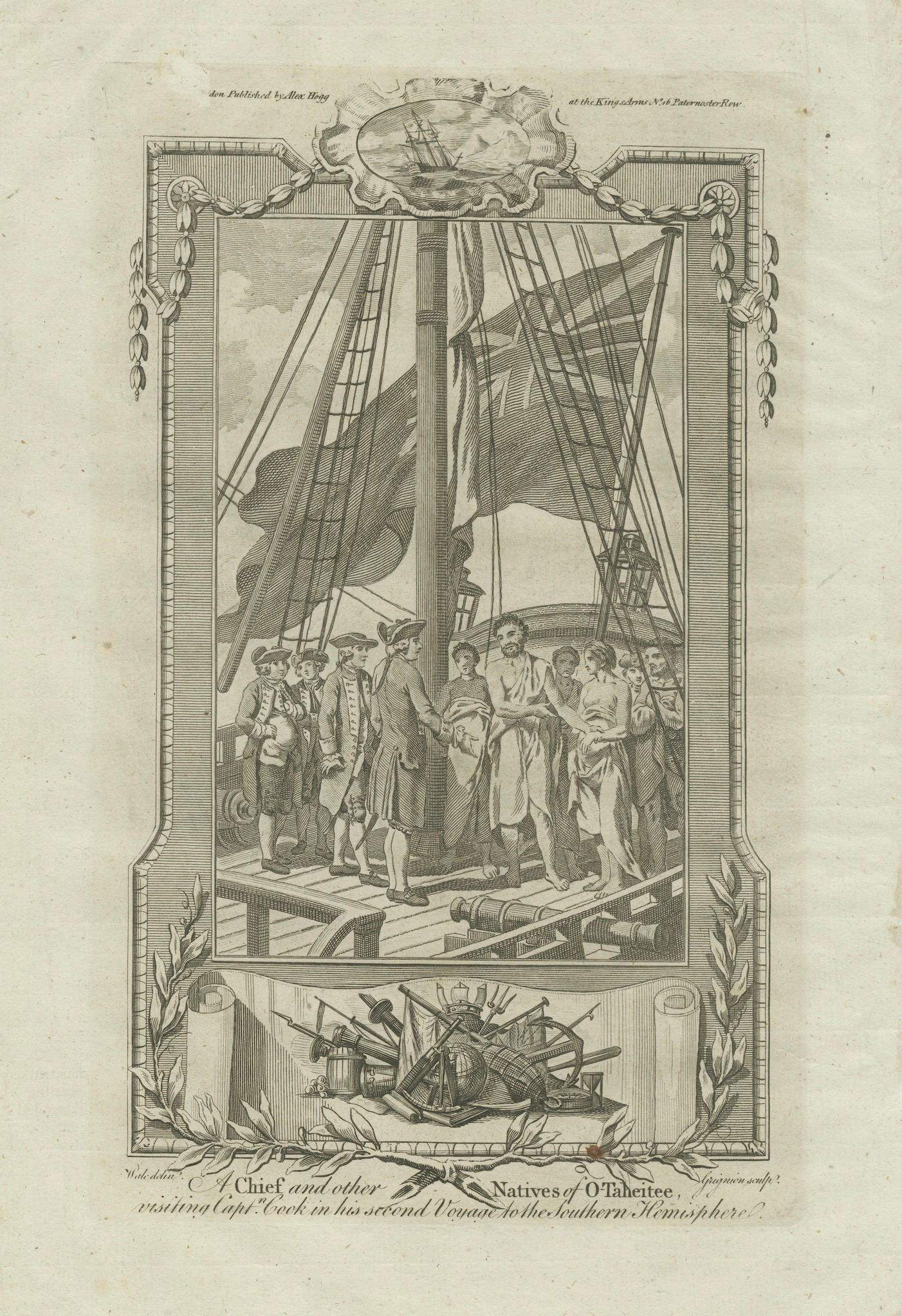
1778 Engraving: Captain Cook's Second Voyage - Meeting the Tahitians

1778 Engraving: Captain Cook's Second Voyage - Meeting the Tahitians

Located in Langweer, NL

1778 Engraving of Captain Cook's Second Voyage: Meeting Tahitians This beautiful copper-line engraving from 1778, created by Charles Grignion (1717-1810) after a work by Samuel Wale...

Category

Antique 1770s British Prints

Materials

Paper

You May Also Like

"King of the Friendly Islands" (Tonga); Engraving from Captain Cook's 3rd Voyage

"King of the Friendly Islands" (Tonga); Engraving from Captain Cook's 3rd Voyage

By John Webber

Located in Alamo, CA

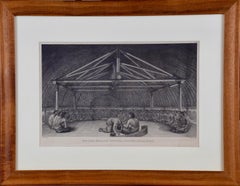
"Poulaho, King of the Friendly Islands, Drinking Kava" is an engraving created by William Sharp (1749-1824), from a drawing by John Webber (1752-1793), who was the artist on Captain James Cook's 3rd and final voyage of discovery. It was published in the atlas of "A Voyage to the Pacific Ocean Undertaken by the Command of His Majesty, for Making Discoveries in the Northern Hemisphere", the official British Admirality sanctioned journal published upon completion of the voyage in London in 1784 by Strahan & Cadell. Captain Cook visited Tonga on his 3rd voyage, which he named The Friendly Islands because of the warm welcome he and his crew received, unlike some of the other more hostile Pacific islands. The engraving depicts Cook and his men observed a kava ceremony at the village of Mu’a on Tongatapu. King Paulaho sits in the centre foreground, his back to the spectator with a man kneeling before him. The ceremonial mat depicted behind Paulaho indicates that nobody was allowed to sit behind him. The figure in the centre holds a single cup, referring to the Tongan custom of offering the cup to the king first. Kava is native to the islands of the South Pacific and was first described for English readers in 1768 by Captain James Cook. The kava root has been used for centuries as a central feature of ceremonies and celebrations because it was able to bring about a calming and pleasant social atmosphere. The root was crushed and processed into coconut milk to become the focal ceremonial beverage, simply referred to as kava. This engraving is presented in a Koa wood frame and a white mat. Koa wood is legendary in Hawaii. There are occasional faint spots, but the print is otherwise in very good condition. This amazing Koa wood is native to Hawaii and it is known for the deep rich colors and varied grain pattern. Koa has an honored heritage in Hawaii and is highly revered and sacred. The word “koa” means “warrior” in Hawaiian. The warriors of King Kamehameha the Great, created canoes and weapons from a wood plentiful on the Big Island of Hawaii. This wood became synonymous with the warriors themselves, and it became known as koa. There are three other engravings listed from the official journal of Captain Cook's 3rd voyage available that are presented in identical Koa wood frames and mats (LU117324682422, LU117324684052, LU117324684032). They would make a wonderful grouping for a display of 2, 3 or 4 prints. A discount is available for a grouping depending on the number of items included. Captain Cook is remembered as one of the greatest explorers and navigators in history. His explorations included Australia, New Zealand and islands of the South Pacific and the northwest coast of North America. Hawaii was discovered by Captain Cook during this voyage. Hawaii was originally called The Sandwich Islands in honor of The Earl of Sandwich...

Category

1780s Realist Figurative Prints
Materials

Engraving

Sandwich Islands Canoe (Hawaii): Framed 18th C. Engraving Captain Cook's Journal

Sandwich Islands Canoe (Hawaii): Framed 18th C. Engraving Captain Cook's Journal

By John Webber

Located in Alamo, CA

"A Canoe of the Sandwich Islands, the Rowers Masked" is an engraving created by Charles Grignion, from a drawing by John Webber (1752-1793), who was the artist on Captain James Cook's 3rd and final voyage of discovery. It is Plate 65 in the atlas of "A Voyage to the Pacific Ocean Undertaken by the Command of His Majesty, for Making Discoveries in the Northern Hemisphere", the official British Admiralty sanctioned journal published upon completion of the voyage in London in 1784 by Strahan & Cadell. This famous image of ten Hawaiian rowers transporting a priest who is carrying a feather-covered image of Kukailimoku, the Hawaiian god of war. The priests and paddlers are all wearing gourd masks in their double-hulled canoe with an upright lateen woven sail. Each hull was shaped from a single large Koa log harvested from island rainforests, where they were carved before being transported to the coast. This engraving is presented in a Koa wood frame and a white mat. There are occasional faint spots, but the print is otherwise in very good condition. Koa is the same wood as was used to make the canoe. Koa wood is legendary in Hawaii. Not only is this amazing wood native to Hawaii, but it is known for the deep rich colors and varied grain pattern. Koa has an honored heritage in Hawaii and is highly revered and sacred. The word “koa” means “warrior” in Hawaiian. The warriors of King Kamehameha the Great, created canoes and weapons from a wood plentiful on the Big Island of Hawaii. This wood became synonymous with the warriors themselves, and it became known as koa. The frame measures 20.75" high, 26.75" wide and 0.88" deep. There are three other engravings listed from the official journal of Captain Cook's 3rd voyage available that are presented in identical Koa wood frames and mat (LU117324682022, LU117324684052, LU117324684062). They would make a wonderful grouping for a display of 2, 3 or 4 prints. A discount is available for a grouping depending on the number of items included. Hawaii was discovered by Captain Cook (1728-1779) during this voyage. Hawaii was originally called The Sandwich Islands in honor of The Earl of Sandwich...

Category

1780s Landscape Prints

Materials

Engraving

Surrender of Tahiti to Captain Wallis: An Original 18th C. Engraving

Surrender of Tahiti to Captain Wallis: An Original 18th C. Engraving

By John Webber

Located in Alamo, CA

"A Representation of the Surrender of the Island of Otaheite to Capt.n Wallis, by the Supposed Queen of Oberea" is an original 18th century engraving created by Sparrow, from a drawi...

Category

1780s Landscape Prints

Materials

Engraving