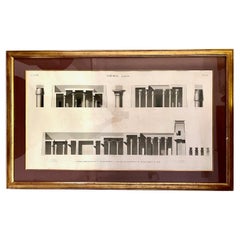
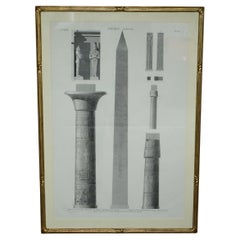
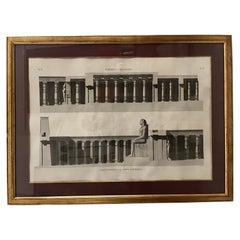
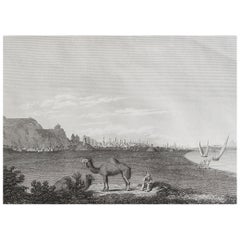
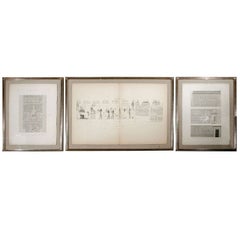
Egypt Architecture & Topography – Denon Voyage Egypt Copper Engravings 1802
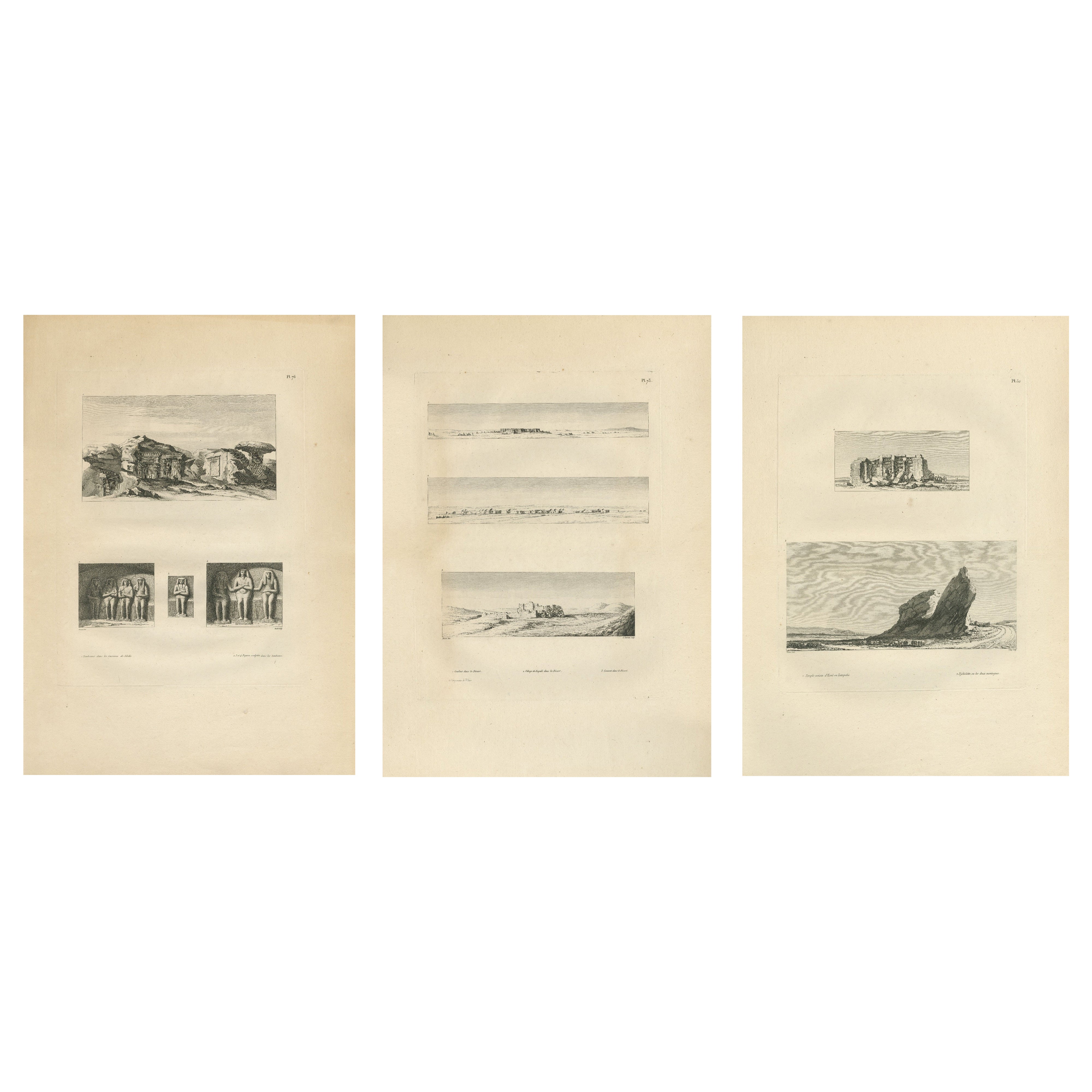
This scholarly and visually compelling set of three copper engravings originates from Voyage dans la Basse et la Haute Égypte, published in Paris in 1802 by Didot and illustrated by Dominique Baron Vivant Denon. Created directly after Napoleon Bonaparte’s Egyptian campaign, Denon’s work represents the earliest coherent European visual and analytical record of ancient Egyptian monuments, landscapes, and architectural systems.
Note: The engravings are offered unframed, enabling custom framing to personal or interior preferences.
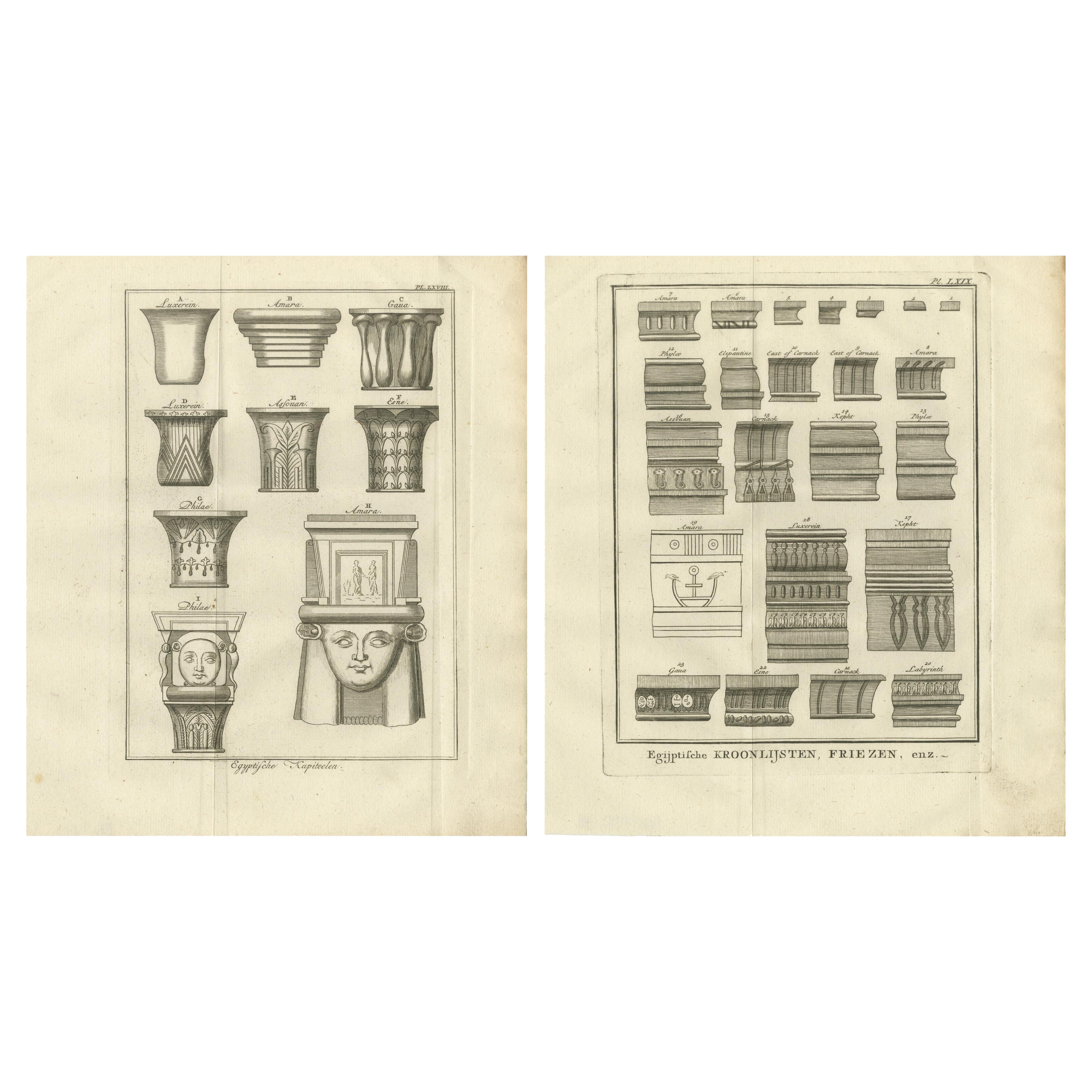
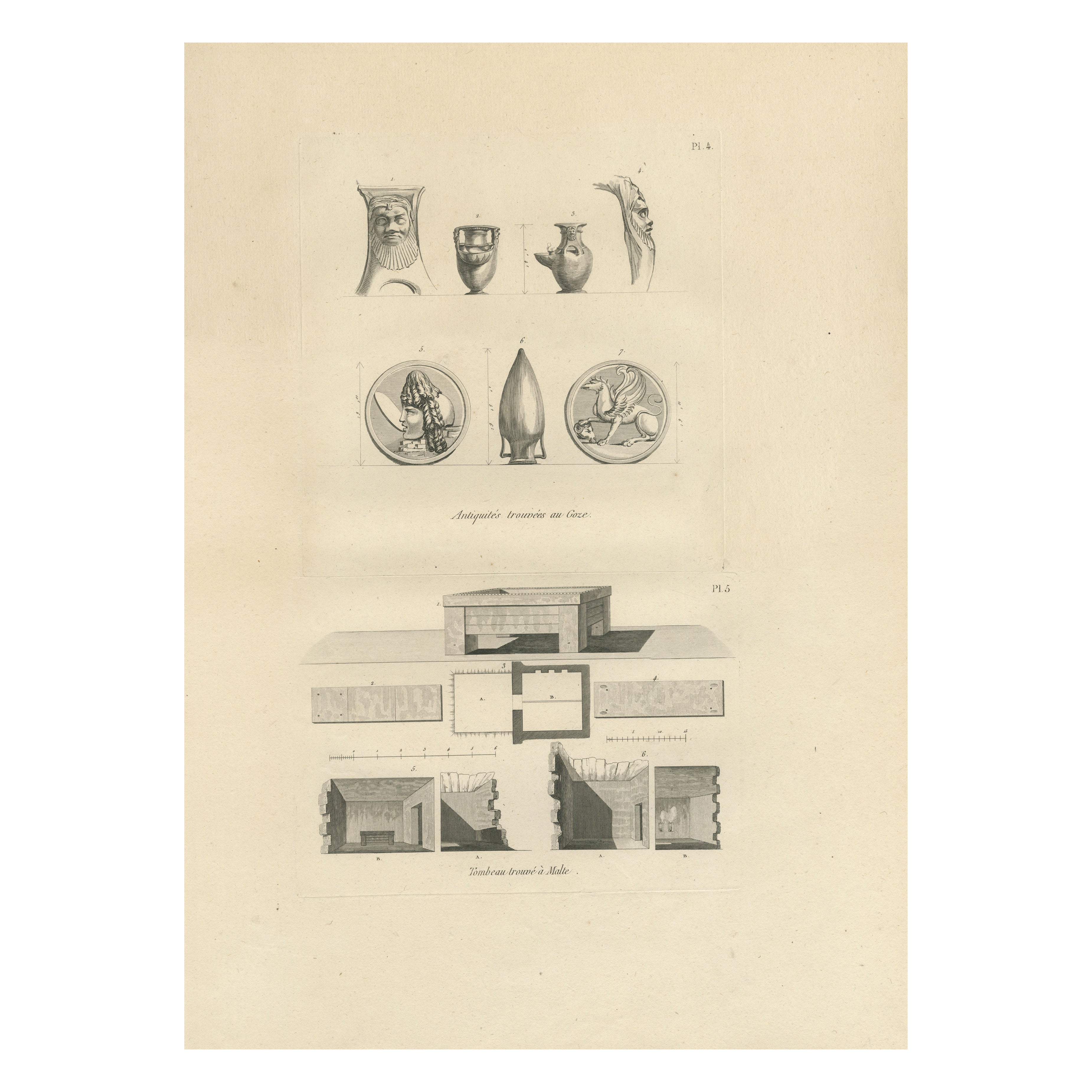
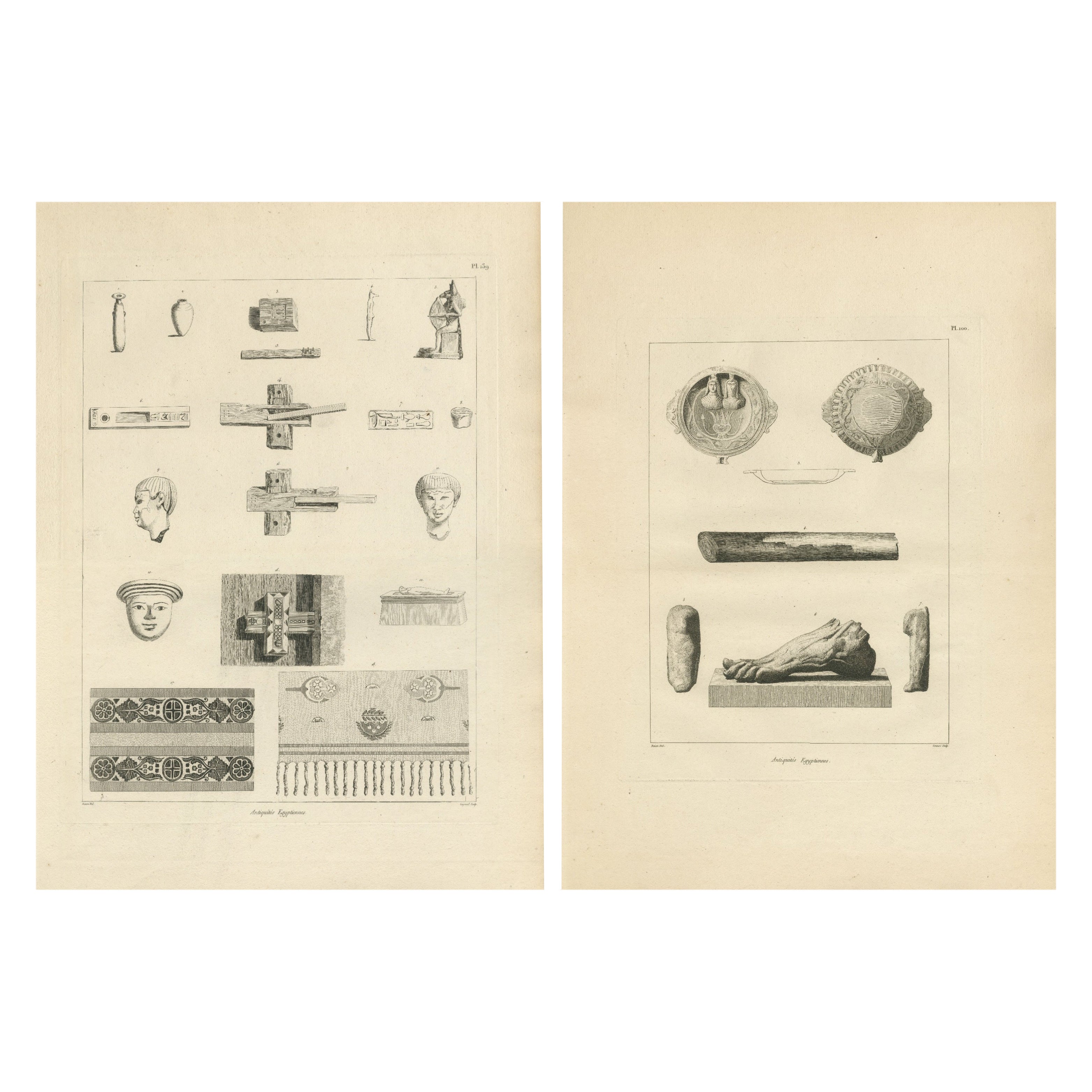
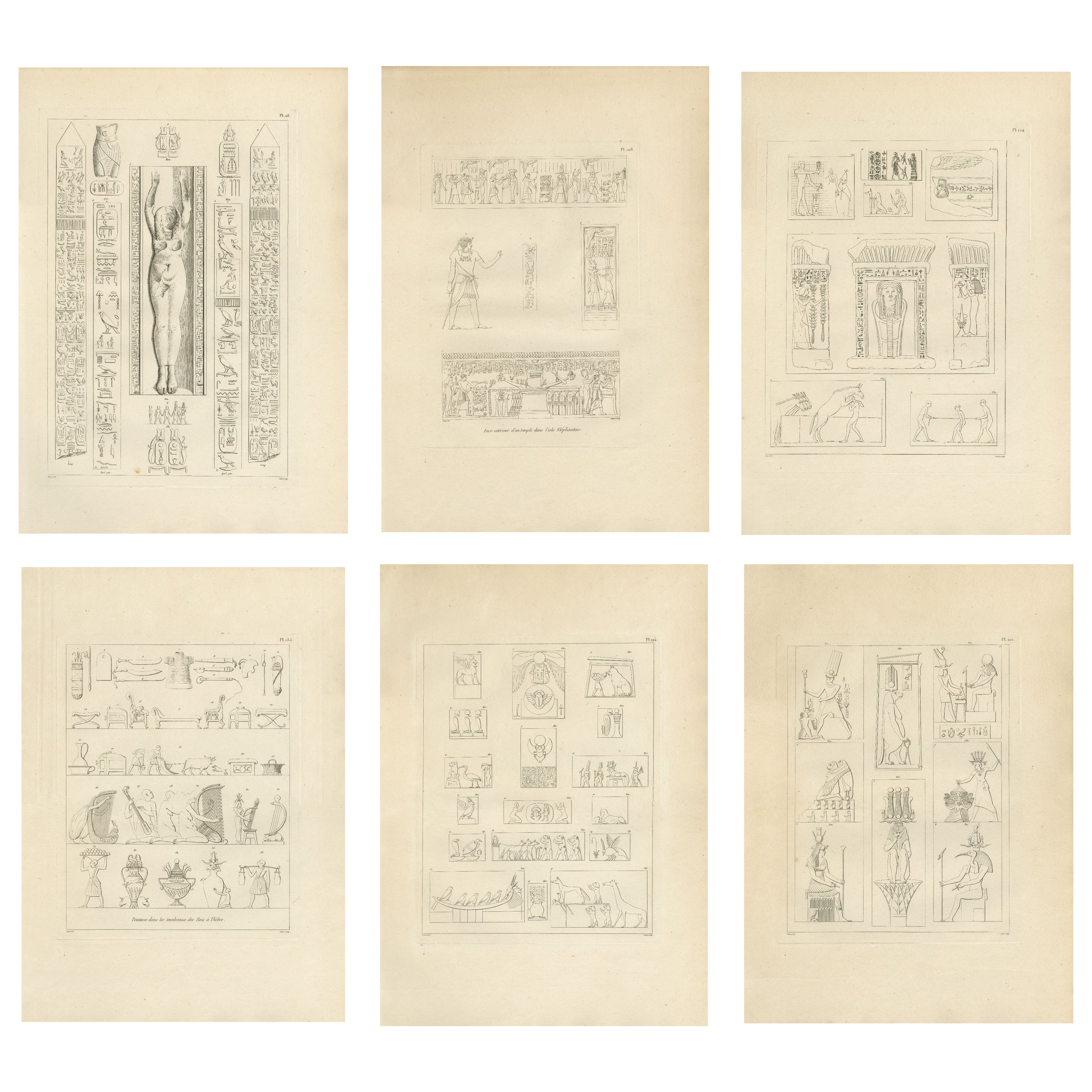
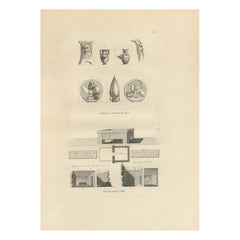
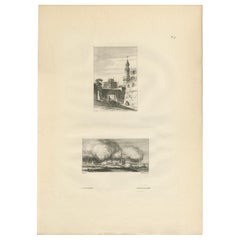
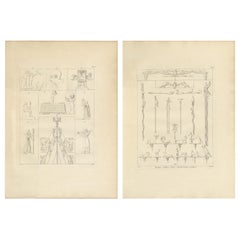
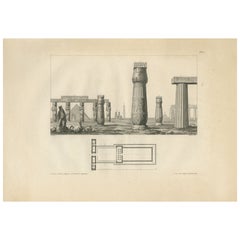
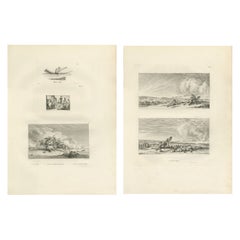
The three plates form a complementary group that combines architectural elevation, measured detail, and topographical mapping. One plate presents Egyptian statuary, obelisks, and temple views alongside architectural sections and elevations, blending pictorial representation with analytical clarity. Another focuses on geographical and topographical mapping, showing terrain, river systems, and site relationships with scientific precision. The third plate emphasizes architectural elements and structural details of temple columns and monuments, including plans and sectional views that reflect the expedition’s systematic approach to documentation.
Unlike later Romantic or purely decorative visions of Egypt, these engravings are rooted in Enlightenment ideals of observation, measurement, and classification. Denon worked from direct sketches made on site during his thirteen-month stay in Egypt (1798–1799), often under difficult conditions. His drawings were engraved on copper by leading French engravers and printed on firm laid paper, resulting in plates that balance fine graphic elegance with empirical rigor.
As a group, these works read as an intellectual ensemble, illustrating how landscape, architecture, and monument were understood as interconnected systems by early Egyptologists. They appeal strongly to collectors of Napoleonic history, early archaeology, and architectural printmaking, while also offering powerful decorative impact for interiors that favor historical depth and academic restraint.
Condition report:
Good antique condition overall. Light age-toning and scattered spotting consistent with early 19th-century laid paper. Minor surface marks and occasional small marginal imperfections may be present. Plate marks visible. No major tears or losses; sheets remain sound and well-preserved.
Framing tips:
These plates work best with generous ivory or soft off-white mats to emphasize their graphic clarity and original sheet size. Dark walnut, ebonized wood, or restrained antique gilt frames complement the academic and architectural character. Particularly effective when framed as a coordinated trio with consistent spacing.
Technique: Copper engraving
Maker: Dominique Baron Vivant Denon, Paris, 1802