Want more images or videos?
Request additional images or videos from the seller
1 of 10

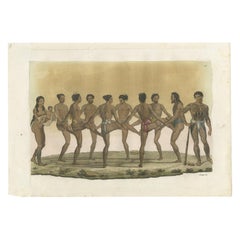
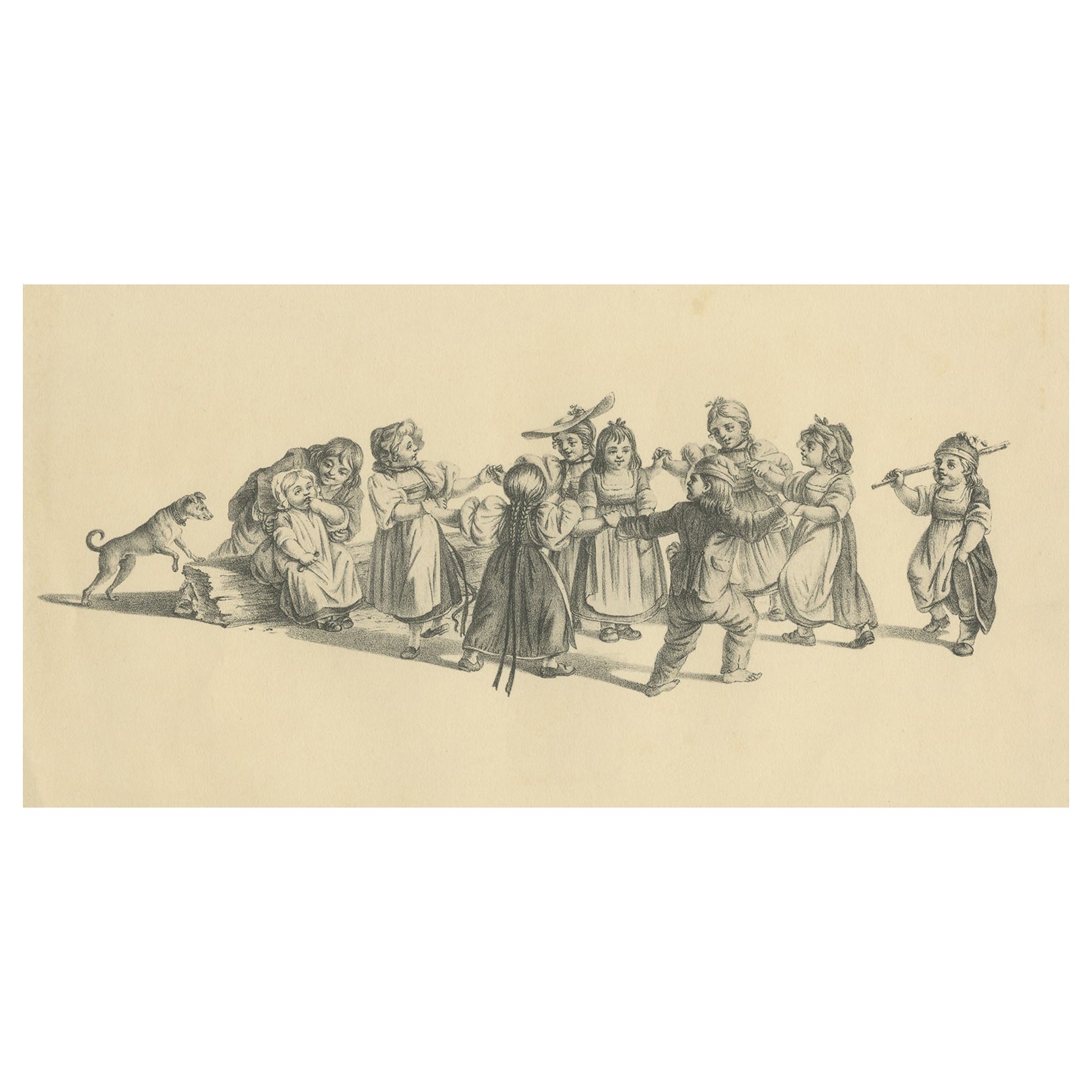
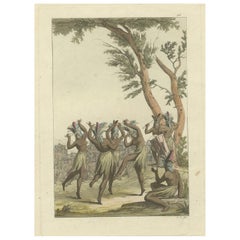
Engraving of Traditional Chilean Circle Dance: A Festive Gathering in 1827 Chile

$376.58
£279.05
€320VAT Included
CA$524.23
A$533.32
CHF 306.45
MX$6,413.22
NOK 3,577.79
SEK 3,599.21
DKK 2,440.01

About the Item

Antique print titled "Danze de' Chiliesi" (Dance of the Chileans), from the historical work "Il Costume Antico e Moderno" by Giulio Ferrario. The print, created in 1821, showcases a traditional Chilean dance, vividly captured in line and aquatint etching with original hand coloring on wove (vellin) paper. The scene depicts a group of Chilean dancers in a circular formation, engaging in a traditional dance. The dancers are adorned in colorful attire, featuring breechcloths, leggings, and vibrant headdresses with feathers, which reflect their cultural heritage and the festive nature of the dance. The setting is outdoors, possibly during a community celebration or ritual, indicated by the natural backdrop and the casual yet organized arrangement of the figures. Cultural and Historical Significance This print is significant as it provides a visual documentation of Chilean cultural practices from the early 19th century, emphasizing the traditional dances that were an integral part of community gatherings and celebrations. The artwork, by C. Bramati and Paolo Fumagalli after designs by Giulio Ferrario, is part of a larger series that aimed to capture the costumes and customs of people around the world, offering insights into the diversity of cultural expressions during a time of burgeoning global awareness. The detailed depiction not only highlights the dance but also serves as an ethnographic record, preserving aspects of Chilean culture that might have evolved or faded over time. This work, along with others in the series, was widely distributed and appreciated for its educational and artistic value, making significant contributions to the understanding of global cultural heritage in the 19th century. ‘Tavole XXVIII. Danze de’ Chiliesi.’ Line & aquatint etching with original hand colouring on wove (vellin) paper. Sheet size: 33 x 23,5 cm. (13 x 9,3 inch). Image size: 21 x 15,5 cm. (8,3 x 6,1 inch). In more detail: From: ‘Il Costume Antico e Moderno …, l’America.’ , by Giulio Ferrario, published in Milan in 17 volumes (first issue), published sequentially between c. 1815/1816 until 1826 after first being issued in 143 weekly installments. This Italian volume has the date 1821. The second issue was published in 21 volumes in 1827. The work appeared in Italian and French. Smaller size editions with smaller much less elaborate plates were published in Florence (1823-38), Naples (1831-42) and even a 16mo. editon in Livorno (1830). Original blindstamp at bottom right image. The sources used for this work are wide including van Humboldt, von Wied etc. Made by ‘C. Bramati and Paola Fumagalli’ after ‘Giulio Ferrario’. Giulio Ferrario was founder of the ‘Societa Tipografica de Classici Italiani’ and served as the director of the Braidense National Library in Milan, Italy. Artists that worked on this monumental work are: Gallo Gallina, D.K. Bonatti, A. Biasioli, L. Rossi, Paolo Fumagalli, Gaetano Zancon (1771-1816), G. Bigatti, C. Bramati, G. Gallo, C. Bottiglia, G. Castellini, Antonio Rancati (1784-1816), Vittorio Raineri, Sydney Parkinson, Castelli, A. Sanquirico (1777-1849), Angelo Monticelli (1778-1837), A.L. Rossins, Bottigella and others. 1. Traditional Chilean dance 2. Cultural heritage 3. 19th-century ethnography 4. Giulio Ferrario 5. "Il Costume Antico e Moderno" 6. Antique print 7. Circle dance 8. Community celebration 9. Chilean costume 10. Historical illustration
  • Dimensions:
    Height: 9.06 in (23 cm)Width: 13.39 in (34 cm)Depth: 0.01 in (0.2 mm)
  • Materials and Techniques:
  • Place of Origin:
  • Period:
  • Date of Manufacture:
    circa 1827
  • Condition:
    Condition: Very good, given age. General age-related toning and/or occasional minor defects from handling. Please study scan carefully.
  • Seller Location:
    Langweer, NL
  • Reference Number:
    Seller: BG-13806-791stDibs: LU3054341208852

More From This Seller

View All
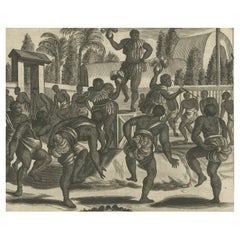
Ritual Dance: Expressions of Cultural Heritage in an African Ceremony, 1827

Ritual Dance: Expressions of Cultural Heritage in an African Ceremony, 1827

Located in Langweer, NL

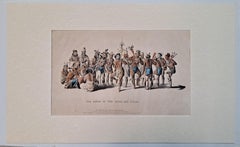
The print is from "Il Costume Antico e Moderno" by Giulio Ferrario, specifically depicting the "Le Lullunge" feast in Senegambia. This festival is illustrated as part of the extensive series detailing the customs, costumes, and daily life of people from different parts of the world. The illustration captures a lively and culturally significant dance that forms part of the "Le Lullunge" celebrations, showcasing traditional attire and communal participation, which are central to the event in Senegambian culture. The illustration not only serves as a vibrant representation of the dance and celebration but also as an ethnographic record from the early 19th century, emphasizing the richness of Senegambian traditions. The term "Senegambia" historically referred to a region in West Africa that encompassed parts of what are today known as Senegal and The Gambia. This area is known for its rich cultural heritage, including vibrant festivals and communal celebrations like the one depicted in the illustration. The "Le Lullunge" feast, as illustrated in Giulio Ferrario's "Il Costume Antico e Moderno," captures the traditional dances and social practices of the peoples in this West African region. This original antique hand-colored print depicts a vibrant scene of Native African dance, possibly part of a ceremonial or ritualistic activity. The individuals are animatedly engaged in dance, with their limbs dynamically positioned, suggesting vigorous movement. Each figure is adorned with elaborate feathered headdresses and carries feathers or other items as part of their dance. These accessories likely have cultural significance, possibly denoting status, role in the ceremony, or spiritual symbolism. The attire of the dancers is simple yet functional for their vigorous activity, consisting of skirts that allow for ease of movement. Their outfits are decorated with additional elements that may indicate tribal affiliation or personal achievement. The dancers are barefoot, connecting them physically and symbolically to the earth, which is a common aspect in many African cultural practices emphasizing a connection to nature. The setting of the dance is outdoors, under a large tree, indicating the importance of natural surroundings for the event. This could be a communal gathering place, chosen for its significance within their community or for its natural beauty and tranquility. Overall, this image captures a moment of cultural expression, highlighting the importance of dance in Native African traditions as a form of communication, celebration, or spiritual practice. The detail and color used in the depiction aim to convey the vibrancy and energy of the scene, reflecting the artist’s perspective on these cultural practices. In more detail: From: ‘Il Costume Antico e Moderno …, l’America.’ , by Giulio Ferrario, published in Milan in 21 volumes by Antonio Fortunato Stella in 1827 (first edition, second issue). The 17 volumes of the first issue were published sequentially between c. 1815/1816 until 1826 after first being issued in 143 weekly installments. The work appeared in Italian and French. Smaller size editions with smaller much less elaborate plates were published in Florence (1823-38), Naples (1831-42) and even a 16mo. editon in Livorno (1830). Original blindstamp at bottom right image. The sources used for this work are wide. Made by ‘Gallo Gallina’ after ‘Giulio Ferrario’. Giulio Ferrario was founder of the ‘Societa Tipografica de Classici Italiani’ and served as the director of the Braidense National Library in Milan, Italy. Artists that worked on this monumental work are: Gallo Gallina, D.K. Bonatti, A. Biasioli, L. Rossi, Paolo Fumagalli, Gaetano Zancon (1771-1816), G. Bigatti, C. Bramati, G. Gallo, C. Bottiglia, G. Castellini, Antonio Rancati (1784-1816), Vittorio Raineri, Sydney Parkinson...

Category

Antique 1820s Prints

Materials

Paper

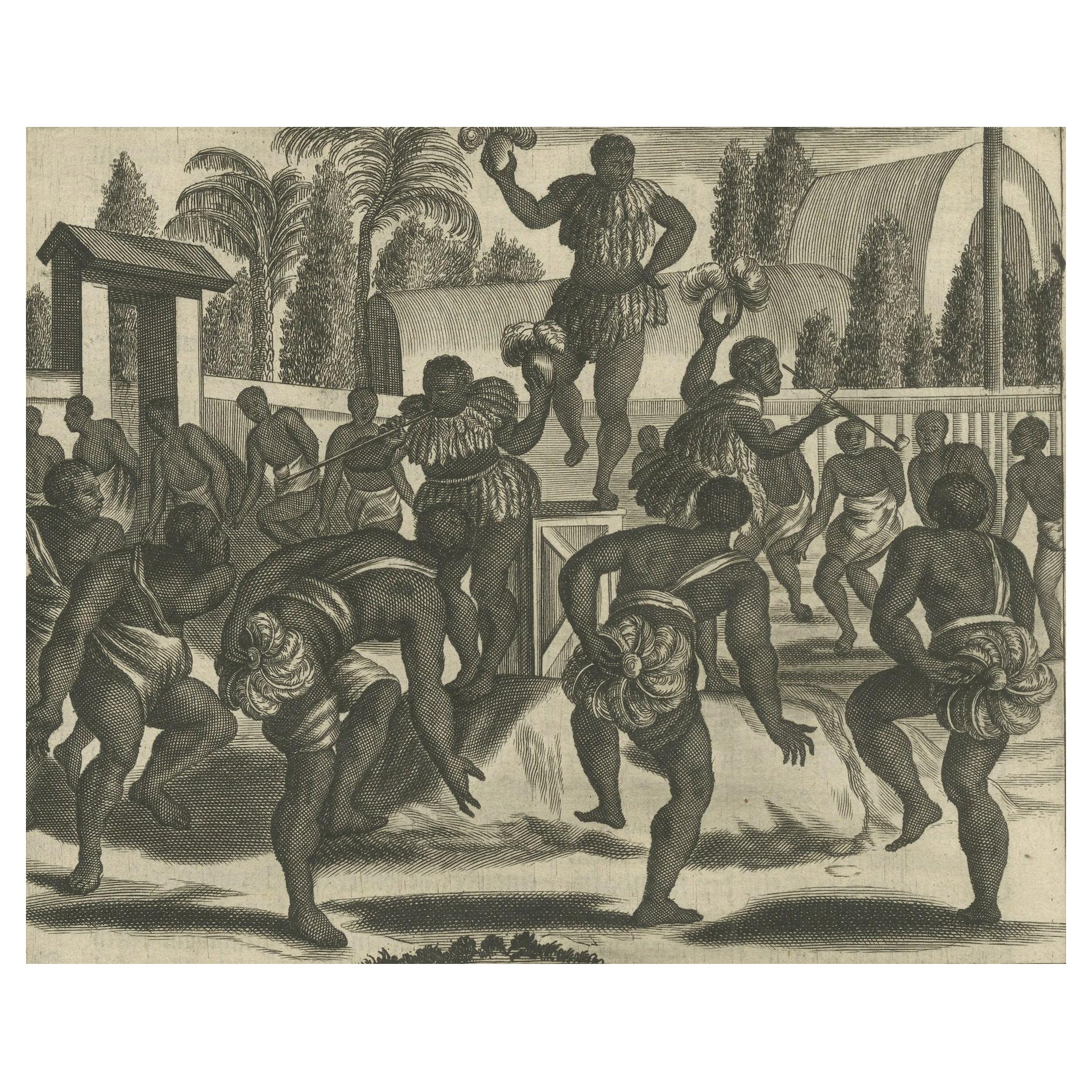
Ritual Dance in Brazil in the 17th Century on a Copper Engraving by Montanus

Ritual Dance in Brazil in the 17th Century on a Copper Engraving by Montanus

Located in Langweer, NL

Title: "Ritual Dance in Brazil" Description: This original copper engraving from Arnoldus Montanus' "Die Unbekannte Neue Welt oder Beschreibung des Welt-teils Amerika und des Sud-La...

Category

Antique 1670s Prints

Materials

Paper

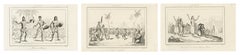
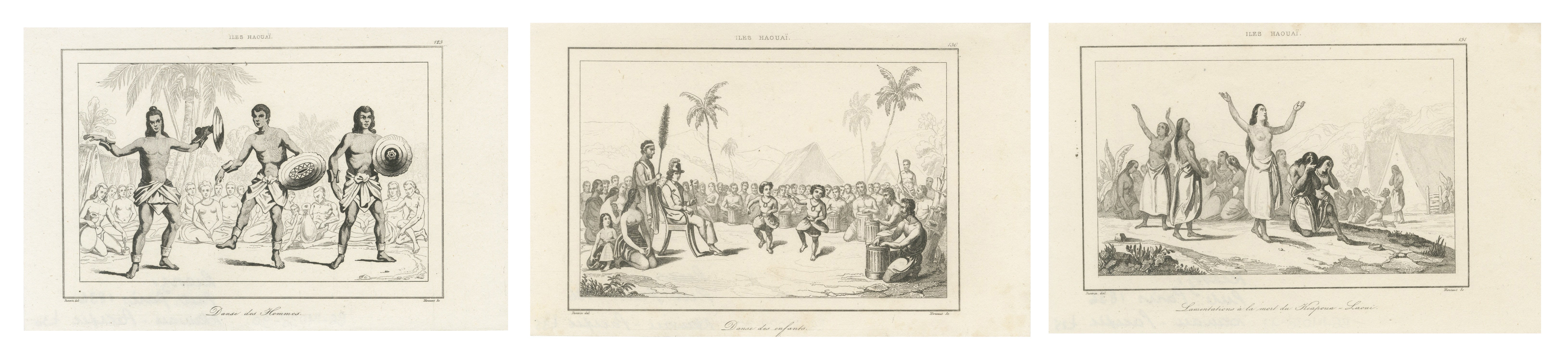
Three Antique Hawaii Engravings – Hula Dance, Native Ceremony & Lamentation 1836

Three Antique Hawaii Engravings – Hula Dance, Native Ceremony & Lamentation 1836

Located in Langweer, NL

Three Antique Hawaii Engravings – Hula Dance, Native Ceremony & Lamentation, 1836 Description: This set of three original 19th-century engravings illustrates scenes of traditional l...

Category

Antique Early 19th Century French Prints

Materials

Paper

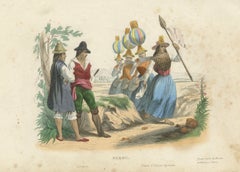
Original Antique Costume Print of Peru – Arrieros & Aymara Dance, c.1840

Original Antique Costume Print of Peru – Arrieros & Aymara Dance, c.1840

Located in Langweer, NL

Title: Original Antique Costume Print of Peru – Arrieros & Aymara Dance, c.1840 Description: An original antique hand-coloured engraving titled "Perou", depicting traditional costumes and customs of Peru. The print was published in France around 1840 as part of the celebrated travel publication *Voyage autour du Monde et Naufrages Célèbres*. The composition combines two characteristic scenes of nineteenth-century Peru. On the left are *Arrieros*, the muleteers who played an essential role in transporting goods across the Andes before the arrival of modern roads and railways. Wearing their distinctive regional dress, they represent one of the most recognisable occupations of the Andean world. On the right, the print illustrates a festive *Danse d'Indiens Aymaras*, showing Aymara men and women performing a traditional dance accompanied by panpipes and drums. The elaborate feathered and balloon-shaped ceremonial headdresses, colourful costumes and musical instruments celebrate the rich cultural traditions of the Indigenous peoples of the high Andes. During the nineteenth century, European publishers produced beautifully hand-coloured costume prints documenting the peoples, customs and landscapes encountered by explorers and travellers. These engravings offered readers an illustrated journey through distant cultures and remain highly sought after today for their ethnographic and decorative appeal. The delicate original hand colouring brings the costumes to life while preserving the fine engraved detail, making this an attractive example of early nineteenth-century travel illustration. This is an original antique print printed...

Category

Antique Mid-19th Century French Prints

Materials

Paper

Dance of California Indians, Tower of Tlaxcallan – Hand-Colored Engraving, c1800

Dance of California Indians, Tower of Tlaxcallan – Hand-Colored Engraving, c1800

Located in Langweer, NL

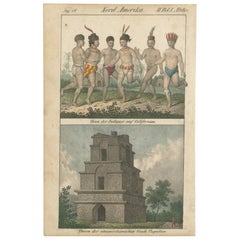
Dance of California Indians, Tower of Tlaxcallan – Hand-Colored Engraving, c.1800 This striking early 19th-century hand-colored engraving titled Tanz der Indianer auf Californien w...

Category

Antique Early 1800s French Prints

Materials

Paper

You May Also Like

War Dance of the Sauks and Foxes Hand Colored Lithograph C.1837

War Dance of the Sauks and Foxes Hand Colored Lithograph C.1837

Located in San Francisco, CA

War Dance Of The Sauks And Foxes Hand Colored Lithograph c.1837 Published by E.C. Biddle, Philadelphia. Beautiful hand colored lithograph from the "History of the Indian Tribes of ...

Category

1830s Naturalistic Figurative Prints

Materials

Lithograph

19th Century French Engraving of a Wedding Dance

19th Century French Engraving of a Wedding Dance

Located in Sofia, BG

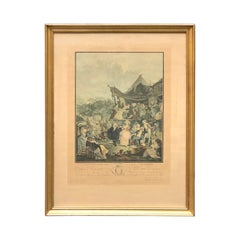
Fine colourful engraving presenting a wedding dance and all the guests around. France, circa 1890.  

Category

Antique Late 19th Century French Drawings

Materials

Paper

Balok Dancers - Lithograph - 1862

Balok Dancers - Lithograph - 1862

Located in Roma, IT

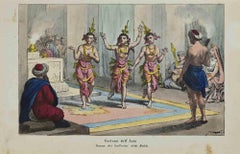
Customs -Balok Dancers is a Hand-colored lithograph on paper realized in 1862. Titled on the lower. The artwork belongs to the Suite Uses and customs of all the peoples of the univ...

Category

1860s Modern Figurative Prints

Materials

Lithograph

Original Antique Ethnographical Print, Figures, New South Wales, Australia, 1809

Original Antique Ethnographical Print, Figures, New South Wales, Australia, 1809

Located in St Annes, Lancashire

Wonderful ethnographical print. A copper-plate engraving after Lesieur Published by Sherwood, Neely & Jones. Dated 1809 Unframed.  

Category

Antique Early 1800s English Folk Art Prints

Materials

Paper

"A Dance in Otaheite" (Tahiti), Engraving from Captain Cook's 3rd Voyage

"A Dance in Otaheite" (Tahiti), Engraving from Captain Cook's 3rd Voyage

By John Webber

Located in Alamo, CA

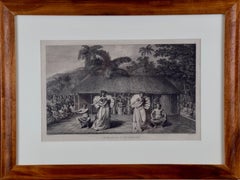
"A Dance in Otaheite" (Tahiti) is an engraving created by William Sharp (1749-1824), from a drawing by John Webber (1752-1793), who was the artist on Captain James Cook's 3rd and final voyage of discovery. It is a plate in the atlas of "A Voyage to the Pacific Ocean Undertaken by the Command of His Majesty, for Making Discoveries in the Northern Hemisphere", the official British Admirality sanctioned journal published upon completion of the voyage in London in 1784 by Strahan & Cadell. Two women and two men wearing ceremonial costumes, performing a dance outdoors standing on a mat. Three men are playing the drums in the background, in front of a thatched roof building. An audience of men are sitting on both sides of the stage. By the time Webber arrived in Tahiti, 'south sea' imagery had become familiar. Webber gave concentrated attention to dance. He had the opportunity to distinguish the Tahitian dance from the more formalized dancing of Tonga. Whereas they seem to have called to mind the more formal dances of antiquity, the Tahitian dancing aroused memories of peasant and folk dancing. This engraving is professionally framed in Koa wood. Koa wood is legendary in Hawaii. Not only is this amazing wood native to Hawaii, but it is known for the deep rich colors and varied grain pattern. Koa has an honored heritage in Hawaii and is highly revered and sacred. The word “koa” means “warrior” in Hawaiian. The warriors of King Kamehameha the Great, created canoes and weapons from a wood plentiful on the Big Island of Hawaii. This wood became synonymous with the warriors themselves, and it became known as koa. The print is in excellent condition. There are three other engravings listed from the official journal of Captain Cook's 3rd voyage available that are presented in identical Koa wood frames and double mats (LU117324682432, LU117324684052, LU117324684062). They would make a wonderful grouping for a display of 2, 3 or 4 prints. A discount is available for a grouping depending on the number of items included. Hawaii was discovered by Captain Cook during this voyage. Hawaii was originally called The Sandwich Islands in honor of The Earl of Sandwich...

Category

1780s Realist Landscape Prints

Materials

Engraving

Ancient African Customs - Lithograph - 1844

Ancient African Customs - Lithograph - 1844

Located in Roma, IT

Ancient Costumes is a lithograph made in 1844. Hand colored. Good condition.

Category

1840s Modern Figurative Prints

Materials

Lithograph