Want more images or videos?
Request additional images or videos from the seller
1 of 6

Exquisite 1755 St. John's Wort Botanical Engraving by Philip Miller

$207.33
$259.1620% Off
£153.75
£192.1820% Off
€176VAT Included
€22020% Off
CA$289.48
CA$361.8520% Off
A$293.71
A$367.1420% Off
CHF 167.79
CHF 209.7320% Off
MX$3,556.11
MX$4,445.1320% Off
NOK 1,971.17
NOK 2,463.9620% Off
SEK 1,968.56
SEK 2,460.7020% Off
DKK 1,341.98
DKK 1,677.4820% Off

About the Item

A copper engraving of Hypericum plants, commonly known as St. John's Wort, from Philip Miller's influential work, *Figures of the Most Beautiful, Useful and Uncommon Plants Described in the Gardener's Dictionary*. Published in 1755, this detailed illustration showcases various species of Hypericum, highlighting their distinctive bright yellow flowers and leaf structures. Details about the Print: - Plate Title: "Hypericum floribus trijngus, calybus acutis, foliis oblongis, apice revolutis, caule fruticoso" and other varieties. - Artist: T. Jeffreys, the engraver who meticulously captured the fine details of these plants. - Publication: Philip Miller's *Figures of the Most Beautiful, Useful and Uncommon Plants Described in the Gardener's Dictionary*, which is a notable work for its contribution to botanical sciences and horticulture in the 18th century. About Philip Miller: Philip Miller (1691-1771) was an esteemed British botanist and horticulturist who served as the chief gardener at the Chelsea Physic Garden. His profound knowledge and contributions to the field of botany were recognized when he was elected a Fellow of the Royal Society. Miller's works were highly influential, helping to spread knowledge about plant cultivation and properties, and his Gardener’s Dictionary was particularly significant for its comprehensive coverage of known plant species during his time, richly illustrated with such engravings. This print not only serves as a botanical illustration but also as a historical artifact, reflecting the Enlightenment era's emphasis on scientific understanding and categorization of the natural world.
  • Dimensions:
    Height: 14.97 in (38 cm)Width: 9.26 in (23.5 cm)Depth: 0 in (0.02 mm)
  • Materials and Techniques:
  • Period:
    1750-1759
  • Date of Manufacture:
    1755
  • Condition:
    Condition: good, given age. Overall light foxing. Patina rich strong paper with short left margin. Borders are supported on reverse. General age-related toning and/or occasional minor defects from handling. Please study scan carefully.
  • Seller Location:
    Langweer, NL
  • Reference Number:
    Seller: BG-13748-1471stDibs: LU3054341339402

More From This Seller

View All
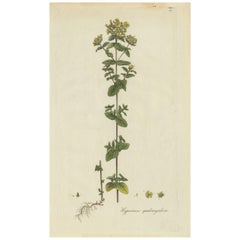
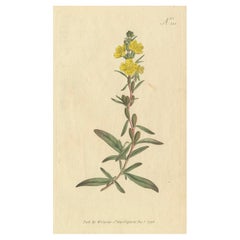
Antique Botany Print of a Species of St. Johnswort by Curtis, circa 1777

Antique Botany Print of a Species of St. Johnswort by Curtis, circa 1777

Located in Langweer, NL

Antique botany print titled 'Hypericum Quadrangulum'. Hand colored engraving of a species of St. Johnswort. This print originates from 'Flora Londinensis' by William Curtis.

Category

Antique Late 18th Century Prints

Materials

Paper

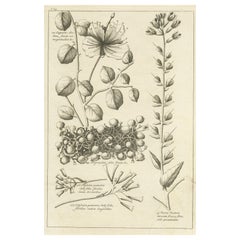
Antique Engraving of the Caper Bush and Other Plants, 1773

Antique Engraving of the Caper Bush and Other Plants, 1773

Located in Langweer, NL

Antique print titled 'Capparis Arabica (..)'. Old botany print depicting the caper bush, shepherd's purse and other plants. Originates from the first Dutch editon of an interesting t...

Category

Antique 18th Century Prints

Materials

Paper

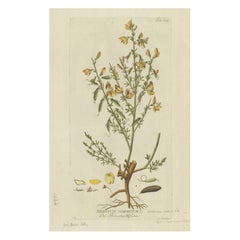
Scotch Broom Botanical Engraving - Icones Plantarum Medicinalium, 1788

Scotch Broom Botanical Engraving - Icones Plantarum Medicinalium, 1788

Located in Langweer, NL

"Scotch Broom Botanical Engraving - Icones Plantarum Medicinalium, 1788" Description This hand-colored engraving features the Scotch Broom (Spartium scoparium), a medicinal shrub kn...

Category

Antique 1780s Prints

Materials

Paper

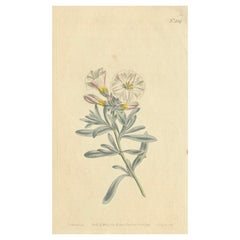
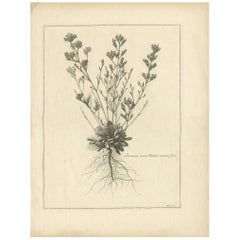
Antique Botany Print of a Limonium Flowering Plant, circa 1680

Antique Botany Print of a Limonium Flowering Plant, circa 1680

Located in Langweer, NL

Antique botany print titled 'Limonium minus Bellidis (..)'. Original antique print of a limonium flowering plant. This print originates from 'Me´moires pour servir a' l'histoire des ...

Category

Antique Late 17th Century Prints

Materials

Paper

You May Also Like

Early 19th Century Botanical Engraving by John Curtis

Early 19th Century Botanical Engraving by John Curtis

Located in Seaford, GB

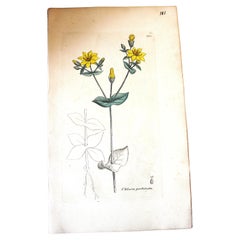
Early 19th Century Botanical Engraving by John Curtis – Hand Coloured Natural History Plate An original early 19th-century hand-coloured botanical engraving from the celebrated natural history publications of John Curtis (1791–1862), one of Britain’s most respected botanical and entomological illustrators. This beautifully detailed plate illustrates a flowering plant in scientific profile, showing bloom structure, leaves, buds, and root system with precision typical of early Victorian natural history illustration. Curtis’s work bridges science and art — created for study, yet prized today for its elegance and balance. These engravings formed part of the golden age of British botanical publishing, when artists collaborated with engravers and colourists to produce plates that were both accurate and visually refined. Each impression was printed from an engraved plate and then carefully coloured by hand, meaning no two examples are ever exactly identical. The composition has the clarity collectors seek: • Central botanical specimen • Naturalistic colour palette • Fine line engraving • Period scientific titling This makes it ideal as a single framed piece or as part of a gallery wall of antique botanical studies. About John Curtis John Curtis was a leading figure in British natural history illustration. He is best known for British Entomology and botanical works that combined taxonomic accuracy with graceful composition. His engravings are held in major museum collections and remain highly collectible in the decorative arts market. Period Early 19th century, circa 1820–1840. Technique Copperplate engraving with original hand colouring on laid paper. Condition Good antique condition consistent with age. Light toning and minor handling marks may be present, as expected with early 19th-century works on paper. Please see the images. Why Collect Curtis Botanical Prints...

Category

Antique Early 19th Century British George III Prints
Materials

Paper

Early 19th Century Botanical Engraving by John Curtis

Early 19th Century Botanical Engraving by John Curtis

Located in Seaford, GB

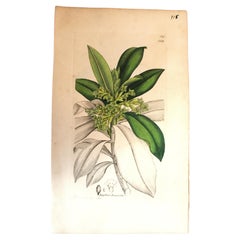
Early 19th Century Botanical Engraving by John Curtis – Hand Coloured Natural History Plate An original early 19th-century hand-coloured botanical engraving from the celebrated natural history publications of John Curtis (1791–1862), one of Britain’s most respected botanical and entomological illustrators. This beautifully detailed plate illustrates a flowering plant in scientific profile, showing bloom structure, leaves, buds, and root system with precision typical of early Victorian natural history illustration. Curtis’s work bridges science and art — created for study, yet prized today for its elegance and balance. These engravings formed part of the golden age of British botanical publishing, when artists collaborated with engravers and colourists to produce plates that were both accurate and visually refined. Each impression was printed from an engraved plate and then carefully coloured by hand, meaning no two examples are ever exactly identical. The composition has the clarity collectors seek: • Central botanical specimen • Naturalistic colour palette • Fine line engraving • Period scientific titling This makes it ideal as a single framed piece or as part of a gallery wall of antique botanical studies. About John Curtis John Curtis was a leading figure in British natural history illustration. He is best known for British Entomology and botanical works that combined taxonomic accuracy with graceful composition. His engravings are held in major museum collections and remain highly collectable in the decorative arts market. Period Early 19th century, circa 1820–1840. Technique Copperplate engraving with original hand colouring on laid paper. Condition Good antique condition consistent with age. Light toning and minor handling marks may be present, as expected with early 19th-century works on paper. Please see the images. Why Collect Curtis Botanical Prints...

Category

Antique Early 19th Century British George III Prints
Materials

Paper

Basilius Besler Botanical Engraving, Hortus Eystettensis, Early 17th Century

Basilius Besler Botanical Engraving, Hortus Eystettensis, Early 17th Century

By Basilius Besler

Located in Stockholm, SE

An original hand-colored botanical engraving from Basilius Besler’s Hortus Eystettensis, published in Nuremberg in 1613. Executed at the transition between Renaissance naturalism and...

Category

Antique 17th Century German Baroque Decorative Art

Materials

Paper

Chironia Baccifera Berry-Bearing Chironia /// English Botanical Flower Engraving

Chironia Baccifera Berry-Bearing Chironia /// English Botanical Flower Engraving

By William Curtis

Located in Saint Augustine, FL

Artist: William Curtis (English, 1746-1799) Title: "Chironia Baccifera Berry-Bearing Chironia" (Vol. 7, Plate 233) Portfolio: The Botanical Magazine; or, Flower-Garden Displayed Year...

Category

1790s Victorian Still-life Prints

Materials

Watercolor, Engraving, Intaglio

Early 19th Century Botanical Engraving by John Curtis – Hand Coloured

Early 19th Century Botanical Engraving by John Curtis – Hand Coloured

Located in Seaford, GB

Early 19th Century Botanical Engraving by John Curtis – Hand Coloured Natural History Plate An original early 19th-century hand-coloured botanical engraving from the celebrated natural history publications of John Curtis (1791–1862), one of Britain’s most respected botanical and entomological illustrators. This beautifully detailed plate illustrates a flowering plant in scientific profile, showing bloom structure, leaves, buds, and root system with precision typical of early Victorian natural history illustration. Curtis’s work bridges science and art — created for study, yet prized today for its elegance and balance. These engravings formed part of the golden age of British botanical publishing, when artists collaborated with engravers and colourists to produce plates that were both accurate and visually refined. Each impression was printed from an engraved plate and then carefully coloured by hand, meaning no two examples are ever exactly identical. The composition has the clarity collectors seek: • Central botanical specimen • Naturalistic colour palette • Fine line engraving • Period scientific titling This makes it ideal as a single framed piece or as part of a gallery wall of antique botanical studies. About John Curtis John Curtis was a leading figure in British natural history illustration. He is best known for British Entomology and botanical works that combined taxonomic accuracy with graceful composition. His engravings are held in major museum collections and remain highly collectable in the decorative arts market. Period Early 19th century, circa 1820–1840. Technique Copperplate engraving with original hand colouring on laid paper. Condition Good antique condition consistent with age. Light toning and minor handling marks may be present, as expected with early 19th-century works on paper. Please see the images. Why Collect Curtis Botanical Prints...

Category

Antique Early 19th Century George III Prints

Materials

Paper

Flowering Burning Bush: 18th Century Hand-colored Weinmann Botanical Engraving

Flowering Burning Bush: 18th Century Hand-colored Weinmann Botanical Engraving

By Johann Wilhelm Weinmann

Located in Alamo, CA

This is an original antique colored botanical mezzotint and line engraving of flowering Gas Plants or Burning Bush and Fraxinella, which is finished with hand-coloring. It is entitle...

Category

Mid-18th Century Naturalistic Still-life Prints

Materials

Engraving, Mezzotint