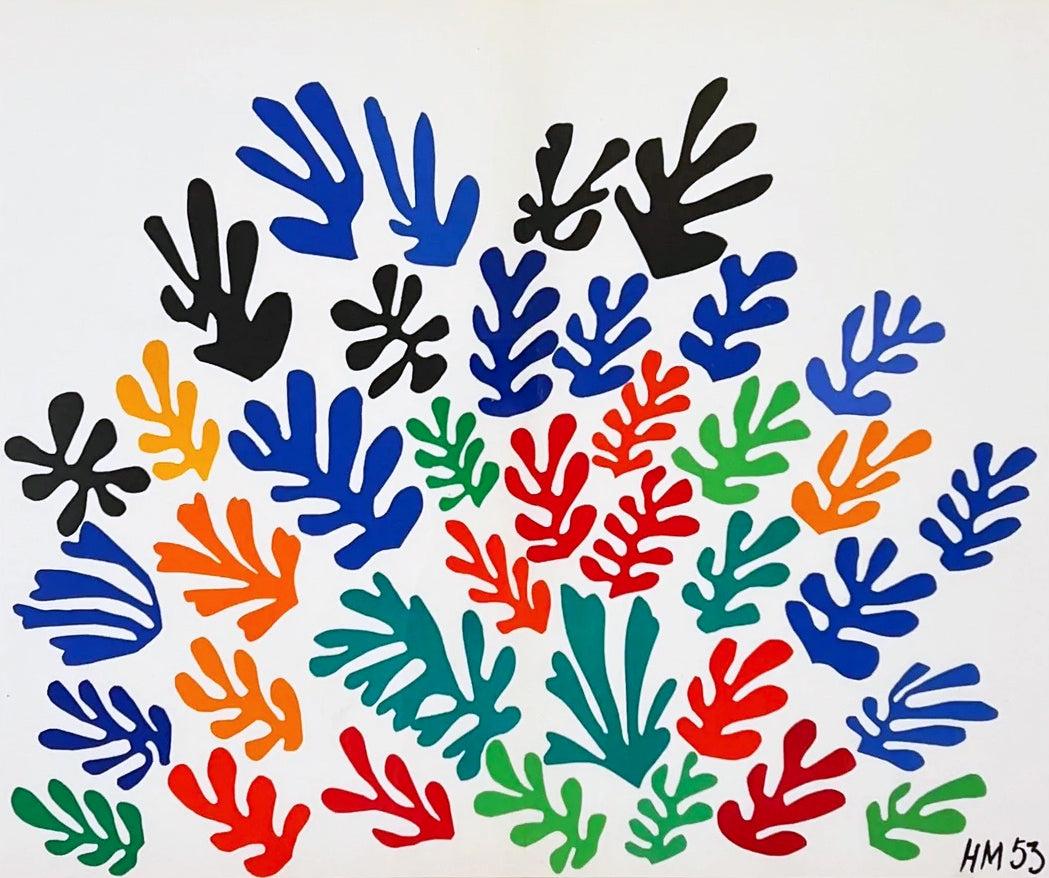
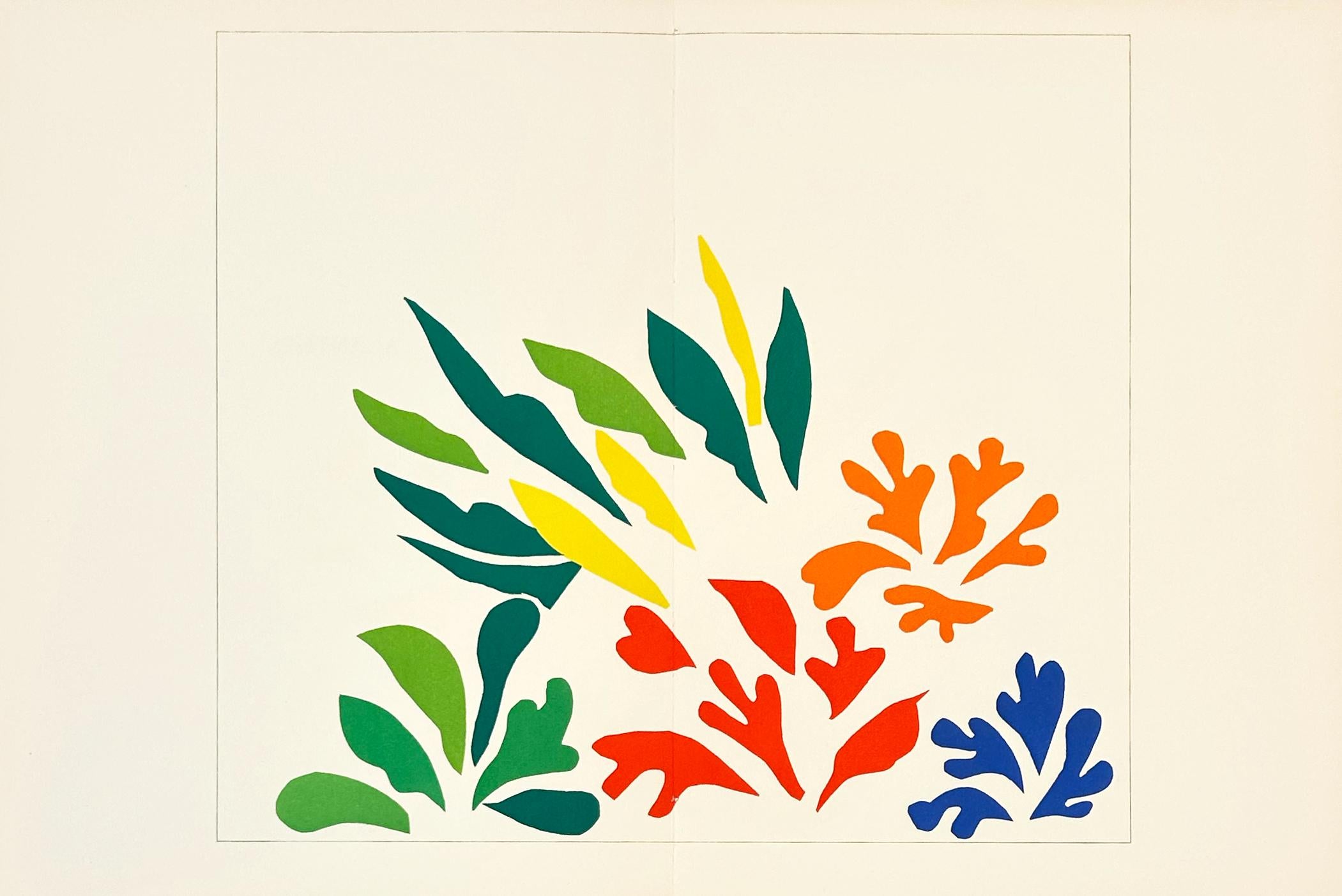
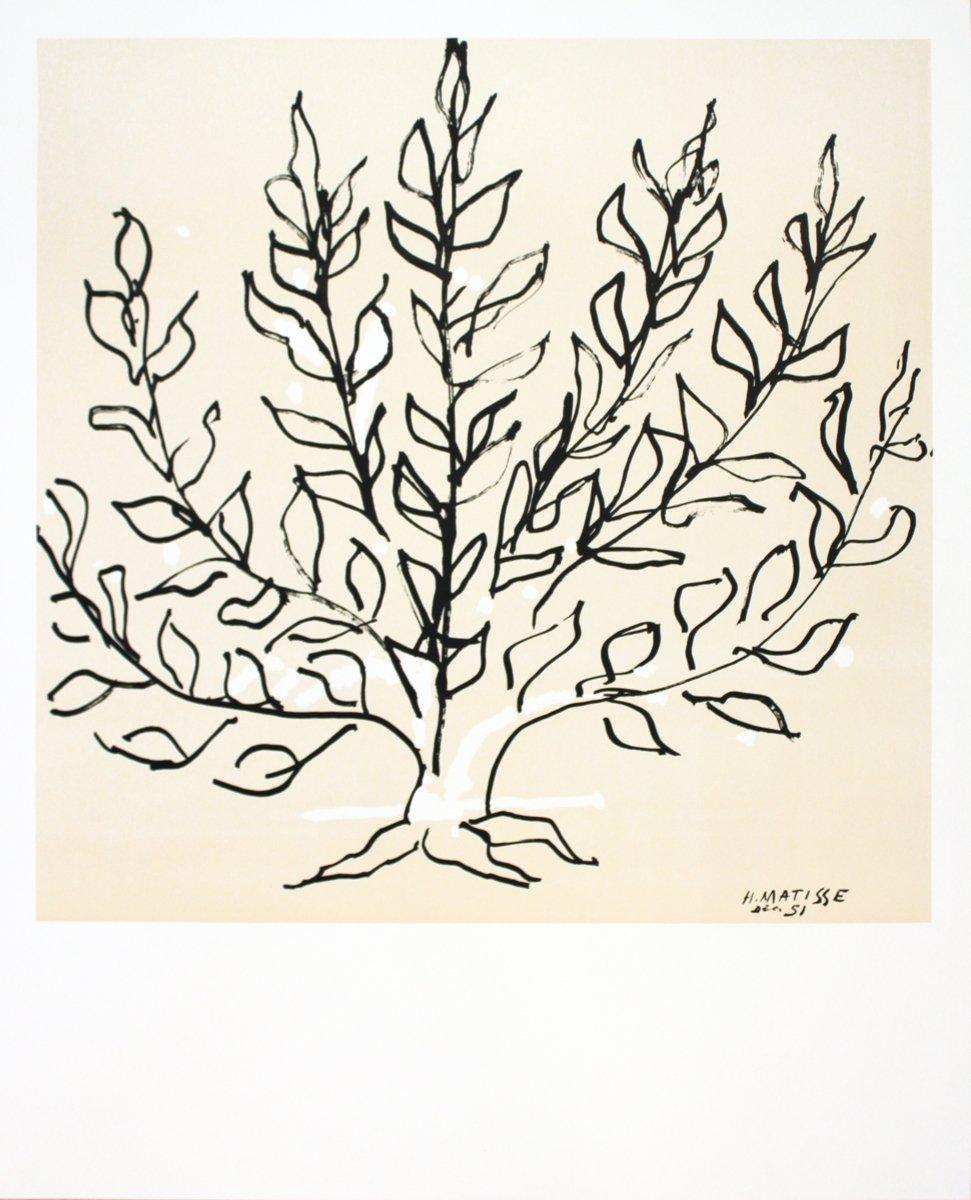
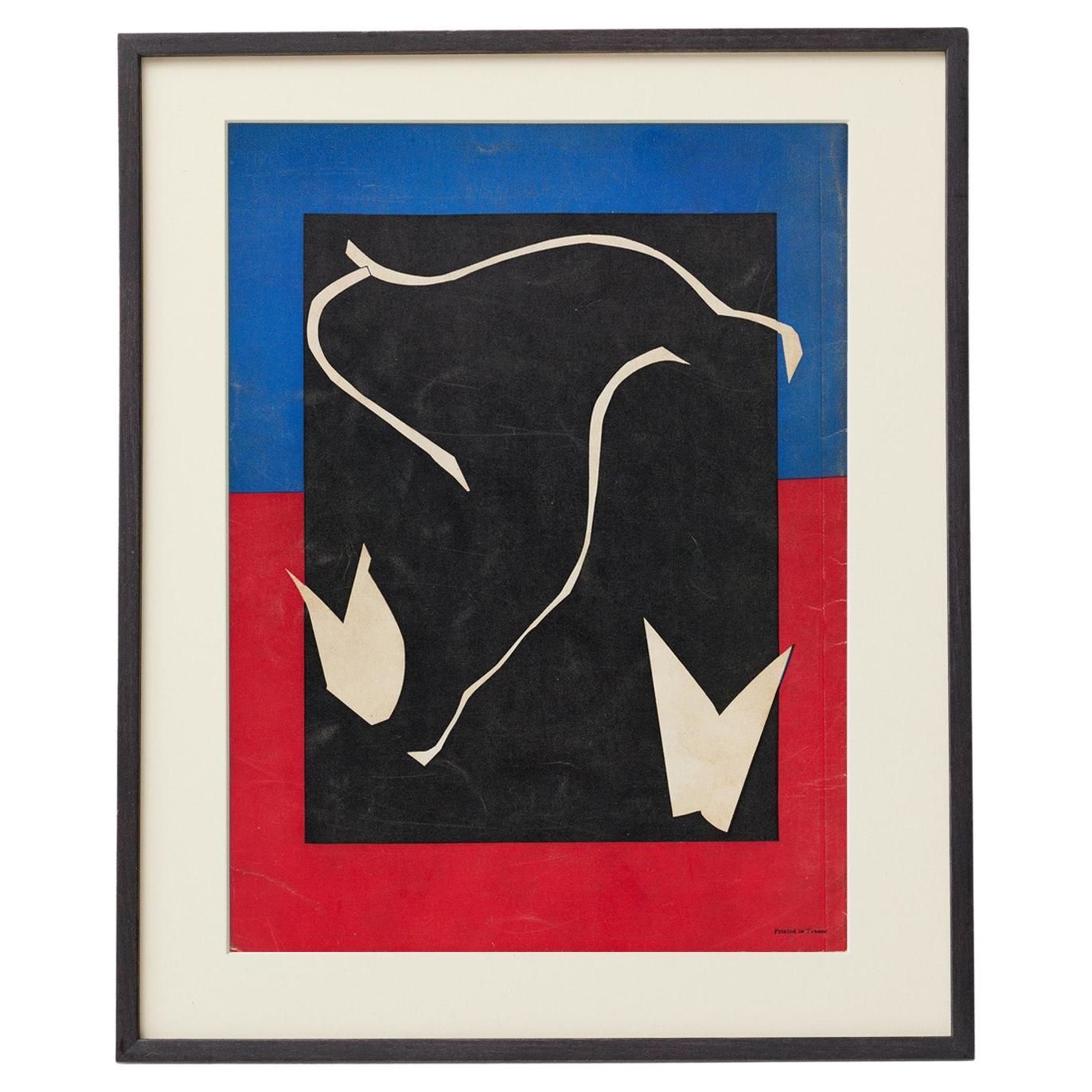
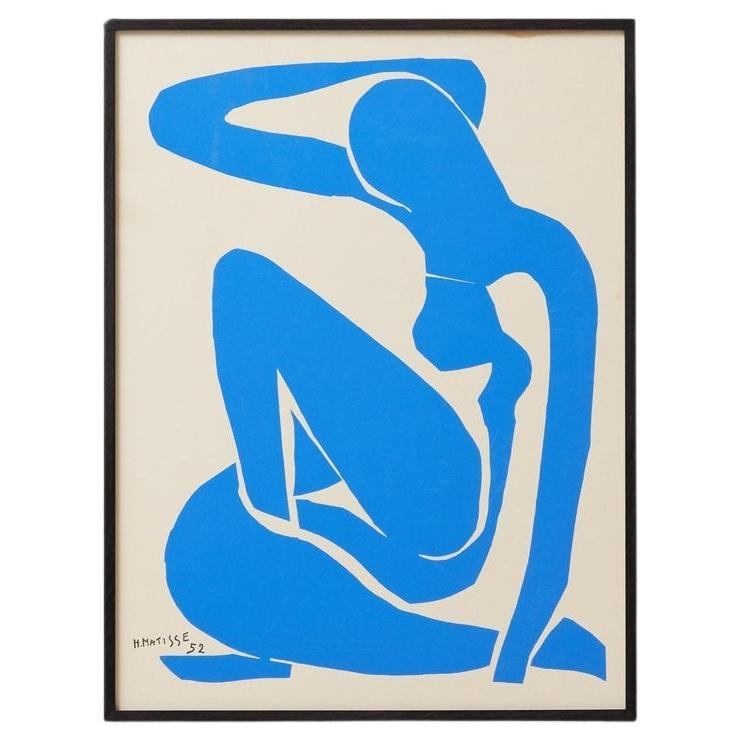
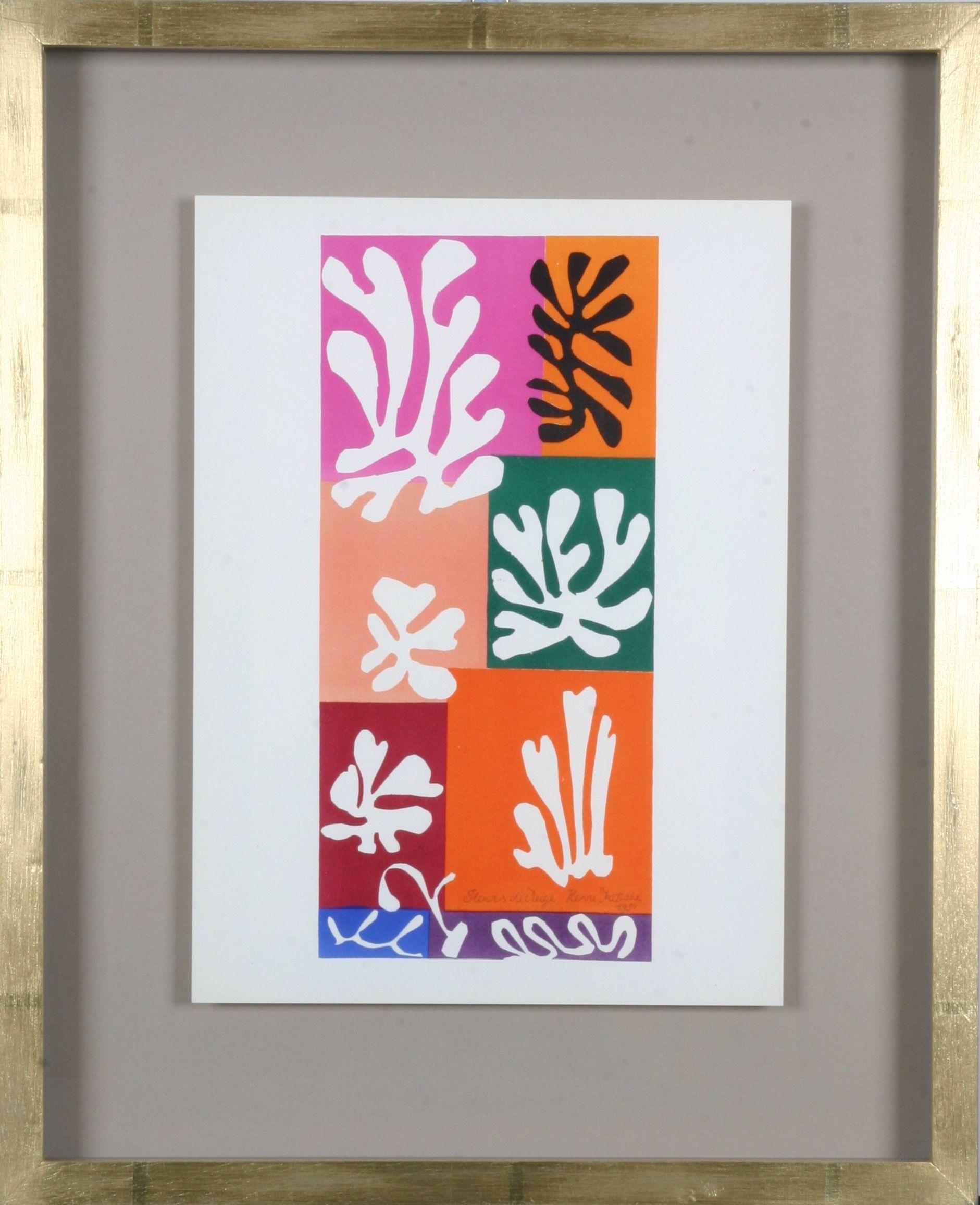
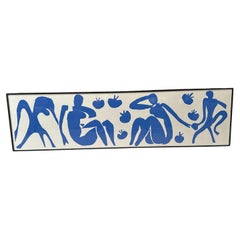
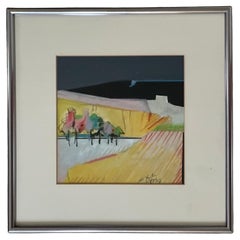
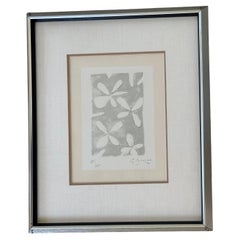
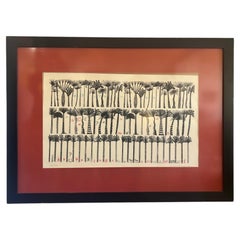
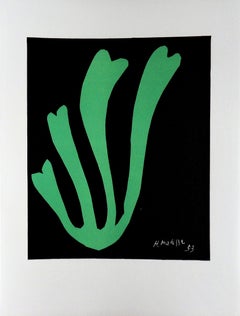
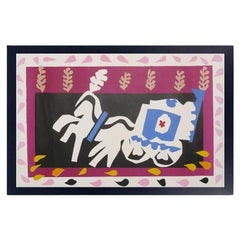
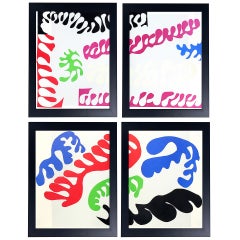
Gorgeous "Fern Cut Out" lithograph by Henri Matisse, circa 1970s. This piece is from Matisse's revered "Cut Out Series" created in 1953 and meticulously edited by Nouvelle Images in the 1970s, this piece exudes Matisse's unparalleled command of color and form.
A vibrant botanical abstraction in lush green hues emerges against a backdrop of profound black, orchestrating a visual symphony that enchants the observer. Signed by the artist within the stone, this lithograph bears the hallmark of Matisse's genius. The print measures 17"W x 1.25"D x 21"H and The is presented in a sleek black metal frame. #4460RM
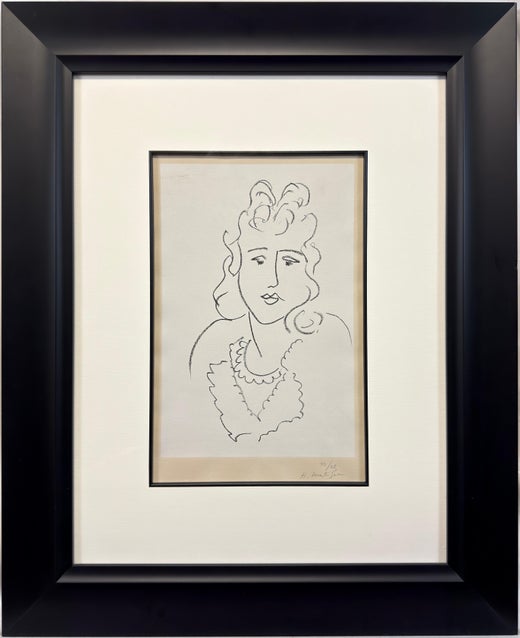
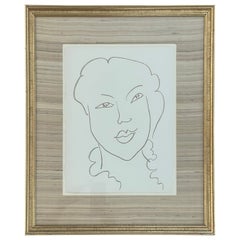
Matisse was a friend and admirer of the French poet Charles Antoine Nau. They both loved Martinique, a tropical island in the French West Indies and in 1945, many years after the death of his friend in 1918, Matisse conceived of the idea of producing a series of portraits of Martinquaise women to complement his favourite poems by Nau, which were inspired by the island. Matisse made 27 drawings on transfer paper to be printed as lithographs at the Mourlot Studio and in 1946 the studio started to print trial impressions. However, there were long delays in producing the text for the work and Matisse died before the project could be brought to fruition. Fortunately, in 1972, under the direction of Matisse's heirs, the folio was finally published.
Henri Matisse was born on December 31, 1869, in Le Cateau-Cambrésis, France. At 22, he had given up studying law in Paris to pursue painting. He had briefly studied art at the Académie Julian and Ecole des Beaux-Arts with Gustave Moreau. At 32, Matisse exhibited at the Salon des Indépendants in Paris, where he met Maurice de Vlaminck, who with Matisse would eventually lead the Fauve art movement.
Matisse's work was included in the 1913 Armory Show in New York, and throughout the 1910s and into the 1920s, his work began to find collectors around the world. Throughout the 1920s and 1930s, he divided his time between Paris and southern France, producing paintings, sculpture, lithographs, and etchings.
Like many avant-garde artists in Paris, Matisse was receptive to a broad range of influences, particularly 'primitive' art, Near Eastern decorative art, African masks and sculpture, impressionist color, cubism, and the paintings of Paul Cezanne. The artist's images of the human face and figure -rendered in fluid lines and flat fields of color- typify these influences. Matisse argued for the prominence of instinct in art production, believing that an artist should not have complete control over color and form.
He died on November 3, 1954, in Nice, France.