Floral Harmony in Art Nouveau: A Botanical Composition by Henry Lambert
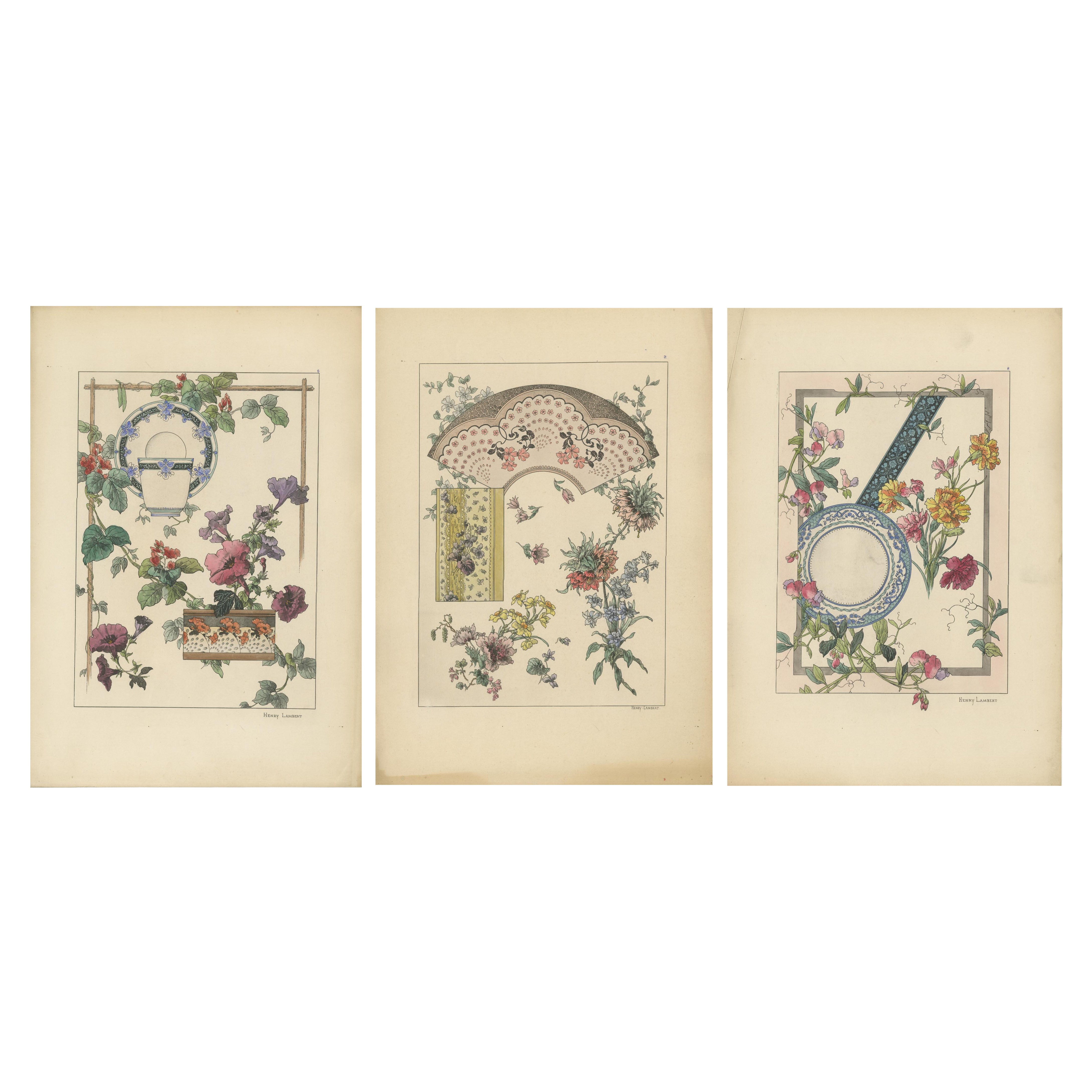
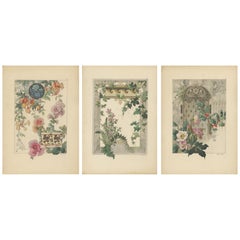
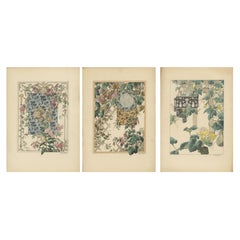
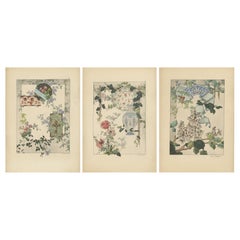
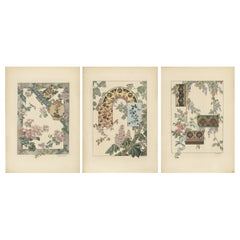
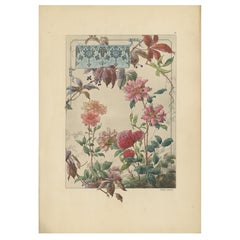
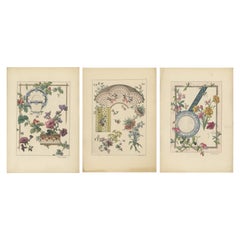
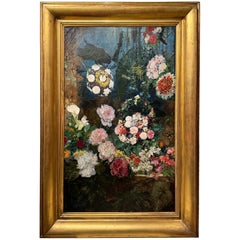
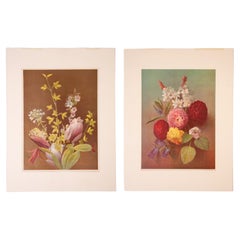
This exquisite Art Nouveau botanical illustration by Henry Lambert captures the delicate beauty of nature through an intricate arrangement of flora, ivy, and decorative motifs. With its soft yet vivid color palette and organic composition, this print exemplifies the artistic movement's embrace of natural forms, fluid lines, and harmonious design.
The title of the print, Carotte sauvage - Vipérine - Millepertuis - Lierre, is in French and refers to the plants depicted in the illustration. Translated to English, it means:
Carotte sauvage – Wild Carrot (Daucus carota), also known as Queen Anne’s Lace
Vipérine – Viper’s Bugloss (Echium vulgare), a striking blue-flowered plant
Millepertuis – St. John’s Wort (Hypericum perforatum), a yellow-flowering medicinal plant
Lierre – Ivy (Hedera helix), a climbing evergreen vine
These botanical names correspond to the plants shown in the illustration, with delicate Queen Anne’s Lace flowers, vivid blue bugloss blossoms, bright yellow St. John’s Wort, and winding ivy framing the composition. The title aligns with the Art Nouveau movement’s emphasis on natural forms and botanical accuracy.
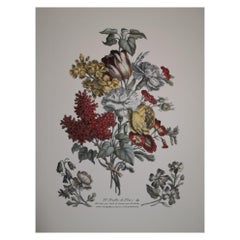
The central focus of the artwork is a collection of wildflowers and foliage, rendered with meticulous detail. Among the identifiable species are clusters of Queen Anne’s lace, whose soft white and pink blossoms add a sense of lightness to the composition. Interwoven with these delicate flowers are blue and yellow blossoms, possibly varieties of bellflowers and buttercups, contributing to the scene’s natural diversity. The carefully observed botanical details suggest a deep appreciation for nature, a hallmark of the Art Nouveau style.
Encircling the flowers, winding ivy vines stretch gracefully across the illustration, their sinuous lines reinforcing the organic dynamism of the piece. The ivy is not merely decorative; it frames the composition, creating depth and contrast against the subtly shaded background. The vines also serve as a unifying element, visually linking the floral arrangement with the stylized border that subtly echoes the forms of the plants.
A distinctive feature of this artwork is the decorative inset at the lower left, a smaller panel displaying a repeating floral motif reminiscent of textile or wallpaper designs. This inclusion emphasizes the influence of nature on applied arts during the Art Nouveau period, when artistic disciplines merged seamlessly to create holistic decorative environments. The rich brown tones and symmetrical arrangement of this inset contrast with the more free-flowing naturalistic depiction in the main illustration, underscoring the interplay between structured design and organic inspiration.
Henry Lambert's work is distinguished by its delicate shading, refined line work, and balanced use of color. The overall composition is a testament to the movement’s philosophy, where art and nature coexist in perfect harmony. The print evokes a timeless elegance, making it not just a historical artifact but also an aesthetically enduring piece.
Condition Summary:
The print is in good condition with signs of aging, including mild discoloration along the edges and minor surface wear. The colors remain vibrant, with no significant fading. There may be some foxing or small spots, which are typical for works of this age. The paper is well-preserved with no major tears or creases.
Framing Tips:
For optimal preservation and display, it is recommended to use archival-quality materials, including acid-free matting and UV-protective glass. A frame in muted gold or natural wood tones would complement the Art Nouveau aesthetic without overpowering the delicate floral details. A wide mat can enhance the visual depth, drawing attention to the intricate design elements while allowing the artwork to breathe within its frame. Displaying it in a softly lit area away from direct sunlight will help maintain its condition for years to come.