Want more images or videos?
Request additional images or videos from the seller
1 of 6

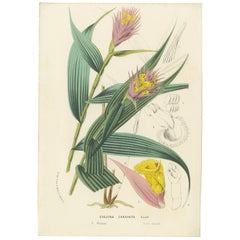
Golden Fleece: Old Vibrant Botanical Illustration from Van Houtte's Collection

$133.43
$16720% Off
£97.81
£122.3820% Off
€112VAT Included
€14020% Off
CA$183.79
CA$229.9020% Off
A$186.17
A$233.8520% Off
CHF 106.89
CHF 133.5320% Off
MX$2,257.23
MX$2,828.6020% Off
NOK 1,240.37
NOK 1,557.0820% Off
SEK 1,262.55
SEK 1,580.9420% Off
DKK 854.06
DKK 1,067.5320% Off

About the Item

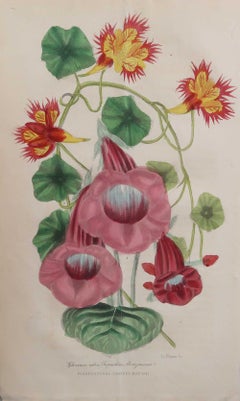
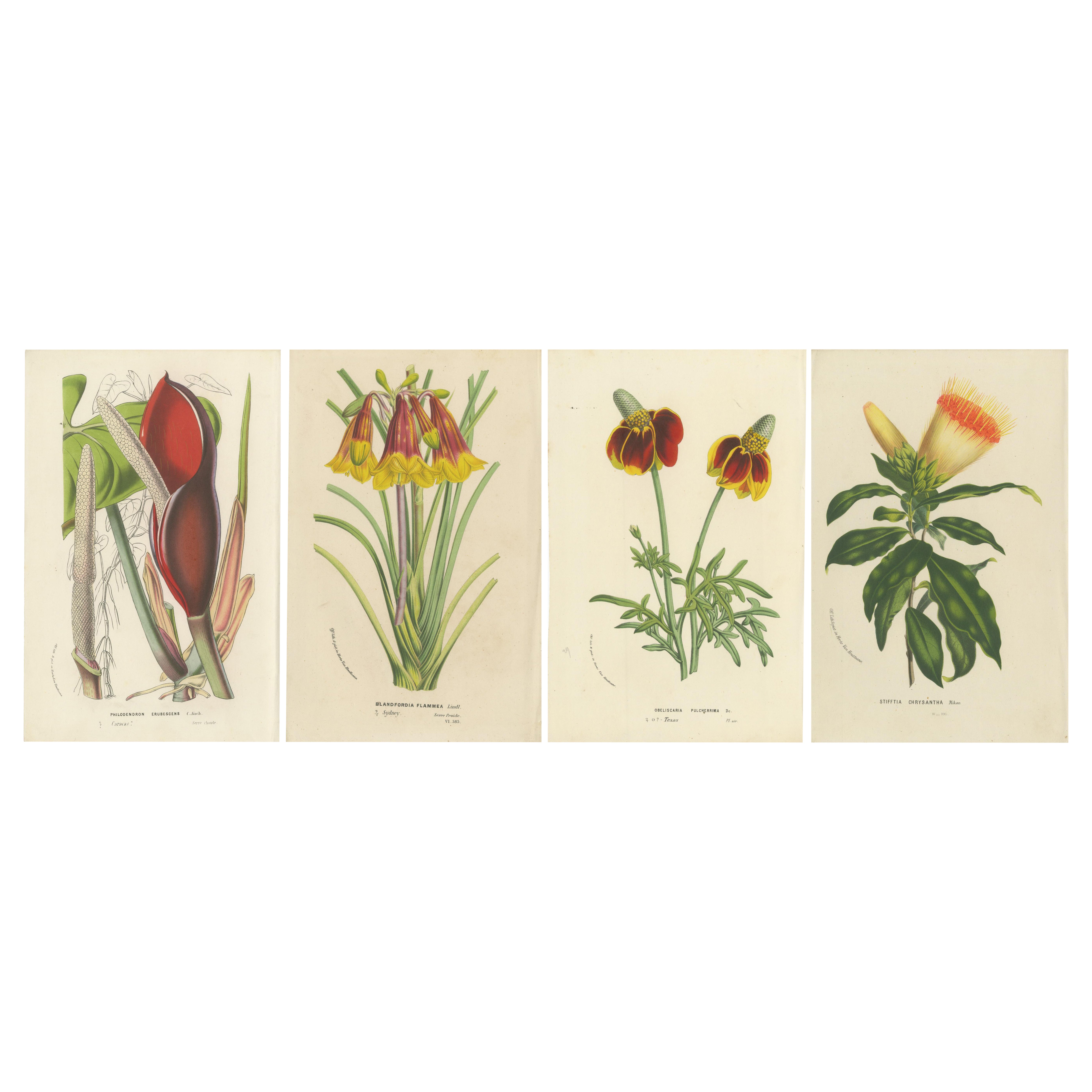
The print is the plant Stifftia chrysantha, also known as the Golden Fleece or Saffron Brush. This illustration is a color lithograph from Louis Van Houtte's "Flore des Serres et des Jardins de l'Europe." Description of Stifftia chrysantha: - Botanical Characteristics: Stifftia chrysantha features striking, dense floral heads comprised of bright orange-yellow bristles that radiate outward, resembling a brush or a flame. The plant has robust, green leaves that provide a lush backdrop to the vibrant flowers. - Flowering and Growth: It is a perennial shrub native to Brazil, particularly noted for its ornamental value due to these distinctive and vibrant inflorescences. Translation of the Text on the Print: - Text: "Stifftia chrysantha Mikan. – Off. tab. & pict in Horto Van Houtteano – IV-391." - Translation: Stifftia chrysantha Mikan. - Officially described and illustrated in Van Houtte's Garden – Volume 4, Plate 391. Significance: The Stifftia chrysantha is particularly celebrated not only for its aesthetic appeal but also for its rarity and exotic origin, making it a prized specimen in botanical collections and ornamental gardens. Its inclusion in Van Houtte's work underscores its desirability and the horticultural interest in exotic New World plants during the 19th century. The use of color lithography in depicting this plant allows for a vivid and detailed portrayal, capturing the texture and color gradients of the flowers with great precision. This technique, popular during the period for its effectiveness in producing colorful and accurate botanical illustrations, helps convey the unique beauty of such exotic species to a European audience, fostering greater appreciation and study of global plant diversity.
  • Dimensions:
    Height: 9.85 in (25 cm)Width: 6.42 in (16.3 cm)Depth: 0 in (0.02 mm)
  • Materials and Techniques:
  • Period:
  • Date of Manufacture:
    Circa 1875
  • Condition:
    Condition: Very good, given age. General age-related toning and/or occasional minor defects from handling. Colors are vivid. Please study scan carefully.
  • Seller Location:
    Langweer, NL
  • Reference Number:
    Seller: BG-13761-271stDibs: LU3054341438482

More From This Seller

View All
Caravata Plant Botanical Illustration by Louis van Houtte, 19th Century

Caravata Plant Botanical Illustration by Louis van Houtte, 19th Century

Located in Langweer, NL

Caravata Plant Botanical Illustration by Louis van Houtte, 19th Century This botanical illustration features Evelyna caravata, commonly known as the Caravata Plant, notable for its ...

Category

Antique 1850s Prints

Materials

Paper

Enchanted Blossoms: Masterpieces of Botanical Art from Van Houtte's Florilegium

Enchanted Blossoms: Masterpieces of Botanical Art from Van Houtte's Florilegium

Located in Langweer, NL

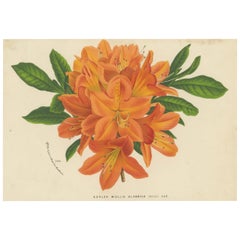
The plant depicted in the print on offer is Azalea mollis 'Glabrior', a variety of the Rhododendron species. Its common English name is the Smooth Azalea. This particular variety is ...

Category

Antique 1870s Prints

Materials

Paper

Lush and Vibrant: A Collection of Exotic Botanical Illustrations, circa 1875

Lush and Vibrant: A Collection of Exotic Botanical Illustrations, circa 1875

Located in Langweer, NL

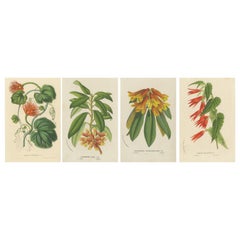
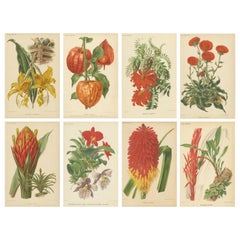
The prints depict a selection of exotic plants with a remarkable detail and vibrant color, showcasing the beauty and diversity of botanical life. Each illustration is a testament to ...

Category

Antique 1870s Prints

Materials

Paper

Original Vintage Botanical Illustrations from Revue Horticole, circa 1855

Original Vintage Botanical Illustrations from Revue Horticole, circa 1855

Located in Langweer, NL

Here are descriptions of the eight botanical illustrations, including the Latin and English names of the plants, why they are significant, and details about the creators and the tech...

Category

Antique 1850s French Prints

Materials

Paper

Hand-Colored Botanical Lithograph of Madder and Safflower, 1854

Hand-Colored Botanical Lithograph of Madder and Safflower, 1854

Located in Langweer, NL

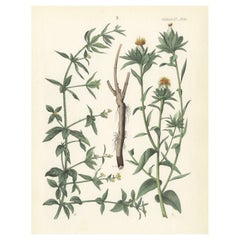
Hand-Colored Botanical Lithograph of Madder and Safflower, Calwer, 1854 This detailed botanical lithograph is from Carl Georg Calwer’s *Deutschlands Technische Pflanzen* (1854), a...

Category

Antique 1850s German Prints

Materials

Paper

You May Also Like

Early 19th Century Botanical Engraving by John Curtis

Early 19th Century Botanical Engraving by John Curtis

Located in Seaford, GB

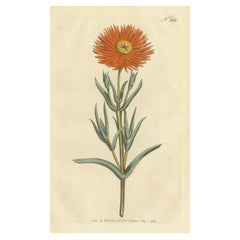
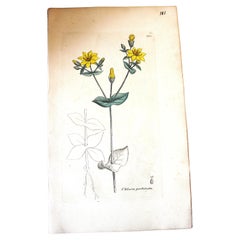
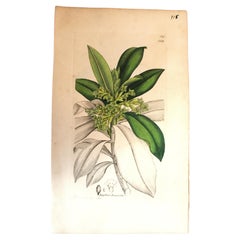
Early 19th Century Botanical Engraving by John Curtis – Hand Coloured Natural History Plate An original early 19th-century hand-coloured botanical engraving from the celebrated natural history publications of John Curtis (1791–1862), one of Britain’s most respected botanical and entomological illustrators. This beautifully detailed plate illustrates a flowering plant in scientific profile, showing bloom structure, leaves, buds, and root system with precision typical of early Victorian natural history illustration. Curtis’s work bridges science and art — created for study, yet prized today for its elegance and balance. These engravings formed part of the golden age of British botanical publishing, when artists collaborated with engravers and colourists to produce plates that were both accurate and visually refined. Each impression was printed from an engraved plate and then carefully coloured by hand, meaning no two examples are ever exactly identical. The composition has the clarity collectors seek: • Central botanical specimen • Naturalistic colour palette • Fine line engraving • Period scientific titling This makes it ideal as a single framed piece or as part of a gallery wall of antique botanical studies. About John Curtis John Curtis was a leading figure in British natural history illustration. He is best known for British Entomology and botanical works that combined taxonomic accuracy with graceful composition. His engravings are held in major museum collections and remain highly collectible in the decorative arts market. Period Early 19th century, circa 1820–1840. Technique Copperplate engraving with original hand colouring on laid paper. Condition Good antique condition consistent with age. Light toning and minor handling marks may be present, as expected with early 19th-century works on paper. Please see the images. Why Collect Curtis Botanical Prints...

Category

Antique Early 19th Century British George III Prints
Materials

Paper

Early 19th Century Botanical Engraving by John Curtis

Early 19th Century Botanical Engraving by John Curtis

Located in Seaford, GB

Early 19th Century Botanical Engraving by John Curtis – Hand Coloured Natural History Plate An original early 19th-century hand-coloured botanical engraving from the celebrated natural history publications of John Curtis (1791–1862), one of Britain’s most respected botanical and entomological illustrators. This beautifully detailed plate illustrates a flowering plant in scientific profile, showing bloom structure, leaves, buds, and root system with precision typical of early Victorian natural history illustration. Curtis’s work bridges science and art — created for study, yet prized today for its elegance and balance. These engravings formed part of the golden age of British botanical publishing, when artists collaborated with engravers and colourists to produce plates that were both accurate and visually refined. Each impression was printed from an engraved plate and then carefully coloured by hand, meaning no two examples are ever exactly identical. The composition has the clarity collectors seek: • Central botanical specimen • Naturalistic colour palette • Fine line engraving • Period scientific titling This makes it ideal as a single framed piece or as part of a gallery wall of antique botanical studies. About John Curtis John Curtis was a leading figure in British natural history illustration. He is best known for British Entomology and botanical works that combined taxonomic accuracy with graceful composition. His engravings are held in major museum collections and remain highly collectable in the decorative arts market. Period Early 19th century, circa 1820–1840. Technique Copperplate engraving with original hand colouring on laid paper. Condition Good antique condition consistent with age. Light toning and minor handling marks may be present, as expected with early 19th-century works on paper. Please see the images. Why Collect Curtis Botanical Prints...

Category

Antique Early 19th Century British George III Prints
Materials

Paper

Original Antique Botanical Print- Gloxina Rubra. 1841

Original Antique Botanical Print- Gloxina Rubra. 1841

Located in St Annes, Lancashire

Great image of Gloxina Rubra Lithograph with original hand colour Published 1841 Unframed. Free shipping

Category

Antique 1840s English Victorian Prints

Materials

Paper

Early 19th Century Botanical Engraving by John Curtis – Hand Coloured

Early 19th Century Botanical Engraving by John Curtis – Hand Coloured

Located in Seaford, GB

Early 19th Century Botanical Engraving by John Curtis – Hand Coloured Natural History Plate An original early 19th-century hand-coloured botanical engraving from the celebrated natural history publications of John Curtis (1791–1862), one of Britain’s most respected botanical and entomological illustrators. This beautifully detailed plate illustrates a flowering plant in scientific profile, showing bloom structure, leaves, buds, and root system with precision typical of early Victorian natural history illustration. Curtis’s work bridges science and art — created for study, yet prized today for its elegance and balance. These engravings formed part of the golden age of British botanical publishing, when artists collaborated with engravers and colourists to produce plates that were both accurate and visually refined. Each impression was printed from an engraved plate and then carefully coloured by hand, meaning no two examples are ever exactly identical. The composition has the clarity collectors seek: • Central botanical specimen • Naturalistic colour palette • Fine line engraving • Period scientific titling This makes it ideal as a single framed piece or as part of a gallery wall of antique botanical studies. About John Curtis John Curtis was a leading figure in British natural history illustration. He is best known for British Entomology and botanical works that combined taxonomic accuracy with graceful composition. His engravings are held in major museum collections and remain highly collectable in the decorative arts market. Period Early 19th century, circa 1820–1840. Technique Copperplate engraving with original hand colouring on laid paper. Condition Good antique condition consistent with age. Light toning and minor handling marks may be present, as expected with early 19th-century works on paper. Please see the images. Why Collect Curtis Botanical Prints...

Category

Antique Early 19th Century George III Prints

Materials

Paper

Original 1880s Botanical Print of Hæmanthus Kalbreyeri — Vibrant Antique Chromol

Original 1880s Botanical Print of Hæmanthus Kalbreyeri — Vibrant Antique Chromol

Located in Fukuoka, JP

A striking original chromolithograph from the 1880s, this botanical print features the dramatic Hæmanthus kalbreyeri, also known as the blood lily. Characterized by its intense red s...

Category

Antique 19th Century French Prints

Materials

Paper