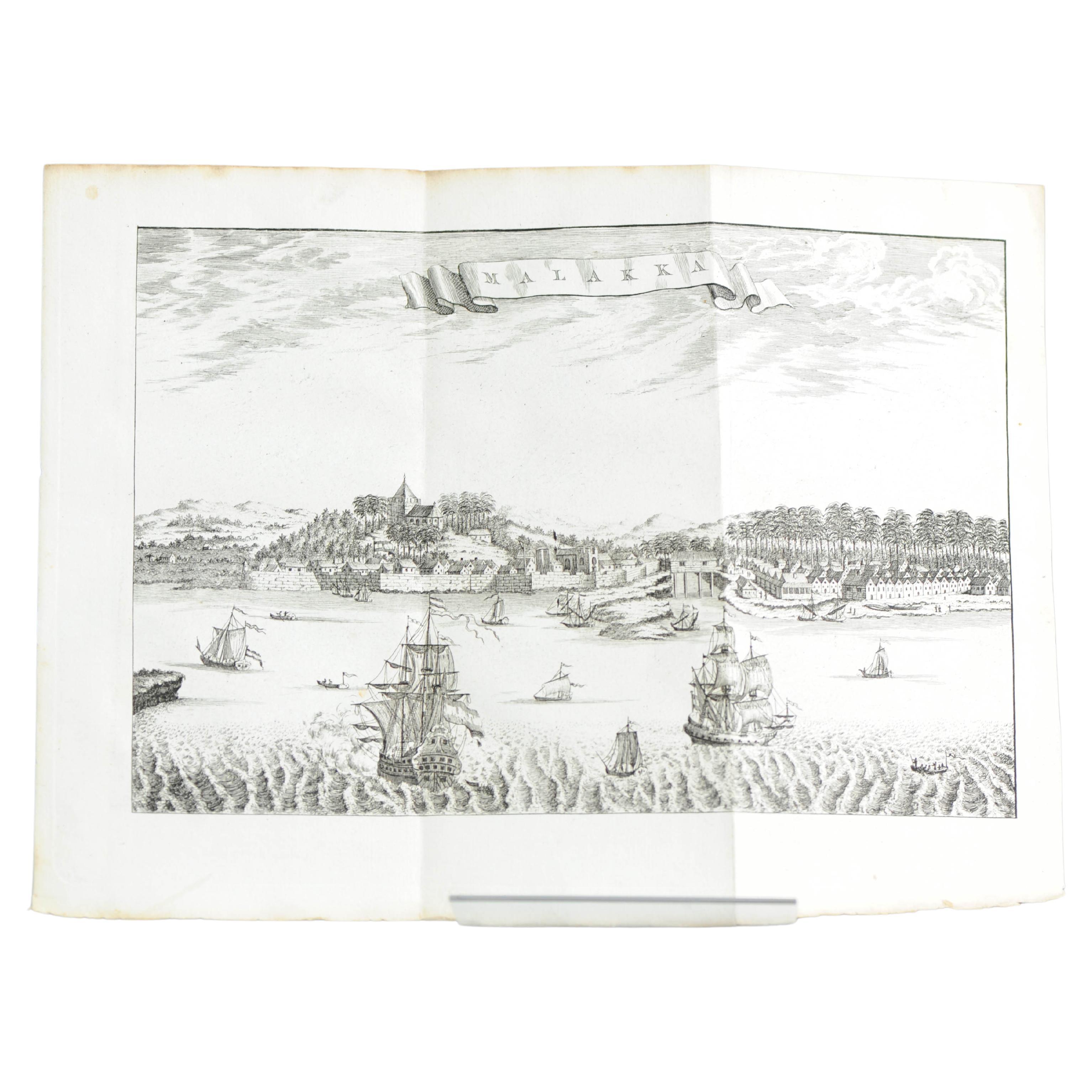
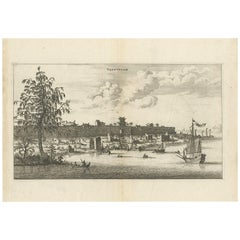
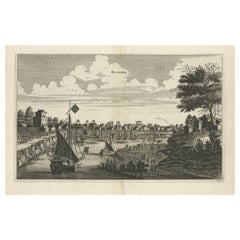
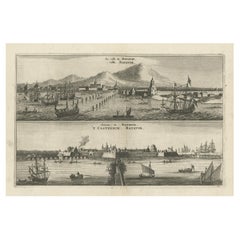
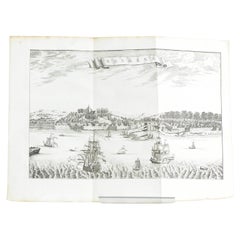
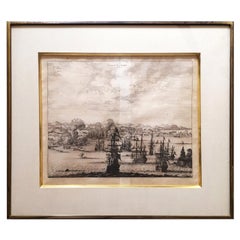
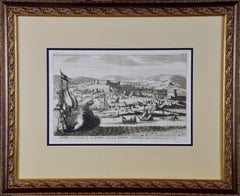
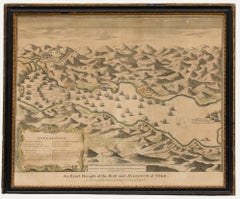
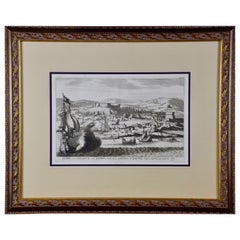
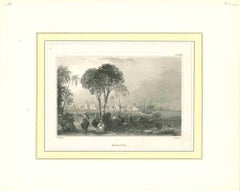
"The City of Malacca in the East Indies" is from Charles Theodore Middleton's work, "A New and Complete System of Geography."
This book was published in 1777. Therefore, the engraving can be dated to around that time, likely published in or close to the year 1777.
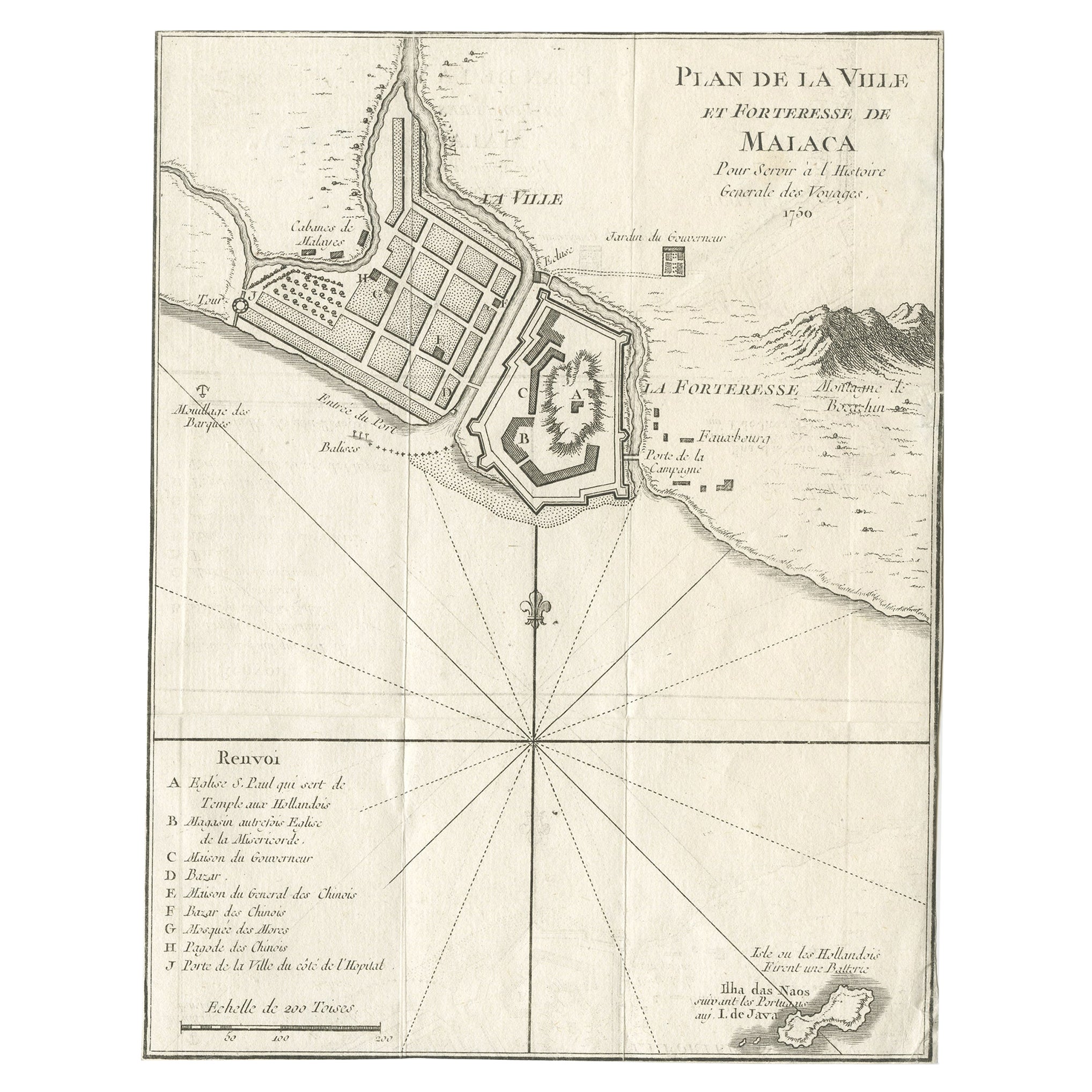
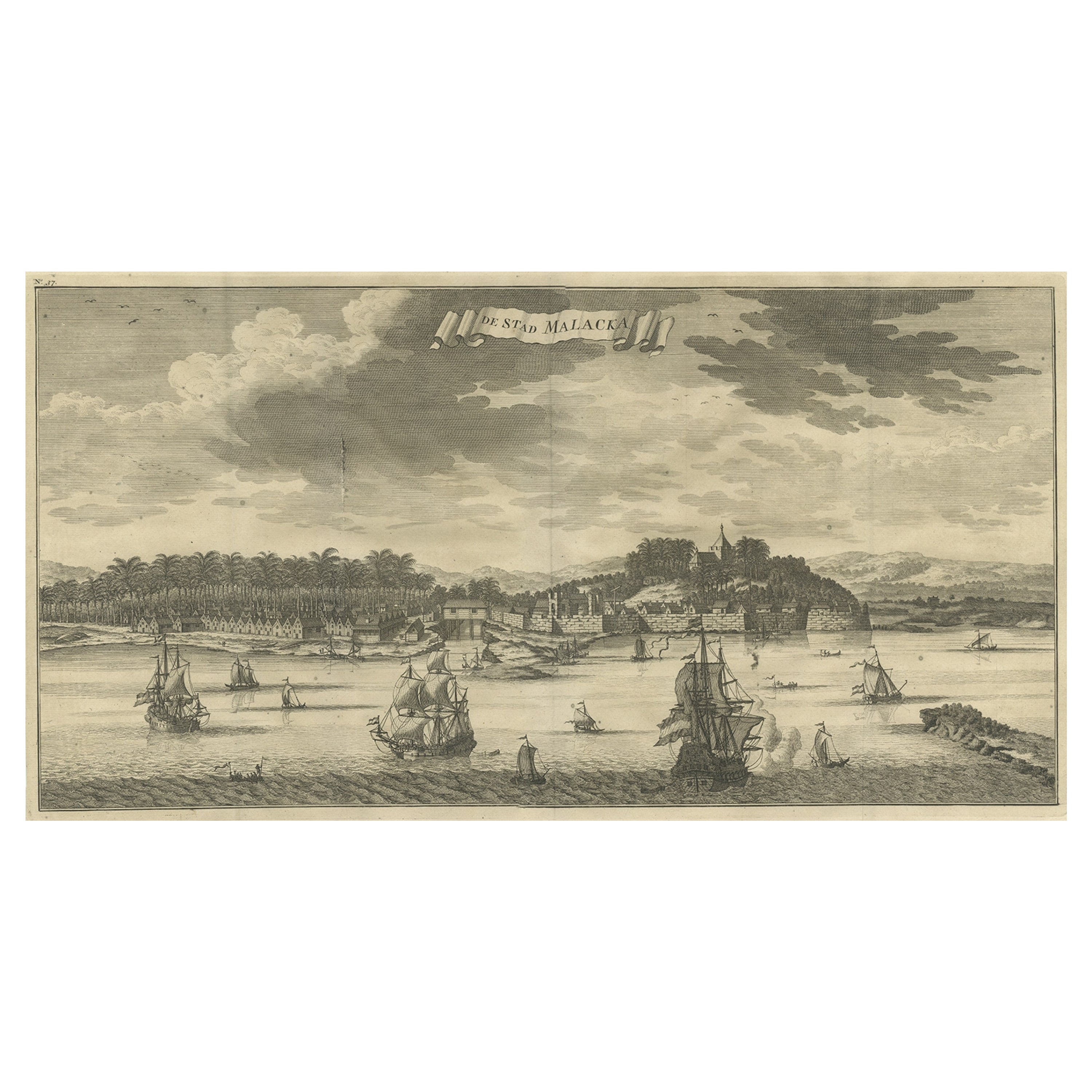
The image is an antique copperplate print depicting the city of Malacca (now Melaka) in the East Indies. The engraving is from Charles Theodore Middleton's work, "A New and Complete System of Geography," which was printed for J. Cooke in Pater-noster Row, London.
Here are some notable features in the print:
1. Cityscape and Buildings: The city of Malacca is shown with a variety of buildings, including what appears to be a church or fort with a steeple or tower in the center, indicating European colonial influence.
2. Harbor and Ships: The foreground features several sailing ships and smaller boats in the harbor, suggesting Malacca's importance as a trading port.
3. Landscape: The background displays a range of hills or mountains, adding to the scenic view of the city.
4. Palm Trees: Dense clusters of palm trees are visible, emphasizing the tropical nature of the region.
5. Architectural Details: The print includes various architectural elements, likely representing significant structures of the time.
Malacca, also known as Melaka, during the period depicted in the engraving (likely the late 18th century) was a significant and bustling port city in Southeast Asia. Here are some key points about Malacca during this time:
Historical Context
1. **Colonial Rule**: In the late 18th century, Malacca was under Dutch colonial rule, having been seized from the Portuguese in 1641. The Dutch controlled Malacca until the early 19th century when it was handed over to the British.
2. **Strategic Location**: Malacca's strategic position along the Malacca Strait made it a crucial hub for maritime trade routes between the Indian Ocean and the South China Sea. It connected the East Indies, India, China, and Europe.
Economic Importance
1. **Trade Hub**: Malacca was a thriving center for trade, where merchants from various parts of the world, including Arabs, Indians, Chinese, and Europeans, exchanged goods such as spices, silk, textiles, and ceramics.
2. **Cultural Melting Pot**: The city was a melting pot of cultures and ethnicities due to its trade connections. This diversity influenced its culture, architecture, and cuisine.
### Social and Cultural Aspects
1. **Population**: The population was diverse, consisting of Malays, Chinese, Indians, Arabs, and Europeans. Each community contributed to the city’s vibrant cultural landscape.
2. **Architecture**: The architectural style in Malacca reflected its colonial history and diverse population. European colonial buildings coexisted with traditional Malay, Chinese, and Indian structures.
3. **Religion**: Various religions were practiced, including Islam, Christianity, Hinduism, and Buddhism, reflecting the diverse ethnic makeup of the city.
### Challenges
1. **Political Instability**: The region experienced political instability due to the shifting control among European colonial powers (Portuguese, Dutch, and British).
2. **Piracy**: The strategic location of the Malacca Strait also attracted pirates, posing a constant threat to maritime trade.
### Influence on the Region
1. **Economic Influence**: Malacca’s prosperity and strategic importance made it a model for other port cities in the region, influencing trade practices and urban development.
2. **Cultural Exchange**: The city facilitated cultural exchanges, leading to a blend of customs, traditions, and culinary practices that still influence the region today.
### Modern Legacy
1. **UNESCO World Heritage Site**: Today, Malacca is recognized as a UNESCO World Heritage Site for its historical significance and well-preserved colonial architecture.
2. **Tourism**: The city attracts tourists worldwide, keen to explore its rich history, diverse culture, and architectural heritage.
The engraving captures a snapshot of Malacca during its colonial period, highlighting its importance as a key trading port and cultural melting pot in Southeast Asia.