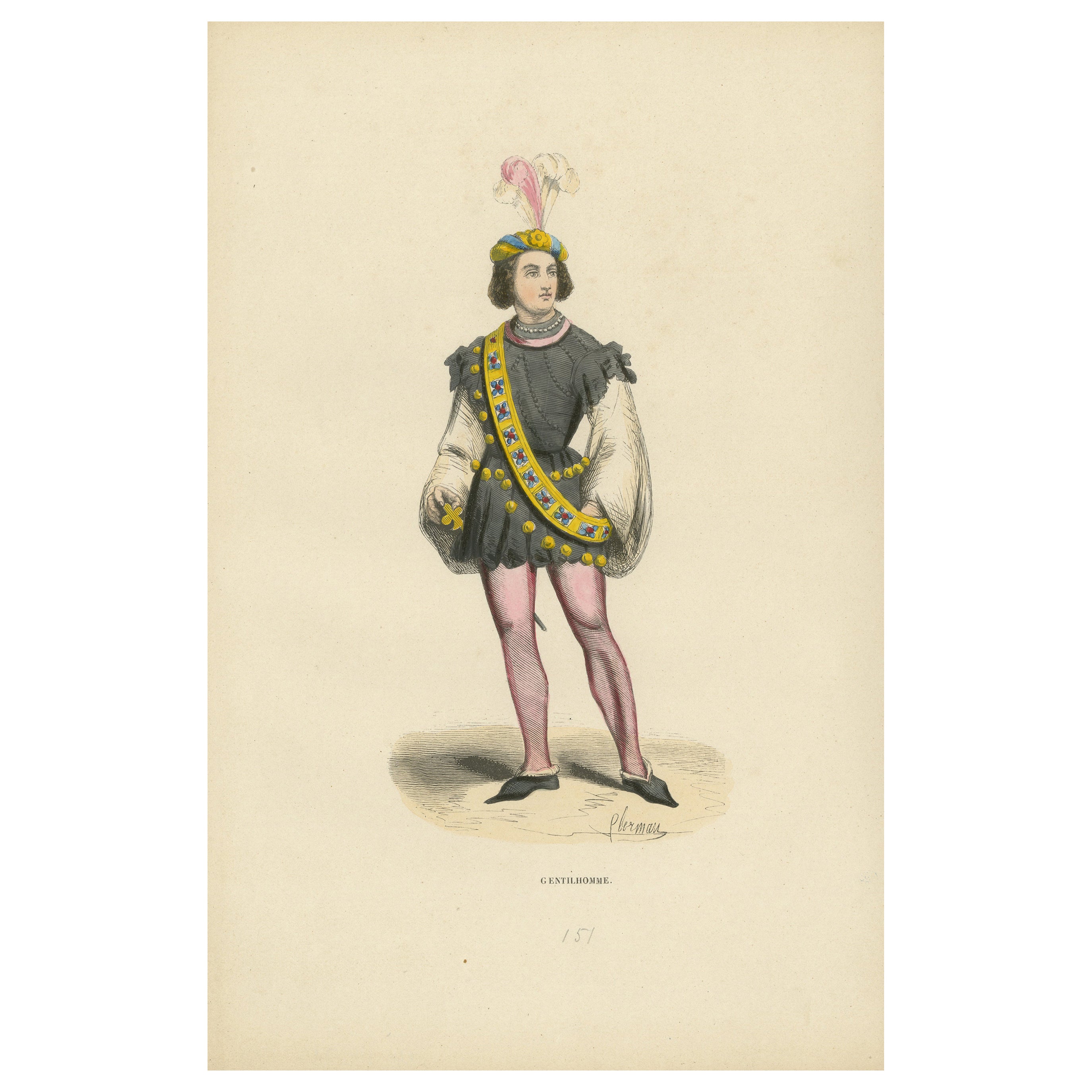
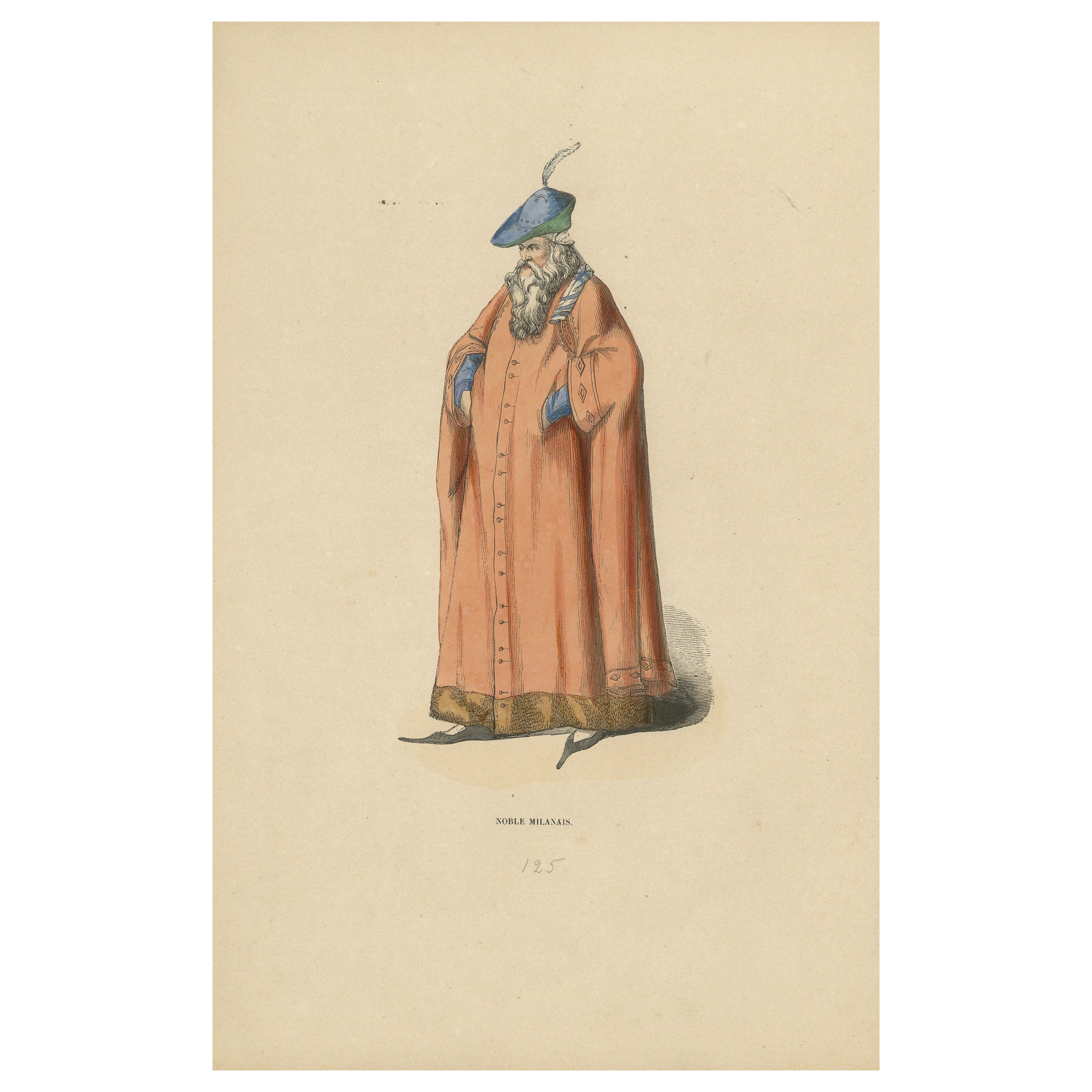
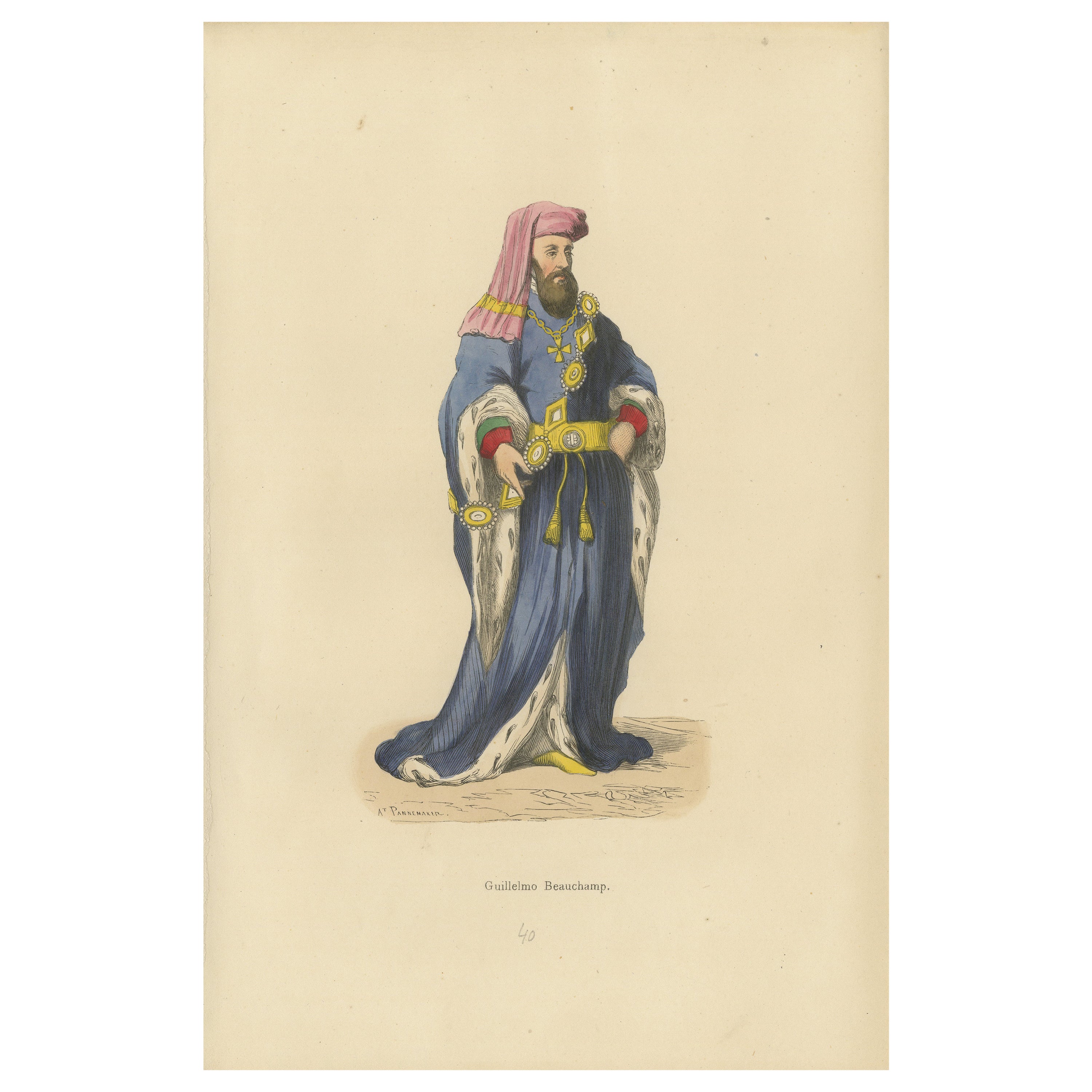
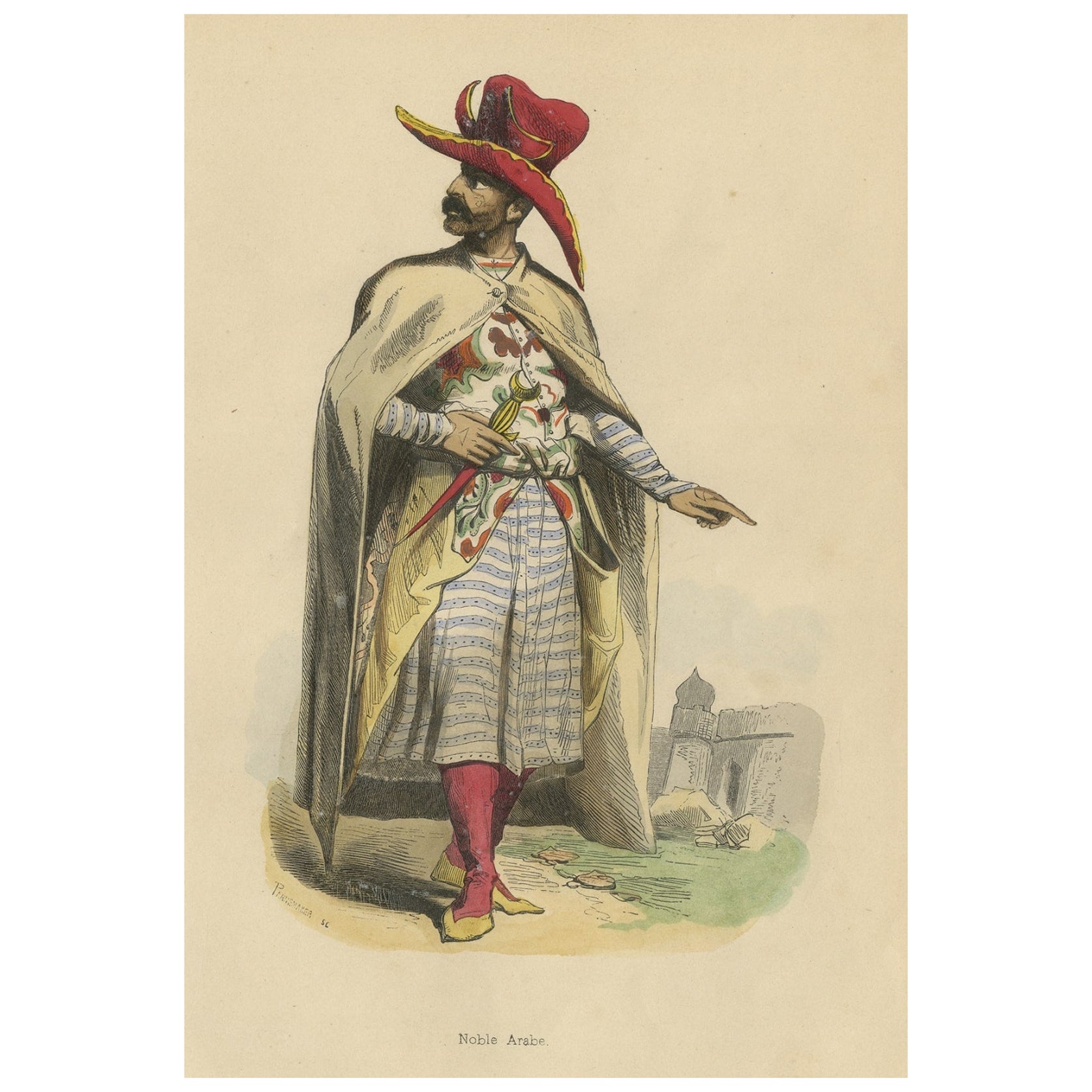
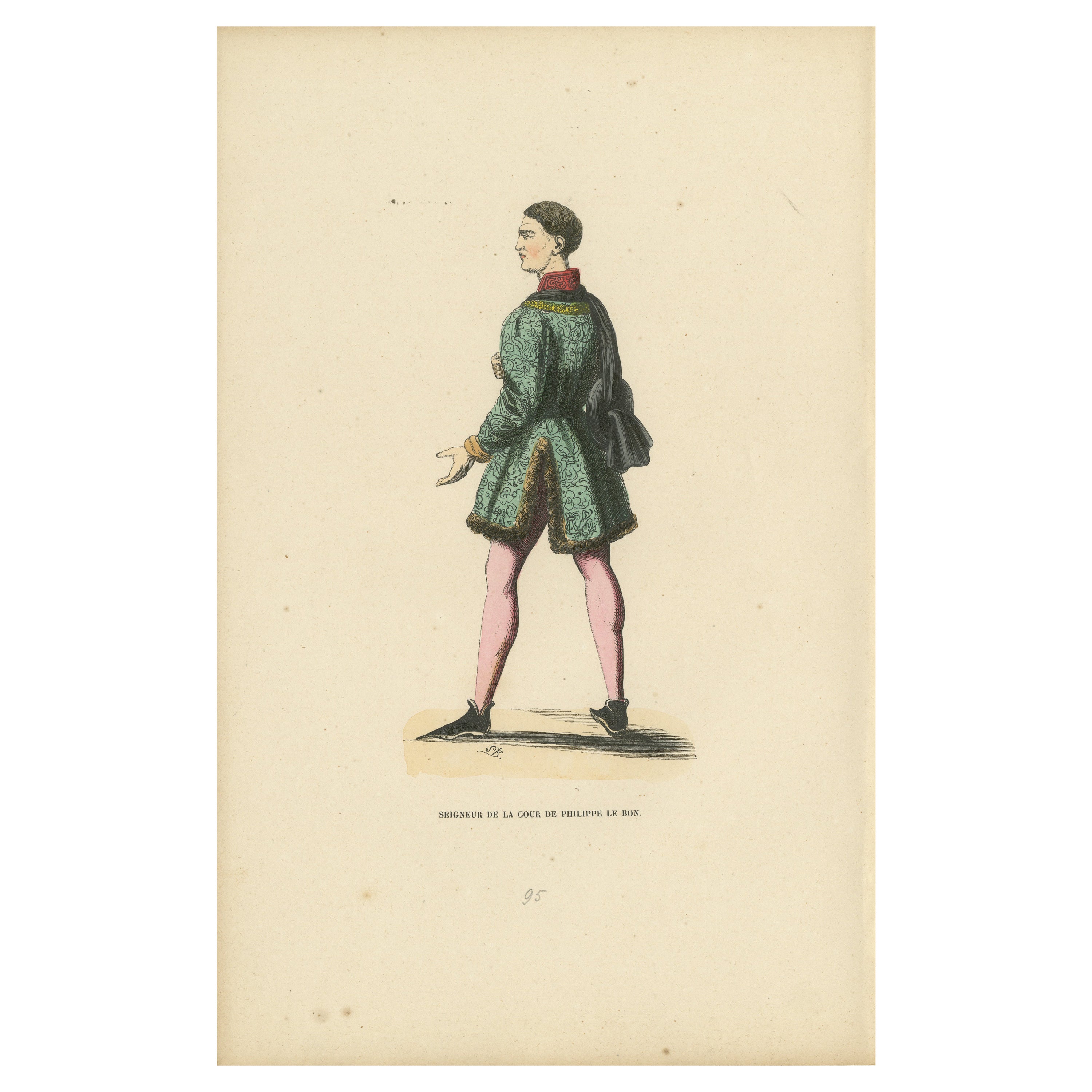
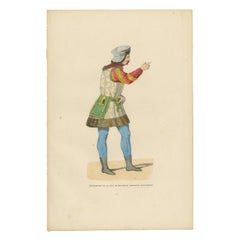
Courtly Splendor: A Nobleman at Emperor Sigismund's Court, 1847
Located in Langweer, NL
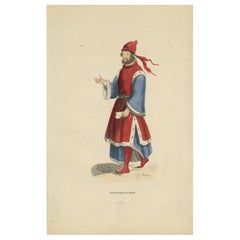
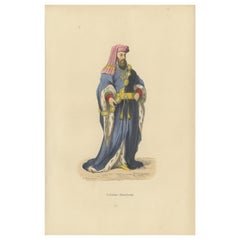
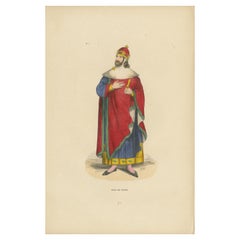
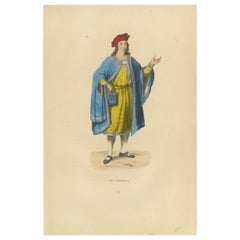
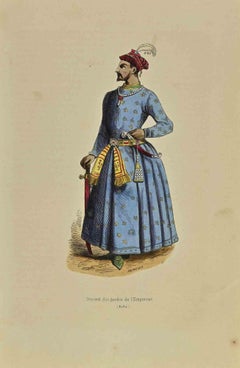
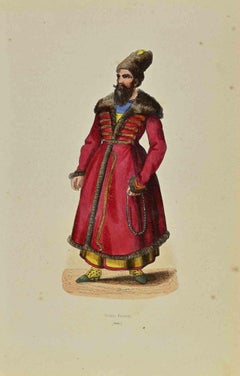
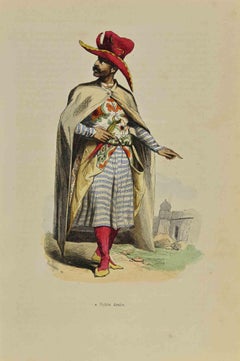
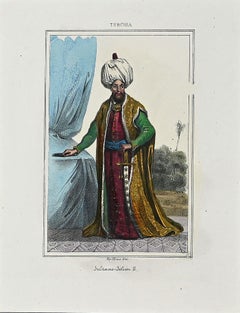
The image depicts a man identified as a "Gentilhomme de la cour de Sigismond, empereur d'Allemagne," which translates to "Gentleman of the court of Sigismund, Emperor of Germany." This individual is portrayed in a profile stance, dressed in attire that is indicative of the high-status courtiers during the time of Emperor Sigismund, who reigned in the early 15th century. He is wearing a turban-like headgear, which reflects the influence of Eastern fashion on European court attire, possibly due to the Ottoman influence or the general exchange of culture during the Crusades and subsequent interactions. His doublet is richly patterned and he has puffed sleeves in red, which were fashionable among the nobility during the period. The garment is accented with a decorative belt that holds what appears to be a purse or a pouch. He also sports tight blue hose and pointed shoes, which complete the ensemble typical of a nobleman or a high-ranking court official in the Holy Roman Empire. Egg whites can be applied as a varnish over pigments to enhance their brightness and to protect the colors. This application could make the colors appear more vivid and also add a slight glossy sheen to the surface of the image. Egg yolk, on the other hand, was commonly used as a binding agent in paint. It forms the basis of tempera paint, a medium that was widely used before the advent of oil painting. Egg yolk helps to create a durable and long-lasting color that adheres well to various surfaces. In the context of the print from 1847, it's less likely that egg whites or yolks were used directly on the print, as by that time, commercial printing processes would have been more advanced and less reliant on such manual methods. However, if this print is a representation of an earlier style or is meant to mimic the appearance of hand-painted manuscripts...
Antique 1840s Prints
Paper