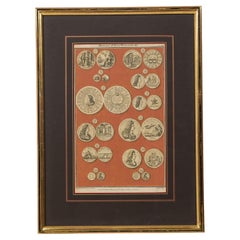
Jupiter Cults and Roman Coins, Composite Classical Engraving, Montfaucon 1721
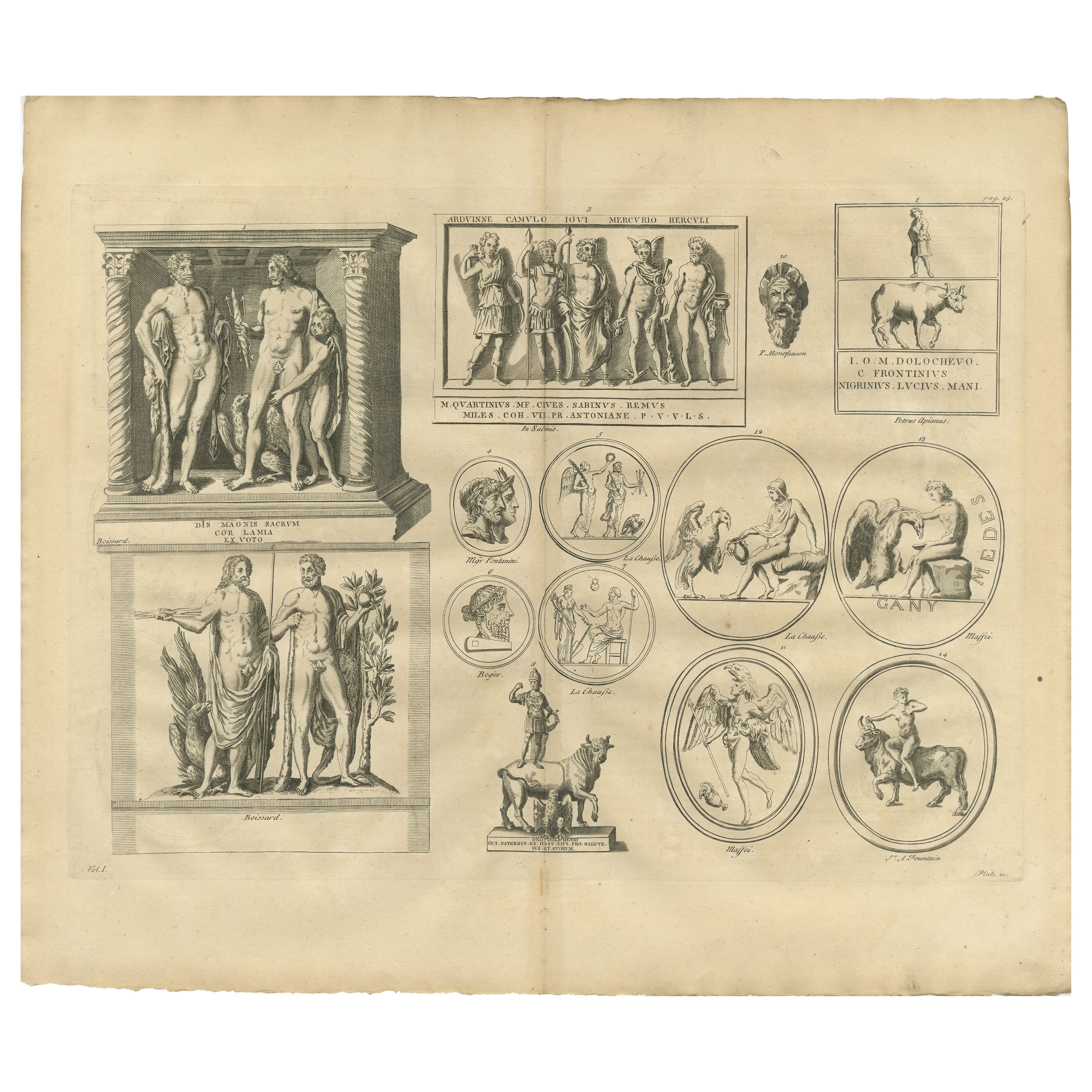
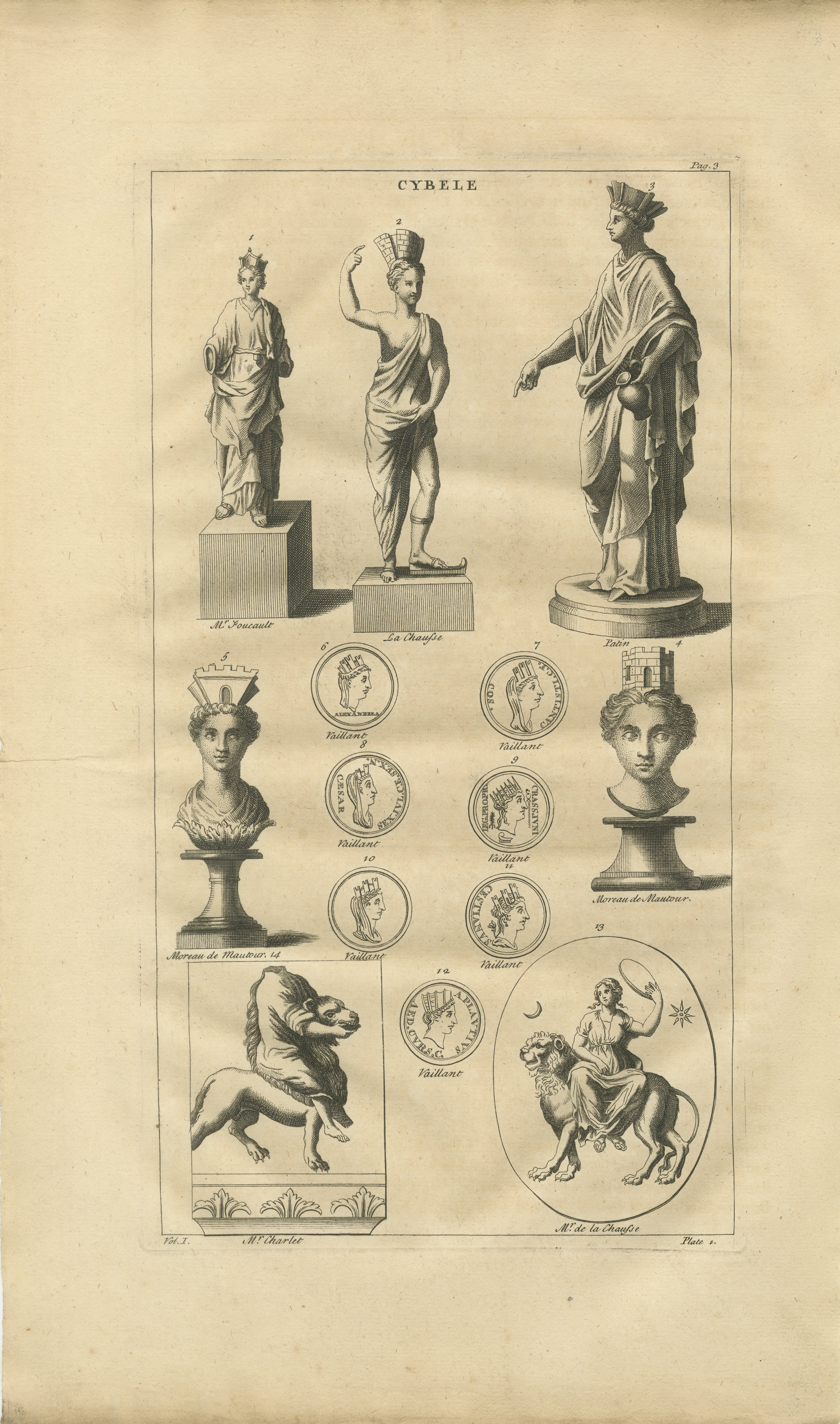
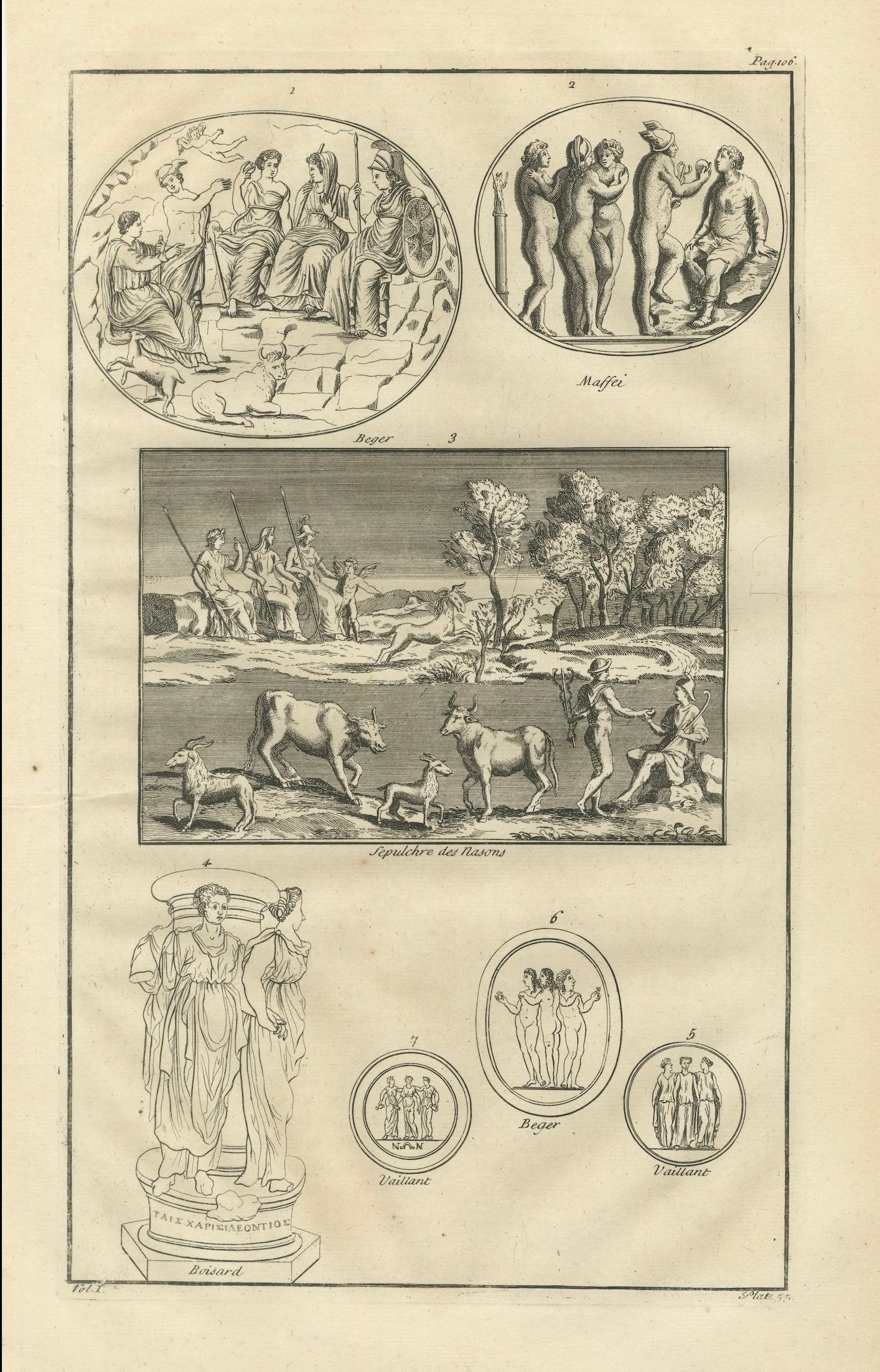
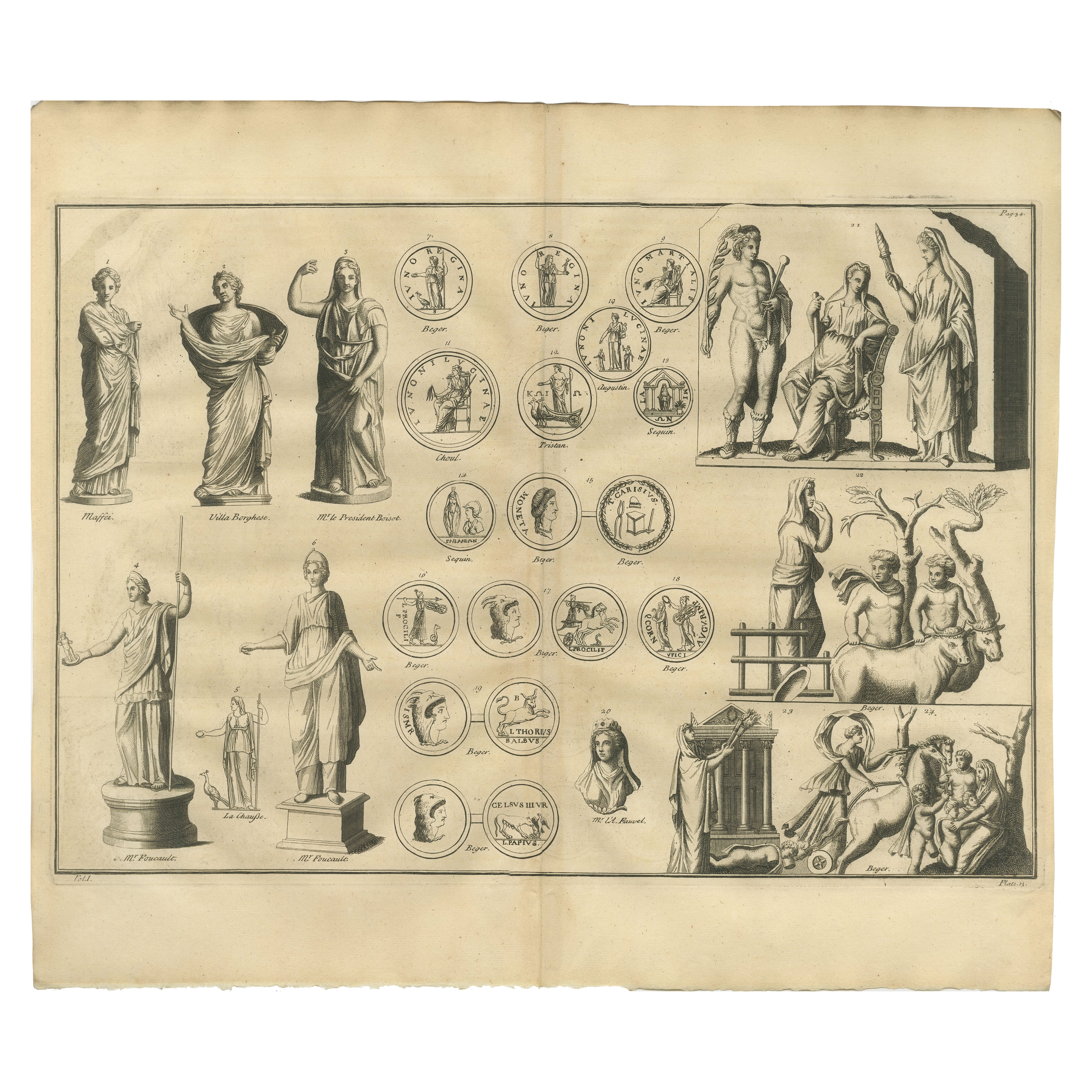
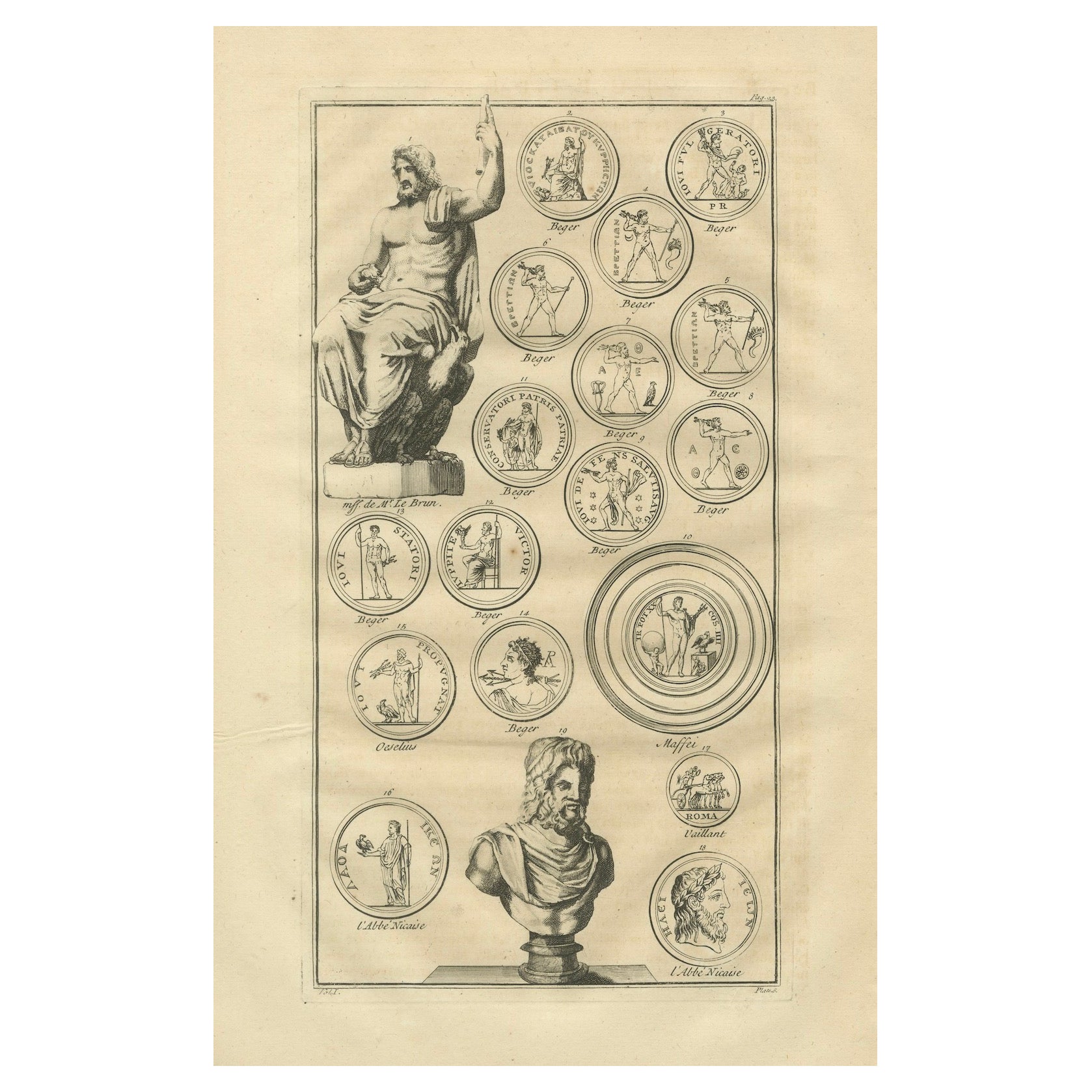
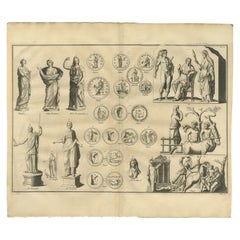
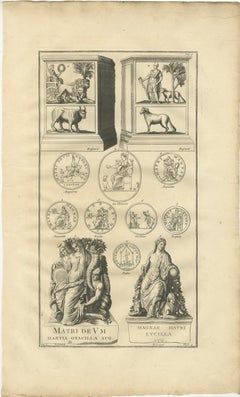
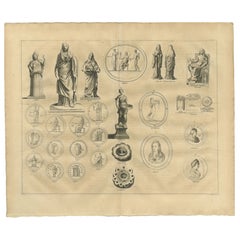
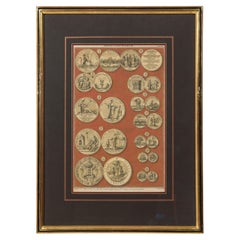
This detailed composite engraving originates from the first English edition of Bernard de Montfaucon’s monumental antiquarian publication Antiquity Explained and Represented in Sculptures, printed in London in 1721. The plate is devoted to Jupiter, the supreme god of Roman religion, and presents a learned visual synthesis of his cult, iconography, and material representations drawn from ancient Roman sources.
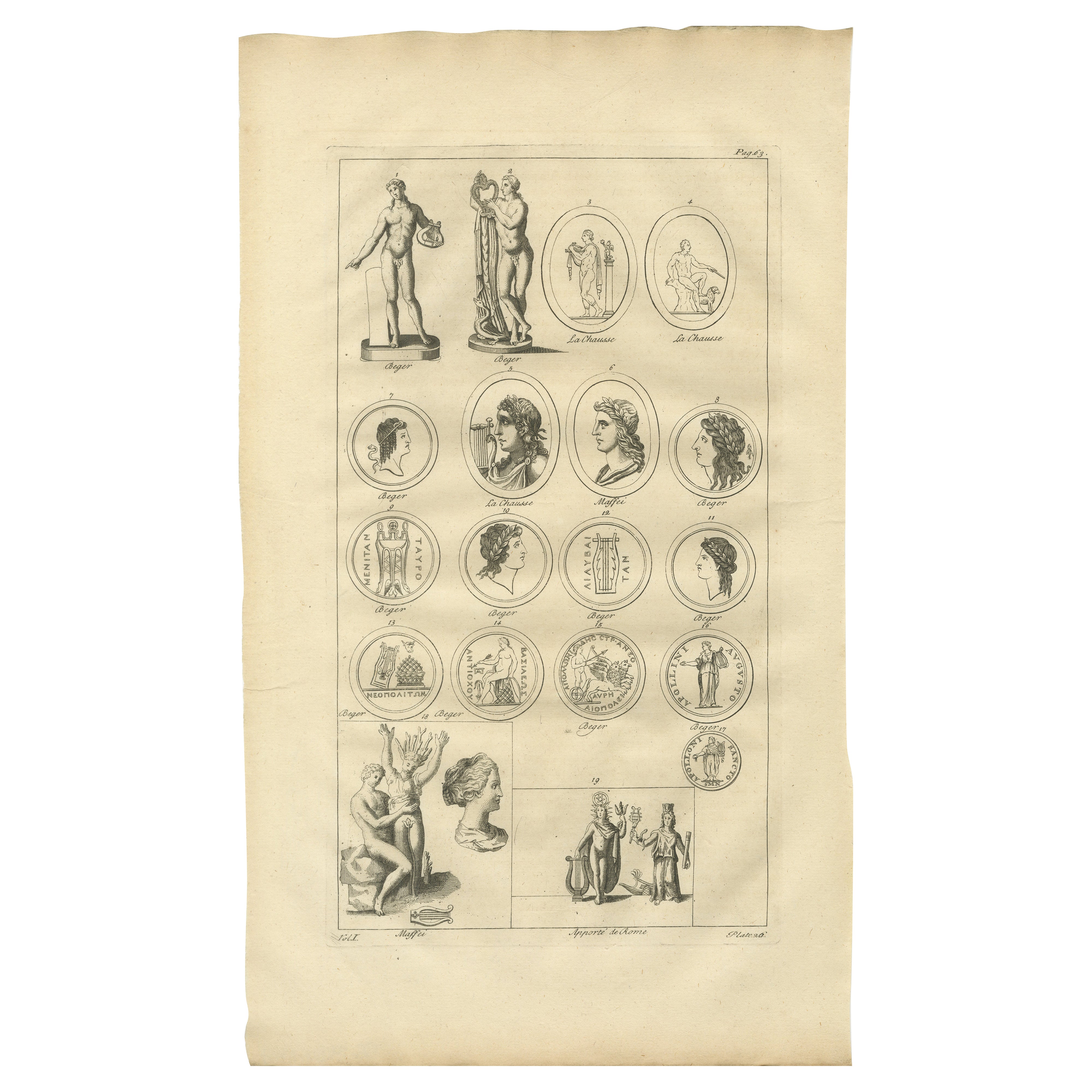
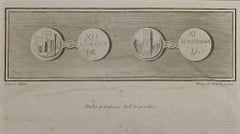
The composition combines a wide range of numismatic studies, including Roman coins and medallions depicting Jupiter, temples, sacred animals, and cult symbols, arranged alongside sculptural fragments, reliefs, and portrait heads. At the center is a sculptural relief scene associated with Jupiter’s worship, while the lower section features a powerful classical bust and fragmentary sculptural details, reflecting the antiquarian practice of reconstructing antiquity through surviving remains. Together, these elements form an encyclopedic reference sheet intended to demonstrate how coins, sculpture, and inscriptions collectively informed early modern understanding of the ancient world.
Although published in England, the intellectual and artistic foundation of the imagery is rooted in Italian scholarship, particularly the Roman antiquarian tradition shaped by Giovanni Pietro Bellori. Plates of this kind were conceived for scholars, artists, and architects and today are especially valued for their scholarly depth, refined engraving, and strong decorative presence in libraries, studies, and classically inspired interiors.
This sheet comes from the same 1721 volume as the other plates in this Montfaucon series and represents an authentic early English issue of one of the most important antiquarian works of the 18th century.
Condition report:
Good overall condition. Light, even age toning and minor edge wear consistent with early 18th-century paper. Plate impression remains strong and clear. No significant tears, losses, or restorations observed.
Framing tips:
This plate is well suited to a wide mat in warm white or soft ivory to emphasize the circular coin studies and central relief. A dark wood frame such as walnut or mahogany reinforces the scholarly, classical character, while a simple black frame works well in more contemporary interiors with classical references.
Technique: Engraving
Maker: Bernard de Montfaucon, France (published London, 1721)