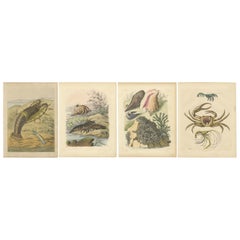
Crustaceans & Marine Invertebrates Print: Crab, Lobster, Horseshoe Crab - 1867
Located in Langweer, NL
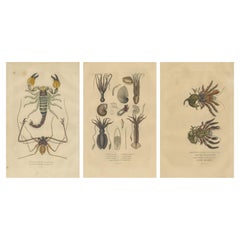
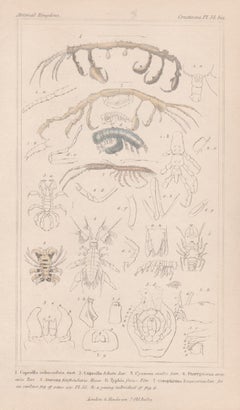
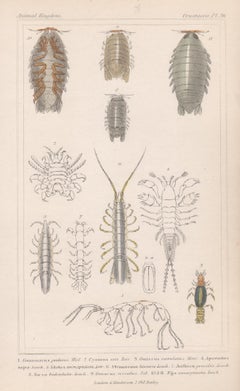
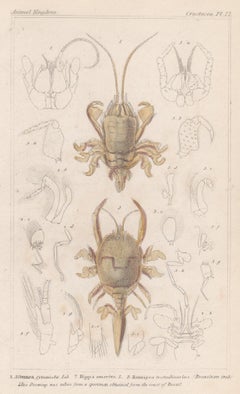
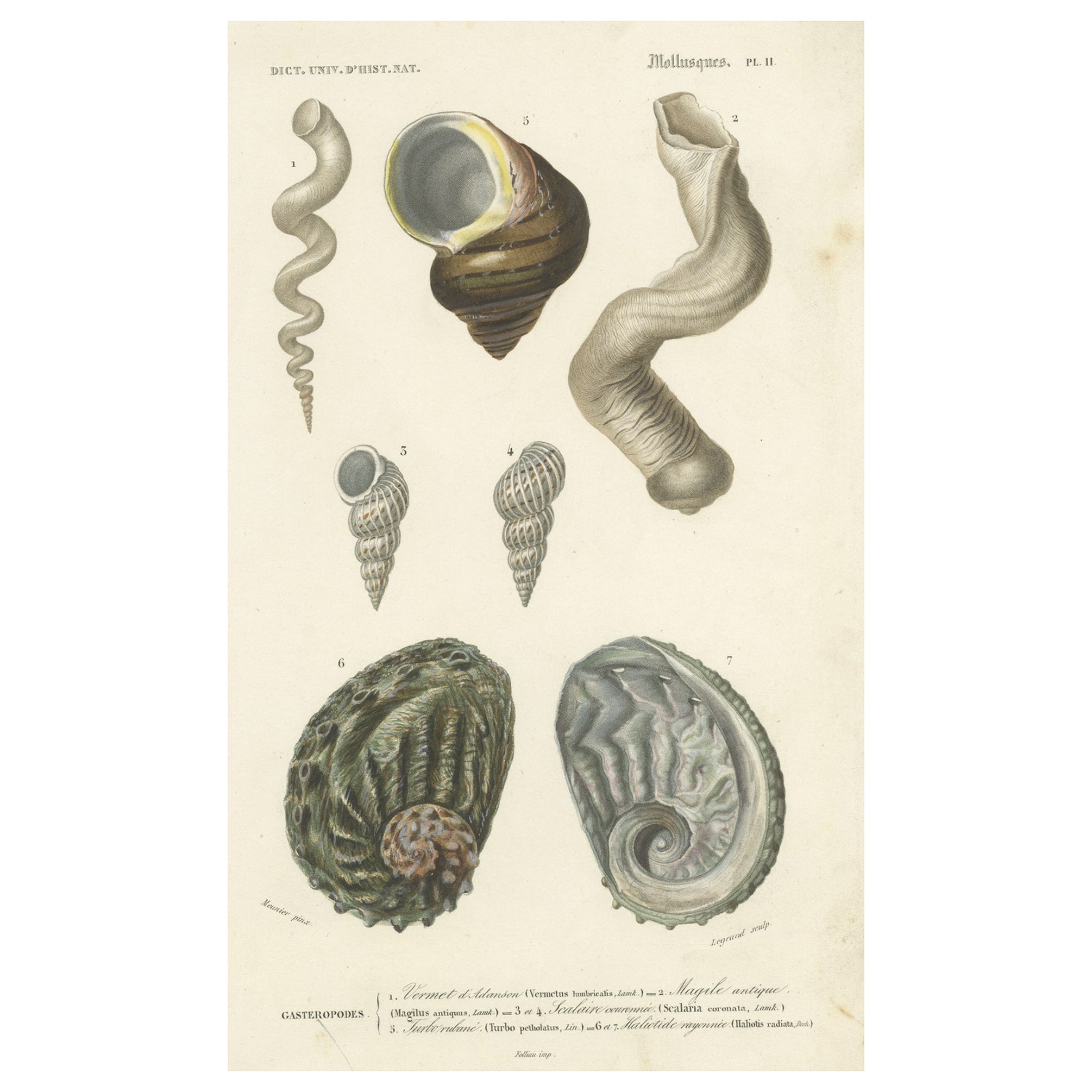
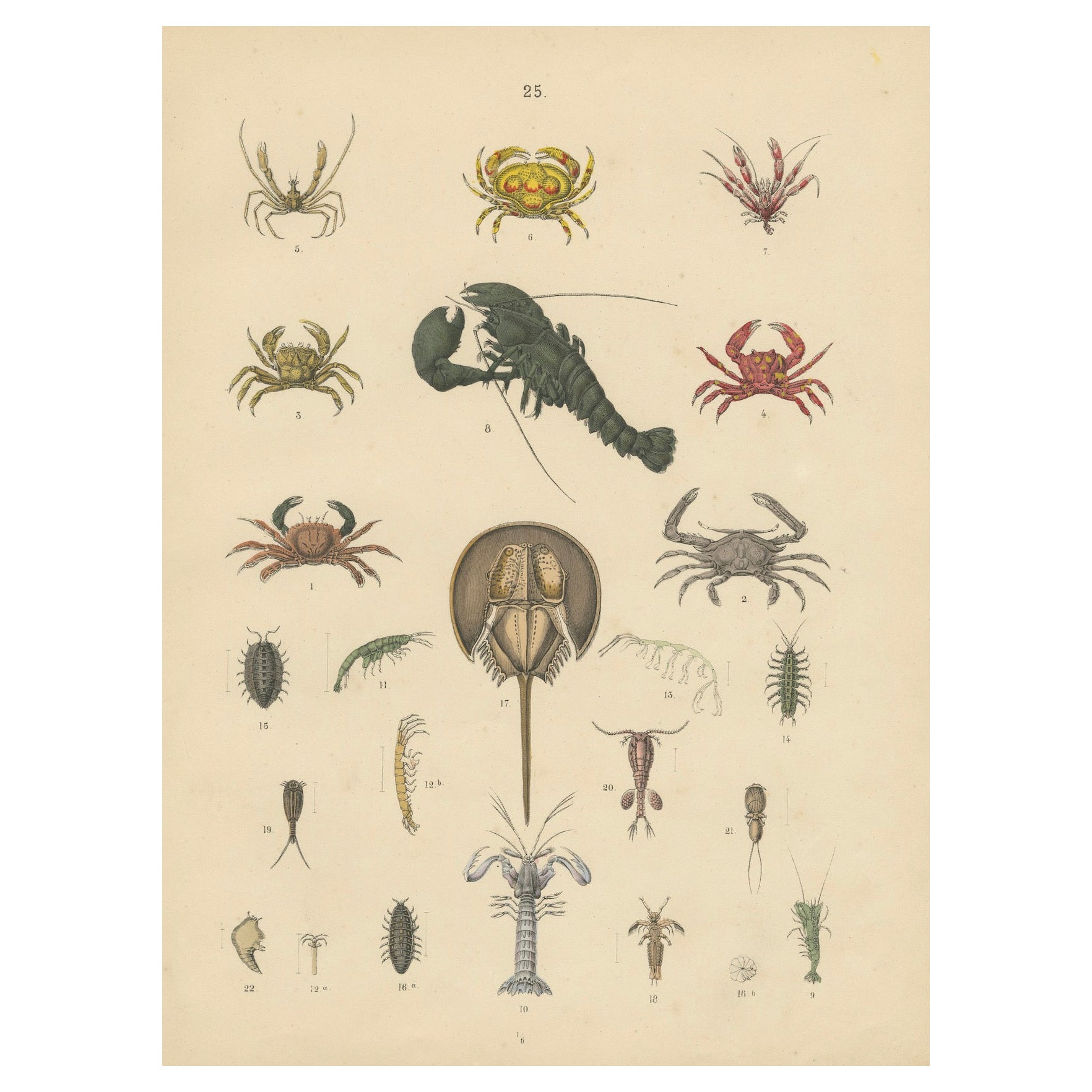
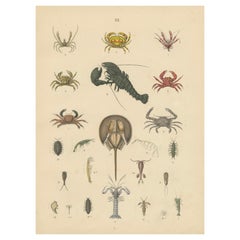
Crustaceans & Marine Invertebrates Print: Crab, Lobster, Horseshoe Crab – Antique 1867 This detailed antique print depicts a diverse range of crustaceans and marine invertebrates, including crabs, lobsters, shrimps, barnacles, copepods, and the horseshoe crab, rendered in fine hand-coloured engravings. It originates from the Atlas der Natuurlijke Geschiedenis voor scholen en huisgezinnen, adapted into Dutch by T.C. Winkler after Traugott Bromme, and published in Amsterdam by J.C. Loman in 1867. Designed for educational use, this plate introduced 19th-century students to marine biology and invertebrate diversity. The labelled figures include: 1. Shore crab (Carcinus maenas) 2. Blue crab (Callinectes sapidus) 3. Spider crab (Maja squinado) 4. Red rock crab (Cancer productus) 5. Fiddler crab (Uca species) 6. Mosaic crab (Lophozozymus pictor) 7. Porcelain crab (Porcellanidae species) 8. Lobster (Homarus gammarus) 9. Branchiopod (Branchiopoda species) 10. Mantis shrimp (Stomatopoda species) 11. Krill (Euphausiacea species) 12. Barnacle larva (Cirripedia species) 12a. Nauplius stage 12b. Cypris stage 13. Amphipod (Amphipoda species) 14. Isopod (Isopoda species) 15. Water flea (Daphnia species) 16. Cyclops copepod (Cyclopoida species) 16a. Adult copepod 16b. Egg stage 17. Horseshoe crab (Limulus polyphemus) 18. Fairy shrimp (Anostraca species) 19. Copepod (Copepoda species) 20. Ostracod (Ostracoda species) 21. Harpacticoid copepod (Harpacticoida species) 22. Barnacle cypris larva Produced using copper engraving with meticulous hand colouring, the print shows fine anatomical lines and vibrant detailing, highlighting each species' structure, limb arrangement, and carapace shape. Each invertebrate is illustrated systematically for easy comparative study, reflecting 19th-century natural history educational standards before photographic field guides were available. Condition summary: Good condition for its age, with slight toning and minor scattered foxing mainly in the margins. The paper remains strong with no tears or repairs, and the hand colouring is vivid and well-preserved. Framing tips: Frame this marine biology print...
Antique 1860s German Prints
Paper