Want more images or videos?
Request additional images or videos from the seller
1 of 12

Large Aquatint of The Celebrated Trotting Stallion Artaxerxes

$2,250
£1,682.43
€1,964.98
CA$3,161.25
A$3,202.18
CHF 1,838.62
MX$38,825.43
NOK 21,334.86
SEK 21,716.44
DKK 14,690.30

About the Item

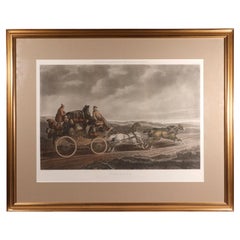
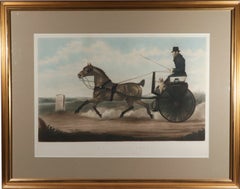
Hand-Coloured Aquatint of Large Size of The Celebrated Trotting Stallion Artaxerxes After Francis Calcraft Turner (c. 1772–1846); Engraved by Richard Gilson Reeve (1803–1889); Published by I.W. Laird, 96 Marshall Street, London, April 1838 A large and impressive hand-coloured aquatint depicting the celebrated trotting stallion Artaxerxes, aged twelve years, shown in spirited action drawing a two-wheeled gig along an open road. The horse — a powerful, well-muscled chestnut rendered with the authority of a specialist sporting artist who knew his subjects intimately — is shown in full trot, his near foreleg advanced and his head slightly turned, the reins held with easy confidence by the top-hatted gentleman-driver seated in the gig behind him. A small black dog runs energetically at the horse’s heels in the right foreground, a lively incidental detail that animates the lower register of the composition. space This vantage point of Blackheath, was a standard compositional choice for sporting prints of this period — Blackheath was itself a famous trotting ground, so the background is almost certainly a deliberate and accurate topographical reference placing the horse Artaxerxes in his actual racing environment. Trotting matches on Blackheath were well documented in the 1830s, which makes the landscape doubly purposeful as both setting and record. The composition is characteristic of F.C. Turner’s best trotting-horse subjects: the horse is given full prominence against a spacious ground, the vehicle and driver subordinate to the animal’s energy and form. The hand-colouring is applied with skill and confidence, the chestnut of the horse’s coat and the harness rendered in warm browns and ochres, the gig’s red wheel spokes providing a sharp note of colour, and the driver’s dark coat and white-covered lap rug carefully differentiated. The landscape ground and sky are washed in the subdued greens and grey-blues characteristic of well-preserved examples of the type. The lower margin carries the standard imprint information: to the left, “Painted by F.C. Turner”; to the right, “Engraved by R.G. Reeve”; centred, "Artaxerxes. AGED 12 YEARS. The Property of Chas. Enderby, Esqr., to whom this Print with Permission is Dedicated by his Obedient Servant J. W. LAIRD. London Pub'd by J. W. LAIRD, April, 1838, at N°1 Leadenhall Street. This celebrated Horse was driven in the style as above shown from Aug't 1835 to Oct. 1837 when he was obliged to be destroyed, from having been unfortunately bitten by a Mad Dog." The print is dedicated to Charles Enderby (the proprietor) as a mark of respect. Charles Enderby was a well-known London merchant and whaling entrepreneur. Trotting — the competitive driving of horses at the trot, typically in lightweight gigs or sulkies — enjoyed a surge of popular enthusiasm in Britain in the 1820s and 1830s, attracting both aristocratic patrons and a wider sporting public. The subject of a named trotting horse in harness, driven by its owner-gentleman along a road, was a well-established formula in British sporting prints of the period. Dimensions Overall (framed): 30½ inches high 38 inches wide (77.5 × 96.5 cm) Condition: The condition is excellent with the color well retained. It is protected by Truview UV Glass. Provenance Private American collection. Historical Context Francis Calcraft Turner (c. 1772–1846) was one of the most prolific and commercially successful sporting artists of the Regency and early Victorian periods. A member of the Society of British Artists, he exhibited regularly at the Royal Academy, the British Institution, and the Suffolk Street Gallery between 1810 and 1846. Turner contributed extensively to the ‘Sporting Magazine’ and was celebrated for his authoritative draughtsmanship, rooted in a lifetime’s direct engagement with the sporting field. He wrote with characteristic immodesty in 1828 that he possessed more practical knowledge of “racing, shooting, and coursing” than any other artist of his time. His paintings entered the Royal Collection and major institutional holdings including the British Museum, the National Horse Racing Museum at Newmarket, and the Yale Center for British Art. Richard Gilson Reeve (1803–1889) was the son and successor of the aquatint engraver Richard Reeve (fl. 1795–1820), and one of the most accomplished sporting print engravers of the second quarter of the nineteenth century. Active from 1825 — initially signing himself ‘Reeve Junior’ — he worked extensively with Turner and other sporting painters, producing hand-coloured aquatints that combined technical precision with expressive tonal range. His prints were published by the leading London houses of the period, including I.W. Laird of Marshall Street, a specialist publisher of sporting and equestrian subjects. Selected Bibliography Egerton, Judy. British Sporting and Animal Paintings, 1655–1867: The Paul Mellon Collection. London: Tate Gallery / Yale Center for British Art, 1978. Gilbey, Sir Walter. Animal Painters of England from the Year 1650. 3 vols. London: Vinton & Co., 1900–1911. Nevill, Ralph. Old English Sporting Prints and Their History. London: The Studio, 1923. Selway, N.C. The Golden Age of Coaching and Sport, as Depicted by James Pollard. Leigh-on-Sea: F. Lewis, 1972. Snelgrove, Dudley. British Sporting and Animal Drawings, c. 1500–1850: The Paul Mellon Collection. London: Tate Gallery, 1981. (Ref: NY11156-nccx)
  • Dimensions:
    Height: 30.5 in (77.47 cm)Width: 38 in (96.52 cm)Depth: 1.5 in (3.81 cm)
  • Style:
    Country (Of the Period)
  • Materials and Techniques:
  • Place of Origin:
  • Period:
  • Date of Manufacture:
    1838
  • Condition:
  • Seller Location:
    Downingtown, PA
  • Reference Number:
    Seller: NY11156-nccx1stDibs: LU861050716812

More From This Seller

View All
The Road 1825: ‘Commercial Traveller’ — A Large Hand-Coloured Aquatint

The Road 1825: ‘Commercial Traveller’ — A Large Hand-Coloured Aquatint

Located in Downingtown, PA

The Road 1825: ‘Commercial Traveller’ — A Large Hand-Coloured Aquatint After Owen Bailey; published in London, Circa 1825–1830 A particularly large and imposing hand-coloured aquatint depicting a trotting horse — named in the lower margin as ‘Commercial Traveller’ — shown in full action drawing a two-wheeled gig at speed along an open road. The horse, a powerful bay or dark chestnut rendered with muscular authority, is caught at the moment of extended trot: near foreleg advanced, haunches driving, the ground thrown up in a small cloud of dust at the hooves. The gentleman driver, dressed in a dark coat and low-crowned hat, sits upright in the gig holding the reins with composed ease, a small terrier or spaniel seated beside him on the box — an appealing detail that gives the composition unusual intimacy. To the left of the road stands a simple stone or wooden milestone, a quietly functional element that anchors the composition geographically and suggests the turnpike road context of the scene. The background opens to a spacious, rolling landscape with a glint of water or estuary in the middle distance and a broadly rendered sky of cumulus cloud. The composition is typical of the ambitious large-format trotting horse print as produced for the English sporting market of the 1820s and 1830s: a wide horizontal format, the horse dominating the picture plane, the landscape ground kept low and unencumbered to emphasise speed and energy. The hand-colouring is applied with care and consistency: the horse’s warm brown coat is modelled with subtlety, the gig’s dark ironwork contrasting with the pale covered seat, and the sky washed in the greys and ochres characteristic of period aquatints in good preservation. The lower margin carries the title ‘THE ROAD 1825’ in spaced capitals, with the subtitle ‘Commercial Traveller’ in italic script below. The plate is signed ‘Owen Bailey, London’ in the lower margin. Dimensions 30¼ inches (76.8 cm) high, 38 inches (96.5 cm) wide, 1¼ inches (3.2 cm) deep, framed. Provenance Private American collection. Condition: Good with with Truguard UV glass to protect from light damage. Historical Context Owen Bailey was a London-based sporting artist active in the second and third decades of the nineteenth century, working in the tradition of F.C. Turner, James Pollard, and Henry Alken. His paintings of trotting horses and driving subjects were reproduced as large-format hand-coloured aquatints published for the broad sporting print market. The ‘Road’ series — of which ‘The Road 1825’ is a representative title — celebrated the open turnpike road as a theatre for the display of horses’ speed and quality, and reflected the intense popular interest in trotting and fast driving that characterised the Regency sporting world. The 1820s were the peak period for the English trotting and fast-driving print. Publishers catering to the sporting and aspiring middle-class market produced large-format plates that were sold individually or in matched pairs for display in dining rooms, libraries, and halls. The format of a single named horse in harness, shown at speed with a stone milestone or country background, became a near-standard formula, and prints of this type were produced in considerable numbers. The finest examples — of which this is one — combine genuine artistic quality with a social documentary interest in the fashions of dress, vehicle design, and road culture of the Regency period. Selected Bibliography Egerton, Judy. British Sporting and Animal Paintings, 1655–1867: The Paul Mellon Collection. London: Tate Gallery / Yale Center for British Art, 1978. Nevill, Ralph. Old English Sporting Prints...

Category

Antique 1820s English Regency Prints

Materials

Paper

‘Waking Up’: Fore’s Coaching Recollections — A Very Large Hand-Coloured Aquatint

‘Waking Up’: Fore’s Coaching Recollections — A Very Large Hand-Coloured Aquatint

Located in Downingtown, PA

‘Waking Up’: Fore’s Coaching Recollections, Plate IV — A Large Hand-Coloured Aquatint After Charles Cooper Henderson (1803–1877); Engraved by Charles Hunt; Published by Messrs. For...

Category

Antique 1840s English Country Prints

Materials

Paper

Horse Pastel Painting by Leslie Charlotte Benenson

Horse Pastel Painting by Leslie Charlotte Benenson

Located in Downingtown, PA

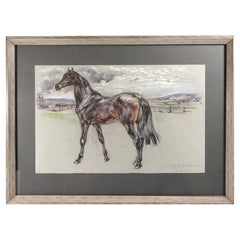
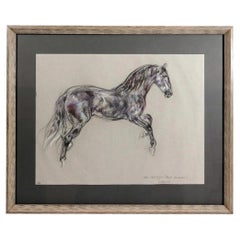
The Equestrian Eye: Original Pastel of a Stallion by Leslie Charlotte Benenson Dated May 16, 1986 This beautifully rendered original pastel is another remarkable addition from our c...

Category

Vintage 1980s English Modern Paintings

Materials

Paper

Horse Pastel Painting by Leslie Charlotte Benenson

Horse Pastel Painting by Leslie Charlotte Benenson

Located in Downingtown, PA

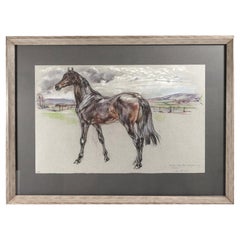
The Equestrian Eye: Original Pastel of a Stallion by Leslie Charlotte Benenson Dated May 16, 1986 This beautifully rendered original pastel is another remarkable addition from our c...

Category

Vintage 1980s English Modern Drawings

Materials

Paper

Horse Pastel Painting by Leslie Charlotte Benenson of Erin Star

Horse Pastel Painting by Leslie Charlotte Benenson of Erin Star

Located in Downingtown, PA

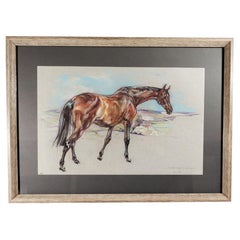
Leslie Charlotte Benenson, Original Pastel of “Erin Star,” a Three-Quarter-Bred Irish Mare Dated 1 June 1985 This beautifully rendered original pastel is a further addition to our c...

Category

Vintage 1980s English Modern Drawings

Materials

Paint

Horse Pastel by Leslie Charlotte Benenson, Stallion Dans Don Juan, Dated 1996

Horse Pastel by Leslie Charlotte Benenson, Stallion Dans Don Juan, Dated 1996

Located in Downingtown, PA

Leslie Charlotte Benenson, Original Pastel of a Spanish Stallion, "Dans Don Juan" Dated 21 July 1996 This striking original pastel is a fine example of the equine studies of the Bri...

Category

1990s English Modern Paintings

Materials

Paint

You May Also Like

English Victorian Lithograph Equestrian Scene, Framed, 24x29.5 Inches

English Victorian Lithograph Equestrian Scene, Framed, 24x29.5 Inches

Located in Queens, NY

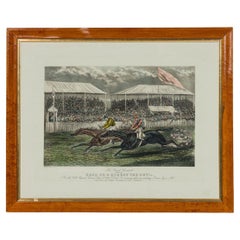
English Victorian Lithograph of an Equestrian Scene depicting two competing horses in a maple and gilt frame Good condition consistent with age and use

Category

Antique 19th Century British Victorian Paintings

Materials

Maple

Framed Victorian Print of Horse Ride, 19th Century, English, Paint

Framed Victorian Print of Horse Ride, 19th Century, English, Paint

Located in Queens, NY

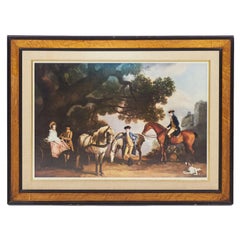
English Victorian-style print of a painting of a group of men in tricorn hats and a lady in a carriage with horses and a dog enjoying a journey through the woods in a rectangular woo...

Category

Antique 19th Century British Victorian Paintings

Materials

Paint

Pair of English Framed Equestrian Engravings

Pair of English Framed Equestrian Engravings

Located in Essex, MA

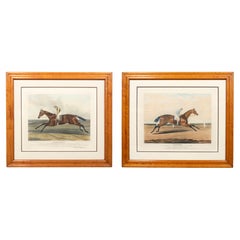
One is 27.25 x25 and other 28.63 x25. Image 16.5 x 20. With birds eye maple frames. Features horse winners at Doncaster races in England.

Category

Antique Early 19th Century English Prints

Materials

Glass, Birdseye Maple, Paper

A watercolor finished print depicting racing horses, England 1799.

A watercolor finished print depicting racing horses, England 1799.

By Samuel Howitt

Located in Milan, IT

A watercolor finished print, depicting racing horses. Samuel Howitt. Solid cherry wood (Prunus Avium, Linnaeus 1755), frame, polished and beeswaxed. England 1799.

Category

Antique Late 18th Century English Other Prints

Materials

Wood, Paper

Lithograph Le Poney after Alfred de Dreux, coloured by Loeillot et Ciceri c1840

Lithograph Le Poney after Alfred de Dreux, coloured by Loeillot et Ciceri c1840

Located in TEYJAT, FR

Framed Lithograph of the original water colour painting titled Le Poney, cataloged as Inv. MCR 104 on page 55 of Marie-Christine Renauld's cabinet raisonne L'univers d'Alfred de Dreu...

Category

Antique Early 19th Century French Paintings

Materials

Paper

Original Antique Lithograph of a Horse Showing the Passion 'Affection', 1827

Original Antique Lithograph of a Horse Showing the Passion 'Affection', 1827

Located in Langweer, NL

Antique horse print titled 'Plate 4th Affection, dedicated by permission to his most Gracious Majesty George the Fourth (..)'. Artists and Engravers: In 1827, British artist Henry Barnard Chalon (1770-1849), designed and lithographed a portfolio of six prints illustrating the “passions” of horses. Chalon had been appointed animal painter to the Duchess of York...

Category

Antique 1820s Prints

Materials

Paper