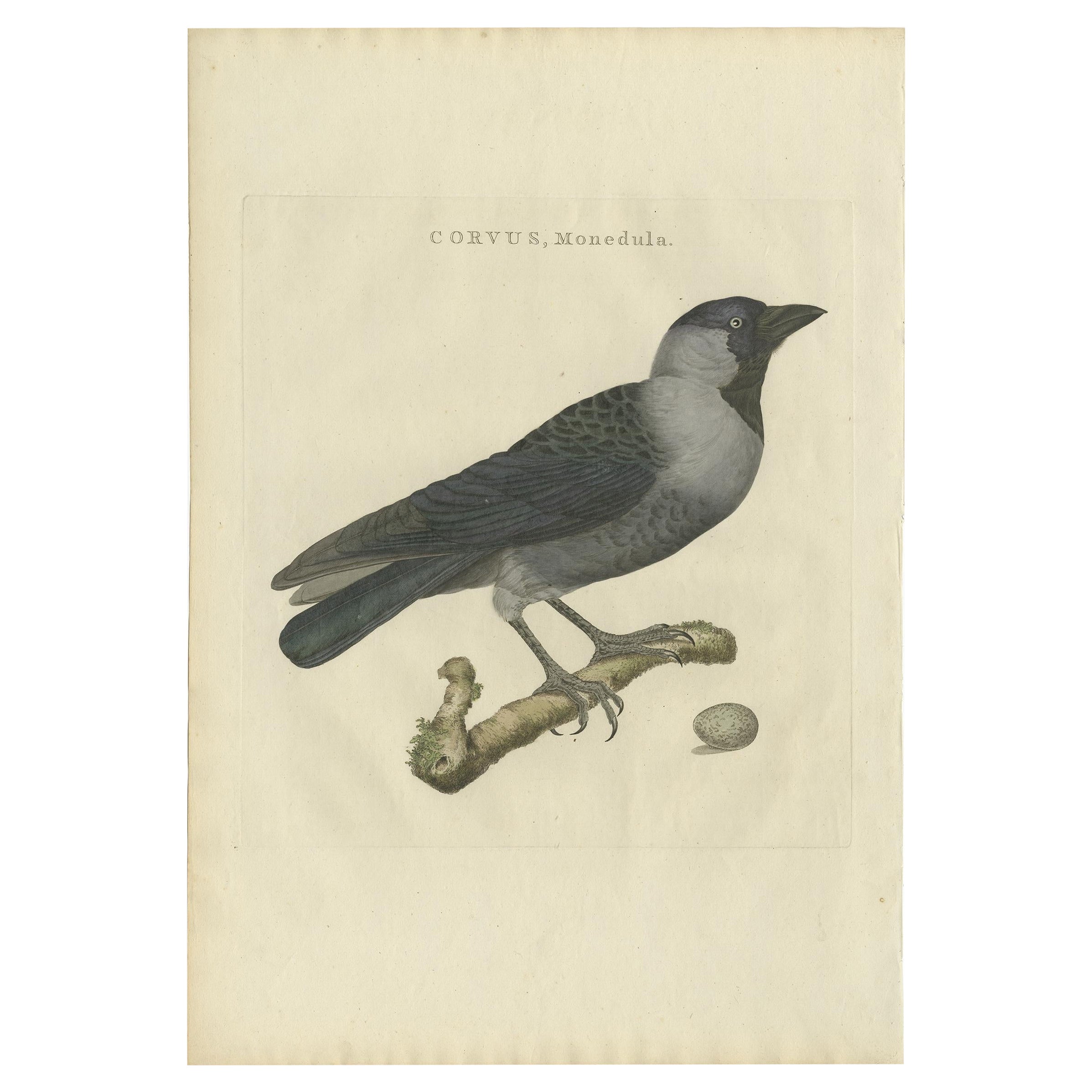
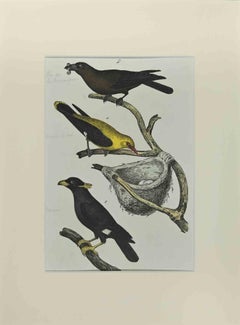
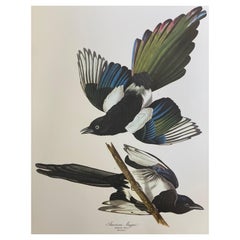
Magpie (Pica) – Antique Ornithological Print with Dutch Text, Nozeman, 1770–1829
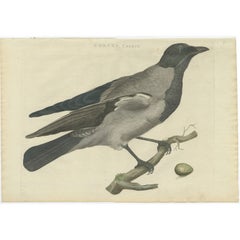
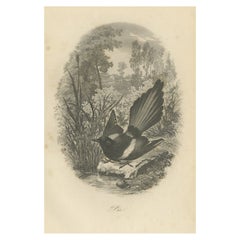
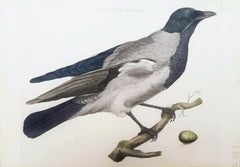
This fine hand-colored engraving depicts the magpie (Pica), shown perched on a branch with a single speckled egg below. The bird is rendered with remarkable detail, highlighting its iridescent blue-black plumage, white underparts, and long graduated tail. The magpie’s inquisitive downward gaze and poised stance capture its alert and intelligent nature. Magpies of the genus Pica inhabit temperate regions across Europe, Asia, and western North America, with populations also found in Tibet, the Ladakh region of India, and parts of Pakistan. Members of the related genus Cyanopica occur in East Asia and the Iberian Peninsula, while the so-called magpies of Australia are unrelated, belonging to a different family.
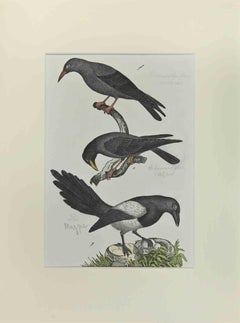
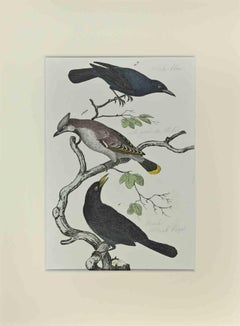
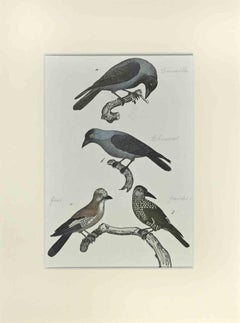
This print originates from the monumental ornithological work ‘Nederlandsche Vogelen; volgens hunne huisdouding, aert, en eigenschappen beschreven’ (Dutch Birds; Described According to Their Domestic Life, Nature, and Characteristics), published in Amsterdam between 1770 and 1829 by Cornelius Nozeman, Martinus Houttuyn, and Christiaan Sepp. Considered the first comprehensive ornithological study in the Netherlands, the series is celebrated for its life-like illustrations, often drawn close to actual size and showing the birds in their natural environment.
Accompanying this plate are two full folio pages of original Dutch text devoted to the magpie. These provide a fascinating period account of the bird’s habits, habitat, and relationship with humans. The text describes the magpie’s remarkable vocal mimicry, its nesting behavior, and its reputation as both a cunning forager and an occasional agricultural pest. Observations include details on the magpie’s diet, ranging from seeds and fruit to small animals, as well as its interactions with other bird species and its tendency to collect shiny objects. The narrative also reflects 18th-century rural life in the Netherlands, discussing how magpies were perceived by farmers, gardeners, and naturalists of the era.
Together, the vivid illustration and extensive contemporary commentary offer both aesthetic appeal and valuable historical insight, making this an exceptional item for collectors of ornithological art and Dutch natural history.
Condition: Very good. Minor age-related toning and faint handling marks. Plate mark visible. Dutch text pages in similarly good condition with only light toning and occasional spots.
Framing tips: The print would present beautifully in a classic dark wood frame with a soft cream or warm ivory mount to complement the natural tones of the paper. A subtle gold fillet could enhance the richness of the hand-coloring without overpowering the image. For scholarly display, the accompanying Dutch text pages could be framed separately or mounted on the reverse in a double-sided frame.