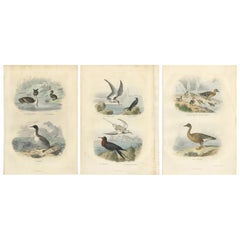
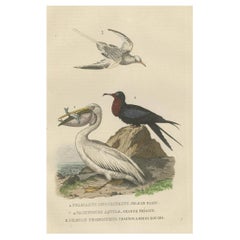
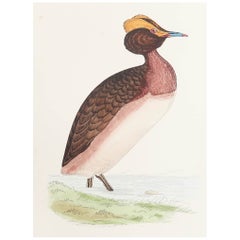
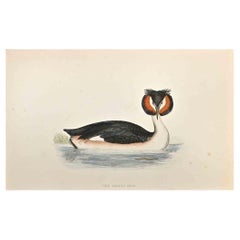
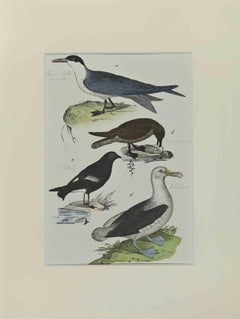
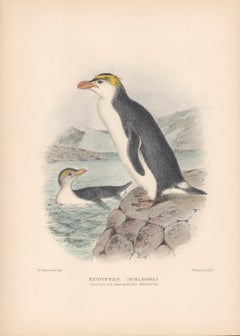
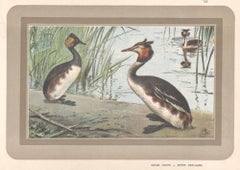
Title: ‘1. PODICEPS CRISTATUS – GREBE HUPPE, 2. MORMON FRATERCULA – MACAREUX MOINE, 3. APTENODYTES PATACHONICA – GRAND MANCHOT, 4. LARUS MARINUS – MOUETTE A MANTEAU NOIR.’
1. Great Crested Grebe, 2. Atlantic Puffin, nicknames such as “clown of the ocean” and “sea parrot”, 3. King Penguin, 4. Great Black-backed Gull.
Made by F.J. Desmares after Pierre Auguste Joseph Drapiez (1778-1856).
Engraving with original hand colouring, heightened with arabic gum on wove (vellin) paper.
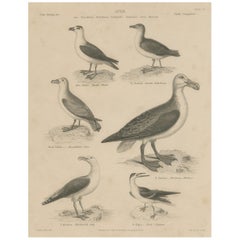
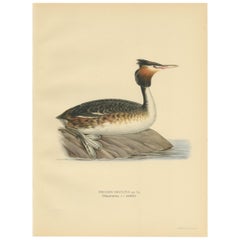
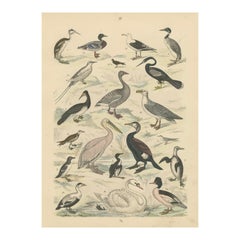
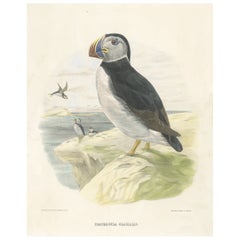
This antique hand-colored bird print showcases a captivating quartet of avian marvels: the Great Crested Grebe, the Atlantic Puffin, the King Penguin, and the Great Black-backed Gull. Each bird is meticulously depicted with vivid colors and intricate detail, offering a stunning portrayal of their distinctive features and natural habitats.
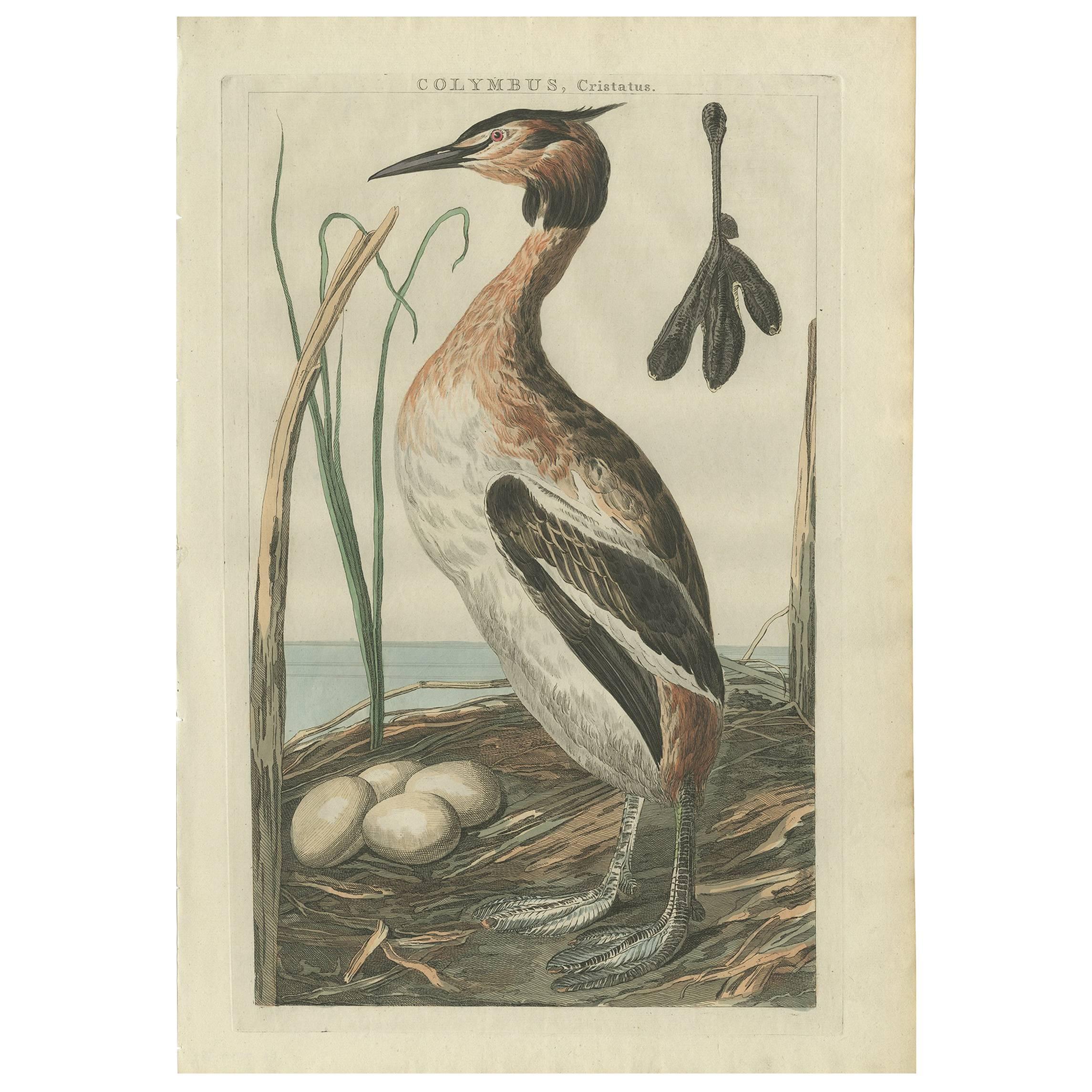
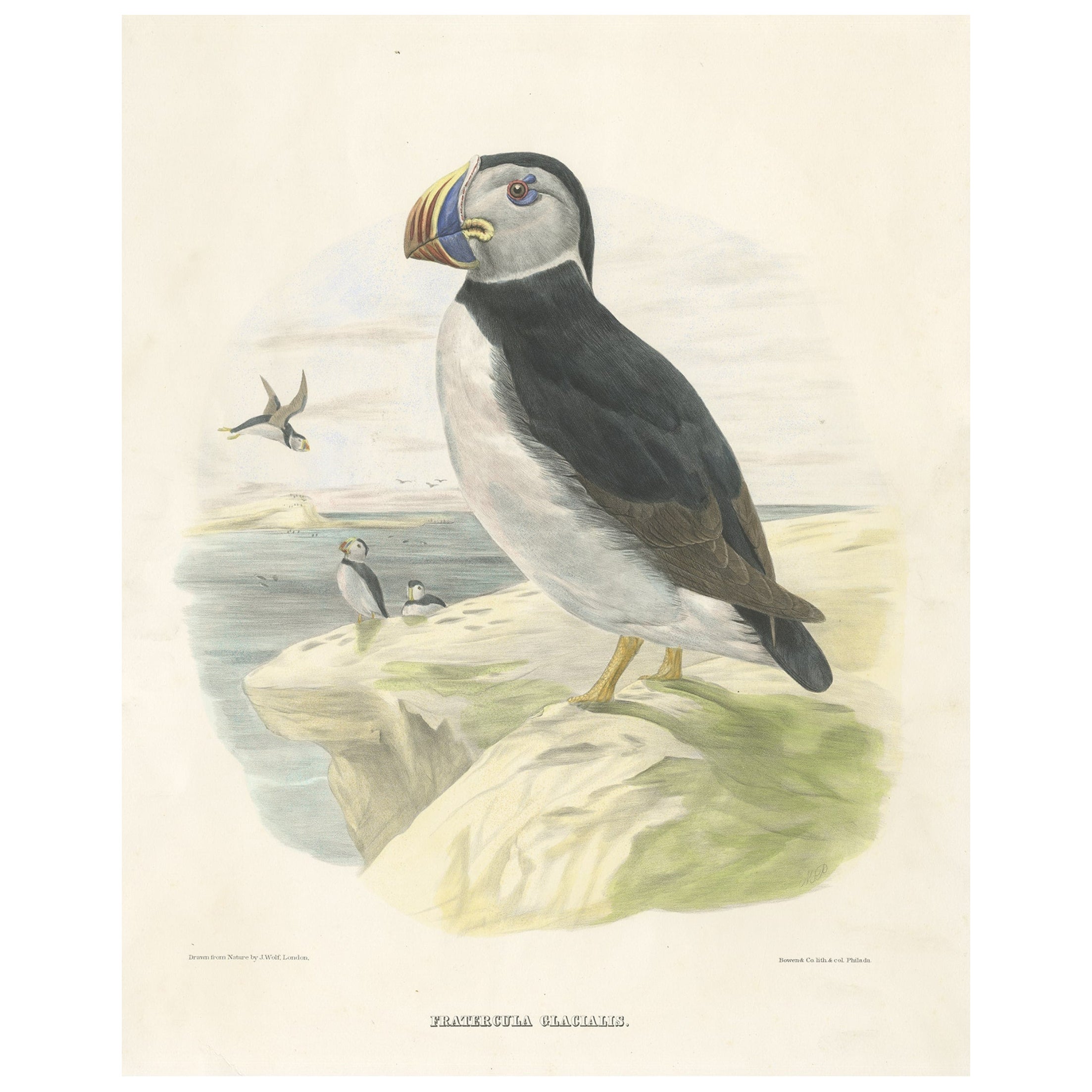
The elegant Great Crested Grebe, depicted in its breeding plumage, showcases its striking red eyes and intricate head plumes, either in serene waters or amidst aquatic foliage. The Atlantic Puffin, with its iconic brightly colored bill and contrasting black and white plumage, is captured in its charming pose, perhaps on a rugged coastal perch. The majestic King Penguin, known for its regal stature and vibrant orange patches, stands tall amidst its colony, exuding a sense of grace and grandeur. Finally, the Great Black-backed Gull, a symbol of coastal majesty, is portrayed in flight or perched, showcasing its impressive wingspan and distinctive markings.
With meticulous hand-coloring and attention to detail, this antique print brings these magnificent birds to life, offering a visual delight and a tribute to the diverse and captivating avian world. The artwork not only captures the beauty of each species but also provides a glimpse into their habitats, behaviors, and individual characteristics, inviting viewers into the enchanting realm of ornithological wonder.
More info on the book in which it was published:
The 'Dictionnaire Classique des Sciences Naturelles' by Pierre Auguste Joseph Drapiez stands as a remarkable testament to 19th-century natural sciences. Published in Brussels in 1845, this work represents an expansive collation of knowledge, building upon the pioneering works of Buffon, Daubenton, Lacepede, Cuvier, de Jussieu, and other influential naturalists.
The prints within this compendium likely showcase a rich amalgamation of artistic precision and scientific accuracy. Drapiez, himself a Belgian naturalist, would have aimed for detailed representations of flora, fauna, and scientific phenomena, mirroring the illustrative styles prevalent during his time. Given the era's emphasis on illustration, these prints were likely engraved meticulously, possibly portraying intricate anatomical details or lifelike depictions of the natural world.
With Drapiez's background in natural history, the prints might bear testament to his commitment to scientific authenticity, aiming to educate and inspire scholars and enthusiasts alike. These engravings would have complemented the text, offering visual aids that elucidate the concepts and specimens discussed in the volume.
Overall, the prints of 'Dictionnaire Classique des Sciences Naturelles' likely serve as both artistic representations and invaluable scientific resources, encapsulating the essence of 19th-century natural history exploration and documentation.