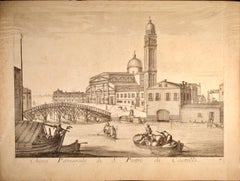
Panoramic View of Venice from St. Mark’s Campanile, Featuring the Basilica di Santa Maria della Salute – By P. Salviati, 19th Century
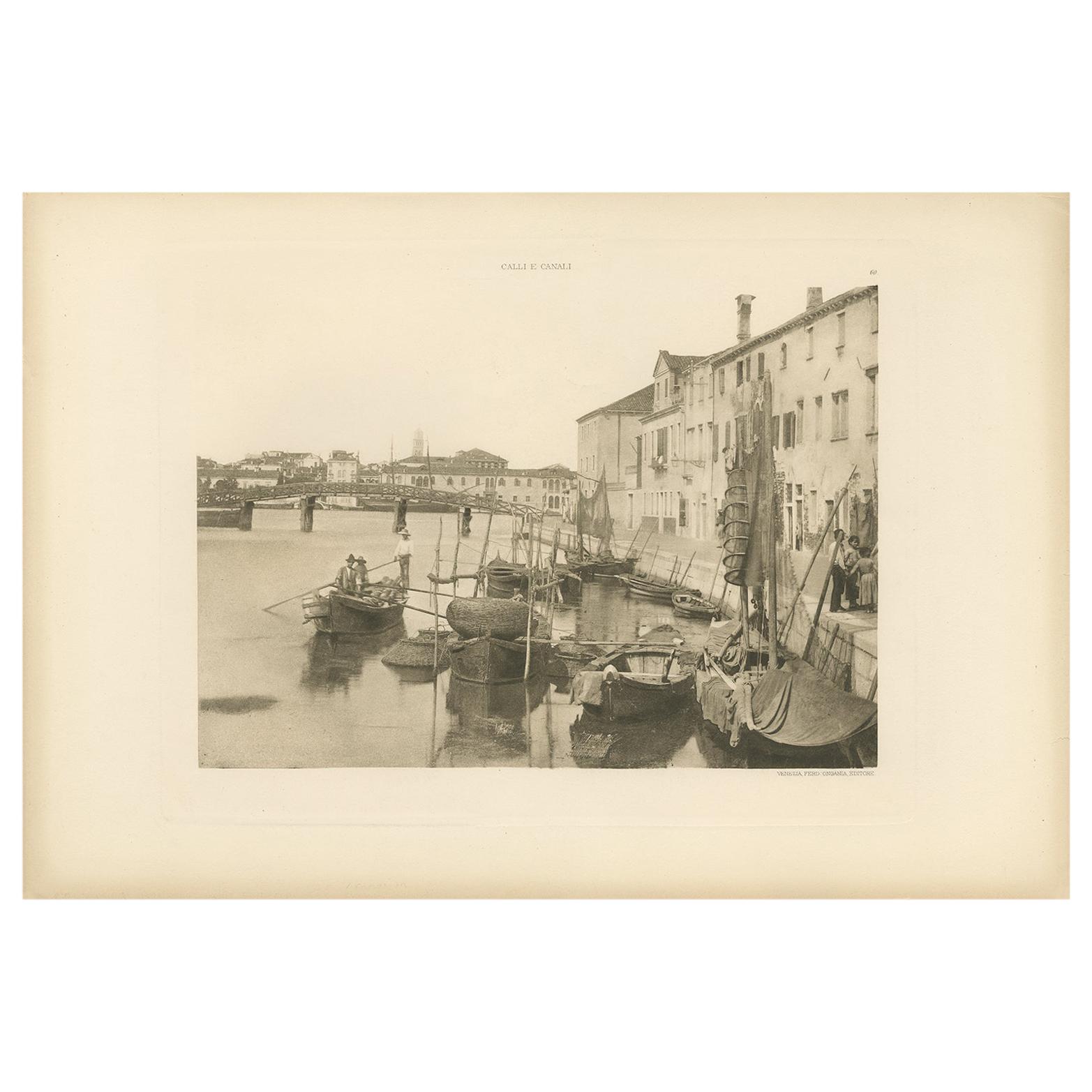
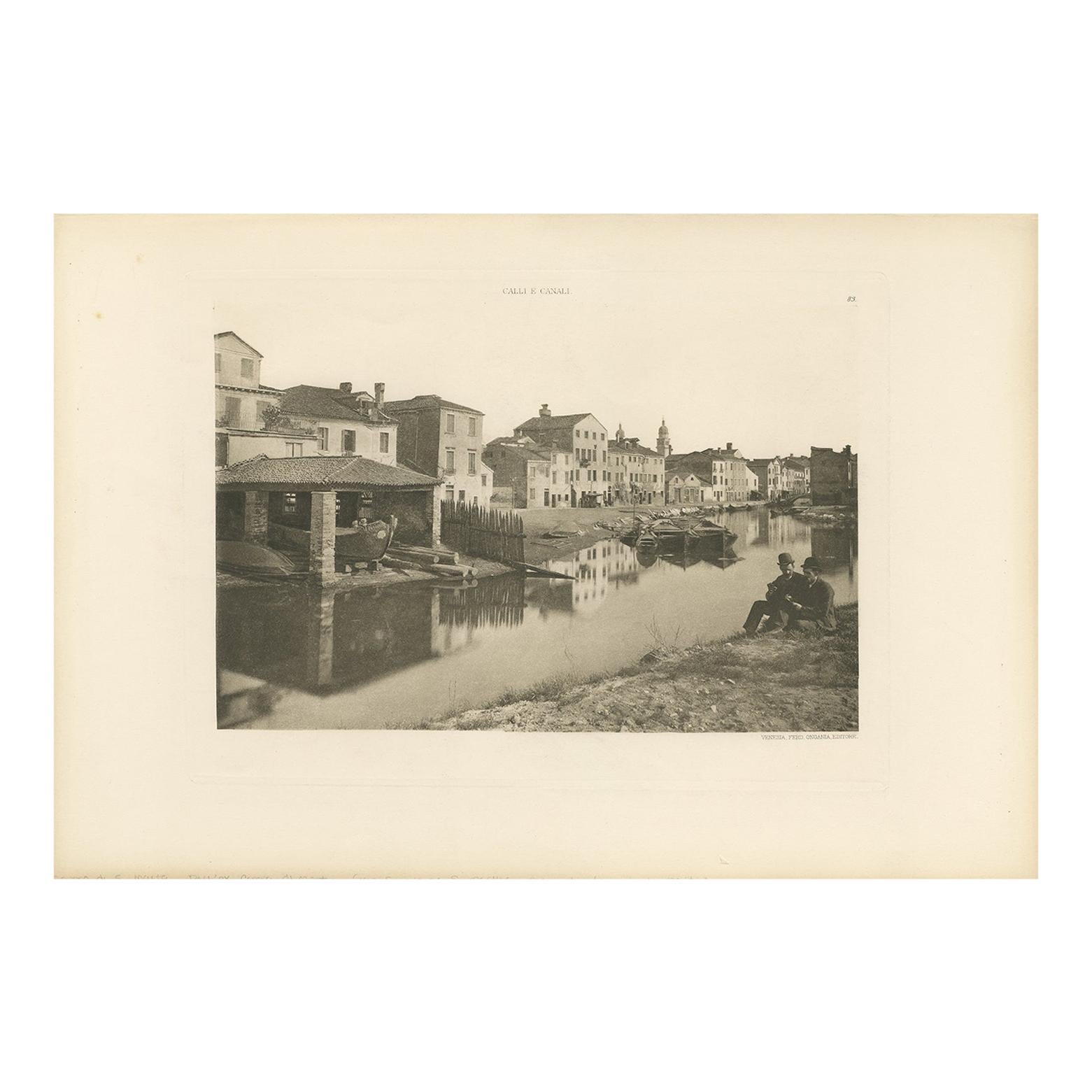
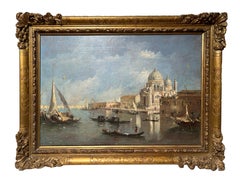
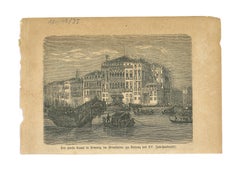
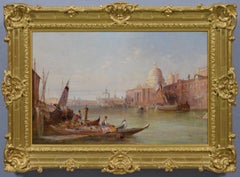
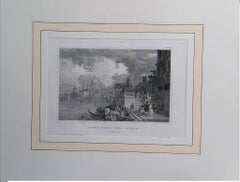
This photograph depicts a panoramic view of Venice, taken from the Campanile of St. Mark’s Basilica (Pan. dal Camp. di S. Marco), capturing a scenic vista of the Venetian waterfront. The image prominently features the iconic Basilica di Santa Maria della Salute, a stunning baroque church near the entrance to the Grand Canal, as well as the surrounding Venetian architecture and boats on the lagoon.
The caption "P. Salviati Venezia" suggests that the photograph was produced or distributed by a Venetian photographer or studio, likely associated with the Salviati family, who were well-known in Venice, particularly for their glassmaking and contributions to the arts during the 19th century.
The condition of this photograph appears to be relatively good, considering its age and historical significance. Here are a few specific observations:
1. Mounting and Presentation: The photograph is mounted on a dark-colored backing, which looks intact, though there are small signs of wear, such as slight corner or edge damage, particularly in the upper-right corner where the photo seems to have a small chip or tear.
2. Photographic Quality: The image itself is clear, with a good level of detail visible in the buildings, boats, and landscape. The tonal range looks well-preserved, showing a decent balance between light and dark areas, though some slight fading might have occurred over time, which is typical for photos of this era.
3. Discoloration and Fading: There is a slight yellowing or sepia tone, which is typical for older photographs, but it seems evenly spread without noticeable spots or stains. This discoloration may be due to the aging of the photographic paper or exposure to light over time.
4. Physical Integrity: Other than the minor damage to the top right corner, the photo appears to be free from significant tears, creases, or folds. The mounting has likely helped to protect the photo from more substantial damage.
5. Surface Condition: The surface appears relatively clean, with no major visible scratches, stains, or marks that would detract from the overall image quality.
Overall, the photograph is in fair to good condition, especially for a historical piece. It shows some typical signs of aging, but these are minimal, and the image itself remains clear and well-preserved.
The photograph is an albumen print photography, a popular technique used from the mid-19th century until the early 20th century, particularly in the production of landscape and architectural images.
Key Aspects of the Albumen Print Process:
1. Process: Albumen prints were made by coating paper with a mixture of egg whites (albumen) and a salt solution, which would form a glossy surface. The paper was then sensitized with silver nitrate, making it light-sensitive.
2. Exposure: The sensitized paper was placed in contact with a glass negative (usually in large format for sharp detail), and exposed to sunlight. The exposure time could be long, depending on the light intensity, usually several minutes.
3. Development and Fixing: After exposure, the print was developed in a chemical solution and then fixed to remove unexposed silver salts. This would leave the image permanently on the paper.
4. Characteristics:
- Sepia Tone: Albumen prints often have a warm, sepia tone, which matches the slight yellowing visible in this photograph.
- Glossy Finish: The egg white coating gives these prints a smooth and shiny finish.
- Detail: This process allowed for a high level of detail, which is evident in the buildings and landscape in this photo.
Likely Timeframe:
The albumen process was widely used between the 1850s and 1890s, and continued somewhat into the early 20th century. Given the Venetian subject matter and the time period of P. Salviati, this technique would have been appropriate for producing scenic and architectural views like this one.
Other early photographic techniques like gelatin silver prints became more popular after 1900.