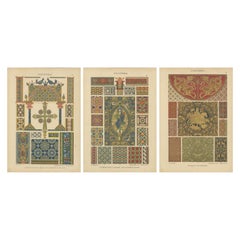
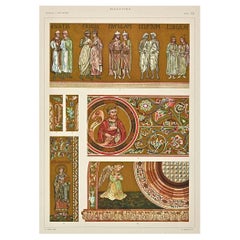
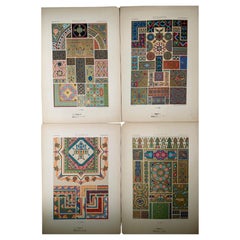
Set of 3 Byzantine Style Prints by H. Dolmetsch from Ornamentenschatz, 1880s
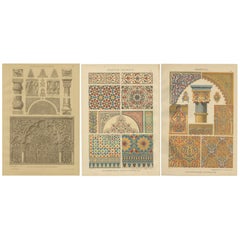
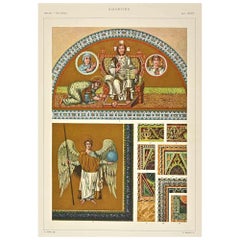
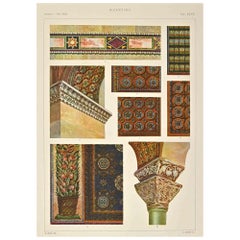
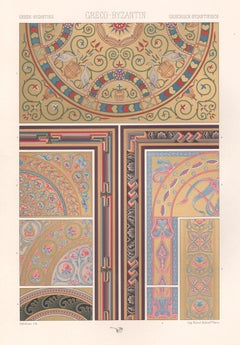
This vibrant set of three antique prints showcases the richness of Byzantine ornamentation as interpreted by German artist and designer Heinrich Dolmetsch in the late 19th century. The prints come from *Der Ornamentenschatz* (The Treasury of Ornament), a seminal reference work published by Jul. Hoffmann in Stuttgart during the 1880s. Known for its masterful chromolithography and extensive range of global historical styles, the collection was created to inspire architects, artisans, and designers of the period.
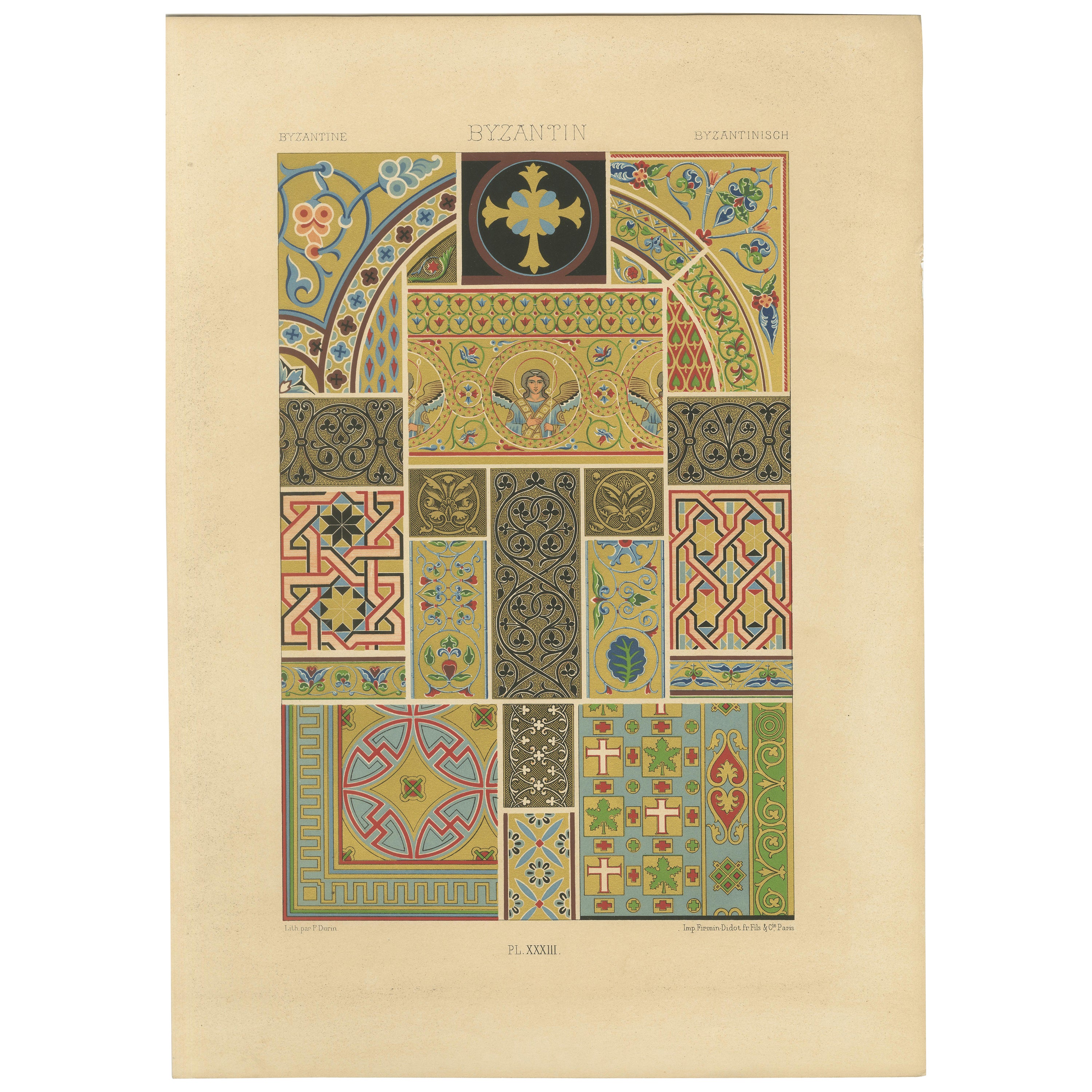
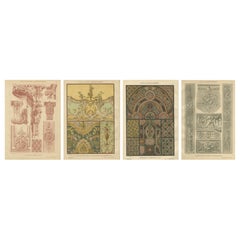
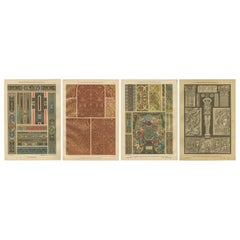
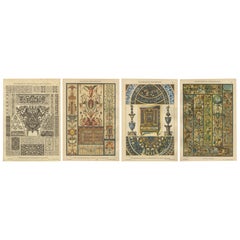
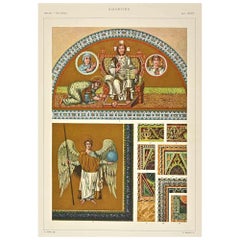
These particular plates, numbered 31 to 33, represent the Byzantine section of the series. They illustrate a spectacular array of mosaics, enamel work, manuscript illuminations, and textile patterns typical of Eastern Roman (Byzantine) decorative traditions. The motifs are highly stylized, incorporating Christian iconography such as crosses, saints, and ecclesiastical borders, as well as floral arabesques, geometric mosaics, and vibrant tessellations.
Plate 31 focuses on glass tesserae mosaic work and manuscript ornament. Two peacocks, ornamental crosses, and intricate borders highlight the opulence and symbolism typical of ecclesiastical art. Plate 32 features enamel inlays and complex geometric marble floor patterns surrounding a majestic image of Christ Pantocrator. Plate 33 delves into Byzantine embroidery and weaving, showing lavish fabrics richly adorned with lions, eagles, horsemen, and symmetrical vines—a true testament to the imperial visual language of the time.
Heinrich Dolmetsch was a key figure in the 19th-century design revival, contributing significantly to the understanding and dissemination of historical ornament. His detailed interpretations were not only academically rigorous but also artistically stunning, making them equally valued by collectors, decorators, and design institutions today.
Condition:
These original chromolithographs are in very good antique condition. The colors remain rich and striking, with only light age toning consistent with 140-year-old paper. Minor edge wear may be present, but the image areas are clean and well-preserved. No tears or major defects are visible.
Framing Tips:
These prints look exceptional when framed as a triptych or displayed individually in archival mats with gilded, dark wood, or classical black frames to echo the ornate themes of the artwork. To protect and enhance the prints, use UV-resistant glass and acid-free backing. For interior display, these pieces are perfect in hallways, studies, libraries, or any room with classical or eclectic decor.