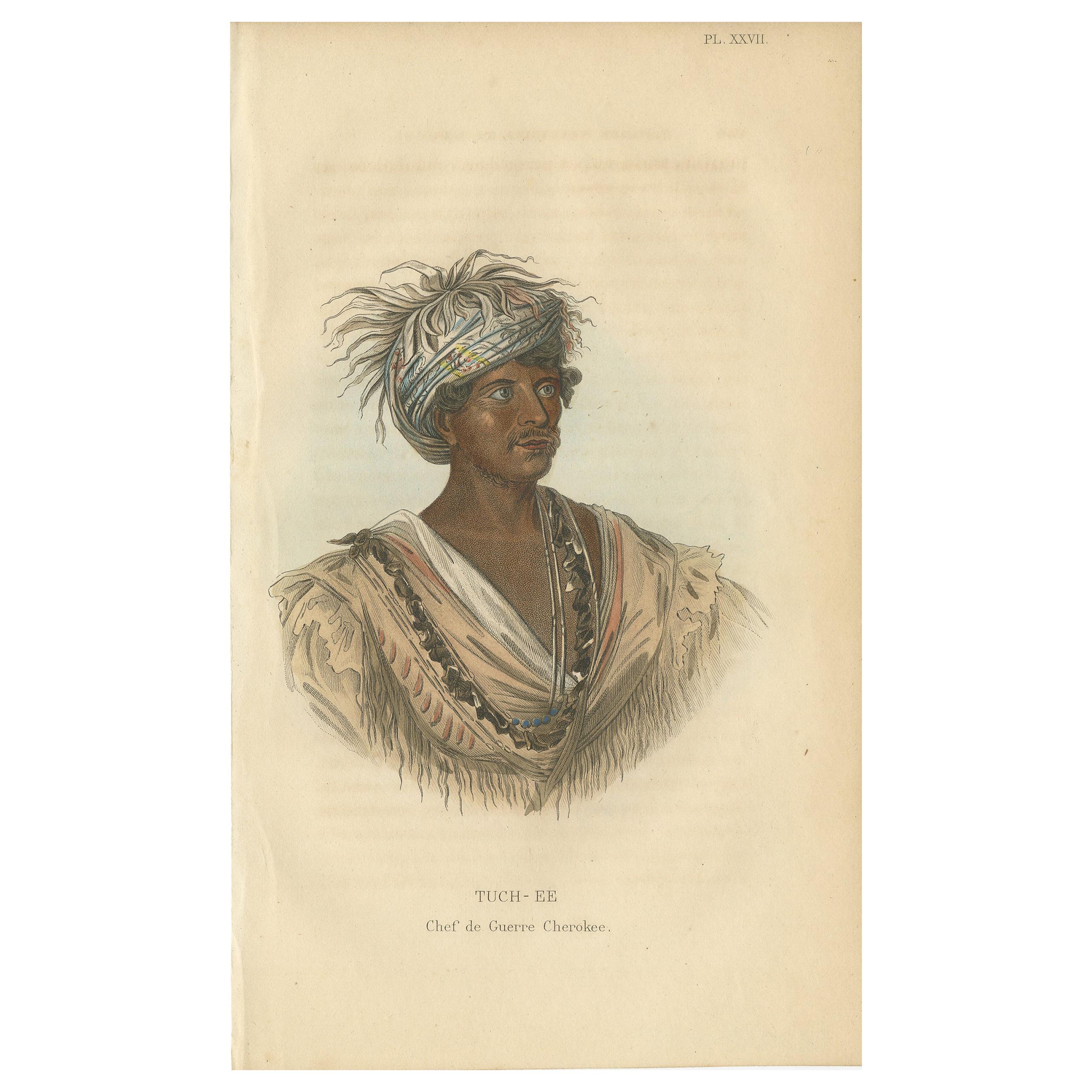
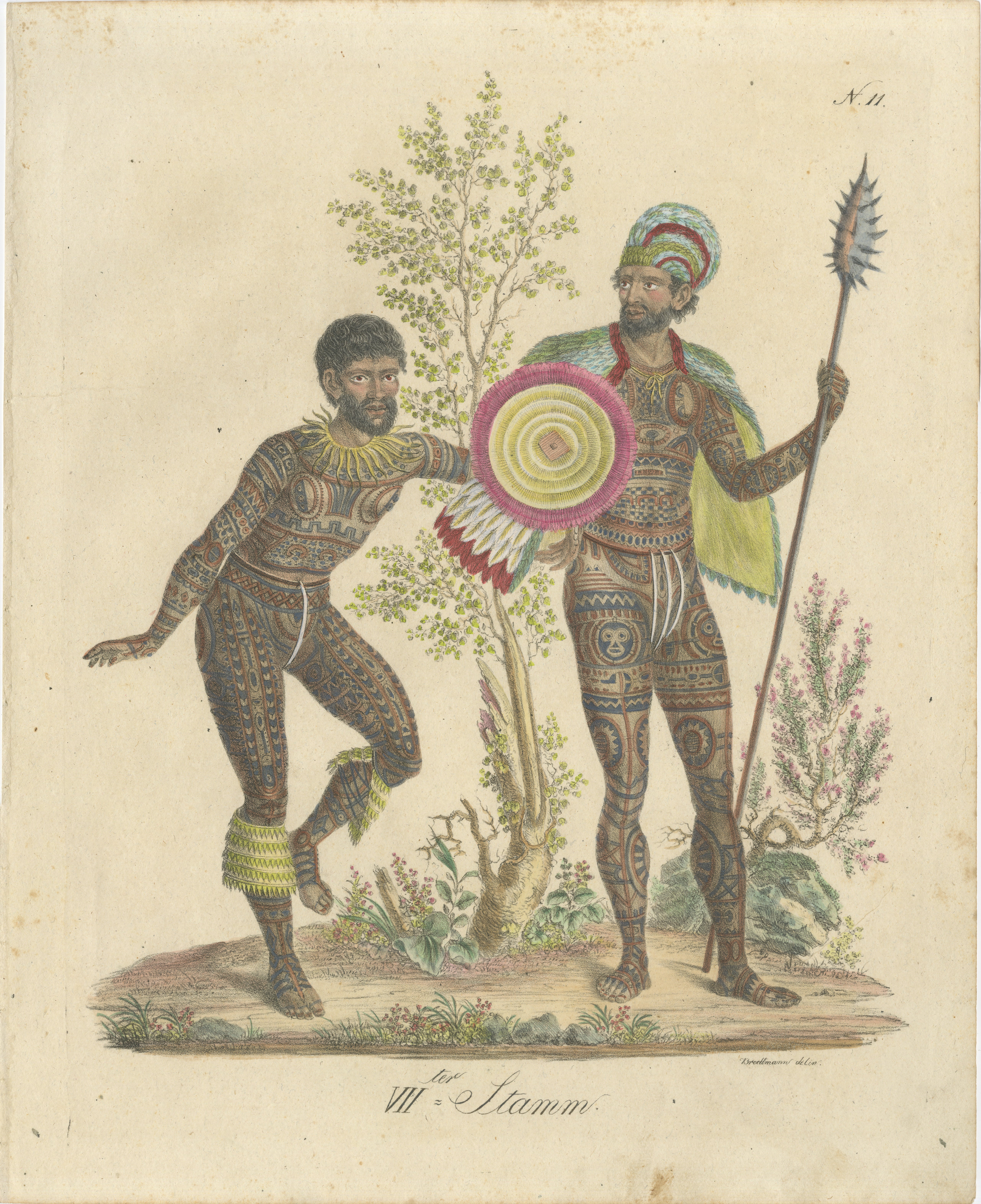
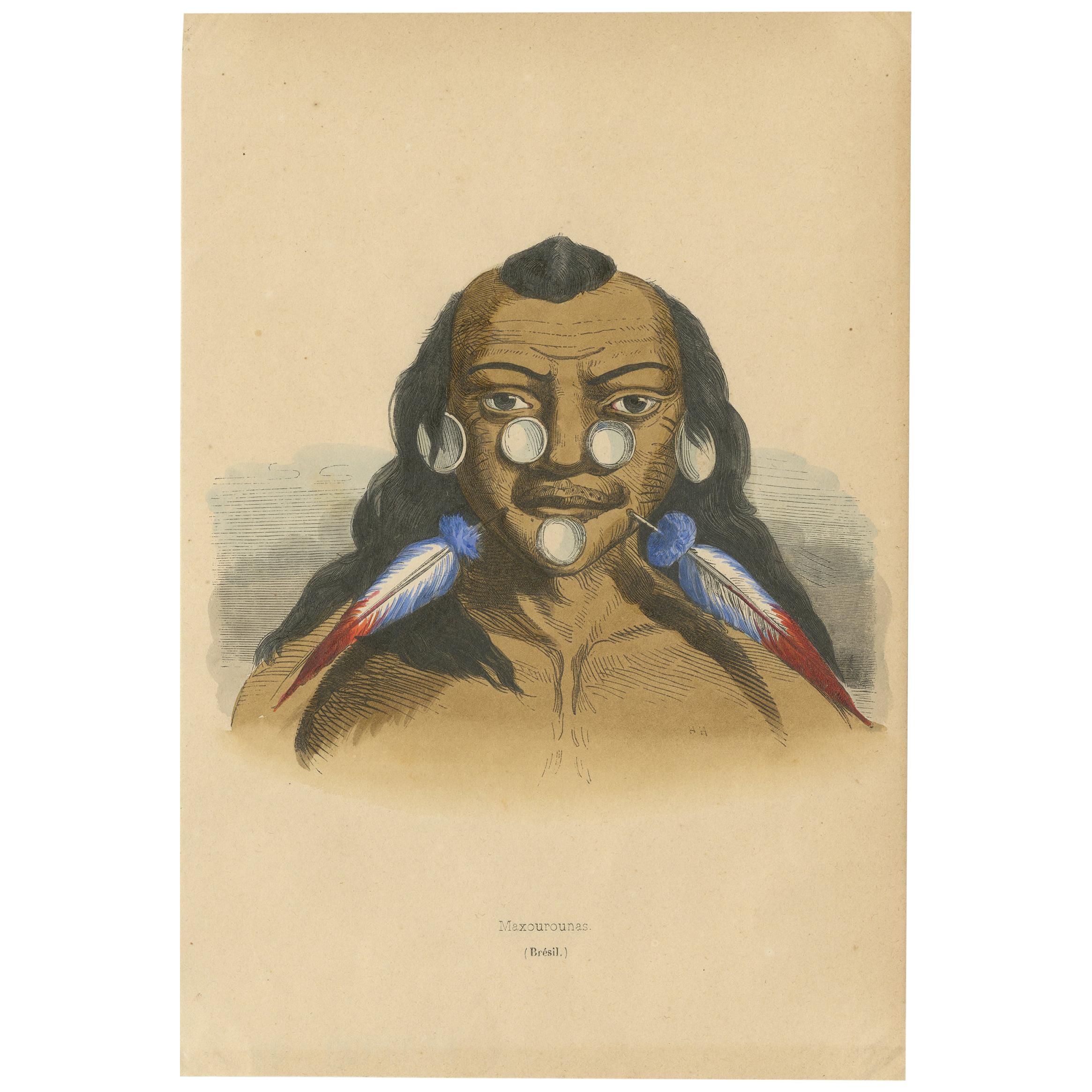
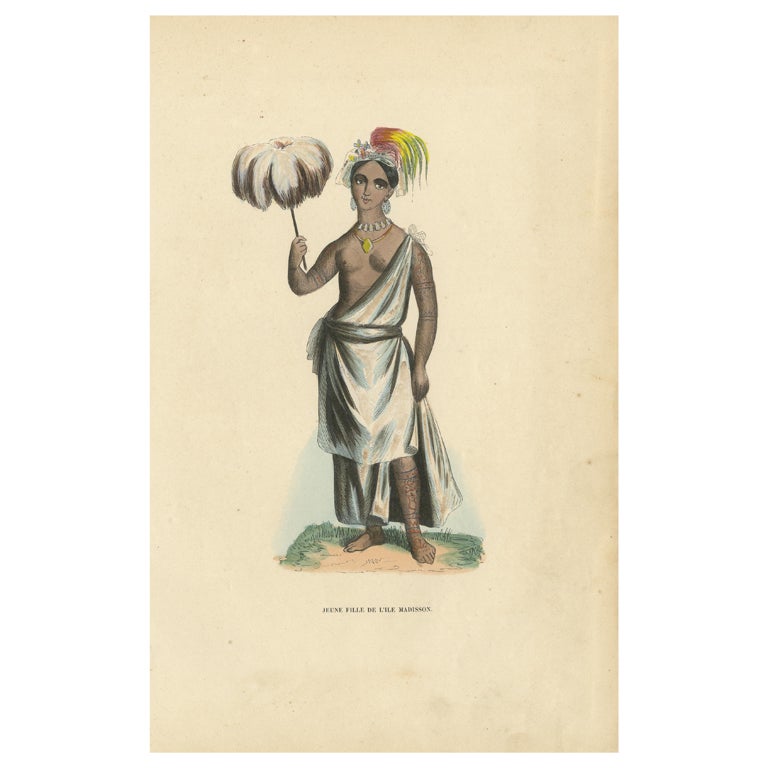
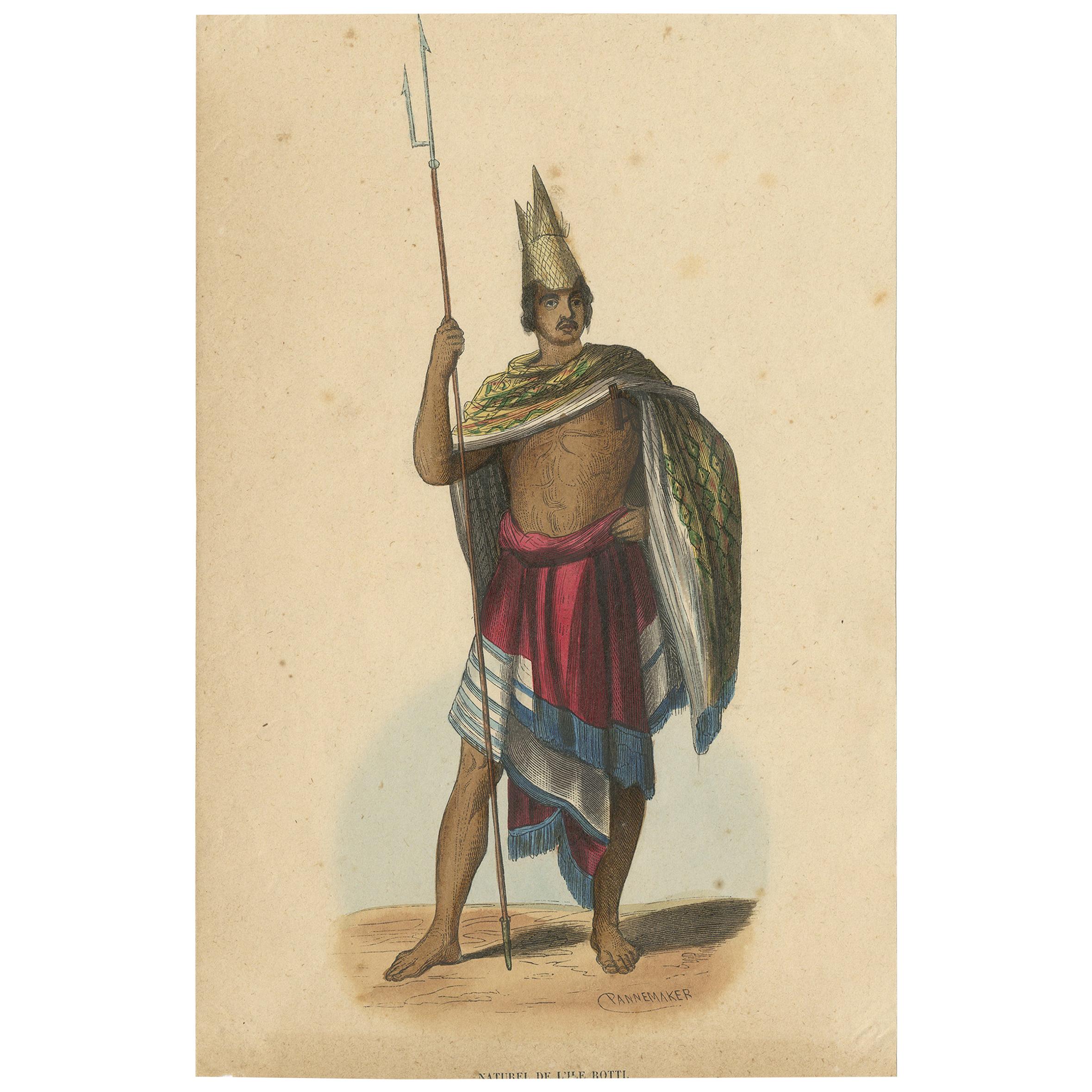
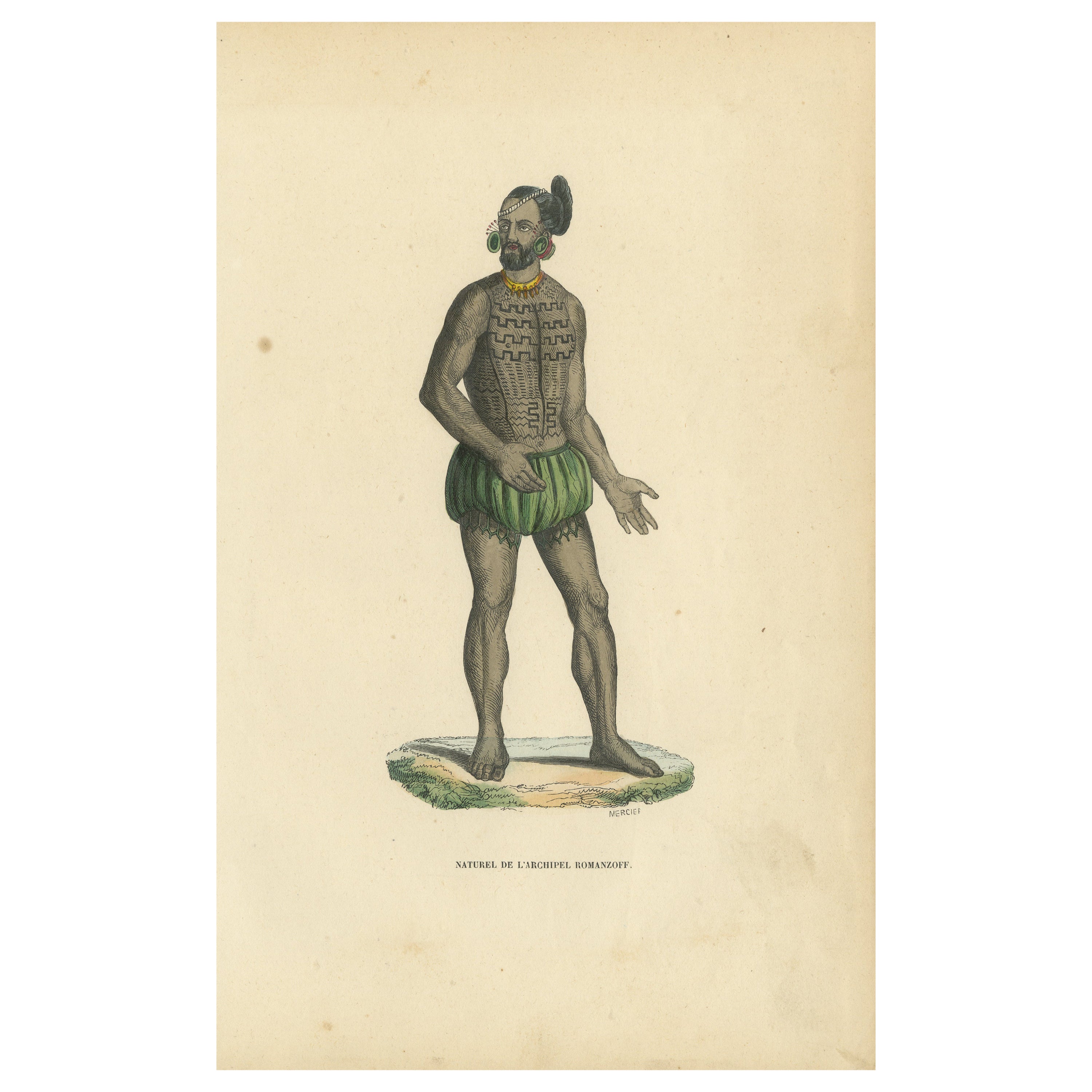
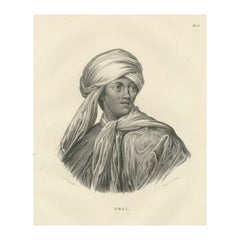
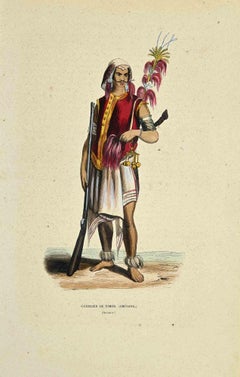
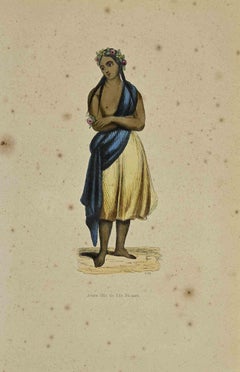
This lithograph, titled Omai, by Karl Joseph Brodtmann, is an example of the artist’s ethnographic studies, showcasing a portrait of Omai, a notable figure from Polynesia who visited Europe in the 18th century. This work highlights Brodtmann’s interest in portraying individuals from distant lands, focusing on their unique cultural attire and expressions.
Description:
The portrait represents Omai, a Polynesian man who gained historical significance during the 18th century as one of the first Polynesians to travel to Europe. Omai (also known as Mai) was a central figure in the encounters between Polynesian and European cultures, having been brought to England by Captain James Cook in the 1770s.
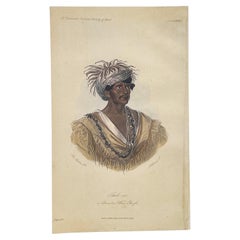
- Clothing: Omai is depicted in an elegant wrap of flowing fabric, draped around his shoulders and tied in a loose, elegant fashion. His head is adorned with a large turban, a stylistic interpretation that may have been influenced by European artistic conventions when portraying foreign dignitaries or exotic figures. The fabric's folds and shading add a sense of depth and texture, showcasing Brodtmann’s mastery of lithography.
- Expression: Omai’s expression is poised and dignified, with his gaze directed slightly off to the side. The sense of serenity and composure in his face is typical of the European portrayals of him as an "exotic noble savage," a term that reflects the European fascination with non-Western peoples during the age of exploration.
The lithograph highlights both the individuality of Omai and the cultural significance of his travels to Europe, where he became a symbol of cross-cultural exchange and curiosity during the 18th century.
Maker:
Karl Joseph Brodtmann (1787–1862), the Swiss lithographer, was known for his detailed illustrations of people from various cultures, natural history subjects, and scientific studies. His ethnographic works were part of a broader effort in 19th-century Europe to document the physical and cultural characteristics of peoples encountered through exploration. Brodtmann’s portraits often struck a balance between realism and the romanticized European views of non-Western cultures.
Technique and Style:
Brodtmann created this portrait using lithography, a technique that allowed him to achieve fine details and subtle gradations of light and shadow. His style in this portrait combines realism with the romanticized ideal of the "exotic," particularly in the way Omai is dressed in flowing garments, which may not be entirely representative of traditional Polynesian dress...
Category
Antique 1830s Prints