Want more images or videos?
Request additional images or videos from the seller
1 of 6

Toil of the Ages: Medieval Peasantry at Work, 1847

$141.46
$174.3720% Off
£104.85
£131.1620% Off
€120VAT Included
€15020% Off
CA$197.34
CA$245.7520% Off
A$200.17
A$25120% Off
CHF 114.30
CHF 142.6320% Off
MX$2,424.08
MX$3,042.7320% Off
NOK 1,345.60
NOK 1,687.0820% Off
SEK 1,341.13
SEK 1,689.3520% Off
DKK 914.95
DKK 1,143.6620% Off

About the Item

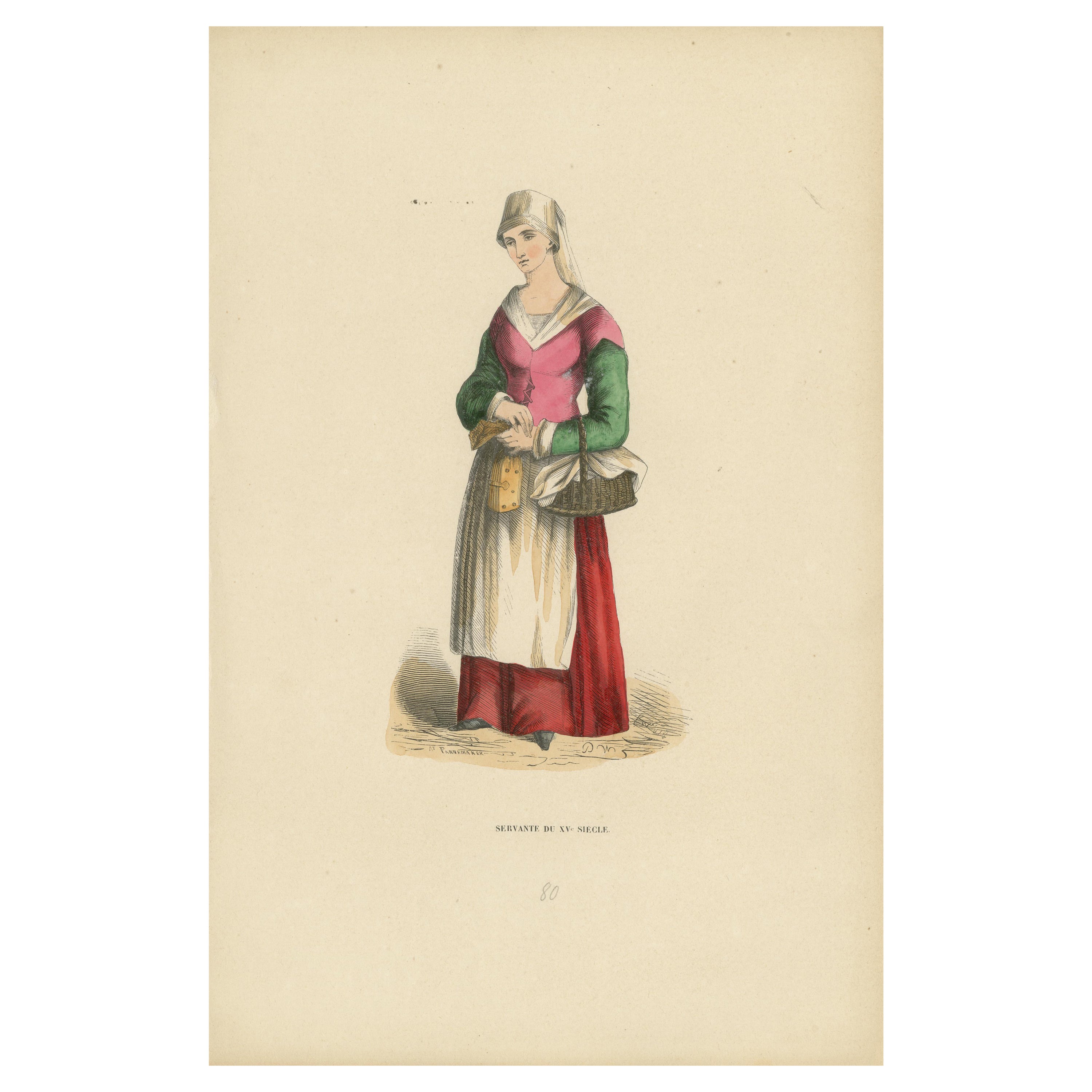
The image depicts two medieval peasants, as indicated by the caption "Paysans," which is French for "Peasants". The figure on the left is wearing a simple tunic with leggings and a red Phrygian-style cap, which was often associated with liberty and the common people in various periods of European history. He carries an axe over his shoulder and has a pouch attached to his belt, suggesting that he might be a woodsman or involved in some form of manual labor. The figure on the right, also in modest attire, wears a cloak with a hood, possibly indicating a lower-class status or the necessity of work outdoors. He holds a spade, indicating agricultural work, which was the most common occupation for peasants during the Middle Ages. Their clothes appear to be practical and robust, meant for work rather than display. The image captures the essence of the peasantry's daily life in the Middle Ages, which was marked by hard labor and simple living conditions. The colors have a nice glow over them. Historically, egg whites, known as glair, and sometimes egg yolk were indeed used in illumination and painting, particularly in manuscripts, to give colors a brighter appearance and to add a sheen or gloss to the work. This technique was quite common during the Middle Ages and into the Renaissance. Egg whites can be applied as a varnish over pigments to enhance their brightness and to protect the colors. This application could make the colors appear more vivid and also add a slight glossy sheen to the surface of the image. Egg yolk, on the other hand, was commonly used as a binding agent in paint. It forms the basis of tempera paint, a medium that was widely used before the advent of oil painting. Egg yolk helps to create a durable and long-lasting color that adheres well to various surfaces. In the context of the print from 1847, it's less likely that egg whites or yolks were used directly on the print, as by that time, commercial printing processes would have been more advanced and less reliant on such manual methods. However, if this print is a representation of an earlier style or is meant to mimic the appearance of hand-painted manuscripts, the original artists might have employed techniques or materials that gave a similar effect to those achieved with egg-based binders and varnishes.
  • Dimensions:
    Height: 10.63 in (27 cm)Width: 7.09 in (18 cm)Depth: 0 in (0.02 mm)
  • Materials and Techniques:
  • Period:
  • Date of Manufacture:
    1847
  • Condition:
    Good. Overal very light toning and light soiling but the image itself clean and hand-colored almost 200 years ago and still in expliciet colors. Aged paper with typically warm, yellowish-brown hue, mostly around the edges. Study the image carefully.
  • Seller Location:
    Langweer, NL
  • Reference Number:
    Seller: BG-13635-51stDibs: LU3054337878422

More From This Seller

View All
Scholar of the Arts: The Medieval Academic, 1847

Scholar of the Arts: The Medieval Academic, 1847

Located in Langweer, NL

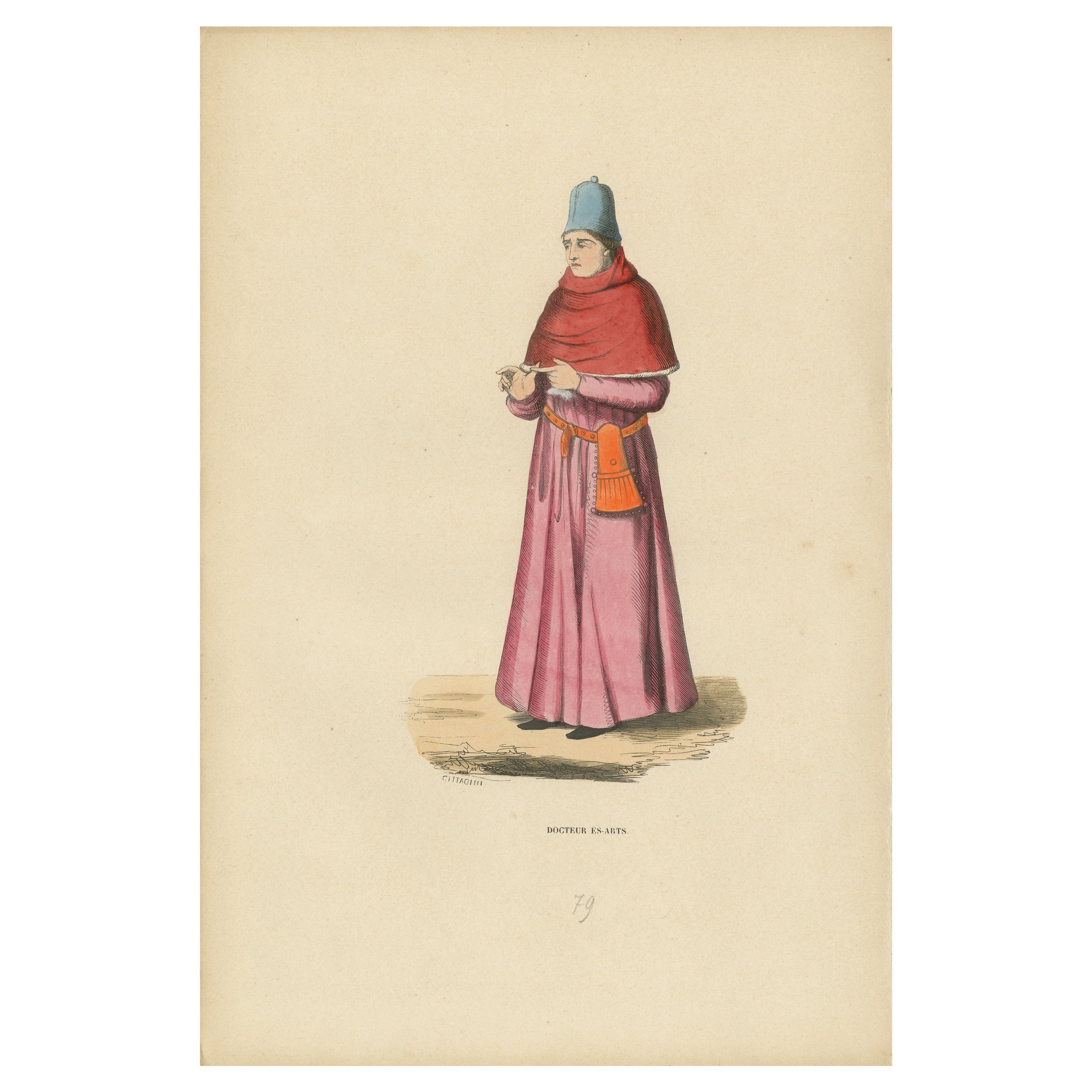
Title: "Scholar of the Arts: The Medieval Academic" Description: This print illustrates a learned individual, likely a doctor of the arts or a scholar, from the medieval period. The...

Category

Antique 1840s Prints

Materials

Paper

Gaulish Domestic Life and Society, France Before Roman Conquest, ca. 1860

Gaulish Domestic Life and Society, France Before Roman Conquest, ca. 1860

Located in Langweer, NL

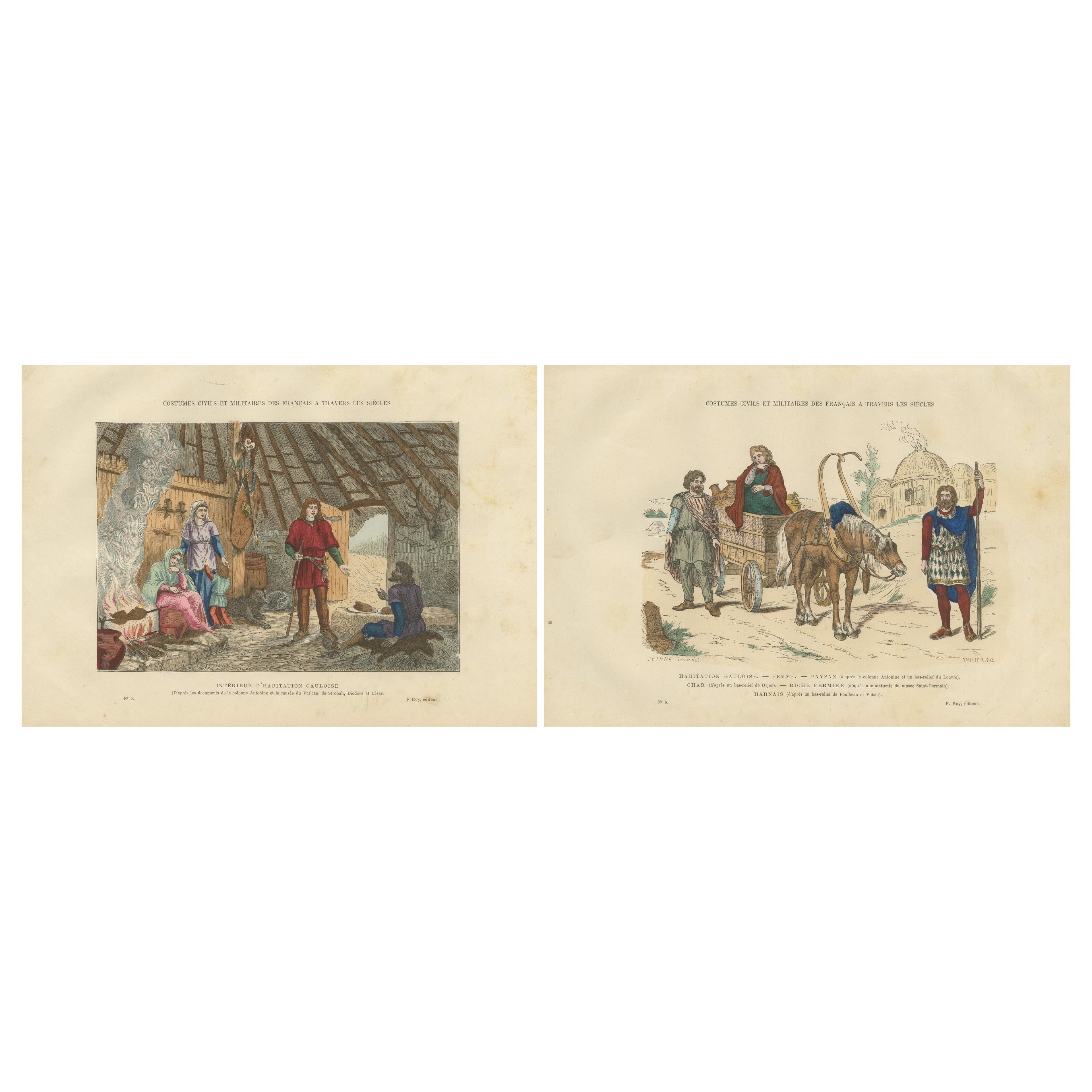
Gaulish Domestic Life and Society, France Before Roman Conquest, ca. 1860 A rare and highly decorative pair of original 19th-century hand-colored engravings illustrating daily life ...

Category

Antique 1860s French Prints

Materials

Paper

Everyday Grace: A Common Woman of the Past, 1847

Everyday Grace: A Common Woman of the Past, 1847

Located in Langweer, NL

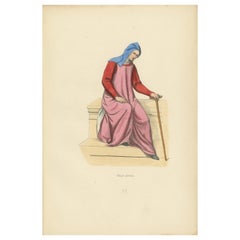
The original antique print shows a seated figure labeled "Muger plebeia," which translates from Spanish to "Plebeian Woman" or "Common Woman." The woman is dressed in a simple yet elegant manner, indicative of the common people of the time. She is wearing a long dress in a pinkish hue with a red overdress or tunic, which drapes gracefully around her. On her head, she wears a blue hood that covers her hair, which was typical for women during various historical periods to denote modesty or as a fashion statement. Her seated position and the presence of the cane suggest rest or perhaps age. The simplicity of her clothing, without elaborate jewelry or adornments, signifies her status as part of the lower social class, although her clothing is neat and well-kept. Egg whites can be applied as a varnish over pigments to enhance their brightness and to protect the colors. This application could make the colors appear more vivid and also add a slight glossy sheen to the surface of the image. Egg yolk, on the other hand, was commonly used as a binding agent in paint. It forms the basis of tempera paint, a medium that was widely used before the advent of oil painting. Egg yolk helps to create a durable and long-lasting color that adheres well to various surfaces. In the context of the print from 1847, it's less likely that egg whites or yolks were used directly on the print, as by that time, commercial printing processes would have been more advanced and less reliant on such manual methods. However, if this print is a representation of an earlier style or is meant to mimic the appearance of hand-painted manuscripts...

Category

Antique 1840s Prints
Materials

Paper

Medieval Discourse: A Moment Between Officials or Artists, Published in 1847

Medieval Discourse: A Moment Between Officials or Artists, Published in 1847

Located in Langweer, NL

Title: "Medieval Discourse: A Moment Between Officials in 'Costume du Moyen Âge'" Description: This vibrant lithograph, extracted from the 1847 publication "Costume du Moyen Âge," i...

Category

Antique 1840s Prints
Materials

Paper

French Maid of the 15th Century: Daily Grace, Published in 1847

French Maid of the 15th Century: Daily Grace, Published in 1847

Located in Langweer, NL

Title: "Maid of the 15th Century: Daily Grace" Description: This print portrays a servant or maid from the 15th century, captured in a moment of stillness, perhaps while going about...

Category

Antique 1840s Prints
Materials

Paper

English Soldiers During the Reign of Henry III, Original Liithograph, 1847

English Soldiers During the Reign of Henry III, Original Liithograph, 1847

Located in Langweer, NL

This illustration depicts three English soldiers from the reign of King Henry III, as indicated by the title "Soldats Anglais du Regne de Henri III." Each soldier is shown wearing di...

Category

Antique 1840s Prints
Materials

Paper

You May Also Like

Uses and Customs - Guesser - Lithograph - 1862

Uses and Customs - Guesser - Lithograph - 1862

Located in Roma, IT

Uses and Customs - Guesser is a lithograph on paper realized in 1862. The artwork belongs to the Suite Uses and customs of all the peoples of the universe: " History of the governme...

Category

1860s Modern Figurative Prints

Materials

Lithograph

Uses and Customs - Pawl - Lithograph - 1862

Uses and Customs - Pawl - Lithograph - 1862

Located in Roma, IT

Uses and Customs - Pawl is a lithograph on paper realized in 1862. The artwork belongs to the Suite Uses and customs of all the peoples of the universe: " History of the government,...

Category

1860s Modern Figurative Prints

Materials

Lithograph

Uses and Customs - 13th and 14th Century - Lithograph - 1862

Uses and Customs - 13th and 14th Century - Lithograph - 1862

Located in Roma, IT

Uses and Customs - 13th and 14th Century is a lithograph on paper realized in 1862. The artwork belongs to the Suite Uses and customs of all the peoples of the universe: " History o...

Category

1860s Modern Figurative Prints

Materials

Lithograph

The Rest - Lithograph - 19th Century

The Rest - Lithograph - 19th Century

Located in Roma, IT

Lithograph realized in 19th Century. In very good condition, it is matted in a black mat.

Category

19th Century Modern Figurative Prints

Materials

Lithograph

Uses and Customs - Ziller Village - Lithograph - 1862

Uses and Customs - Ziller Village - Lithograph - 1862

Located in Roma, IT

Uses and Customs -Ziller Village is a lithograph on paper realized in 1862. The artwork belongs to the Suite Uses and customs of all the peoples of the universe: " History of the go...

Category

1860s Modern Figurative Prints

Materials

Lithograph