Want more images or videos?
Request additional images or videos from the seller
1 of 7

Waii Totai's Plea for Peace: Dramatic Encounter Aboard Astrolabe in Tonga-Tabu

$285.55
£209.39
€240VAT Included
CA$395.75
A$397.59
CHF 229.33
MX$4,838.41
NOK 2,664
SEK 2,702.34
DKK 1,830.02

About the Item

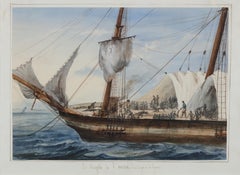
This captivating lithograph, dating to around 1836, presents a dramatic scene from the voyage of the French corvette Astrolabe under the command of Dumont d'Urville. Set against the backdrop of Tonga-Tabu, the artwork captures a poignant moment of cultural encounter and diplomacy. At the center of the composition is Waii Totai, a Tongan representative, kneeling in an impassioned plea for peace and the cessation of hostilities. His traditional attire and expressive gesture create a striking contrast to the stoic and uniformed French naval officers, whose rigid posture underscores the tension and formality of the event. The ship’s deck is rendered with meticulous detail, from the taut rigging and lifeboats to the seafaring equipment scattered in the foreground. The inclusion of sailors, officers, and civilians adds layers of narrative, illustrating the complex dynamics of 19th-century exploration. In the background, the calm sea and distant horizon juxtapose the intense emotions unfolding on the deck. This smaller German-titled issue, created by Louis Auguste de Sainson, was originally featured in Dumont d’Urville’s Voyage autour du Monde and later included in Brodtmann’s Entdeckungs, Reise der Franzosischen Corvette Astrolabe. The print not only captures a historic moment but also serves as a powerful visual document of cross-cultural interaction during the era of European maritime exploration.
  • Dimensions:
    Height: 9.93 in (25.2 cm)Width: 13.47 in (34.2 cm)Depth: 0.01 in (0.2 mm)
  • Materials and Techniques:
  • Period:
  • Date of Manufacture:
    circa 1836
  • Condition:
    ConditionLight age toning and minor foxing to margins, with minimal handling wear. Image area remains clean and sharp, showcasing strong impressions and well-preserved detail. Slight edge wear consistent with age, overall in very good condition.
  • Seller Location:
    Langweer, NL
  • Reference Number:
    Seller: BG-14025-11stDibs: LU3054343021252

More From This Seller

View All
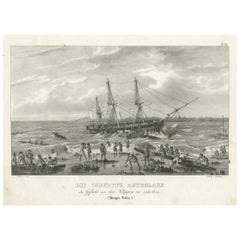
Old Print of The Corvette Astrolabe in Peril Near Cliffs, Tonga-Tabu, circa 1836

Old Print of The Corvette Astrolabe in Peril Near Cliffs, Tonga-Tabu, circa 1836

Located in Langweer, NL

Title: The Corvette Astrolabe in Peril Near the Cliffs, Tonga-Tabu Description: This striking lithograph, circa 1836, captures a dramatic maritime moment during Dumont d’Urville’s...

Category

Antique 1830s Swiss Prints

Materials

Paper

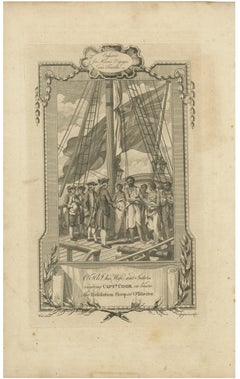
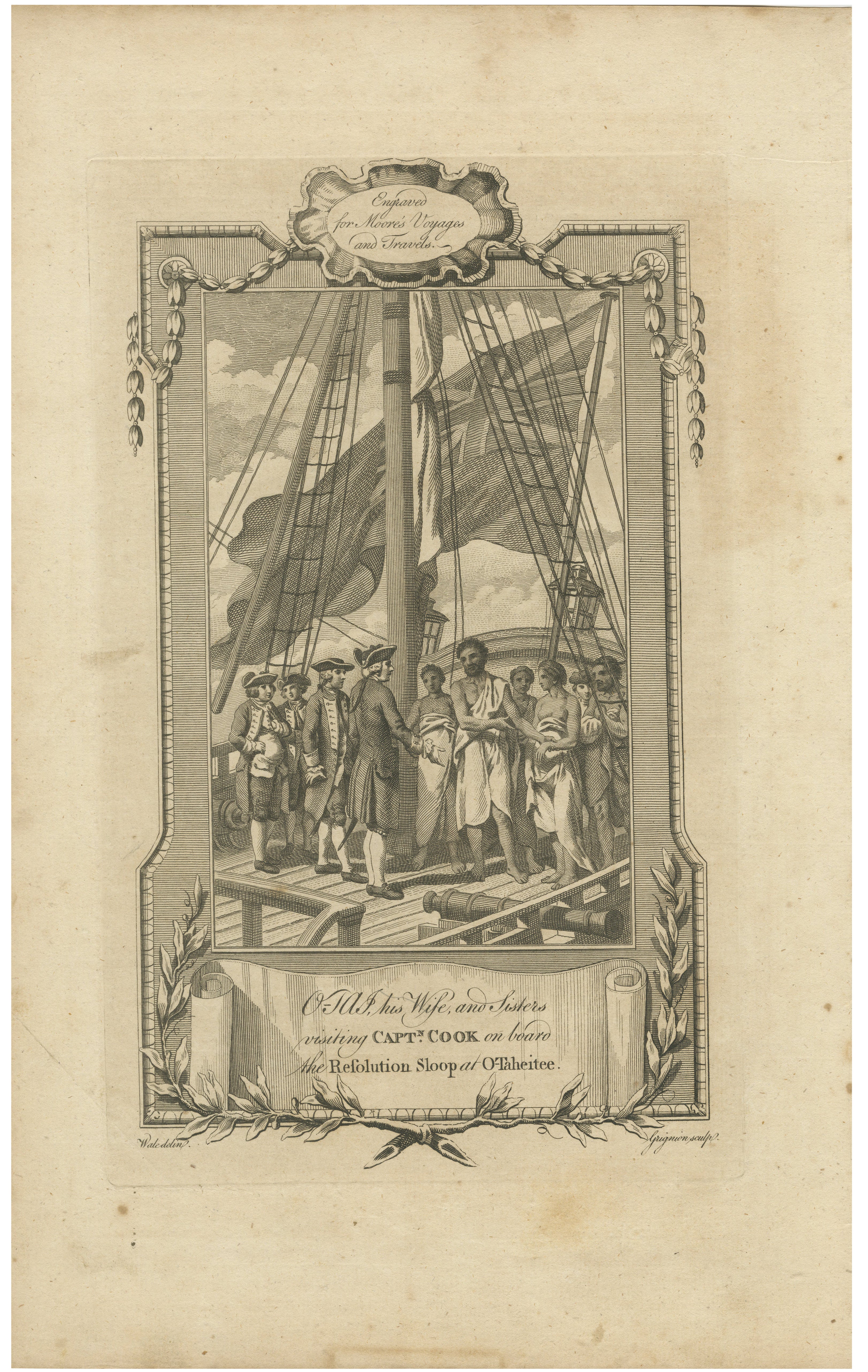
O-Mai Visiting Captain Cook aboard the Resolution at Tahiti, 18th Century

O-Mai Visiting Captain Cook aboard the Resolution at Tahiti, 18th Century

Located in Langweer, NL

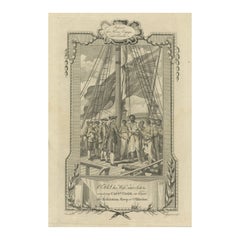
Title: O-Mai Visiting Captain Cook aboard the Resolution at Tahiti, 18th Century Description: This finely engraved 18th-century copperplate print depicts a diplomatic encounter betw...

Category

Antique Late 18th Century British Prints

Materials

Paper

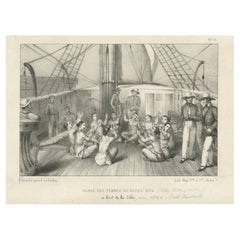
Antique Print of the Dance of the Women of Nuka Hiva Aboard the Zelee

Antique Print of the Dance of the Women of Nuka Hiva Aboard the Zelee

Located in Langweer, NL

Antique print titled 'Danse des Femmes de Nouka-Hiva'. This print shows the dance of the women of Nuka Hiva aboard the Zelee. Nuku Hiva is the largest of the Marquesas Islands in Fre...

Category

Antique Mid-19th Century Prints

Materials

Paper

Encounters at Dawn: The Standoff at Tahiti with Captain Wallis Engraved, 1801

Encounters at Dawn: The Standoff at Tahiti with Captain Wallis Engraved, 1801

Located in Langweer, NL

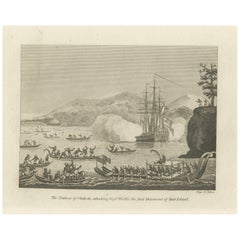
Title: "The Natives of Otaheite Attacking Capt. Wallis, The First Discoverer of that Island" This engraving depicts a significant historical encounter between the natives of Tahiti ...

Category

Antique Early 1800s Prints

Materials

Paper

1778 Engraving: Captain Cook's Second Voyage - Meeting the Tahitians

1778 Engraving: Captain Cook's Second Voyage - Meeting the Tahitians

Located in Langweer, NL

1778 Engraving of Captain Cook's Second Voyage: Meeting Tahitians This beautiful copper-line engraving from 1778, created by Charles Grignion (1717-1810) after a work by Samuel Wale...

Category

Antique 1770s British Prints

Materials

Paper

Naval Engagement at Unalata, Guam: The Peril of HMS Success, circa 1790

Naval Engagement at Unalata, Guam: The Peril of HMS Success, circa 1790

Located in Langweer, NL

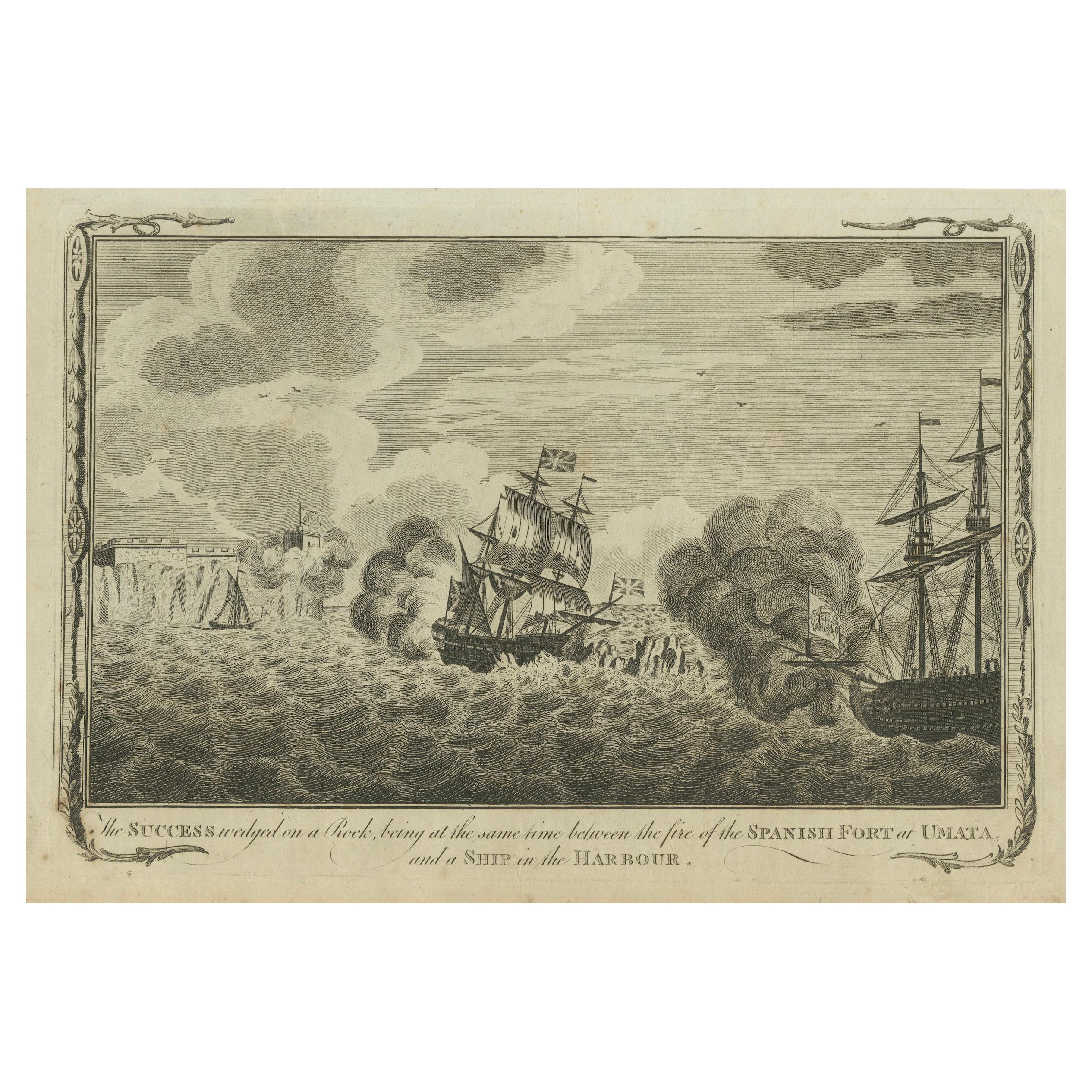
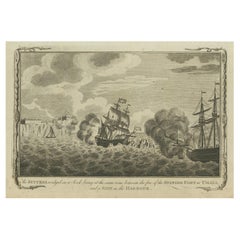
This is an 18th-century engraving depicting a nautical scene with dramatic action. The image shows two sailing ships in a state of distress near a rocky coastline, with the central s...

Category

Antique Late 18th Century Prints

Materials

Paper

You May Also Like

"King of the Friendly Islands" (Tonga); Engraving from Captain Cook's 3rd Voyage

"King of the Friendly Islands" (Tonga); Engraving from Captain Cook's 3rd Voyage

By John Webber

Located in Alamo, CA

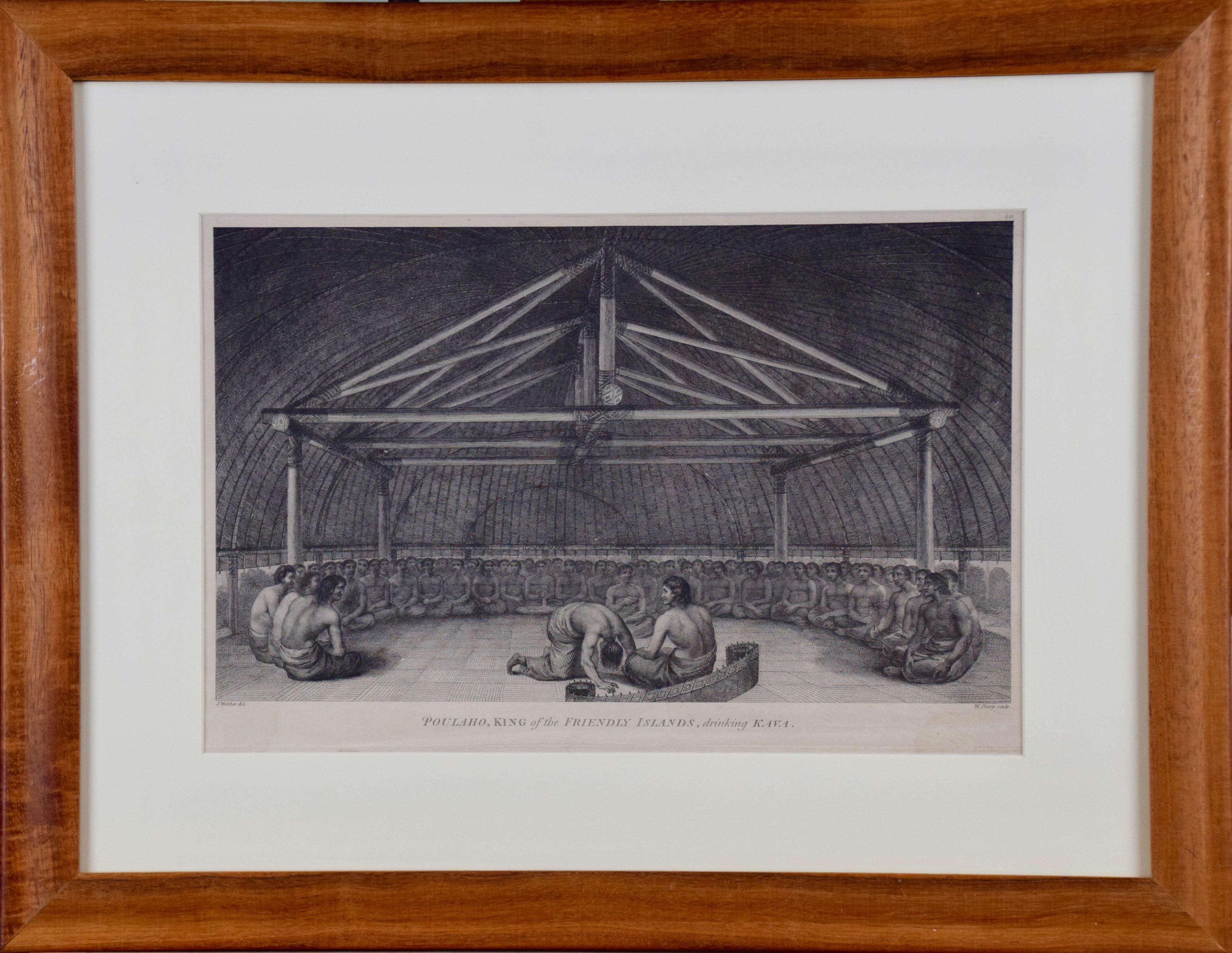
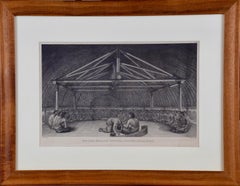
"Poulaho, King of the Friendly Islands, Drinking Kava" is an engraving created by William Sharp (1749-1824), from a drawing by John Webber (1752-1793), who was the artist on Captain James Cook's 3rd and final voyage of discovery. It was published in the atlas of "A Voyage to the Pacific Ocean Undertaken by the Command of His Majesty, for Making Discoveries in the Northern Hemisphere", the official British Admirality sanctioned journal published upon completion of the voyage in London in 1784 by Strahan & Cadell. Captain Cook visited Tonga on his 3rd voyage, which he named The Friendly Islands because of the warm welcome he and his crew received, unlike some of the other more hostile Pacific islands. The engraving depicts Cook and his men observed a kava ceremony at the village of Mu’a on Tongatapu. King Paulaho sits in the centre foreground, his back to the spectator with a man kneeling before him. The ceremonial mat depicted behind Paulaho indicates that nobody was allowed to sit behind him. The figure in the centre holds a single cup, referring to the Tongan custom of offering the cup to the king first. Kava is native to the islands of the South Pacific and was first described for English readers in 1768 by Captain James Cook. The kava root has been used for centuries as a central feature of ceremonies and celebrations because it was able to bring about a calming and pleasant social atmosphere. The root was crushed and processed into coconut milk to become the focal ceremonial beverage, simply referred to as kava. This engraving is presented in a Koa wood frame and a white mat. Koa wood is legendary in Hawaii. There are occasional faint spots, but the print is otherwise in very good condition. This amazing Koa wood is native to Hawaii and it is known for the deep rich colors and varied grain pattern. Koa has an honored heritage in Hawaii and is highly revered and sacred. The word “koa” means “warrior” in Hawaiian. The warriors of King Kamehameha the Great, created canoes and weapons from a wood plentiful on the Big Island of Hawaii. This wood became synonymous with the warriors themselves, and it became known as koa. There are three other engravings listed from the official journal of Captain Cook's 3rd voyage available that are presented in identical Koa wood frames and mats (LU117324682422, LU117324684052, LU117324684032). They would make a wonderful grouping for a display of 2, 3 or 4 prints. A discount is available for a grouping depending on the number of items included. Captain Cook is remembered as one of the greatest explorers and navigators in history. His explorations included Australia, New Zealand and islands of the South Pacific and the northwest coast of North America. Hawaii was discovered by Captain Cook during this voyage. Hawaii was originally called The Sandwich Islands in honor of The Earl of Sandwich...

Category

1780s Realist Figurative Prints
Materials

Engraving

Attack on Captain Wallis When He Discovered Tahiti: Original 18th C. Engraving

Attack on Captain Wallis When He Discovered Tahiti: Original 18th C. Engraving

Located in Alamo, CA

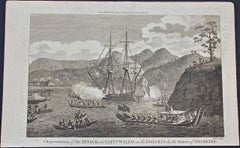
"A Representation of the Attack on Captain Wallis in the Dolphin by the Natives of Otaheite (Tahiti)" is an engraving created by the artist Sparrow based on an engraving in John Hawk...

Category

1780s Landscape Prints

Materials

Engraving

Painting Representing, French, 19th Century

Painting Representing, French, 19th Century

Located in Labrit, Landes

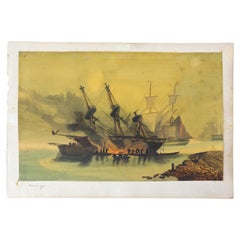
French 19th century, painting of a boat fairing. This scene represents a boat fairing and sealing with tar by the sea. Today, as much as possible, boats are put in dry dock to carry...

Category

Antique Mid-19th Century French Nautical Objects

Materials

Paint, Paper

Portrait of a Slave Ship: 'Le Negrito à l’ancre. Dans le port de la havanne'

Portrait of a Slave Ship: 'Le Negrito à l’ancre. Dans le port de la havanne'

Located in Amsterdam, NL

FRANÇOIS MATHURIN ADALBERT, BARON DE COURCY (1805-1839) 'Le Negrito à l’ancre. Dans le port de la havanne' Indistinctly signed lower left Titled on the mount Pencil and watercolour, heightened with white, on paper, 24.8 x 34.6 cm Literature: The present watercolour will be illustrated in: - Prof. Manuel Garcia’s projected book on the disease and the slave trade provisionally titled “Fighting the Yellow Demon of Fever: The Struggle against Disease in the Illegal Slave Trade”. - Prof. Micael Zeuske’s forthcoming Global history of slave trade. Exhibited: Mexico City, 1998, Palacio Virreinal, El Barón de Courcy, illustrationes de un viaje, 1831-1833, no. 108 Note: Baron de Courcy was in the Caribbean in late 1832 and early 1833, following his tour of Mexico in 1832, on the last leg of his “Grand Voyage...

Category

Mid-19th Century Old Masters Figurative Drawings and Watercolors

Materials

Paper, Watercolor, Gouache, Pencil

Sandwich Islands Canoe (Hawaii): Framed 18th C. Engraving Captain Cook's Journal

Sandwich Islands Canoe (Hawaii): Framed 18th C. Engraving Captain Cook's Journal

By John Webber

Located in Alamo, CA

"A Canoe of the Sandwich Islands, the Rowers Masked" is an engraving created by Charles Grignion, from a drawing by John Webber (1752-1793), who was the artist on Captain James Cook's 3rd and final voyage of discovery. It is Plate 65 in the atlas of "A Voyage to the Pacific Ocean Undertaken by the Command of His Majesty, for Making Discoveries in the Northern Hemisphere", the official British Admiralty sanctioned journal published upon completion of the voyage in London in 1784 by Strahan & Cadell. This famous image of ten Hawaiian rowers transporting a priest who is carrying a feather-covered image of Kukailimoku, the Hawaiian god of war. The priests and paddlers are all wearing gourd masks in their double-hulled canoe with an upright lateen woven sail. Each hull was shaped from a single large Koa log harvested from island rainforests, where they were carved before being transported to the coast. This engraving is presented in a Koa wood frame and a white mat. There are occasional faint spots, but the print is otherwise in very good condition. Koa is the same wood as was used to make the canoe. Koa wood is legendary in Hawaii. Not only is this amazing wood native to Hawaii, but it is known for the deep rich colors and varied grain pattern. Koa has an honored heritage in Hawaii and is highly revered and sacred. The word “koa” means “warrior” in Hawaiian. The warriors of King Kamehameha the Great, created canoes and weapons from a wood plentiful on the Big Island of Hawaii. This wood became synonymous with the warriors themselves, and it became known as koa. The frame measures 20.75" high, 26.75" wide and 0.88" deep. There are three other engravings listed from the official journal of Captain Cook's 3rd voyage available that are presented in identical Koa wood frames and mat (LU117324682022, LU117324684052, LU117324684062). They would make a wonderful grouping for a display of 2, 3 or 4 prints. A discount is available for a grouping depending on the number of items included. Hawaii was discovered by Captain Cook (1728-1779) during this voyage. Hawaii was originally called The Sandwich Islands in honor of The Earl of Sandwich...

Category

1780s Landscape Prints

Materials

Engraving