Want more images or videos?
Request additional images or videos from the seller
1 of 10

Antique Bessarabian Tapestry

$7,000
£5,292.22
€6,178.07
CA$9,960.66
A$10,103.30
CHF 5,769.26
MX$122,354.25
NOK 67,918.32
SEK 67,692.91
DKK 46,181.52

About the Item

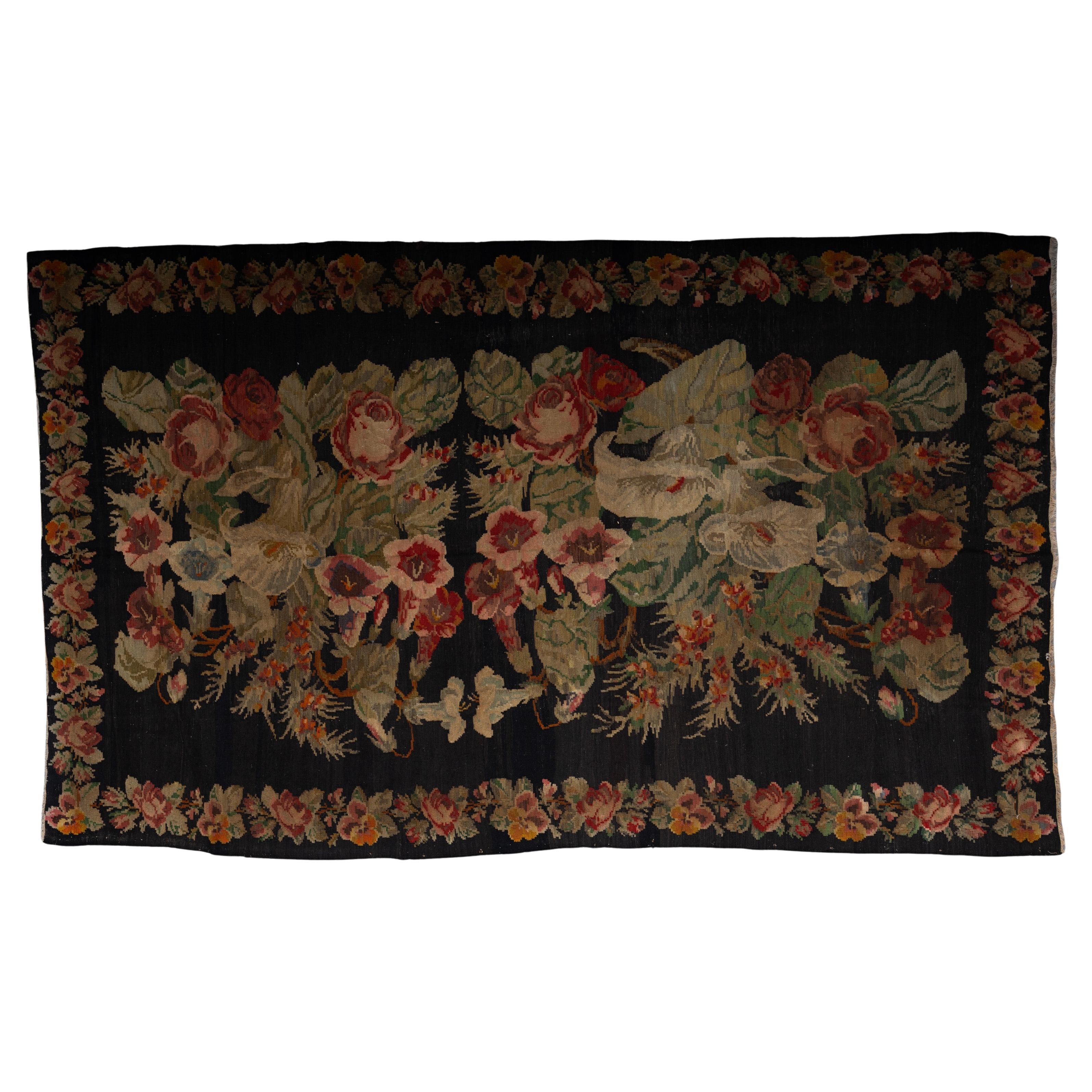
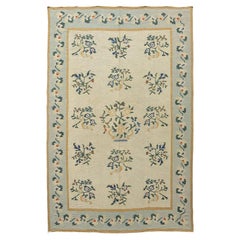
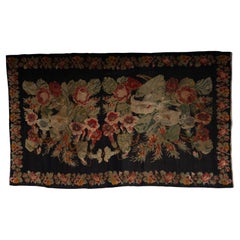
This exceptional antique Bessarabian tapestry, woven circa 1900, exemplifies the rich pictorial and decorative traditions of Eastern European folk textiles. At the center is a finely rendered rooster standing within a stylized landscape, a motif historically associated with protection, abundance, and the cycle of daily life. The pictorial field is framed by an elaborate floral border composed of garlands, blossoms, and scrolling forms, executed with remarkable clarity and balance. The color palette is both bold and refined, featuring a deep chocolate brown ground enlivened by shades of rose pink, soft sage and emerald green, ivory, pale yellow, and subtle black accents. The contrast between the central pictorial panel and the densely patterned border creates a strong visual rhythm, a defining characteristic of high-quality Bessarabian textiles from this period. Woven using a flat tapestry technique rather than pile, this piece demonstrates the craftsmanship and decorative intent of Bessarabian workshop production at the turn of the century. Suitable for use as a wall hanging or floor tapestry, it offers both artistic presence and historical significance. A rare and highly decorative example of early 20th century European folk art.
  • Dimensions:
    Height: 61 in (154.94 cm)Width: 82 in (208.28 cm)Depth: 0.2 in (5.08 mm)
  • Style:
    Folk Art (In the Style Of)
  • Materials and Techniques:
  • Place of Origin:
  • Period:
  • Date of Manufacture:
    1900
  • Condition:
    Good antique condition with age appropriate wear.
  • Seller Location:
    Los Angeles, US
  • Reference Number:
    Seller: 5750y1stDibs: LU9020248095502

More From This Seller

View All
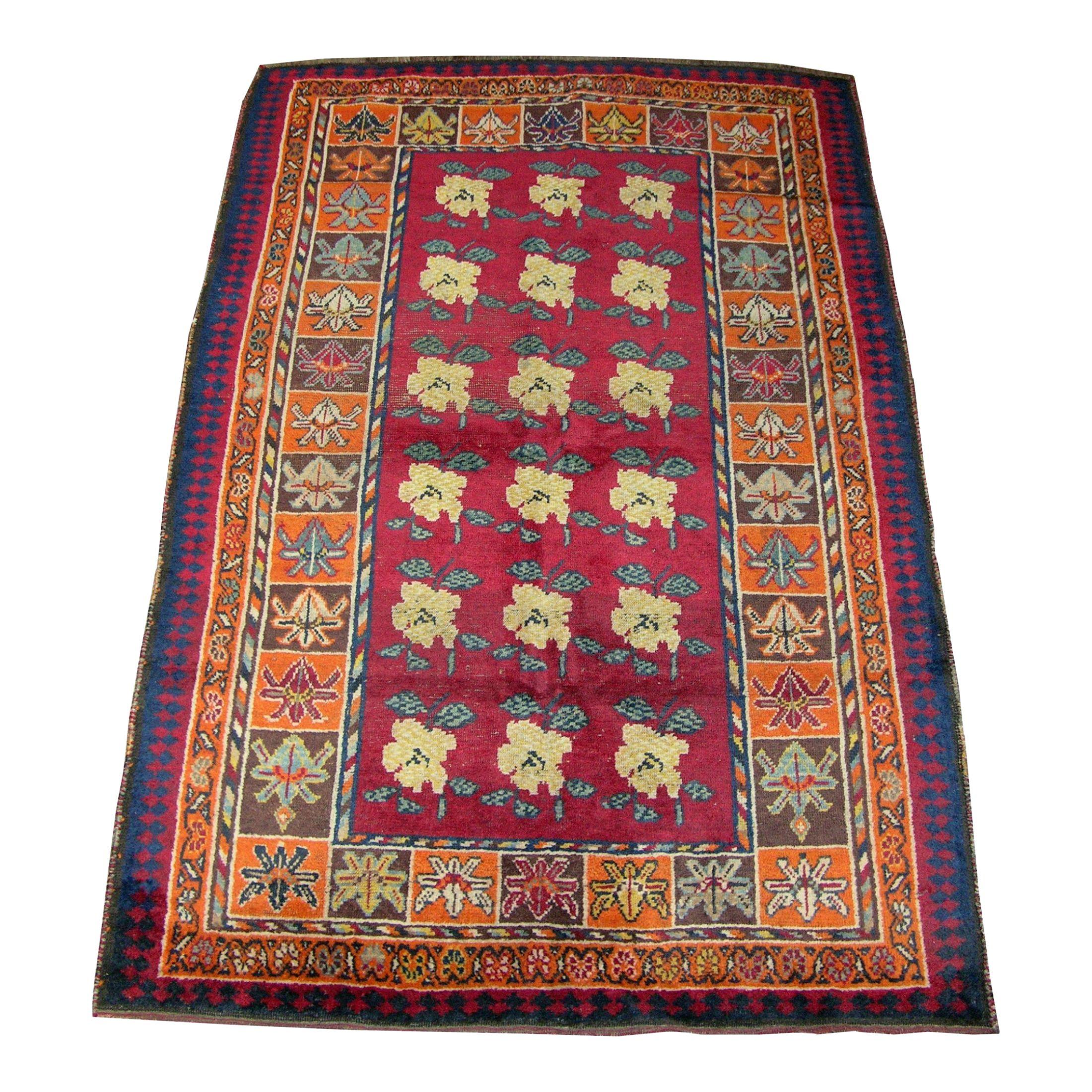
Early 20th Century Antique Bessarabian Rug

Early 20th Century Antique Bessarabian Rug

Located in Los Angeles, US

Antique Bessarabian Rugs / Kilims in both pile and tapestry weaving technique are some of the more beautiful carpets to have been produced in Europe. Many of the Bessarabian Kilims w...

Category

Antique Early 1900s Other Russian and Scandinavian Rugs

Materials

Wool, Cotton

Antique Nomad Samarkand Rug

Antique Nomad Samarkand Rug

Located in Los Angeles, US

Antique Samarkand Rugs: The desert oasis of Khotan was an important stop on the Silk Road. The people of Khotan were expert carpet weavers who produced high quality antique rugs and ...

Category

Antique Early 1900s Russian and Scandinavian Rugs

Materials

Wool, Cotton

Antique Central Asian Samarkand Rug

Antique Central Asian Samarkand Rug

Located in Los Angeles, US

Antique Central Asian Samarkand 8'2'' X 4'7'', Hand-knotted and Authentic.

Category

Antique Early 1900s Asian Other Russian and Scandinavian Rugs

Materials

Wool, Cotton

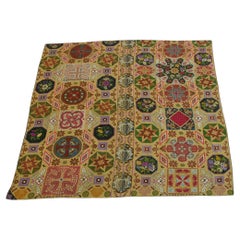
Antique Needlework Floral Design

Antique Needlework Floral Design

Located in Los Angeles, US

Needlepoint rugs were created using the traditional needlework weaving technique that is used to make everyday items from furniture to carpets and artwork. However, it has a fascinat...

Category

Antique Early 1900s Other Russian and Scandinavian Rugs

Materials

Wool, Cotton

Antique Gabeh Rug 6.2x4.0

Antique Gabeh Rug 6.2x4.0

Located in Los Angeles, US

Antique Gabeh Rug 6.2x4.0, handmade and hand-knotted,

Category

Antique Early 1900s Other Russian and Scandinavian Rugs

Materials

Wool, Cotton

Antique Collectible Woolen Needlework

Antique Collectible Woolen Needlework

Located in Los Angeles, US

Needlepoint rugs were created using the traditional needlework weaving technique that is used to make everyday items from furniture to carpets and artwork. However, it has a fascinating history both as a hobby and as an industry. When many people think of carpets, they think of pile carpets or flat weave kilims, but needlepoint has also been used to create beautiful carpets. These carpets are durable and an important part of carpet history. Archaeologists and scholars consider the roots of needlepoint to have been around 1500 BC. They consider the first needlepoint to include the fine diagonal stitches that were used to sew tents together by the ancient Egyptians. The art eventually evolved into tapestry weaving. However, a tapestry weaving differs significantly from needlepoint in that it uses a loom and vertical warp. Tapestry weaving is closer to the weaving of kilims and pile rugs than canvas work. However, some still include tapestry weaving in the category of needlepoint because of the fine work that appeared during the late Renaissance. It can have a similar appearance to the untrained eye. Technically, tapestry weaving and needlepoint are not the same, and they do not use the same technique. The first actual needlepoint rugs and needle-points began to appear in the late Renaissance. Needlepoint is worked by creating stitches on a stiff canvas. The canvas is typically made from jute or linen and is quite durable. Pieces from the Renaissance were used to cover footstools, chairs, pillows, bed headboards, and other furnishings. They were also used as table coverings and wall coverings. You could also find them on many small items such as purses, shoes, and various adornments for clothing. During the Renaissance, the craft reached a high level of skill, and the designs became incredibly detailed and realistic. They mimicked many of the subjects and styles of famous paintings of the time. They created florals, still life designs, scenes, and geometric tiled pieces. Some of them mimicked the designs found in Persian Carpets. Needlepoint reached its peak popularity in the 19th century when it was considered a proper occupation for a lady. Needlepoint and embroidery held a similar place in societal status at the time. During this time, the work became finer, with some of the canvas reaching a high level of detail. The level of detail is determined by counting the number of mesh in an inch. During this time petit point by French needlewomen could have a mesh count as high as 45 mesh. This allowed women to create highly intricate designs with incredible levels of detail. It is possible to find many antique pieces of needlepoint besides rugs. Needlepoint rugs were popular in France and Spain, where the technique was adapted to create highly intricate designs that mimicked the designs in architecture and fashion. They were popular because they were durable, and it could be fashioned into a variety of items. The canvases themselves were durable, and the wool that they used was also strong, which means that many of the pieces were able to withstand daily use. We have many artifacts that have survived from this time period. Needlepoint rugs are important collectibles because they are different from the pile rugs and kilims that are typically found on the market. Needlepoint carpets are special because they take many hours to create, especially larger works. Needlepoint pieces of any type became popular throughout Europe during the 19th century. It is still a popular hobby today, but perhaps one of the most interesting stories is that of the Portuguese needlewomen of Arraiolos. The story of these women and their beautiful carpets begins in 1492. Needlepoint was a popular occupation in Spain, which had a large population of Moors and Jews. They were an integral part of Spanish culture. However, in 1492, Queen Isabella of Spain issued a proclamation that gave these ethnic groups the order to pack their bags and board ships headed...

Category

Antique Early 1900s Other Russian and Scandinavian Rugs
Materials

Wool

You May Also Like

Bessarabian Kilim

Bessarabian Kilim

Located in New York, NY

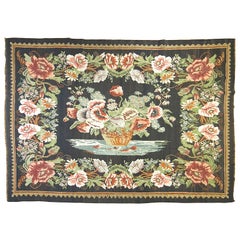
Charming room size handwoven Bessarabian Kilim with large flower vase

Category

Vintage 1940s Romantic Russian and Scandinavian Rugs
Materials

Wool

Antique Bessarabian Kilim Carpet

Antique Bessarabian Kilim Carpet

Located in Ottawa, Ontario

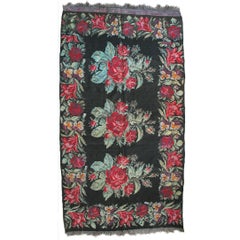
An antique Bessarabian Kilim carpet, floral patterns made in a naturalistic Western style on a black background, inscribed with the weaver's ...

Category

Early 20th Century Romanian Bessarabian Western European Rugs

Materials

Wool

Vintage Armenian Kilim Rug

Vintage Armenian Kilim Rug

Located in Chicago, IL

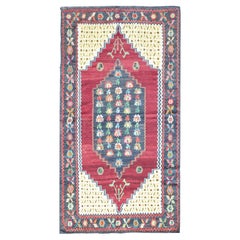
A wonderful vintage Armenian kilim rug with a central medallion with stylized flowers woven in myriad colors against a dark crimson background, and flo...

Category

Mid-20th Century Armenian Kilim Persian Rugs

Materials

Wool

Antique Bessarabian Kilim

Antique Bessarabian Kilim

Located in Closter, NJ

An antique Bessarabian flat-woven kilim from the Balkan provinces in excellent, original condition measuring 9' 3" x 6' 1".

Category

Antique 1890s Balkan Folk Art Russian and Scandinavian Rugs
Materials

Wool, Cotton

21st Century Bessarabian Rug

21st Century Bessarabian Rug

Located in Paradise Valley, AZ

This striking Bessarabian rug from Turkey is a beautiful example of the region’s rich weaving heritage, combining Eastern European elegance with Ottoman craftsmanship. Handwoven in w...

Category

2010s Turkish Bessarabian Central Asian Rugs

Materials

Wool

Wonderful Antique Kazak Design Turkish Rug

Wonderful Antique Kazak Design Turkish Rug

Located in Saint Ouen, FR

Beautiful antique Turkish rug with a geometrical Kazak design and natural colors with orange, red, yellow and green, very decorative, entirely hand knotted with wool velvet on wool f...

Category

Antique Late 19th Century Turkish Kazak Turkish Rugs

Materials

Wool