Want more images or videos?
Request additional images or videos from the seller
1 of 21

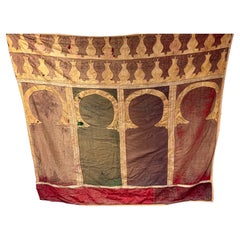
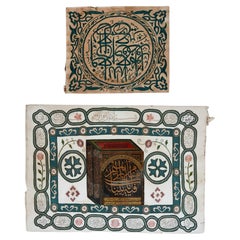
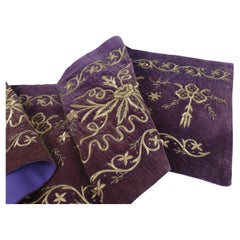
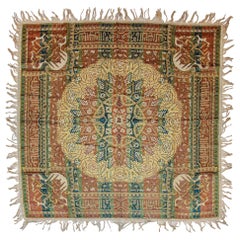
Islamic Ottoman Silk and Metal-Thread External Curtain Cover for The Holy Kaba

$12,500List Price

You May Also Like

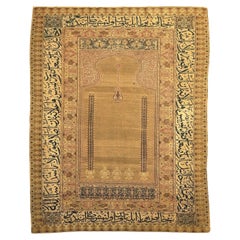
Important Antique Ottoman Sultan’s Prayer Rug

Important Antique Ottoman Sultan’s Prayer Rug

Located in Santa Barbara, CA

This Important Antique Ottoman Sultan’s Prayer Rug (4'6" x 5'10") is a rare and historically significant example of Ottoman weaving, showcasing exqu...

Category

Antique Mid-18th Century Turkish Turkish Rugs

Materials

Wool

Original Ottoman Embroidered Coverlet, circa 1880

Original Ottoman Embroidered Coverlet, circa 1880

Located in Berlin, DE

This rare Ottoman embroidered coverlet from around 1880 is a remarkable surviving textile that reflects the opulence, symbolism and artistic sensibility of late-imperial Turkish craf...

Category

Antique 19th Century Turkish Islamic Turkish Rugs

Materials

Wool

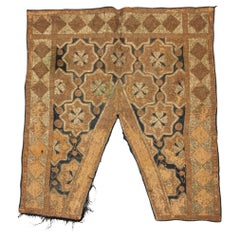
Rare Ottoman Metal-Thread Embroidered Silk Velvet

Rare Ottoman Metal-Thread Embroidered Silk Velvet

$5,766

H 46.07 in W 34.26 in D 0.04 in

Rare Ottoman Metal-Thread Embroidered Silk Velvet

Located in Ferrara, IT

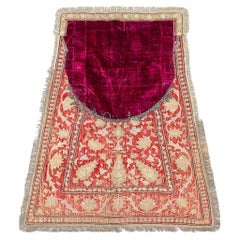
Rare Ottoman Metal-Thread Embroidered Silk Velvet Saddle Cover (Gualdrappa)This exceptional antique textile is a magnificent example of Ottoman ceremonial horse trappings (gualdrappa...

Category

Antique 19th Century Turkish Textiles

Materials

Metallic Thread

Antique Silk Woven Curtain or Hanging, Tetouan, Morocco

Antique Silk Woven Curtain or Hanging, Tetouan, Morocco

Located in Point Richmond, CA

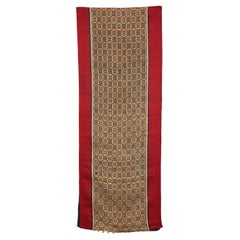
A Hanging or Curtain for a Wedding Alcove or Reception Room Tetouan, Morocco 19th century Silk strip weave with double weave patterning 129 x 24 ins (61 x 328 cm) This luxurious, sh...

Category

Antique Early 19th Century Moroccan Islamic Tapestries

Materials

Cotton, Silk

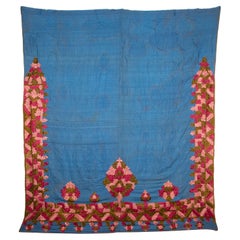
Rabat Curtain 'Izar' from Morocco, Late 19th/ Early 20th C

Rabat Curtain 'Izar' from Morocco, Late 19th/ Early 20th C

Located in Istanbul, TR

This is silk embroidery on a silk blue background. A rare item to come by.

Category

Early 20th Century Moroccan Islamic Moroccan and North African Rugs

Materials

Silk

Ottoman Antique Embroidery Gold Metallic Thread Tapestry (Late 19th Century)

Ottoman Antique Embroidery Gold Metallic Thread Tapestry (Late 19th Century)

By Ottoman Touch

Located in London, GB

This 19th-century Ottoman metallic embroidery tapestry is a magnificent representation of the empire’s rich textile heritage, crafted with exceptional skill and artistry. The use of ...

Category

Antique Late 19th Century Turkish Islamic Tapestries

Materials

Metallic Thread

Antique Islamic Art Ottoman Metallic Threads Arched Fragment Textile 19th c.

Antique Islamic Art Ottoman Metallic Threads Arched Fragment Textile 19th c.

Located in Moreno Valley, CA

19th Century Islamic Art, Ottoman Moorish Metallic Threads Embroidered Arched Textile. Collectible Museum quality antique textile fragment probably part of a wall hanging or mirror cloth. Early 19th century antique Islamic Ottoman Empire style embroidered silk and metal thread panel. Compositions in Moorish 8 pointed star design medallions surrounded by scrolling vine, lined, scattered losses and loose threads to silk. Antique Oriental Byzantine textile depicting embroidered flowers depicting branches filled-in with silk floss threads creating an intricate embroidered pattern. On two of the corners, the antique textile panel is embellished with bands of blue silk rushing framed by with antique metallic trims, this dramatic embroidered of meandering botanical's are done in earthy colors and embroidered on natural linen. An antique Ottoman Empire textile decorative and historical artifact. "Ottoman silk textiles are among the most elegant textiles produced in the Islamic word. Executed in a range of woven techniques including satin and velvet, these silks were produced for use both within the Ottoman Empire and for export to Europe and the Middle East, where they were considered among the most prized luxury objects. Most Ottoman silks produced for use within the Empire were used either for garments or furnishings." Condensed from: Nazanin Hedayat Munroe. Department of Islamic Art, the Metropolitan Museum of Art. This antique Islamic Art...

Category

Antique Late 19th Century Turkish Islamic Textiles

Materials

Metallic Thread

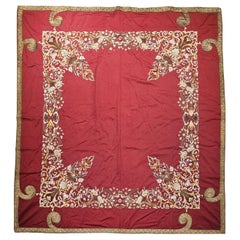
19th Century Ottoman Tapestry Textile, Silk & Gold Embroidery, Turkey

19th Century Ottoman Tapestry Textile, Silk & Gold Embroidery, Turkey

Located in Barrington, IL

19th Century Ottoman silk and gold thread embroidery textile. The square textile of red cotton is decorated in elaborate silk and gold thread embroidery of arabesques, florals and scrolls enclosed by a wide gold metallic ribbon framing the whole. Created in the 19th century, even after 200 years of use the panel still has beautiful and brilliant colors and the gold threads shine under the right light. Beautiful tapestry textile to decorate the wall or displayed on a table or a bed. A Sotheby's Auction tag from October 1st of 1993 remains at one corner. Dimensions: 84” x 84” Date of Manufacture: 19th Century Place of Origin: Ottoman, Turkey Material: Silk and gold thread embroidery on cotton Condition: Wear consistent with age and use The Persian Knot Gallery, SKU 1986 Ottoman Textiles, 19th Century Ottoman Textiles, Gold Thread Textiles, 19th Century Silk Embroidery Textiles, French Aubusson Tapestry, European Embroidery, 18th Century Antique Ottoman Textiles...

Category

Antique Early 19th Century Turkish Quilts and Blankets

Materials

Gold

More From This Seller

View All
Placido Zuloaga, an Extremely Rare Spanish Gold and Silver Damascened Frame

Placido Zuloaga, an Extremely Rare Spanish Gold and Silver Damascened Frame

By Plácido Zuloaga 1

Located in Long Island City, NY, NY

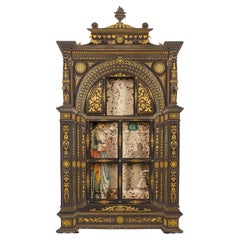
Placido Zuloaga, An extremely rare Spanish gold and silver damascened window frame, in the Alhambra / Islamic taste, circa 1880. The interior is lined and fitted with an orientalist artwork throughout. Signed PZ on the reverse. Placido Zuloaga was a renowned Spanish metalworker and damascene artist known for his exceptional skills in working with gold and silver and for creating intricate and ornate designs on metal surfaces using a technique called damascening. One of Zuloaga's works is this rare gold and silver damascened frame that he created in the late 19th century. The frame is decorated with intricate designs in silver and gold, creating a stunning contrast that is characteristic of Zuloaga's work. The frame is a remarkable example of Zuloaga's artistry and skill, as well as his mastery of the damascening technique. The technique involves inlaying silver or gold wire into the surface of the metal, creating intricate and detailed designs that are both beautiful and durable. Zuloaga's work was highly sought after during his lifetime and is still highly valued today. His pieces are considered to be some of the finest examples of damascene artistry in the world, and his legacy continues to inspire and influence metalworkers and artists today. His works are in private collections and in museums worldwide. Comparative Literature: James D. Lavin, The Art and Tradition of the Zuloagas, Spanish Damascene...

Category

Antique 19th Century Spanish Islamic Picture Frames

Materials

Steel, Iron

A Monumental Gilt-Lacquered Bronze Ornamental Buddha Sculpture of Vajravidarana

A Monumental Gilt-Lacquered Bronze Ornamental Buddha Sculpture of Vajravidarana

Located in Long Island City, NY, NY

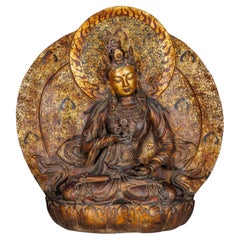
A Monumental Gilt-Lacquered Bronze Ornamental Buddha Sculpture of Vajravidarana: A Masterpiece of Sino-Tibetan Craftsmanship, Late 19th Century, Qing Dynasty This monumental gilt-lacquered bronze ornamental sculpture of Vajravidarana is an extraordinary and commanding piece of art, showcasing the pinnacle of Sino-Tibetan craftsmanship from the late 19th century. The figure of Vajravidarana, a powerful purification deity in Tibetan Buddhism, is meticulously sculpted to embody both spiritual authority and artistic excellence. Vajravidarana is primarily known for his role in removing spiritual impurities and negativities. Unlike other deities associated with wisdom or compassion, Vajravidarana’s function is centered on purification and healing. He is typically depicted holding a vajra and a bell, symbolizing the cutting away of delusions and the resonance of divine truth. In this striking sculpture, Vajravidarana is shown holding a vishva vajra (the double vajra), a unique and powerful variation of the traditional iconography, which signifies ultimate protection and the dispelling of negative karma. Vajravidarana: The Supreme Purifier and Protector Vajravidarana is revered in Tibetan Buddhism as the deity of spiritual purification, called upon to cleanse practitioners of defilements and negative influences. His vajra represents the indestructibility of truth, while his bell signifies the wisdom that resonates through purification rituals. In this sculpture, the presence of the vishva vajra, or double vajra, enhances his association with supreme protection, ensuring the destruction of all spiritual obstacles and afflictions. The figure’s powerful yet composed expression conveys a sense of unwavering resolve and divine authority. His posture, along with the carefully sculpted details of his robes and ornaments, highlights his function as a guardian against impurity. The inclusion of the vishva vajra rather than the usual single vajra reinforces his role as a supreme protector, capable of dispelling all forms of negativity and restoring balance. Symbolism of the Mantras and Aureole: Unlike deities that embody wisdom through duality, Vajravidarana’s iconography is centered on purification and exorcism. The aureole surrounding him is inscribed with sacred purification mantras rather than depictions of a consort. These mantras emphasize his function as a remover of obstacles and impurities, reinforcing his role in Buddhist healing rituals. The presence of the sacred inscriptions elevates the sculpture’s spiritual significance, making it a focal point for meditation and ritual purification. Practitioners often visualize Vajravidarana radiating purifying light, dissolving afflictions and negative karma. This theme is mirrored in the sculptural repetition of the purification symbols on the aureole, reinforcing the deity’s role as a divine cleanser. Gilt-Lacquered Bronze: The Artistry of Sino-Tibetan Metalwork: The craftsmanship of this monumental figure reflects the expertise of late 19th-century Sino-Tibetan metalwork, where traditional Tibetan themes were infused with Chinese artistic sensibilities. Cast in bronze and finished with a rich gilt lacquer, the statue has an otherworldly glow, giving it an ethereal, almost divine presence. The gilding process—applied with exceptional skill—gives the sculpture a striking luminosity that enhances the fine details of the facial features, flowing robes, jewelry, and other elements of the deity’s attire. The technique employed to create this figure speaks to the high level of craftsmanship that flourished during the late Qing Dynasty and early modern Tibetan art. The ornate details of the robes and the fine texture of the sculpture highlight the exceptional skill of the artisans who brought this work to life. The use of gold and lacquer not only reflects the preciousness of the sculpture but also its spiritual significance as an object meant to inspire reverence and meditation. An Ornamental Sculpture of Monumental Scale: Unlike smaller devotional objects, this sculpture is designed as an ornamental masterpiece, intended to make a grand visual and spiritual statement. Its monumental size allows it to dominate any space, offering a commanding presence that is both physically and symbolically impressive. In Buddhist practice, large sculptures of this nature are often placed in temples or meditation halls, where their imposing size and serene presence would encourage contemplation and devotion. The grand scale of the statue further amplifies the spiritual power it is meant to convey. As a representation of Vajravidarana, it is not only a physical object of beauty but also a conduit for meditation, purification, and enlightenment. The scale of the sculpture also emphasizes the divine stature of the deity, highlighting his importance in the Buddhist tradition as the ultimate force for spiritual cleansing and protection. Provenance: Acquired in China in circa 1900 1905 Private Buddhist Temple, Northeast, USA Private Sale Solomon Treasure...

Category

Antique Late 19th Century Chinese Tibetan Metalwork
Materials

Bronze

Rare Louis XV Ormolu-Mounted Tulipwood and Chinese Lacquer Cabinet

Rare Louis XV Ormolu-Mounted Tulipwood and Chinese Lacquer Cabinet

Located in Long Island City, NY, NY

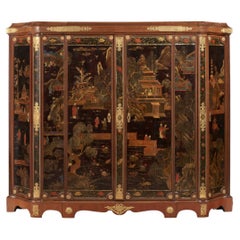
A Rare Louis XV Ormolu-Mounted Tulipwood and Chinese Lacquer cabinet, c. 1750 (Regence Period) A truly magnificent, monumental, and one of a kind cabinet, painted throughout with gi...

Category

Antique 18th Century French Louis XV Cabinets

Materials

Ormolu

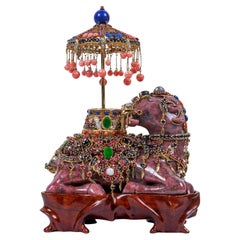
Exquisite 14K Gold, Diamonds, Emeralds, Rubies, Semi Precious Stone Camel

Exquisite 14K Gold, Diamonds, Emeralds, Rubies, Semi Precious Stone Camel

Located in Long Island City, NY, NY

An Exquisite 14K Gold, Diamonds, Emeralds, Rubies, Sapphires, and Semi Precious Stone Mounted Rhodonite Camel. Possibly by Verdura, circa 1970, Italy. A very good quality and unusual gold mounted jeweled object...

Category

20th Century Italian Mounted Objects

Materials

Gold

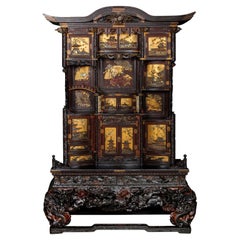
An Imperial Japanese Meiji Shibayama Tea Cabinet by The Tokugawa Samurai Clan

An Imperial Japanese Meiji Shibayama Tea Cabinet by The Tokugawa Samurai Clan

Located in Long Island City, NY, NY

An Imperial Japanese Meiji Shibayama Tea Ceremony Cabinet by The Tokugawa Samurai Clan. This extraordinary Meiji-period shibayama cabinet, attributed to the Tokugawa samurai clan, s...

Category

Antique 19th Century Japanese Meiji Furniture

Materials

Mother-of-Pearl, Wood, Lacquer

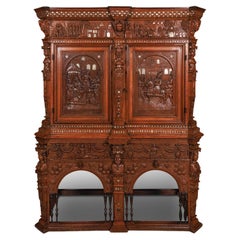
Rare and Important Renaissance "Judaica" Carved Oak Wood Cabinet

Rare and Important Renaissance "Judaica" Carved Oak Wood Cabinet

Located in Long Island City, NY, NY

A Rare and Important Renaissance "Judaica" Carved Oak Wood Cabinet, circa 1680 We are pleased to present a rare and important Renaissance Judaica c...

Category

Antique 17th Century German Renaissance Cabinets

Materials

Oak, Mother-of-Pearl