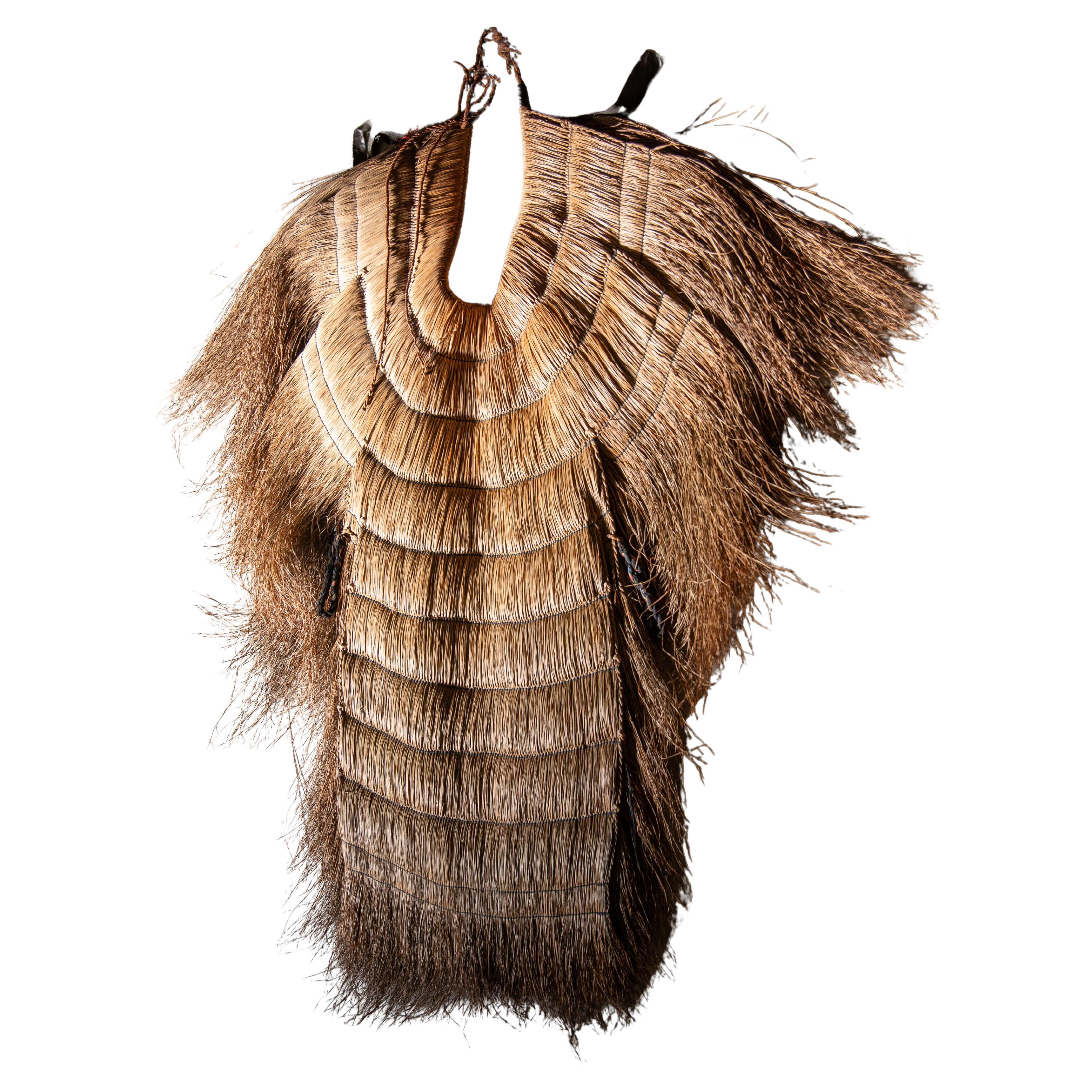
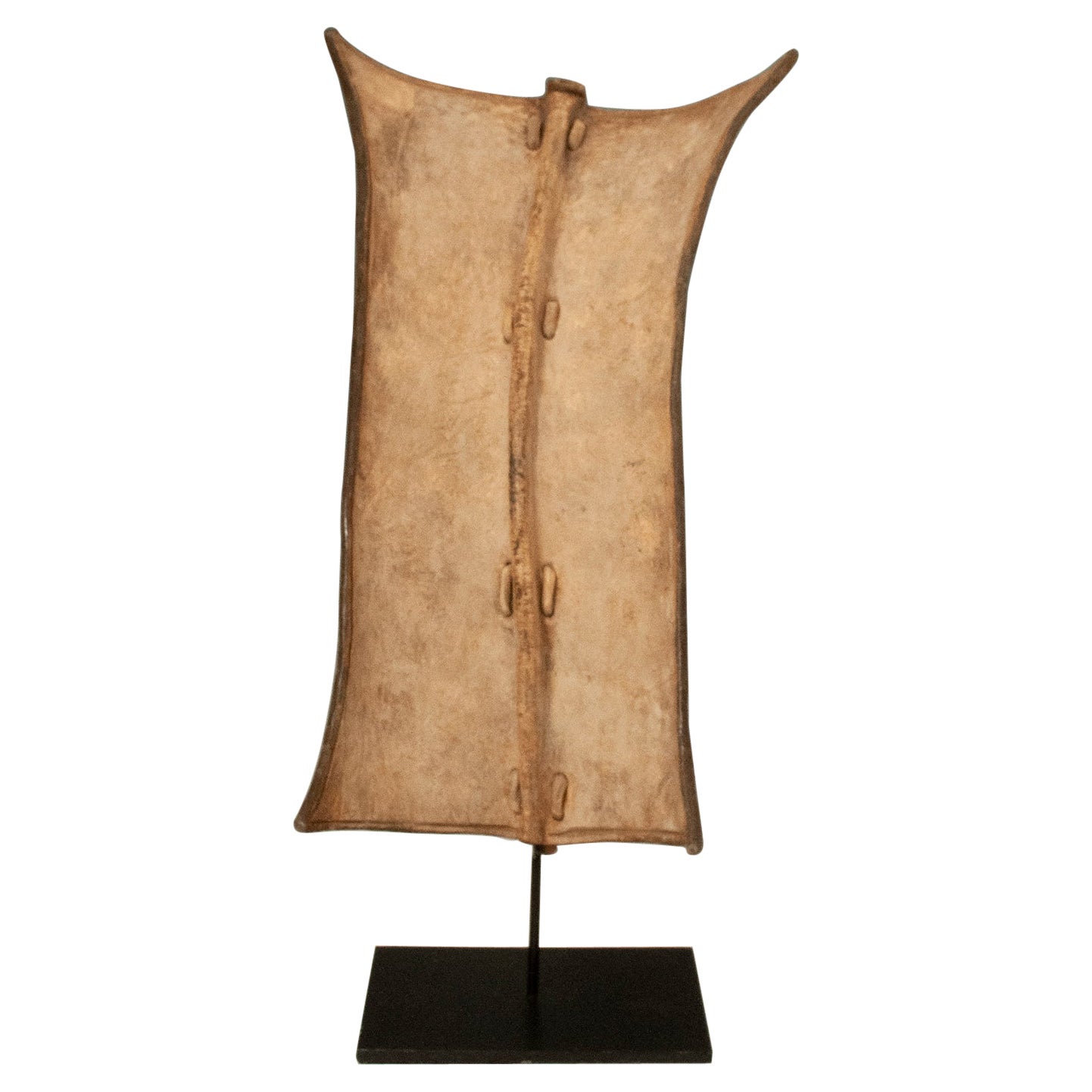
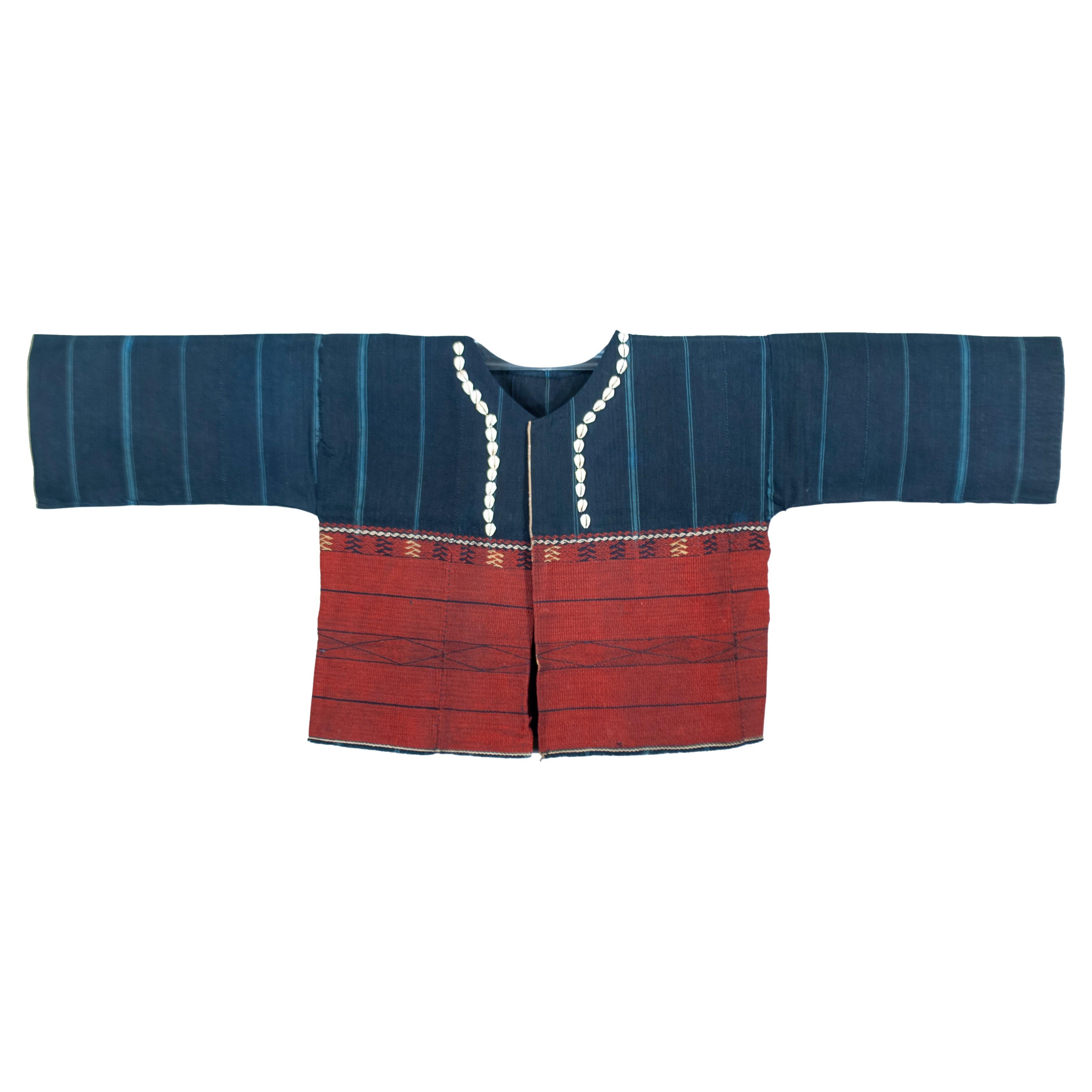
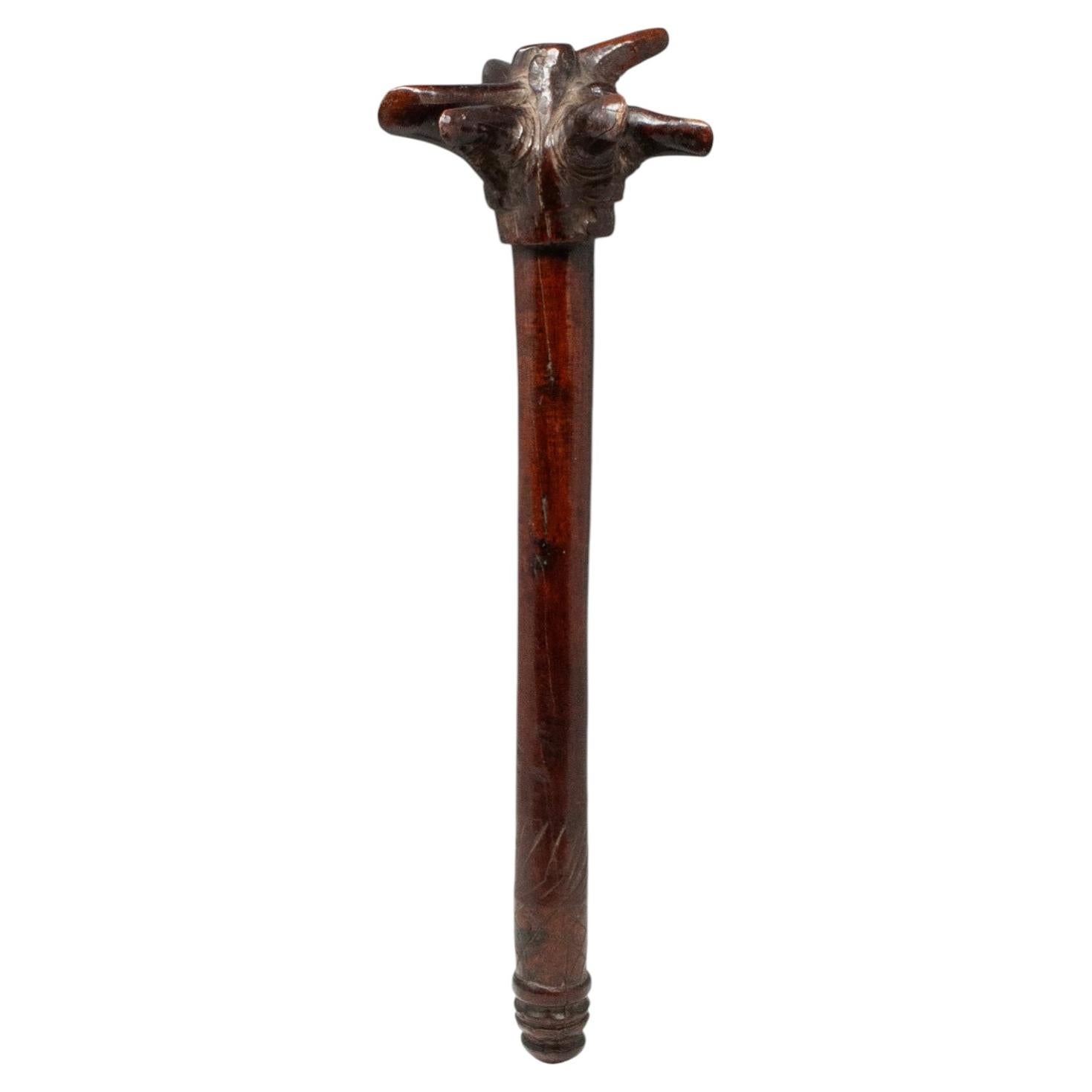
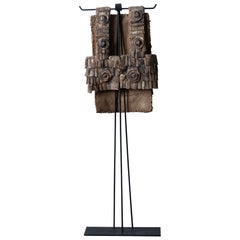
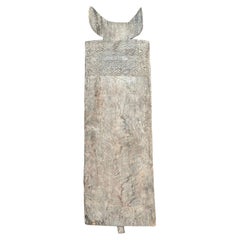
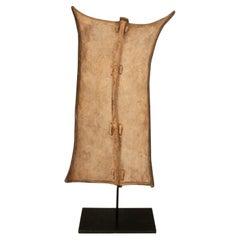
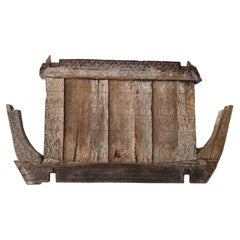
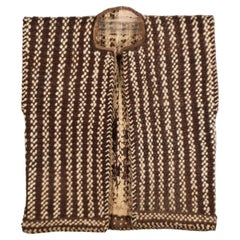
Indonesian Wild Boar Hunting Vest, Carved Cow Bone Armour, Lombok, Mid-20th Century
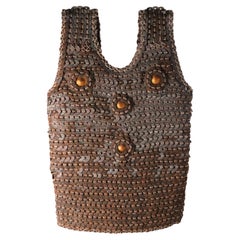
This rare and evocative vest from Lombok, Indonesia, was traditionally worn by hunters protecting their village crops from wild boar raids. Crafted from dozens of carved cow bone plates, intricately woven together with natural fibre cordage, it formed a strong yet flexible armour designed to withstand slashing tusks during close-quarter hunts.
Wild boar were a significant threat to farming communities, often timing their raids for when rice or crops were nearly ready to harvest, causing devastating losses overnight. Hunting these boar was not only an act of bravery but a communal duty, safeguarding the village’s food supply and ensuring honour and survival.
Each cow bone segment was hand-carved and polished before being woven into layered rows, creating a protective scale effect. Bone, considered both strong and spiritually protective, was readily available and imbued the vest with symbolism of life, death, and ancestral strength.
Such vests are exceedingly rare today, having been used intensively and often lost to time. In many Indonesian cultural traditions, items of personal protection, hunting regalia, and status were also buried with their owners or dedicated to ancestral shrines. While direct written records specifically referencing Lombok bone hunting vests are limited, broader patterns across Southeast Asia support this practice. Weapons, armour, and ritual wear were commonly interred as grave goods to accompany the deceased into the afterlife or offered to ancestor houses as ongoing protection for the family line.
This piece stands as a powerful sculptural artefact representing courage, ingenuity, and the deep relationship between humans, animals, and nature in traditional Sasak life.
Its striking organic textures and rhythmic woven pattern make it ideal as:
• A commanding wall-mounted sculptural display in ethnographic, wabi-sabi, or organic modern interiors
• A museum-level conversation piece within tribal and ethnographic collections
• A wearable art object reflecting resilience, ritual protection, and craft heritage
Care and preservation:
Handle with care to preserve the aged patina of the bone and the integrity of the natural fibre weaving. Dust gently with a soft brush. Avoid direct moisture or overly dry conditions to maintain stability.
Origin: Lombok, Indonesia
Date: Mid-20th century
Materials: Carved cow bone plates, natural fibre cordage
Dimensions:
Condition: Excellent structural condition. Natural bone patina, minor surface wear, and fibre ageing consistent with traditional use.
Authentic bone hunting vests of this era are extremely scarce, offering collectors and designers a unique opportunity to acquire an artefact of genuine cultural significance, sculptural presence, and quiet wabi-sabi beauty.
We endeavour to find the best shipping solutions for our clients worldwide. Please contact us for accurate shipping quotes to your location.
Follow our page to see our latest tribal, sculptural, and wabi-sabi pieces as soon as they are listed.