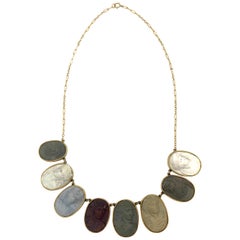
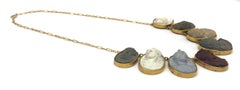
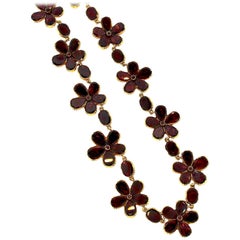
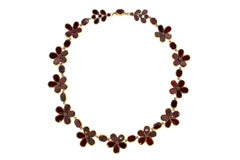
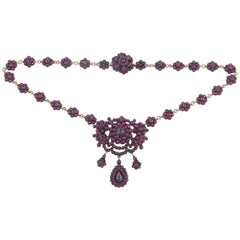
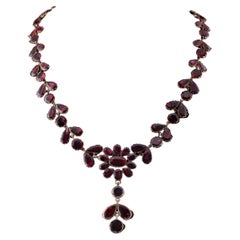
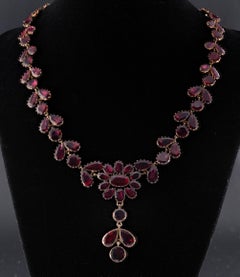
Located in Malmö, Skåne län
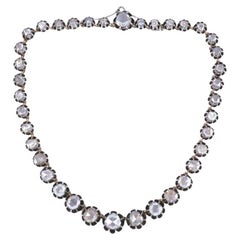
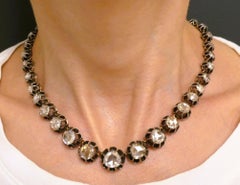
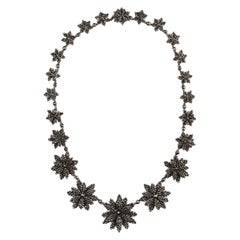
Cut steel jewelry was at the height of fashion from the mid 1700s well into the 19th century.
Originated in the 1700s. Popular from the Georgian through the Victorian eras. To make cut steel, melted horseshoe nails were formed into tiny faceted beads. Those small steel gemstone-like studs were then riveted one-by-one onto a base plate. It was an English invention that quickly travelled throughout the world. Each stud could have up to 15 facets, and in general the finer and older the piece the more facets the studs will have.
Improvements in candles meant that grand events and entertaining could take place at night. As diamonds are diamonds and not available for everyone, and everyone wanted to shine, the popularity grew. Cut-steel provided a stylish and popular new jewelry material that could be enjoyed by everyone at all levels of society. It grew beyond a simple imitation to an art in its own right. The manufacturing was complex and the workmanship that was required highly skilled. These were not mass produced objects.
The studs were made from decarbonated cast steel, which was case-hardened, then the studs were faceted by cutting against a pewter wheel. Next were then polished with first fine emery and a hard brush, and then by hand with a special putty. Finally they were riveted onto pierced base plates which had to be drilled and cut by hand, too.
The main place of cut steel production was Birmingham, England. And there, one manufacturer stood out from all the rest: Matthew Boulton. He had been born in 1728 into the industry — his father manufactured small metal products. But the younger Boulton had a special talent for marrying the latest technology with the latest fashion. He also was continually expanding — he even founded a mint. He wined and dined with dignitaries and advocated for his steel products. Fortuitously, he became quite close with the Russian ambassador to Catherine the Great. When the ambassador toured the mint, Boulton made sure to send the Empress some of his cut-steel necklaces.
In 1759, Louis XV “encouraged” the nobility to donate their gold and gemstone jewelry to help fund the Seven Years War. The popularity of cut steel in France may in part have been due to these sumptuary laws which limited who could wear precious metals and diamonds. Either you complied with the law and gave up your family jewels to be melted down for the war chest...
Category
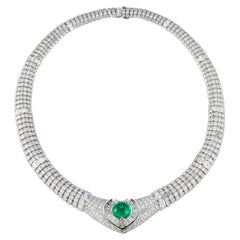
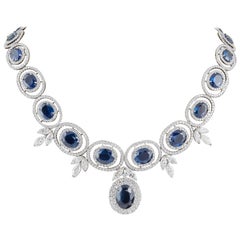
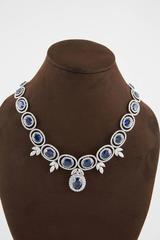
English Early Victorian Antique Early 19th Century More Necklaces