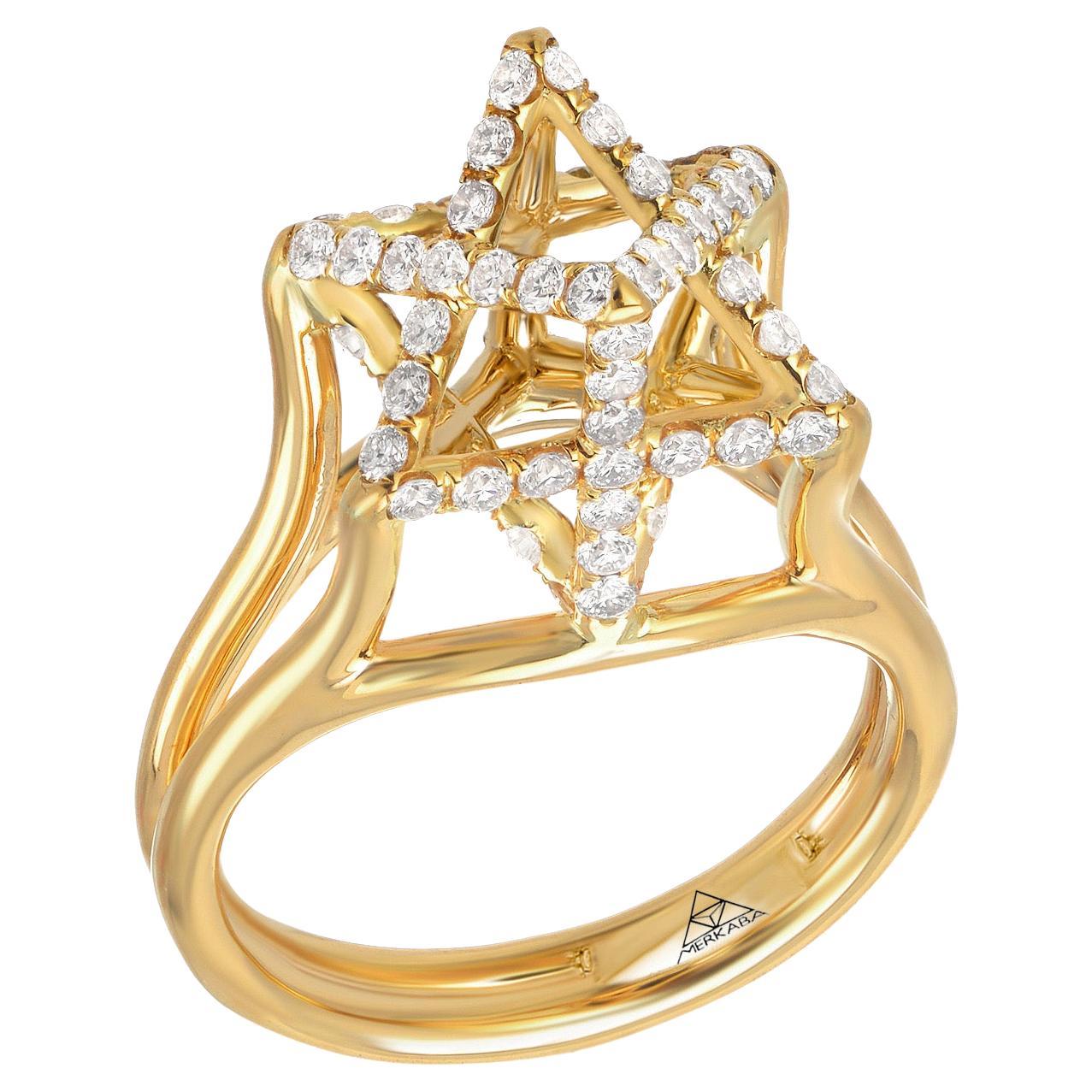
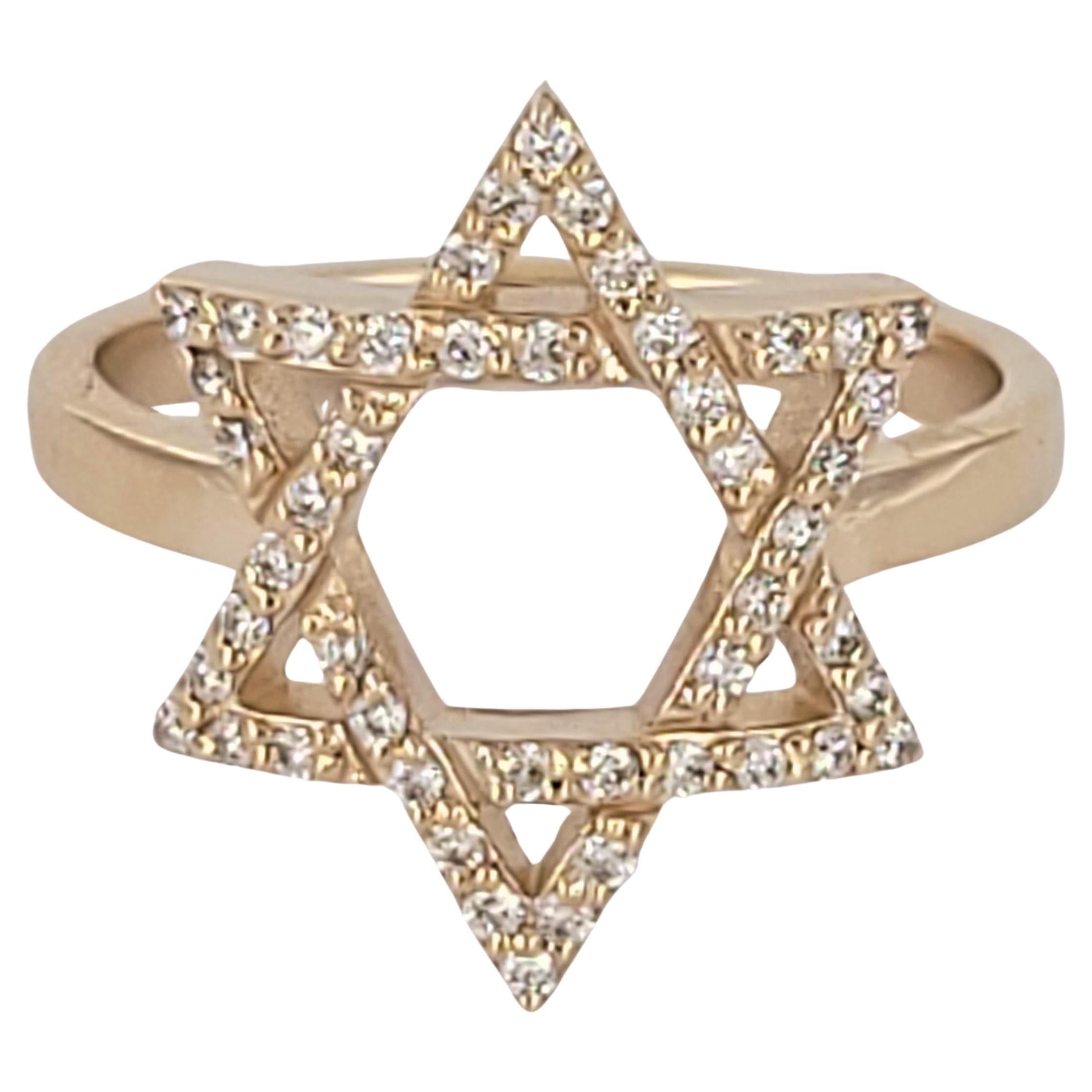
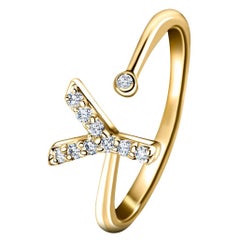
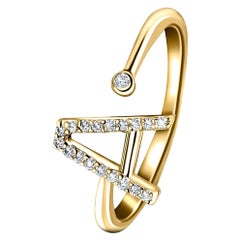
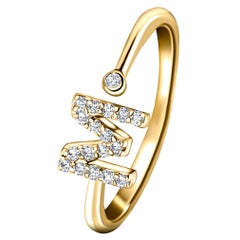
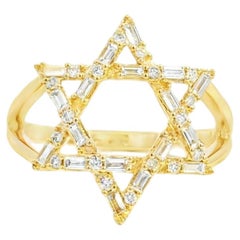
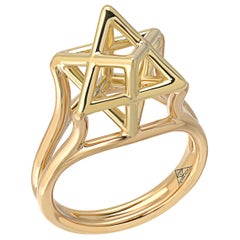
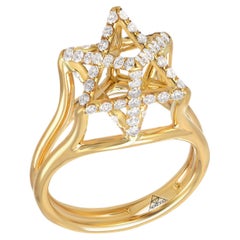
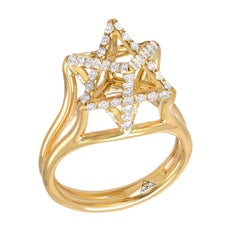
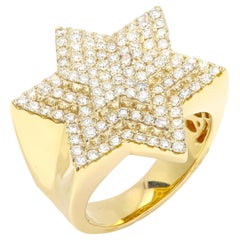
Crafted in radiant 18 karat yellow gold, this elegant open-style ring showcases a beautifully detailed Star of David on one side and a brilliant bezel-set round brilliant cut natural diamond on the other. A refined balance of symbolism and contemporary design, this unique piece is perfect for everyday wear or as a meaningful gift. Timeless, sophisticated, and rich in heritage.
Rooted in history, the Star of David—associated with the Seal of Solomon—has been worn through generations as a powerful symbol of identity, resilience, and faith. Adorned by royalty, collectors, and modern trendsetters alike, this ring carries both cultural significance and understated luxury.
Expertly made in Britain, the ring is fully British hallmarked, guaranteeing authenticity and quality craftsmanship.
Diamond Details:
Diamond Weight: 0.025 Carat
Colour Grade: G–H
Clarity Grade: VS
Dimensions:
Star Head Width: 5mm
Diamond Bezel Width: 3mm
Weight:
Approx. 2.00 – 3.50 grams (depending on size)
A distinctive piece of fine jewellery, ideal for collectors or those seeking a meaningful gold and diamond ring with enduring appeal.
Culture history and additional information:
The Star of David, also known as the Shield of David, is one of the most recognizable symbols in Jewish culture. Its origin and meaning have a rich history that spans centuries. The star is composed of two overlapping equilateral triangles, creating a hexagram shape.
In religious context, the Star of David holds significant symbolism. One interpretation is that the three upper points represent the connection between God, the Jewish people, and the Torah, while the three lower points represent the physical and spiritual unification of the Jewish people. The symbol is often associated with divine protection and is believed to have the power to ward off evil.
The Star of David has also become a prominent motif in Jewish jewelry. It is seen in various forms, including pendants, necklaces, rings, and bracelets. Jewelry featuring the Star of David is not only worn as a cultural symbol but as a statement of faith and identity. The design can be found in various materials, such as gold, silver, or even adorned with precious gemstones, making it a popular choice for both everyday wear and special occasions.
In terms of history, the Star of David's origins are not entirely clear. Some theories suggest that it may have been derived from ancient mystic practices, specifically the interlocking triangles in the Seal of Solomon. However, historical records indicate that the symbol did not gain widespread usage until the Middle Ages.
During this time, the Star of David was prominently featured on Jewish synagogues, tombstones, and religious texts. It was not until the 17th century that the symbol started to gain even more recognition and became associated with Jewish identity. Jewish communities in Eastern Europe adopted the symbol, using it as a signifier of their religious affiliation.
In modern times, the Star of David carries political significance as well. It was adopted as a symbol of Jewish identity during the Zionist movement in the late 19th and early 20th centuries. The star appeared on flags and other emblems associated with the re-establishment of the city of David, Jewish homeland in Israel.
Jerusalem, the city of David, holds a rich and significant history that dates back thousands of years. Located in the heart of Israel, with deep religious importance to Judaism, Christianity, and Islam.
The history of Jerusalem can be traced back to the time of King David, who established it as the capital of Israel around 1000 BCE. Under his rule, Jerusalem flourished and became a symbol of power and religious devotion.
Throughout its history, Jerusalem has been conquered and ruled by various empires including the Assyrians, Babylonians, Greeks, Romans, and Ottomans. Each of these conquerors left their mark on the city, shaping its architecture and culture.
Jerusalem is known for its religious sites, such as the Western Wall, the holiest site in Judaism, Dome of the Rock, and The Church of the Holy Sepulchre, located in the Old City which is a major pilgrimage site for Christians from around the world.
Jerusalem, the Jewish capital has been a site of conflict for centuries due to its religious importance and strategic location. The city has been destroyed twice, first by the Babylonians in 586 BCE and later by the Romans in 70 CE.
As the city of David, Jerusalem stands as a testament to the enduring power of faith and the importance of history. The Star of David is a reminder of Its rich tapestry of religious and cultural heritage and as the roots of faith and civilization
Numerous notable individuals have been associated with wearing the Star of David. One such person is Anne Frank, the young Jewish diarist who documented her experiences in hiding during the Holocaust. Anne Frank's pendant, featuring the Star of David, serves as a poignant symbol of Jewish resistance and remembrance.
Others who have proudly worn the Star of David include prominent Jewish figures in various fields, such as science, literature, and music. Albert Einstein, the renowned physicist, was known to wear a Star of David lapel pin as a symbol of his Jewish heritage. Writer and Nobel laureate Elie Wiesel also wore a Star of David pendant, representing his connection to the Jewish people as a Holocaust survivor and advocate for human rights.
The Star of David symbol holds immense significance in Jewish religion, culture, and history. Its usage as a religious, cultural, and political emblem has solidified its place as an enduring symbol of Jewish identity. Worn proudly as jewelry or displayed in religious and communal settings, the Star of David continues to serve as a powerful reminder of Jewish heritage and resilience.