1930s Portrait Drawings and Watercolors

to
10
64
39
15
4
1
Overall Width
to
Overall Height
to
87
608
2,523
926
54
68
118
151
192
208
257
178
140
52
34
27
4
1
1
1
98
24
1
112
63
62
50
38
34
22
21
20
13
9
5
4
3
3
3
3
2
2
2
64
39
39
31
29
9
3
3
3
2
39
20
68
55
Period: 1930s
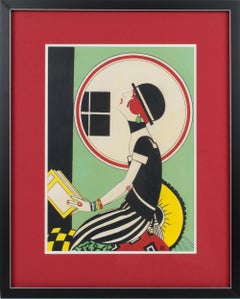
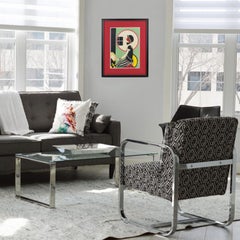
Art Deco Gouache Painting, Stylish Singer, Monogrammed FG, France, circa 1930

Art Deco Gouache Painting, Stylish Singer, Monogrammed FG, France, circa 1930

Located in Atlanta, GA

A striking Art Deco gouache on cardboard depicting a stylish singer captured in a bold, graphic modernist idiom. The figure—rendered with short red hair, a chic black hat, striped tr...

Category

Art Deco 1930s Portrait Drawings and Watercolors

Materials

Gouache, Board, Cardboard

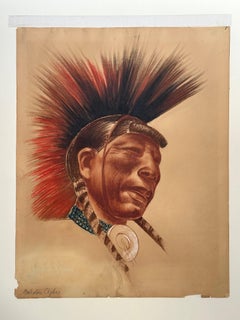
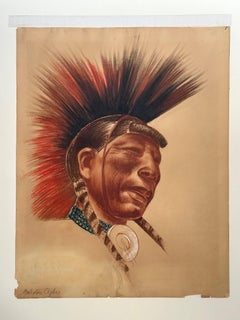
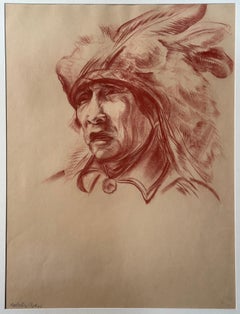
Taos (Timeless Ritual) Native American 1939 Indian Portrait Drawing

Taos (Timeless Ritual) Native American 1939 Indian Portrait Drawing

Located in Wilton Manors, FL

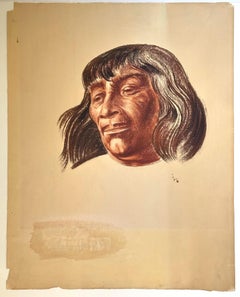
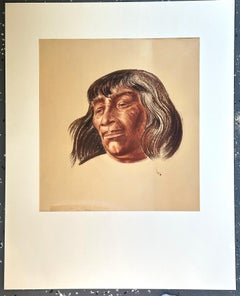
Boleslaw Cybis (1895-1957). Taos (Timeless Ritual), Indian Negro Series, 6 of 18. Conte on paper, sheet measures 18 x 23 inches. Small tear in sheet left margin. Evidence of alteration of image lower left where writing was probably removed before photographs require to create lithograph. The area has oxidized consequently. Signed by the artist some years after its creation in blue ink, lower left, ca. 1950's. the sheet is hinged at top margin, not glued down to backing board. Provenance: Cybis Archive. This original drawing was created in 1939-40 during an extensive visit to the Southwest US. The artist created 18 portraits and titled the series "Indian Negro Serie". Of the 18 images, 9 were selected to be included in a limited edition lithographic series some 30 years after creation. 1000 editions were printed. This is the original drawing upon which one of the images is based, and is thus unique. Of the 18 original drawings, 2 are owned by the polish government, 5 are in our collection and the other 11 are whereabouts unknown. The artist and his wife opened a porcelain factory in the 1950's, Cybis Studios. The only non-porcelain retail offering from the Cybis studio was a 1970s art issue called the Folio One. This was a limited edition reproduction series taken from nine conté drawings of Native Americans made by Boleslaw Cybis in 1939. Conté is the name of a type of crayon made of compressed charcoal or graphite mixed with wax or clay. The artist Georges Seurat was particularly fond of using conté for his drawings. Boleslaw Cybis was fascinated by the Native American (then typically referred to as American Indian) culture and peoples. This may seem odd when you consider that much of his ceramic-based works were distinctly Rococo and/or Old World European in style….a pretty stark contrast, I’d say! But Cybis was nothing if not eclectic in his tastes. The originals were reproduced as color lithographs, in an edition of 1000, in 1970. This meant “1000 of each individual print.” At present its original issue pricing is unknown, but a Spring 1972 dealer price list shows the full set of nine at $500. Individual prints could also be purchased at either $50 (for Comanche, Shoshone, or Apache) or $65 (for any of the other six)… representing a $40 savings when buying the entire folio at once versus singly. The Spring 1981 price list is the final one that shows the Folio One set for sale, still at the same price ($500) as it was a decade earlier. Individual prints are not available on that list. According to the 1979 Cybis catalog text “Each of the 12″ x 20″ prints is hand-numbered on heavy Beckett rag-content paper, with a specially designed validating hallmark in the lower right-hand corner, and carries an accompanying page with a brief tribal history.” The hallmark is blind-embossed, not surface printed. However, the Spring 1972 dealer price list cited above described the prints as being 17″ x 23″ in size. Checking past auction listings for the set, the actual prints are indeed 17″ x 23″, which means that the 12″ x 20″ size probably refers to the image area. The overall size of the set’s burlap-covered box is 18.5″ x 24.5″. These nine portraits represent seven different tribes: the Comanche, Shoshone, Taos, Apache, Hopi, Mohave, and Yuma. A bit of trivia is that only two of those tribes (Apache and Shoshone) were featured within the modern studio’s North American Indians porcelain...

Category

Realist 1930s Portrait Drawings and Watercolors

Materials

Paper, Conté

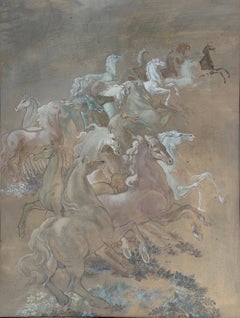
Unnamed Horses (Wild Horses)

Unnamed Horses (Wild Horses)

Located in Wilton Manors, FL

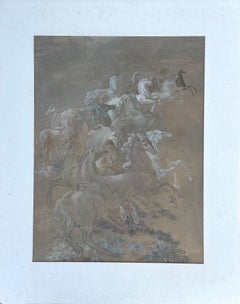
Boleslaw Cybis (1895-1957). Unnamed Horses (Wild Horses), ca. 1930's. Conte on paper, sheet measures 20 x 23 inches. Signed by the artist some years after its creation in blue ink...

Category

Art Deco 1930s Portrait Drawings and Watercolors

Materials

Paper, Gouache, Pencil

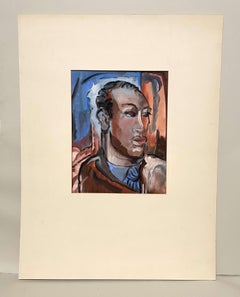
A Striking 1930s Modern Watercolor Portrait of a Distinguished Black Male Model

A Striking 1930s Modern Watercolor Portrait of a Distinguished Black Male Model

By Eugene Dana

Located in Chicago, IL

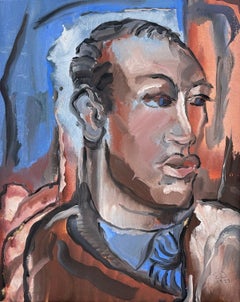
A striking 1930s American Modern portrait figure study watercolor of a distinguished, young African American male model by notable Chicago Institute of Design artist, Eugene Dana. W...

Category

American Modern 1930s Portrait Drawings and Watercolors

Materials

Paper, Watercolor

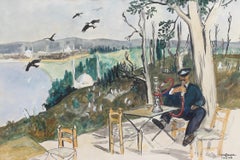
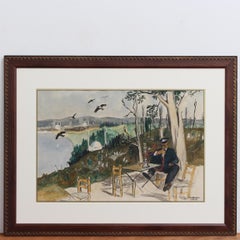
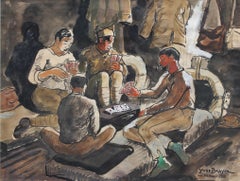
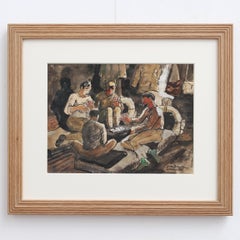
Man Smoking Shisha in Istanbul, Watercolor on Paper, Framed, 1930s

Man Smoking Shisha in Istanbul, Watercolor on Paper, Framed, 1930s

By Yves Brayer

Located in London, GB

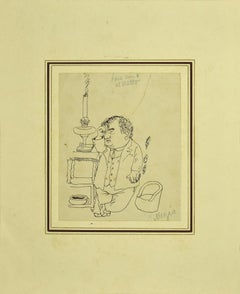
'Man Smoking Shisha in Istanbul', watercolour on art paper, by Yves Brayer (1933). So many historic elements grace this stunning depiction by celebrated French artist and world trave...

Category

1930s Portrait Drawings and Watercolors

Materials

Paper, Watercolor

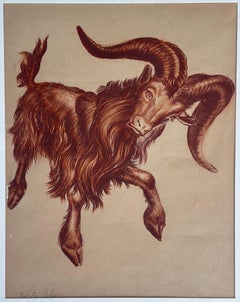
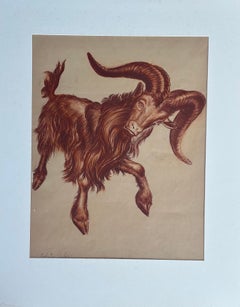
Prancing Ram (Taurus)

Prancing Ram (Taurus)

Located in Wilton Manors, FL

Boleslaw Cybis (1895-1957). Prancing Ram, ca. 1930's. Conte on paper, sheet measures 18 x 23 inches. Signed by the artist some years after its creation in blue ink, on verso botto...

Category

Art Deco 1930s Portrait Drawings and Watercolors

Materials

Paper, Conté

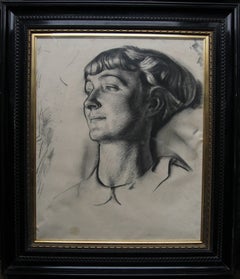
Portrait of a Young Woman - 1930's Art Deco portrait drawing British artist

Portrait of a Young Woman - 1930's Art Deco portrait drawing British artist

By James Stroudley

Located in Hagley, England

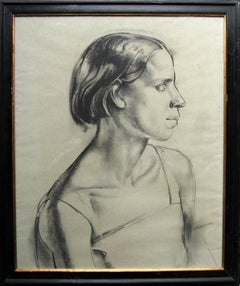
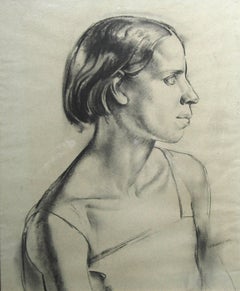
A fine large charcoal and pencil drawing by British listed artist James Stroudley. Executed in 1931, it is a stunning example of a 1930s Art Deco portrait. Very strong and bold, it d...

Category

Realist 1930s Portrait Drawings and Watercolors

Materials

Carbon Pencil

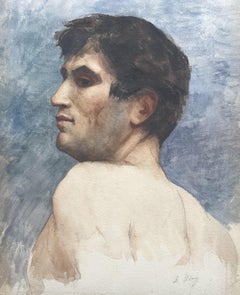
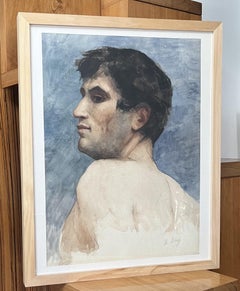
French School of the20th Century, Bust of a man viewed from behind, watercolor

French School of the20th Century, Bust of a man viewed from behind, watercolor

Located in Paris, FR

French School of the20th Century Bust of a man viewed from behind, signed on the lower right (unidentified signature, see detail photograph) watercolor on paper 46 x 34 cm In a very...

Category

French School 1930s Portrait Drawings and Watercolors

Materials

Watercolor

A Striking 1930s Modern, Art Deco Drawing, Portrait of a Young Woman, "Visage"

A Striking 1930s Modern, Art Deco Drawing, Portrait of a Young Woman, "Visage"

By Harold Haydon

Located in Chicago, IL

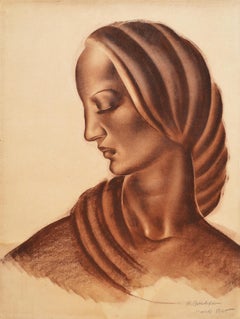
A Striking, 1930s Art Deco Modern Portrait Study of a Young Woman ("Visage") by Notable Chicago Artist, Harold Haydon (Am. 1909-1994). A finely drawn studio portrait reminiscent of ...

Category

American Modern 1930s Portrait Drawings and Watercolors

Materials

Paper, Charcoal

Portrait of a Man from the Rif Region

Portrait of a Man from the Rif Region

Located in Stockholm, SE

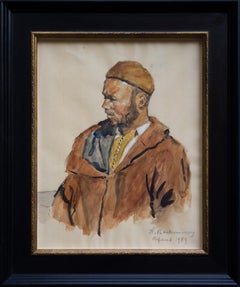
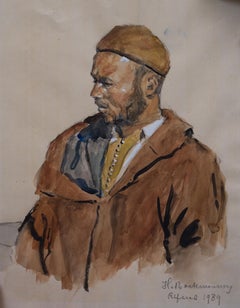
This watercolour portrait by Finnish artist Hugo Backmansson depicts an Arab man from the Rif region of Morocco. Created during Backmansson’s journey to Morocco in 1939, the work cap...

Category

1930s Portrait Drawings and Watercolors

Materials

Paper, Watercolor

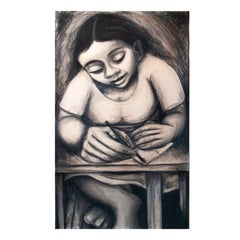
Large Charcoal Portrait Girl Writing Letter La Pensadora The Thinker Puerto Rico

Large Charcoal Portrait Girl Writing Letter La Pensadora The Thinker Puerto Rico

By Juan De Prey

Located in Portland, OR

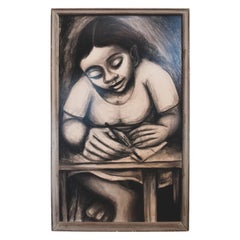
A large portrait by the celebrated Puerto-Rican American muralist artist Juan De'Prey (1904-1962), signed & titled "La Pensadora" (The Thinker), circa 1930. This painting is by...

Category

Outsider Art 1930s Portrait Drawings and Watercolors

Materials

Paper, Charcoal, Mixed Media

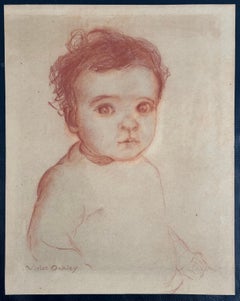
Portrait of a Baby
Portrait of a Baby

Portrait of a Baby

Located in Wilton Manors, FL

Violet Oakley (1896-1961). Portrait of a Baby, ca. 1930. Conte crayon and pencil on laid paper, sheet measuring 11 x 14 inches. Framed measurement: 13.5 x 16.5 inches. Signed low...

Category

Realist 1930s Portrait Drawings and Watercolors

Materials

Conté, Laid Paper

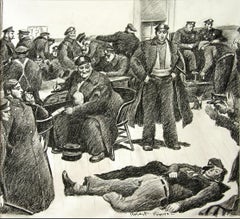
New York City Police Fortune Magazine Illustration

New York City Police Fortune Magazine Illustration

By Robert Riggs

Located in Miami, FL

This original illustration, titled "Cops at Ease in the Muster Room of a Station," is packed with character and detail and shows an unexpected and rare vision of the police in an off moment. Riggs unveils the real-life behind-the-scenes in this narrative work, which stylistically flaunts Riggs ' prodigious drawing skills. It accompanied the article Nineteen Thousand Cops published in the July 1939 issue of Fortune Magazine. This issue was dedicated to the city of New York and included a total of ten paintings by Riggs for this article on New York City's police department. Robert Riggs was a gay artist...

Category

Realist 1930s Portrait Drawings and Watercolors

Materials

Charcoal, Archival Paper

Portrait of a Lady, Charcoal Drawing, 20th Century Russian

Portrait of a Lady, Charcoal Drawing, 20th Century Russian

Located in London, GB

Charcoal , signed lower right and dated 'Paris 1935' Image size: 25 x 19 inches (63.5 x 48 cm) Original oak frame An accomplished example of Russian art from the mid 20th century. ...

Category

Art Deco 1930s Portrait Drawings and Watercolors

Materials

Charcoal, Paper

Apache (Image Makers) Native American 1939 Indian Portrait Drawing

Apache (Image Makers) Native American 1939 Indian Portrait Drawing

Located in Wilton Manors, FL

Boleslaw Cybis (1895-1957). Apache (Image Makers), Indian Negro Series, image #15 of 18 unique image that comprise the drawing series. Conte on paper, sheet measures 18 x 23 inche...

Category

Realist 1930s Portrait Drawings and Watercolors

Materials

Paper, Conté

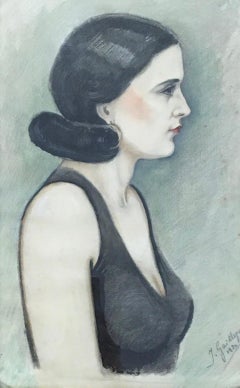
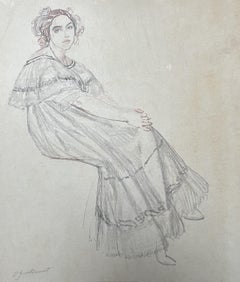
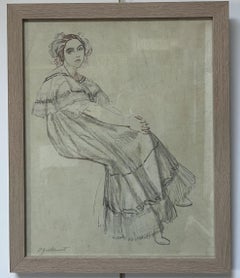
Octave Denis Victor Guillonnet (1872 - 1967)  A woman seated, drawing signed

Octave Denis Victor Guillonnet (1872 - 1967) A woman seated, drawing signed

By Octave Guillonnet

Located in Paris, FR

Octave Denis Victor Guillonnet (1872 - 1967) A young woman seated signed lower leftt Charcoal, red and white chalks on thin paper transfered on cardboard 49 x 39 cm Framed : 55.5 x ...

Category

Art Deco 1930s Portrait Drawings and Watercolors

Materials

Charcoal, Chalk

Comanche (Indomitable Spirit) Native American 1939 Indian Portrait Drawing

Comanche (Indomitable Spirit) Native American 1939 Indian Portrait Drawing

Located in Wilton Manors, FL

Boleslaw Cybis (1895-1957). Comanche (Indomitable Spirit) Indian Negro Series, image #8 of 18 unique image that comprise the drawing series. Conte on paper, sheet measures 18 x 23 inches. Signed by the artist some years after its creation in blue ink, lower left, ca. 1950's. The sheet is hinged at top margin, not glued down to backing board. The sheet has an encircled 1 notation on back signifying that it is the first of 9 images selected for the lithographic series. Provenance: Cybis Archive. This original drawing was created in 1939-40 during an extensive visit to the Southwest US. The artist created 18 portraits and titled the series "Indian Negro Serie". Of the 18 images, only 9 were selected to be included in a limited edition lithographic series some 30 years after creation. 1000 editions were printed. This is the original drawing upon which one of the images is based, and is thus unique. Of the 18 original drawings, 2 are owned by the polish government, 5 are in our collection and the other 11 are whereabouts unknown. The artist and his wife opened a porcelain factory in the 1950's, Cybis Studios. The only non-porcelain retail offering from the Cybis studio was a 1970s art issue called the Folio One. This was a limited edition reproduction series taken from nine conté drawings of Native Americans made by Boleslaw Cybis in 1939. Conté is the name of a type of crayon made of compressed charcoal or graphite mixed with wax or clay. The artist Georges Seurat was particularly fond of using conté for his drawings. Boleslaw Cybis was fascinated by the Native American (then typically referred to as American Indian) culture and peoples. This may seem odd when you consider that much of his ceramic-based works were distinctly Rococo and/or Old World European in style….a pretty stark contrast, I’d say! But Cybis was nothing if not eclectic in his tastes. The originals were reproduced as color lithographs, in an edition of 1000, in 1970. This meant “1000 of each individual print.” At present its original issue pricing is unknown, but a Spring 1972 dealer price list shows the full set of nine at $500. Individual prints could also be purchased at either $50 (for Comanche, Shoshone, or Apache) or $65 (for any of the other six)… representing a $40 savings when buying the entire folio at once versus singly. The Spring 1981 price list is the final one that shows the Folio One set for sale, still at the same price ($500) as it was a decade earlier. Individual prints are not available on that list. According to the 1979 Cybis catalog text “Each of the 12″ x 20″ prints is hand-numbered on heavy Beckett rag-content paper, with a specially designed validating hallmark in the lower right-hand corner, and carries an accompanying page with a brief tribal history.” The hallmark is blind-embossed, not surface printed. However, the Spring 1972 dealer price list cited above described the prints as being 17″ x 23″ in size. Checking past auction listings for the set, the actual prints are indeed 17″ x 23″, which means that the 12″ x 20″ size probably refers to the image area. The overall size of the set’s burlap-covered box is 18.5″ x 24.5″. These nine portraits represent seven different tribes: the Comanche, Shoshone, Taos, Apache, Hopi, Mohave, and Yuma. A bit of trivia is that only two of those tribes (Apache and Shoshone) were featured within the modern studio’s North American Indians porcelain...

Category

Realist 1930s Portrait Drawings and Watercolors

Materials

Paper, Conté

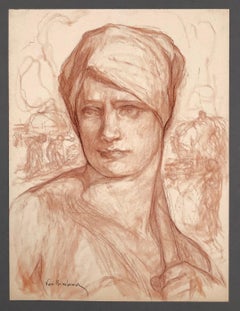
Head of a Man
Head of a Man

Head of a Man

By Victor Prouvé 1

Located in London, GB

Charcoal on paper, Signed (centre) 40cm × 29cm (57cm × 46cm framed) Victor Prouvé was a French painter, sculptor, and decorative artist known for his work in the Art Nouveau style ...

Category

Art Deco 1930s Portrait Drawings and Watercolors

Materials

Paper, Charcoal

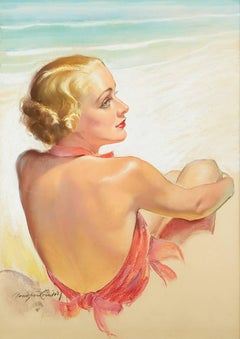
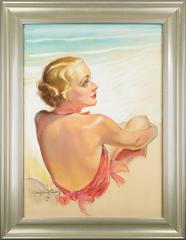
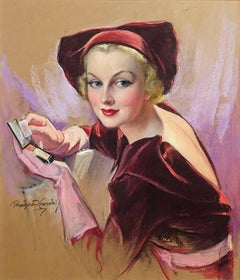
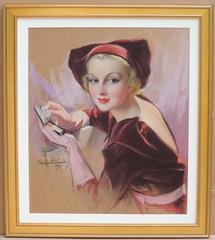
Bathing Beauty (Carole Lombard), Cover for Cosmopolitan

Bathing Beauty (Carole Lombard), Cover for Cosmopolitan

By Bradshaw Crandell

Located in Fort Washington, PA

Original cover for Cosmopolitan, published September 1935. Crandell (1896-1966) was the undisputed "artist of the stars," befriending and immortalizing Hollywood's most beautiful starlets in his portraits. Among his subjects were Bette Davis, Judy Garland, Carole...

Category

1930s Portrait Drawings and Watercolors

Materials

Paper, Pastel

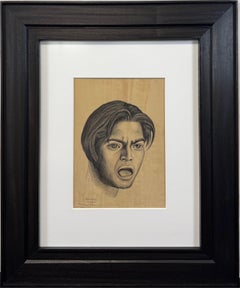
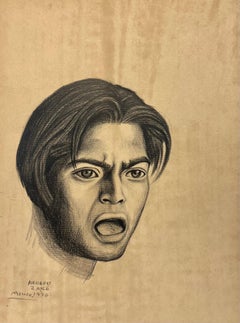
“Untitled (Head of a Young Man), 1936” Mexican Charcoal Drawing Study Signed

“Untitled (Head of a Young Man), 1936” Mexican Charcoal Drawing Study Signed

By Alfredo Zalce

Located in Yardley, PA

This striking early drawing by Zalce captures a young man at a moment of heightened emotion, his mouth open and brow furrowed in what reads as shock and defiance. Executed in 1936, a...

Category

Other Art Style 1930s Portrait Drawings and Watercolors

Materials

Paper, Charcoal

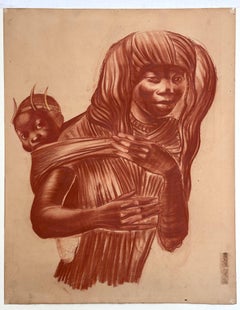
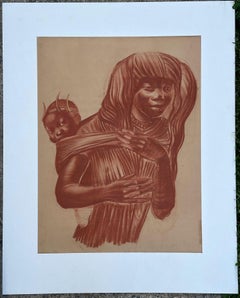
Mother and Child Native American 1939 Indian Portrait Drawing

Mother and Child Native American 1939 Indian Portrait Drawing

Located in Wilton Manors, FL

Boleslaw Cybis (1895-1957). Mother and Baby, Indian Negro Series, image #15 of 18 unique image that comprise the drawing series. Conte on paper, sheet measures 18 x 23 inches. Si...

Category

Realist 1930s Portrait Drawings and Watercolors

Materials

Paper, Conté

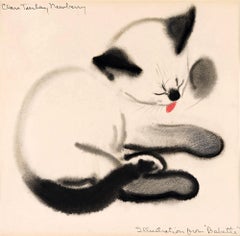
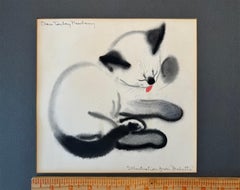
Babette the Cat Watercolor Drawing, American Impressionist, 1937

Babette the Cat Watercolor Drawing, American Impressionist, 1937

Located in Miami, FL

A stylized cat named Babette is depicted licking her paw. It is rendered in black and white, which bears the influence of Asian art in its simplicity of line, use of wash, and bleedi...

Category

American Impressionist 1930s Portrait Drawings and Watercolors

Materials

Paper, Pencil, Watercolor, Crayon

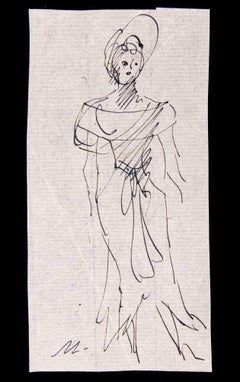
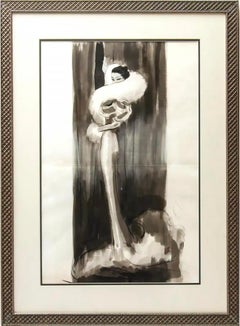
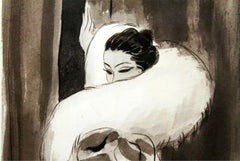
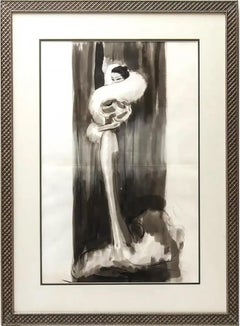
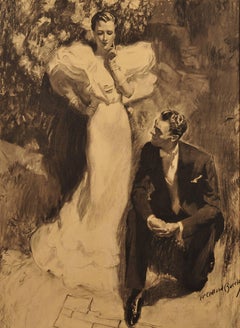
Art Deco Vogue Magazine Illustration

Art Deco Vogue Magazine Illustration

By Edouard Garcia Benito

Located in Miami, FL

Art Deco "Mademoiselle X" story illustration for Vogue February 1, 1934, watercolor and ink, reverse signed in pencil "Benito for Madame X," pencil inscription "Feb.1, 1934 / Page 51 / 316," accompanied by corresponding issue of Vogue magazine...

Category

Art Deco 1930s Portrait Drawings and Watercolors

Materials

Watercolor, Paper

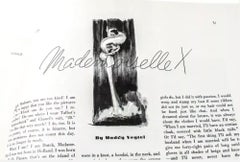
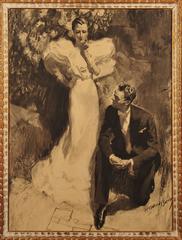
Vogue Magazine Illustration

Vogue Magazine Illustration

Located in Miami, FL

"Mademoiselle X" story illustration for Vogue February 1, 1934, watercolor and ink, reverse signed in pencil "Benito for Madame X," pencil inscription "Feb.1, 1934 / Page 51 / 316," ...

Category

Art Deco 1930s Portrait Drawings and Watercolors

Materials

Paper, Ink, Watercolor

Elegant Couple, Good Housekeeping Illustration

Elegant Couple, Good Housekeeping Illustration

By McClelland Barclay

Located in Fort Washington, PA

Date: 1934 Medium: Charcoal on Paper Dimensions: 34.00" x 25.00" Signature: Signed Lower Right Story illustration: Elegant couple considers floor plan drawn in the sand. “Benda finished explaining the house plan she had drawn in the sand. ‘But, Benda,’ Don said, examining it, ‘the place is not complete. Haven't you forgotten something?’ ‘That's all... I'm sure... Don,’ she answered softly.” Story illustration: “Between the Owl's Nest and a Rift in the Clouds”, author: Clara Hood Rugel, Good Housekeeping...

Category

1930s Portrait Drawings and Watercolors

Materials

Paper, Charcoal

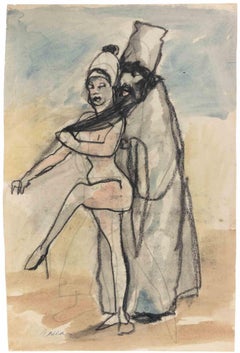
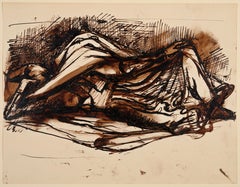
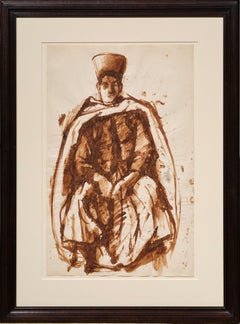
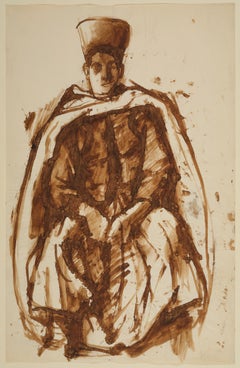
A preparatory study for the portrait of Spahi drawn by Pavel Tchelitchew in 1930

A preparatory study for the portrait of Spahi drawn by Pavel Tchelitchew in 1930

By Pavel Tchelitchew

Located in PARIS, FR

This vigorous ink wash study is preparatory to "Portrait of a Spahi," a 1931 painting reproduced (in black and white) in James Thrall Soby's book Tchelitchew: paintings, drawings—New...

Category

Art Deco 1930s Portrait Drawings and Watercolors

Materials

Paper, Ink

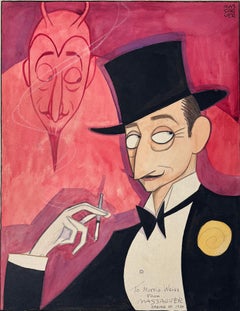
Cuban Artist  - Caricature of Adolphe Menjou Debonair Devil

Cuban Artist - Caricature of Adolphe Menjou Debonair Devil

Located in Miami, FL

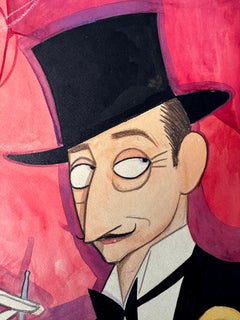
Framed Cuban Artist/Caricaturist Conrado Walter Massaguer presents Hollywood star Adolphe Menjou in a satirical dual portrait. In the foreground, the subject is seen in a dapper top hat, tux, fashionable cigarette and boutonnière, and is shown as being the epitome of being stylishly debonair. To make a larger point about this subject, Massaguer paints a cast shadow of Menjou as a burning red devil who studies his alter ego from above. Keeping with the artist's sarcasm, we see the good and bad in one image. Works by Massaguer are rare and this work is in keeping with his signature style. This work was most likely done on assignment for Life Magazine, Cosmopolitan, The New Yorker or Vanity Fair. Signed upper right. Inscribe lower right. Titled on verso. Unframed, Slight bend to board; toning to board; scattered faint foxing; pin point abrasions to margins, not affecting image. 19-1/2 x 15-1/8 inches board size. Conrado Walter Massaguer y Diaz was a Cuban artist, political satirist, and magazine publisher. He is considered a student of the Art Nouveau. He was the first caricaturist in the world to broadcast his art on television.He was first caricaturist to exhibit on Fifth Avenue. He was the first caricaturist in the world to exhibit his caricatures on wood. He, and his brother Oscar, were the first magazine publishers in the world to use photolithographic printing. Self portrait of Conrado Walter Massaguer, depicted on a carrousel ride, with the devil over his left shoulder and an angel over his right. (1945) He created the magazine Social with his brother Oscar to showcase Cuban artistic talent. The duo later created the magazine Carteles, which became for a period the most popular magazine in Cuba, which was purchased by Miguel Ángel Quevedo in 1953. In his life, he met and drew caricatures of Franklin D. Roosevelt, Walt Disney, Albert Einstein, the King of Spain, and many others.[ In sum total, he was the author of more than 28 thousand caricatures and drawings.Ernest Hemingway once had to refrain himself from punching Massaguer in the face after the artist drew an unflattering caricature of him. The dictator Gerardo Machado, however, did not punch Massaguer for his own unflattering caricature - he had the artist deported. He was one of the most internationally renowned Cuban artists of his day, and his art is still regularly featured in galleries across the Western Hemisphere and Europe. Early life Massaguer was born on October 18, 1889, in Cárdenas, Cuba.[In 1892, his family moved to Havana. When the Cuban War of Independence broke out, Massaguer's family escaped the country. From 1896 to 1908, he lived in Mérida, Mexico. However, during this time, his parents enrolled him in the New York Military Academy, where he stayed during school years. In 1905, after graduating the military academy, he briefly attended the San Fernando school in Havana, where he was tutored by Ricardo de la Torriente and Leopoldo Romañach. In 1906, less than a year later, he returned to the family home in Mexico. Career as artist Early career While living in Yucatán, Mexico, Massaguer published his first caricatures in local newspapers and magazines. These included La Campana, La Arcadia, and the Diario Yucateco. In 1908, he moved back to Havana. After returning to the island in 1908, Massaguer began mingling with Havana's aristocratic circles, forming close friendships with some of the city's most powerful and influential men, as well as winning the favor of many women who were quickly charmed by him. Massaguer, largely self-taught, honed his style using the avant-garde techniques he studied from the European and American magazines that were widely available in Cuba at the time. Cover of the immensely popular Cuban magazine El Figaro, drawn by Massaguer in 1909. This cover depicts two bumbling, incompetent American tourists to the island. He started drawing for El Fígaro, and was featured prominently on the cover in 1909. After two years of refining his craft, Havana announced a poster contest aimed at attracting North American tourists to stay in the city during the winter months. Notable figures like Leopoldo Romañach, Armando Menocal, Rodríguez Morey, Jaime Valls, and others also entered the competition. The jury was particularly impressed by the modern execution and creative solution of one piece, signed by Massaguer, who was relatively unknown at the time. The jury deliberations caused a great controversy.[5] The prize was ultimately awarded to the Galician painter Mariano Miguel, who had recently married the daughter of Nicolás Rivero, the wealthy owner of the conservative newspaper Diario de la Marina. Although Massaguer received only an honorable mention, the fraud scandal caused such an uproar that his name quickly entered the public spotlight, and he became an overnight sensation. In 1910, he became co-owner of the advertising agency Mercurio, with Laureano Rodríguez Castells. At Mercurio, he led the Susini cigar campaign, and earned substantial wealth. Massaguer has been described as a restless man, in both mind and body.After earning enough money from his art to begin traveling, he was almost always doing so. He constantly traveled between New York City and Havana, Mexico and France, Europe and the Americas. In 1911, his reputation among the Havana socialites solidified when he organized his own first public caricature exhibit, and also the first Caricature Salon ever held in the Americas, hosted at Athenaeum of Havana (the Ateneo), and the Círculo de La Habana. Other exhibitors here included Maribona, Riverón, Portell Vilá, Valer, Botet, Barsó, García Cabrera, Carlos Fernández, Rafael Blanco, and Hamilton de Grau. "Messaguer Visits Broadway." Caricatures of theatrical and literary figures. Elsie Janis, Raymond Hitchcock, S. Jay Kaufman (columnist), Ibanez, author of The Four Horsemen, and Frances White In 1912, in the New York American Journal, he published his first Broadway drawings. From 1913 to 1918, he was an editor for Gráfico. Social Main article: Social (magazine) Cover of the magazine Social, July 7, 1923 In 1916, he created the magazine Social with his brother, Oscar H. Massaguer. Social's contributors included Guillén Carpentier, Chacón y Calvo, Enrique José Varona and others.Social has been described as Massaguer's great love in the magazine industry, and was the property that historians say he cared the most about. Social was an innovative magazine, being the first magazine in the world to use a modern printing process called photolithographic printing. Social set cultural trends, not only in the fashion of Cuba, but in art, politics, and Cuban identity.[11] Social catered to a certain aesthetic in Cuba - that of the sophisticated elite socialite - but Massaguer would also use this magazine to ridicule and jibe against that same class of society when he found their personalities worthy of his contempt. In Social, readers could find a variety of content, including short stories, avant-garde poetry, art reviews, philosophical essays, and serialized novels, as well as articles on interior design, haute couture, and fashion. Occasionally, the magazine also featured reports on sports such as motor racing, rowing, tennis, and horse riding.The cultural promotion efforts of both Massaguer and Emilio Roig de Leuchsenring are evident in the magazine. Notably, this period overlaps with their involvement in the Minorista Group, which was then at the forefront of the country's intellectual life.[5] Many contributors were devoted members of the group, leading some experts to consider Social as the cultural voice of the Minoristas. One of the features of Social magazine was its section called "Massa Girls," which was a play on his own name, and pronounced with a glottal 'g' in a similar fashion to the letter in Massaguer.[12] Massaguer drew women as independent and free-thinking, and never drew the woman celebrity as a caricature of herself, but as a free agent surrounded by caricatures.[11] However, Massaguer himself has been described as a womanizer in his personal life, and hesitant to fully embrace every facet of women's liberation. In 1916, he also established la Unión de Artes Gráficas and the advertising agency Kesevén Anuncios.[9] The art critic Bernardo González Barroa wrote: “Massaguer has solved the problem of working hard, living comfortably off what his art produces and not missing any artistic, sporting or social event. His broad, childish laugh, of a carefree individual who carries his luck hidden in a pocket, appears everywhere for the moment, disguising the pranks of pupils that lurk, mock and, finally, flash with satisfaction at finding the characteristic point after having analyzed a soul... Massaguer's personality is beginning to solidify now. He has been the best-known and most popular caricaturist for a long time, but his technique had not reached the security, the mastery of values that he presents in his latest works, which is very natural and explainable”[5] Carteles Main article: Carteles Cover of the magazine Carteles, November 29, 1931 In 1919, Massaguer and his brother created the magazine Carteles.[9] Carteles gained the widest circulation of any magazine in Latin America, and the most popular magazine in Cuba for a time, until that title was claimed by Revista Bohemia. Carteles remained in print until July 1960.This magazine showcased Cuban commerce, art, sports, and social life before the revolution. In 1924, Carteles took a more political turn, with articles criticizing Gerardo Machado's government. it became a prime example of the humor and graphic design employed by artists like Horacio Rodríguez Suria and Andrés García...

Category

Art Nouveau 1930s Portrait Drawings and Watercolors

Materials

Ink, Watercolor, Illustration Board
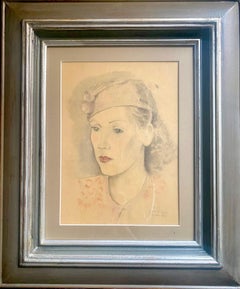
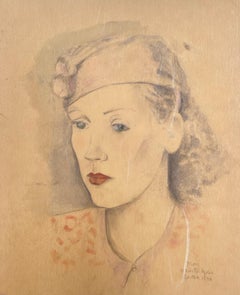
Beautiful May, Boston, 1936: intimate art deco modernistportrait of young woman

Beautiful May, Boston, 1936: intimate art deco modernistportrait of young woman

By Mariette Lydis

Located in Norwich, GB

A rare and captivating original portrait drawing by Mariette Lydis, executed during her important 1936 journey to America. This work showcases Lydis’s mastery of line, colour, and p...

Category

Art Deco 1930s Portrait Drawings and Watercolors

Materials

Paper, Chalk, Watercolor, Graphite

Art Deco Automobile Exhibition Drawing, Pencil on Paper, 1930s, Framed

Art Deco Automobile Exhibition Drawing, Pencil on Paper, 1930s, Framed

Located in Miami, FL

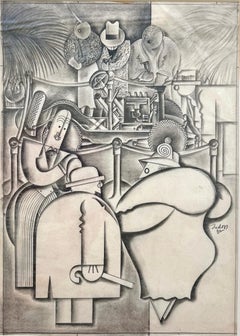
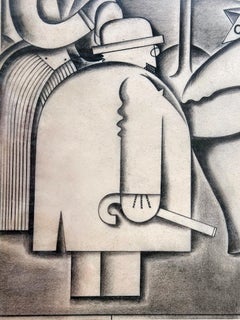
Legendary Life Magazine Art Director and Illustrator Charles Tudor depicts a vibrant 1930s Automobile Exhibition. In the background, four onlookers are shown studying a vehicle. At ...

Category

Art Deco 1930s Portrait Drawings and Watercolors

Materials

Pencil, Paper, Graphite

Yuma (Vanished Dreams), Native American 1939 Indian Portrait Drawing

Yuma (Vanished Dreams), Native American 1939 Indian Portrait Drawing

Located in Wilton Manors, FL

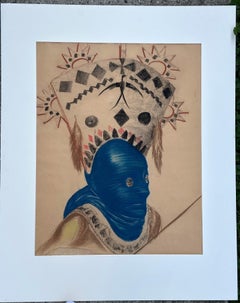
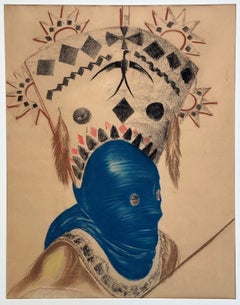
Boleslaw Cybis (1895-1957). Yuma (Vanished Dreams), Indian Negro Series, image #7 of 18 unique image that comprise the drawing series. Conte on paper, sheet measures 18 x 23 inches. Unsigned. Staining lower left is a consequence of removal of writing prior to lithographic photography process. Small hole on paper, lower region, patched with white tape. The sheet is hinged at top margin, not glued down to backing board. The sheet has an 9 notation on back signifying that it is the 9th and final image selected for the lithographic series. Provenance: Cybis Archive. This very unusual portrait is titled Apache ‘Image Makers’ and depicts the ritual Devil Dancer or Spirit Dancer headdress and fully-swathed face. In Apache culture and legend, the Devil Dancer is a somewhat mischievous although benevolent spirit. This original drawing was created in 1939-40 during an extensive visit to the Southwest US. The artist created 18 portraits and titled the series "Indian Negro Serie". Of the 18 images, only 9 were selected to be included in a limited edition lithographic series some 30 years after creation. 1000 editions were printed. This is the original drawing upon which one of the images is based, and is thus unique. Of the 18 original drawings, 2 are owned by the polish government, 5 are in our collection and the other 11 are whereabouts unknown. The artist and his wife opened a porcelain factory in the 1950's, Cybis Studios. The only non-porcelain retail offering from the Cybis studio was a 1970s art issue called the Folio One. This was a limited edition reproduction series taken from nine conté drawings of Native Americans made by Boleslaw Cybis in 1939. Conté is the name of a type of crayon made of compressed charcoal or graphite mixed with wax or clay. The artist Georges Seurat was particularly fond of using conté for his drawings. Boleslaw Cybis was fascinated by the Native American (then typically referred to as American Indian) culture and peoples. This may seem odd when you consider that much of his ceramic-based works were distinctly Rococo and/or Old World European in style….a pretty stark contrast, I’d say! But Cybis was nothing if not eclectic in his tastes. The originals were reproduced as color lithographs, in an edition of 1000, in 1970. This meant “1000 of each individual print.” At present its original issue pricing is unknown, but a Spring 1972 dealer price list shows the full set of nine at $500. Individual prints could also be purchased at either $50 (for Comanche, Shoshone, or Apache) or $65 (for any of the other six)… representing a $40 savings when buying the entire folio at once versus singly. The Spring 1981 price list is the final one that shows the Folio One set for sale, still at the same price ($500) as it was a decade earlier. Individual prints are not available on that list. According to the 1979 Cybis catalog text “Each of the 12″ x 20″ prints is hand-numbered on heavy Beckett rag-content paper, with a specially designed validating hallmark in the lower right-hand corner, and carries an accompanying page with a brief tribal history.” The hallmark is blind-embossed, not surface printed. However, the Spring 1972 dealer price list cited above described the prints as being 17″ x 23″ in size. Checking past auction listings for the set, the actual prints are indeed 17″ x 23″, which means that the 12″ x 20″ size probably refers to the image area. The overall size of the set’s burlap-covered box is 18.5″ x 24.5″. These nine portraits represent seven different tribes: the Comanche, Shoshone, Taos, Apache, Hopi, Mohave, and Yuma. A bit of trivia is that only two of those tribes (Apache and Shoshone) were featured within the modern studio’s North American Indians porcelain...

Category

Realist 1930s Portrait Drawings and Watercolors

Materials

Paper, Conté

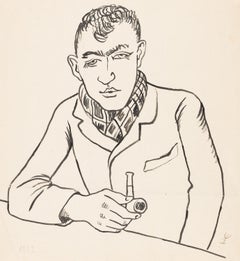
Man with pipe
Man with pipe

Man with pipe

By August Wilhelm Dressler

Located in Wien, 9

August Dressler is one of the painters of the New Objectivity. He is one of the lesser-known artists of the Weimar era, but he too, like his famous contemporaries Georg Grosz, John H...

Category

Modern 1930s Portrait Drawings and Watercolors

Materials

Ink, Watercolor

The Court Ladies Dressed Gerda - Women Illustrators

The Court Ladies Dressed Gerda - Women Illustrators

Located in Miami, FL

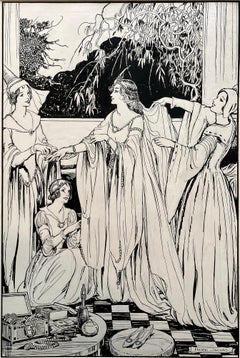
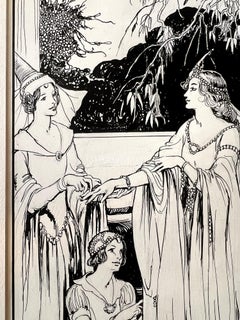
Women illustrators were alive, well, and quite active in the early 20th century. Most of their production was associated with topics that dealt with the home, children or fairy tales. In this masterfully rendered work in pen and ink, Jacobs displays great technical skill in presenting three maidens dressing a beautiful female member of the Court wearing a tiara. Signed in a cartouche lower right From: Stella Mead, Great Stories from Many Lands, London: James Herbert and Co, 1936, page 78 " Red and White Roses" Provenance: Chris Beetles Work is elegantly matted and not framed. Helen Mary Jacobs was born in Ilford, Essex, the sister of the writer W.W. Jacobs; she studied art at the West Ham...

Category

Art Nouveau 1930s Portrait Drawings and Watercolors

Materials

Ink, Pencil, Paper

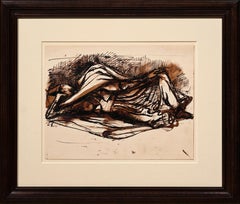
Portrait of Leopold Myers by Sir William Rothenstein

Portrait of Leopold Myers by Sir William Rothenstein

By Sir William Rothenstein

Located in Soquel, CA

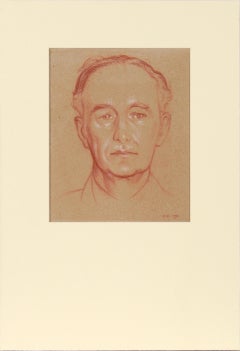
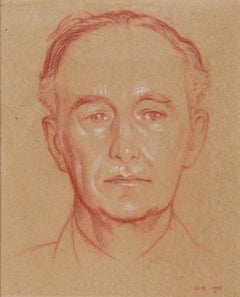
Stately sanguine portrait of Leopold Hamilton Myers (Novelist) by Sir William Rothenstein (English, 1872-1945). Captured in Rothenstein's characteristic style, Myers looks directly at the viewer with a neutral expression. Although this portrait uses only two colors and minimal shading, the likeness of Myers is incredibly well captured. Leo (Leopold) Hamilton Myers (1881 – 1944) was a British novelist. Numerous examples like this one of the writer are in the Tate Museum. Initialed and dated in the lower right corner ("W.R. 1936") Inscription on verso indicating materials, subject, and artist. Presented in a new cream colored mat with foamcore backing. Mat size: 18"H x 12"W Paper size: 15.25"H x 10.75"W William Rothenstein (English, 1872-1945) was born into a German-Jewish family in Bradford, West Yorkshire. His father, Moritz, emigrated from Germany in 1859 to work in Bradford's burgeoning textile industry. Soon afterwards he married Bertha Dux, and they had six children, of which William was the fifth. Rothenstein was knighted in 1931. Rothenstein left Bradford Grammar School at the age of sixteen to study at the Slade School of Art*, London (1888-1893), where he was taught by Alphonse Legros, and the Académie Julian* in Paris (1889-1893), where he met and was encouraged by James McNeill Whistler, Edgar Degas and Henri Toulouse-Lautrec. Whilst in Paris he also befriended the Anglo-Australian artist Charles Conder, with whom he shared a studio in Montmartre. In 1893 he returned to England to work on "Oxford Characters" a series of lithographic* portraits. In Oxford he met and became a close friend of the caricaturist* and parodist Max Beerbohm, who later immortalised him in the short story Enoch Soames (1919). During the 1890s Rothenstein exhibited with the New English Art Club* and, in 1900, won a silver medal for his painting The Doll's House at the Exposition Universelle. In 1898 he co-founded the Carfax Gallery in St. James' Piccadilly with John Fothergill. During its early years the gallery was closely associated with such artists as Charles Conder, Philip Wilson Steer, Charles Ricketts and Augustus John. It also exhibited the work of Auguste Rodin, whose growing reputation in England owed much to Rothenstein's friendship and missionary zeal. The gallery was later the home for all three exhibitions of The Camden Town Group*, led by Rothenstein's friend and close contemporary Walter Sickert. Rothenstein is best known for his portrait drawings of famous individuals and for being an official war artist in both World War I and World War II. He was also a member of the International Society of Sculptors, Painters & Gravers. The style and subject of his paintings varies, though certain themes reappear, in particular an interest in 'weighty' or 'essential' subjects tackled in a restrained manner. Good examples include Parting at Morning (1891), Mother and Child (1903) and Jews Mourning at a Synagogue (1907) - all of which are owned by the Tate Gallery. The National Portrait Gallery owns over two hundred of his portraits. In 2011 the BBC and the Public Catalogue Foundation began cataloguing all of his paintings in public ownership online. Between 1902 and 1912 Rothenstein lived in Hampstead, London, where his social circle included such names as H.G.Wells, Joseph Conrad and the artist Augustus John. Amongst the young artists to visit Rothenstein in Hampstead were Mark Gertler...

Category

Realist 1930s Portrait Drawings and Watercolors

Materials

Conté, Handmade Paper

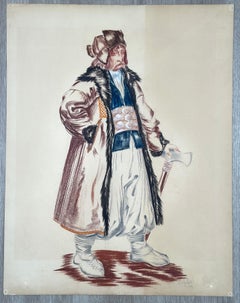
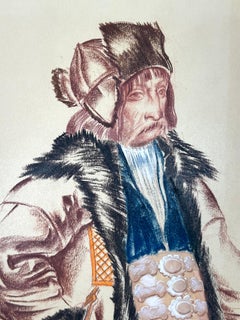
16th-century Traditional Historical Polish Male Dress Peasant Attire

16th-century Traditional Historical Polish Male Dress Peasant Attire

Located in Wilton Manors, FL

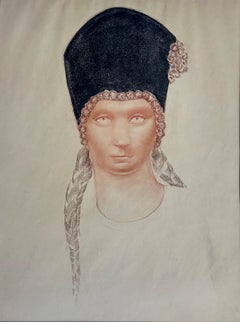
Boleslaw Cybis (1895-1957). Polish Peasant, 16th-century Attire, 1939. Conte and gouache with pencil on paper, sheet measures 18 x 23 inches. Signed by the artist and dated bottom...

Category

Art Deco 1930s Portrait Drawings and Watercolors

Materials

Paper, Crayon, Gouache, Pencil

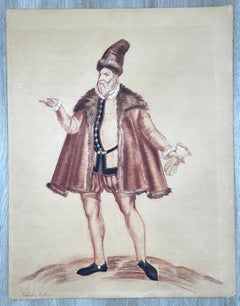
16th-century Traditional Historical Polish Male Dress Attire

16th-century Traditional Historical Polish Male Dress Attire

Located in Wilton Manors, FL

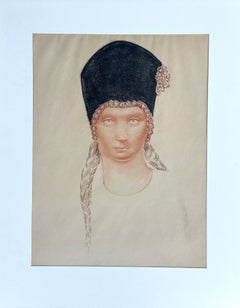
Boleslaw Cybis (1895-1957). Polish Merchant, 16th-century Attire, 1939. Conte and gouache with pencil on paper, sheet measures 18 x 23 inches. Signed by the artist and dated botto...

Category

Art Deco 1930s Portrait Drawings and Watercolors

Materials

Paper, Gouache, Pencil, Crayon

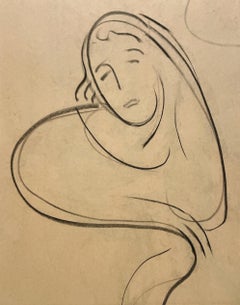
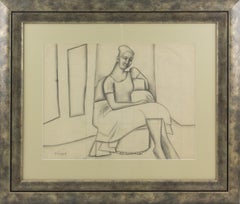
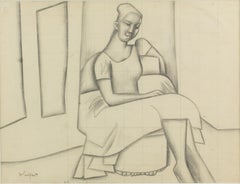
Art Deco Cubist Woman Study Black Pencil Drawing by Wouyart

Art Deco Cubist Woman Study Black Pencil Drawing by Wouyart

Located in Atlanta, GA

An engaging modernist pencil study of a seated woman by French artist Wouyart (20th Century). The figure is rendered with a refined economy of line, where traced contours, subtle sha...

Category

Cubist 1930s Portrait Drawings and Watercolors

Materials

Paper, Pencil, Carbon Pencil

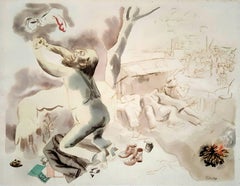
Christus am Oelberg - Christ on the Mount of Olives

Christus am Oelberg - Christ on the Mount of Olives

By George Grosz

Located in Miami, FL

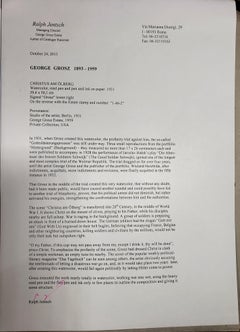
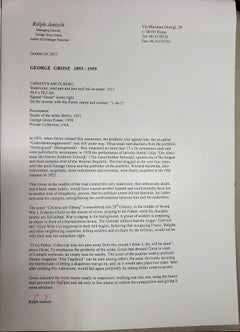
This work is accompanied by a Photo-certificate and essay from Ralph Jentsch who will include it in his forthcoming catalogue raisonné Signed lower right. Estate stamp on v...

Category

Dada 1930s Portrait Drawings and Watercolors

Materials

Ink, Watercolor

Mathieu Rosianu, Men, portrait, ink on paper, circa 1935

Mathieu Rosianu, Men, portrait, ink on paper, circa 1935

By Mathieu Rosianu

Located in PARIS, FR

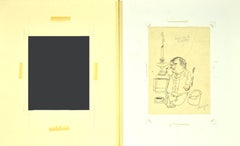
Mathieu (Matei) ROSIANU (1897-1969) Man, circa 1935 Ink on paper (thin paper) Stamp lower right 20,5 × 13 cm Born in Bucharest in 1897 to an officer in the Romanian National Guard a...
Category

1930s Portrait Drawings and Watercolors
Materials

Ink

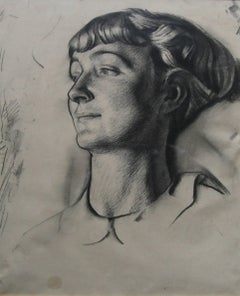
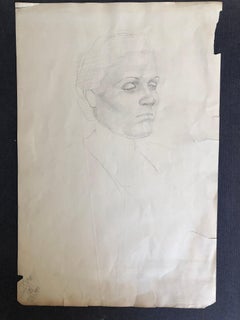
Portrait of a Young Woman - Art Deco charcoal pencil drawing

Portrait of a Young Woman - Art Deco charcoal pencil drawing

By James Stroudley

Located in Hagley, England
A fine large charcoal and pencil drawing on paper by British listed artist James Stroudley. Executed in 1931, it is a stunning example of a 1930s Art Deco portrait. Very strong and b...

Category

Art Deco 1930s Portrait Drawings and Watercolors

Materials

Charcoal, Carbon Pencil

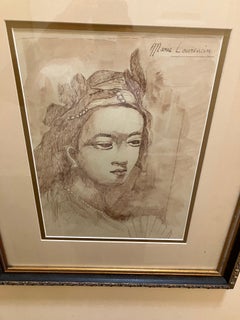
Marie Laurencin Lady with Fan

Marie Laurencin Lady with Fan

By Marie Laurencin

Located in San Francisco, CA

Marie Laurencin: 1883-1956. Very well listed French artist who has had Auction results as high as $187,000 for a watercolor and ink on paper. Although she is best known for her color...

Category

French School 1930s Portrait Drawings and Watercolors

Materials

Mixed Media

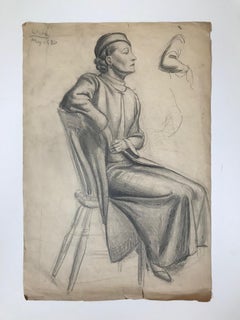
Untitled: 1930s Drawing Of  A Seated Woman

Untitled: 1930s Drawing Of A Seated Woman

Located in New York, NY

Unidentified Artist, "Untitled: 1930s Drawing of a Seated Woman", Signed Figurative Pencil Drawing on Paper, 21 x 13.88, Early 20th Century, 1936 Colors: Black and White *Unknown Artist signature...

Category

Academic 1930s Portrait Drawings and Watercolors

Materials

Pencil

Christus am Oelberg - Christ on the Mount of Olives

Christus am Oelberg - Christ on the Mount of Olives

By George Grosz

Located in Miami, FL

This work is accompanied by a Photo-certificate and essay from Ralph Jentsch who will include it in his forthcoming catalogue raisonné Signed lower right. Estate stamp on verso....

Category

Dada 1930s Portrait Drawings and Watercolors

Materials

Ink, Watercolor

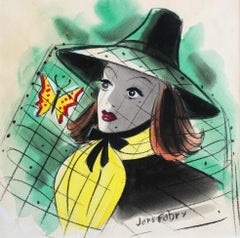
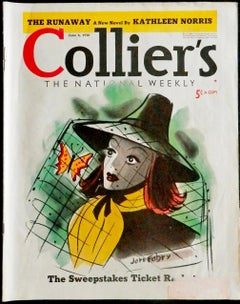
Woman with a butterfly in her hat sees herself. Colliers Magazine Cover

Woman with a butterfly in her hat sees herself. Colliers Magazine Cover

By Jaro Fabry

Located in Miami, FL

This is a brilliant and charming cover concept, with an attractive young woman staring at a beautiful butterfly caught in the netting of her hat. The butterfly's yellow and red color...

Category

Art Deco 1930s Portrait Drawings and Watercolors

Materials

Watercolor, Gouache, Board