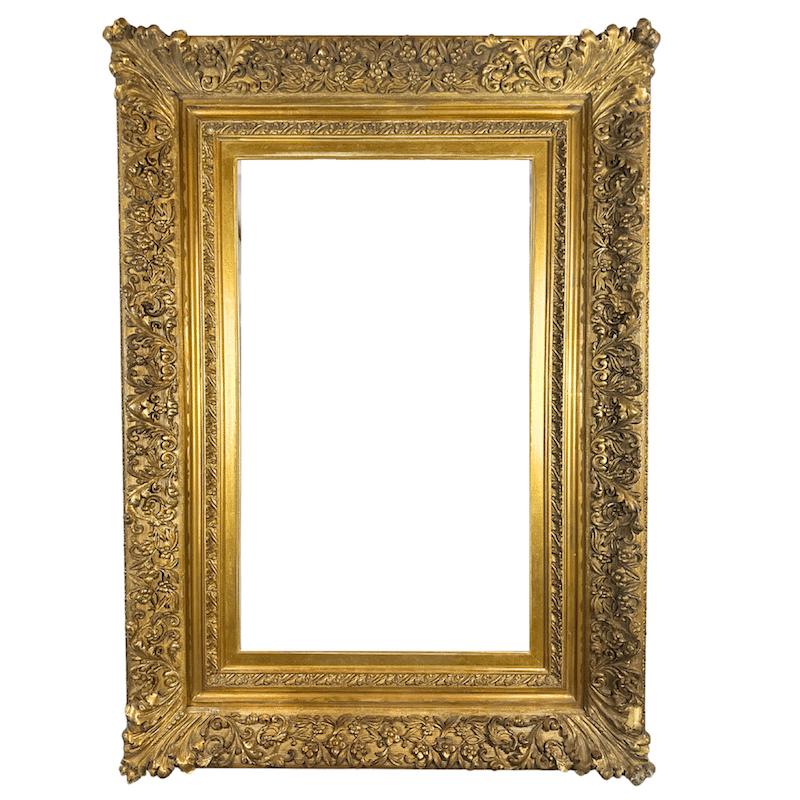
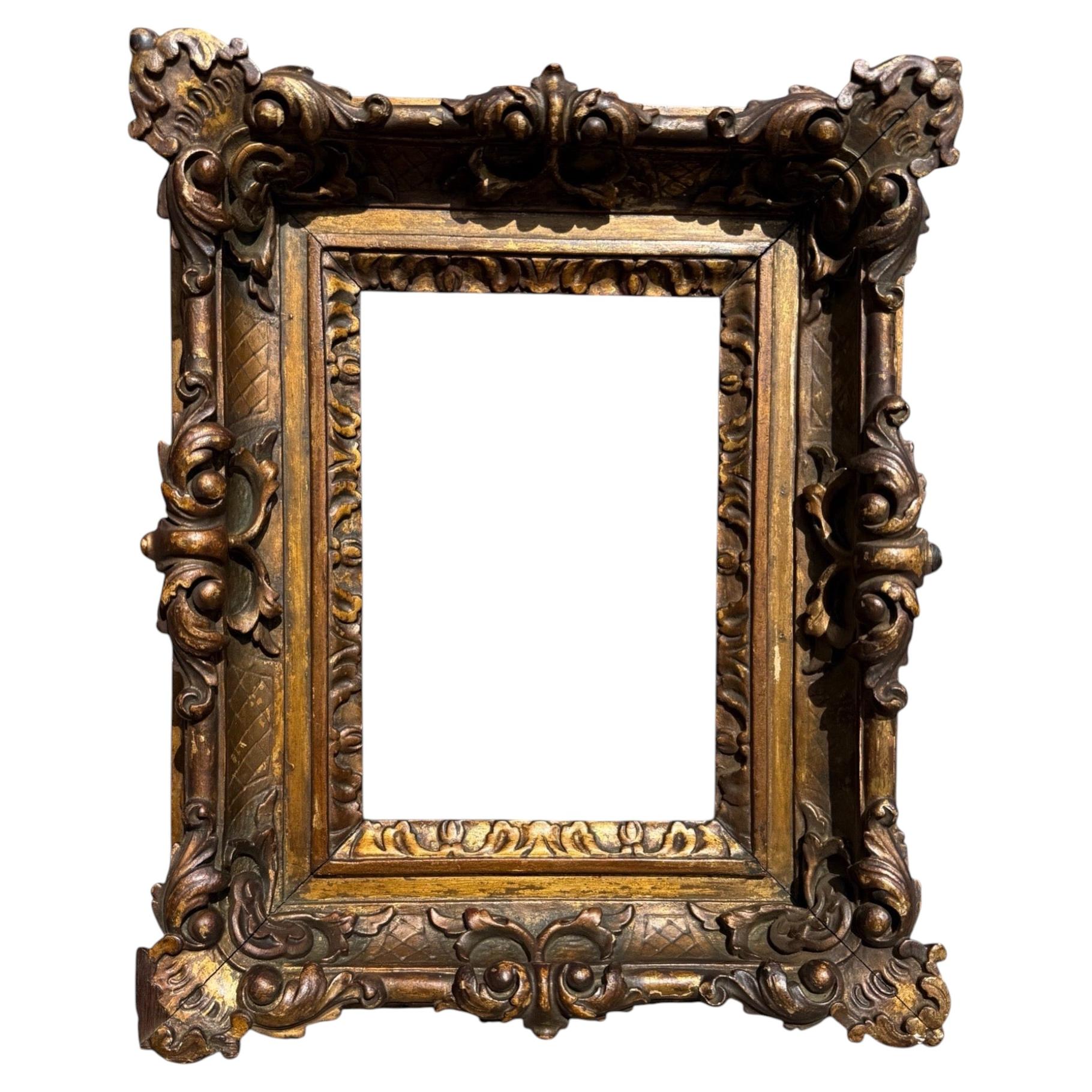
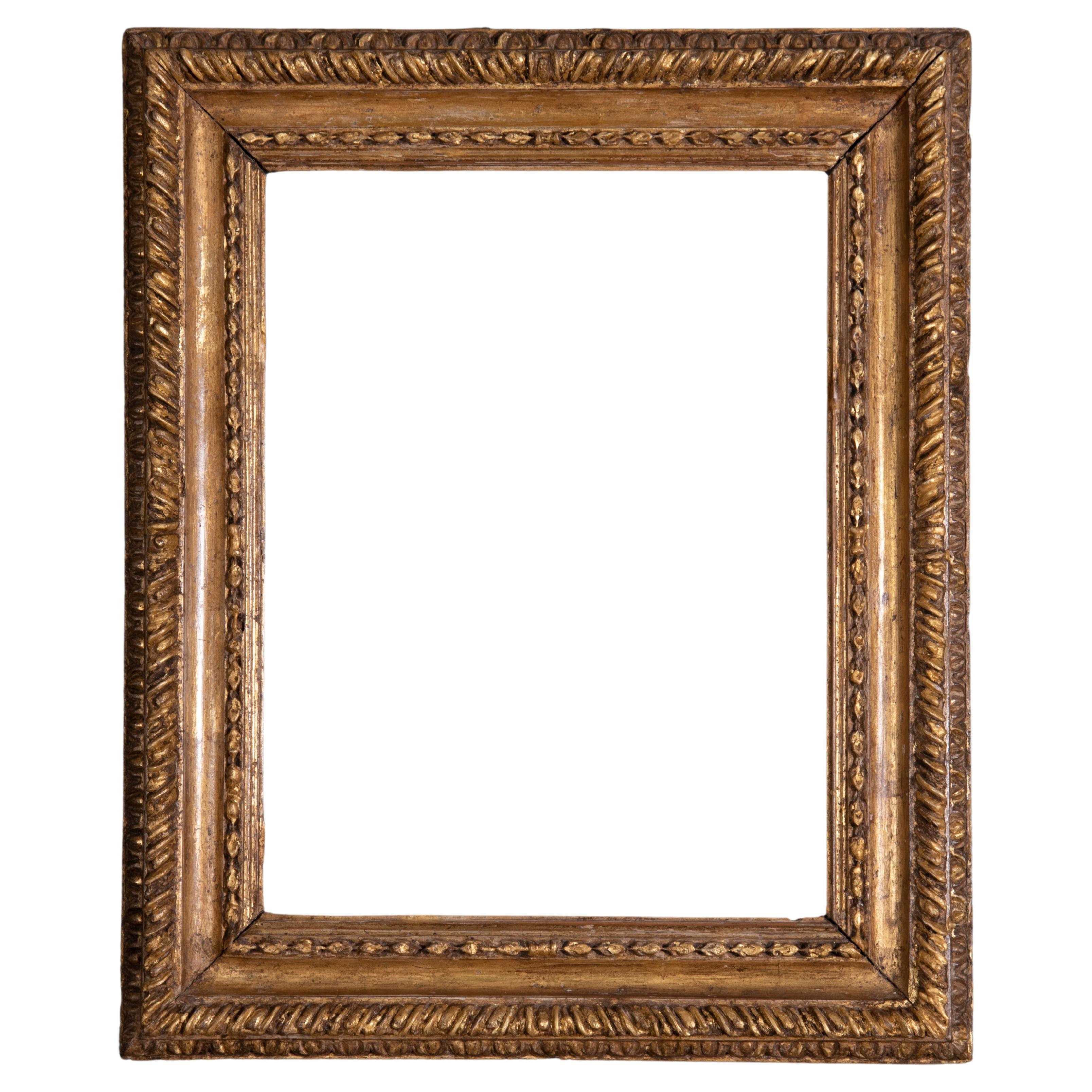
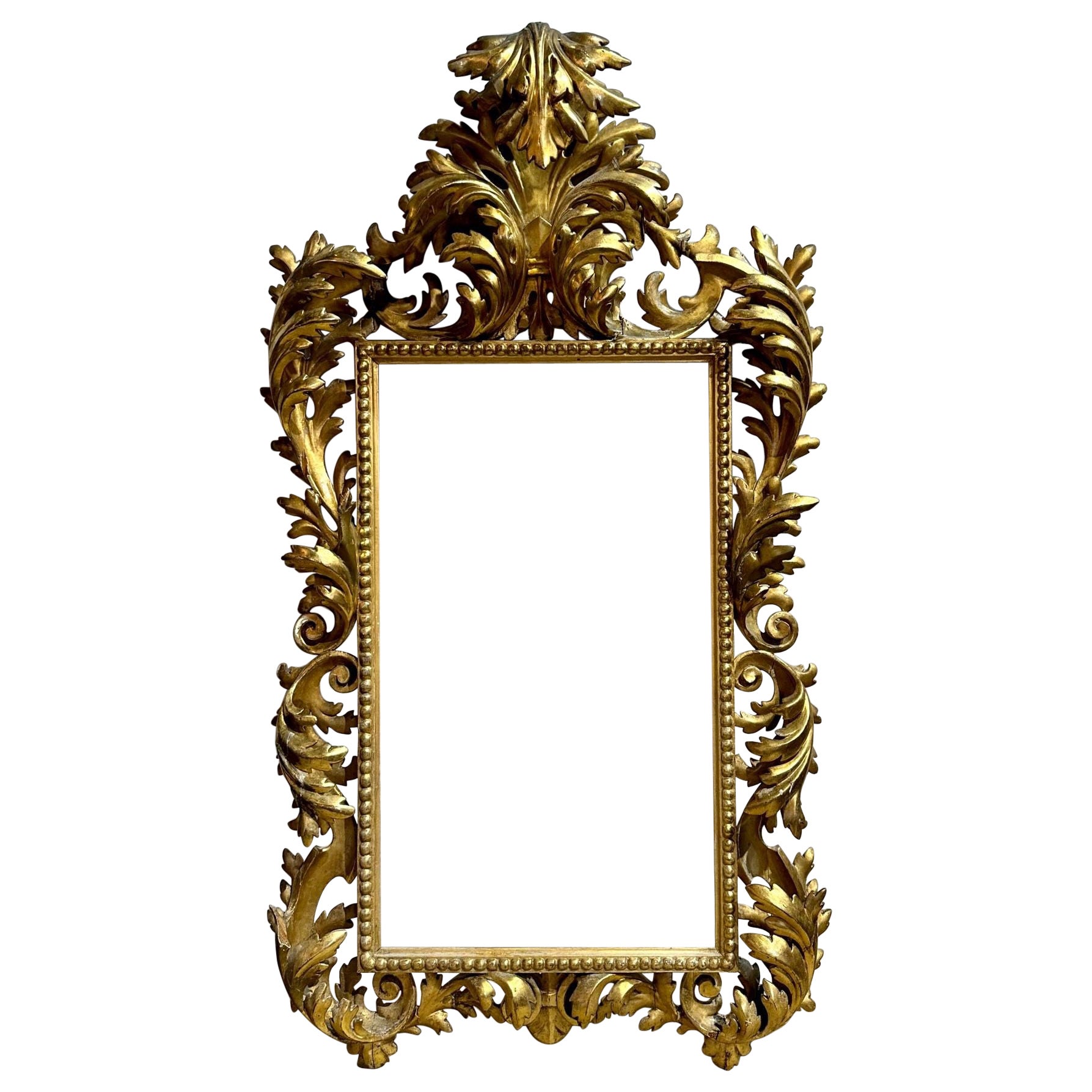
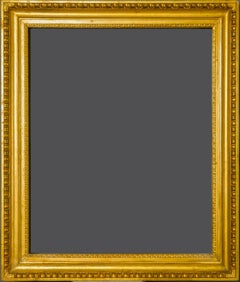
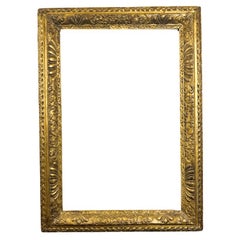
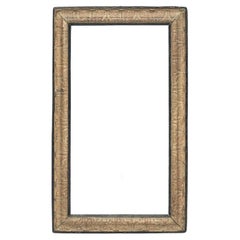
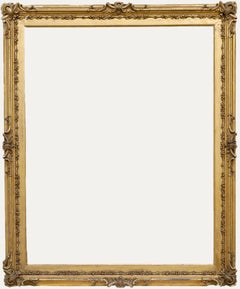
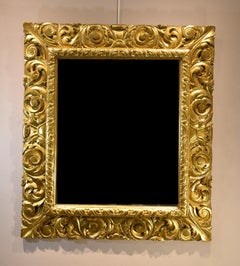
A marvellous and extremely rare frame crafted using the papier-mâché technique.
It features beautiful leaf-inspired ornamental motifs that make this mirror frame a small work of art. It is entirely covered in pure gold leaf.
It can be used both as a frame for antique artworks of various sizes, which can be accommodated using a passe-partout, and as a beautiful and prestigious mirror.
Internal dimensions cm 70.2 x 59.5
This artwork, never before on the market, comes from an important Florentine private collection
Our company has been present on this platform for many years, with more than 100 sales made and just as many excellent reviews received that you can under our Furniture account.
Regarding the papier-mâché technique Raffaele Casciaro tells us that “…in Bernini’s Rome colossal sets of wood and papier-mâché and grandiose structures, such as the lost but well-documented carnival cart by Bernini for Agostino Chigi and… especially in Florence, versatile workshops, from the time of Lorenzo Ghiberti to that of Andrea Verrocchio, with the crucial figure of Donatello in between, experimented with almost all available materials… the sculptors of the next generation used papier-mâché frequently.”
It is to this tradition of the Florentine school that we owe our two sculptures.
On the topic of the scenes built by Gianlorenzo Bernini, Professor Salerno adds to our knowledge. “There is nothing left of the production of works that were, with rare exception, immediately destroyed. Among those for decorations in papier-mâché… we have Bernini’s Carnival cart made for Agostino Chigi in 1658, of which we have documents about payments.”
Regarding the decorative system as a whole, we can deduce from the documents that they were in golden and silver papier-mâché: “four large flesh-colored papier-mâché cherubs with two natural heads of hair and garlands of silk roses, masks and more” and then “eight festoons of golden papier-mâché pods” and “papier-mâché loops with as many turbans for the Moors.”
Another Bernini student, Giovanni Paolo Schor, received payments in 1687 for the lamps of the San Marcello procession; the sculptor created the sketches and then the papier-mâché.”
What does this all mean? This means that the ateliers, even those of great artists, made works and sculptures in papier-mâché, which explains the almost museum quality of our sculptures.
As Paolo Biscottini tells us “…while initially we were all sure that papier-mâché sculpture had, in some cases, its own, autonomous artistic value, in the course of our work, we recognized exactly the opposite: except for some cases of true and noble craftsmanship … it is legitimate and indeed necessary to talk about papier-mâché as a its own genre of sculpture, with excellent results in the work of artists surely better known for the use of other materials.”
Here, Professor Biscottini is undoubtedly referring to the papier-mâché works of great marble sculptors such as Jacopo Sansovino, Donatello, and Lorenzo Ghiberti in the Renaissance.
In the Baroque era, we can mention Gianlorenzo Bernini himself and Alessandro Algardi; two of their important papier-mâché sculptures are found in the Civic Museum Palazzo della Penna in Perugia in the Martinelli collection.
The distinguished scholar Carlo Stefano Salerno tells us that papier-mâché was used …to make models by Gianlorenzo Bernini … for two of the four statues of angels made for St. Peter’s Baldachin, documented with a later payment to Bernini for the clay models, and ‘as payment for the papier-mâché angels of said Altar’.
Of the four angels, therefore, two were made in raw clay … and two with the papier-mâché technique …
This type of process, therefore, illustrates the relationships between the sculptor responsible for the invention and the molders and papier-mâché artisans who translated that invention into finished works.”
In terms of the technical procedure, Salerno continues, ”We start from an internal structure on which the volumes are gradually built up and on which the individual parts are molded; face, hands and feet are applied; the sheets of paper are then applied in successive steps, which are shaped freely during the making, which does not make serial copies but artifacts each different from the other.”
Under existing legislation, any artwork created over 70 years ago by an artist who has died can requires a license for export regardless of the work’s market price. The shipping may require additional handling days to require the license according to the destination of the artwork.