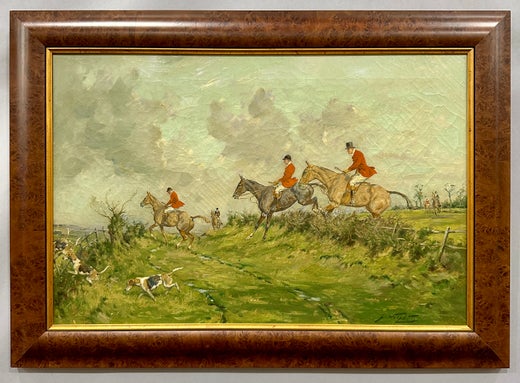
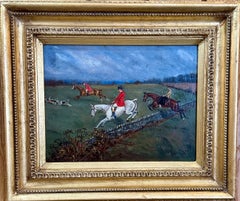
George Wright, British, 1860–1942Over the FenceFox-Hunting SceneOil on canvas, circa 1910Signed lower rightPresented in a burr walnut frame with gilt inner slip
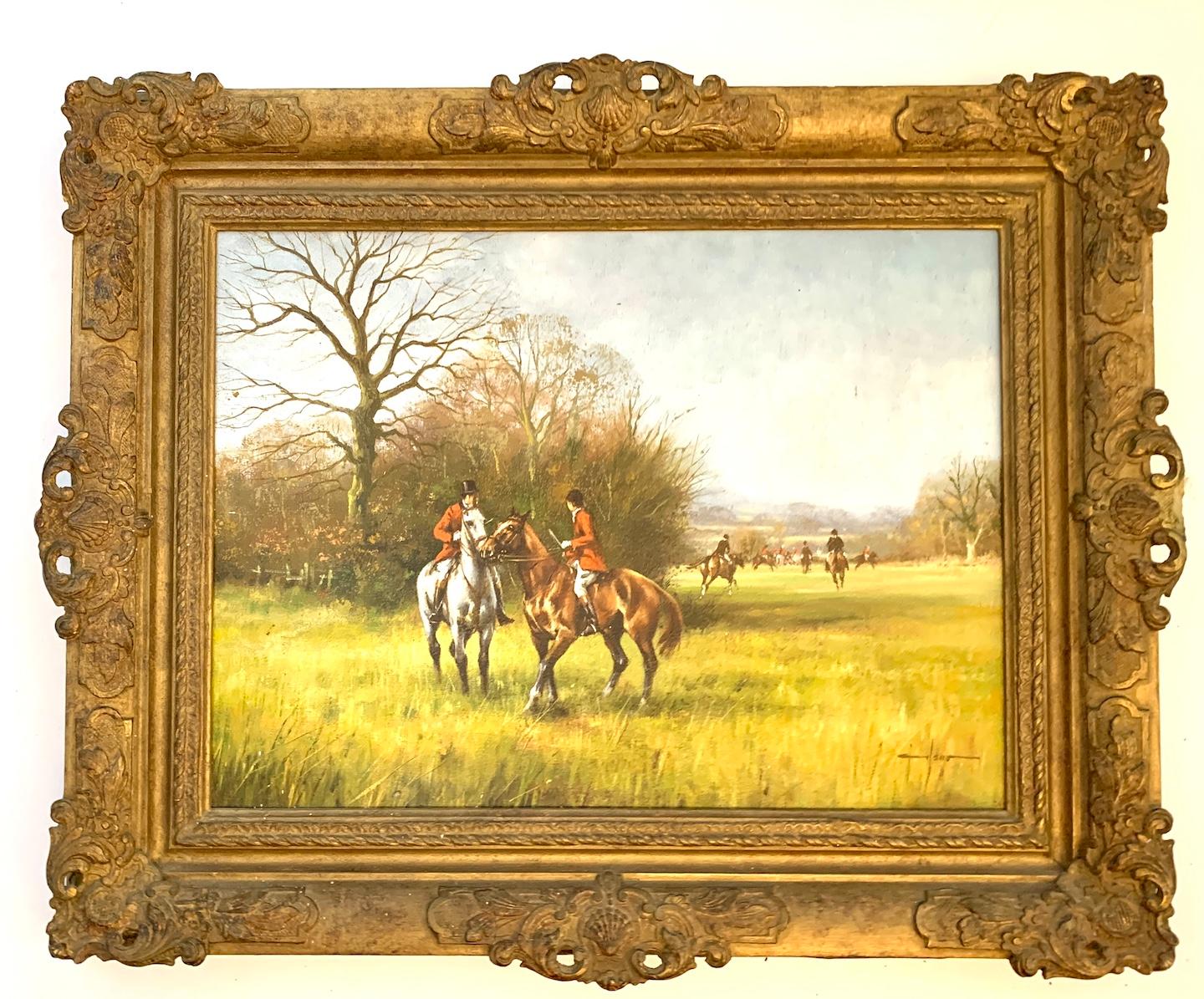
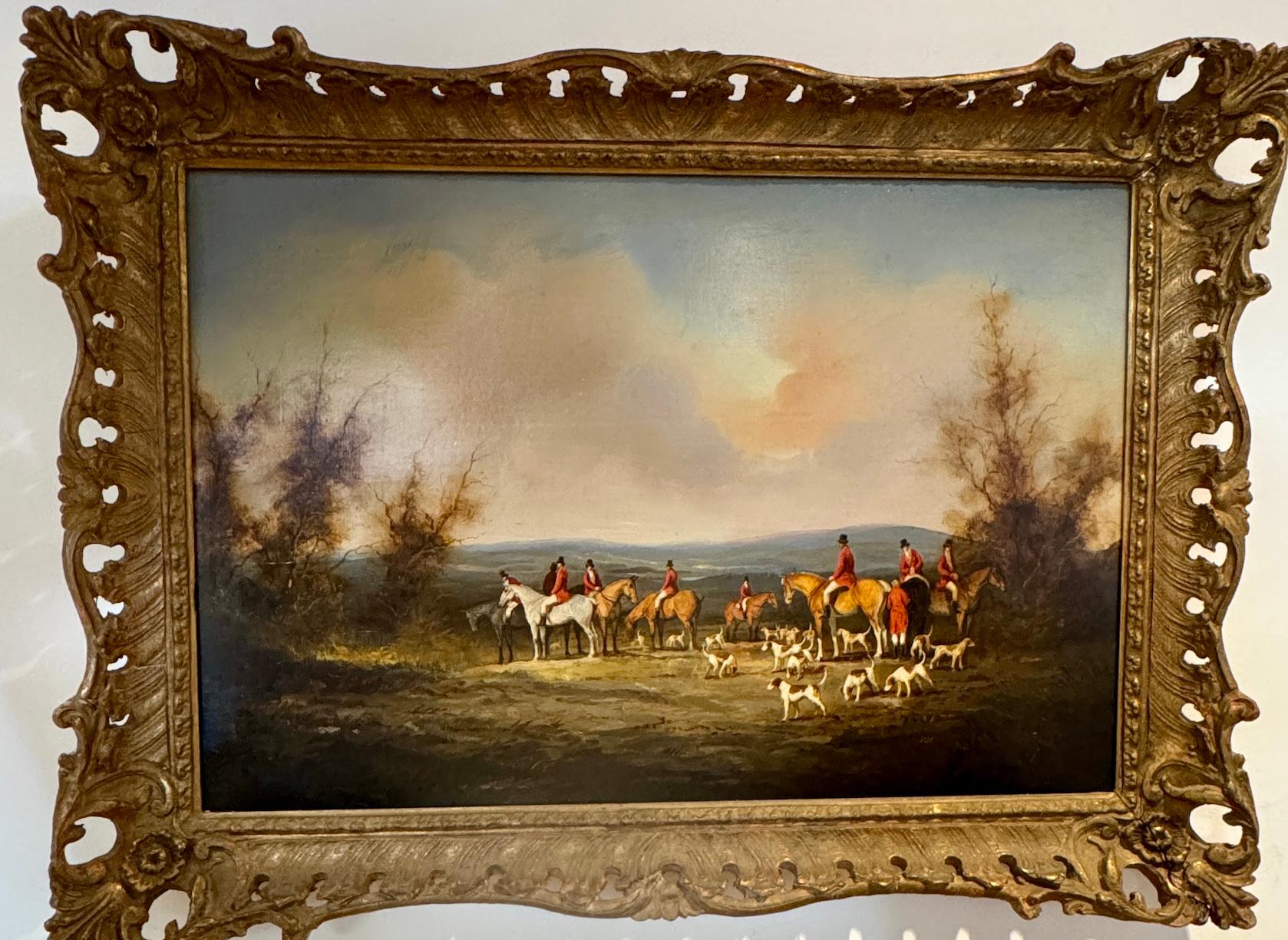
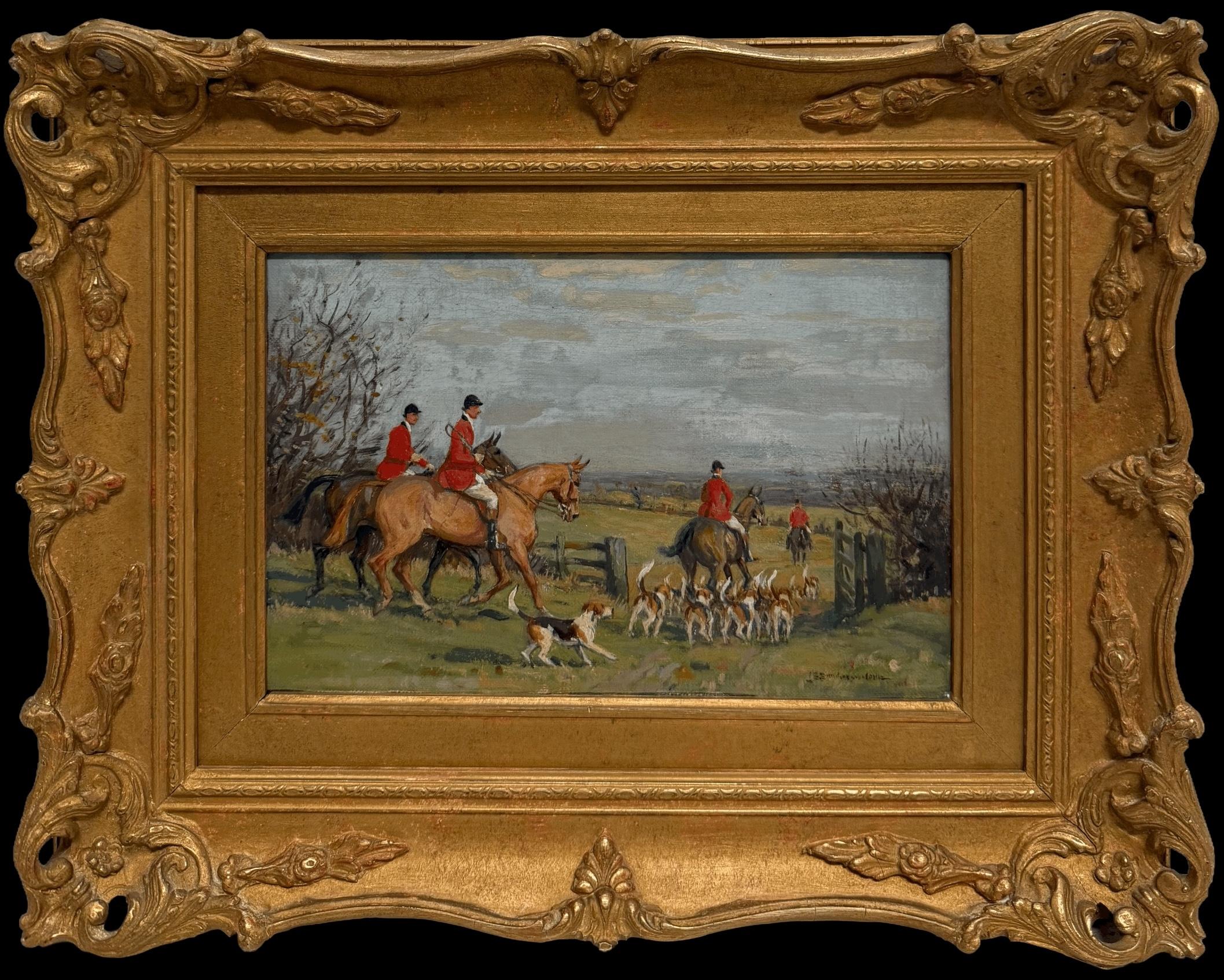
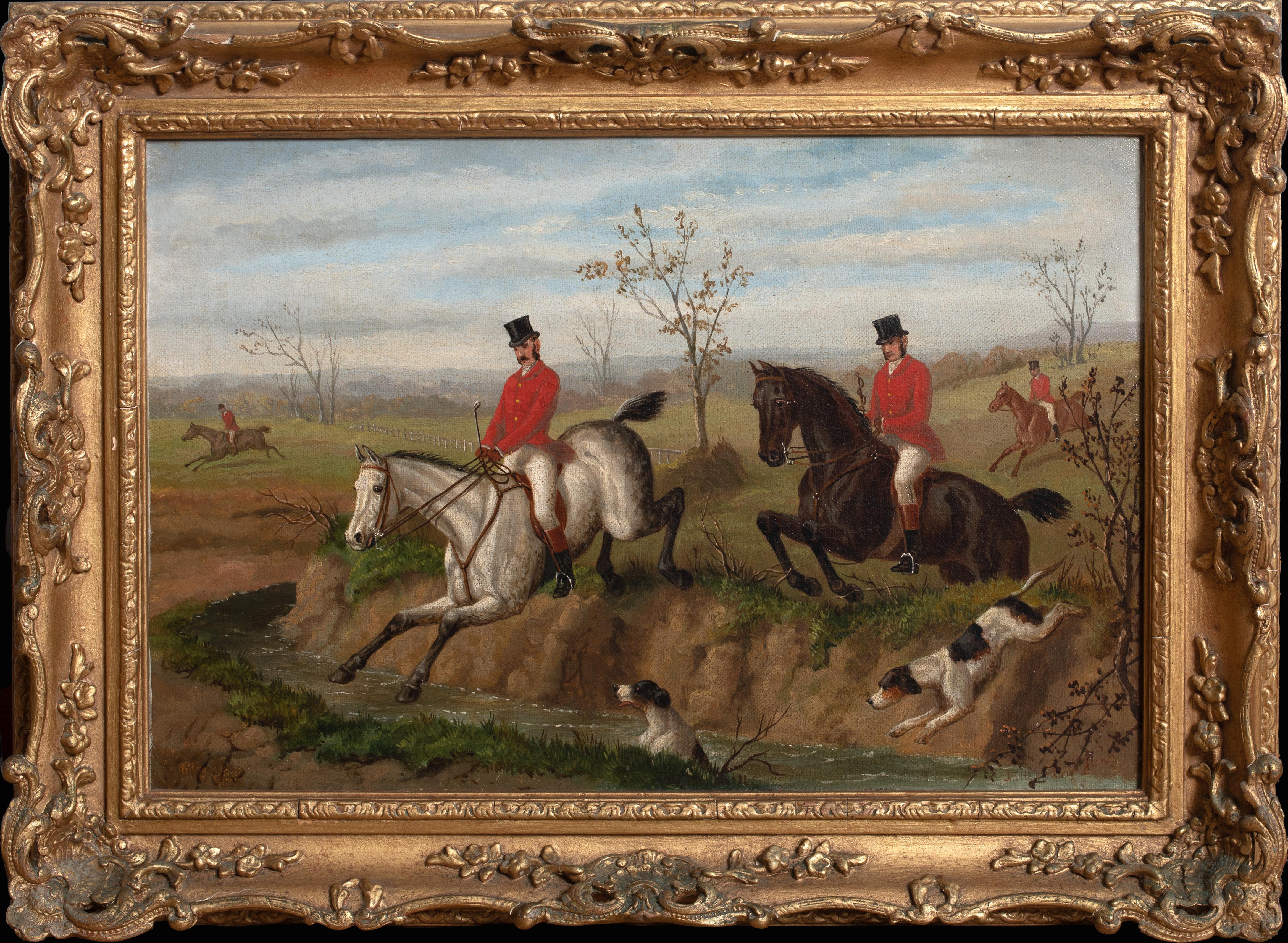
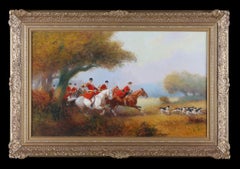
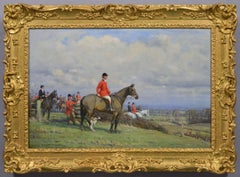
This spirited early twentieth-century sporting painting by George Wright captures the excitement and elegance of an English fox hunt in full pursuit. Painted around 1910, Over the Fence depicts a succession of mounted huntsmen crossing open countryside as the hounds race ahead through the foreground. Combining accomplished equestrian painting with an expansive rural landscape, the work exemplifies the enduring appeal of British sporting art during the late Victorian and Edwardian periods.
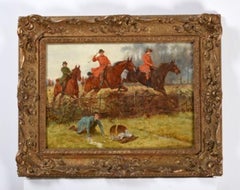
At the centre of the composition, two riders in traditional scarlet hunting coats approach and clear a substantial hedge, their horses shown at different stages of the jump. The foremost grey horse descends confidently onto the sloping ground, while the larger chestnut immediately behind remains momentarily suspended above the obstacle. To the left, another rider gallops onward after successfully negotiating the fence, creating a continuous sweep of movement across the canvas. Further members of the hunt appear in the middle and far distance, suggesting the scale of the gathering and extending the pursuit deep into the surrounding countryside.
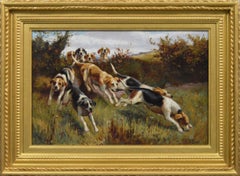
In the foreground, a group of hounds moves eagerly across the grass, their lowered heads and outstretched bodies conveying both speed and purpose. Wright carefully balances the compact energy of the pack with the larger forms of the horses above, establishing a convincing relationship between animals, riders and terrain. The varied poses of the horses are particularly effective, each one contributing to the unfolding narrative while demonstrating the artist’s close familiarity with equestrian movement.
The landscape is painted with broad, expressive handling. Rough grasses, hedgerows and broken fencing define the undulating ground, while the distant fields dissolve gently beneath an expansive, cloud-filled sky. The restrained greens, ochres and soft greys of the countryside provide a harmonious setting for the vivid scarlet coats of the huntsmen, which form a rhythmic sequence of colour across the composition. Light falls softly over the scene, giving the painting an atmospheric quality while preserving the immediacy and drama of the chase.
George Wright was among the most accomplished British sporting painters working around the turn of the twentieth century. He became particularly admired for hunting, coaching and equestrian subjects, frequently portraying horses and riders in moments of vigorous action. His paintings continued the great tradition of English sporting art established during the eighteenth and nineteenth centuries, while their fluid brushwork and lively compositions gave them a distinctly modern Edwardian character. Rather than presenting the hunt as a static record, Wright sought to convey its speed, atmosphere and social pageantry.
Fox hunting occupied a prominent position within British country life and remained a particularly popular subject for sporting artists. Paintings of the hunt celebrated not only horsemanship and rural tradition but also the drama of riders and horses negotiating the natural obstacles of the landscape. In Over the Fence, Wright chooses one of the most visually compelling moments of the pursuit: the instant at which horse and rider commit themselves to the jump. The result is both a convincing observation of the sport and a highly decorative image of courage, movement and controlled athleticism.
Signed by the artist lower right, the painting is presented in a handsome burr walnut frame with a gilt inner slip. The richly figured timber and warm colouring of the frame complement the earthy palette of the landscape while lending the work a distinguished country-house character.
Rich in movement, atmosphere and traditional English sporting interest, Over the Fence is a particularly appealing example of George Wright’s equestrian painting. Its combination of scarlet-coated huntsmen, galloping hounds and open countryside would make it a distinguished addition to a collection of British sporting art, equestrian painting or classic country-house interiors.