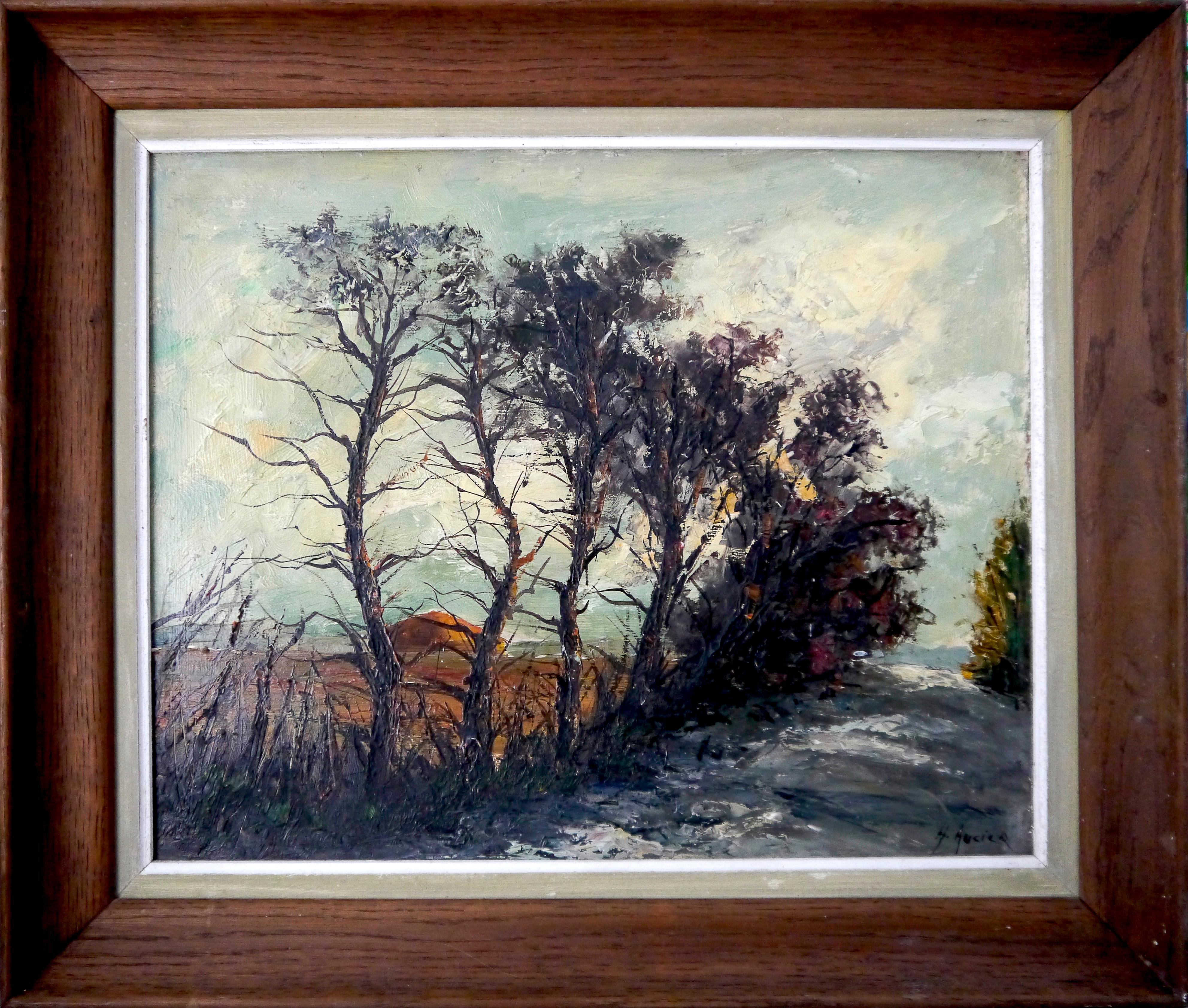
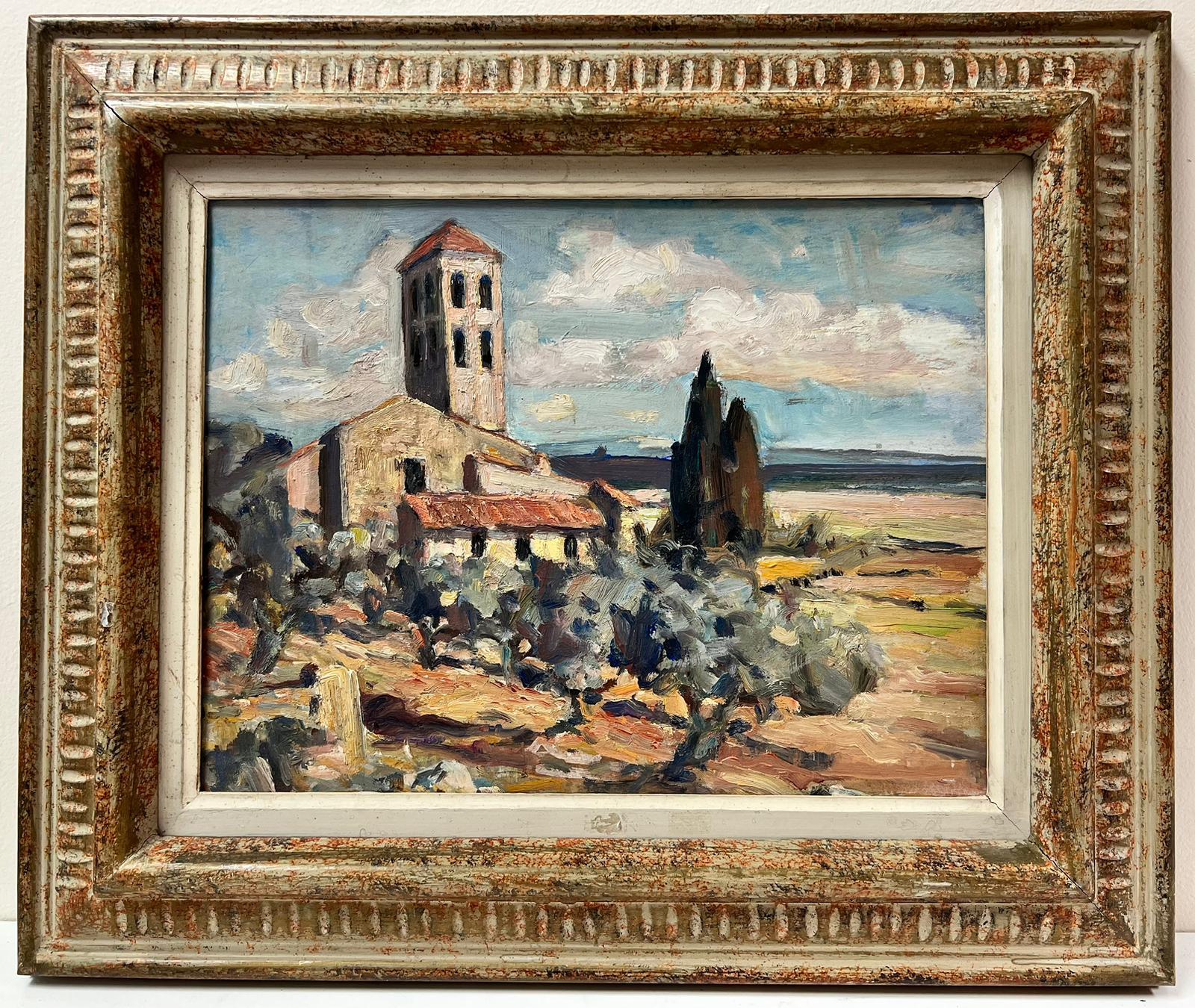
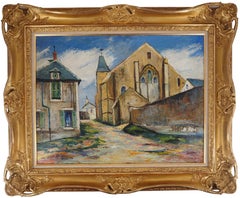
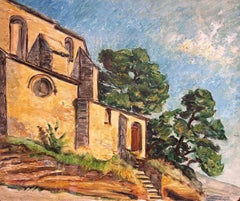
➡️ Landscape Woodland and waterfall⬅️
⏩It is signed Rohlfs 1903⏪
⭐Medium:⭐ Oil on canvas
⭐Technique: ⭐Impasto painting with expressive brushwork.
⭐Size:⭐19.5x24.3cm /7.7x9.6 inch
⭐Date: 1903⭐
⭐Condition : ⭐ Good condition. few cracks
⭐Provenance:⭐ Private collection - France.
⭐Shipping:⭐ from France is fast 4-6 days with Fedex / DHL
🟢🟢🟢🟢🟢🟢🟢🟢🟢🟢🟢🟢🟢🟢🟢🟢🟢🟢
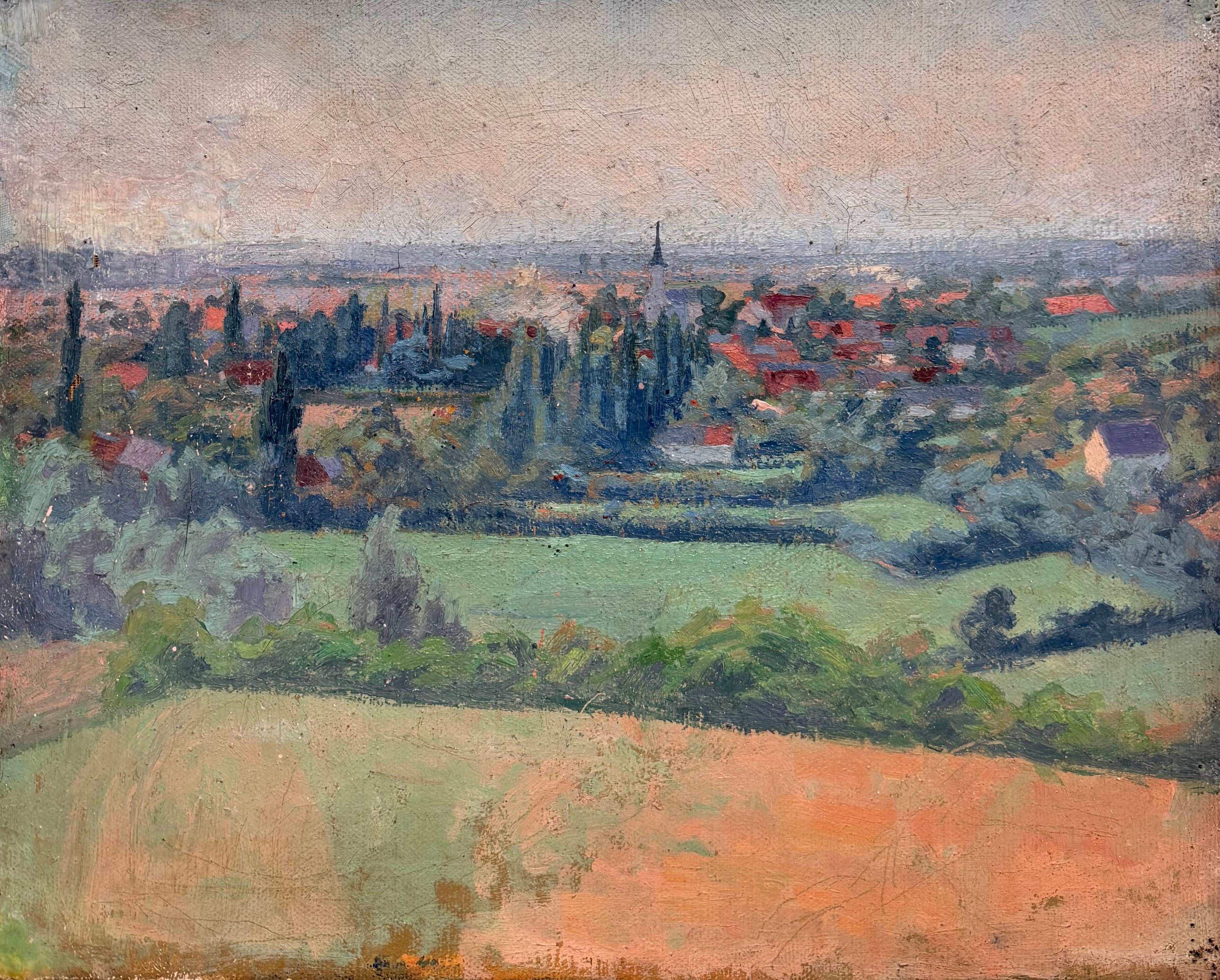
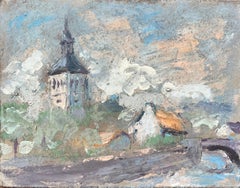
Inscribed in the lower left corner with the name (Adolphe) Rohlfs, the date 1903, and the location Mamers, this small oil painting offers a quietly compelling glimpse into provincial French landscape painting at the turn of the twentieth century. Mamers is a modest market town in the Sarthe department of the Pays de la Loire region, and its relative obscurity makes this work all the more intriguing, it speaks of an artist deeply rooted in a specific place and moment, working outside the grand machinery of Parisian fame.
⭐Subject and Composition⭐
The painting depicts a panoramic view of Mamers as seen from a slightly elevated vantage point, looking across a foreground of dark, uneven terrain toward the rooftops and trees of the town. The undisputed protagonist of the composition is the church steeple, almost certainly that of the Gothic church of Saint-Nicolas de Mamers, which rises from the centre-left of the canvas, its sharp slate spire cutting upward into a pale, cloudy sky. The church dominates the scene with quiet authority, emerging from a dense mass of autumnal foliage as a symbol of permanence and communal identity within the landscape.
The composition is structured around three distinct horizontal bands: a dark, earthy foreground that anchors the viewer; a richly textured middle ground of trees, rooftops, and vegetation; and a luminous, open sky that breathes space and air into the upper third of the canvas. This layered recession into depth is a classical device, handled here with confidence and without rigidity. The rooftops, rendered in warm, terracotta pinks, punctuate the green mass of the middle ground like scattered embers, creating chromatic rhythm across the canvas.
⭐Technique and Medium⭐
The work is an oil on canvas, small in format, consistent with the practice of plein air sketching that was widespread among landscape painters of the period. In several areas, particularly toward the upper right, the canvas weave is visible beneath thin, translucent paint layers, suggesting either deliberate economy or the spontaneous, rapid execution of an outdoor study. This quality of immediacy is one of the painting's greatest strengths: it has the freshness of a work captured in a single session, before the motif changes or the light shifts.
The brushwork is loose and animated, particularly in the treatment of the foliage, where short, broken strokes of dark green, olive, orange, and yellow are layered to suggest volume and movement without being descriptive. This approach echoes the lessons of French Impressionism and Post-Impressionism, absorbed by many regional painters of the era through exhibitions and reproductions rather than direct contact with the avant-garde. The church and its rooflines are treated with slightly firmer, more deliberate strokes, distinguishing the architectural elements from the organic fluidity of the trees surrounding them.
Palette and Atmosphere
The palette is autumnal and restrained, built upon a foundation of deep greens, warm browns, and cool grey-blues, enlivened by accents of orange, red, and pink in the foliage and rooftops. The sky is handled in soft, horizontal washes of white and pale grey-green, conveying the diffuse, overcast light of a northern French autumn day, neither dramatic nor dull, but quietly atmospheric. There is no direct sunlight, yet the scene is suffused with a gentle luminosity that gives it warmth and life.
This muted, melancholic atmosphere is entirely appropriate to the subject. Mamers is not a spectacular destination; it is an ordinary town, and Rohlfs paints it with affection rather than grandeur. The painting does not seek to impress, it seeks to observe, to record, and perhaps to remember.