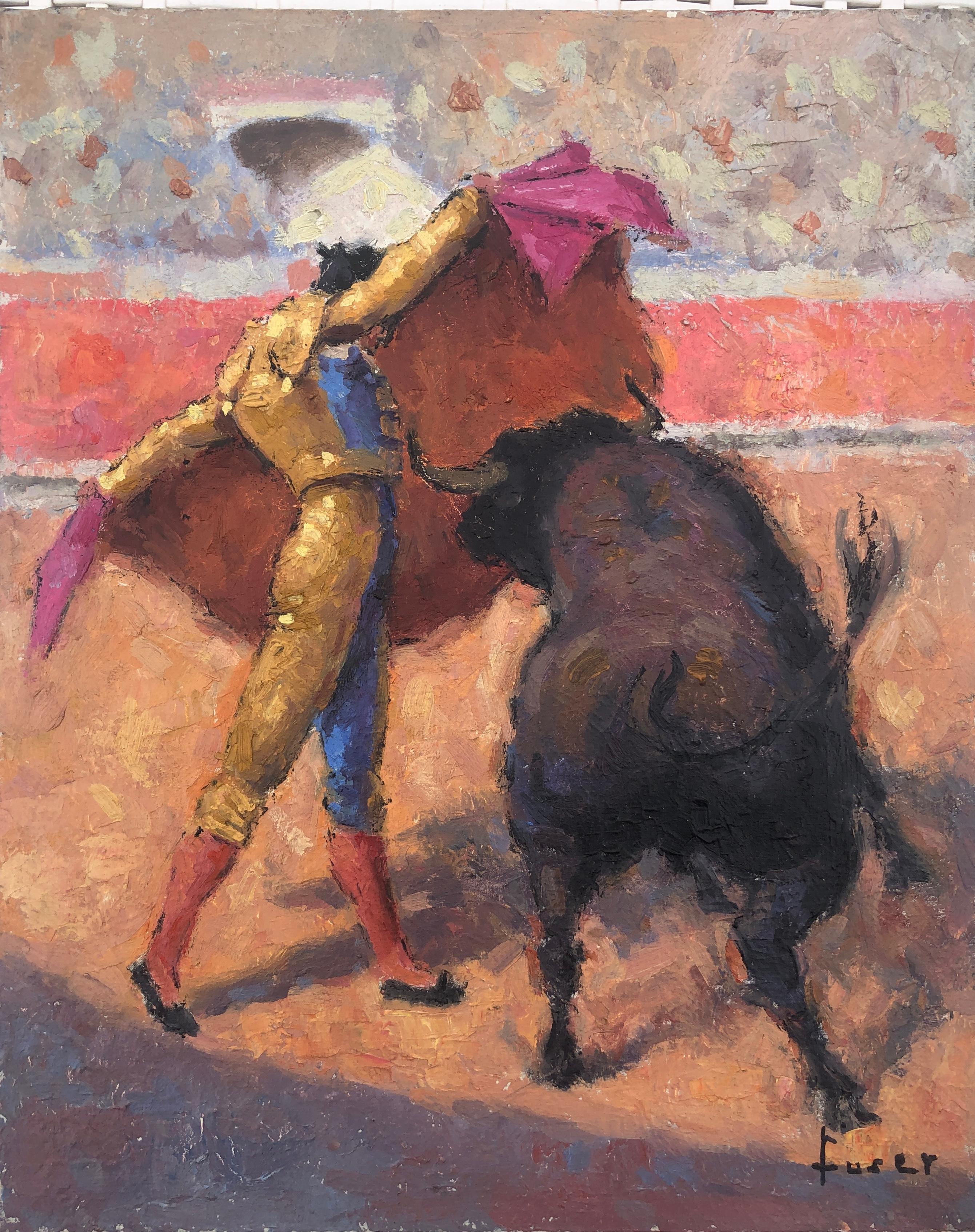
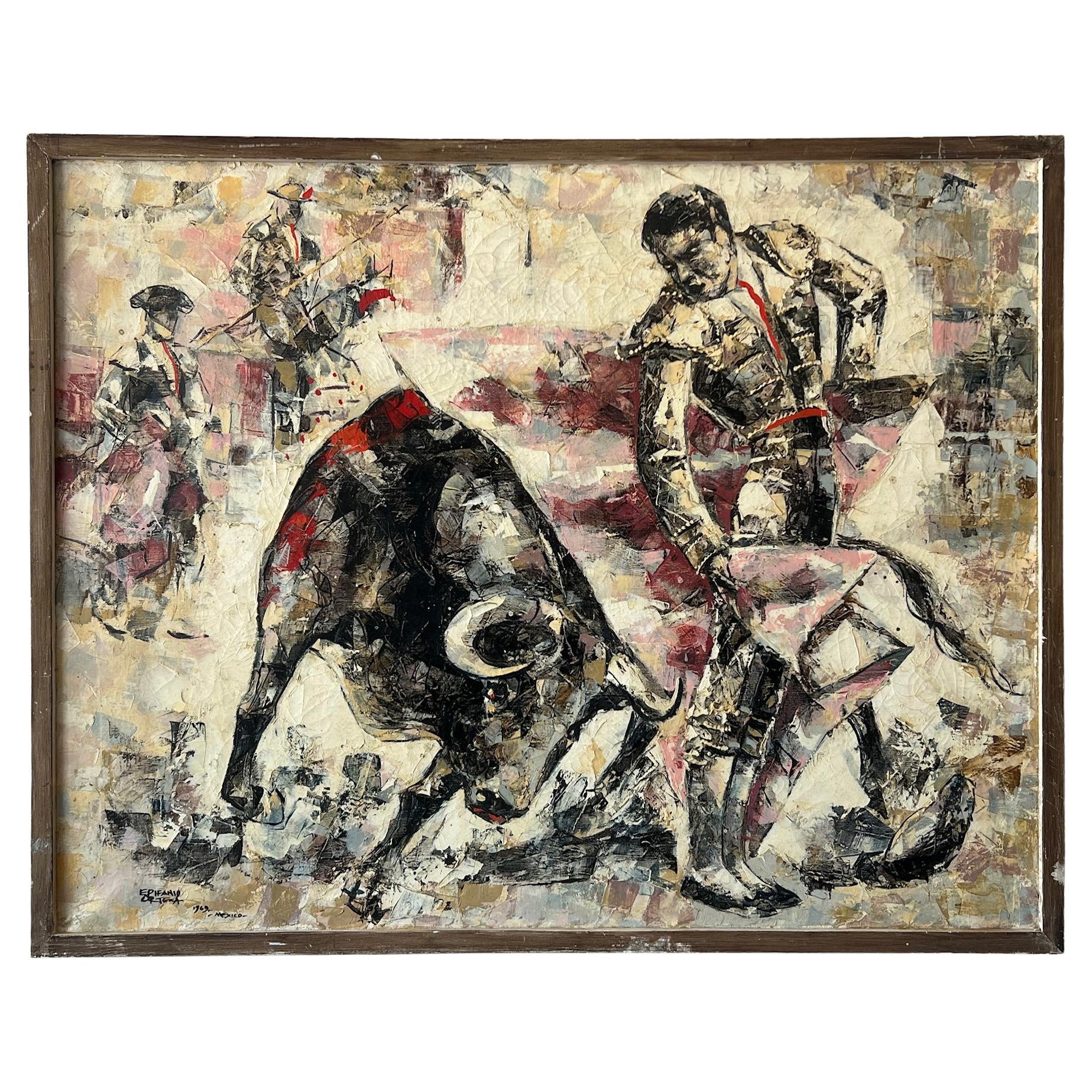
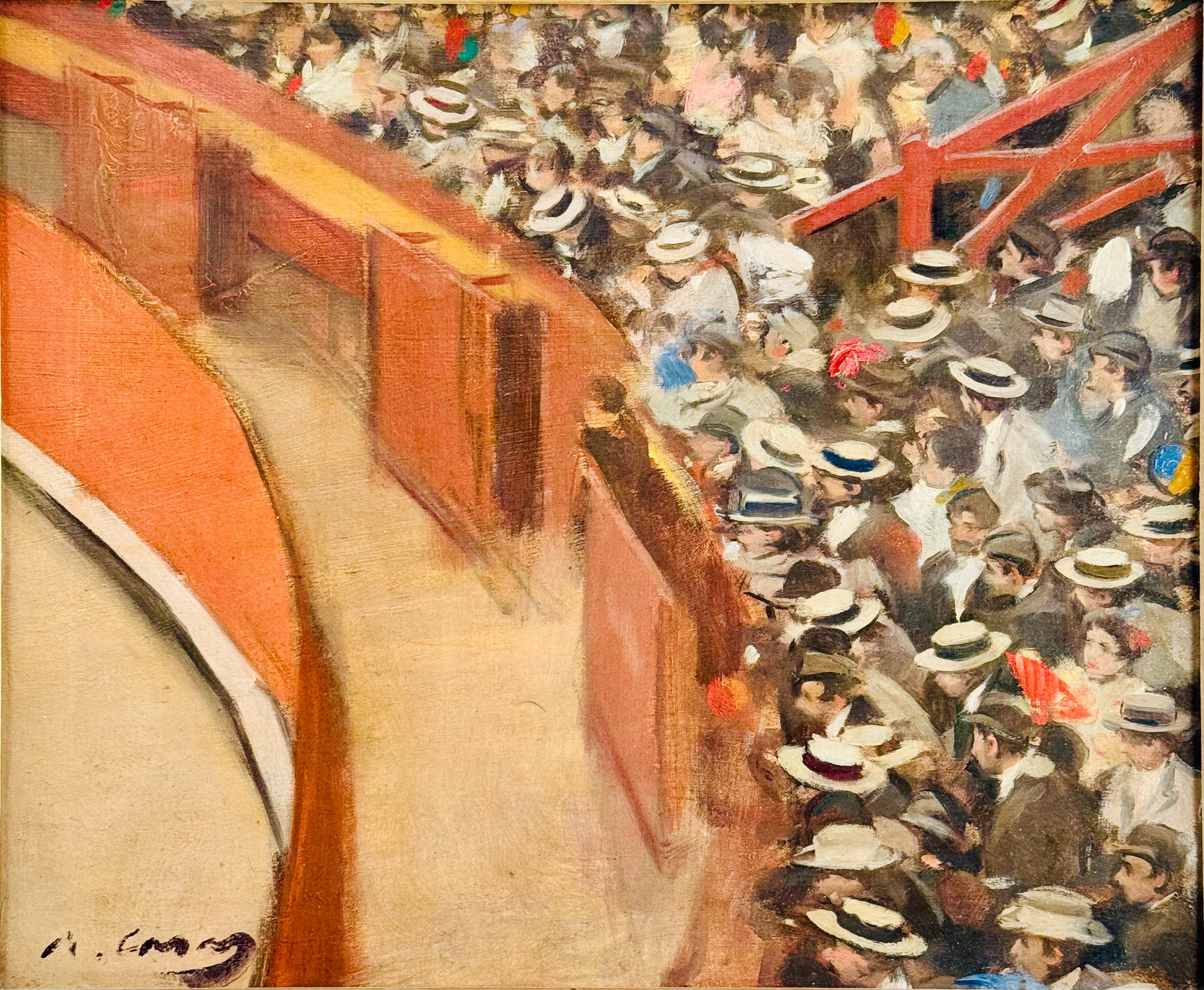
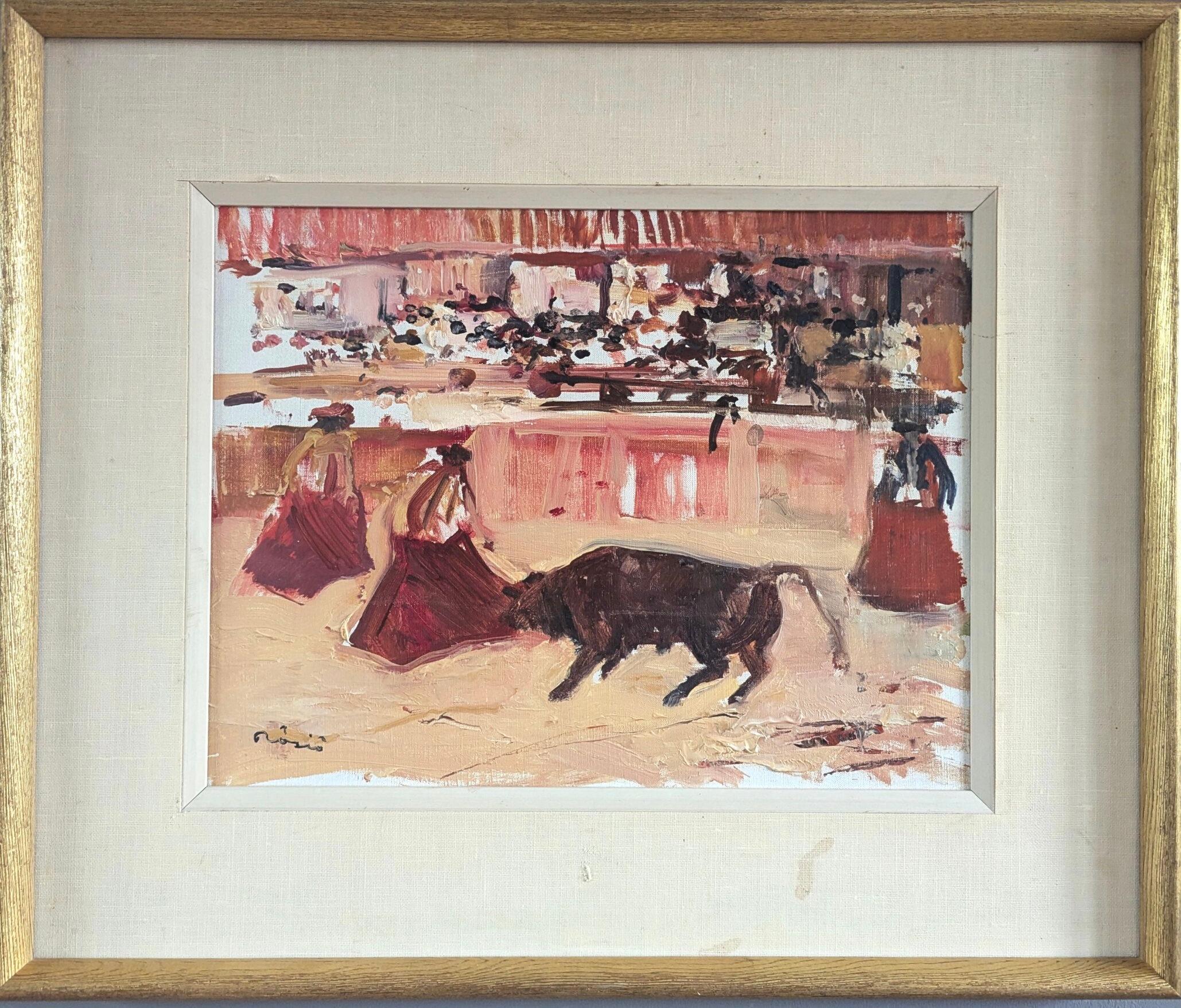
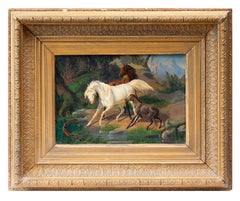
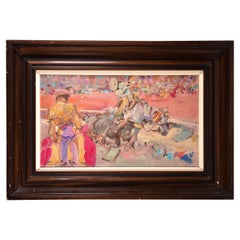
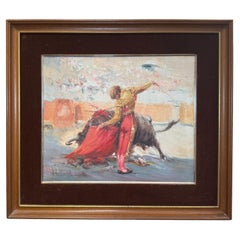
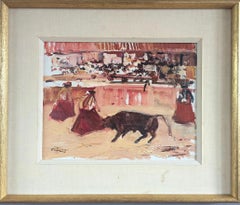
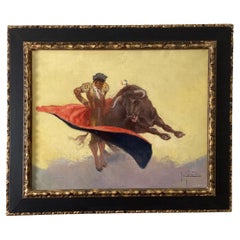
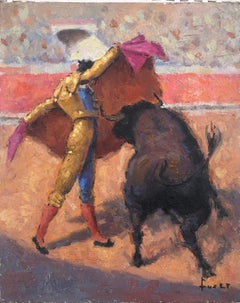
This striking and dynamic painting, attributed to the 20th-century Spanish School, captures the raw intensity and drama of a traditional Spanish bullfighting scene, focusing on the rare and visceral moment of confrontation between a bull and a horse. Rendered in oil on canvas, later mounted on board for preservation and support, the work reflects the enduring cultural and symbolic weight of bullfighting in Spanish art and identity.
The composition centers on a powerful, muscular bull locked in combat with a rearing horse—a visual metaphor for tension, struggle, and survival. The bull, depicted mid-charge, exudes brute force and instinct, its dark body modeled with thick, energetic brushwork that conveys both weight and motion. The horse, caught in a moment of high agitation, rears back on its hind legs, its mane flaring, eyes wide—its form rendered with equal vigor and expressive tension. There is no clear victor; the scene is suspended in the chaos of the encounter.
The artist's technique is bold and emotionally charged. Loose, fluid brushstrokes define both animals with a dynamic immediacy, while maintaining enough anatomical accuracy to emphasize their nobility and physicality. The palette is earthy and dramatic, dominated by browns, ochres, blacks, and muted reds—evoking the dust and blood of the arena, the heat of the afternoon sun, and the gravity of ancient ritual.
Background details are loosely suggested rather than fully articulated, drawing the viewer’s focus to the confrontation itself. This compositional economy heightens the tension, giving the impression that the moment is frozen in time—a fleeting, violent ballet charged with cultural resonance.
The use of canvas glued to board suggests that the work may have been preserved from a sketch or smaller format, perhaps intended for study or exhibition. This support allows for a textured, intimate viewing experience, as brushwork and color take center stage without distraction.
Deeply rooted in Spanish tradition, this painting reflects the complex dualities at the heart of bullfighting imagery: beauty and brutality, control and chaos, honor and mortality. In the hands of the 20th-century Spanish artist, these themes are not merely illustrated but emotionally interpreted, turning the encounter between beast and beast into a symbol of struggle—both physical and existential.
A powerful and evocative work, this piece stands as a compelling example of 20th-century Spanish figurative painting, rich in national identity, artistic expression, and timeless conflict.