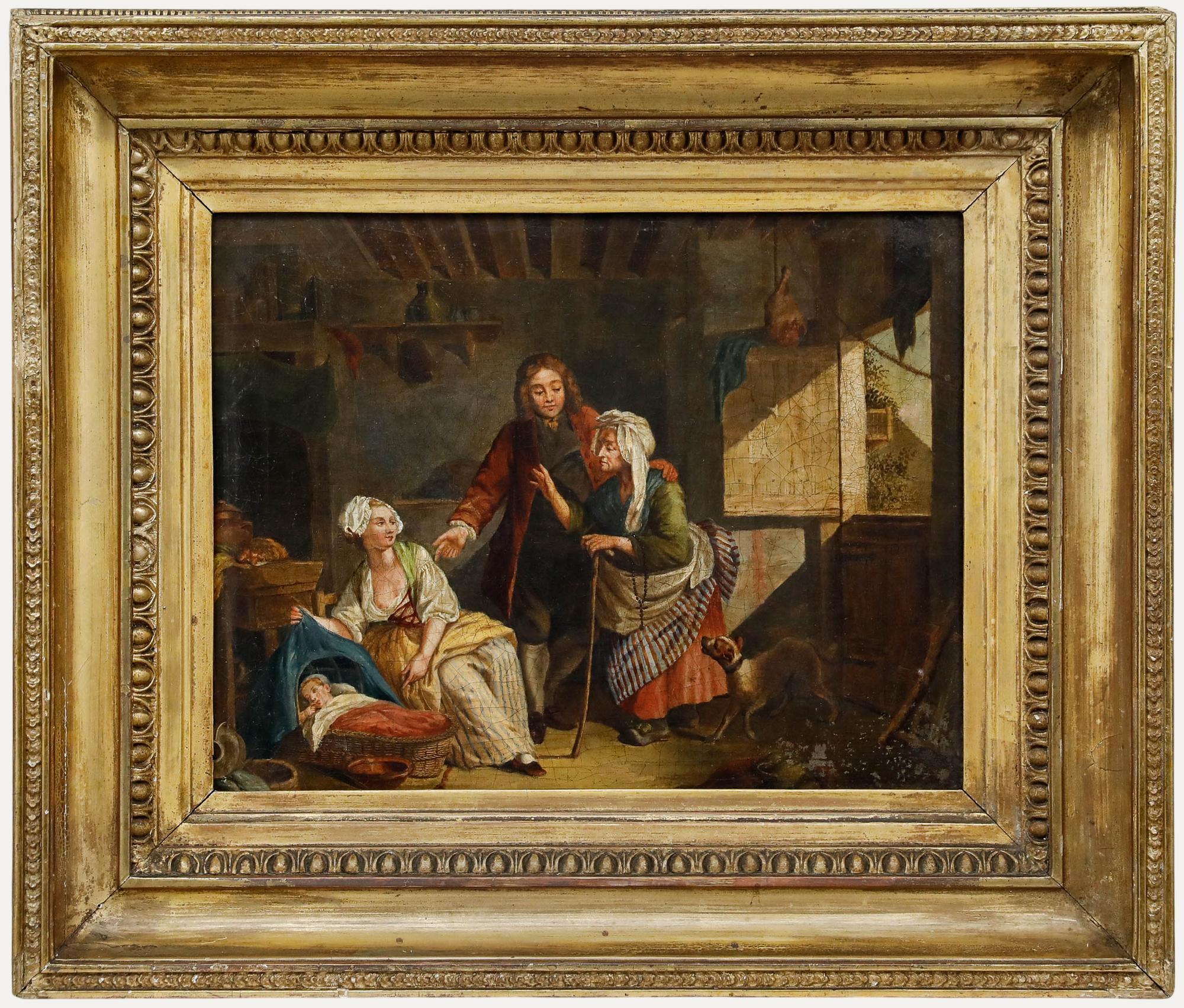
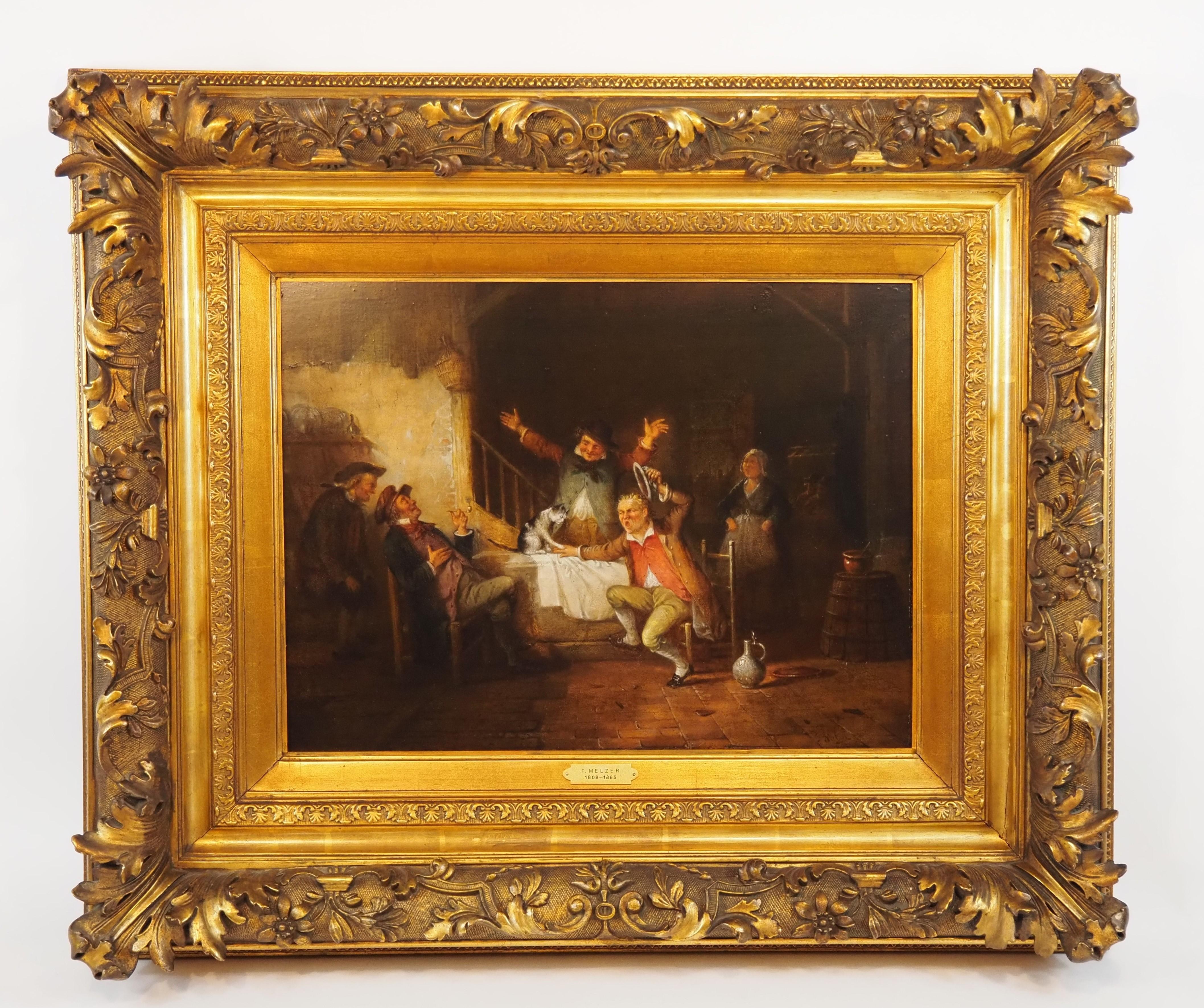
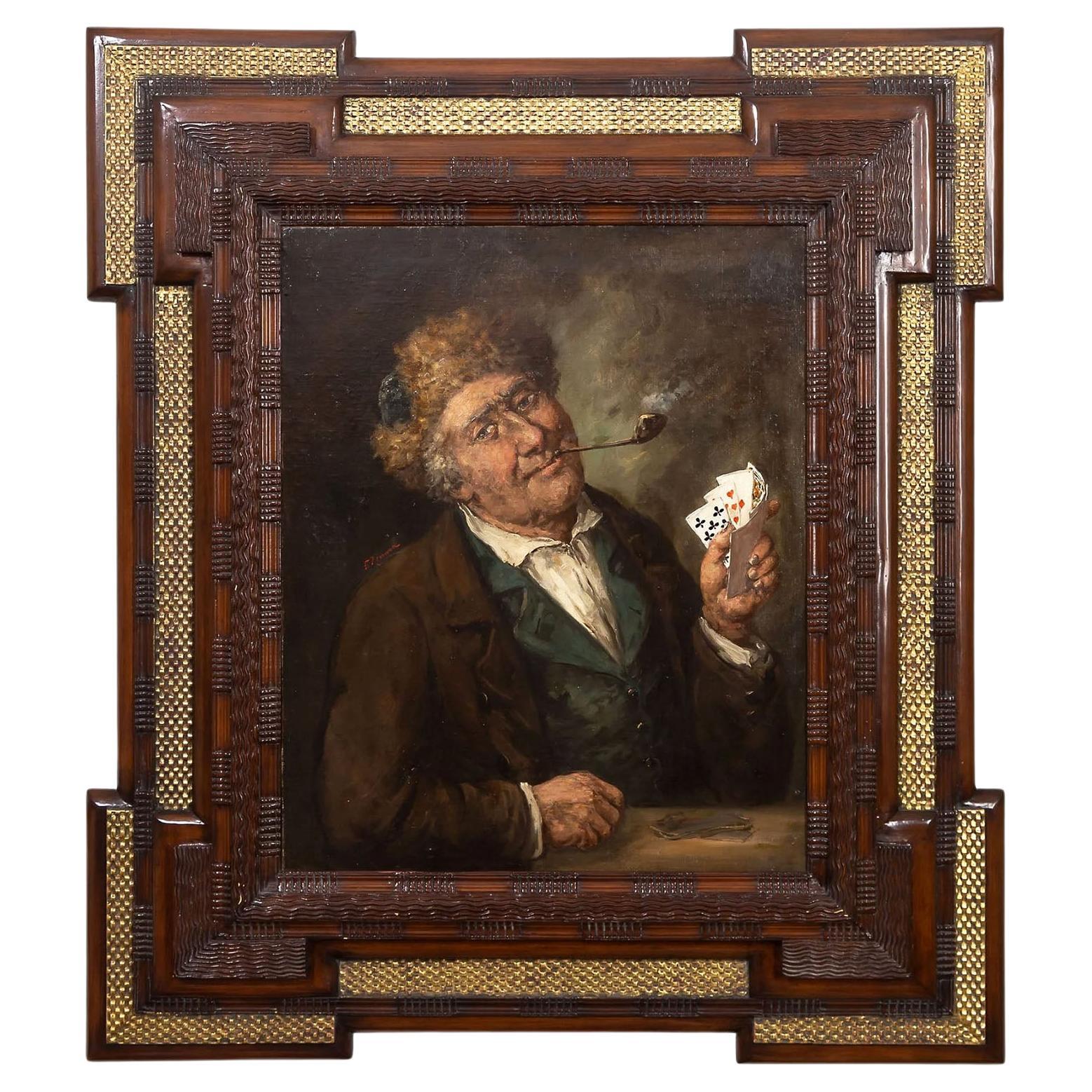
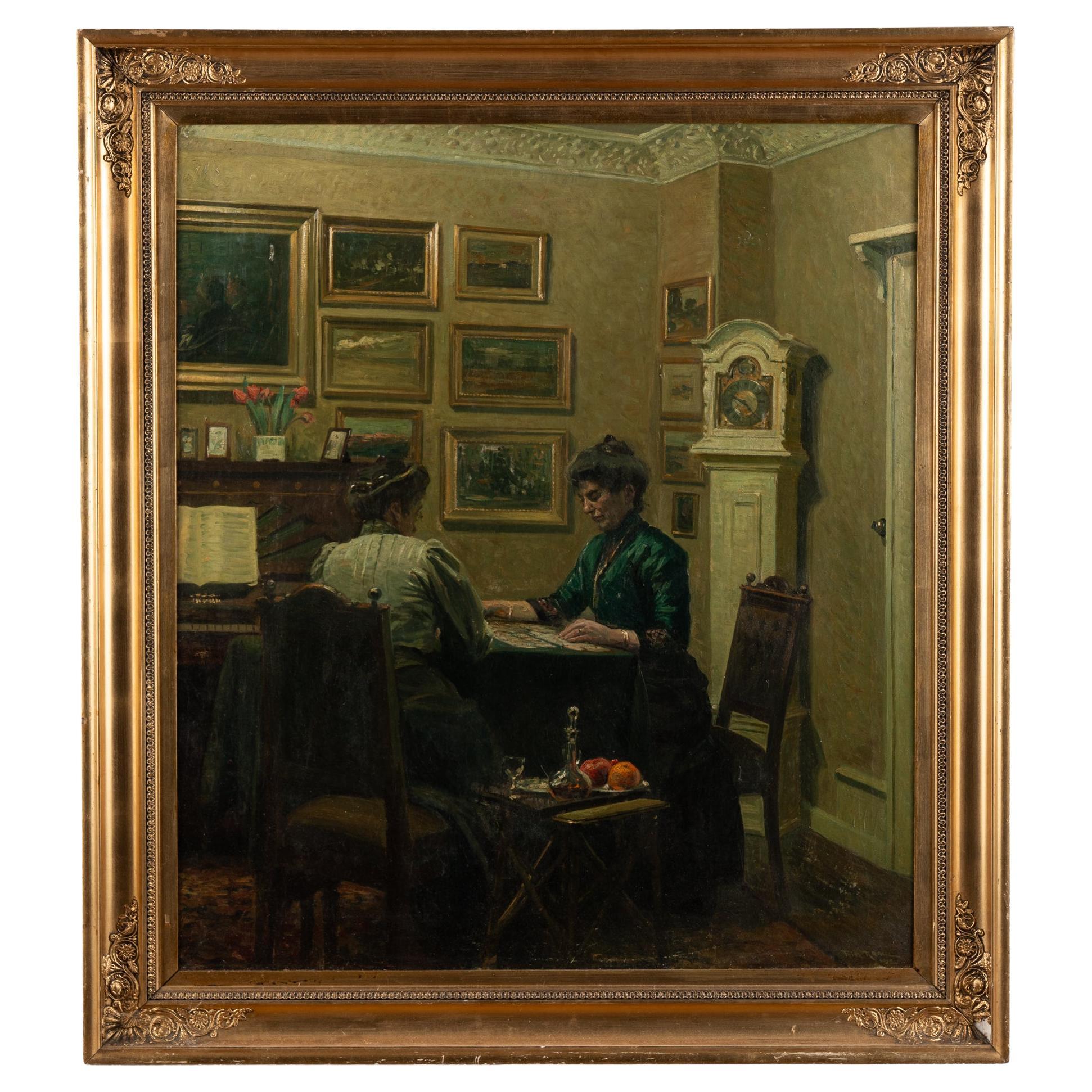
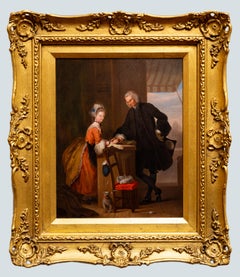
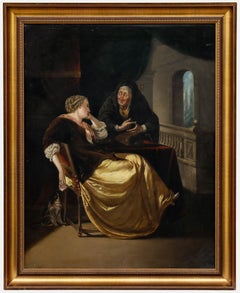
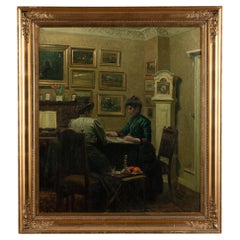
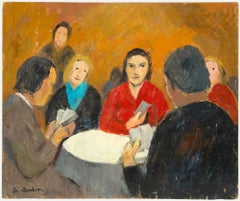
This painting unfolds within a dimly lit interior, where the scene emerges gradually from shadow, as if shaped by a single, concentrated source of light. The composition is intimate and psychologically charged, drawing the viewer into a moment of quiet suspense centered on the act of fortune-telling.
At the heart of the scene, two women face one another across a small table. The woman on the right, dressed in dark garments, assumes the role of the fortune teller. She leans forward with measured intent, holding a set of cards that she studies and reveals with deliberate care. Her posture is composed, her gesture controlled, suggesting both authority and ritual—she is not merely handling objects, but interpreting them.
Opposite her, a younger woman extends her hand, palm open, in a gesture of expectation. Her body inclines slightly forward, her face softly illuminated, revealing a mixture of curiosity, vulnerability, and quiet apprehension. She awaits knowledge that is both desired and feared—the unveiling of her future.
Behind her, a third figure—older and partially veiled in shadow—leans into the scene. This presence intensifies the atmosphere, acting as a silent witness. Whether companion, guardian, or simply observer, she reinforces the sense that this is a shared yet deeply private moment.
Between the two principal figures, a white cat perches upon the table, its pale body catching the light and becoming a subtle focal point. The animal introduces an element of ambiguity and symbolism: often associated with intuition, superstition, and the unseen, it underscores the theme of divination and the boundary between knowledge and mystery.
The setting itself remains sparse. A ceramic vessel in the background and the barely defined interior suggest a modest domestic environment, but details are intentionally subdued. The artist’s focus lies not in description, but in atmosphere.
The palette is restrained, dominated by deep browns, warm ochres, and muted reds. Light is used selectively, illuminating faces and hands—the instruments of expression and revelation—while the surrounding space recedes into darkness. This use of chiaroscuro heightens the emotional intensity and directs the viewer’s attention to the psychological exchange unfolding at the center.
The brushwork is soft and blended, allowing forms to emerge gradually rather than through sharp delineation. This painterly approach enhances the sense of immediacy and intimacy, placing the viewer within the confined space of the encounter.
Rather than narrating a specific outcome, the painting captures a suspended moment—the instant before meaning is disclosed. It is a scene not of action, but of anticipation, where the promise of knowledge hangs in the balance, and the quiet tension between revelation and uncertainty becomes the true subject of the work.
Théodule Ribot (1823–1891) was a French painter associated with the Realist movement, known for his dark, introspective scenes and his profound engagement with the traditions of earlier masters.
Born in Saint-Nicolas-d'Attez, Ribot did not follow a conventional academic training. Instead, he was largely self-taught, developing his style through close study of 17th-century Spanish and Dutch painters, particularly artists such as Jusepe de Ribera and Francisco de Zurbarán. Their influence is evident in his use of strong chiaroscuro and his focus on humble, often austere subjects.
Ribot first gained recognition at the Paris Salon in the 1860s, where his works stood out for their sobriety and psychological intensity at a time when more polished academic styles dominated. His paintings frequently depict kitchen scenes, religious subjects, and intimate genre compositions, often featuring a limited number of figures engaged in quiet, contemplative actions.
A defining characteristic of Ribot’s work is his emphasis on light emerging from darkness. He used deep shadows not merely as a visual device but as a means of focusing attention and evoking mood. His figures often appear isolated, absorbed in their own thoughts or tasks, lending his compositions a timeless and meditative quality.
Though not as widely celebrated as some of his contemporaries, Ribot was highly respected within artistic circles and influenced a generation of painters interested in realism and tonal painting. His work bridges the gap between the Old Masters and 19th-century modernity, combining historical technique with contemporary subject matter.
Today, Ribot is appreciated for his ability to transform ordinary scenes into profound studies of light, presence, and human introspection.
Canvas size 36.5 x 46.5 cm