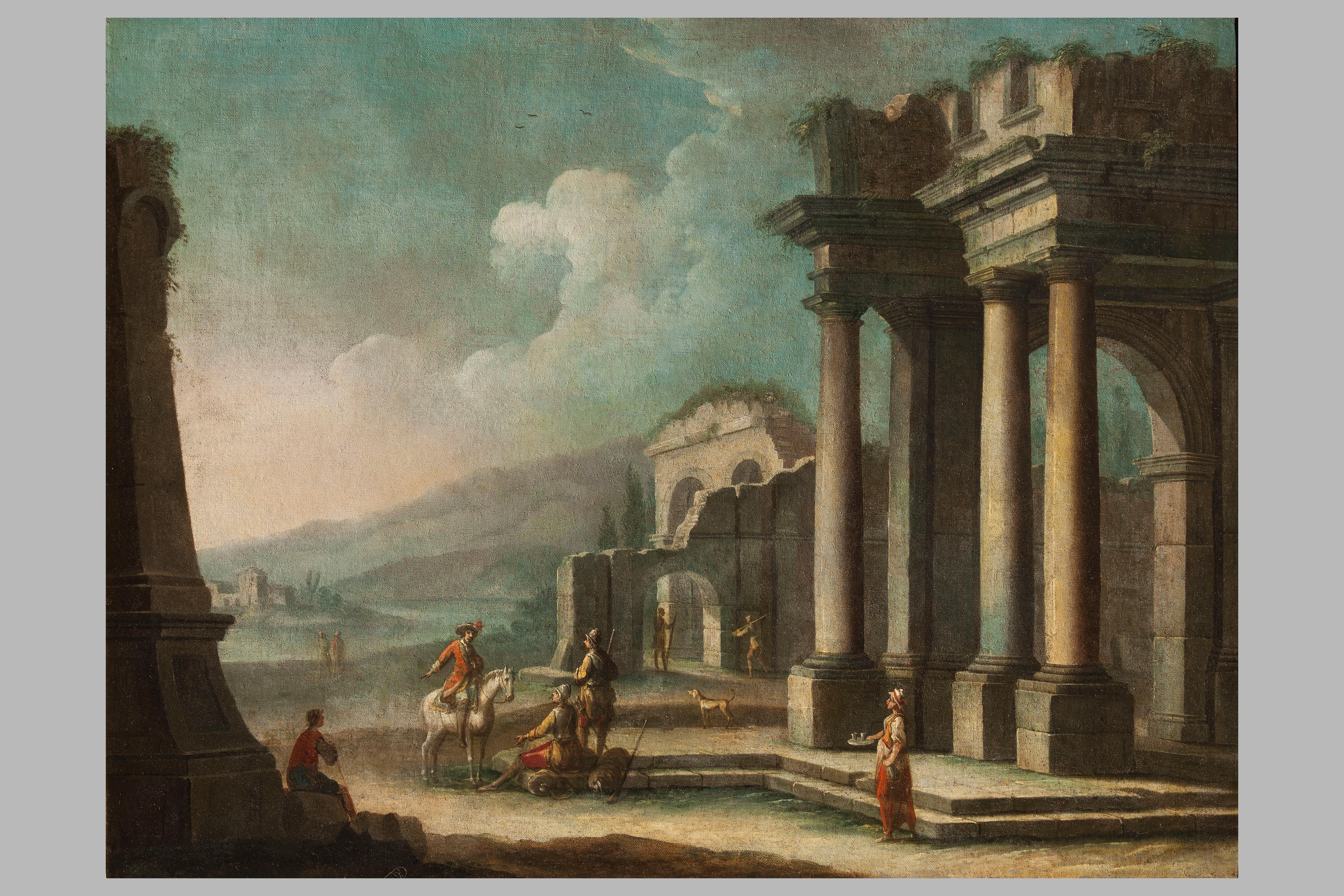
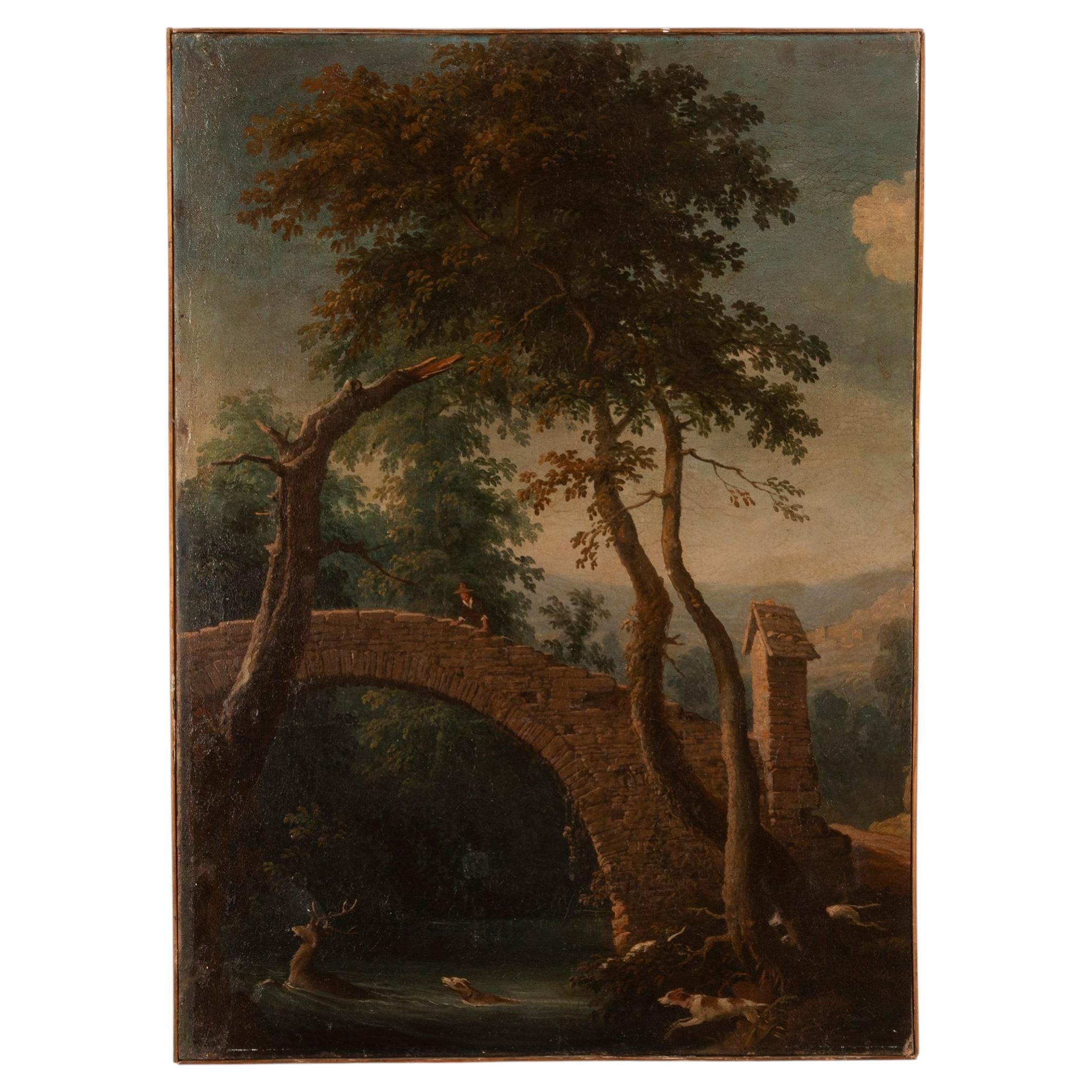
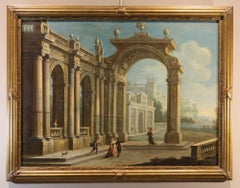
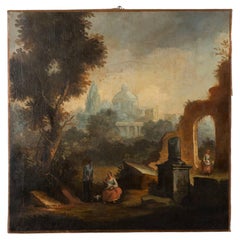
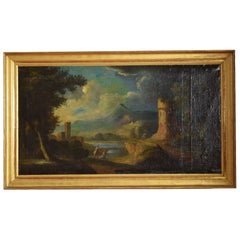
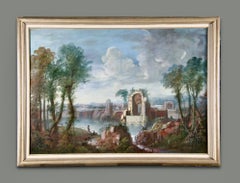
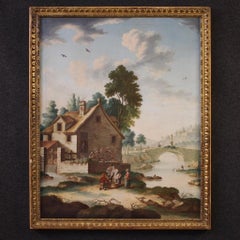
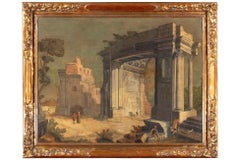
An important Swedish capriccio landscape with classical Architecture and Figures by a Fire, representing an allegory of winter, painted by the Swedish artist Johan Pasch (1706–1769. Oil on canvas. Mounted in a original wood carved and gilt frame after a design by Royal architect Carl Hårleman (1700–1753), Sweden’s most important architect and designer of the first half of the eighteenth century.
Provenance:
Hårlemanska Huset (Hårleman Manor), Drottninggatan 88, Stockholm. Original carved and gilded rococo frame after a design by Carl Hårleman.
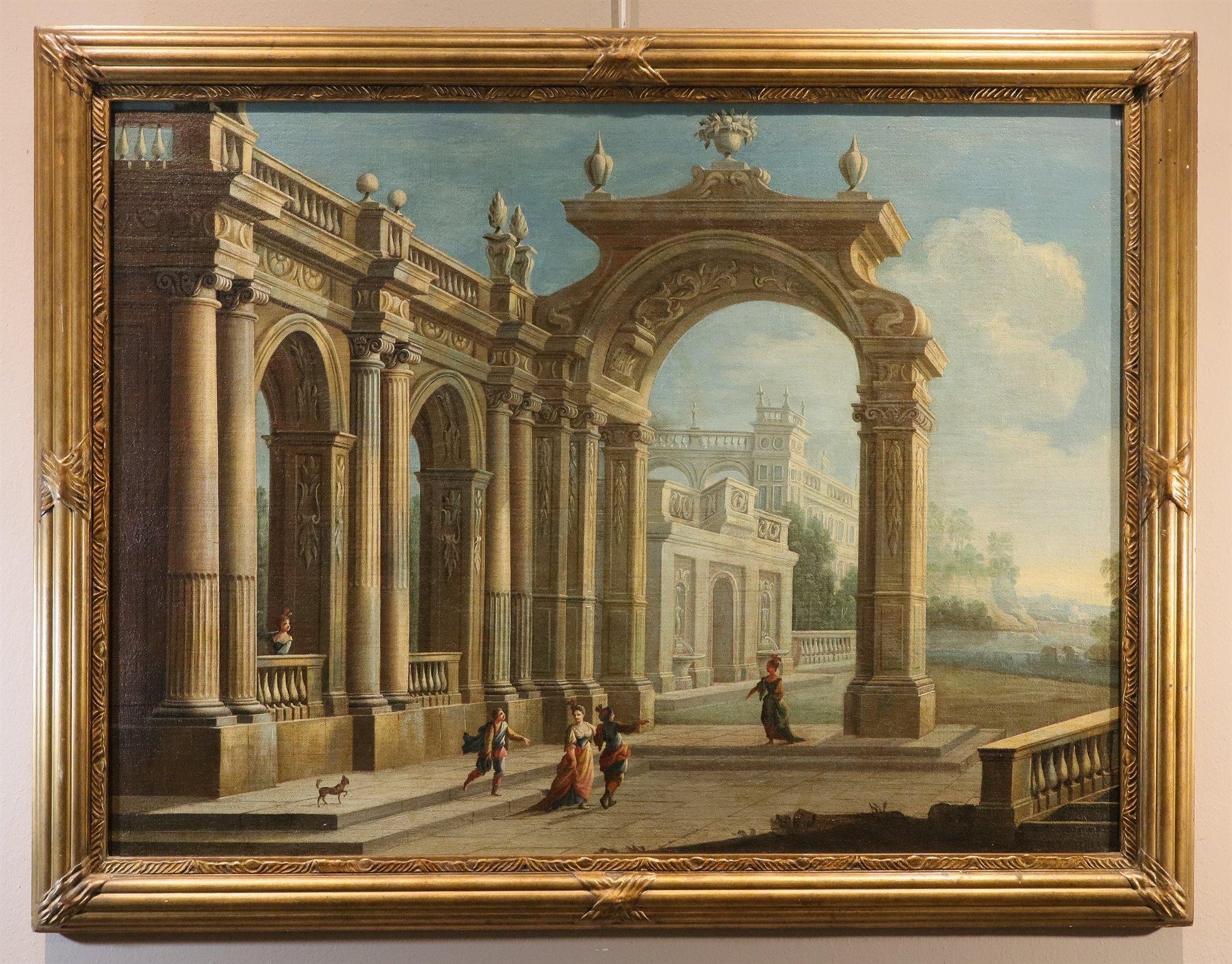
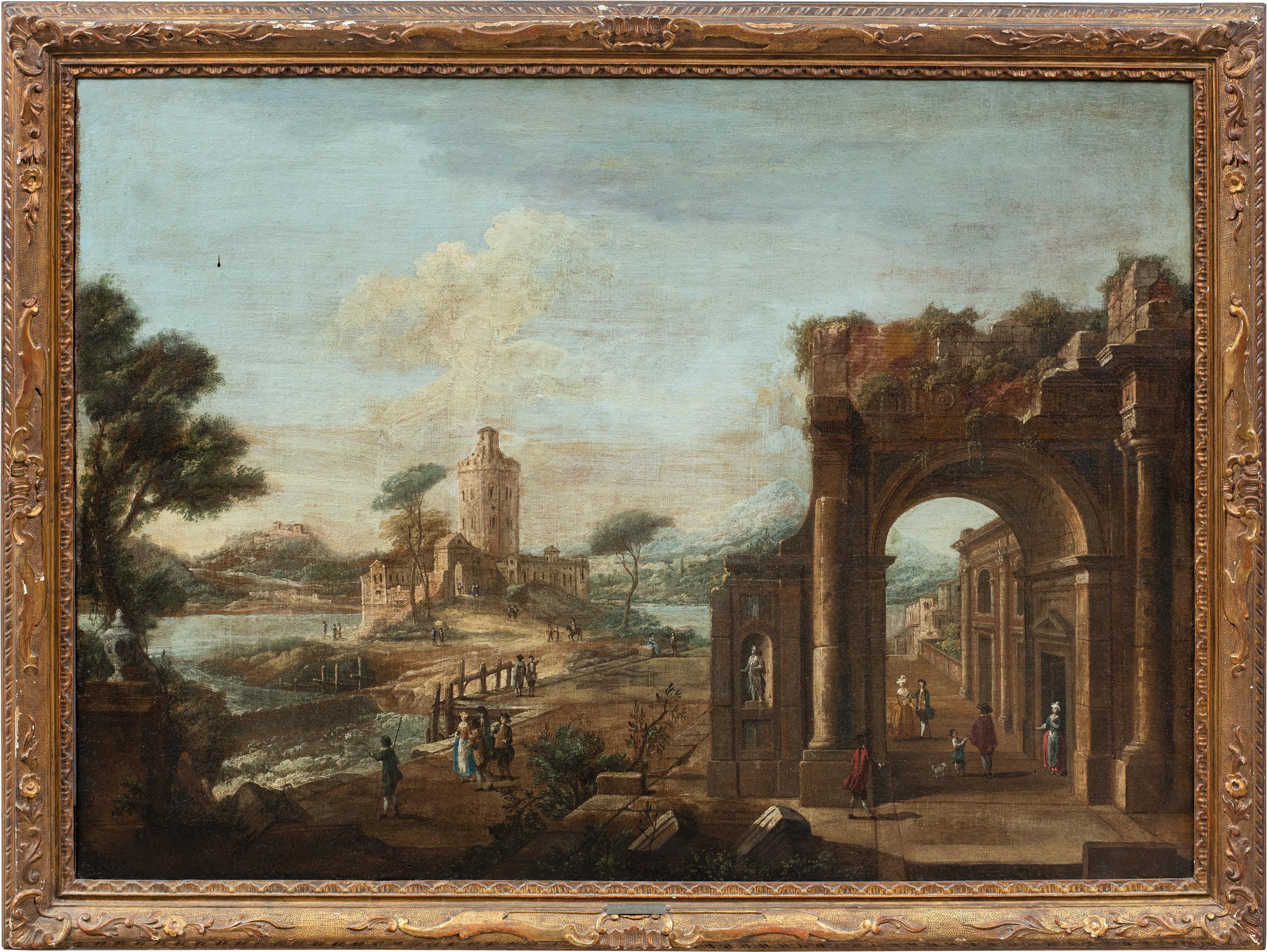
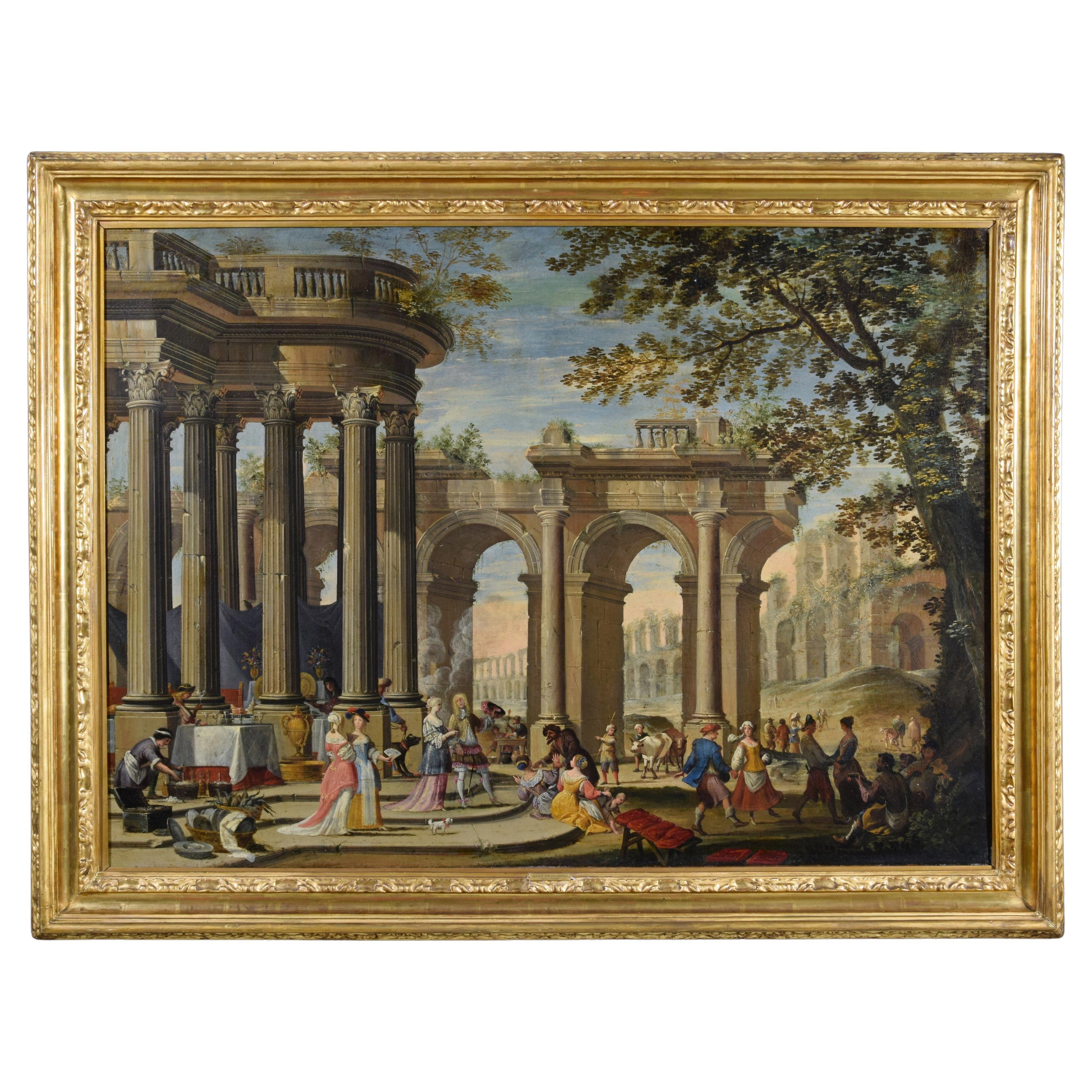
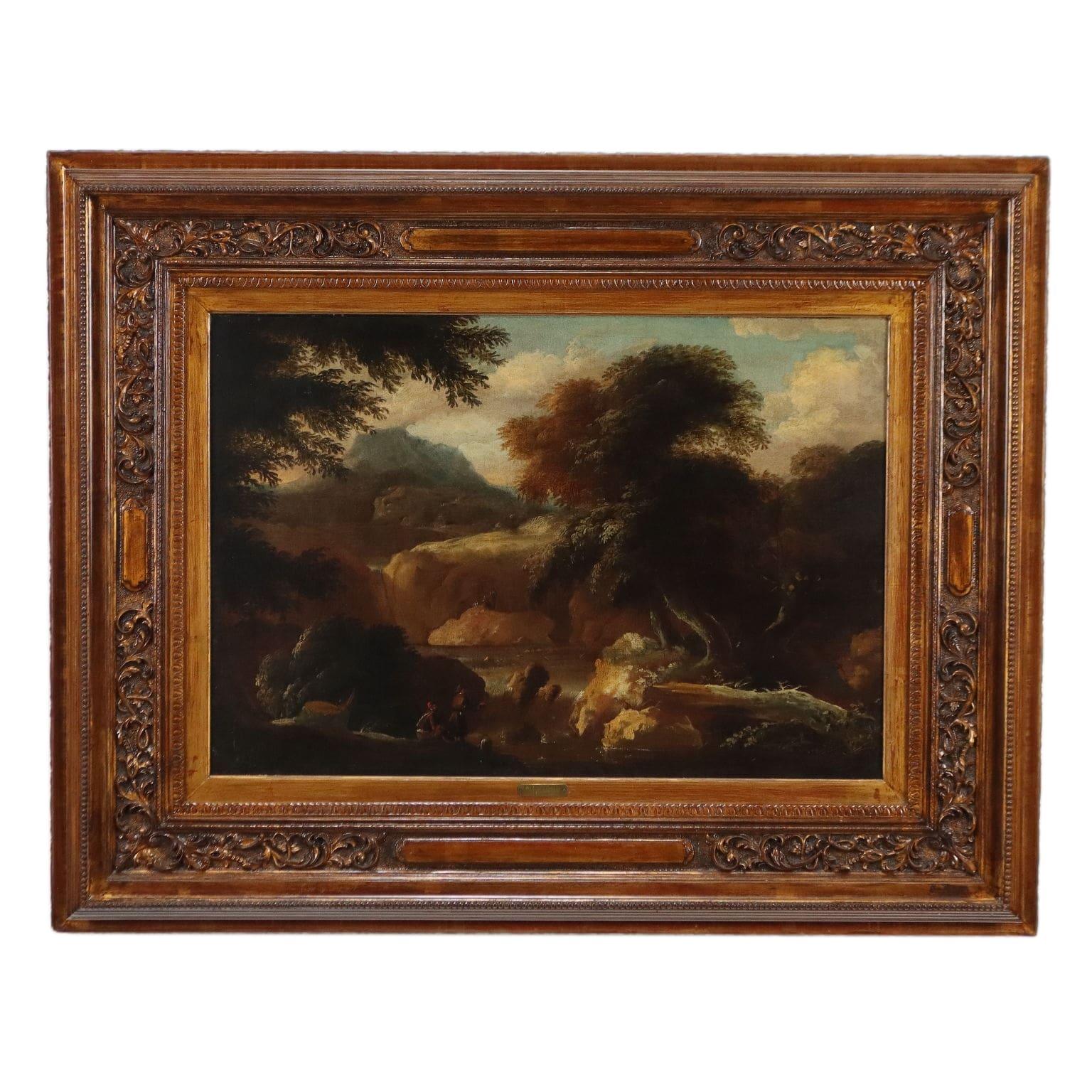
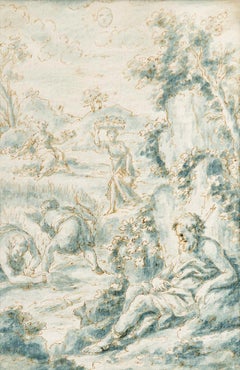
This elegant decorative painting presents an idealised landscape in which nature and architecture are harmoniously united in the spirit of the 1750´s. In the foreground, two figures gather around a small fire, while beyond them rises a monumental architectural structure consisting of a triumphal arch and curved masonry crowned by an ornamental urn. Arcades, cypress trees and distant architectural elements lead the eye into a poetic southern landscape bathed in soft pink, blue and golden light.
The composition exemplifies the refined decorative imagination that characterized Johan Pasch’s finest work. The architecture serves not merely as a setting but as a theatrical framework, creating an illusionistic space reminiscent of stage design. The delicate colour harmonies and carefully balanced arrangement of landscape, architecture and figures produce an atmosphere of serenity and cultivated elegance.
Particularly noteworthy is the painting’s sophisticated spatial construction. The monumental architectural forms anchor the composition, while the sweeping curve of the masonry wall guides the viewer's eye into the distance. The figures, provide a human element that animates the scene and reinforces the pastoral character of the landscape. The result is a work that successfully combines fantasy, architecture and nature into a unified decorative vision.
The present painting has close parallels to decorative wall panels executed by Pasch for the Stockholm residence of Carl Hårleman. Similar architectural capriccios, inspired by French Rococo decorative painting, recur throughout Pasch’s known decorative oeuvre and demonstrate his ability to adapt international artistic trends to Swedish interiors. These type of paintings are never signed, as this one.
Johan Pasch was born in Stockholm in 1706 into one of Sweden’s most distinguished artistic families. He was the son of portrait painter Lorens Pasch the Elder and brother of both Lorens Pasch the Younger and Ulrika Pasch, all of whom became prominent artists. He received his earliest training within the family workshop before continuing his studies abroad.
Like many ambitious Swedish artists of his generation, Pasch travelled extensively in Europe. During the 1730s he studied in France and Italy, where he encountered the latest developments in decorative painting, architecture and interior design. His exposure to French Rococo art proved particularly influential and would shape his mature style for the remainder of his career.
Upon returning to Sweden, Pasch became one of the foremost decorative painters of the eighteenth century. He worked extensively for the royal court and the Swedish aristocracy, contributing to the decoration of palaces, manor houses and public buildings. Through his association with Carl Hårleman and the extensive building campaigns surrounding the completion of the Royal Palace in Stockholm, Pasch came into direct contact with many of the French artists and craftsmen who were transforming Swedish artistic taste during the Age of Liberty.
Among the foreign artists who appear to have influenced Pasch, the French decorative painter Jacques de Lajoue (1687–1761) occupies a particularly important position. De Lajoue's theatrical architectural fantasies, combining monumental ruins, elegant landscapes and ornamental structures, became highly influential throughout Europe. The present painting clearly reflects this tradition in its dramatic architectural forms and illusionistic sense of space.
Pasch was elected a member of the Royal Swedish Academy of Arts and became one of the leading representatives of Swedish Rococo painting. Today his works are represented in numerous public collections, including the Nationalmuseum in Stockholm, Gripsholm Castle, the Royal Collections and several Swedish historic houses and manor collections. His decorative paintings remain among the finest surviving examples of eighteenth-century Swedish Rococo interior art.
Carl Hårleman (1700–1753)
No discussion of Johan Pasch can be separated from the influence of Carl Hårleman, Sweden’s most important architect and designer of the first half of the eighteenth century. Hårleman was born in Stockholm in 1700 and studied architecture in France and Italy, where he absorbed the newest developments in French Rococo design.
Following the death of Nicodemus Tessin the Younger, Hårleman assumed responsibility for the completion of the Royal Palace in Stockholm and served as Superintendent of Royal Buildings. Through his work he introduced French Rococo taste to Sweden and fundamentally transformed Swedish architecture, interior decoration and furniture design.
Hårleman’s influence extended far beyond architecture. He was instrumental in shaping an entire aesthetic culture, encompassing interiors, decorative arts, furniture, textiles and ornamental design. His refined interpretation of French Rococo ideals established what became known as the Swedish Rococo style, a uniquely Nordic adaptation characterized by elegance, restraint and sophistication.
Artists such as Johan Pasch played a crucial role in realizing Hårleman’s vision. Decorative wall paintings, architectural capriccios and illusionistic landscapes became important components of aristocratic interiors designed according to Hårleman’s principles. The present work should be understood within this broader cultural and artistic context.
An important aspect of the present work is its remarkable original frame. Richly carved and gilded, the frame is a high quality work dating from the early Swedish rococo period around 1750, retaining significant late Baroque characteristics. Given the provenance and period, it is most likely that the design originated from Carl Hårleman himself. The frame is original to the painting and forms an integral part of the work's historical and artistic significance.
Paintings of this type, preserved together with their original eighteenth-century frames and documented provenance, have become increasingly rare. The survival of both painting and frame as a unified ensemble provides an unusually complete insight into the decorative ideals of Swedish Rococo interiors.
The Hårleman House (Hårlemanska Huset), Drottninggatan 88, Stockholm
The painting originates from the Hårleman House, also known as Hårlemanska Malmgården, situated at Drottninggatan 88 in Stockholm. The property was acquired by Carl Hårleman and became one of the most refined private residences associated with Sweden’s leading architect.
Hårleman used the residence as a setting in which architecture, interior decoration and the decorative arts could be combined into a coherent artistic whole. Contemporary records indicate the presence of numerous paintings and decorative schemes throughout the house. An inventory compiled following Hårleman’s death in 1753 records no fewer than seventeen paintings in one of the principal reception rooms.
The Hårleman House occupies a special place in Swedish architectural history as one of the few surviving environments directly associated with the architect who introduced Rococo taste to Sweden. Works originating from the house therefore possess significance not only as individual works of art but also as surviving fragments of one of the most influential decorative interiors of eighteenth-century Stockholm.
The present painting, preserved together with its original frame and distinguished provenance, stands as an exceptional document of the artistic world shaped by Carl Hårleman and Johan Pasch. It embodies the international outlook, refined taste and decorative sophistication that defined Swedish Rococo culture.