Want more images or videos?
Request additional images or videos from the seller
1 of 11

Louis de Caullery 1
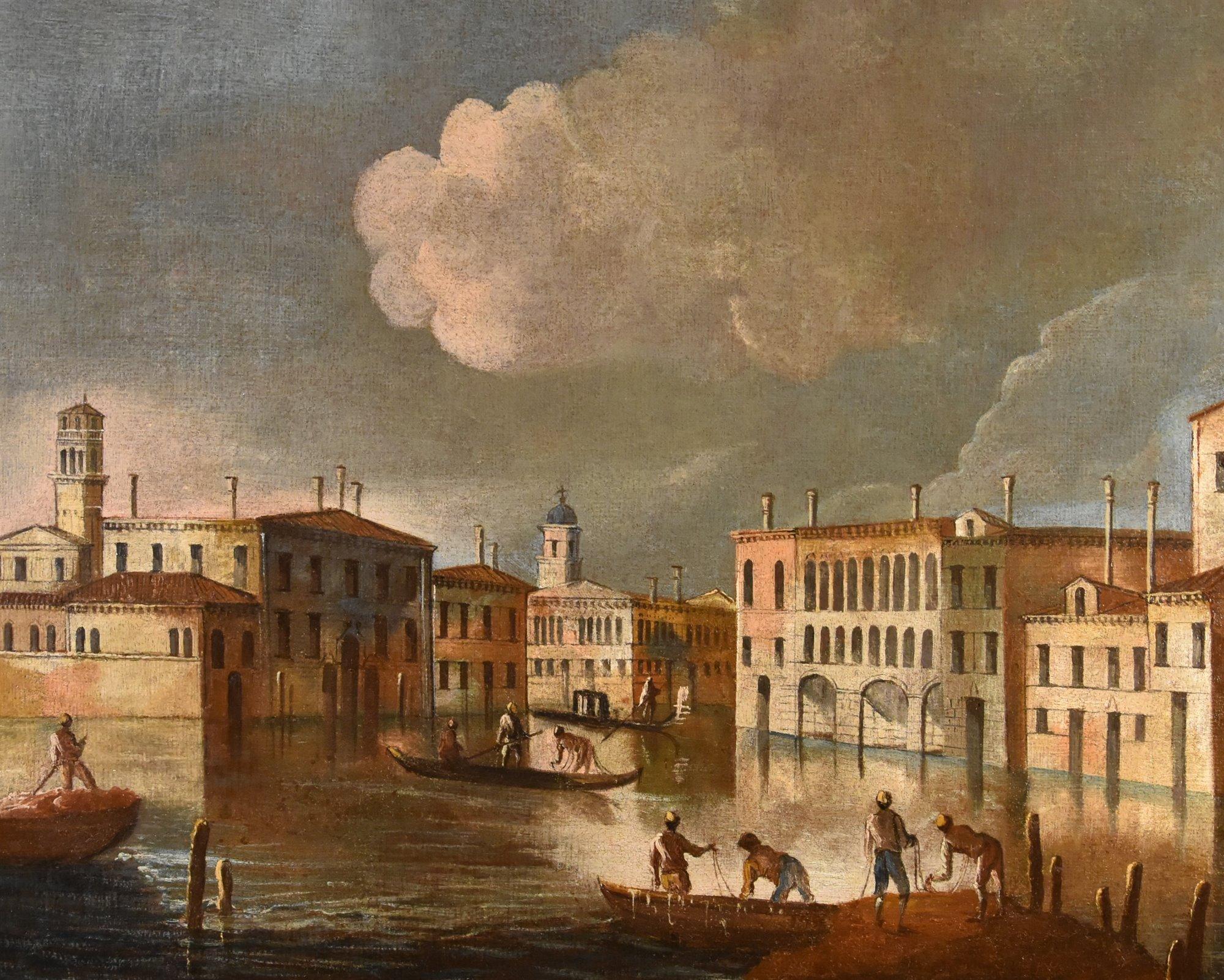
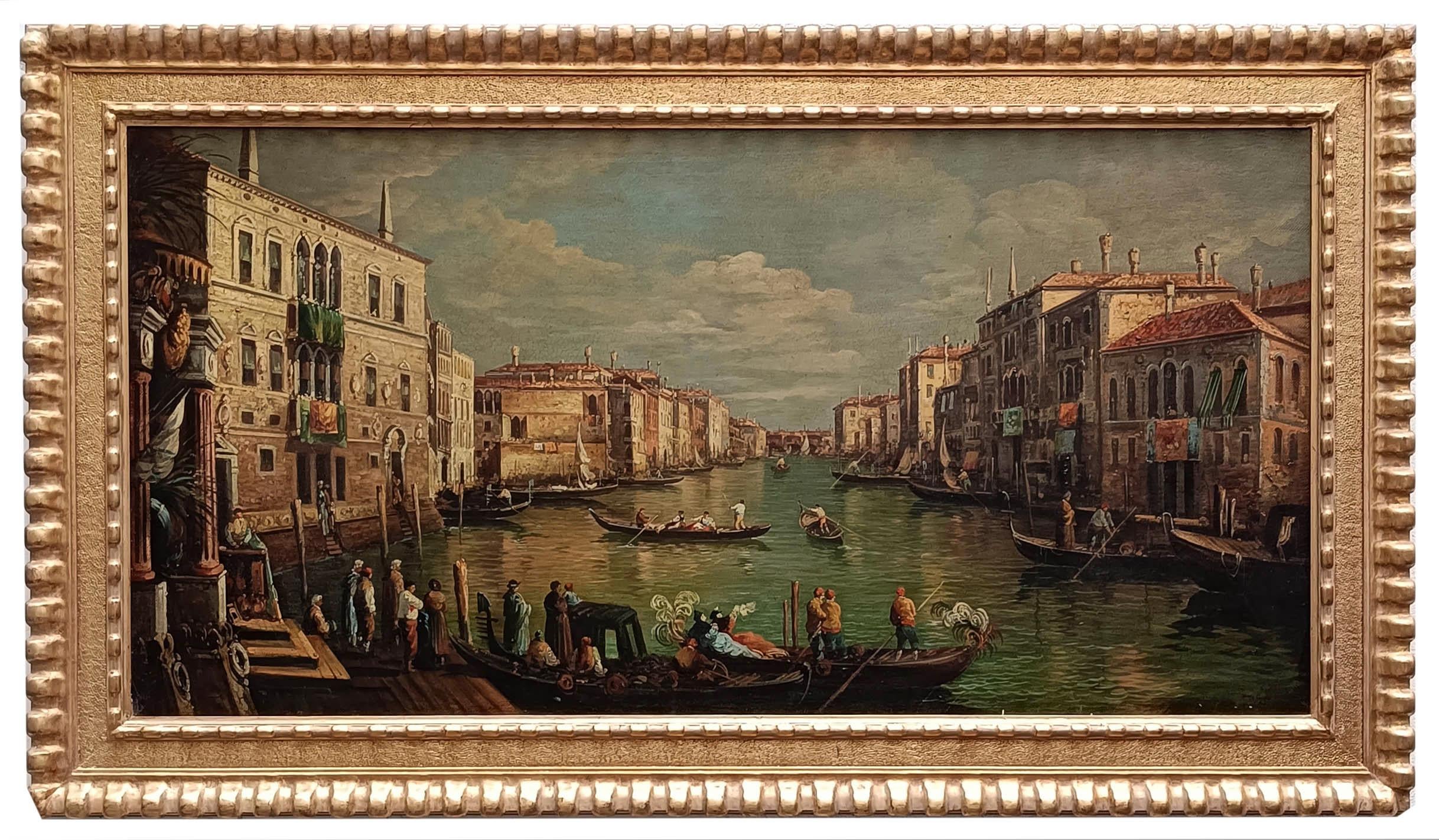
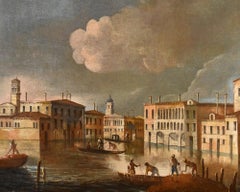
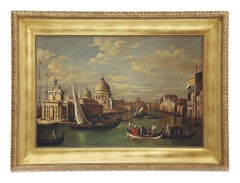
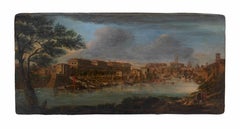
San Marco basin Venice, Louis de Caullery, oil on panel, 17th c. Flemish school

$22,829.09
£16,917.24
€19,300VAT Included
CA$31,572.95
A$31,841.55
CHF 18,536.94
MX$387,527.84
NOK 212,444.62
SEK 219,529.74
DKK 147,157.27

About the Item

Ascension Day in Venice with view of San Marco basin 17th century Antwerp School Louis de Caullery (1582-1621) Oil on oak panel Dimensions: h. 12.8 in, w. 23.03 in (h. 32,5 cm, w. 58,5 cm) Italian style frame in ebonized wood with gilt edging Framed: h. 20.87 in, w. 31.10 in (h. 53 cm, w. 79 cm) This artwork is sold with a certificate of authenticity guaranteeing its origin, date of execution, and attribution to the artist. Our work illustrates the view of the basin of San Marco with the departure of the "Bucentaure" towards the Lido of Venice on the feast of the Ascension Day. The magnificent Bucentaure, the parade galley, makes its way across the bay accompanied by a flotilla of gondolas and various other craft. During the ceremony, the Doge (ruler of the Republic of Venice) and his retinue sail to the Lido, where the lagoon gives way to the sea. There a ritual ceremony was performed during which a ring was thrown at the sea, symbolizing the marriage of Venice with the sea. Then the Doge attended Mass at S.Nicolò on the Lido, before returning to Venice. Visitors from all over Europe and the Middle East flocked to Venice every year to watch the show. Since de Caullery probably never visited Venice himself, he must have surrounded himself with etchings and prints for his depictions of the city. Buildings across the bay are easily recognizable as Piazza San Marco, framed by the Library, Campanile, Basilica and most prominently the Doge's Palace, but the buildings to the far right and left of the composition are largely the product of the artist's imagination. Nevertheless, de Caullery managed to capture the festive atmosphere of the big event and the exotic flavor of the city. Relates works : 1. Attributed to Louis de CAULLERY (1580-1621),Panel 33 x 59 cm, Sotheby’s New-York, 30 January 2014, lot n 202 2. Workshop of Louis de Caullery, Sotheby’s New-York, panel : 51,4 cm x 66,7 cm 14 october 1998, lot n 183 3. Louis de Caullery, panel :49 x 67 cm, Sotheby’s London, 14 december 2000, lot n 5 4. Attributed to de Louis de Caullery, panel : 50 cm x 70 cm, Sotheby’s London, 26 october 1994, lot n 10 Louis de Caullery Probably Caulery around 1582 – Antwerp, around 1621 We have little information on the origins of the artist. He was probably born in Cauery, the town whose name he ended up taking and which is located 18 km from Cambrai. He probably maintained ties with this region. In 1594 he was recruited under the name of "Loys Solleri" as an apprentice of the landscape gardener Joos de Momper. When he became master of the Guild of Saint Luke in Antwerp in the list of 1602-1603, he registered under the name of "Lowis Callori." Caullery was a prolific painter of genre scenes and mythological paintings. His elegant style is oriented towards late mannerism. His multi-figure compositions have aptly been compared to the work of Frans Francken and other mannerist masters. Small-scale figures are depicted in huge squares, interior scenes or in a landscape with a very large depth of field. His mixture of genre scenes and landscape painting is thoroughly Nordic and even when he introduced mythological and religious themes it was in the manner of a non-heroic genre painter. There are no signs of stylistic evolution in his work. Some paintings are dated but they mainly belong to the end of his career, such as the Allegory of the senses of 1618, at the castle of Nelahozeves in Poland, or another version of the same subject, dated 1620 and on deposit at the Museum of Fine Arts de Cambrai, as well as the Crucifixion of 1619 at the Brussels Museum. Given the large number of works that have come down to us and the repetition of certain compositions, it seems that Caullery directed a large and very active workshop.
  • Creator:
    Louis de Caullery 1 (1580 - 1621, Belgian, French)
  • Dimensions:
    Height: 20.87 in (53.01 cm)Width: 31.1 in (79 cm)
  • Medium:
  • Movement & Style:
  • Period:
    Early 17th Century
  • Condition:
    Very good original condition, cleaned and revarnished by our professionnal art restorer.
  • Gallery Location:
    PARIS, FR
  • Reference Number:
    1stDibs: LU2433213422332

More From This Seller

View All
A 17th c. Italian school, Capriccio with the Colosseum, circle of V. Codazzi

A 17th c. Italian school, Capriccio with the Colosseum, circle of V. Codazzi

Located in PARIS, FR

A capriccio with the Colosseum in Roma 17th century Italian school Circle of Viviano Codazzi (1604-1670) Oil on canvas Dimensions: h. 35.43 in, w. 51.18 in Modern 17th century style ...

Category

17th Century Old Masters Landscape Paintings

Materials

Canvas, Oil

Landscape with figures, workshop of Paul Bril, Italian school 17th Century

Landscape with figures, workshop of Paul Bril, Italian school 17th Century

By Paul Bril

Located in PARIS, FR

Idyllic landscape with myhological story of Cephalus and Procris Early 17th century Italian school Workshop Of Paul Bril (Antwerp, 1554 - Roma, 1626) Oil on poplar panel: H. 28 cm (1...

Category

Early 17th Century Old Masters Landscape Paintings

Materials

Poplar, Oil

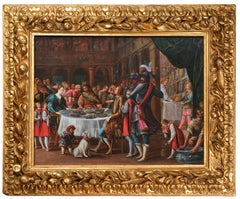
Attributed à H. Francken II, 17th c. Anwerp - The prodigal son among courtesans

Attributed à H. Francken II, 17th c. Anwerp - The prodigal son among courtesans

Located in PARIS, FR

The Prodigal Son Among Courtesans Attributed to Hieronymus Francken II (Antwerp 1578-1623) Early 17th century Antwerp school Oil on oak panel, Dimensions: H. 52.5 cm (20.67 in), W. 74 cm (29.14 in) Flemish-style moulded wood frame Frame: h. 78 cm (h. 30.70 in.), w. 100 cm (39.37 in.) This artwork is sold with a certificate of authenticity guaranteeing its origin, date of execution, and attribution to the artist. At first glance, this festive and joyful painting depicts a group of elegantly dressed people dancing to the sound of an orchestra in a richly decorated interior with a wide opening onto a rural exterior. However, the real theme is cleverly concealed by the painter and is only discernible through the artifice of a small scene in the background where we see a half-naked man, in the company of the pigs next to a makeshift shelter. In fact, beyond the pleasant and apparently superficial character of the painting, it is a subject taken from the parable of the prodigal son in the Gospel. The illustrated episode is the prodigal son among courtesans. Even if the viewer's attention is drawn to the central couple (prodigal son embracing a pretty courtesan) doing the dance steps, the artist takes care in a narrative approach of all the groups and ancillary scenes in order to create a rich and varied composition. Thus the musicians seated on a raised platform are depicted with great skill, their faces animated, their clothes abundantly varied. The theme of music, which has always been associated with that of sensuality and physical love, helps to exacerbate licentious pleasures. The merry company dances "Spanish pavane", a slow court dance from the sixteenth century, danced close to the ground by couples arranged in a procession, which was probably introduced to the south of the Netherlands around 1600 during the governance of Albrecht VII and the daughter of the King of Spain Isabella Clara Eugenia in Brussels. The interior of the house is also carefully elaborated, the embossed leather dyes on the walls, the middle sideboard (typical in Francken interiors), where the rich gold and silver crockery is placed in front of the painting "Andromeda chained to the rock and Perseus arriving to rescue her". The inclusion of a contemporary and probably extant pictorial work is also one of the characteristics of the Francken family, among them Frans Francken the Younger...

Category

Early 17th Century Old Masters Interior Paintings
Materials

Oak, Oil

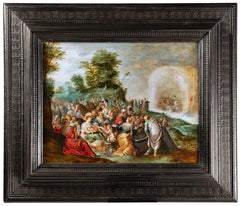
The Crossing of the Red Sea, 17th Century Flemish, Oil on Panel, Frans Francken

The Crossing of the Red Sea, 17th Century Flemish, Oil on Panel, Frans Francken

By Frans Francken II

Located in PARIS, FR

The Crossing of the Red Sea Workshop of Frans Francken II (Antwerp, 1581–1642) Antwerp, first half of the 17th century Oil on oak panel Dimensions: H. 49.5 cm × W. 64.5 cm Moulded a...

Category

17th Century Old Masters Figurative Paintings

Materials

Oil, Wood Panel

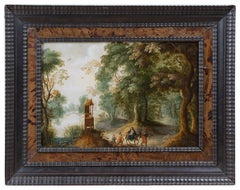
17th c. Flemish - Landscape with Flight to Egypt - Antwerp circa 1630

17th c. Flemish - Landscape with Flight to Egypt - Antwerp circa 1630

Located in PARIS, FR

LANDSCAPE WITH FLIGHT TO EGYPT, JASPER VAN DER LANEN (ANTWERP, 1585 - 1634) 17TH CENTURY FLEMISH SCHOOL ANTWERP CIRCA 1630 Oil on copper, dimensions: h. 10.23 in, w. 14.96 in Flemish style frame in ebonized wood adorned with wavy moldings and wood veneer. Framed dimensions: h. 17.32 in, w. 21.65 in This artwork is sold with a certificate of authenticity guaranteeing its origin, date of execution, and attribution to the artist. Provenance: Philips auction...

Category

Early 17th Century Old Masters Figurative Paintings

Materials

Copper

You May Also Like

18th Century Venice Jacopo Fabris Venice Rialto Bridge Oil on Canvas Blue

18th Century Venice Jacopo Fabris Venice Rialto Bridge Oil on Canvas Blue

Located in Sanremo, IT

Painting oil on canvas measuring 70 x 90 cm without frame and 82 x 102 cm with frame depicting View of the Grand Canal with the Rialto Bridge. The work under examination depicting a...

Category

Mid-18th Century Italian School Landscape Paintings

Materials

Canvas, Oil