Want more images or videos?
Request additional images or videos from the seller
1 of 6

Unknown
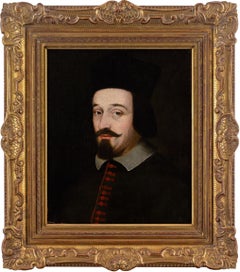
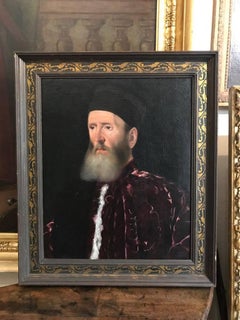
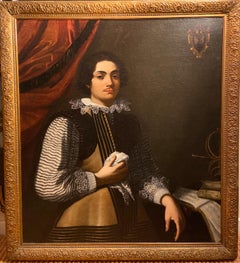
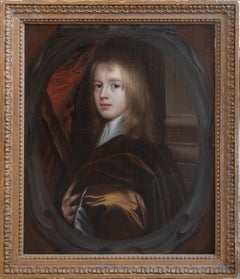
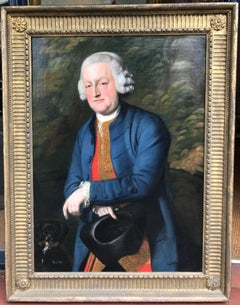
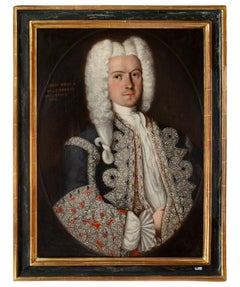
16th Century Oil Painting Portrait of Sir Francis Drake

1587

$41,755.36List Price

You May Also Like

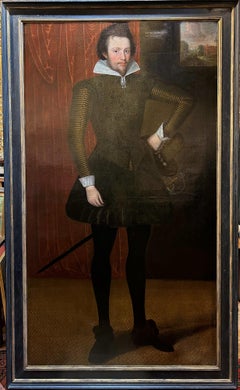
Sir Rowland Cotton (1581 – 1634), Tudor Oil on Canvas, Life Size Painting

Sir Rowland Cotton (1581 – 1634), Tudor Oil on Canvas, Life Size Painting

Located in London, GB

Oil on original canvas Image size: 78 1/4 x 44 inches (199 x 112 cm) Contemporary style frame Provenance Sir Rowland Cotton, 1608 Family Descent Private Collection Sir Rowland Cot...

Category

17th Century English School Figurative Paintings

Materials

Canvas, Oil

Portrait of William Herbert, 3rd Earl of Pembroke, Early 17th Century Portrait

Portrait of William Herbert, 3rd Earl of Pembroke, Early 17th Century Portrait

Located in London, GB

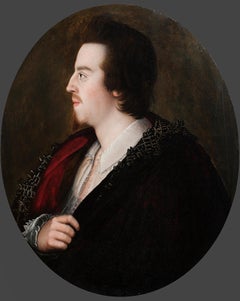
English School, (circa 1600) Portrait of William Herbert, 3rd Earl of Pembroke Oil on panel, oval Image size: 29¼ x 23⅞ inches Painted wooden frame Provenance: 176, Collection of Francis Greville, 1st Earl of Warwick. The Trustees of the Lord Brooks’ Settlement, (removed from Warwick Castle). Sotheby’s, London, 22nd March 1968, lot 81. Painted onto wooden panel, this portrait shows a dark haired gentleman in profile sporting an open white shirt. On top of this garments is a richly detailed black cloak, decorated with gold thread and lined with a sumptuous crimson lining. With the red silk inside it’s all very expensive and would fall under sumptuary laws – so this is a nobleman of high degree. It’s melancholic air conforms to the contemporary popularity of this very human condition, evident in fashionable poetry and music of the period. In comparison to our own modern prejudices, melancholy was associated with creativity in this period. This portrait appeared in the earliest described list of pictures of Warwick castle dating to 1762. Compiled by collector and antiquary Sir William Musgrave ‘taken from the information of Lord & Lady Warwick’ (Add. MSS, 5726 fol. 3) is described; ‘8. Earl of Essex – an original by Zuccharo – seen in profile with black hair. Holding a black robe across his breast with his right hand.’ As tempting as it is to imagine that this is a portrait of Robert Devereux, the 2nd Earl Essex, we might take this with a pinch of salt. Its identification with this romantic and fatal Elizabethan might well have been an attempt to add romance to Warwick Castle’s walls. It doesn’t correspond all that well with Essex’s portraits around 1600 after his return from Cadiz. Notably, this picture was presumably hung not too far away from the castle’s two portraits of Queen Elizabeth I. The first, and undoubtedly the best, being the exquisite coronation portrait that was sold by Lord Brooke in the late 1970s and now hangs in the National Portrait Gallery. The second, described as being ‘a copy from the original at Ld Hydes’, has yet to resurface. The portrait eventually ended up being hung in the State Bedroom of Warwick Castle. Archival documents present one other interesting candidate. The Greville family’s earliest inventory of paintings, made in 1630 at their home Brooke House in Holborn, London, describes five portraits of identified figures. All five belonged to the courtier, politician and poet Sir Fulke Greville (1554-1628), 1st Baron Brooke, and were hung in the ‘Gallerie’ of Brooke House behind yellow curtains. One of them was described as being of ‘Lord of Pembrooke’, which is likely to have been William Herbert (1580-1630), 3rd Earl of Pembroke. William was the eldest son of Greville’s best friend’s sister Mary Sidney, and was brought up in the particularly literary and poetically orientated household which his mother had supported. Notably, the 3rd Earl was one of the figures that Shakespeare’s first folio was dedicated to in 1623. The melancholic air to the portrait corresponds to William’s own pretensions as a learned and poetic figure. The richness of the robe in the painting, sporting golden thread and a spotted black fabric, is indicative of wealth beyond that of a simple poet or actor. The portrait’s dating to around the year 1600 might have coincided with William’s father death and his own rise to the Pembroke Earldom. This period of his life too was imbued with personal sadness, as an illicit affair with a Mary Fitton had resulted in a pregnancy and eventual banishment by Elizabeth I to Wilton after a short spell in Fleet Prison. His illegitimate son died shortly after being born. Despite being a close follower of the Earl of Essex, William had side-stepped supporting Devereux in the fatal uprising against the Queen and eventually regained favour at the court of the next monarch James I. His linen shirt is edged with a delicate border of lace and his black cloak is lined on the inside with sumptuous scarlet and richly decorated on the outside with gold braid and a pattern of embroidered black spots. Despite the richness of his clothes, William Herbert has been presented in a dishevelled state of semi-undress, his shirt unlaced far down his chest with the ties lying limply over his hand, indicating that he is in a state of distracted detachment. It has been suggested that the fashion for melancholy was rooted in an increase in self-consciousness and introspective reflection during the late 16th and early 17th centuries. In contemporary literature melancholy was said to be caused by a plenitude of the melancholy humor, one of the four vital humors, which were thought to regulate the functions of the body. An abundance of the melancholia humor was associated with a heightened creativity and intellectual ability and hence melancholy was linked to the notion of genius, as reflected in the work of the Oxford scholar Robert Burton, who in his work ‘The Anatomy of Melancholy’, described the Malcontent as ‘of all others [the]… most witty, [who] causeth many times divine ravishment, and a kind of enthusiamus… which stirreth them up to be excellent Philosophers, Poets and Prophets.’ (R. Burton, The Anatomy of Melancholy, London, 1621 in R. Strong, ‘Elizabethan Malady: Melancholy in Elizabethan and Jacobean Portraits’, Apollo, LXXIX, 1964). Melancholy was viewed as a highly fashionable affliction under Elizabeth I, and her successor James I, and a dejected demeanour was adopted by wealthy young men, often presenting themselves as scholars or despondent lovers, as reflected in the portraiture and literature from this period. Although the sitter in this portrait is, as yet, unidentified, it seems probable that he was a nobleman with literary or artistic ambitions, following in the same vain as such famous figures as the aristocratic poet and dramatist, Edward de Vere...

Category

Early 17th Century Old Masters Portrait Paintings
Materials

Oil, Wood Panel

END OF THE 16th CENTURY PORTRAIT OF PHILIP II KING OF SPAIN

END OF THE 16th CENTURY PORTRAIT OF PHILIP II KING OF SPAIN

Located in Firenze, FI

Refined oil painting on canvas, framed in carved and gilded wood. This work depicts the portrait of King Philip II of Spain (1527-1598), as evidenced by the inscription at the top ri...

Category

Antique 16th Century Spanish Renaissance Paintings

Materials

Canvas, Paint, Wood

Portrait Noble Man Ceresa Paint Oil on canvas Old master 17th Century Italy Art

Portrait Noble Man Ceresa Paint Oil on canvas Old master 17th Century Italy Art

Located in Riva del Garda, IT

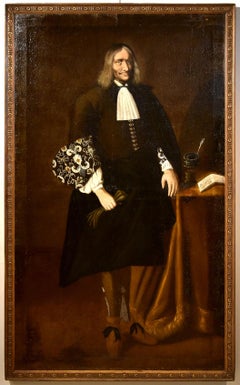
Carlo Ceresa (San Giovanni Bianco 1609 - Bergamo 1679) attributable Full-length portrait of Giacomo Pesenti Oil on canvas (206 x 121 cm - in frame 212 x 133 cm.) This fascinating portrait, portraying a full-length gentleman and datable to the 17th century, illustrates the stylistic and compositional details typical of the pictorial production of the Lombardy area, Bergamo in particular. This reference is reflected in elements such as the natural light, the sober and austere setting and, above all, the subtle psychological characterisation of the face. We are inclined to identify the hand of portrait painter Carlo Ceresa, one of the most illustrious Bergamasque figure painters of the 17th century, capable of developing a style of intense realism and acute psychological investigation. In his works, and our portrait perfectly reflects his canons, an extraordinary naturalistic imprint, great realism and remarkable essentiality are evident. Those traits of severity, moral rigour and austerity typical of his portraiture find a perfect balance here: never courtly or rhetorical, his portraits are profoundly linked to the concept of counter-reform. Immortalising the main personalities of the time, he established himself as a point of reference for the Bergamasque aristocracy, from the Vertova to the Pesenti to the Secco Suardo. The subject of the portrait is Giacomo Pesenti, here immortalised life-size in a rigorous black suit, his left hand resting on a table, on which is placed the necessities for writing and a manuscript, and his right hand, with a sealed ring on his little finger, abandoned along his side while he holds his gloves. He wears a suit of incredible rigour, dressed as befits a man of his high social standing, while the sharp light focuses on his face, with an intensity that seems to be accentuated by the reflection of the white collar, with its sharp profile. For Ceresa, it is not the richness of the garment that gives value to the person portrayed, it is the need to give feeling and bring out the character of the person, and this he succeeds in marvellously, aided by his ability to capture the essence of the person and return it to us in painting through the face and light used as a strong expressive element. In fact, the image highlights that 'counter-reformed' composure typical of the portraiture of painters active in this area and era, adhering to a verism...

Category

17th Century Old Masters Paintings

Materials

Oil

17th Century Round English Portrait of Richard Sackville, 5th Earl of Dorset

17th Century Round English Portrait of Richard Sackville, 5th Earl of Dorset

Located in Milford, NH

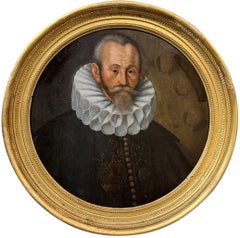
A finely detailed round portrait of the 5th Earl of Dorset, Richard Sackville (1622–1677), an English peer, politician, and Fellow of the Royal Society. Before inheriting the earldom...

Category

17th Century Portrait Paintings

Materials

Oil, Wood Panel

Early 17th Century by Tiberio Titi Portrait of a Gentleman Oil on panel

Early 17th Century by Tiberio Titi Portrait of a Gentleman Oil on panel

Located in Milano, Lombardia

Tiberio Titi (Florence, Italy, 1573 – 1638) Title: Portrait of a Gentleman Medium: Oil on panel Dimensions: Without frame 122 x 91 cm – with frame 162 x 133 x 10 cm Not signed Publ...

Category

Early 17th Century Old Masters Portrait Paintings
Materials

Oil, Wood Panel

Mid-17th-Century Spanish School Oil Painting, Portrait Of A Theologian

Mid-17th-Century Spanish School Oil Painting, Portrait Of A Theologian

Located in Cheltenham, GB

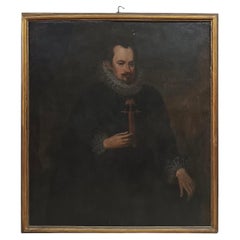
This mid-17th-century Spanish oil on canvas depicts a dignified man of learning - a theologian, or perhaps a cathedral canon. Dressed in a black cassock, marked by a vertical row of...

Category

Mid-17th Century Baroque Portrait Paintings

Materials

Canvas, Oil

Portrait Man Pourbus 16/17th Century Paint Oil on canvas Old master Flemish

Portrait Man Pourbus 16/17th Century Paint Oil on canvas Old master Flemish

Located in Riva del Garda, IT

Frans Pourbus (Bruges, 1545 - Antwerp, 1581) circle Portrait of a gentleman in Renaissance dress with a black doublet and ruff Late 16th century Oil on canvas 46 x 32 cm. - 65 x 53...

Category

16th Century Old Masters Paintings

Materials

Oil

Fine British Aristocratic Portrait of a Nobleman Lord Jeffreys of Wem

Fine British Aristocratic Portrait of a Nobleman Lord Jeffreys of Wem

Located in Cirencester, Gloucestershire

Portrait of Lord Jeffreys of Wem British School, 20th century (presumably after an earlier work) oil painting on canvas, framed framed: 30.5 x 24.5 inches canvas: 26 x 20 inches prov...

Category

20th Century Old Masters Portrait Paintings
Materials

Oil, Canvas

More From This Seller

View All
Lady Dormore - A 16th Century Portrait of a key member of Shakespeare's England

Lady Dormore - A 16th Century Portrait of a key member of Shakespeare's England

Located in London, GB

Lady Dormer, Mary Browne c. 1592 oil on panel 35 x 29 inches, unframed; 41 x 34.75 inches, inc. frame Inscribed 'Lady Dormore' Mary married Henry Wriothesley, 2nd Earl of Southampton who gave birth to Henry Wriothesley, 3rd Earl of Southampton - one of the great figures in Shakespears"s circle and founder of the Virginia company, developers of Virginia USA. Henry Wriothesley, born 6 October 1573 at Cowdray House, Sussex, was the only son of Henry Wriothesley, 2nd Earl of Southampton, by Mary Browne, the only daughter of Anthony Browne, 1st Viscount Montague, and his first wife, Jane Radcliffe.[5] He had two sisters, Jane, who died before 1573, and Mary (c. 1567 – 1607), who in June 1585 married Thomas Arundell, 1st Baron Arundell of Wardour.[6] After his father's death, Southampton's mother married firstly, on 2 May 1595, as his second wife, Sir Thomas Heneage (d. 17 October 1595), Vice-Chamberlain of the Household, and secondly, between 5 November 1598 and 31 January 1599, Sir William Hervey. She died in November 1607.[7] Early life When his father died on 4 October 1581 Southampton inherited the earldom and landed income valued at £1097 6s per annum. His wardship and marriage were sold by the Queen to her kinsman, Charles, Lord Howard of Effingham, for £1000. According to Akrigg, Howard then "entered into some further agreement, of which no documentation can now be found, which transferred to Lord Burghley personally the custody and marriage of the young Earl, but left Howard holding his lands", and late in 1581 or early in 1582 Southampton, then eight years of age, came to live at Cecil House in the Strand.[8] In October 1585, at age twelve, Southampton entered St John's College, Cambridge,[9] graduating M.A. on 6 June 1589.[10] His name was entered at the Gray's Inn legal society before he left the university, and he was admitted on 29 February 1588.[11] On Southampton's 16th birthday, 6 October 1589, Lord Burghley noted Southampton's age in his diary, and by 1590 Burghley was negotiating with Southampton's grandfather, Anthony Browne, 1st Viscount Montague, and Southampton's mother, Mary, for a marriage between Southampton and Lord Burghley's eldest granddaughter, Elizabeth Vere, daughter of Burghley's daughter, Anne Cecil, and Edward de Vere...

Category

16th Century Old Masters Figurative Paintings

Materials

Oil

16th Century Italian Renaissance Old Master Portrait of a Procuratore

16th Century Italian Renaissance Old Master Portrait of a Procuratore

By Jacopo Bassano

Located in London, GB

Jacopo BASSANO (c. 1510-1592, Italian) Portrait of a Procuratore Oil on canvas 30 ¼ x 26 inches (including frame) Provenance: Lucien Bonaparte’s Collection (as Portrait of Doge Priuli, Tiziano); Rich-mond, Virginia Museum, Portrait of Doge Lorenzo Priuli. The painting is a portrait of a man half-length, on a black background. It is a three-quarter portrait, according to a custom very common in the genre of portraiture in sixteenth century. The man is wearing a decorated...

Category

16th Century Old Masters Portrait Paintings
Materials

Oil

17th Century Oil Painting Portrait of a Young English Boy

17th Century Oil Painting Portrait of a Young English Boy

By Gerard Soest

Located in London, GB

Gerard SOEST (1600 - 1681) Portrait of a Young Boy oil on canvas 35.5 x 30.5 inches inc. frame Gerard Soest (circa 1600 – 11 February 1681), also known as Gerald Soest, was a portra...

Category

17th Century Old Masters Portrait Paintings
Materials

Oil

18th Century Oil Painting Portrait of Phillip, 6th Viscount Wenman.

18th Century Oil Painting Portrait of Phillip, 6th Viscount Wenman.

By Nathaniel Dance-Holland

Located in London, GB

Sir Nathaniel Dance-Holland (1750-1811) was an English portrait painter and one of the founding members of the Royal Academy in 1768. Justly celebrated in his lifetime he won several...

Category

Late 18th Century Old Masters Portrait Paintings
Materials

Oil

A Portrait of a Gentleman, thought to be Moses Diego Lopez Pereira

A Portrait of a Gentleman, thought to be Moses Diego Lopez Pereira

Located in London, GB

Austrian School, 18th Century A Portrait of a Gentleman, thought to be Moses Diego Lopez Pereira, 1st Baron d’Aguilar, in an elaborate coat and a powdered wig Oil on canvas Provena...

Category

18th Century Paintings

Materials

Canvas, Oil