Want more images or videos?
Request additional images or videos from the seller
1 of 12

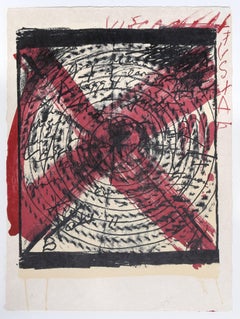
Antoni Tàpies
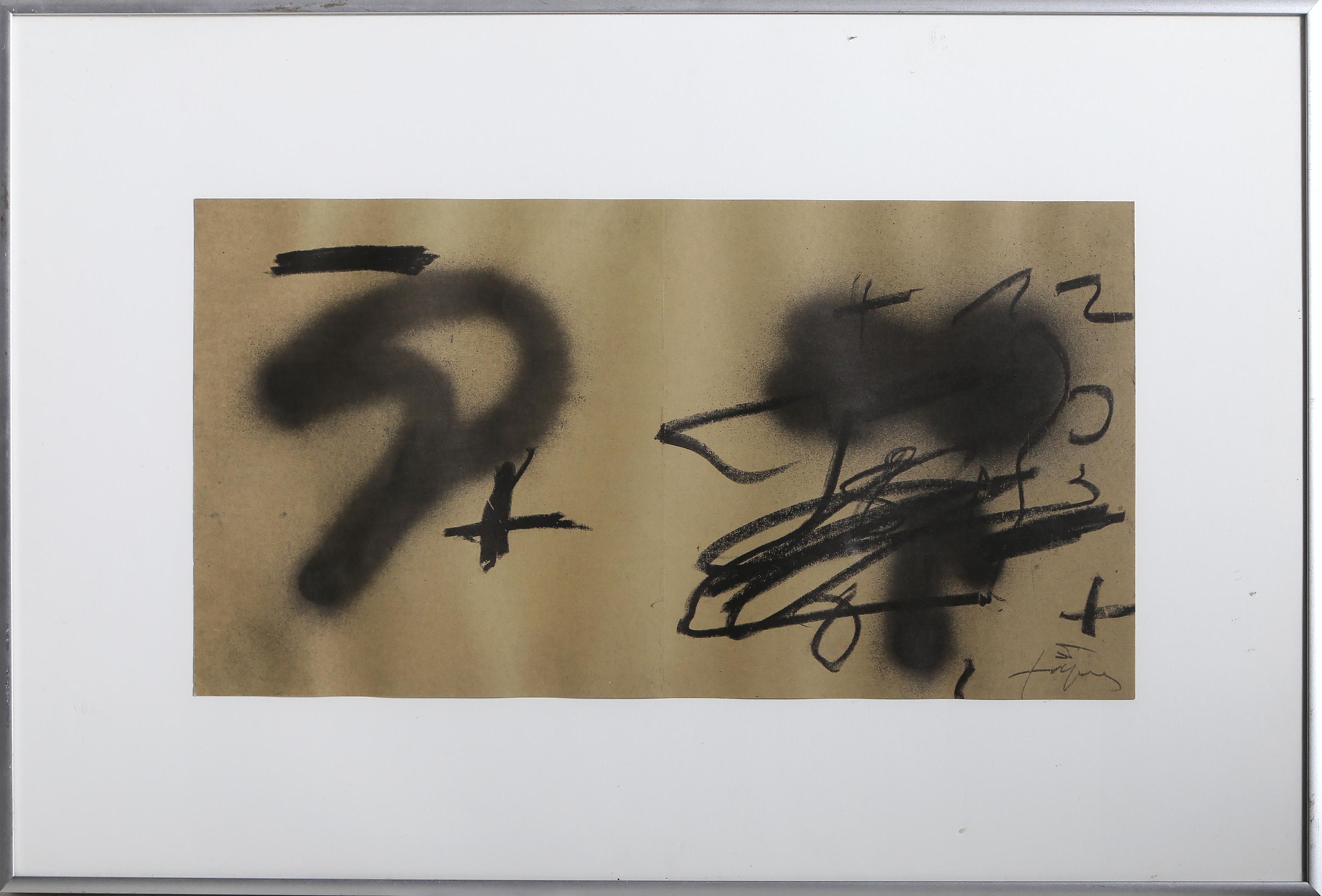
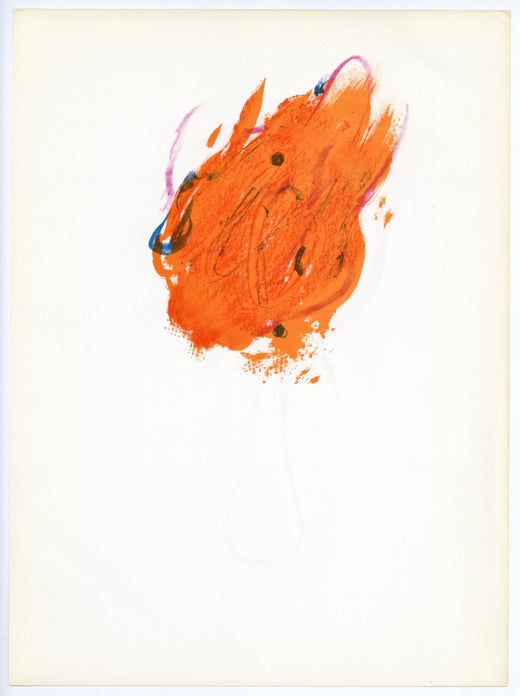
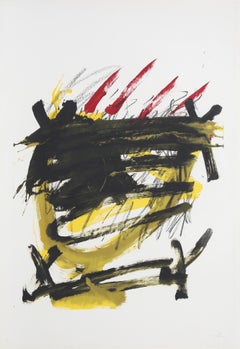
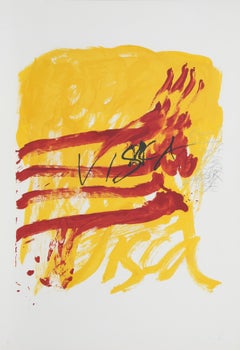
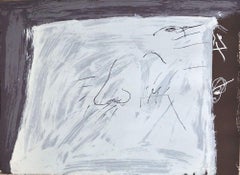
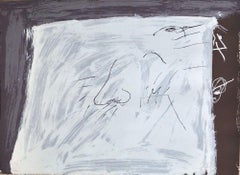
Tapies, Dibujos No. 2, from the Berliner-Suite, Albright Knox Museum, lithograph

1974

$2,750
£2,071.04
€2,419.86
CA$3,896.29
A$3,913.59
CHF 2,269.21
MX$47,749.87
NOK 26,261.24
SEK 26,945.40
DKK 18,089.43

About the Item

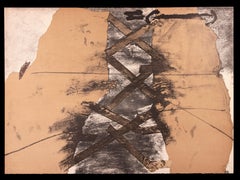
Dibujos #2 Color lithograph, 1974 Signed and numbered in pencil (see photos) From: Berliner Suite (10 plates) Publisher: Proplaen Verlag, Berlin, 1975 Edition: 150 (141/150) Exhibited: Virginia Commonwealth University, School of the Arts, Richmond, VA, Sept. 1-Oct 17, 1988 (see label) Albright Knox Art Gallery, Rental Gallery (label), price $5,000. on label Provenance: Martha Jackson Gallery, New York (label), Tapies first American dealer Anderson Gallery, Buffalo, New York (label) David Anderson Grandchildren Trust Exhibition and institutional history: Albright-Knox Art Gallery Rental-Sales Gallery, Buffalo, New York; Anderson Gallery, School of the Arts, Virginia Commonwealth University, Richmond, September 1–October 17, 1988. The portfolio and Berlin The title Berliner-Suite establishes a German context without turning the portfolio into a literal description of Berlin. Tàpies rarely represented a city through recognizable monuments. Instead, he evoked place through surfaces and accumulated signs. In this suite, Berlin may be understood as a historical and psychological environment: a city marked by division, reconstruction, political inscription, and walls carrying successive layers of paint, posters, graffiti, damage, and repair. Provenance and exhibition history The provenance through the Martha Jackson–David Anderson circle gives this impression exceptional historical context. Martha Jackson was among the most consequential American dealers of postwar international art. Her gallery introduced American audiences to European and Latin American artists at a moment when New York’s market was heavily oriented toward domestic Abstract Expressionism. Her program placed Tàpies within an international conversation that included Art Informel, European matter painting, and related forms of gestural abstraction. Martha Jackson died in 1969, before the creation of the Berliner-Suite. Accordingly, the work cannot literally have been owned or exhibited by her during her lifetime. The Martha Jackson Gallery name nevertheless continued in use for a period under her son, David K. Anderson, who assumed control after her death and subsequently operated the David Anderson Gallery. The Smithsonian’s Archives of American Art confirms this succession and the renaming of the business. Smithsonian Archives of American Art The labels should therefore be read as evidence of gallery succession and inventory history, rather than as proof of Martha Jackson’s personal ownership. The Martha Jackson Gallery label bears inventory number G3051 and identifies the object as “Tapies—Dessins,” a lithograph measuring approximately 21⅜ × 30 inches. The corresponding Anderson Gallery label retains the same number, 63051/G3051, and records the title, edition, dimensions, and storage location. Together, these labels demonstrate continuity from the post-1969 Martha Jackson business into David Anderson’s gallery operation. That continuity matters because David Anderson preserved and extended his mother’s commitment to international postwar art. The close relationship between the Anderson family and the Albright-Knox is well documented. In 1974 David and Rebecca Anderson donated forty-four works from Martha Jackson’s collection to the museum, where they formed the nucleus of the Martha Jackson Collection. The museum notes that Jackson had spent decades cultivating relationships between important contemporary artists, collectors, and the institution. Buffalo AKG Art Museum The Albright-Knox Rental-Sales Gallery label provides direct evidence that this particular impression entered the museum’s public-facing circulation program. It records Tàpies as the artist, Anderson Gallery as the consigning gallery, the title Dibujos #2, the date 1974, and a retail price of $5,000, with a rental charge of $31. This is not the same as inclusion in a formal curated exhibition in the museum’s principal galleries. It does, however, establish documented presentation and availability through an Albright-Knox program—an institutional association substantially stronger than an undocumented dealer tradition. A further label records the work at the Anderson Gallery, School of the Arts, Virginia Commonwealth University, Richmond, from September 1 through October 17, 1988, under reference T88.7.44. This constitutes evidence of an identifiable exhibition or gallery presentation. The surviving label does not give the exhibition’s title, so a definitive title should not be supplied without consulting the Anderson Gallery archives or the 1988 exhibition checklist. The subsequent passage to the David Anderson Grandchildren’s Trust strengthens the chain of custody. Rather than entering the market through a sequence of anonymous owners, the impression apparently remained within the Anderson family’s gallery and trust structure. The provenance thus connects the sheet to a notable American dealer dynasty, a major museum’s educational sales program, and a documented university-gallery presentation. The labels do more than record ownership; they trace the American reception and circulation of Tàpies’s graphic work through a network linking Martha Jackson’s legacy, David Anderson’s gallery, the Albright-Knox Art Gallery, and Virginia Commonwealth University. That history gives the print value as both an individual work of art and a document of how European postwar abstraction was promoted, exhibited, and collected in the United States.
  • Creator:
    Antoni Tàpies (1923 - 2012, Spanish)
  • Creation Year:
    1974
  • Dimensions:
    Height: 21.75 in (55.25 cm)Width: 30 in (76.2 cm)
  • Medium:
  • Movement & Style:
  • Period:
  • Condition:
    Very good. Minor toning of the paper on extreme edges. Framed under plexi in a thin wooden frame. Archival framing by Davis Anderson Gallery.
  • Gallery Location:
    Fairlawn, OH
  • Reference Number:
    Seller: FA94991stDibs: LU14010363622

More From This Seller

View All
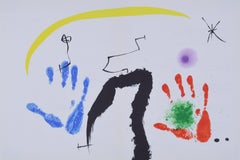
Abstract, Joan Miro, lithograph, 1973, Sobreteixims I

Abstract, Joan Miro, lithograph, 1973, Sobreteixims I

By Joan Miró

Located in Fairlawn, OH

Sobreteixims I Color lithograph, 1973 Unsigned (as issued) From: Derrière le Miroir, No. 203. Large edition Published by Maeght Éditeur, Paris Lithographs printed by Lourlot, Paris P...

Category

1970s Abstract Abstract Prints

Materials

Lithograph

Abstract Expressionist Drawing, Ink on Textured Paper, Circa 1958

Abstract Expressionist Drawing, Ink on Textured Paper, Circa 1958

By Rolph Scarlett

Located in Fairlawn, OH

Untitled (Abstract Expressionist Drawing)) Ink on textured paper, c. 1958 Signed lower right: Scarlett (see photo) Note: A rare mid to late 1950s example of the artist's abstract exp...

Category

1950s Abstract Expressionist Abstract Drawings and Watercolors

Materials

Ink

Miro lithograph, Les Mans (The Hinds), Abstraction, 1971

Miro lithograph, Les Mans (The Hinds), Abstraction, 1971

By Joan Miró

Located in Fairlawn, OH

Les Mans (The Hinds) Color lithograph, 1971 Unsigned (as issued) From: Derrière le Miroir, No. 193-194, Peintures sur papier, dessins Large edition Published by Maeght Éditeur, Paris...

Category

1970s Abstract Abstract Prints

Materials

Lithograph

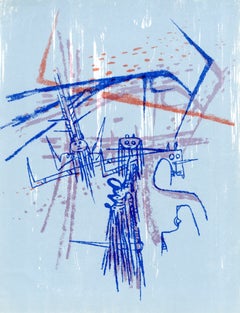
Cuban, Surrealist, lithograph, Paris School, XXe Siecle, 1963, Wilfredo Lam

Cuban, Surrealist, lithograph, Paris School, XXe Siecle, 1963, Wilfredo Lam

By Wilfredo Lam

Located in Fairlawn, OH

Wilfredo Lam (1902-1982) Les affinities ambigues Color lithograph, 1963 Unsigned (as issued) From: XXe Siecle, No. 21 Publisher: G. di San Lazzaro, Paris. Printer: Mourlot? Large edi...

Category

1960s Surrealist Figurative Prints

Materials

Lithograph

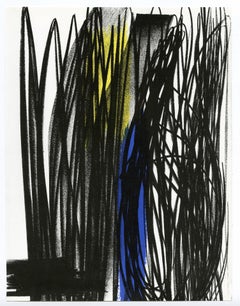
Untitled (for the journal, XX Siécle)

Untitled (for the journal, XX Siécle)

By Hans Hartung

Located in Fairlawn, OH

Untitled (for the journal, XXe Siécle) Color lithograph on wove paper, 1973 Unsigned (as issued) From: XXe Siecle,, December 1973, No. 41 Published by G. di San Lazzaro for A. Maeght, Paris Printed by Mourlot, Paris Edition 3000 (There was also a signed edition of 75 on larger paper) Catalogue raisonné: Subsequent to Schmücking Condition: Excellent Image/Sheet size: 12 1/4 x 9 1/2 inches "Hans Hartung B. 1904, LEIPZIG, GERMANY; D. 1989, ANTIBES, FRANCE Hans Hartung was born on September 21, 1904, in Leipzig, Germany. He cultivated interests in philosophy, astronomy, music, and religion at a young age before he turned to painting. Early in his career he found inspiration in the works of Rembrandt van Rijn and Francisco de Goya, and later influences included Lovis Corinth, Oskar Kokoschka, Emil Nolde, and Max Slevogt. At just 17, Hartung began to experiment with abstraction, synthesizing the graphic techniques of his artistic models while completely eliminating figurative elements. Hartung entered the Universität Leipzig in 1924 to study philosophy and art history but left to concentrate on painting at the Kunstakademie, Leipzig. While Hartung was advised to pursue further training at the Bauhaus, he opted to study at the Kunstakademie, Dresden. In 1926 Hartung saw an exhibition of international art in Dresden, which exposed him to Cubism and other modern styles that had emerged in France. His encounters with works by Georges Braque, Juan Gris, Henri Matisse, and Pablo Picasso, along with various travels abroad, encouraged him to move to Paris in 1926, where he spent the majority of his time until 1932, although he passed the summer of 1928 in Munich studying under artist and theorist Max Dörner. In 1929 Hartung married the Norwegian painter Anna-Eva Bergman. After several years abroad, they tried to reestablish themselves in Berlin in 1935 but were soon forced into exile by the National Socialist regime. In the years leading up to World War II, Hartung's work reflected his attempts to reconcile chance and control, combining expressive graphic elements with patches of black and color to produce a sense of spontaneity. After the outbreak of the war, Hartung served in the Foreign Legion (1939–40), and later in the Free French (1943–44). He was gravely wounded at the German Front, and one of his legs was amputated. In 1945 he returned to Paris and resumed painting and the following year earned French citizenship. Hartung was a major figure in Art Informel and Tachisme (from the French tache, meaning blot or stain). While Hartung's postwar paintings are generally described as exhibiting a calligraphic quality, his work moved through a series of phases, becoming less spontaneous and more formally aggressive than his work from the late 1930s. In many works of the late 1940s and early 1950s, such as T-50 Painting 8 (T-50 peinture 8, 1950), he applied large areas of color to the canvas on which he painted a combination of bold black brushstrokes and thinner frenetic linear strokes. Hartung received several international awards, including the 1956 award for the Europe-Africa section at the Guggenheim International Award and the International Grand Prize for painting at the 1960 Venice Biennale. His first major group show was organized by curator and critic Christian Zervos at the Jeu de Paume, Paris (1937). After settling permanently in Paris, he exhibited regularly at the Salon des Surindépendants (1935, 1937, 1945). His first solo show took place at Galerie Lydia...

Category

1970s Abstract Abstract Prints
Materials

Lithograph

Untitled (Martha Jackson Gallery Poster)

Untitled (Martha Jackson Gallery Poster)

By Walasse Ting

Located in Fairlawn, OH

Untitled (Martha Jackson Gallery Poster) Lithograph, 1960 Signed and dated in red crayon by the artist Edition 90 (63/90) 1st state before letters for the poster created for the Martha Jackson Gallery, Ting Exhibition, April 23-May 31, 1960 Printed on wove paper with a ”JAPAN' watermark Edition: 90 Provenance: Martha Jackson Gallery, New York Anderson Gallery David K. Anderson Collection (label) Walasse Ting (Chinese: 丁雄泉, 13 October 1929 – May 17, 2010)[1] was a Chinese-American visual artist and poet. His colorful paintings have attracted critical admiration and a popular following. Common subjects include nude women and cats, birds and other animals. He was born on 13 October 1929 in Shanghai, left China in 1946 and lived for a while in Hong Kong, then settled in Paris in 1952.[2] There, he associated with artists such as Karel Appel, Asger Jorn, and Pierre Alechinsky, members of the avant-garde group CoBrA. Ting started his career as an artist in Paris in the 1950s, where he became friends with artists such as Sam Francis and Pierre Alechinsky. His early works were influenced by the CoBrA group, a European art movement known for its use of expressive, childlike imagery. In the 1960s, Ting moved to New York City and became associated with the Pop Art movement. Ting is perhaps best known for his series of paintings featuring women, which he called "Cat Women...

Category

1960s Abstract Abstract Prints
Materials

Lithograph

You May Also Like

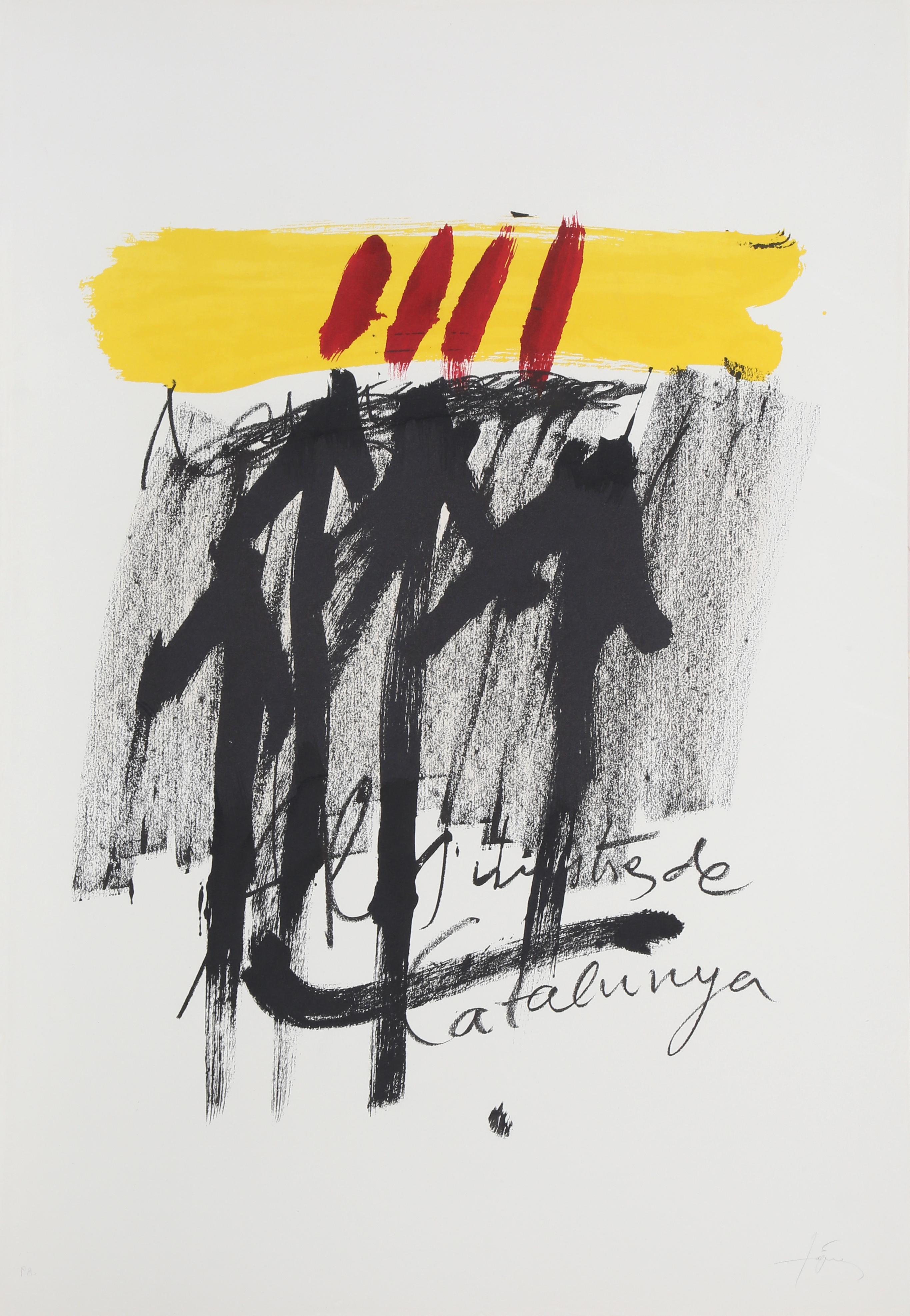
No. 4 from "Als Mesters de Catalunya, " Lithograph by Antoni Tapies, 1974

No. 4 from "Als Mesters de Catalunya, " Lithograph by Antoni Tapies, 1974

By Antoni Tàpies

Located in Long Island City, NY

This lithograph was created by Catalan artist Antoni Tapies. Tàpies started as a surrealist painter, and his early works were influenced by Paul Klee and Joan Miró. However, he soon ...

Category

1970s Abstract Expressionist Abstract Prints

Materials

Lithograph

No. 7 from "Als Mestres de Catalunya, " Lithograph by Antoni Tapies

No. 7 from "Als Mestres de Catalunya, " Lithograph by Antoni Tapies

By Antoni Tàpies

Located in Long Island City, NY

This lithograph was created by Catalan artist Antoni Tapies. Tàpies started as a surrealist painter, and his early works were influenced by Paul Klee and Joan Miró. However, he soon ...

Category

1970s Abstract Expressionist Abstract Prints

Materials

Lithograph

Untitled - Original Lithograph by Antoni Tapies - 1974

Untitled - Original Lithograph by Antoni Tapies - 1974

By Antoni Tàpies

Located in Roma, IT

This original artwork by Antoni Tàpies is one of the 10 colored lithographs of the “Berlin Suite”. Tàpies realized this portfolio in 1974, each lithograph is on Arches wove paper. ...

Category

1970s Contemporary Abstract Prints

Materials

Lithograph

Untitled - Original Lithograph by Antoni Tapies - 1974

Untitled - Original Lithograph by Antoni Tapies - 1974

By Antoni Tàpies

Located in Roma, IT

This original artwork by Antoni Tàpies is one of the 10 colored lithographs of the “Berlin Suite”. Tàpies realized this portfolio in 1974, each lithograph is on Arches wove paper. ...

Category

1970s Contemporary Abstract Prints

Materials

Lithograph

Untitled Lithograph, Antoni Tàpies, Signed, Edition 64/150, 1974

Untitled Lithograph, Antoni Tàpies, Signed, Edition 64/150, 1974

By Antoni Tàpies

Located in Roma, IT

This original artwork by Antoni Tàpies is one of the 10 coloured lithographs of the “Berlin Suite”. Tàpies realized this portfolio in 1974, each lithograph is on Arches wove paper. ...

Category

1970s Contemporary Abstract Prints

Materials

Lithograph

Diana, Abstract Expressionist Lithograph on Japon Paper by Antoni Tapies

Diana, Abstract Expressionist Lithograph on Japon Paper by Antoni Tapies

By Antoni Tàpies

Located in Long Island City, NY

This lithograph was created by Catalan artist Antoni Tapies. Tàpies started as a surrealist painter, and his early works were influenced by Paul Klee and Joan Miró. However, he soon ...

Category

1970s Abstract Expressionist Abstract Prints

Materials

Rice Paper, Lithograph