Abstract Expressionist Abstract Prints

to
120
196
175
526
225
199
Overall Width
to
Overall Height
to
8,924
3,260
1,175
995
838
307
148
144
113
74
33
17
16
93
88
65
27
25
4
1,217
100
2
1
1
13
33
166
313
308
225
852
425
41
15
11
9
7
6
4
4
3
3
3
2
2
2
2
2
2
1
1
1
1
527
298
219
123
100
195
510
1,055
231
Style: Abstract Expressionist
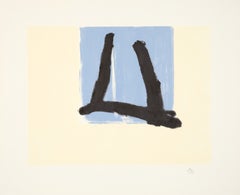
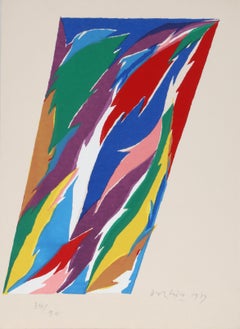
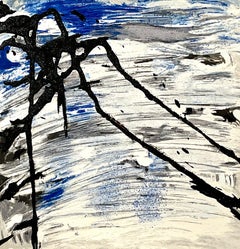
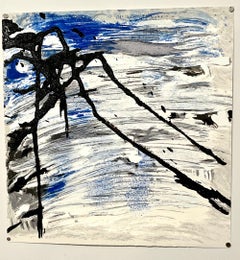
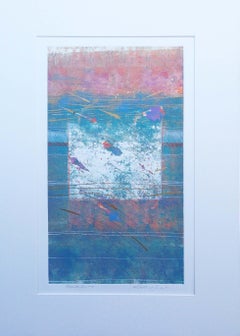
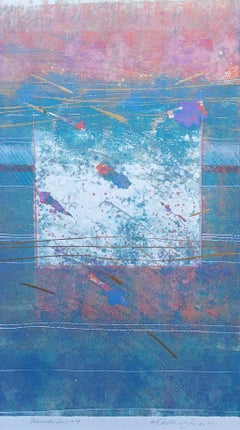
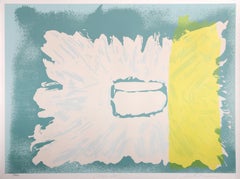
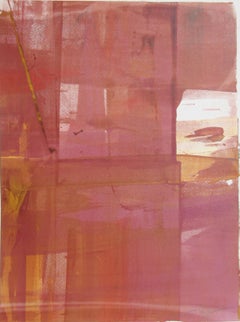
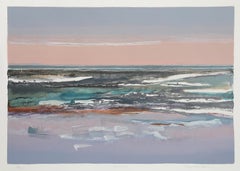
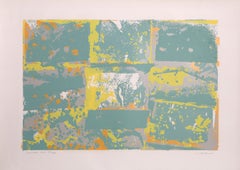
Summer sign - Modern, Expressionism, Aquatint, Light Blue, Abstract, Symbol

Summer sign - Modern, Expressionism, Aquatint, Light Blue, Abstract, Symbol

By Robert Motherwell

Located in Köln, DE

Aquatint in colours with carborundum "Summer Sign" by Robert Motherwell from 1990. The edition on Whatman comprises 55 copies. The present copy is monogrammed in pencil below the...

Category

1990s Abstract Expressionist Abstract Prints

Materials

Color, Aquatint, Carborundum Etching

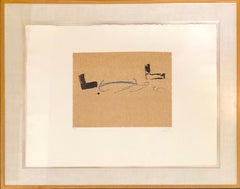
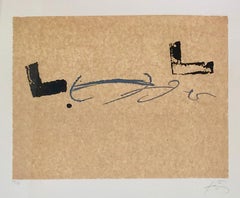
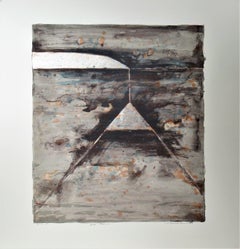
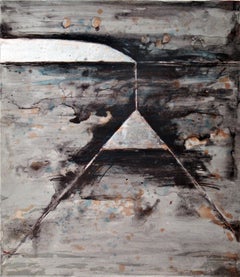
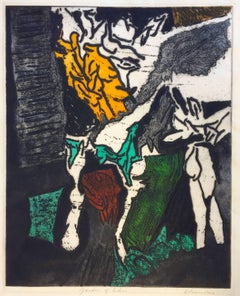
Antoni Tapies Post Modern Abstract Expressionist Aquatint

Antoni Tapies Post Modern Abstract Expressionist Aquatint

By Antoni Tàpies

Located in Surfside, FL

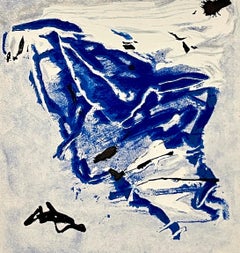
Size includes frame. There is a plate impression at the image that leads me to believe this is an aquatint. Antoni Tàpies i Puig, 1st Marquis of Tàpies (Catalan: 13 December 1923 – ...

Category

20th Century Abstract Expressionist Abstract Prints

Materials

Etching, Aquatint

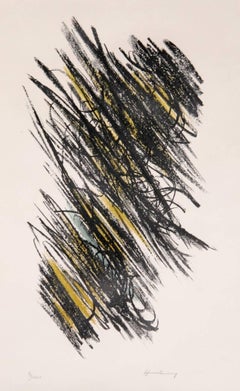
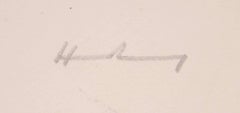
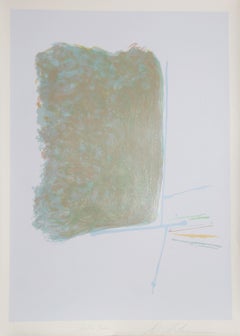
Abstract Expressionist Lithograph by Hans Hartung

Abstract Expressionist Lithograph by Hans Hartung

By Hans Hartung

Located in Long Island City, NY

Artist: Hans Hartung, German (1904-1989) Title: Untitled Year: Circa 1960 Medium: Lithograph, signed and numbered in pencil Edition: 90/100 Size: 26 x 20 inches

Category

1960s Abstract Expressionist Abstract Prints

Materials

Lithograph

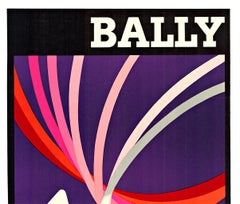
Original "BALLY" Shoe kinetic style vintage poster, 1981

Original "BALLY" Shoe kinetic style vintage poster, 1981

By Jacques Auriac

Located in Spokane, WA

Original linen-backed small-format Bally women's shoe posters. The modern kinetic design of the shoes is represented by lines in different colors on a purple background. The poster does have a black outline around the image. The size is of the original poster and does not include the linen backing size in the measurements. The poster is undated, but all references indicate that this poster is from 1981. Artist: Jacques Auria (1922 - 2003) The poster is in very good condition but did have touch up work during linen backing along the bottom right corner and edge. Using bright, contrasting colors (such as pink, white, and purple) creates a visually engaging composition. The flowing lines and curves suggest motion, fitting for a Bally shoe vintage poster...

Category

1980s Abstract Expressionist Abstract Prints

Materials

Lithograph

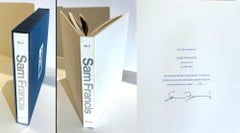
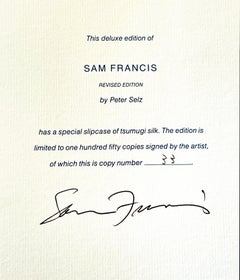
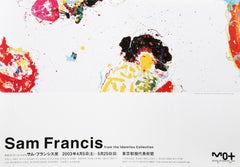
Limited Signed Deluxe Monograph with Slipcase (signed & numbered by Sam Francis)

Limited Signed Deluxe Monograph with Slipcase (signed & numbered by Sam Francis)

By Sam Francis

Located in New York, NY

SAM FRANCIS: Limited Signed Deluxe Edition (Hand signed and numbered by Sam Francis), 1982 Deluxe limited edition hardback monograph with cloth boards, held in special slipcase of ts...

Category

1980s Abstract Expressionist Abstract Prints

Materials

Silk, Paper, Ink, Mixed Media, Lithograph, Offset, Board

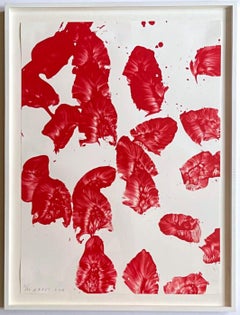
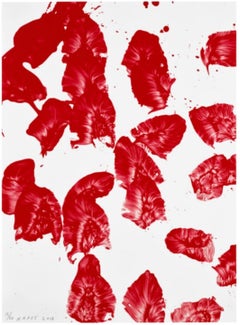
Jamie Nares, When the Language was Young. lithograph on polymer, signed/N Framed

Jamie Nares, When the Language was Young. lithograph on polymer, signed/N Framed

Located in New York, NY

Jamie Nares When the Language was Young, 2010 Lithograph in red on polymer Pencil signed, dated and numbered 13/50 lower front Lithograph in red on acrylic Pencil signed, dated and ...

Category

2010s Abstract Expressionist Abstract Prints

Materials

Plastic, Mixed Media, Lithograph

Litografia Original VIII (Abstract, Modern, Surrealism, Colorful, 50% OFF)

Litografia Original VIII (Abstract, Modern, Surrealism, Colorful, 50% OFF)

By Joan Miró

Located in Kansas City, MO

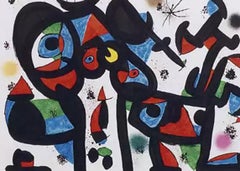
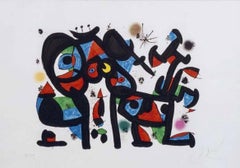
Joan Miró Litografia Original VIII (Abstract, Modern, Surrealism, Colorful, Iconic) Color Lithograph Year: 1975 Size: 13.25 x 20 inches (33.65 x 50.8 cm) Catalogue Raisonné: Queneau,...

Category

1970s Abstract Expressionist Abstract Prints

Materials

Lithograph

Alta Beach
Alta Beach

Alta Beach

Located in San Francisco, CA

This artwork titled "Alta Beach" c.1990 is an original lithograph with silver leaf addition on Arches paper, by Japanese artist Kenji Nanao, 1929-2013. It ...

Category

Late 20th Century Abstract Expressionist Abstract Prints

Materials

Mixed Media

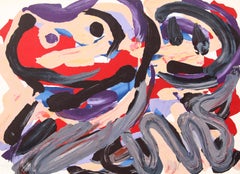
Happy Battle, Abstract Expressionist Lithograph by Karel Appel

Happy Battle, Abstract Expressionist Lithograph by Karel Appel

By Karel Appel

Located in Long Island City, NY

An abstract expressionist lithograph by Karel Appel from 1979. Happy Battle Karel Appel, Dutch (1921–2006) Date: 1979 Lithograph on Arches, Signed and numbered in pencil Edition of ...

Category

1970s Abstract Expressionist Abstract Prints

Materials

Lithograph

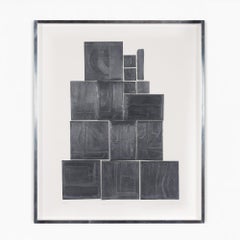
The Great Wall
The Great Wall

The Great Wall

By Louise Nevelson

Located in Toronto, Ontario

Caviar20 is thrilled to present the esteemed work of Louise Nevelson - one of the most revered and unique artists of the 20th century. (Also, an artist who continues to be undervalu...

Category

1970s Abstract Expressionist Abstract Prints

Materials

Metal

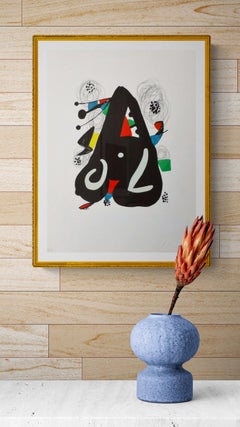
La Mélodie Acide - 9 (Surrealism, Colorful, Modern, ~26% OFF LIMITED TIME ONLY)

La Mélodie Acide - 9 (Surrealism, Colorful, Modern, ~26% OFF LIMITED TIME ONLY)

By Joan Miró

Located in Kansas City, MO

Joan Miró La Mélodie Acide - 9 Color lithograph Year: 1980 Edition: 1500 Artist Dry Stamp lower right, Annotated "H.C" (hors commerce) in pencil lower left Size: 8.2 × 6.6 on 12.9 ...

Category

1980s Abstract Expressionist Abstract Prints

Materials

Lithograph

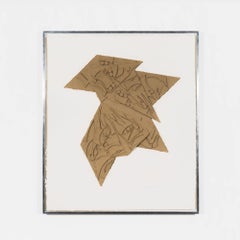
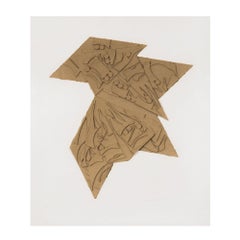
Six Pointed Star
Six Pointed Star

Six Pointed Star

By Louise Nevelson

Located in Toronto, Ontario

Louise Nevelson (1899-1988) is one of the most revered and unique artists of the 20th century. There has been a tremendous renewal of interest and appreciation for Nevelson’s work...

Category

1980s Abstract Expressionist Abstract Prints

Materials

Handmade Paper

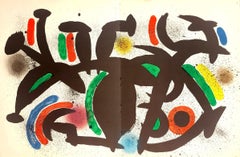
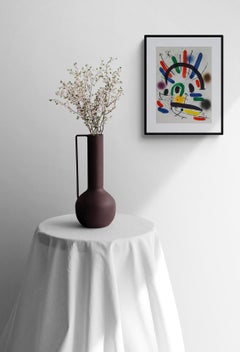
Litografia Original II

Litografia Original II

By Joan Miró

Located in Kansas City, MO

Joan Miró Litografia Original II Color Lithograph Year: 1975 Size: 12.5 × 9.6 inches Catalogue Raisonné: Queneau, Miro Lithographe II, 1952-1963, p.35 Publisher: Maeght Editeur, Pari...

Category

1970s Abstract Expressionist Abstract Prints

Materials

Lithograph

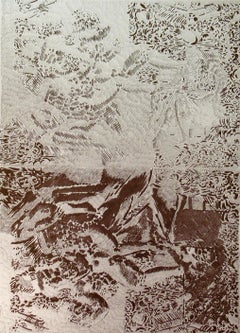
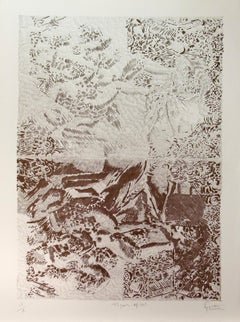
Emil Schumacher Limited Edition Serigraph Terraraph Print Abstract Art Informel

Emil Schumacher Limited Edition Serigraph Terraraph Print Abstract Art Informel

By Emil Schumacher 1

Located in Surfside, FL

Heavily textured abstract print in a serigraph and terragraph technique. It has a raised texture to the surface, A beautiful piece. This listing is for the one print, the cover justification sheet and the photograph are just included for provenance. This is from the limited edition of 100. Hand signed and numbered on colophon page. (They are not signed and numbered on each print) Arches paper. Dimensions: 15.75 X 15.25 These have a texture that feels like a painting. Done in Jaffa Israel based on the Hebrew Bible. Jewish, Judaica interest. Emil Schumacher is among the best-known exponents of Art Informel in Germany. His painting style, which he initially developed in the 1950s under the influence of Wols, is marked by dark, brownish black or brilliant thick red colours and a graffiti like sign language that endow the pictures the expressive character of old cracked masonry. Emil Schumacher (29 August 1912 in Hagen, Westfalen – 4 October 1999 in San José, Ibiza) was a German artist and painter. He was an important representative of abstract expressionism in post-war Germany. As an 18-year-old, Emil Schumacher undertakes a four-week-long bicycle tour to Paris, France. 1932–1935: Studies graphic design at the School of Applied Arts in Dortmund intending to become a graphic designer in advertising. 1935–1939: Independent artist without participating in exhibits. He undertakes study trips by bicycle to the Netherlands and Belgium. 1939–1945: Service obligation as draftsman in an arms factory, the Akkumulatoren–Werke of Hagen. Since 1945: Immediately after end of war, new start as independent artist. 1947: First solo exhibit in the Studio für neue Kunst. Co-founder of the artist group Junger Westen. 1954: Participates in the Willem Sandberg exhibition Deutsche Kunst nach 45 (German Art after 1945) at the Stedelijk Museum Amsterdam: for the first time after World War II, Contemporary German Art is shown abroad. 1955: Participates in the exhibition Peintures et sculptures non-figuratives en Allemagne d’aujourd’hui in Paris. This is the first time, 10 years after the war's end, that René Drouin shows contemporary German art at the Cercle Volney in France. 1956: While searching for new media and materials, Schumacher creates his first 'Tastobjekte' (tactile objects). Conrad von Soest Preis (Conrad-von-Soest Award), Münster, Germany. 1958: Travels to Spain, Italy and Tunisia. Participates in the XXIX. Venice Biennale, Italy. 1958–1960: Professorship at the Hochschule für bildende Künste Hamburg (University of Fine Arts) in Hamburg, Germany. 1959: Participates in the documenta II in Kassel, Germany, as well as the V. São Paulo Art Biennial, Brazil. First solo exhibit in New York at the Samuel M. Kootz Gallery. 1962: Travels to Libya and Tunisia. Summer stay in Anguillara, Lago di Bracciano, Italy. 1963: Solo exhibit as German contribution to the VII. São Paulo Art Biennial, Brazil. Travels to Brazil, Argentina, Uruguay, Peru and Bolivia. Once again summer stay in Anguillara, paintings that originated during the stay are shown in the Galeria La Medusa in Rome. 1964: Participates in the documenta III in Kassel, Germany. 1965: Travels through Yugoslavia, to Montenegro, the Herzegovina, and Bosnia. 1966–77: Professorship at the Academy of Fine Arts, Karlsruhe. 1967–68: Guest professorship at the Minneapolis School of Art, Minneapolis, USA. In Minneapolis, a series of works on paper are created. This series called Minneapolis Suite was exhibited at the Lefebre Gallery in New York and at the Galerie de Montréal in Montréal, Canada. Extensive travels through the USA. 1969: Winter stay on the Island of Djerba in Tunisia. Here, the Djerba gouaches were created over the course of the following years. 1971: Since 1971, frequent stays on Ibiza during spring and summer. 1974: Autumn stay in Cunardo, Lago Maggiore where the first ceramic works are created in Ceramica Ibis. 1983: Travels to Morocco where Suite Maroc, encompassing 36 pages, is created. 1985: Guest of Honor of the German Academy of Rome, Villa Massimo, Italy. 1988: In October 1988, a 10-day stay in Iraq. Design and creation of a 20 m long ceramic wall mural in the new building of the Landtag of North Rhine-Westphalia. 1991: Guest professorship at the Concorso Superiore Internazionale del Disegno of the Fondazione Antonio Ratti, Como, Italy. 1996: Schumacher designs a 20 m long and 3 m high mosaic wall for the Colosseo (Rome Metro) in Rome, Italy. 1998: Commission for mural in the Reichstag building, Berlin (executed in 1999). 1999: Member of the Academy of the Arts of Saxony (Sächsische Akademie der Künste), Dresden, Germany. Publication of the Israeli book 'GENESIS' with 18 Serigraphies in the edition Har-El, Jaffa/ Jerusalem / Israel. Awards 1948: Kunstpreis junger westen from the city of Recklinghausen, Germany. 1955 Art award from the city of Iserlohn, Germany. 1958: Karl Ernst Osthaus Preis (Karl-Ernst-Osthaus Award), 1958: Guggenheim Award (National Section), New York. 1959: Award from the Japanese Cultural Minister in celebration of the V. International Art Exhibition, Tokyo. 1962: Premio Cardazzo, XXX Venice Biennale, Italy. 1962: First prize silver medal, Bang Danh-Du Award in celebration of the 1st International Arts Exhibition, Saigon, Vietnam. 1963: Großer Kunstpreis (Great Art Award) of North Rhine-Westphalia, Düsseldorf, Germany. 1966: Prize of the Governor of Tokyo, in celebration of the 5th International Biennale Exhibition of Prints, Tokyo, 1968: Member of the Academy of Arts Berlin, Germany. 1974: Award of the city of Ibiza in celebration of the Graphic-Biennial 1974. 1978: August Macke Prize of the city of Meschede 1983: Receives Grand Cross of Merit with Star from the Order of Merit of the Federal Republic of Germany. French art critic Michel Tapié named the influential European movement that during the 1950s paralleled Abstract Expressionism in the U.S, Art Informel. Art Informel is and expressionist, artist-oriented abstraction rooted in the works of Wassily Kandinsky, Paul Klee, Jean Dubuffet, and Tachiste and Surrealist automatism. A style primarily of painting that developed in 1945/46 as reaction to geometric abstraction prevailing in post war Paris in the following of the École de Paris. Informel painting emphasises the spontaneous act of painting, the unconscious side of artistic creativity. The process of painting is often more important than what comes out of it. Informel is an international style and can be subdivided into various schools. Tachism [French: "tache" = blot], Action painting, Abstract Expressionism and Art Brut [French = "raw art"] are also considered Informel. By that definition, leading exponents of Informel in the US were Jackson Pollock and Willem de Kooning and in France Wols, Jean Fautrier and Jean Dubuffet. In Germany Informel was at its height in the 1950s and 1960s. The leading exponents of German Informel are Hans Hartung, Emil Schumacher, Karl Fred Dahmen, K.O. Götz, Gerhard Hoehme...

Category

20th Century Abstract Expressionist Abstract Prints

Materials

Screen

Magia Blanca I Lithograph, Abstract Expressionist, Signed, 1981

Magia Blanca I Lithograph, Abstract Expressionist, Signed, 1981

By Joan Miró

Located in New York, NY

'Magia Blanca I'. 1981 Joan Miró Lithograph in colors 23.4 x 35.4 in. /. 60 x 90 cm. Edition of 100, Signed by the Artist Joan Miró’s 'Magia Blanca I' (1981) is a bold and playful c...

Category

1980s Abstract Expressionist Abstract Prints

Materials

Paper, Ink, Watercolor

Emil Schumacher Limited Edition Serigraph Terraraph Print Abstract Art Informel

Emil Schumacher Limited Edition Serigraph Terraraph Print Abstract Art Informel

By Emil Schumacher 1

Located in Surfside, FL

Heavily textured abstract print in a serigraph and terragraph technique. It has a raised texture to the surface, A beautiful piece. This listing is for the one print, the cover justification sheet and the photograph are just included for provenance. This is from the limited edition of 100. Hand signed and numbered on colophon page. (They are not signed and numbered on each print) Arches paper. Dimensions: 15.75 X 15.25 These have a texture that feels like a painting. Done in Jaffa Israel based on the Hebrew Bible. Jewish, Judaica interest. Emil Schumacher is among the best-known exponents of Art Informel in Germany. His painting style, which he initially developed in the 1950s under the influence of Wols, is marked by dark, brownish black or brilliant thick red colours and a graffiti like sign language that endow the pictures the expressive character of old cracked masonry. Emil Schumacher (29 August 1912 in Hagen, Westfalen – 4 October 1999 in San José, Ibiza) was a German artist and painter. He was an important representative of abstract expressionism in post-war Germany. As an 18-year-old, Emil Schumacher undertakes a four-week-long bicycle tour to Paris, France. 1932–1935: Studies graphic design at the School of Applied Arts in Dortmund intending to become a graphic designer in advertising. 1935–1939: Independent artist without participating in exhibits. He undertakes study trips by bicycle to the Netherlands and Belgium. 1939–1945: Service obligation as draftsman in an arms factory, the Akkumulatoren–Werke of Hagen. Since 1945: Immediately after end of war, new start as independent artist. 1947: First solo exhibit in the Studio für neue Kunst. Co-founder of the artist group Junger Westen. 1954: Participates in the Willem Sandberg exhibition Deutsche Kunst nach 45 (German Art after 1945) at the Stedelijk Museum Amsterdam: for the first time after World War II, Contemporary German Art is shown abroad. 1955: Participates in the exhibition Peintures et sculptures non-figuratives en Allemagne d’aujourd’hui in Paris. This is the first time, 10 years after the war's end, that René Drouin shows contemporary German art at the Cercle Volney in France. 1956: While searching for new media and materials, Schumacher creates his first 'Tastobjekte' (tactile objects). Conrad von Soest Preis (Conrad-von-Soest Award), Münster, Germany. 1958: Travels to Spain, Italy and Tunisia. Participates in the XXIX. Venice Biennale, Italy. 1958–1960: Professorship at the Hochschule für bildende Künste Hamburg (University of Fine Arts) in Hamburg, Germany. 1959: Participates in the documenta II in Kassel, Germany, as well as the V. São Paulo Art Biennial, Brazil. First solo exhibit in New York at the Samuel M. Kootz Gallery. 1962: Travels to Libya and Tunisia. Summer stay in Anguillara, Lago di Bracciano, Italy. 1963: Solo exhibit as German contribution to the VII. São Paulo Art Biennial, Brazil. Travels to Brazil, Argentina, Uruguay, Peru and Bolivia. Once again summer stay in Anguillara, paintings that originated during the stay are shown in the Galeria La Medusa in Rome. 1964: Participates in the documenta III in Kassel, Germany. 1965: Travels through Yugoslavia, to Montenegro, the Herzegovina, and Bosnia. 1966–77: Professorship at the Academy of Fine Arts, Karlsruhe. 1967–68: Guest professorship at the Minneapolis School of Art, Minneapolis, USA. In Minneapolis, a series of works on paper are created. This series called Minneapolis Suite was exhibited at the Lefebre Gallery in New York and at the Galerie de Montréal in Montréal, Canada. Extensive travels through the USA. 1969: Winter stay on the Island of Djerba in Tunisia. Here, the Djerba gouaches were created over the course of the following years. 1971: Since 1971, frequent stays on Ibiza during spring and summer. 1974: Autumn stay in Cunardo, Lago Maggiore where the first ceramic works are created in Ceramica Ibis. 1983: Travels to Morocco where Suite Maroc, encompassing 36 pages, is created. 1985: Guest of Honor of the German Academy of Rome, Villa Massimo, Italy. 1988: In October 1988, a 10-day stay in Iraq. Design and creation of a 20 m long ceramic wall mural in the new building of the Landtag of North Rhine-Westphalia. 1991: Guest professorship at the Concorso Superiore Internazionale del Disegno of the Fondazione Antonio Ratti, Como, Italy. 1996: Schumacher designs a 20 m long and 3 m high mosaic wall for the Colosseo (Rome Metro) in Rome, Italy. 1998: Commission for mural in the Reichstag building, Berlin (executed in 1999). 1999: Member of the Academy of the Arts of Saxony (Sächsische Akademie der Künste), Dresden, Germany. Publication of the Israeli book 'GENESIS' with 18 Serigraphies in the edition Har-El, Jaffa/ Jerusalem / Israel. Awards 1948: Kunstpreis junger westen from the city of Recklinghausen, Germany. 1955 Art award from the city of Iserlohn, Germany. 1958: Karl Ernst Osthaus Preis (Karl-Ernst-Osthaus Award), 1958: Guggenheim Award (National Section), New York. 1959: Award from the Japanese Cultural Minister in celebration of the V. International Art Exhibition, Tokyo. 1962: Premio Cardazzo, XXX Venice Biennale, Italy. 1962: First prize silver medal, Bang Danh-Du Award in celebration of the 1st International Arts Exhibition, Saigon, Vietnam. 1963: Großer Kunstpreis (Great Art Award) of North Rhine-Westphalia, Düsseldorf, Germany. 1966: Prize of the Governor of Tokyo, in celebration of the 5th International Biennale Exhibition of Prints, Tokyo, 1968: Member of the Academy of Arts Berlin, Germany. 1974: Award of the city of Ibiza in celebration of the Graphic-Biennial 1974. 1978: August Macke Prize of the city of Meschede 1983: Receives Grand Cross of Merit with Star from the Order of Merit of the Federal Republic of Germany. French art critic Michel Tapié named the influential European movement that during the 1950s paralleled Abstract Expressionism in the U.S, Art Informel. Art Informel is and expressionist, artist-oriented abstraction rooted in the works of Wassily Kandinsky, Paul Klee, Jean Dubuffet, and Tachiste and Surrealist automatism. A style primarily of painting that developed in 1945/46 as reaction to geometric abstraction prevailing in post war Paris in the following of the École de Paris. Informel painting emphasises the spontaneous act of painting, the unconscious side of artistic creativity. The process of painting is often more important than what comes out of it. Informel is an international style and can be subdivided into various schools. Tachism [French: "tache" = blot], Action painting, Abstract Expressionism and Art Brut [French = "raw art"] are also considered Informel. By that definition, leading exponents of Informel in the US were Jackson Pollock and Willem de Kooning and in France Wols, Jean Fautrier and Jean Dubuffet. In Germany Informel was at its height in the 1950s and 1960s. The leading exponents of German Informel are Hans Hartung, Emil Schumacher, Karl Fred Dahmen, K.O. Götz, Gerhard Hoehme...

Category

20th Century Abstract Expressionist Abstract Prints

Materials

Screen

Emil Schumacher Limited Edition Serigraph Terraraph Print Abstract Art Informel

Emil Schumacher Limited Edition Serigraph Terraraph Print Abstract Art Informel

By Emil Schumacher 1

Located in Surfside, FL

Heavily textured abstract print in a serigraph and terragraph technique. It has a raised texture to the surface, A beautiful piece. This listing is for the one print, the cover justification sheet and the photograph are just included for provenance. This is from the limited edition of 100. Hand signed and numbered on colophon page. (They are not signed and numbered on each print) Arches paper. Dimensions: 15.75 X 15.25 These have a texture that feels like a painting. Done in Jaffa Israel based on the Hebrew Bible. Jewish, Judaica interest. Emil Schumacher is among the best-known exponents of Art Informel in Germany. His painting style, which he initially developed in the 1950s under the influence of Wols, is marked by dark, brownish black or brilliant thick red colours and a graffiti like sign language that endow the pictures the expressive character of old cracked masonry. Emil Schumacher (29 August 1912 in Hagen, Westfalen – 4 October 1999 in San José, Ibiza) was a German artist and painter. He was an important representative of abstract expressionism in post-war Germany. As an 18-year-old, Emil Schumacher undertakes a four-week-long bicycle tour to Paris, France. 1932–1935: Studies graphic design at the School of Applied Arts in Dortmund intending to become a graphic designer in advertising. 1935–1939: Independent artist without participating in exhibits. He undertakes study trips by bicycle to the Netherlands and Belgium. 1939–1945: Service obligation as draftsman in an arms factory, the Akkumulatoren–Werke of Hagen. Since 1945: Immediately after end of war, new start as independent artist. 1947: First solo exhibit in the Studio für neue Kunst. Co-founder of the artist group Junger Westen. 1954: Participates in the Willem Sandberg exhibition Deutsche Kunst nach 45 (German Art after 1945) at the Stedelijk Museum Amsterdam: for the first time after World War II, Contemporary German Art is shown abroad. 1955: Participates in the exhibition Peintures et sculptures non-figuratives en Allemagne d’aujourd’hui in Paris. This is the first time, 10 years after the war's end, that René Drouin shows contemporary German art at the Cercle Volney in France. 1956: While searching for new media and materials, Schumacher creates his first 'Tastobjekte' (tactile objects). Conrad von Soest Preis (Conrad-von-Soest Award), Münster, Germany. 1958: Travels to Spain, Italy and Tunisia. Participates in the XXIX. Venice Biennale, Italy. 1958–1960: Professorship at the Hochschule für bildende Künste Hamburg (University of Fine Arts) in Hamburg, Germany. 1959: Participates in the documenta II in Kassel, Germany, as well as the V. São Paulo Art Biennial, Brazil. First solo exhibit in New York at the Samuel M. Kootz Gallery. 1962: Travels to Libya and Tunisia. Summer stay in Anguillara, Lago di Bracciano, Italy. 1963: Solo exhibit as German contribution to the VII. São Paulo Art Biennial, Brazil. Travels to Brazil, Argentina, Uruguay, Peru and Bolivia. Once again summer stay in Anguillara, paintings that originated during the stay are shown in the Galeria La Medusa in Rome. 1964: Participates in the documenta III in Kassel, Germany. 1965: Travels through Yugoslavia, to Montenegro, the Herzegovina, and Bosnia. 1966–77: Professorship at the Academy of Fine Arts, Karlsruhe. 1967–68: Guest professorship at the Minneapolis School of Art, Minneapolis, USA. In Minneapolis, a series of works on paper are created. This series called Minneapolis Suite was exhibited at the Lefebre Gallery in New York and at the Galerie de Montréal in Montréal, Canada. Extensive travels through the USA. 1969: Winter stay on the Island of Djerba in Tunisia. Here, the Djerba gouaches were created over the course of the following years. 1971: Since 1971, frequent stays on Ibiza during spring and summer. 1974: Autumn stay in Cunardo, Lago Maggiore where the first ceramic works are created in Ceramica Ibis. 1983: Travels to Morocco where Suite Maroc, encompassing 36 pages, is created. 1985: Guest of Honor of the German Academy of Rome, Villa Massimo, Italy. 1988: In October 1988, a 10-day stay in Iraq. Design and creation of a 20 m long ceramic wall mural in the new building of the Landtag of North Rhine-Westphalia. 1991: Guest professorship at the Concorso Superiore Internazionale del Disegno of the Fondazione Antonio Ratti, Como, Italy. 1996: Schumacher designs a 20 m long and 3 m high mosaic wall for the Colosseo (Rome Metro) in Rome, Italy. 1998: Commission for mural in the Reichstag building, Berlin (executed in 1999). 1999: Member of the Academy of the Arts of Saxony (Sächsische Akademie der Künste), Dresden, Germany. Publication of the Israeli book 'GENESIS' with 18 Serigraphies in the edition Har-El, Jaffa/ Jerusalem / Israel. Awards 1948: Kunstpreis junger westen from the city of Recklinghausen, Germany. 1955 Art award from the city of Iserlohn, Germany. 1958: Karl Ernst Osthaus Preis (Karl-Ernst-Osthaus Award), 1958: Guggenheim Award (National Section), New York. 1959: Award from the Japanese Cultural Minister in celebration of the V. International Art Exhibition, Tokyo. 1962: Premio Cardazzo, XXX Venice Biennale, Italy. 1962: First prize silver medal, Bang Danh-Du Award in celebration of the 1st International Arts Exhibition, Saigon, Vietnam. 1963: Großer Kunstpreis (Great Art Award) of North Rhine-Westphalia, Düsseldorf, Germany. 1966: Prize of the Governor of Tokyo, in celebration of the 5th International Biennale Exhibition of Prints, Tokyo, 1968: Member of the Academy of Arts Berlin, Germany. 1974: Award of the city of Ibiza in celebration of the Graphic-Biennial 1974. 1978: August Macke Prize of the city of Meschede 1983: Receives Grand Cross of Merit with Star from the Order of Merit of the Federal Republic of Germany. French art critic Michel Tapié named the influential European movement that during the 1950s paralleled Abstract Expressionism in the U.S, Art Informel. Art Informel is and expressionist, artist-oriented abstraction rooted in the works of Wassily Kandinsky, Paul Klee, Jean Dubuffet, and Tachiste and Surrealist automatism. A style primarily of painting that developed in 1945/46 as reaction to geometric abstraction prevailing in post war Paris in the following of the École de Paris. Informel painting emphasises the spontaneous act of painting, the unconscious side of artistic creativity. The process of painting is often more important than what comes out of it. Informel is an international style and can be subdivided into various schools. Tachism [French: "tache" = blot], Action painting, Abstract Expressionism and Art Brut [French = "raw art"] are also considered Informel. By that definition, leading exponents of Informel in the US were Jackson Pollock and Willem de Kooning and in France Wols, Jean Fautrier and Jean Dubuffet. In Germany Informel was at its height in the 1950s and 1960s. The leading exponents of German Informel are Hans Hartung, Emil Schumacher, Karl Fred Dahmen, K.O. Götz, Gerhard Hoehme...

Category

20th Century Abstract Expressionist Abstract Prints

Materials

Screen

Aventurine (Edition D'Artiste)

Aventurine (Edition D'Artiste)

By Amaranth Ehrenhalt

Located in New York, NY

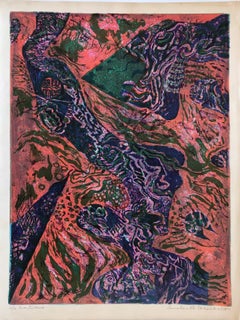
Amaranth Ehrenhalt (American, 1928 - )," Aventurine", Edition D'Artiste, Abstract Expressionist Colored Lithograph signed in Pencil , 30 x 22, Late 20th Century, ca. 1970 Colors: Red, Blue, Purple, Green, Blue Amaranth Roslyn Ehrenhalt is an American painter, sculptor, and writer, who spent the majority of her career living and working in Paris, France. Ehrenhalt is one of the few abstract expressionists from the New York School of the 1950s who is still active today. She now lives and works in New York City. Born in Newark, New Jersey, Amaranth was raised in Philadelphia, Pennsylvania. As a child, she expressed a passion for art, and by the age of twelve, Amaranth was enrolled in a Saturday morning program for artistically gifted children at the Philadelphia Museum of Art, followed a few years later by art classes at Fleisher Art Memorial. Amaranth Ehrenhalt graduated from Olney High School in 1945, and went on to study for one year at the Philadelphia Museum School of Industrial Arts (now known as the University of Arts, Philadelphia), after which, she was awarded an Honors Scholarship to the Pennsylvania Academy of the Fine Arts. While attending PAFA, she simultaneously earned a bachelor's degree from the University of Pennsylvania studying French, English, Psychology, and Art History. From 1949-1951, Amaranth completed additional studies in Art Appreciation via the Barnes Foundation, attending classes afternoon per week. Amaranth Ehrenhalt lived in New York City during the heyday of the New York School of Abstract Expressionism. She is officially recognized as part of the second wave of American Abstract Expressionists. She socialized with Willem de Kooning and Franz Kline, among others. Her social life revolved around the Cedar Tavern on University Place. Describing life in her fourth floor Greenwich Village walk-up, Amaranth states: “I painted on the floor, not by choice a la Jackson Pollock but for lack of a table. The painter Al Held and sculptor Ronnie Bladen worked at the Door Store and, upon hearing of my predicament, carried a wooden door up four flights of stairs and plopped it on top of the bathtub. From then on, I could work at a more comfortable height.” Amaranth Ehrenhalt traveled to Paris for the first time in the early 1950s, one of many moves between Paris, Philadelphia, and New York. (Amaranth has also lived in Los Angeles, Rome, and Pietrasanta, Italy). Amaranth lived and worked in France and Italy for over 30 years. “I have lived many years in Italy and France and was privileged to know, and sometimes exhibit with many writers and artists who have greatly contributed to modern art, i.e. Giacometti, Sonia Delaunay, who invited me to choose my paint supplies...

Category

Late 20th Century Abstract Expressionist Abstract Prints

Materials

Lithograph

Tapestry
Tapestry

Tapestry

By Ruth Leaf

Located in San Francisco, CA

This artwork titled "Tapestry" c.1990, is an original colors etching on Wove paper by noted American artist Ruth Leaf, 1923-2015. It is hand signed, titled and numbered 8/15 in penci...

Category

Late 20th Century Abstract Expressionist Abstract Prints

Materials

Etching

For Lisa

For Lisa

By Willem de Kooning

Located in New York, NY

A very good impression of this color lithograph on cream laid Japan paper. Signed and numbered 48/250 in pencil by de Kooning. Published by Brand X Editions, Ltd., New York, with the...

Category

1880s Abstract Expressionist Abstract Prints

Materials

Color, Lithograph

Untitled (Edition 83/100)

Untitled (Edition 83/100)

By Eberhard Dänzer

Located in New York, NY

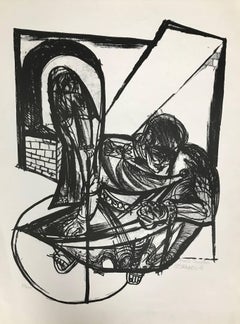
Eberhard Dänzer (German, 1938-2005), "Untitled" Edition 83/100, Abstract Lithograph signed and numbered in Pencil, 23 x 17, Late 20th Century, 1966 Colors: Black and White Eberhar...

Category

1960s Abstract Expressionist Abstract Prints

Materials

Lithograph

John Chamberlain - Signed Western Union cable re: sculpture show at Leo Castelli

John Chamberlain - Signed Western Union cable re: sculpture show at Leo Castelli

By John Chamberlain

Located in New York, NY

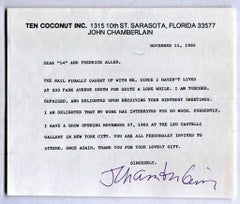
John Chamberlain Hand Signed Letter re: Leo Castelli Exhibition, 1982 Typewriter on paper (hand signed) 6 1/2 × 8 1/2 inches Hand-signed by artist, Signed in purple felt tip marker Hand signed telegraph/letter refers to Chamberlain's exhibition at the legendary Leo Castell Gallery. John Chamberlain Biography John Chamberlain (1927 – 2011) was a quintessentially American artist, channeling the innovative power of the postwar years into a relentlessly inventive practice spanning six decades. He first achieved renown for sculptures made in the late 1950s through 1960s from automobile parts—these were path-breaking works that effectively transformed the gestural energy of Abstract Expressionist painting into three dimensions. Ranging in scale from miniature to monumental, Chamberlain’s compositions of twisted, crushed, and forged metal also bridged the divide between Process Art and Minimalism, drawing tenets of both into a new kinship. These singular works established him as one of the first American artists to determine color as a natural component of abstract sculpture. From the late 1960s until the end of his life, Chamberlain harnessed the expressive potential of an astonishing array of materials, which varied from Plexiglas, resin, and paint, to foam, aluminum foil, and paper bags. After spending three years in the United States Navy during World War II, Chamberlain enrolled in the Art Institute of Chicago and Black Mountain College, where he developed the critical underpinnings of his work. Chamberlain lived and worked in many parts of the United States, moving between New York City, Long Island, Los Angeles, Santa Fe, Connecticut, and Sarasota, before finally settling on Shelter Island. In many ways, each location provoked a distinct material sensibility, often defined by the availability of that material or the limitations of physical space. In New York City, Chamberlain pulled scrap metal and twelve-inch acoustic tiles from the ceiling of his studio apartment. He chose urethane in Los Angeles in 1965 (a material he had been considering for many years), and film in Mexico in 1968. He eventually returned to metal in 1972, and, in Sarasota, he expanded the scale of his works to make his iconic Gondolas (1981 – 1982). The movement of the artist and the subsequent evolution of the work is indicative not only of a kind of American restlessness but also of Chamberlain’s own personal evolution: he sometimes described his use of automobile materials as sculptural self-portraits, infused with balance and rhythm characteristic of the artist himself. Chamberlain refused to separate color from his practice, saying, ‘I never thought of sculpture without color. Do you see anything around that has no color? Do you live in a world with no color?’. He both honored and assigned value to color in his practice—in his early sculptures color was not added, but composed from the preexisting palette of his chosen automobile parts. Chamberlain later began adding color to metal in 1974, dripping and spraying—and sometimes sandblasting—paint and lacquer onto his metal components prior to their integration. With his polyurethane foam works, color was a variable of light: ultraviolet rays or sunlight turned the material from white to amber. It was this profound visual effect that brought the artist’s personal Abstract Expressionist hand into industrial three-dimensional sculpture. Chamberlain moved seamlessly through scale and volume, creating material explorations in monumental, heavy-gauge painted aluminum foil in the 1970s, and later in the 1980s and 1990s, miniatures in colorful aluminum foil and chromium painted steel. Central to Chamberlain’s works is the notion that sculpture denotes a great deal of weight and physicality, disrupting whatever space it occupies. In the Barges series (1971 – 1983) he made immense foam couches, inviting spectators to lounge upon the cushioned landscape. At the end of his career, Chamberlain shifted his practice outdoors, and through a series of determined experiments, finally created brilliant, candy-colored sculptures in twisted aluminum foil. In 2012, four of these sculptures were shown outside the Seagram Building in New York, accompanied by playful titles such as ‘PINEAPPLESURPRISE’ (2010) and ‘MERMAIDSMISCHIEF’ (2009). These final works exemplify Chamberlain’s lifelong dedication to change—of his materials, of his practice, and, consequently, of American Art. Chamberlain has been the subject of numerous solo exhibitions, including two major Retrospectives at the Solomon R. Guggenheim Museum in New York NY in 2012 and 1971; ‘John Chamberlain, Squeezed and Tied. Foam and Paper Sculptures 1969-70,’ Dan Flavin Art Institute, Dia Center for the Arts, Bridgehampton NY (2007); ‘John Chamberlain. Foam Sculptures 1966–1981, Photographs 1989–2004,’ Chinati Foundation, Marfa TX (2005); ‘John Chamberlain. Current Work and Fond Memories, Sculptures and Photographs 1967–1995,’ Stedelijk Museum, Amsterdam, Netherlands (Traveling Exhibition) (1996); and ‘John Chamberlain. Sculpture, 1954–1985,’ Museum of Contemporary Art, Los Angeles CA (1986). Chamberlain’s sculptures are part of permanent exhibitions at the Chinati Foundation in Marfa TX and at Dia:Beacon in upstate New York. In 1964, Chamberlain represented the United States in the American Pavilion at the 32nd International Exhibition of the Venice Biennale. He received many awards during his life, including a Doctor of Fine Arts, honoris causa, from the College for Creative Studies, Detroit (2010); the Distinction in Sculpture Honor from the Sculpture Center, New York (1999); the Gold Medal from The National Arts Club Award, New York (1997); the Lifetime Achievement Award in Contemporary Sculpture by the International Sculpture Center, Washington D.C. (1993); and the Skowhegan Medal for Sculpture, New York NY (1993). -Courtesy Hauser & Wirth Leo Castelli Leo Castelli was born in 1907 in Trieste, a city on the Adriatic sea, which, at the time, was the main port of the Austro-Hungarian Empire. Leo’s father, Ernest Kraus, was the regional director for Austria-Hungary’s largest bank, the Kreditandstalt; his mother, Bianca Castelli, was the daughter of a Triesten coffee merchant. With the outbreak of World War I in 1914 the Kraus family relocated to Vienna where Leo continued his education. A particularly memorable moment for Leo during this period of his life was the funeral of Emperor Francis Joseph which he witnessed in November of 1916. Leo and his family returned to Trieste when the war ended in 1918. With the fall of the Austro-Hungarian Empire Trieste embraced its new Italian identity. Motivated by this shift Ernest decided to adopt his wife's more Italian-sounding maiden name, Castelli, which his children also assumed. In many ways the Castelli’s return Trieste after the war marked an optimistic new beginning for the family. Ernest was made director of the Banca Commerciale Italiana, which had replaced the Kreditandstalt as the top bank in Trieste. This elevated position allowed Ernest and Bianca to cultivate a cosmopolitan life-style. Together they hosted frequent parties which brought them in contact with a spectrum of political, financial, and cultural luminaries. Growing up in such an environment fostered in Leo and his two siblings, Silvia and Giorgio, a strong appreciation of high culture. During this time Leo developed a passion for Modern literature and perfected his fluency in German, French, Italian, and English. After earning his law degree at the University of Milan in 1932, Leo began his adult life as an insurance agent in Bucharest. Although Leo found the job unfulfilling and tedious, the people he met in Bucharest made up for this deficiency. Among the most significant of Leo’s acquaintances during this time was the eminent businessman, Mihail Shapira. Leo eventually became friendly with the rest of the Shapira family and in 1933 he married Mihail's youngest daughter, Ileana. In 1934 Leo and Ileana moved to Paris where, thanks to his step-father’s influence, Leo was able to get a job in the Paris branch of the Banca d'Italia. In the same year, Leo met the interior designer René Drouin, who became his close friend. In the spring of 1938, while walking through the Place Vendôme, Leo and René came across a storefront for rent between the Ritz hotel and a Schiaparelli boutique. The space immediately impressed them as an ideal location for an art gallery, a plan which became reality the following spring in 1939. The Drouin Gallery opened with an exhibition featuring painting and furniture by Surrealist artists including Léonor Fini, Augene Berman, Meret Oppenheim, Max Ernst, and Salvador Dali. Despite the success of this initial exhibition, the gallery proved short-lived. Germany invaded Poland on September 1, 1939 marking the start of World War II and consequently the temporary end of the Drouin gallery. René was called to serve in the French army, while Leo, Ileana, and their three-year-old daughter Nina moved to the relative safety of Cannes, where Ileana’s family owned a summer house. As the war escalated, it became evident that Europe was no longer safe for the Castelli family—Leo and Ileana were both Jewish. In March of 1941, Leo, Ileana and Nina fled to New York bringing with them Nina’s nurse Frances and their dog, Noodle. After a year of moving around the city, the family took up permanent residence at 4 East 77 Street in a townhouse Mihail had bought. Nine months after his arrival in New York, in December of 1943, Leo volunteered for the US army, expediting his naturalization as a US citizen. Owing to his facility with languages, Leo was assigned to serve in the U.S. Army Intelligence Corp, a position which he held for two years, until February 1946. While on military leave in 1945 Leo visited Paris and stopped by Place Vendôme gallery where René had once more set up business selling work by European avant-garde artists such as Jean Dubuffet and Jean Fautrier. The meeting not only rekindled René and Leo’s friendship but also the latter’s interest in art dealing, a pursuit which Leo began to view as more than a mere hobby but as a potential career. After reconnecting, the two friends decided to go back into partnership with Leo acting as the New York representative for the Drouin Gallery. Working in this capacity, Leo began to form relationships with some of the New York art world’s most influential figures, including Peggy Guggenhiem, Sydney Janis, Willem De Kooning, and Jackson Pollock. By the late 40s Leo’s ties with René Drouin had begun to slacken, while his alliance with the dealer Sydney Janis became closer. Janis opened his New York gallery in 1948 and in 1950 invited Leo to curate an exhibition of contemporary French and American artists. The show drew a significant connection between the venerable tradition of European Modernism and the emerging artists of the New York School. Not long after this, in 1951, Leo was asked by these same New York School artists to organize the groundbreaking Ninth Street Show. This exhibition was instrumental in establishing Abstract Expressionism as the preeminent art movement of the post-war era. Leo founded his own gallery in 1957, transforming the living room on the fourth floor of the 77th Street townhouse into an exhibition space. Perhaps the most critical moment of Leo’s career occurred later that year, when he first visited the studios of Robert Rauschenberg and Jasper Johns. In 1958 Leo gave Johns and Rauschenberg solo shows, in January and March respectively. For Johns, this was the first solo show of his career. These exhibitions received wide critical acclaim, solidifying Leo’s reputation not only as a dealer but as the arbiter of a new and important art movement. Over the course of the 1960s Leo played a formative role in launching the careers of many of the most significant artists of the twentieth century including Roy Lichtenstein, Andy Warhol, Claes Oldenberg, Cy Twombly, Donald Judd, Dan Flavin, Robert Morris, Bruce Nauman, Richard Serra, Joseph Kosuth and Lawrence Weiner. Through his support of these artists Leo likewise helped cultivate and define the movements of Pop, Minimalism, Conceptual Art, and Post-Minimalism. As business expanded over the course of the 60s and artistic trends shifted in favor of larger artworks, Leo realized that his townhouse gallery was not sufficient to meet these new demands. Indicative of the trend toward maximal art...

Category

1980s Abstract Expressionist Abstract Prints

Materials

Ink, Lithograph, Offset
Self Portrait II
Self Portrait II

Self Portrait II

By Pia Stern

Located in San Francisco, CA

This artwork titled "Self Portrait II" 1994 is in an original color monoprint on paper by noted American artist Pia Stern, b. 1953. It is hand signed, dated ...

Category

Late 20th Century Abstract Expressionist Abstract Prints

Materials

Monoprint

Self Portrait I
Self Portrait I

Self Portrait I

By Pia Stern

Located in San Francisco, CA

This artwork titled "Self Portrait I" 1994 is in an original color monoprint on paper by noted American artist Pia Stern, b. 1953. It is hand signed, dated a...

Category

Late 20th Century Abstract Expressionist Abstract Prints

Materials

Monoprint

Vintage Abstract Series #39 Fireworks

Vintage Abstract Series #39 Fireworks

By Katherine Chang Liu

Located in Soquel, CA

Period mixed media print and painting by California artist Katherine Chang Liu (American, 20th-century). Signed "Fireworks Series #39" Katherine Chang Liu '87. Presented with a white...

Category

1980s Abstract Expressionist Abstract Prints

Materials

Ink, Oil, Archival Paper, Etching

Red, Orange, Blue, Purple

Red, Orange, Blue, Purple

By Raymond Parker

Located in San Francisco, CA

Artist: Raymond Parker – American (1922-1990) Title: Red, Orange, Blue, Purple Year: 1969 Medium: Color Lithograph Sight size: 22.25 x 30 inches. Sheet size: 22.25 x 30 inches Sig...

Category

1960s Abstract Expressionist Abstract Prints

Materials

Color, Lithograph

Two Metamorphosed Women with a Mythological Creature

Two Metamorphosed Women with a Mythological Creature

By Walter Becker

Located in Belgrade, MT

This lithograph is part of my private collection. It is limited in edition artist signed lower right and is in very good condition. Walter Becker was a German artist. Another impress...

Category

Mid-19th Century Abstract Expressionist Abstract Prints

Materials

Lithograph

Untitled VI
Untitled VI

Untitled VI

By Tracey Adams

Located in San Francisco, CA

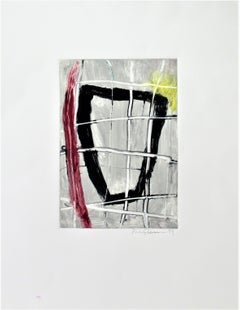
This artwork "Untitled VI" is a monotype on paper by noted artist Tracey Adams, born 1954. It is hand signed in pencil at the lower right corner by the artist. The image size is 15.6...

Category

Late 20th Century Abstract Expressionist Abstract Prints

Materials

Monotype

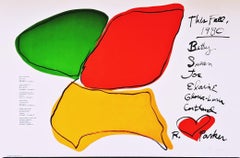
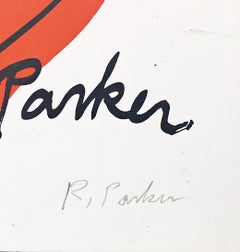
Print honoring famous 1980s Art Dealers (Hand Signed by Ray Parker) Historic!

Print honoring famous 1980s Art Dealers (Hand Signed by Ray Parker) Historic!

By Raymond Parker

Located in New York, NY

Raymond Parker (also known as Ray Parker) 1980s Art Dealers (Hand Signed by Raymond Parker), 1980 Rare Offset Lithograph Poster. Hand Signed in Pencil by Ray Parker Hand signed by Ray Parker on the front 25 × 38 inches Unframed This is a collectible hand signed vintage offset lithograph poster on blind stamped wove paper, published on the occasion of an exhibition of works by renowned Abstract Expressionist painter Ray Parker, hand signed as well as plate signed. This traveling exhibition was hosted by multiple galleries, all listed on the poster including Betty Cuningham, Susan Caldwell, The Grippi Gallery...

Category

1980s Abstract Expressionist Abstract Prints

Materials

Lithograph, Offset, Pencil, Graphite

Untitled (Edition 80/120)

Untitled (Edition 80/120)

Located in New York, NY

Unknown/Unidentified Artist, "Untitled" Edition 80/120, Abstract Lithograph signed and numbered in pencil, 22 x 30, Late 20th Century Colors: Red, Green, Yellow, Black, White, Brown...

Category

Late 20th Century Abstract Expressionist Abstract Prints

Materials

Lithograph

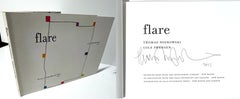
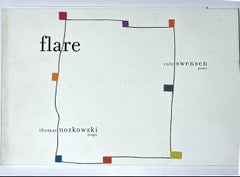
Monograph titled FLARE Thomas Nozkowski Images (hand signed by Thomas Nozkowski)

Monograph titled FLARE Thomas Nozkowski Images (hand signed by Thomas Nozkowski)

By Thomas Nozkowski

Located in New York, NY

Thomas Nozkowski Flare: Thomas Nozkowski Images (hand signed by Thomas Nozkowski), 2009 Limited Edition monograph on fine art paper (hand signed and dated by Thomas Nozkowski on the ...

Category

2010s Abstract Expressionist Abstract Prints

Materials

Paper, Ink, Mixed Media, Lithograph, Offset
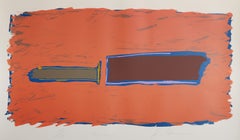
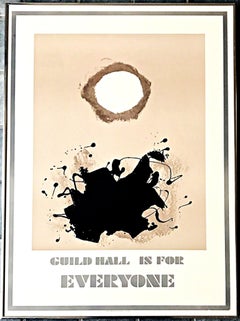
Adolph Gottlieb, rare exhibition print for Guild Hall in Easthampton, NY, Framed

Adolph Gottlieb, rare exhibition print for Guild Hall in Easthampton, NY, Framed

By Adolph Gottlieb

Located in New York, NY

Adolph Gottlieb Guild Hall is for Everyone, 1970 Rare Abstract Expressionist Offset Lithograph poster Vintage metal Frame included Rare vintage, limited edition, offset lithograph ...

Category

1970s Abstract Expressionist Abstract Prints

Materials

Lithograph, Offset
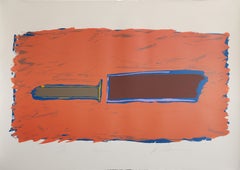
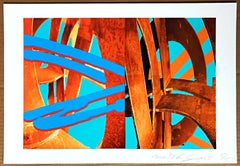
Mark di Suvero - Papillon, Signed/N Abstract Expressionist print Lt of only 15

Mark di Suvero - Papillon, Signed/N Abstract Expressionist print Lt of only 15

By Mark di Suvero

Located in New York, NY

Mark di Suvero Papillon, 2005 Digital fine art print on Hahnemuhle acid free photo rag paper. Hand signed, dated and numbered Accompanied by colophon page from Artist's Studio, with ...

Category

Early 2000s Abstract Expressionist Abstract Prints

Materials

Digital Pigment, Lithograph

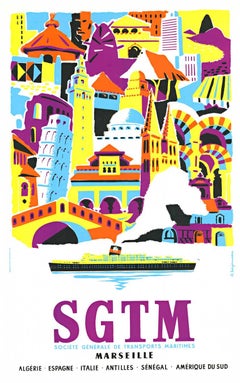
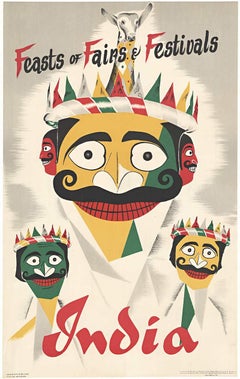
India  Feasts of Fairs & Festival original colorful vintage travel poster

India Feasts of Fairs & Festival original colorful vintage travel poster

Located in Spokane, WA

Original India Feasts of Fairs & Festivals vintage travel poster. Conservation linen backed in very fine condition. Ready to frame. A slight lower fold mark was professionall...

Category

1950s Abstract Expressionist Abstract Prints

Materials

Lithograph

CI, Abstract Expressionist Monoprint by Liu Jian

CI, Abstract Expressionist Monoprint by Liu Jian

By Liu Jian

Located in Long Island City, NY

Liu Jian, Chinese (1961 - ) - CI, Year: 1999, Medium: Monoprint, signed and dated in pencil, Size: 25 x 19 in. (63.5 x 48.26 cm), Description: An Abstract Expressionist monopri...

Category

1990s Abstract Expressionist Abstract Prints

Materials

Monoprint

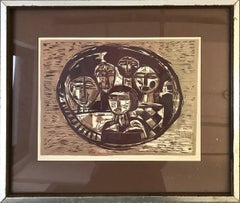
Medaillon (Edition 52/100)

Medaillon (Edition 52/100)

By Eberhard Dänzer

Located in New York, NY

Eberhard Dänzer (German, 1938-2005), "Medaillon" Edition 52/100, Abstract Woodcut signed and numbered in Pencil, 14.50 x 18.75 (In Frame 27.25 x 32.50) , Late 20th Century, 1963 Co...

Category

1960s Abstract Expressionist Abstract Prints

Materials

Woodcut

XXXI, Abstract Expressionist Monoprint by Liu Jian

XXXI, Abstract Expressionist Monoprint by Liu Jian

By Liu Jian

Located in Long Island City, NY

Liu Jian, Chinese (1961 - ) - XXXI, Year: 1999, Medium: Monoprint, signed and dated in pencil, Size: 25 x 19 in. (63.5 x 48.26 cm), Description: An Abstract Expressionist monop...

Category

1990s Abstract Expressionist Abstract Prints

Materials

Monotype

Daybreak #2, Abstract Expressionist Screenprint by Joanne Miller Rafferty

Daybreak #2, Abstract Expressionist Screenprint by Joanne Miller Rafferty

By Joanne Miller Rafferty

Located in Long Island City, NY

Joanne Miller Rafferty, American - Daybreak #2, Medium: Screenprint on BFK Rives, signed, titled and numbered in pencil, Edition: 300, Image Size: 22 x 32 inches, Size: 29.5 x 39...

Category

1990s Abstract Expressionist Abstract Prints

Materials

Screen

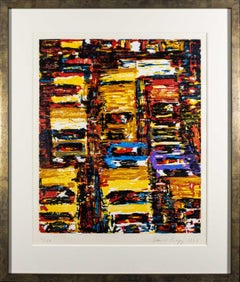
Truck Traffic Woodcut Print, Abstract Expressionist, Signed, 1990s

Truck Traffic Woodcut Print, Abstract Expressionist, Signed, 1990s

By David Kapp

Located in New Orleans, LA

A six block woodcut published in an edition of only 23. It is signed. David Kapp is best known for his paintings of the contemporary urban landscape. His paintings have been descri...

Category

1990s Abstract Expressionist Abstract Prints

Materials

Woodcut

Out on the Coast

David Morris 2Out on the Coast, 2023

$2,344Sale Price|39% Off

Out on the Coast

By David Morris 2

Located in Kansas City, MO

David Morris Out on the Coast Digital Painting on Archival Paper Year: 2023 Size: 24x24in Edition: 15 Signed, numbered and dated by hand on label to be attached verso COA provided Re...

Category

2010s Abstract Expressionist Abstract Prints

Materials

Archival Paper, Archival Pigment

Figure Miroir
Figure Miroir

Figure Miroir

By Francois Rouan

Located in San Francisco, CA

This artwork titled "Figure Miroir" c.1980 is an original lithograph on Arches paper by noted French abstract expressionist artist Francois Rouan, b.194...

Category

Late 20th Century Abstract Expressionist Abstract Prints

Materials

Lithograph

Spectral Vision
Spectral Vision

Spectral Vision

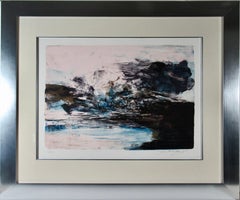
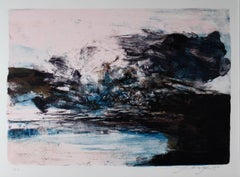
By Zao Wou-Ki

Located in San Francisco, CA

This artwork titled "Spectral Vision" 1970, is an original color lithograph by renown Chinese/American artist Zao Woo Ki, 1921-2013. It is hand signed and inscribed H.C. (Hors Commerce) in pencil by the artist. The image size is 17.25 x 24.5 inches, framed size is 32.65 x 39 inches. Custom framed in a wooden silver frame, with silver color spacer and fabric matting. It is in excellent condition. About the artist: Zao Woo Ki was born in Beijing with family roots in Dantu, Zhenjiang, Jiangsu province. In his childhood he was brought back to his hometown Dantu where he studied calligraphy. From 1935 to 1941, he studied painting at the China Academy of Art in Hangzhou, Zhejiang province, where he was taught by Lin Fengmian, Fang Ganmin and Wu Dayu. In 1948, he went with his wife Lan-lan, a composer, to Paris to live on the same block in Montparnasse where the classes of Émile Othon Friesz took place. His earliest exhibitions in France were met with praise from Joan Miró and Picasso. In 1957, Zao decided to visit the United States where his younger brother Chao Wu-Wai was living in Montclair, New Jersey, close to the art scene of New York City. He wanted to learn more about "pop art". While in the US, he painted seven canvases at his brother's house. There are relatively few items dating from that year (1957). Years later, the largest canvas was given by his brother, Chao Wu-Wai, to the Detroit Institute of Arts. He left the U.S. after a six-week stay, traveling to Tokyo and then to Hong Kong, where he met his second wife Chan May-Kan Zao's works, influenced by Paul Klee, are orientated to abstraction. He names them with the date in which he finishes them, and in them, masses of colours appear to materialise a creating world, like a Big Bang, where light structures the canvas. He worked formats in triptychs and diptychs. While his work was stylistically similar to the Abstract Expressionists whom he met while travelling in New York, he was influenced by Impressionism. Zao Wou-Ki stated that he had been influenced by the works of Matisse, Picasso and Cézanne.[ His meetings with Henri Michaux pushed him to review his Indian ink techniques, always based in Chinese traditional drawings. Zao was a member of the Académie des beaux-arts, and was considered to have been one of the most successful Chinese painters during his lifetime. In 1982, he was invited to paint for the Fragrant Hills Hotel in Beijing, designed by I. M. Pei. In 1983, he returned to his alma mater, the China Academy of Art in Hangzhou to give lectures. Former French President Jacques Chirac was offered a painting by Zao Wou-Ki by his ministers during their last meeting. His auction record of HKD 510 million was set at Sotheby's, Hong Kong, on 1 September 2018. Zao's work 'Juin-Octobre 1985' is now the most expensive painting ever to go under the hammer at auction in Hong Kong. By the end of his life Zao had stopped producing new paintings due to health problems. He died on 9 April 2013 at his home in Switzerland. Selected public collections and museums: Vienna, Albertina Museum, Graphische Sammlung Brussels, Museum of Modern Art Brussels, Royal Museums of Fine Arts of Belgium Rio de Janeiro, Museum of Modern Art Montreal, Museum of Contemporary Art of Montreal (Quebec) Montréal, Museum of Fine Art (Quebec) Quebec City, National Museum of Fine Arts of Quebec (Quebec) Toronto, Art Gallery of Ontario (Ontario) Hangzhou, China Academy of Art Hong Kong, Hong Kong Museum of Art Beijing, China Central Academy of Fine Arts Suzhou, Suzhou Museum Helsinki, Ateneum Museum Tempere, Sara Hildén Art Museum Châteauroux, Bertrand Museum Colmar, Unterlinden Museum Dunkirk, LAAC Évreux, Museum of Art, History and Archeology Gravelines, Musée du Dessin et de l’Estampe Originale Issoudun, Musée de l’Hospice Saint-Roch Le Havre, Malraux Museum Lyons, École normale supérieure Metz, Museum of Art and History Montauban, Ingres Museum Montpellier, Fabre Museum Nantes, Museum of Fine Art Orléans, Museum of Fine Art Paris, L’Adresse – Musée de La Poste Paris, Bibliothèque nationale de France Paris, Bibliothèque de l’Institut de France Paris, Centre Pompidou, National Museum of Modern Art / Industrial Design Center Paris, Cercle de l’Union Interalliée Paris, Fonds National d’Art Contemporain Paris, Institut national d’histoire de l’art Paris, Manufacture Nationale des Gobelins Paris, Manufacture Nationale de la Savonnerie Paris, Manufacture Nationale de Sèvres Paris, Mobilier National Paris, Museum of Modern Art of Paris Paris, Cernuschi Museum Paris, Musée du Louvre (at Musée Fabre in Montpellier) Paris, Schlumberger Ltd. Paris-La Défense, Société Générale Paris-La Défense, TOTAL France Rennes, Museum of Fine Art Saint-Dié-des-Vosges, Musée Pierre-Noël Sceaux, Musée de l’Ile-de-France, Château de Sceaux Tournus, Musée Greuze Tours, Museum of Fine Art Tours, Conseil général d’Indre-et-Loire, fourteen windows for La Demeure de Ronsard, La Riche Valence, Museum of Fine Art and Natural History Essen, Folkwang Museum Liverpool, The Tate Gallery London, The Tate Gallery London, Victoria and Albert Museum Jakarta, Jakarta Museum Tel Aviv, Tel Aviv Museum Genova, Gallery of Modern Art Milan, Museum of MOdern Art of Milan Fukuoka, Fukuoka Art Museum Fukushima, Iwaki City Art Museum Hakone-Machi, The Hakone Open-Air Museum Kyoto, Kyoto National Museum of Modern Art Nagaoka, Nagaoka Contemporary Art Museum Osaka, National Museum of Art Tokyo, Bridgestone Museum of Art, Ishibashi Foundation Luxembourg City, Grand Ducal Collections of the State of Luxembourg Luxembourg City, National Museum of History and Art Skopje, Museum of Contemporary Art Mexico, Centro Cultural/Arte Contemporáneo Mexico, Museum of Modern Art Mexico, Tamayo Museum of Contemporary Art Castelo Branco...
Category

Late 20th Century Abstract Expressionist Abstract Prints

Materials

Lithograph

Lithograph no. 18 from: The Skin of Things - French Abstract Expressionism

Lithograph no. 18 from: The Skin of Things - French Abstract Expressionism

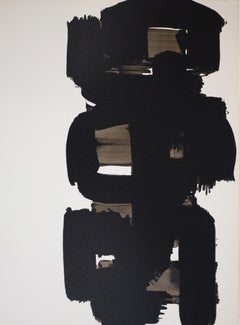
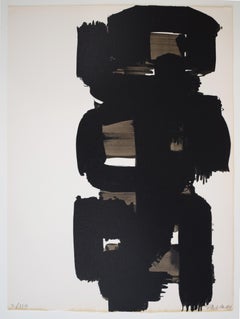
By Pierre Soulages

Located in London, GB

This original lithograph in colours is hand signed in pencil by the artist ''Soulages'' at the lower right margin. The work is also hand numbered in pencil from the edition of 114, at the lower left margin. This lithograph was printed and published in a limited edition of 114 signed and numbered impressions by Jean-Robert Arnaud, Paris. Note: The subject is one of ten published in the folio ‘La peau des choses’ [The Skin of Things] in 1968. The folio also included works by Huguette-Arthur Bertrand, Cesar, Émile Gilioli, James Guitet...

Category

1960s Abstract Expressionist Abstract Prints

Materials

Lithograph

Abstract Expressionist abstract prints for sale on 1stDibs.

Find a wide variety of authentic Abstract Expressionist abstract prints available for sale on 1stDibs. Works in this style were very popular during the 21st Century and Contemporary, but contemporary artists have continued to produce works inspired by this movement. If you’re looking to add abstract prints created in this style to introduce contrast in an otherwise neutral space in your home, the works available on 1stDibs include elements of orange, blue, red, yellow and other colors. Many Pop art paintings were created by popular artists on 1stDibs, including Robert Motherwell, Sam Francis, Joan Miró, and Helen Frankenthaler. Frequently made by artists working with Lithograph, and Screen Print and other materials, all of these pieces for sale are unique and have attracted attention over the years. Not every interior allows for large Abstract Expressionist abstract prints, so small editions measuring 0.02 inches across are also available. Prices for abstract prints made by famous or emerging artists can differ depending on medium, time period and other attributes. On 1stDibs, the price for these items starts at $60 and tops out at $96,000, while the average work sells for $1,451.