Want more images or videos?
Request additional images or videos from the seller
1 of 3

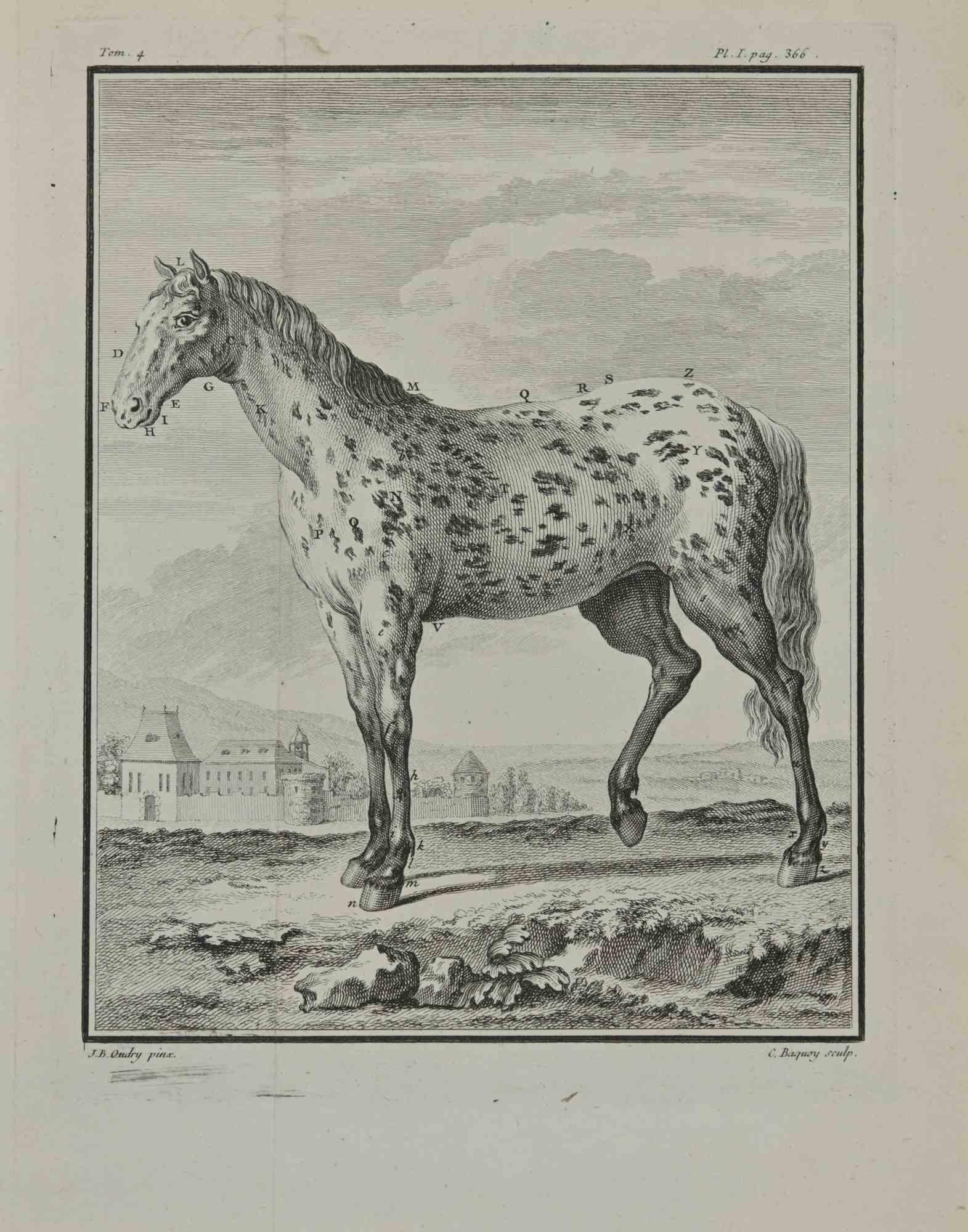
'Cheval de Mecklembourg' — 19th-Century French Romanticism

1822

$450
£339.93
€396.38
CA$638.73
A$642.81
CHF 373.08
MX$7,806.02
NOK 4,285.53
SEK 4,423.49
DKK 2,963.03

About the Item

Théodore Géricault 'Cheval de Mecklembourg' (Mecklembourg Horse), lithograph, 1822, 2nd state of 4, Delteil 47. Signed in the matrix 'Gericault', lower left. Published by Godefroy Engelmann. A fine impression, on off-white wove paper, with margins (17/8 to 2 3/8 inches) in good condition. Archivally matted to museum standards, unframed. Image size 7 3/8 x 9 1/4 inches (187 x 235 mm); sheet size 10 5/8 x 13 3/4 inches (270 x 349 mm). Collections: Bibliotheque de l’Ecole des Beaux-Arts, Paris; British Museum; Cabinet des Estampes, Paris; Metropolitan Museum of Art; Minneapolis Institute of Art; Musee de Rouen; National Gallery of Art; Philadelphia Museum of Art; Rhode Island School of Design Museum; University of Cambridge Museum; Virginia Museum of Fine Arts; Yale University Art Gallery. ABOUT THE ARTIST Géricault's fiery, audacious personality and short life fit the mold of Romantic artists of his era and, along with his controversial paintings, profoundly influenced nineteenth-century art. Notwithstanding about three years of studio training, Géricault was largely self-taught. He copied paintings in the Louvre and traveled to Rome, where he discovered Michelangelo's works and the exuberance of Baroque art. In his enormous 'Raft of the Medusa,' now at the Louvre, Géricault fused Realism and Romanticism, elevating a current event—a shipwreck with few survivors—to the status of monumental art. To achieve authenticity, he used a model of the raft and carefully studied real cadavers—even his friend, Eugène Delacroix, posed for one of the figures. The wreck was attributed to governmental negligence and corruption and the resulting controversy, combined with the painting's veracity, brought Géricault widespread attention. Géricault was also a master of lithography, the sole printmaking medium he employed to produce his breathtaking representations of horses and military subjects, two of his lifelong passions. During his English sojourn of 1820-21, Géricault improved his knowledge of the lithographic technique in the London workshop of Charles Joseph Hullmandel. The most striking result of this experience was the series of twelve lithographs ‘Various Subjects Drawn from Life and on Stone’, also known as ‘The English Set.’ Géricault continued his studies of the horse once he was back in France, producing the renowned series ‘Etudes, de chevaux lithographiés’. Géricault died in 1824 at age thirty-two after a prolonged illness caused by a riding accident. His last major works, discovered almost fifty years after his death, were penetrating portraits of the insane. Like the 'Raft of the Medusa,' they offered a new concept of appropriate subject matter for serious painting.
  • Creation Year:
    1822
  • Dimensions:
    Height: 7.38 in (18.75 cm)Width: 9.25 in (23.5 cm)
  • Medium:
  • Movement & Style:
  • After:
    Jean Louis Andre Theodore Gericault (1791 - 1824, French)
  • Period:
  • Condition:
  • Gallery Location:
    Myrtle Beach, SC
  • Reference Number:
    Seller: 1042331stDibs: LU532312856012

More From This Seller

View All
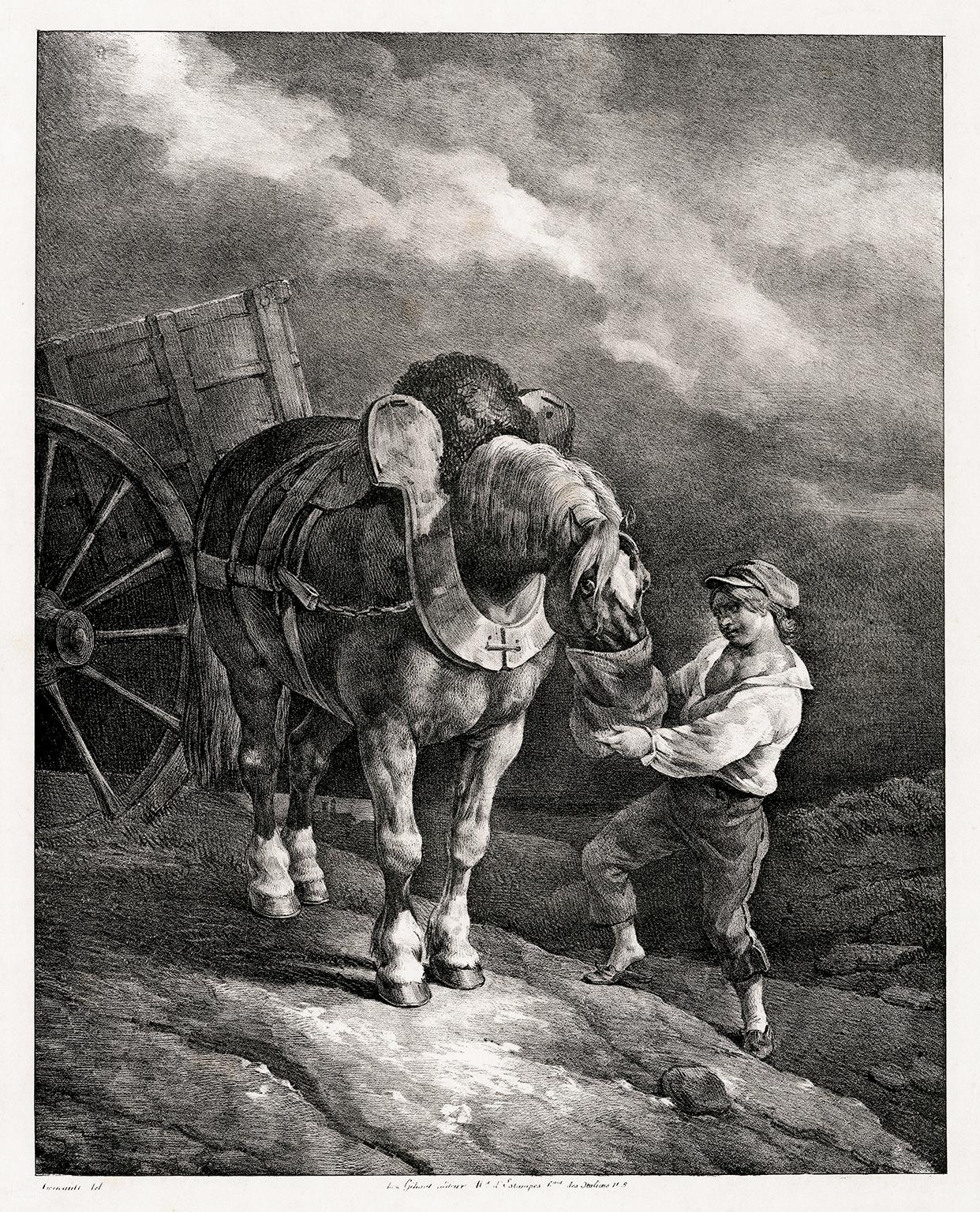
'Garçon donnant l'avoine à un cheval dételé' — 19th Century French Romanticism

'Garçon donnant l'avoine à un cheval dételé' — 19th Century French Romanticism

By Jean Louis Andre Theodore Gericault

Located in Myrtle Beach, SC

Théodore Géricault, 'Garçon donnant l'avoine à un cheval dételé' (Boy Giving Oats to a Hitched Horse), lithograph, 1822, 2nd state of 2, Delteil 89...

Category

1820s Romantic Animal Prints

Materials

Lithograph

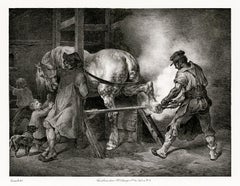
'Le maréchal flamand' (The Flemish Blacksmith) — 19th-Century French Romanticism

'Le maréchal flamand' (The Flemish Blacksmith) — 19th-Century French Romanticism

By Jean Louis Andre Theodore Gericault

Located in Myrtle Beach, SC

Théodore Géricault 'Le maréchal flamand' (The Flemish Blacksmith) from the series ‘Etudes, de chevaux lithographiés,’ lithograph, 1822, 2nd state ...

Category

1820s Romantic Animal Prints

Materials

Lithograph

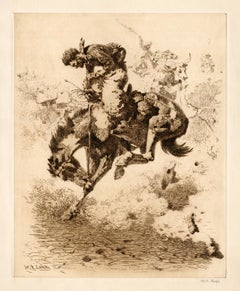
'Foul Rope (Left)' — Early American Southwest Rodeo

'Foul Rope (Left)' — Early American Southwest Rodeo

By William Robinson Leigh

Located in Myrtle Beach, SC

William Robinson Leigh, 'Foul Rope (Left)', etching, c. 1920, edition unknown but small. Signed in pencil and signed in the plate, lower left. A superb, richly-inked impression, in dark brown ink, on buff wove Umbria paper, the full sheet with margins (1 1/2 to 2 3/4 inches); slight toning at the sheet edges, otherwise in excellent condition. Very scarce. Archivally matted to museum standards, unframed. Image size 14 7/8 x 11 15/16 inches (378 x 303 mm); sheet size 20 3/8 x 15 3/8 inches (518 x 391 mm). ABOUT THE ARTIST Born near Falling Waters, West Virginia, on a plantation a year after the Civil War and raised in Baltimore, William Robinson Leigh (1866 - 1955) became one of the foremost painters of the American West. His career spanning some seventy-five years, Leigh created some of the most iconic depictions of the Western landscape, with admirers referring to him as ‘The Sagebrush Rembrandt.’ The son of impoverished Southern aristocrats, Leigh received his first art training at age 14 from Hugh Newell at the Maryland Institute, where he was regarded as the best student in his class. From 1883 to 1895, he studied in Europe, mainly at the Royal Academy in Munich with Ludwig Loefftz. From 1891 to 1896, he painted six cycloramas or murals in the round, a giant German panorama. In 1896, Leigh began working as a magazine illustrator for Scribner's and Collier's Weekly Magazine in New York City. He also painted portraits, landscapes, and genre scenes. Leigh's trips to the Southwest began in 1906 when he agreed to paint the Grand Canyon with William Simpson, Santa Fe Railway advertising manager, in exchange for free transportation West. In 1907, he completed his Grand Canyon painting, which led to more commissions and an extensive painting trip through Arizona and New Mexico. These travels inspired him to paint western subjects for the next 50 years, and his primary interests were the Hopi and Navajo Indians. In 1910, he traveled to Wyoming, where he painted in Yellowstone Park and created sketches, many of which he later converted into large canvases such as ‘Lower Falls of the Yellowstone’ (1915) and ‘Grand Canyon of the Yellowstone’ (1911). In 1926, he traveled to Africa at the invitation of Carl Akeley for the American Museum of Natural History, and from this experience, wrote and illustrated 'Frontiers of Enchantment: An Artist's Adventures in Africa'. In 1933, he wrote and illustrated 'The Western Pony'. His adventures were chronicled in several popular magazines, including Life, the Saturday Evening Post, and Colliers. For many years, Grand Central Art Galleries at the Biltmore Hotel handled his work exclusively in New York. In 1953, Leigh was elected an associate member of the National Academy of Design and became a full Academician in 1955. In March 1999, the Historical Center of Cody, Wyoming, held an exhibition of his field sketches and finished works depicting his experiences near Cody early in the century. Between 1910 and 1921, when he often painted in the Carter Mountain vicinity, these years were considered pivotal to his artistic development and devotion to the Western landscape. Leigh's work is held in many museum collections of American Western art...

Category

1920s Realist Animal Prints
Materials

Etching

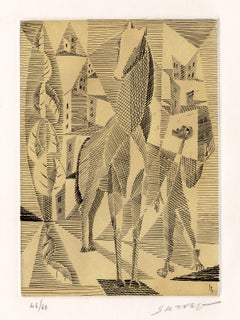
Le Cheval (The Horse) — Mid-Century Cubism

Le Cheval (The Horse) — Mid-Century Cubism

By Léopold Survage

Located in Myrtle Beach, SC

Léopold Survage, 'Le Cheval' (The Horse), color etching, edition 60, 1953. Signed and numbered '46/60' in pencil. Initialed in the plate, lower right. A superb, richly-inked impressi...

Category

1950s Surrealist Figurative Prints

Materials

Etching

You May Also Like

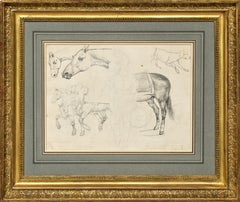
Double-sided Horse Studies by Théodore Géricault

Double-sided Horse Studies by Théodore Géricault

By Jean Louis Andre Theodore Gericault

Located in PARIS, FR

Recto: two horses, preparatory study for the lithograph "Les Boueux" ("The Muddy Ones") Verso: four studies of horse heads (including two preparatory studies for the watercolor "Plowing in England"), a study of a life guard with the rump of his horse (preparatory to the lithograph "A Party of Life...

Category

1820s Old Masters Animal Drawings and Watercolors

Materials

Carbon Pencil

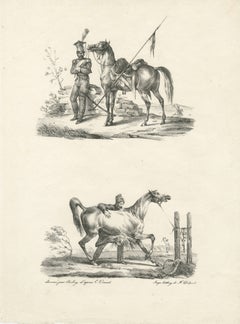
Antique Arabian Horse & Cavalry Lithograph after Carle Vernet, c.1825

Antique Arabian Horse & Cavalry Lithograph after Carle Vernet, c.1825

Located in Langweer, NL

Title: Antique Arabian Horse & Cavalry Lithograph after Carle Vernet, c.1825 Description: A finely executed French lithograph depicting two spirited Arabian equestrian scenes in...

Category

Antique Early 19th Century French Prints

Materials

Paper

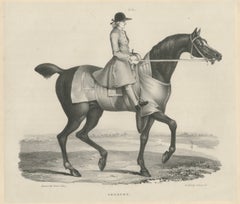
Sedbury – Antique Equestrian Horse & Rider Portrait, Gauci & Hullmandel c.1840

Sedbury – Antique Equestrian Horse & Rider Portrait, Gauci & Hullmandel c.1840

Located in Langweer, NL

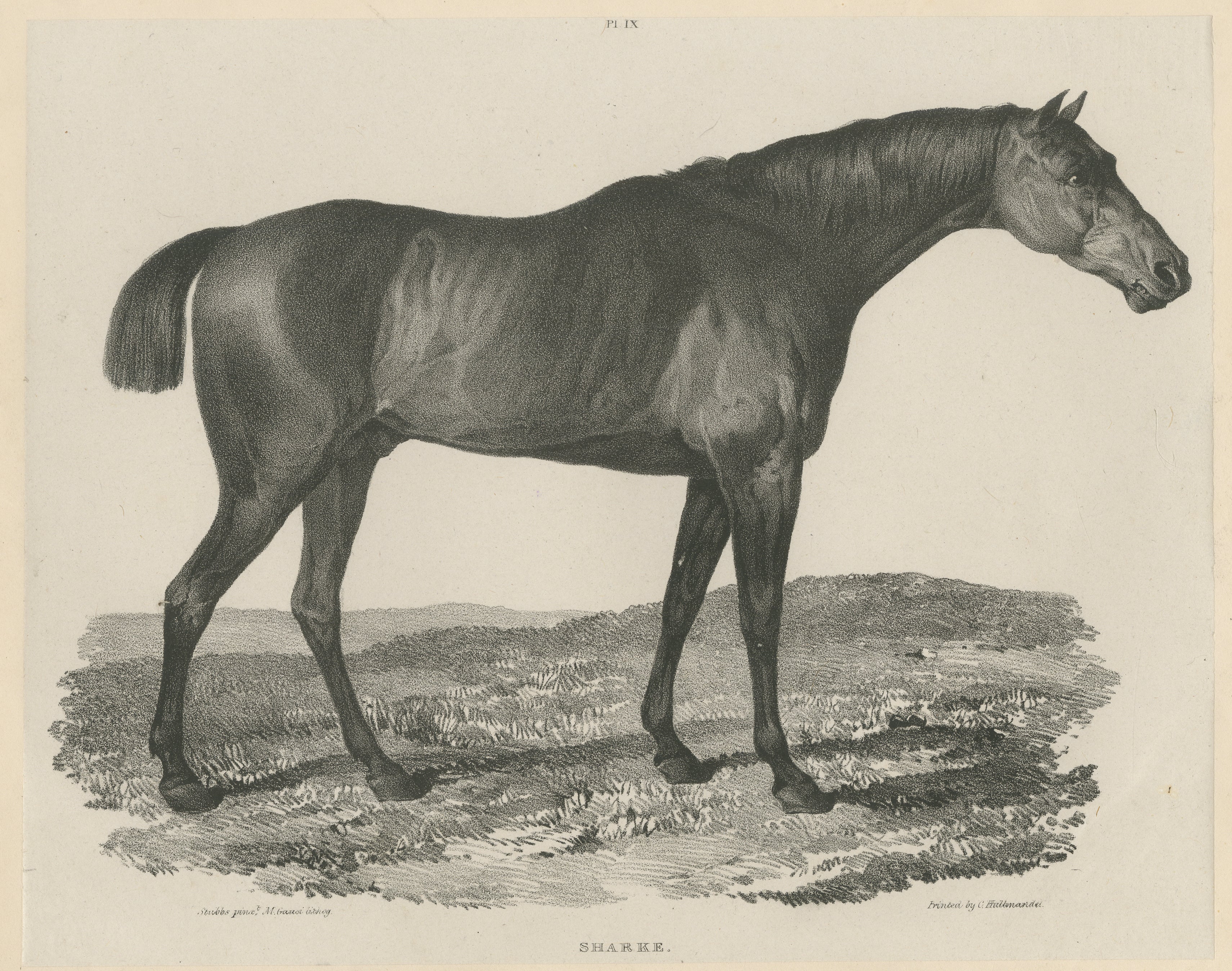
Sedbury – Antique Equestrian Horse & Rider Portrait, Gauci & Hullmandel c.1840 A refined nineteenth-century sporting lithograph depicting Sedbury, shown under saddle with a mounted ...

Category

Antique Mid-19th Century British Prints

Materials

Paper

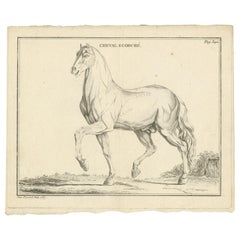
Antique Print of an Écorché of a Horse by Fessard, '1819'

Antique Print of an Écorché of a Horse by Fessard, '1819'

Located in Langweer, NL

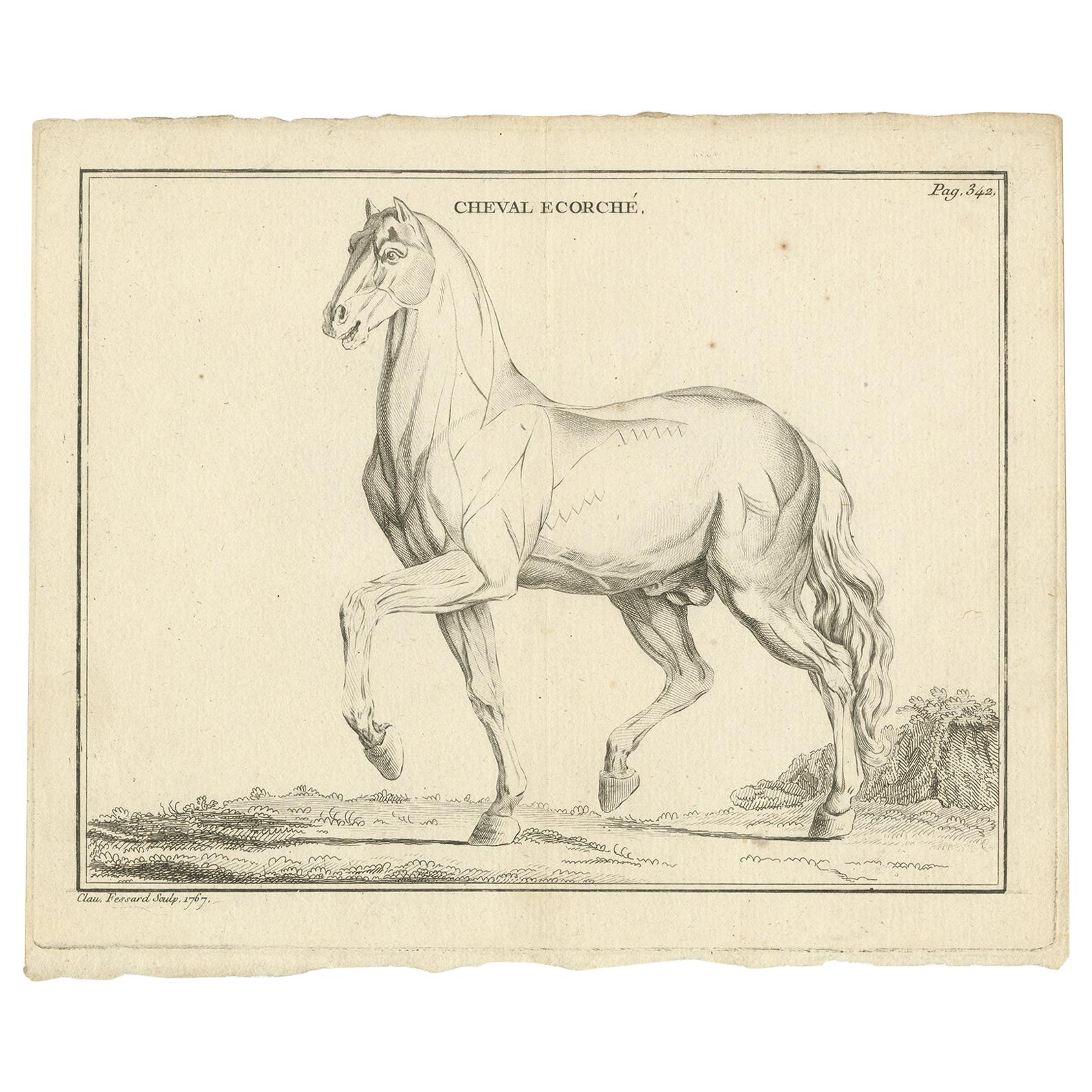
Antique print titled 'Cheval Ecorché'. Copper engraving of an écorché of a horse. An écorché is a figure drawn, painted, or sculpted showing the muscles of the body without skin. Thi...

Category

Antique Early 19th Century Prints

Materials

Paper

Antique Print of a Navarrin Horse by Fessard, 1819

Antique Print of a Navarrin Horse by Fessard, 1819

Located in Langweer, NL

Antique print titled 'Cheval Navarrois'. Copper engraving of a Cheval Navarrin, also called Navarin, Navarrois, Tarbais, Tarbésan or Bigourdin, an extinct breed of light saddle-horse...

Category

Antique Early 19th Century Prints

Materials

Paper

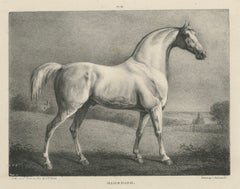
Mambrino – Antique Thoroughbred Horse Portrait, Chalon & Hullmandel c.1840

Mambrino – Antique Thoroughbred Horse Portrait, Chalon & Hullmandel c.1840

Located in Langweer, NL

Mambrino – Antique Thoroughbred Horse Portrait, Chalon & Hullmandel c.1840 A beautiful nineteenth-century sporting lithograph depicting the celebrated horse Mambrino, portrayed in a...

Category

Antique Mid-19th Century British Prints

Materials

Paper