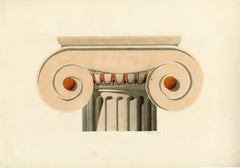
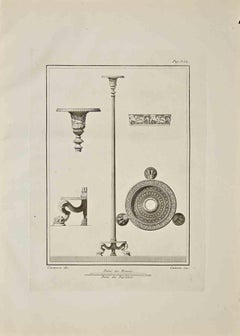
Gallo Gallina (1798-1874)
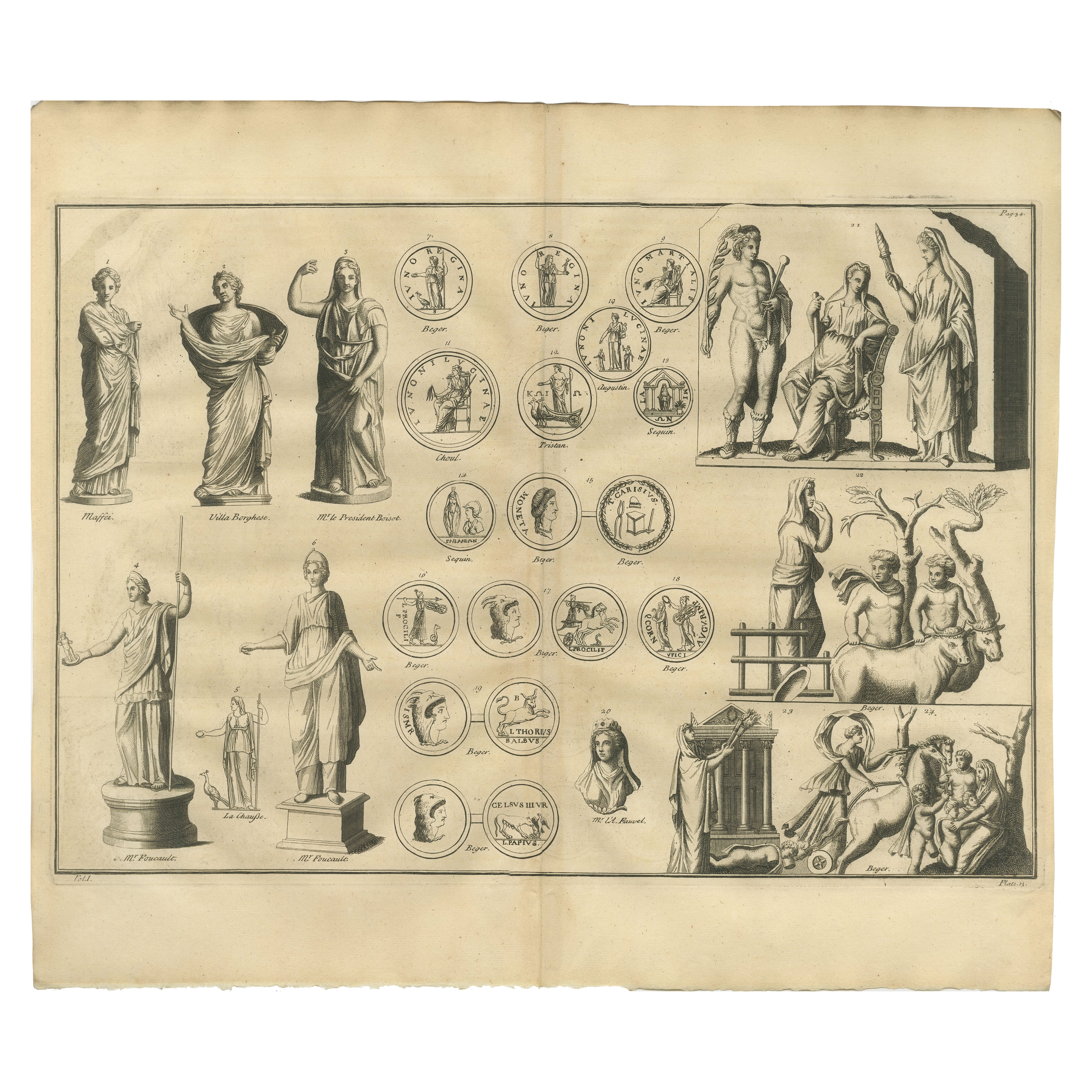
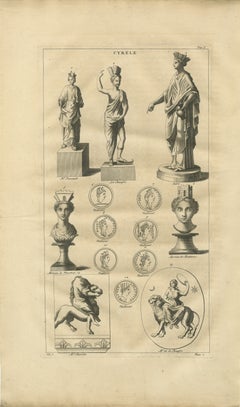
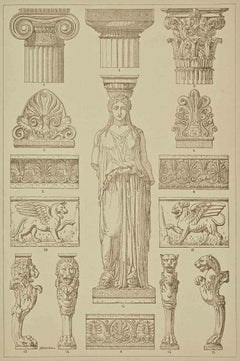
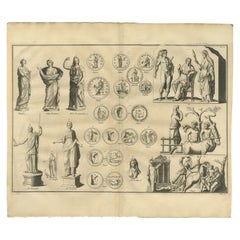
Plate 77, Greek Statue and Coins
Hand colored aquatint and engraving, 1820-1830
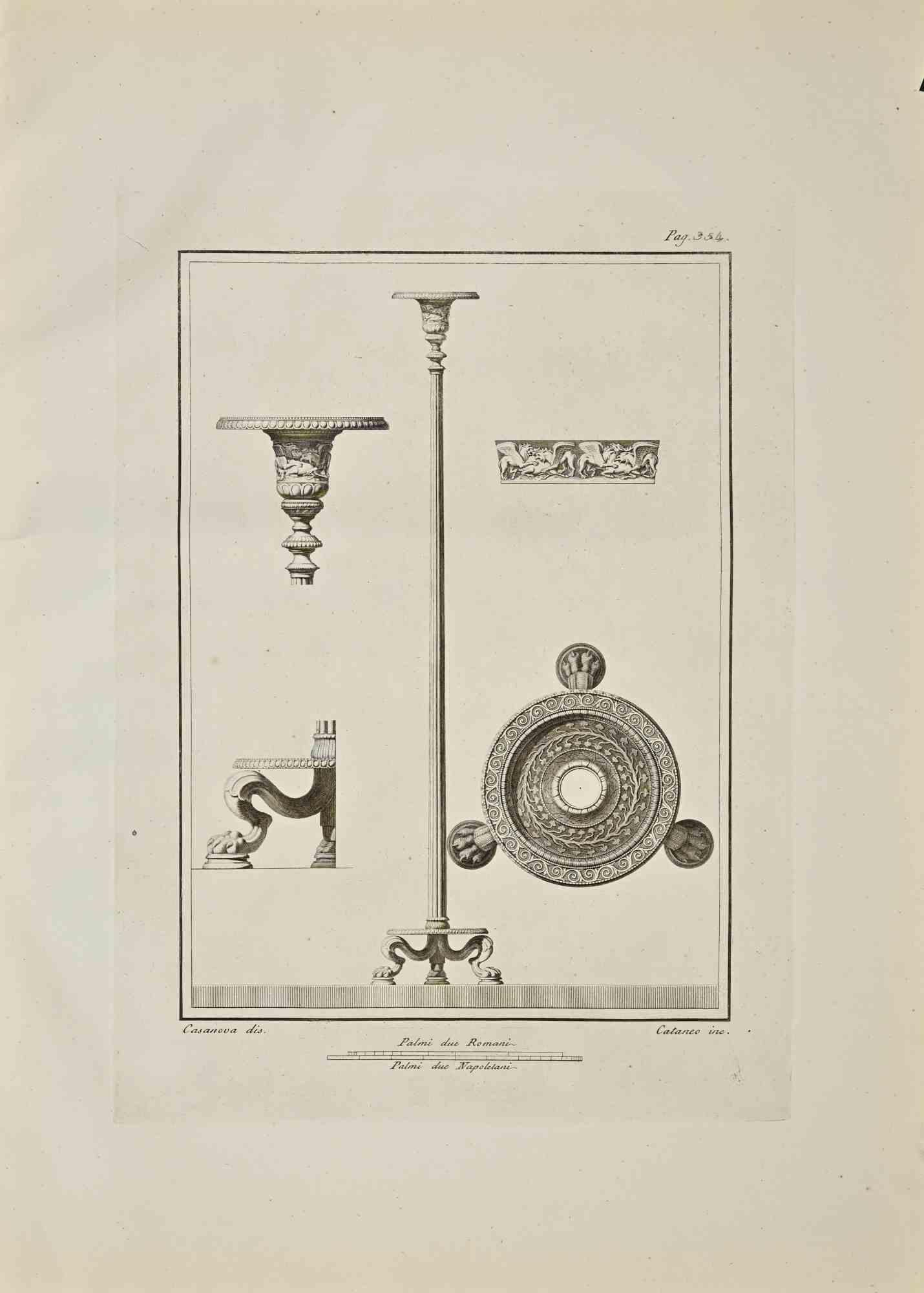
Engraved signature in the plate (see photo)
From: Le Costume Ancien et Moderne
published by Antonio Fortunato Stella, Milan, ca. 1815–1834.
Compiled by Giulio Ferrario, Le Costume Ancien et Moderne, ou Histoire du gouvernement, de la milice, de la religion, des arts, sciences et usages de tous les peuples anciens et modernes was issued in Milan between approximately 1815 and 1834 in both French and Italian editions. It is considered one of the most ambitious illustrated surveys of world cultures produced during the nineteenth century. The complete work comprises more than 1,500 engraved plates distributed among numerous volumes devoted to Asia, Africa, Europe, and the Americas.
Condition: Excellent
Image size: 6 7/8 x 9 3/8 inches
Sheet size: 10 x 14 inches
Gallo Gallina (Italian, 1778–1848)
From: Le Costume Ancien et Moderne, ou Histoire du gouvernement, de la milice, de la religion, des arts, sciences et usages de tous les peuples anciens et modernes
Etching and aquatint with original hand-coloring, published by Antonio Fortunato Stella, Milan, ca. 1815–1834.
Among the finest achievements of nineteenth-century European book illustration, Le Costume Ancien et Moderne ranks as one of the most ambitious visual surveys of world history, ethnography, and material culture ever published. Conceived and written by the Italian scholar Giulio Ferrario (1767–1847), the monumental work extended far beyond the conventions of a costume book, documenting the dress, architecture, religion, military traditions, customs, and artistic achievements of civilizations across Europe, Asia, Africa, and the Americas. Issued in numerous volumes over nearly two decades, the publication contains more than 1,500 engraved plates, making it one of the largest illustrated encyclopedic works of its era.
The present engraving was executed by Gallo Gallina (1778–1848), one of the principal engravers and illustrators responsible for the publication's remarkable visual program. Trained at the Accademia di Brera in Milan, Gallina established a distinguished career as a painter, engraver, and lithographer whose work reflected the precision and archaeological rigor of the Neoclassical period. His appointment as custodian of the archaeological collections of the Brera Academy further strengthened his reputation as an authority on classical antiquity and historical illustration.
Gallina's engravings are distinguished by their refined draftsmanship, delicate linear engraving, and subtle aquatint tonalities. Working from Ferrario's scholarly research, he translated historical sources, archaeological discoveries, and earlier artistic models into compositions of exceptional clarity and elegance. The finely engraved copperplates were printed and then meticulously hand-colored, producing impressions of remarkable richness while preserving the documentary precision intended by the publication. Although created as book illustrations, the plates possess an artistic quality that has long encouraged their collection and display as independent works on paper.
Unlike earlier costume books that focused principally on fashionable attire, Le Costume Ancien et Moderne sought to present a comprehensive visual history of civilization. Individual plates depict rulers and common citizens, religious ceremonies, military uniforms, architectural monuments, ceremonial objects, and scenes of everyday life. Together they constitute an extraordinary nineteenth-century attempt to synthesize historical, archaeological, and ethnographic knowledge through the medium of print.
Today, impressions from Le Costume Ancien et Moderne are valued for both their historical importance and artistic excellence. Original hand-colored examples remain highly desirable among collectors of costume illustration, travel imagery, and nineteenth-century printmaking. They also provide important evidence of the European scholarly fascination with world cultures during the decades following the Enlightenment and the Napoleonic era.
Complete sets of Le Costume Ancien et Moderne are preserved in the collections of major research libraries and museums, including the Library of Congress, the Smithsonian Libraries and Archives, the British Library, the Bibliothèque nationale de France, the New York Public Library, and the Wellcome Collection. Individual plates are also represented in numerous institutional print collections, where they continue to serve historians of costume, archaeology, and the history of illustration.
Selected Bibliography
Ferrario, Giulio. Le Costume Ancien et Moderne, ou Histoire du gouvernement, de la milice, de la religion, des arts, sciences et usages de tous les peuples anciens et modernes. Milan: Antonio Fortunato Stella, ca. 1815–1834.