Want more images or videos?
Request additional images or videos from the seller
1 of 3

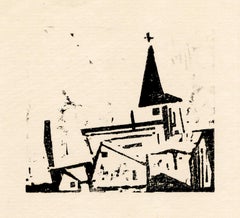
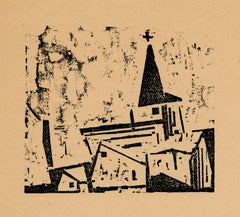
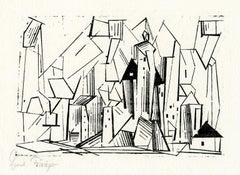
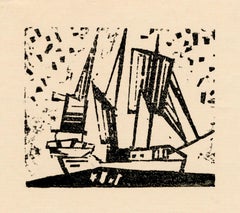
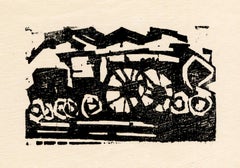
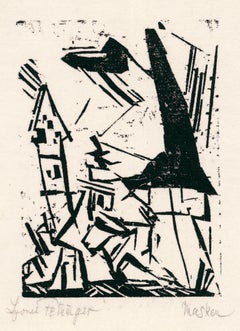
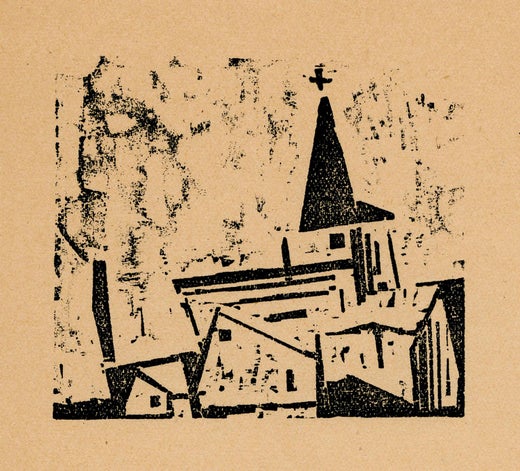
Lyonel Feininger
'Church with Star' – Artist's Personal Letterhead, Bauhaus Modernism

1936

Price:$688.08
$800List Price

You May Also Like

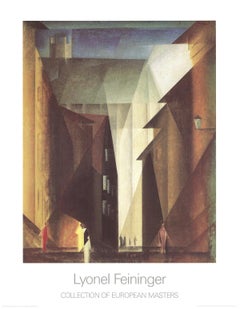
Church View Offset Print by Lyonel Feininger, Modern, 1988, Unframed

Church View Offset Print by Lyonel Feininger, Modern, 1988, Unframed

By Lyonel Feininger

Located in Brooklyn, NY

This rare exhibition poster features a high-quality reproduction of Lyonel Feininger’s Church View, part of the "Collection of European Masters" series published by Achenbach Edition...

Category

1980s Modern Prints and Multiples

Materials

Offset

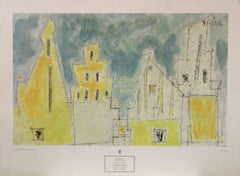
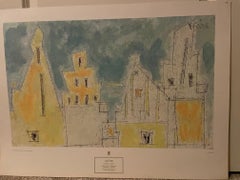
"Gothic Gables" New York Graphic Society 1966, Printed in Switzerland

"Gothic Gables" New York Graphic Society 1966, Printed in Switzerland

By Lyonel Feininger

Located in Chesterfield, MI

"Gothic Gables" Poster/Print by LYONEL FEININGER (American-German, 1871-1956). The print measures approximately 20 x 27 inches and is unframed. Published by New York Graphic Society 1966. Printed in Switzerland...

Category

1960s Figurative Prints

Materials

Lithograph

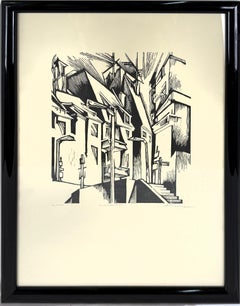
"Nurnberg" Woodcut Print of the Old City by A. Thomas style of Lyonel Feininger

"Nurnberg" Woodcut Print of the Old City by A. Thomas style of Lyonel Feininger

Located in Soquel, CA

The image shows an abstract, black and white block print in the style of Lyonel Feininger of what appears to be a streetscape in Nuremberg, Germany. The style is reminiscent of early...

Category

1960s Bauhaus Landscape Prints

Materials

Woodcut

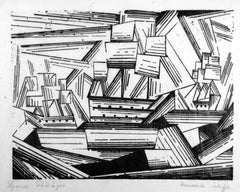
Kreuzende Segelschiffe 2 (Cruising Sailing Ships 2)

Kreuzende Segelschiffe 2 (Cruising Sailing Ships 2)

By Lyonel Feininger

Located in New York, NY

Lyonel Feininger, “Kreuzende Segelschiffe 2 (Cruising Sailing Ships 2)” 1919, Woodcut. Prasse W175. Edition 275 unsigned for portfolio Die tunlte Jahresgabe des Kreises graphischer ...

Category

1910s Bauhaus Landscape Prints

Materials

Woodcut

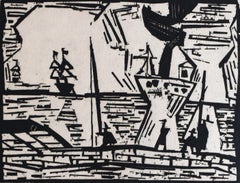
On the Quay Wall  Auf der Quaimauer, 1921

On the Quay Wall Auf der Quaimauer, 1921

By Lyonel Feininger

Located in London, GB

LYONEL FEININGER 1871-1956 1871 - New York - 1956 (American/German) Title: On the Quay Wall Auf der Quaimauer, 1921 Technique: Original Hand Signed Woodcut on Wove Paper Paper...

Category

1920s Expressionist Figurative Prints

Materials

Woodcut

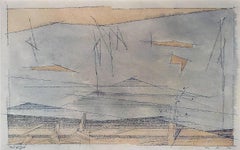
Connecticut Hills

Lyonel FeiningerConnecticut Hills, 1950

$58,000

H 12.35 in W 18.75 in

Connecticut Hills

By Lyonel Feininger

Located in Miami, FL

Executed in 1950 during the heyday of Abstract Expressionism and non-representational art, Feininger reduces a landscape to the bare minimums of lines and wash. Moeller Fine Art

Category

1950s Abstract Geometric Abstract Drawings and Watercolors

Materials

Watercolor, Pencil

"Gothic Gable" by American artist Lyonel Feininger

"Gothic Gable" by American artist Lyonel Feininger

Located in Chesterfield, MI

"Gothic Gables" is an interesting lithograph printed from the original oil by American artist Lyonel Feininger (1871-1956). It was from the Joseph H. Hirshhorn Collection, printed b...

Category

Late 20th Century Abstract Prints

Materials

Lithograph

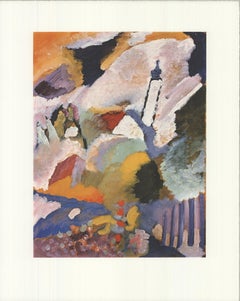
Modern Limited Edition Offset Lithograph Print of Murnau Church

Modern Limited Edition Offset Lithograph Print of Murnau Church

By Wassily Kandinsky

Located in Brooklyn, NY

"Church in Murnau" is a high-quality reproduction of an original painting by Wassily Kandinsky, one of the pioneers of abstract art. This reproduction is part of a limited edition of...

Category

1990s Modern Prints and Multiples

Materials

Offset

Werner Drewes, woodcut, 1919, early pre Bauhaus, small edition

Werner Drewes, woodcut, 1919, early pre Bauhaus, small edition

By Werner Drewes

Located in Fairlawn, OH

Werner Drewes (1899-1985) Berlin Elevated Linocut on Japanese paper, 1919 Unsigned Provnenance: Gift of the artist Bauhaus Art Professor Jorg Maass Kunsthandel, Berlin ...

Category

1910s Bauhaus Landscape Prints

Materials

Woodcut

Church of Bolzano Lithograph, Modern Style, Signed, 1990 Edition

Church of Bolzano Lithograph, Modern Style, Signed, 1990 Edition

By Egon Schiele

Located in Roma, IT

This lithograph from the portfolio "Egon Schiele" is a reproduction of " Kirche von Bozen ", an original artwork realized by Egon Schiele in 1907. The portfolio, that includes 10 lit...

Category

1990s Modern Landscape Prints

Materials

Lithograph

More From This Seller

View All
'Church with House and Tree' – Artist's Personal Letterhead, Bauhaus Modernism

'Church with House and Tree' – Artist's Personal Letterhead, Bauhaus Modernism

By Lyonel Feininger

Located in Myrtle Beach, SC

Lyonel Feininger, 'Church with House and Tree (Kirche mit Haus und Baum)', woodcut, 1936, one of a small but unknown number of letterhead proofs; Prasse W290 V. Inscribed 'J. F. note paper', in pencil, in the artist’s hand; with the Feininger estate stamp and catalog no. 'W 859' in pencil. Annotated 'W.290 V state 3609' in pencil, in the bottom right sheet corner. A fine impression, on cream, laid letterhead stock; hinge remains on the left and right top sheet edges, verso, in excellent condition. Very scarce. Image size 2 3/8 x 2 3/4 inches; sheet size 10 x 7 5/16 inches. Archivally sleeved, unmatted. Exhibited: 'Lyonel Feininer, Woodcuts Used As Letterheads'; Associated American Artists; Feb 4 - March 2, 1974; NY, NY. ABOUT THE ARTIST Lyonel Feininger (1871-1956) was born in New York City into a musical family—his father was a violinist and composer, his mother was a singer and pianist. He studied violin with his father, and by the age of 12, he was performing in public. Still, he also drew incessantly, most notably the steamboats and sailing ships on the Hudson and East Rivers, and the landscape around Sharon, Conn., where he spent time on a farm owned by a family friend. At the age of 16 he left New York to study music and art in Germany, from where his parents emigrated. Drawn more to the visual arts, he attended schools in Hamburg, Berlin, and Paris from 1887 to 1892. After completing his studies, Feininger began his artistic career as a cartoonist and illustrator, his originality leading him to great success. In 1906, after working for a dozen years in Germany, he was offered a job as a cartoonist at the Chicago Tribune, the largest circulation newspaper in the Midwest. He worked there for a year, inventing what became the standard design for the comic strip: in the words of John Carlin, “an overall pattern. . . that allowed the page to be read both as a series of elements one after the other, like language and as a group of juxtaposed images, like visual art.” His originality did not end there: he went on to become one of the great abstract painters. Like Kandinsky, music was his model, but Kandinsky only knew music from the outside—as a listener (inspired initially by Wagner, then by Schoenberg)—while Feininger knew it from the inside. He lived in Paris from 1906 to 1908, during which time he met and was influenced by the work of progressive painters Robert Delaunay and Jules Pascin, as well as that of Paul Cezanne and Vincent van Gogh. He began painting full-time, developing his distinctive Iyrical style based on Cubist and Expressionist idioms and a concern for the emotive qualities of light and color. He exhibited with the Der Blaue Reiter group in 1913, and in 1917, he had his first solo exhibition at Galerie Der Sturm in Berlin. One year after his solo exhibition, in 1918, Feininger began making woodcuts. He became enamored with the medium, producing an impressive 117 in his first year of exploring the printmaking medium. In 1919 at the invitation of the architect Walter Gropius, he was appointed the first master at the newly formed Staatliches Bauhaus in Weimar. His woodcut of a cathedral crowned...

Category

1930s Bauhaus Figurative Prints

Materials

Woodcut

'Church with House and Tree' – Artist's Personal Letterhead, 1940s Modernism

'Church with House and Tree' – Artist's Personal Letterhead, 1940s Modernism

By Lyonel Feininger

Located in Myrtle Beach, SC

Lyonel Feininger, 'Church with House and Tree (Kirche mit Haus und Baum)', woodcut, 1936, one of a small but unknown number of letterhead proofs; Prasse W290 IV. Annotated 'PW 290 state IV / IV 3669', in pencil, in the bottom right sheet corner. With the artist's typed address and date adjacent to the letterhead image: 'Falls Village, Connecticut September 26th, 1940'. A fine impression, on buff, wove letterhead stock; several small losses, and tears, in the sheet edges (not affecting the image area); a crease in the bottom right sheet edge, otherwise in good condition. Very scarce. Image size: 2 3/8 x 2 3/4 inches; sheet size 11 x 8 5/8 inches. Archivally sleeved, unmatted. Feininger moved from Germany to New York City in 1938 and began spending his summers in Falls Village in 1940. Exhibited: 'Lyonel Feininer, Woodcuts Used As Letterheads'; Associated American Artists; Feb 4 - March 2, 1974; New York, NY. ABOUT THE ARTIST Lyonel Feininger (1871-1956) was born in New York City into a musical family—his father was a violinist and composer, his mother was a singer and pianist. He studied violin with his father, and by the age of 12, he was performing in public, but he also drew incessantly, most notably the steamboats and sailing ships on the Hudson and East Rivers, and the landscape around Sharon, Conn., where he spent time on a farm owned by a family friend. At the age of 16 he left New York to study music and art in Germany, from where his parents emigrated. Drawn more to the visual arts, he attended schools in Hamburg, Berlin, and Paris from 1887 to 1892. After completing his studies, Feininger began his artistic career as a cartoonist and illustrator, his originality leading him to great success. In 1906, after working for a dozen years in Germany, he was offered a job as a cartoonist at the Chicago Tribune, the largest circulation newspaper in the Midwest. He worked there for a year, inventing what became the standard design for the comic strip: in the words of John Carlin, “an overall pattern. . . that allowed the page to be read both as a series of elements one after the other, like language and as a group of juxtaposed images, like visual art.” His originality did not end there: he went on to become one of the great abstract painters. Like Kandinsky, music was his model, but Kandinsky only knew music from the outside—as a listener (inspired initially by Wagner, then by Schoenberg)—while Feininger knew it from the inside. He lived in Paris from 1906 to 1908, during which time he met and was influenced by the work of progressive painters Robert Delaunay and Jules Pascin, as well as that of Paul Cezanne and Vincent van Gogh. He began painting full-time, developing his distinctive Iyrical style based on Cubist and Expressionist idioms and a concern for the emotive qualities of light and color. He exhibited with the Der Blaue Reiter group in 1913, and in 1917, he had his first solo exhibition at Galerie Der Sturm in Berlin. One year after his solo exhibition, in 1918, Feininger began making woodcuts. He became enamored with the medium, producing an impressive 117 in his first year of exploring the printmaking medium. In 1919 at the invitation of the architect Walter Gropius, he was appointed the first master at the newly formed Staatliches Bauhaus in Weimar. His woodcut of a cathedral crowned...

Category

1930s Bauhaus Figurative Prints

Materials

Woodcut

'Die Architektur' (Architecture) — Bauhaus Modernism, Signed Woodcut

'Die Architektur' (Architecture) — Bauhaus Modernism, Signed Woodcut

By Lyonel Feininger

Located in Myrtle Beach, SC

Lyonel Feininger, 'Die Architektur' (Architecture), also 'Stadtbild' (Cityscape), woodcut, edition – proofs only in 1920; 50 in 1921. Prasse W 232. Signed in pencil. A fine, richly-inked impression, on off-white Japan paper, with full margins (1 1/4 to 2 1/8 inches), in excellent condition. Matted to museum standards, unframed. Image size 6 x 8 7/8 inches (152 x 229 mm); sheet size 9 1/2 x 11 7/8 inches (241 x 302 mm). No. 11 of the portfolio 'Zwolf Holzschnitte von Lyonel Feininger', 1921. Provenance: Peter Deitsch collection; exhibited Weimar Museum, 1968. Impressions of this work are in the permanent collections of: the Busch-Reisinger Museum (Cambridge, Mass.), Bauhaus-Archiv (Germany), Hamburger Kunsthalie (Germany), Pfaizische Landesgewerbeanstalt (Germany), Kaiser Wilhelm Museum (Germany), Staatliche Graphische Sammlung (Germany), and the Philadelphia Museum of Art. ABOUT THE ARTIST Lyonel Feininger was born in New York City into a musical family—his father was a violinist and composer, his mother was a singer and pianist. He studied violin with his father, and by the age of 12, he was performing in public, but he also drew incessantly, most notably the steamboats and sailing ships on the Hudson and East Rivers, and the landscape around Sharon, Conn., where he spent time on a farm owned by a family friend. At the age of 16 he left New York to study music and art in Germany, from where his parents emigrated. Drawn more to the visual arts, he attended schools in Hamburg, Berlin, and Paris from 1887 to 1892. After completing his studies, Feininger began his artistic career as a cartoonist and illustrator, his originality leading him to great success. In 1906, after working for a dozen years in Germany, he was offered a job as a cartoonist at the Chicago Tribune, the largest circulation newspaper in the Midwest. He worked there for a year, inventing what became the standard design for the comic strip: in the words of John Carlin, “an overall pattern. . . that allowed the page to be read both as a series of elements one after the other, like language and as a group of juxtaposed images, like visual art.” His originality did not end there: he went on to become one of the great abstract painters. Like Kandinsky, music was his model, but Kandinsky only knew music from the outside—as a listener (inspired initially by Wagner, then by Schoenberg)—while Feininger knew it from the inside. He lived in Paris from 1906 to 1908, during which time he met and was influenced by the work of progressive painters Robert Delaunay and Jules Pascin, as well as that of Paul Cezanne and Vincent van Gogh. He began painting full-time, developing his distinctive Iyrical style based on Cubist and Expressionist idioms and a concern for the emotive qualities of light and color. He exhibited with the Der Blaue Reiter group in 1913, and in 1917, he had his first solo exhibition at Galerie Der Sturm in Berlin. One year after his solo exhibition, in 1918, Feininger began making woodcuts. He became enamored with the medium, producing an impressive 117 in his first year of exploring the printmaking medium. In 1919 at the invitation of the architect Walter Gropius, he was appointed the first master at the newly formed Staatliches Bauhaus in Weimar. His woodcut of a cathedral...

Category

1920s Bauhaus Landscape Prints
Materials

Woodcut

'Three Masted Ship, 2' – Artist's Personal Letterhead, Bauhaus Modernism

'Three Masted Ship, 2' – Artist's Personal Letterhead, Bauhaus Modernism

By Lyonel Feininger

Located in Myrtle Beach, SC

Lyonel Feininger, 'Three Masted Ship, 2 (Dreimastiges Schiff, 2)', woodcut, 1937, one of a small but unknown number of letterhead proofs; Prasse W296. Feininger estate stamp and inventory no. 'W 865' in pencil, bottom left sheet corner. Annotated 'W 296' and 'on block : 3702a' in pencil, bottom right sheet corner. A fine impression, on cream, laid, letterhead stock; hinge remains on the left and right top sheet edges, verso, in excellent condition. Very scarce. Image size 2 1/4 x 2 11/16 inches; sheet size 10 x 6 3/4 inches. Archivally sleeved, unmatted. Exhibited: 'Lyonel Feininer, Woodcuts Used As Letterheads'; Associated American Artists; Feb 4 - March 2, 1974; New York, NY. ABOUT THE ARTIST Lyonel Feininger (1871-1956) was born in New York City into a musical family—his father was a violinist and composer, his mother was a singer and pianist. He studied violin with his father, and by the age of 12, he was performing in public, but he also drew incessantly, most notably the steamboats and sailing ships on the Hudson and East Rivers, and the landscape around Sharon, Conn., where he spent time on a farm owned by a family friend. At the age of 16 he left New York to study music and art in Germany, from where his parents emigrated. Drawn more to the visual arts, he attended schools in Hamburg, Berlin, and Paris from 1887 to 1892. After completing his studies, Feininger began his artistic career as a cartoonist and illustrator, his originality leading him to great success. In 1906, after working for a dozen years in Germany, he was offered a job as a cartoonist at the Chicago Tribune, the largest circulation newspaper in the Midwest. He worked there for a year, inventing what became the standard design for the comic strip: in the words of John Carlin, “an overall pattern. . . that allowed the page to be read both as a series of elements one after the other, like language and as a group of juxtaposed images, like visual art.” His originality did not end there: he went on to become one of the great abstract painters. Like Kandinsky, music was his model, but Kandinsky only knew music from the outside—as a listener (inspired initially by Wagner, then by Schoenberg)—while Feininger knew it from the inside. He lived in Paris from 1906 to 1908, during which time he met and was influenced by the work of progressive painters Robert Delaunay and Jules Pascin, as well as that of Paul Cezanne and Vincent van Gogh. He began painting full-time, developing his distinctive Iyrical style based on Cubist and Expressionist idioms and a concern for the emotive qualities of light and color. He exhibited with the Der Blaue Reiter group in 1913, and in 1917, he had his first solo exhibition at Galerie Der Sturm in Berlin. One year after his solo exhibition, in 1918, Feininger began making woodcuts. He became enamored with the medium, producing an impressive 117 in his first year of exploring the printmaking medium. In 1919 at the invitation of the architect Walter Gropius, he was appointed the first master at the newly formed Staatliches Bauhaus in Weimar. His woodcut of a cathedral crowned...

Category

1930s Bauhaus Figurative Prints

Materials

Woodcut

'Little Locomotive' – Artist's Personal Letterhead, Bauhaus Modernism

'Little Locomotive' – Artist's Personal Letterhead, Bauhaus Modernism

By Lyonel Feininger

Located in Myrtle Beach, SC

Lyonel Feininger, 'Little Locomotive (Kleine Lokomotive)', woodcut, 1936, one of a small but unknown number of letterhead proofs; Prasse W158. Annotated 'W 158' (Feininger catalogue number) and '1936' in pencil, in the bottom right sheet corner. A fine impression, on cream, laid letterhead stock; hinge remains on the left and right top sheet edges, verso, in excellent condition. Very scarce. Image size 2 1/4 x 3 5/16 inches; sheet size 10 x 7 inches. Archivally sleeved, unmatted. Exhibited: 'Lyonel Feininer, Woodcuts Used As Letterheads'; Associated American Artists; Feb 4 - March 2, 1974; New York, NY. Collections: Cleveland Museum of Art, Museum of Modern Art, Staatliche Museen zu Berlin (East Berlin KK). ABOUT THE ARTIST Lyonel Feininger (1871-1956) was born in New York City into a musical family—his father was a violinist and composer, his mother was a singer and pianist. He studied violin with his father, and by the age of 12, he was performing in public, but he also drew incessantly, most notably the steamboats and sailing ships on the Hudson and East Rivers, and the landscape around Sharon, Conn., where he spent time on a farm owned by a family friend. At the age of 16 he left New York to study music and art in Germany, from where his parents emigrated. Drawn more to the visual arts, he attended schools in Hamburg, Berlin, and Paris from 1887 to 1892. After completing his studies, Feininger began his artistic career as a cartoonist and illustrator, his originality leading him to great success. In 1906, after working for a dozen years in Germany, he was offered a job as a cartoonist at the Chicago Tribune, the largest circulation newspaper in the Midwest. He worked there for a year, inventing what became the standard design for the comic strip: in the words of John Carlin, “an overall pattern. . . that allowed the page to be read both as a series of elements one after the other, like language and as a group of juxtaposed images, like visual art.” His originality did not end there: he went on to become one of the great abstract painters. Like Kandinsky, music was his model, but Kandinsky only knew music from the outside—as a listener (inspired initially by Wagner, then by Schoenberg)—while Feininger knew it from the inside. He lived in Paris from 1906 to 1908, during which time he met and was influenced by the work of progressive painters Robert Delaunay and Jules Pascin, as well as that of Paul Cezanne and Vincent van Gogh. He began painting full-time, developing his distinctive Iyrical style based on Cubist and Expressionist idioms and a concern for the emotive qualities of light and color. He exhibited with the Der Blaue Reiter group in 1913, and in 1917, he had his first solo exhibition at Galerie Der Sturm in Berlin. One year after his solo exhibition, in 1918, Feininger began making woodcuts. He became enamored with the medium, producing an impressive 117 in his first year of exploring the printmaking medium. In 1919 at the invitation of the architect Walter Gropius, he was appointed the first master at the newly formed Staatliches Bauhaus in Weimar. His woodcut of a cathedral crowned...

Category

1930s Bauhaus Figurative Prints

Materials

Woodcut

'Masken (Masks)' — German Expressionism, Bauhaus

'Masken (Masks)' — German Expressionism, Bauhaus

By Lyonel Feininger

Located in Myrtle Beach, SC

Lyonel Feininger, 'Masken (Masks)' also 'Carnival Masks', woodcut, 1920, proofs only. Prasse W193. Signed and titled in pencil. Annotated '1973', the artist’s inventory number. A fin...

Category

1920s Bauhaus Abstract Prints

Materials

Woodcut