Want more images or videos?
Request additional images or videos from the seller
1 of 11

Werner Drewes
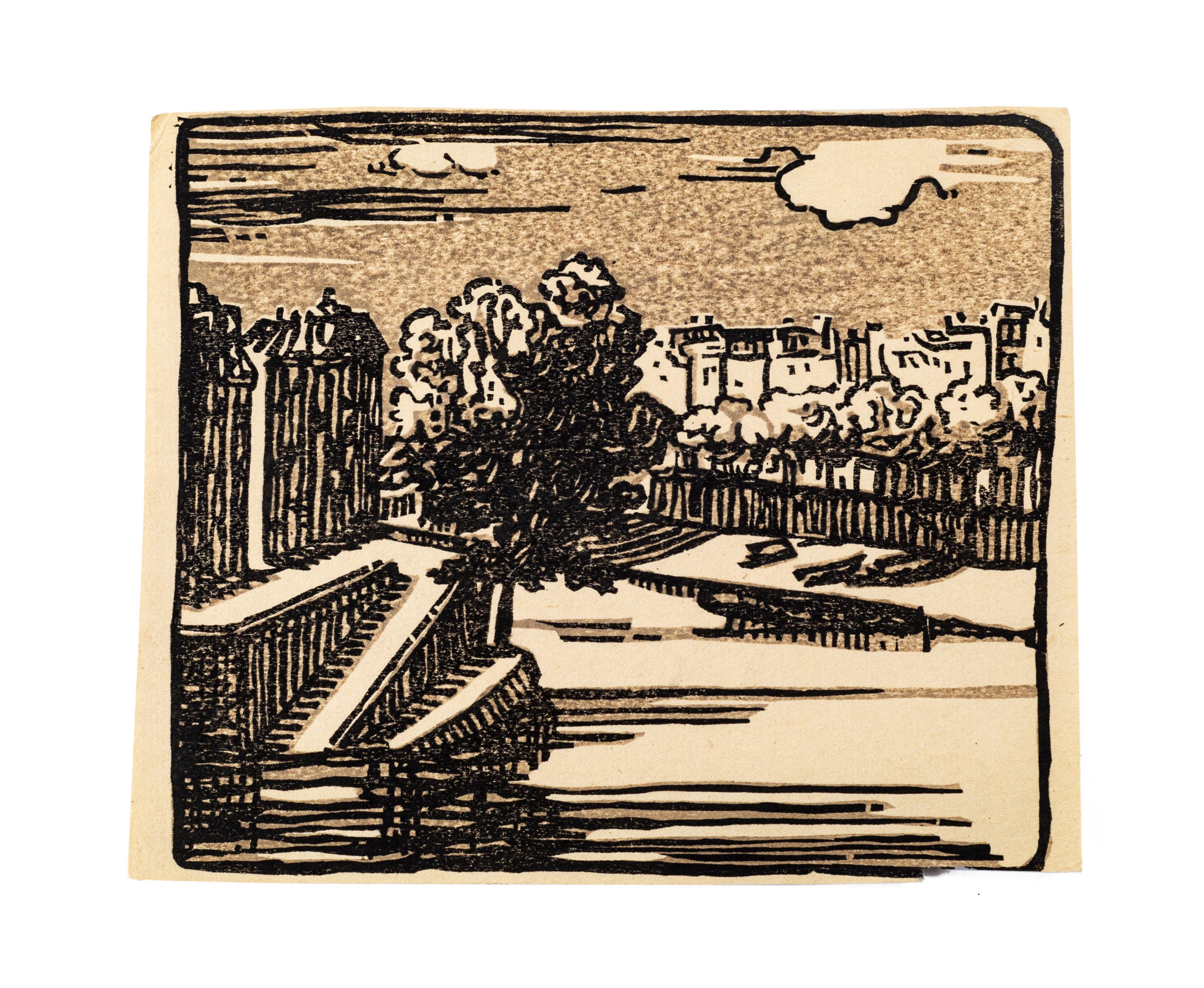
Werner Drewes, woodcut, 1919, early pre Bauhaus, small edition

1919

$2,500
£1,868.72
€2,180.54
CA$3,510.51
A$3,570.93
CHF 2,039.05
MX$43,192.34
NOK 23,776.41
SEK 24,140.71
DKK 16,301.14

About the Item

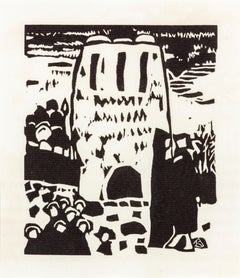
Werner Drewes (1899-1985) Berlin Elevated Linocut on Japanese paper, 1919 Unsigned Provnenance: Gift of the artist Bauhaus Art Professor Jorg Maass Kunsthandel, Berlin Reference: Rose 13, ful page illustration in the catalog raisonne Very small edition, proofs only A definitive edition size for Berlin Elevated does not appear to be readily documented; surviving impressions were probably printed by the artist in a small, informal group rather than as a large commercial edition. Its 1919 date—at the very beginning of his recorded print production—substantially increases its historical and collecting importance. Created when Werner Drewes was only twenty, Berlin Elevated belongs to the first phase of his printmaking career. After military service during the First World War, Drewes entered the Technische Hochschule in Berlin-Charlottenburg in 1919 to study architecture and design. He produced his earliest woodcuts that same year, two years before enrolling at the Weimar Bauhaus, where he studied with Johannes Itten, Paul Klee, and Oskar Schlemmer. The print should therefore be described as a pre-Bauhaus work anticipating Drewes’s Bauhaus development, rather than as a work made at the school. Drewes subsequently returned to the Bauhaus in Dessau, studying with Wassily Kandinsky, László Moholy-Nagy, and Lyonel Feininger. The elevated railway and its supporting bridges are translated into a dense construction of intersecting arches, girders, rooftops, and reflections. Drewes sharply reduces the architecture to alternating black and unprinted areas, allowing the white paper to function as illumination. The massive curved bridge anchors the composition, while diagonal tracks, cranes, and trusses lead the eye into an almost vertiginous urban space. Water in the foreground is represented by agitated horizontal cuts that contrast with the rigid engineering above. The work remains indebted to German Expressionist woodcut—particularly its emphatic contrasts, deliberately rough cutting, and psychologically charged distortion. Yet its interlocking structural forms also reveal Drewes’s architectural training and anticipate the Bauhaus concern with geometry, construction, and the integration of artistic and technical design. The circular monogram cut into the lower-right corner reinforces the object’s identity as a hand-carved relief print. Comparable early and Bauhaus-period prints are held by major institutions. The Metropolitan Museum of Art owns Drewes’s 1919 woodcut Prayer—Inside of Naumburg Cathedral and also holds the 1921 Street Scene with Tram Wires, made during the period of his first Bauhaus studies. The Smithsonian American Art Museum preserves Ecce Homo X of 1921, part of Drewes’s important Bauhaus-era portfolio of ten woodcuts. The Smithsonian ultimately assembled an especially substantial representation of his graphic work and organized a major print retrospective in 1984. Conclusion Berlin Elevated occupies a pivotal position between Expressionism and the emerging Bauhaus aesthetic. Its turbulent cutting records the unsettled atmosphere of postwar Germany, while its architectural organization already points toward Drewes’s later synthesis of emotion, geometry, and disciplined design. Both an evocative image of modern Berlin and a rare document of the artist’s beginnings, the woodcut foreshadows the role Drewes would later play in transmitting Bauhaus principles to American modernism. Condition: Excellent, full sheet (see photo) Image size: 7 9/16 x 8 inches Sheet size: 10 3/8 x 9 7/8 inches Werner Drewes (1899–1985) began making woodcuts before entering the Bauhaus, producing his first examples in 1919 while studying architecture and design in Berlin and Stuttgart. He attended the Bauhaus at Weimar from 1921 to 1922, studying under such masters as Paul Klee, Johannes Itten, and Oskar Schlemmer. He later returned to the Bauhaus at Dessau in 1927–1928, where he studied with Wassily Kandinsky, László Moholy-Nagy, and Lyonel Feininger. The most significant woodcuts associated with Drewes's Bauhaus years are the portfolio Ecce Homo, a suite of ten expressionist woodcuts produced during his early Bauhaus period. These prints reveal the influence of German Expressionism and the Bauhaus emphasis on structural design, combining bold black-and-white contrasts with simplified, powerful forms. The portfolio is frequently cited as the principal body of woodcuts created during his Bauhaus training. Unlike many Bauhaus artists who moved away from traditional printmaking, Drewes continued to regard the woodcut as a primary artistic medium throughout his career. The lessons he absorbed from Klee, Kandinsky, and Feininger helped transform his work from expressionist figuration toward increasingly abstract compositions. After emigrating to the United States in 1930, he became one of the first artists to introduce Bauhaus principles to American printmaking and eventually produced more than 400 woodcuts, including over 250 color woodcuts. For collectors and cataloguers, the Bauhaus-period woodcuts most often encountered include: • Ecce Homo (portfolio of ten woodcuts, c. 1921–22) • Various untitled expressionist woodcuts executed during his Weimar Bauhaus studies • Woodcuts produced immediately after his Bauhaus training that retain strong Bauhaus and Expressionist characteristics, particularly those exhibited in Germany during the late 1920s.
  • Creator:
    Werner Drewes (1899-1985, American)
  • Creation Year:
    1919
  • Dimensions:
    Height: 7.62 in (19.36 cm)Width: 8 in (20.32 cm)
  • Medium:
  • Movement & Style:
  • Period:
  • Condition:
    Excellent condition for a proof impression.
  • Gallery Location:
    Fairlawn, OH
  • Reference Number:
    Seller: FA22241stDibs: LU14018459962

More From This Seller

View All
Bauhaus, Werner Drewes, woodcut, 1921, unrecorded proof

Bauhaus, Werner Drewes, woodcut, 1921, unrecorded proof

By Werner Drewes

Located in Fairlawn, OH

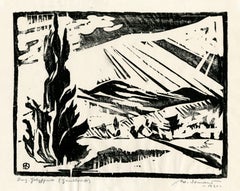
Werner Drewes (1899-1985) Mountainous Landscape with Cypress, 1921 Woodcut on wove paper Original paper folder serving as overmatting of the image, signed and titled a second time by...

Category

1920s Bauhaus Landscape Prints

Materials

Woodcut

Myron Kozman, New Bauhaus, screenprint, 1947, edition 24

Myron Kozman, New Bauhaus, screenprint, 1947, edition 24

By Myron Kozman

Located in Fairlawn, OH

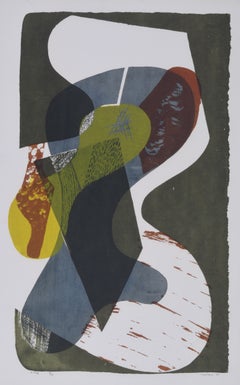
Myron Kozman (1916-2002) Abstraction #318 Screenprint in colors, 1947 Signed, titled, and numbered in pencil (see photos) Rare abstract screenprint Myron Kozman’s Abstraction #318 of...

Category

1940s Abstract Abstract Prints

Materials

Screen

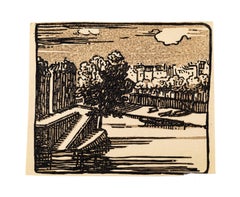
Bougival Woodcut Print, Fauvist Style, Signed, Edition 30, 1914

Bougival Woodcut Print, Fauvist Style, Signed, Edition 30, 1914

By Maurice de Vlaminck

Located in Fairlawn, OH

Bougival Woodcut, 1914 Signed and numbered in pencil Edition 30, this numberd 22 Printed on laid Van Gelder Zonen paper Published by Henri Kanweiler, Paris Printed by Paul Birault, P...

Category

1910s Fauvist Landscape Prints

Materials

Woodcut

Marcoussis etching, Cubist, 1931, You, Me, and That White Rabbit

Marcoussis etching, Cubist, 1931, You, Me, and That White Rabbit

By Louis Marcoussis

Located in Fairlawn, OH

Louis Marcoussis (1883-1941) Rue Caulaincourt (Ty, ja i ten biały królik / You, Me, and That White Rabbit) 1931 Etching and engraving Initialed with the artist’s engraved monogram (s...

Category

1930s Cubist Still-life Prints

Materials

Etching

You May Also Like

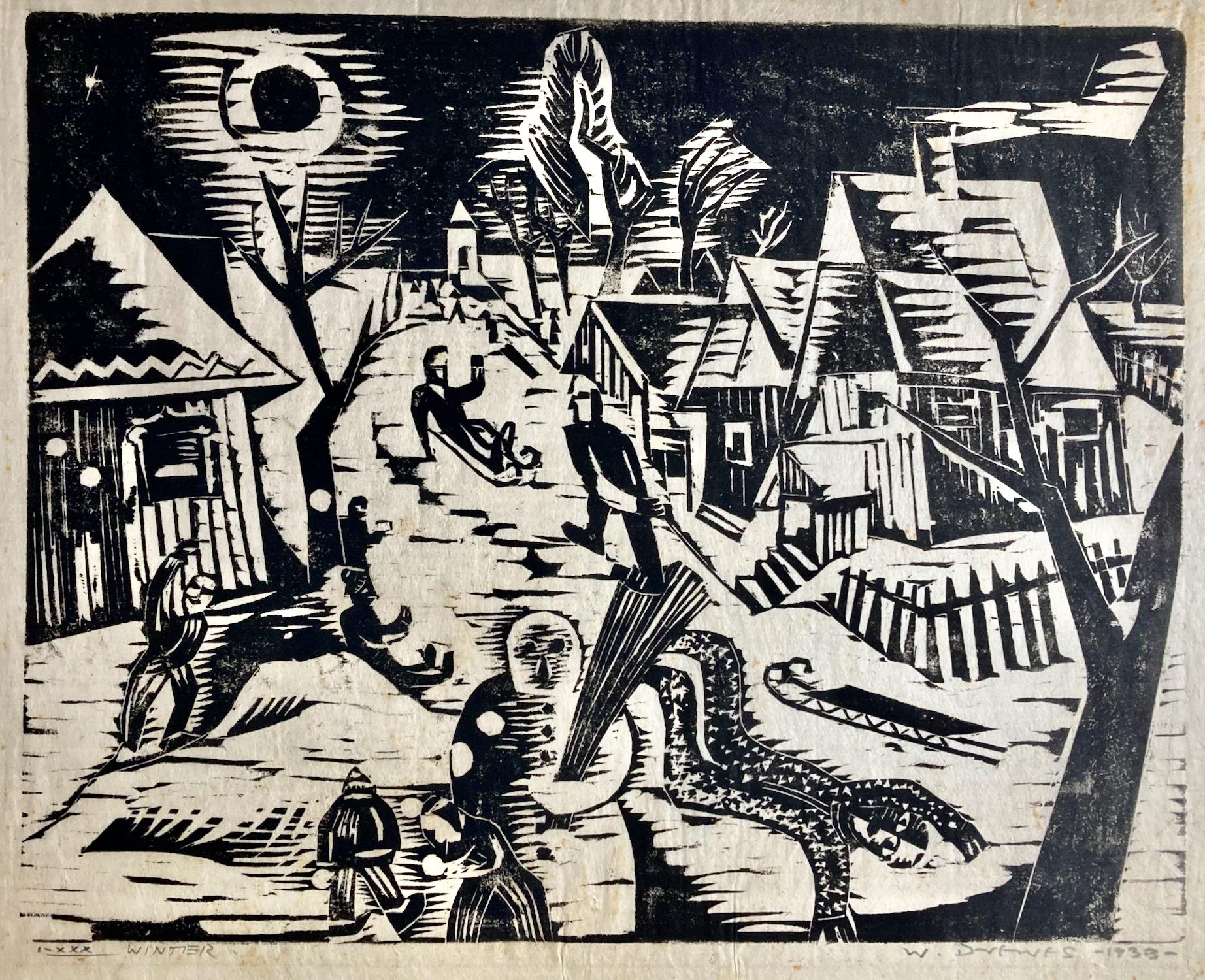
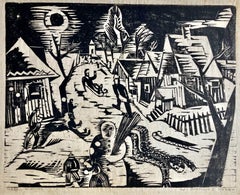
Werner Drewes, Winter, 1933, modernist woodcut

Werner Drewes, Winter, 1933, modernist woodcut

By Werner Drewes

Located in New York, NY

A modernist fantasy winter scene created by Werner Drewes, this print brings key aspects of the period together. His cubist-inspired woodcut technique is utilized here to bring the s...

Category

1930s American Modern Landscape Prints

Materials

Woodcut

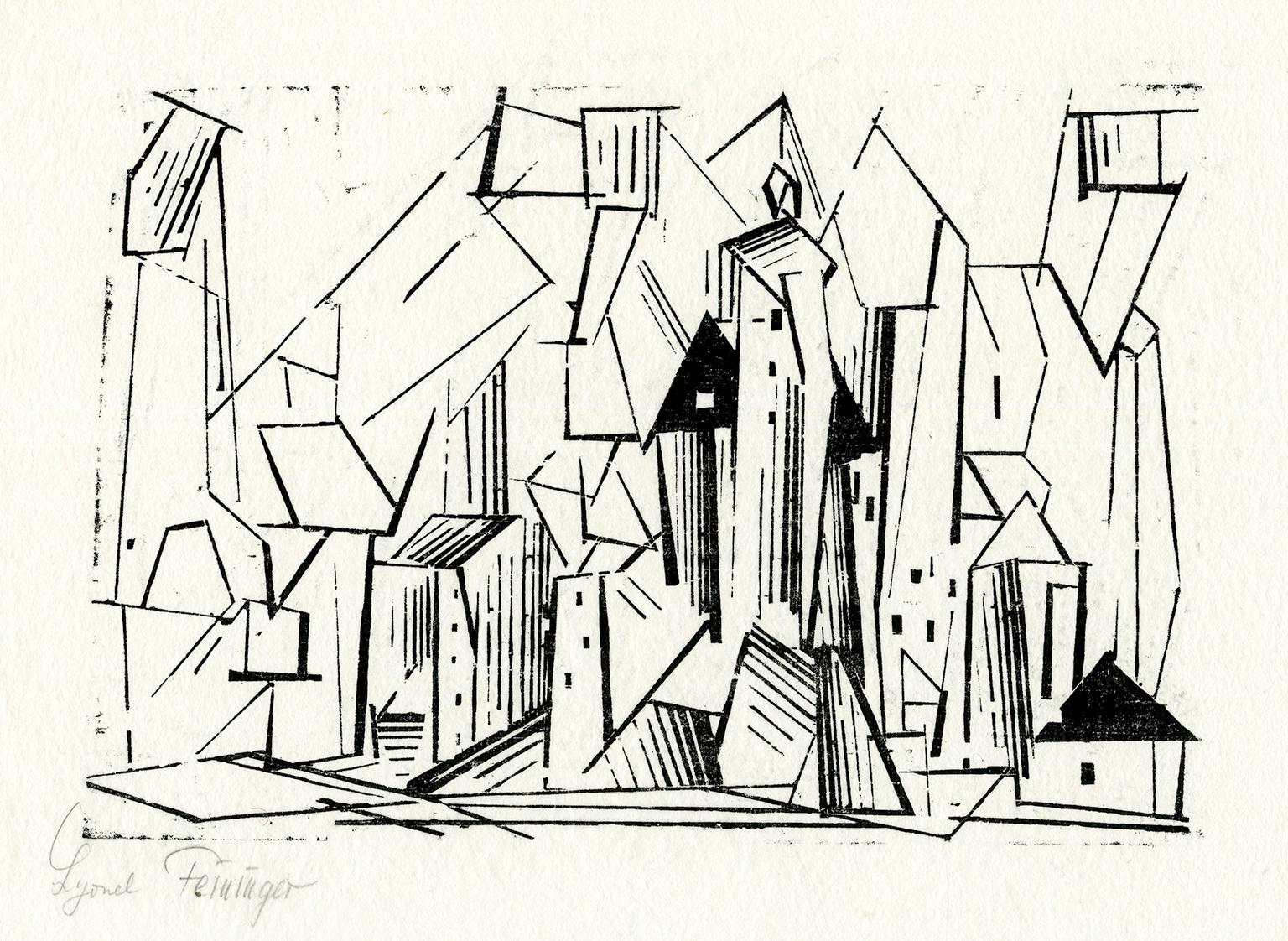
'Die Architektur' (Architecture) — Bauhaus Modernism, Signed Woodcut

'Die Architektur' (Architecture) — Bauhaus Modernism, Signed Woodcut

By Lyonel Feininger

Located in Myrtle Beach, SC

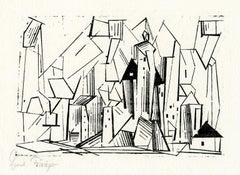
Lyonel Feininger, 'Die Architektur' (Architecture), also 'Stadtbild' (Cityscape), woodcut, edition – proofs only in 1920; 50 in 1921. Prasse W 232. Signed in pencil. A fine, richly-inked impression, on off-white Japan paper, with full margins (1 1/4 to 2 1/8 inches), in excellent condition. Matted to museum standards, unframed. Image size 6 x 8 7/8 inches (152 x 229 mm); sheet size 9 1/2 x 11 7/8 inches (241 x 302 mm). No. 11 of the portfolio 'Zwolf Holzschnitte von Lyonel Feininger', 1921. Provenance: Peter Deitsch collection; exhibited Weimar Museum, 1968. Impressions of this work are in the permanent collections of: the Busch-Reisinger Museum (Cambridge, Mass.), Bauhaus-Archiv (Germany), Hamburger Kunsthalie (Germany), Pfaizische Landesgewerbeanstalt (Germany), Kaiser Wilhelm Museum (Germany), Staatliche Graphische Sammlung (Germany), and the Philadelphia Museum of Art. ABOUT THE ARTIST Lyonel Feininger was born in New York City into a musical family—his father was a violinist and composer, his mother was a singer and pianist. He studied violin with his father, and by the age of 12, he was performing in public, but he also drew incessantly, most notably the steamboats and sailing ships on the Hudson and East Rivers, and the landscape around Sharon, Conn., where he spent time on a farm owned by a family friend. At the age of 16 he left New York to study music and art in Germany, from where his parents emigrated. Drawn more to the visual arts, he attended schools in Hamburg, Berlin, and Paris from 1887 to 1892. After completing his studies, Feininger began his artistic career as a cartoonist and illustrator, his originality leading him to great success. In 1906, after working for a dozen years in Germany, he was offered a job as a cartoonist at the Chicago Tribune, the largest circulation newspaper in the Midwest. He worked there for a year, inventing what became the standard design for the comic strip: in the words of John Carlin, “an overall pattern. . . that allowed the page to be read both as a series of elements one after the other, like language and as a group of juxtaposed images, like visual art.” His originality did not end there: he went on to become one of the great abstract painters. Like Kandinsky, music was his model, but Kandinsky only knew music from the outside—as a listener (inspired initially by Wagner, then by Schoenberg)—while Feininger knew it from the inside. He lived in Paris from 1906 to 1908, during which time he met and was influenced by the work of progressive painters Robert Delaunay and Jules Pascin, as well as that of Paul Cezanne and Vincent van Gogh. He began painting full-time, developing his distinctive Iyrical style based on Cubist and Expressionist idioms and a concern for the emotive qualities of light and color. He exhibited with the Der Blaue Reiter group in 1913, and in 1917, he had his first solo exhibition at Galerie Der Sturm in Berlin. One year after his solo exhibition, in 1918, Feininger began making woodcuts. He became enamored with the medium, producing an impressive 117 in his first year of exploring the printmaking medium. In 1919 at the invitation of the architect Walter Gropius, he was appointed the first master at the newly formed Staatliches Bauhaus in Weimar. His woodcut of a cathedral...

Category

1920s Bauhaus Landscape Prints
Materials

Woodcut

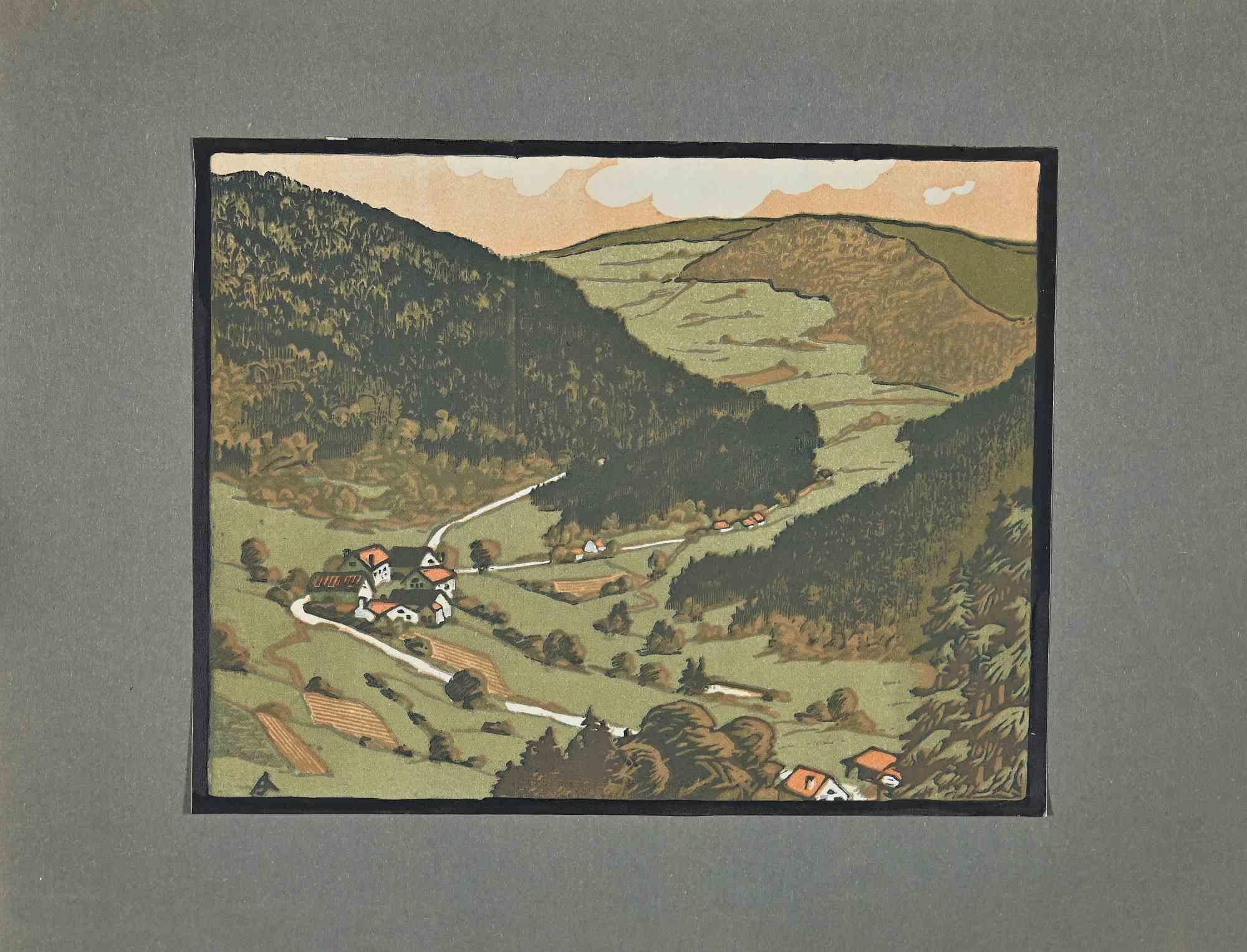
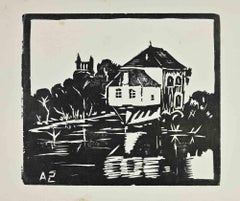
Landscape - Original Woodcut - Mid 20th Century

Landscape - Original Woodcut - Mid 20th Century

Located in Roma, IT

Modern Landscape is an original xylograph realized during the half of the 20th Century by an anonymous artist. The artwork represents a view of a village with several buildings and ...

Category

Mid-20th Century Modern Figurative Prints

Materials

Woodcut

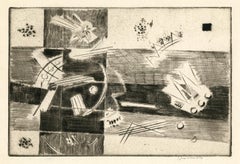
Small Forms On Crossing Bands

Small Forms On Crossing Bands

By Werner Drewes

Located in Myrtle Beach, SC

Werner Drewes, 'Small Forms on Crossing Bands', drypoint and roulette, 1935, edition 20, Rose 1.197. Signed in pencil. A fine, rich impression, in warm black ink, on cream wove paper...

Category

1930s Bauhaus Abstract Prints

Materials

Drypoint